2025 Pushed Society Into Using AI Faster Than Ever, Data Shows; Clinicians Warn About Escalating Mental-Health Toll
ChatGPT application (Source: Canva)
As AI adoption explodes globally, it comes with a mental-health toll, the latest research from KPMG and EY suggests. Clinicians call for regulations that prioritise people’s well-being to prevent a mental health crisis.
December 9, 2025. In 2025, AI became a routine part of life for most people. Earlier this year, KPMG revealed that 66% now use AI regularly. On top of that, EY’s 2025 AI Survey found that in workplaces, the use of AI is making work more complicated.
These reports also point to rising levels of stress and overwhelm linked to rapid AI adoption, and clinicians warn that the lack of clear rules and guidelines around AI use risks pushing us toward a mental health crisis.
The workplace is where this pressure is most visible. 64% of employees feel overloaded by the constant stream of new AI tools at work and report that their workload has increased rather than eased over the past year. At the same time, only half of employees say they have any form of AI training or clear internal policies on its use, KPMG added.
“People aren’t just learning a new tool once, they’re living in a state of permanent adaptation,” said Dr. Hannah Nearney, clinical psychiatrist and UK Medical Director at Flow Neuroscience, a company developing brain stimulation treatment for depression. “When the brain is repeatedly pushed to process new systems and higher expectations in productivity with unclear rules, the stress becomes chronic. Without clearer rules, chronic stress becomes an easy path to burnout, anxiety, and even depression.”
Economic uncertainty amplifies this strain. EY’s survey also showed that over half of workers are worried about their job security as AI becomes more capable and fear that their roles could be replaced entirely.
“When you’re constantly worried about your skills becoming irrelevant, every new AI update feels like a threat,” said Dr. Kultar Singh Garcha, NHS GP and Chief Medical Officer at Flow Neuroscience. “More than that, worries about livelihood are a different kind: they push the brain into survival mode, which easily drains its resources. If a person is experiencing this regularly, their mental health is set to decline.”
The lack of AI regulations fuels worries about the privacy and security of personal data, too, KPMG emphasised. It showed 70% of people believe regulations are necessary, but less than half see current laws as enough.
The same study indicates that loss of human connection is one of the most reported concerns around AI use.
“I've seen that many times in my practice too, where patients ask the chatbot what they should feel or do, instead of checking in with themselves or reaching out to others,” explained Dr. Nearney. “AI may provide useful information or practical advice, but people often forget that what they need is to tune into their emotions or simply to be listened to by another human being.”
As stress levels rise, the people who interact with AI the most – Millennials and Gen Z – are also the most proactive about protecting their mental health, Deloitte’s 2025 Future of Wellness report shows.
“Younger generations know that the presence of AI in their lives will only grow, and it’s great to see that they are looking for ways to manage stress before it escalates into anxiety or depression,” said Dr. Garcha. “We’ve seen growing interest in our technology this year, too, particularly among younger adults, and more regulatory approvals in different countries. Rising AI-related stress is one of the reasons.”
The technology Dr. Garcha refers to is a non-invasive form of brain stimulation (tDCS). Many patients tell him they want to try evidence-based tools before turning to medication, especially when their main concerns are rising stress, anxiety, and low mood linked to work and technology use.
Flow Neuroscience launched in Sweden in 2019. Since then, its at-home brain-stimulation device for depression has received regulatory approval and is available in several regions, including the EU, UK, and Australia. The device targets brain areas involved in mood regulation, and can also help ease anxiety. A clinical study published in Nature Medicinefound that brain stimulation reduced depressive symptoms in more than 70% of patients.
“There are many tools that can help people ease AI-related stress daily: from meditation and mindfulness apps to mental health devices and psychotherapy. Enough sleep and physical activity are also important,” Dr. Nearney said. “Coping on your own isn’t enough, though. As AI develops, the stress it creates won’t disappear. We need proper AI training, clear workplace rules, and national regulations that put people’s well-being at the centre. At the end of the day, AI was created to make life and work easier, not harder.”
– END –
About Flow Neuroscience
Flow Neuroscience is a healthcare company that focuses on tDCS therapies and devices. In 2016, it was co-founded in Sweden by Daniel Mansson, a clinical psychologist, and Erik Rehn, an engineer. Erin Lee joined as CEO in 2022, having previously worked at Google, Uber and Babylon, and the company is now based in the UK. Flow is the only at-home medical tDCS device with clinically proven effectiveness in treating depression. It is not only used by the National Health Service (NHS), but also available and has passed regulations in Europe, Norway, Switzerland, and Hong Kong.
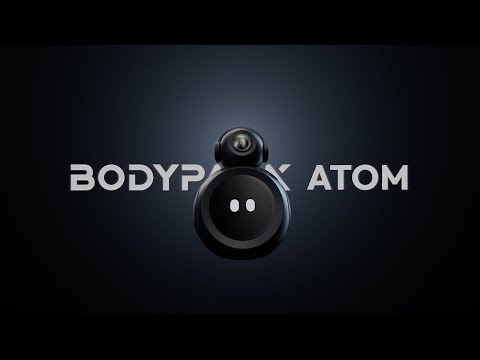
BodyPark Launches ATOM, the World's First AI Fitness Companion, Bringing Professional Motion Intelligence to Everyday Strength Training
SAN FRANCISCO, Nov. 21, 2025 /PRNewswire/ -- BodyPark, an emerging innovator in AI fitness technology, today announced BodyPark ATOM, the world's first device positioned as an AI Fitness Companion. Built for real-time motion capture, instant form correction, automatic rep-counting, video replay, and adaptive AI training, ATOM is designed to upgrade the way people train—whether at home, in the gym, or while traveling.
Solving Fitness' Biggest Pain Points: Movement Quality & Training Motivation
BodyPark ATOM: The World's First Al Fitness CompanionBodyPark ATOM KickstarterBodyPark ATOM Kickstarter
While wearables and apps track numbers, most still rely on intuition for form, pacing, and planning. ATOM solves this gap through BodyPark's DeepBody™ Engine, delivering 96% pose-estimation accuracy and tracking 34+ keypoints, including its unique lumbar "Lumbus" point for posture analysis. ATOM recognizes 1,000+ exercises, covering strength, calisthenics, and functional training.
Key real-time capabilities:
Hands-free automatic rep counting
Instant voice-based form correction
Gamified scoring and pacing cues
Full-body tracking via 160° ultra-wide lens
High-contrast 1.43" AMOLED display
Users simply place ATOM at arm's length and start training with no setup required.
Instant Video Replay With SmartPath Analysis
Between sets, ATOM automatically generates replay clips with:
SmartPath keypoint trajectory
Center-of-gravity visualization
Barbell/equipment path tracking
Depth and stability indicators
Users can quickly spot issues like shifting weight, uneven symmetry, or decreasing stability—insights once limited to coaches or motion labs.
Professional-Level Training Reports
After each session, ATOM provides in-depth metrics such as:
Range of Motion
Displacement
Velocity & Power
Stability and movement consistency
These performance insights, traditionally reserved for elite sports facilities, are now accessible to everyday athletes.
Adaptive AI Planning
Powered by the BodyPark Multi-Agent Fitness Engine, ATOM delivers training plans that evolve with the user's performance, fatigue, goals, and mobility. Users can guide training through text, voice, DIY programming, or a library of 1,000+ exercises. The system integrates BodyPark's proprietary intelligence with large models such as Gemini, DeepSeek, and Qwen.
Portable Hardware for Real-World Use
Weighing just 155 g, ATOM packs advanced sensing and computing into a compact device featuring:
160° field-of-view lens
1/2.8" CMOS sensor
MagMount system for desks, racks, tripods
72-hour battery life, 7+ hours full-intensity use
Adjustable vertical tilt, built-in speaker, Bluetooth earphone mode
Interchangeable privacy caps in multiple colors
Use it in home gyms, commercial gyms, offices, hotels, or outdoors.
Built on Proven Technology
BodyPark spent years developing its AI fitness technology, delivering fitness testing and retail AI systems for major brands in China. ATOM inherits and enhances this DeepBody™ foundation, optimized for complex lighting, fast motion, and varied training environments.
A New Category in the AI Era
"ATOM isn't here to replace phones or watches, it reinforces them," said Yili Lin, Founder of BodyPark. "Phones track numbers. ATOM understands movement, the true driver of progress and injury prevention."
BodyPark ATOM is now available for global preorder on Kickstarter, with worldwide shipping in Q1 2026. Early backers receive exclusive pricing and limited-time membership perks.
About BodyPark Founded in 2021 and headquartered in Hong Kong with a Silicon Valley presence, BodyPark builds AI-powered fitness technology specifically for serious workout and training. The founding team includes veterans from Google, Xiaomi, Volkswagen, BCG, and Mobvoi. Learn more at www.atom.bodypark.fit.
AI Is Transforming Hiring – But Human Expertise Remains Essential, Finds Canada 2026 Hays Salary & Hiring Trends Report
Toronto, ON – Artificial intelligence is reshaping the Canadian workplace, but the latest Canada 2026 Hays Salary & Hiring Trends Guide reveals that the shift is measured, with human skills and adaptability still at the forefront.
The annual study, based on thousands of employer and employee responses nationwide, shows that while over 53% of Canadian organizations are using AI to supplement their teams, only 2% of roles are being fully replaced by AI. Instead, companies are leveraging AI to automate repetitive tasks, fill gaps created by talent shortages, and empower existing staff. More than 40% of organizations are choosing to upskill their teams rather than hire new talent, reflecting a strategic shift toward internal development and resilience.
“Artificial Intelligence is no longer a distant concept, it’s a present force reshaping the workplace,” said Travis O’Rourke, President of Hays Canada. “Canada’s workforce is evolving to adapt to AI, but the shift isn’t as dramatic as many headlines suggest. While AI continues to make waves, its impact on job displacement remains limited, highlighting the ongoing need for human expertise in key areas. The future of work in Canada will be shaped by those who embrace change with intention, leaders who invest in people, communicate transparently, and align technology with human potential.”
Key Findings: The State of Work in the Age of AI (Canada)
AI adoption is widespread but measured: Over 53% of organizations use AI to support teams, while only 2% report replacing jobs outright.
Upskilling over hiring: 42.6% of companies are investing in upskilling current employees, compared to 35% hiring externally to fill skill gaps.
New in-demand skills: Data literacy, automation fluency, and prompt engineering are now baseline expectations across most functions.
Top sectors feeling AI’s impact: Customer service and technology roles are experiencing the most disruption, while skilled trades, construction, mining, and oil & gas remain notably resilient.
Human oversight remains critical: Roles demanding empathy, communication, and complex decision-making continue to show high resistance to automation.
Tariffs and trade policy: Nearly 25% of organizations have paused or delayed hiring due to economic uncertainty and tariffs.
The Human Advantage Endures
Despite the rise of AI, human skills remain irreplaceable.
“The shift to AI is more nuanced than it appears. For instance, finance roles like controllers and analysts are evolving, as organizations increasingly value data literacy and automation fluency. With these capabilities becoming central to performance, clients are starting to benchmark compensation differently by comparing finance talent not only to peers in accounting, but also to roles in analytics and technology,” said Alistair Houghton, Vice President of Accounting and Finance Recruitment at Hays.
Emerging Roles and Economic Forces
AI is not only transforming traditional workplace functions but also generating new opportunities – particularly in high-skilled, technology-driven roles such as machine learning engineers, data infrastructure specialists, and automation experts. At the same time, economic pressures, including tariffs and trade restrictions, are influencing hiring decisions and prompting organizations to accelerate investment in automation and AI.
About the Canada 2026 Hays Salary & Hiring Trends Guide
The Canada 2026 Hays Salary & Hiring Trends Guide is based on an August 2025 survey of hiring managers, HR professionals, and employees across all major industries. The report explores compensation data, workforce strategies, and AI adoption patterns shaping the next era of work in Canada.
TRAIN IT RIGHT NEWSLETTER
Sign Up and get a free 7 day Train it Right HIIT Program!

 ChatGPT application (Source: Canva)