Six Plant-Based Foods You Should Try Today
By Vanessa Chamberlin

The glorious thing about plant-based eating is that your grocery store or farmer’s market is full of an incredible array of foods, flavors, and textures that are just waiting to be discovered. Even a typical grocery store has a produce section that carries seasonal and ethnic foods that often get passed-over, but are convenient, inexpensive, and yummy.
If you’re stuck in a rut of getting the same lettuce-tomato-onion-type foods that you always get, take a walk! Look at some of the other plant-based foods and see how you can work them into your diet.
Not sure where to start? In the spirit of a number that signifies longevity, here are six plant-based foods I totally love that are healthy and tasty, but not part of the average diet. What are some delicious food discoveries you’ve made and put on your grocery list each week?
Jicama
Jicama, also known as a Mexican potato, is a big, heavy, brown fruit that really does look like a weird potato. The excellent thing about jicama is that it is very crisp and crunchy, but has a mild flavor like a cucumber. Jicama can be sliced and used with dips as an alternative to chips, eaten in sticks like any other crunchy veggie, or added to salads for a snappy texture without confusing the flavor profile. It’s a great summer side dish served with a spritz of lime juice and a dusting of chili powder if you’d like a little kick!
Bok Choy
In Asian cuisine, bok choy is a staple! For most of us, though, we’d never think to work bok choy into a dish, which is unfortunate because of how versatile and healthy this veggie is. Bok choy can be added to a salad, but it can also be eaten like you’d eat celery with a little hummus or nut butter. It can also be added to soups or stir-frys, or braised or grilled on its own, and given a little seasoning to become a brilliant side dish.
Pluots
Pluots are an incredible, juicy little snack that comes from mixing a plum with an apricot. They’re so good! Plums aren’t terribly uncommon, but not a lot of people are familiar with pluots. It’s a shame because they’re easy to carry in a lunch for you or for your children, they’re a little sweet with the benefits of both plums and apricots, and they’re another inexpensive fruit. They might be seasonal depending on where you live, but look for a fruit that’s a little smaller than a plum, and more yellow, in the plum area of your grocery store.
Rutabaga
Rutabaga is popular in some countries around the world, but it frequently gets forgotten in the US. With a little bit of a punch like a radish, rutabaga is an awesome root vegetable. If you like the spicy snap of it, it’s great to be eaten as a raw veggie. Others would enjoy rutabagas along with things like potatoes, parsnips, and squash in a cold-weather harvest stew!
Nopal/Cactus
A lot of people feel strange about eating cactus, but prickly pear cactus (also known as nopal) tastes great and is SO good for you! It can have positive effects on blood sugar and managing diabetes, and it can help lower cholesterol. I suggest buying it cleaned already because the spines can be difficult to deal with if you’re new to the food, but many average grocery stores (and I imagine every Mexican or Hispanic market) carry cleaned nopal ready to cook. Similar in texture to something like a green pepper, nopal is great in dishes like scrambled tofu, or really anything sautéed. It tastes like other green veggies (think green peppers or green beans) with just a little lemony tartness. It goes really well with spicy dishes.
Dandelion Greens
The wonderful world of leafy greens leaves us with plenty of options at pretty much every grocery store, but dandelion greens aren’t something most people eat every day. The green leaves are great in salads and slaws, but they can also be boiled like spinach or sautéed and seasoned. They’re just a little bitter, but fun to try, and you can even forage for them if you’re really up for an adventure!
When people tell me that they don’t do plant-based eating because they don’t want to limit themselves, I have to laugh. People limit themselves all the time! Even with great options and an endless menu of flavors and colors, most people fall into a routine of eating the same things all the time. This is your wake-up call to use plant-based eating as a way to EXPAND your diet, and bring in fantastic fruits, vegetables, nuts, seeds, and beans that you otherwise never would have enjoyed.
Vanessa Chamberlin is a Certified Holistic Health Practitioner and Lifestyle Coach and author of The Fire-Driven Life: How to Ignite the Fire of Self-Worth, Health, and Happiness with a Plant-Based Diet. For more information, please visit, www.vanessachamberlin.com and connect with her on Twitter, @vkchamberlin.
For some strange reason, range of motion in the fitness world seems to be completely misunderstood with trainers having their clients only do partial range movements saying its full range (partial does not mean full) and trainees performing these ranges. So with this in mind I will quickly explain what Range of Motion or ROM actually is in a human movement setting:
WHAT IT IS
Range of motion (ROM) is as its name suggest, the range to which a body part can move properly in space while attached to another. Typically what this means is how many degrees of flexion or extension a joint can go thru. Here are 3 prime examples of full ROM:
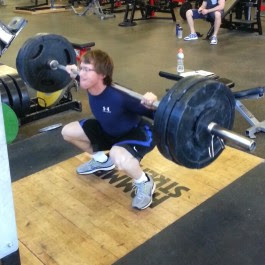
- Squats: While maintaining a flat/neutral back position, bending at the knees, hips and ankles one lowers their buttocks until the hamstring covers the calf while the feet remain flat on the ground.
- Bench Press (any barbell variation): Keeping the shoulders and glutes on the bench, one bends their elbows and shoulder joint lowering the bar until it is in contact with the chest
- Pull/Chin-up: Starting from a full hang (elbows are not flexed), pull the body up by bending the elbow and shoulder until the chin has passed the bar and until the forearm and bicep have made contact.
So what does this mean?
First take a look at any joint in the human body, the joint has a range of motion that it was designed to be able to go thru whether under additional external resistance or not. Many people will advocate that full ROM training will damage the joint and these people are what I like to call……..WRONG!
By training the joints thru their entire range of motion, this will actually make the joint healthier than continuous partial range training.............
To read the full article please visit: http://rislingperformance.wordpress.com/2014/04/28/what-is-range-of-motion/
Injury prevention: Tennis Elbow

No doubt you have heard of this injury in past while either watching sports or have personally experienced some symptoms of it. Tennis elbow (properly known as Lateral Epicondylitis) is a chronic, nagging pain on the lateral (outer) aspect of the elbow joint often caused by weakness leading to overuse and overexertion of certain movements. Some other signs include pain when gripping an object, pronation and supination while holding an object or by stiffness throughout the forearm and elbow. The reason it was given the common name of tennis elbow was it was a common injury that was popping up in tennis players, with those at higher levels having a greater incidence of the injury. While not a completely debilitating injury, it is commonly a nagging, persistent annoyance for many while it can manifest itself as a very sharp shooting pain very much like other tendonitis type pains.
Rapid extension of the elbow joint coupled with either forceful pronation (turning palm down) or supination (turning palm up) is one of the primary causes of tennis elbow with both direct impacts and overuse also being major contributors to the frequency of the debilitation. Typically there is minimal inflammation from this but is indicated with pain along the radial nerve as micro tears and adhesions in the tendons at the wrist and/or elbow signal pain.
To help prevent the injury from occurring in the first place or to reverse the symptoms of it, one must directly focus on the structures involved. What this requires is properly warming them up to allow greater blood flow and also performing various stretches for the muscles around the elbow and wrist to ensure that there is adequate flexibility in the muscles and tendons and also that the joints themselves are able to move through their full ranges of motion. Some simples ones are wrist circles, wrist extension and stretching out the hand. As well, ensuring that the muscles and joints are “conditioned” enough to handle repetitive use like in tennis/racket sports by gradually increasing their work capacity over time and learning proper mechanics. One population known for this are the older population who take up tennis, doing some general fitness and stretching before and after will help alleviate symptoms.
Also strengthening up specific muscles will immensely cut down the risk for injury. A few of the major points are the supinators and pronators of the arm, excluding the biceps brachii as it is typically already sufficiently strong. I speak of the smaller, supinator muscle, Pronator quadratus and teres. Some simple ways to do this is at a twin pulley station, adjust the pulley height to be at roughly waist height (approximately the same height as the hand when the elbow is bent to 90 deg). From here using either a small straight bar or a rope attachment, perform both pronation and supination of the wrist while keeping the elbow bent to 90 degrees. To do this, stand beside the pulley with it beside your elbow while you are looking sideways to the pulley, grab the attachment with your furthest hand (if right side is beside pulley, grab with left hand) for supination and closest hand for pronation. From here if you are doing supination start with the palm facing the floor and turn your palm up, in the case of pronation, do this in reverse. This will help strengthen the muscles to be able to handle greater external load demands like striking a ball in with a racket. Performing relatively higher reps, 10-15 reps with a slow eccentric and fast concentric is best while holding a pause at the end of each range.
Another common issue is that people are generally far stronger in elbow flexion movements when the hands are supinated (regular bicep curl) while being pronated (reverse curl) they are significantly weaker. This large imbalance on its own over time can manifest it in the form of tendonitis so as opposed to always doing regular curls, for a time being exclude them completely and focus on reverse grip and neutral (hammer) grip curling movements to bring these muscles all up to par.

In every gym when you walk in no doubt you will see men standing in front of the mirrors pumping out set after set of bicep curls focussing primarily on the Biceps brachii (the visible bicep muscle). While this is an obvious and relatively effective way to train the elbow flexor, it leaves out many other undertrained muscles involved in elbow flexion. To give a quick boost to your arm training in the quest for bulging biceps try some of the following:
Reverse Grip - EZ bar curls:
Grab the EZ bar with an overhand grip and the palms on a grip where they will ever so slightly begin to face each other. Now starting with the arms straight curl the bar up and only at the top will your elbows slightly move forward. What this does is work the brachioradialis (a muscle running directly underneath the biceps) and forearm muscles intensely while reducing the work the biceps brachii contributes to the lift. When this muscle grows it pushes the biceps up which gives the appearance of larger arms!
Seated Dumbbell Hammer Curls:
Hammer curls are performed by holding the dumbbells with the palms facing one another as if about to use a hammer. This allows the brachialis and brachioradialis to be further targeted as the biceps function of supination will be removed. Performing these seated will allow you to focus directly on the task at hand, flexing the elbows without swaying the upper body to gain momentum. As well this way the nervous system isn't preoccupied with maintaining standing balance and instead is fully devoted to the hammer curl!
Thick grip implements:
The reason that thick grip implements work so well for making the arms bigger in a hurry is that they increase the neural recruitment of the motor units in the forearm while reducing the strain on the wrist. When this occurs the forearms will gain strength and size which will lead to a radiating effect up to the biceps leading to greater weights being able to be lifted and then more micro trauma to the muscles causing hypertrophy. In the event the facility you train at doesn't have any thick implements, you can bypass this issue by purchasing a pair of Fat Gripz which are attachable to most barbells, dumbbells and handles at www.fatgripz.ca, or at many supplement stores.
For more visit www.rislingperformance.wordpress.com, Follow on Twitter: @TonyRisling