Want a delicious Super Bowl meal that burns belly fat and help you get lean? Chili! You can even use fatty ground beef. [Recipe below.]
Husbands, boyfriends and other men over 40 can also build testosterone levels – and have more energy, more strength and less belly fat, according to Clark Bartram, 53, Performance & Nutrition Industry Expert for Six Pack Abs, and Lead Advisor to the International Sports Sciences Association. When men’s testosterone levels are low, they face muscle loss, low energy and loss of sex drive. Additionally, their body stores most of the food they eat as belly fat.

Clark Bartram cooks testosterone boosting, belly fat burning chili, his Super Bowl meal of choice.
When a man turns 30, his testosterone levels can decrease by 1-2% a year. By the time he reaches his 40s and 50s, his testosterone production can be down to half of what it once was, according to Bartram.
“Giving you half the testosterone production and double the belly fat – that’s not good,” he says. “That’s why it’s so important for us older men to start boosting our natural testosterone immediately.”
Rather than get testosterone treatments or “legal steroids” (with frequent side effects) from a physician, Bartram says, “Let food be your medicine.”
The fats in red meat as well as salmon and tuna boost testosterone, he said. Other such foods are: almonds, garlic, eggs, cabbage, spinach, asparagus, avocados, bananas, watermelon, citrus fruit, grapes, and honey.
For Super Bowl chili, adding white button mushrooms are a key ingredient to blocking estrogen, the female version of testosterone. Estrogen can cause a man to bloat, develop breast tissue and store more fat around the waist. Rising estrogen levels also cause your belly fat to start producing a testosterone killing chemical that creates even more estrogen.
At TestMaxMeals.com, Bartram offers more testosterone boosting food tips, 3 so-called “healthy” foods that can dramatically decrease testosterone levels, and 3 “cheat” foods that boost testosterone. He also explains how to quickly prepare and cook an entire week’s worth of your favorite testosterone boosting foods in less than an hour and at a low cost.
Clark Bartram’s Super Bowl Chili Recipe
2 lbs. ground beef (15% fat) 1 can kidney beans
1 cup white button mushrooms 1 can black beans
1/2 cup chopped onions 1 can organic chopped tomatoes
2 tbs. chili powder pinch of salt
jar organic tomato puree garlic to taste
1.) Sauté ground beef until it is brown.
2.) Place meat into big pot and add all other ingredients.
3.) Cook on medium heat, stirring occasionally, for 30-45 minutes.
Enjoy.
Are your obsessive thought signs of OCD, or just quirks of modern life?
“I’m completely obsessed with this bracelet.”
“You’re being so OCD right now.”
They’re sentences we can expect to hear in normal conversation. Everyone feels fixated on or drawn to things from time to time.
But for the thousands of people with undiagnosed OCD, anxiety or depression, certain obsessions or obsessive thoughts take a different shape.
How can you tell if you or somebody you care about is crossing that line? Maggie Lamond Simone, author of the memoir Body Punishment about struggling with OCD and anxiety, offers these guideposts for distinguishing OCD from the quirky obsessive thoughts we all experience:
These thoughts block out all others
An OCD obsession prevents you from thinking about or concentrating on anything else whatsoever until it has been resolved, getting in the way of daily life. Does your fear of germs prevent you from holding hands with your love interest? This crosses a line.
You think the same thing or perform the same behavior repeatedly
Are you extremely fastidious about organizing your cabinets? So fastidious that you’ve done it three times since last week? Repeating behavior unnecessarily is more than a quirk.
You want to end your behavior, but can’t.
Plucking out your eyebrows and lashes (trichotillomania) and relentlessly picking scabs are just two examples of behavior you might wish you could stop but just can’t - and are likely signs of clinical OCD.
If any of these sound familiar, it’s time to seek professional help. With the right support, you can learn to manage, live and even to thrive with OCD.
**
About Maggie Lamond Simone
Maggie Lamond Simone is an award-winning columnist and author. With two titles already to her name, her third book, Body Punishment: OCD, Addiction and Finding the Courage to Heal (Central Recovery Press) was released in April 2015. It traces Simone’s journey struggling with obsessive-compulsive disorder, anxiety, and depression. Her writing has been featured in multiple publications and collections, including From Beer to Maternity (2009), Cosmopolitan Magazine, The Zen of Midlife Mothering (2013), Not Your Mother’s Book on Do-It-Yourselfers (2013), P.S. What I Didn’t Say (2009), and Chicken Soup for the Soul: My Resolution (2008). Simone has been a guest on NPR and is a regular blog columnist for the Huffington Post. An an adjunct professor in the department of communications at SUNY Oswego and Onondaga Community College in Syracuse, she lives in Central New York with her husband and two children.
About Body Punishment
For as long as she can recall, Maggie Lamond Simone has been plagued by self-loathing and urges to harm herself physically while emotionally sabotaging her life. In Body Punishment: OCD, Addiction and Finding the Courage to Heal (Central Recovery Press, April 2015), she reveals it all. The obsessive thoughts that drove her to cut, starve, pick, drink, pluck, purge, and otherwise hurt herself. The profound shame, the utter despair and the confusion over her own inner workings that prevented her from establishing stable, long-term goals and healthy relationships. Through this poignant story of her painful, eye-opening journey she explores the issues of substance abuse, anxiety, and depression that commonly occur with OCD, all in an effort to further the dialogue around mental illness and eliminate the shame and help others find a way forward toward healing.
10 Lesser Known Ways Booze Impacts Your Body

www.Drcalapai.net
We all know that alcohol wreaks havoc on the liver and sends kidneys into overdrive. We also know that after a night of libations the next morning is often met with a dull headache and at times nausea. While moderate consumption of alcohol can offer health benefits, the happy hour or weekend partiers who binge drink may see negative effects. Dr. Christopher Calapai, an Osteopathic Physician board certified in family medicine, who has worked with Mike Tyson, Mickey Rourke, Steven Seagal, and and as a medical consultant for the New York Rangers, offers some sobering facts and 10 lesser knows ways booze impacts your body.
- Hair thinning, shedding and loss.
When you drink excessively (more than 3 drinks within a 3 hour period) there’s an elevation of estrogen in the body and a decrease of zinc. “A rise in estrogen leads to the hair loss and then the drop in zinc plus folic acid levels compromise healthy hair growth and maintenance,” explains Dr. Calapai.
- Voice loss, or changes.
Ever lose your voice after a night out of partying? Typically shouting over loud music and second hand cigarette smoke gets the blame. “What people don’t realize is that alcohol can cause dehydration leading to a dry throat and some constriction of the vocal chords. You really want to drink water in between cocktails,” advises Dr. Calapai.
- Cuts and bruises take longer to heal.
In 2014, a study published by researchers from the Loyola University Healthcare System showed that binge drinking reduces bacteria fighting white blood cells and hinders the production of a special protein that attracts them. White blood cells are essential for wound healing. Dr. Calapai says to pay attention to how you heal. “A simple cut should be gone within a day or two and a bruise should be fading within 3-5 days. If you’re drinking 10 or more drinks in one week you’ll connect the dots to delayed healing.”
- Chronic colds.
This is more evidence of a compromised immune system. If you typically kick a sore throat with some warm tea, chicken soup and a good night’s sleep; after binge drinking that same sore throat may escalate into strep throat. When the white blood cell count is low you may feel like your always battling a cold. “It’s so important to drink water and add vitamin E, C, zinc, selenium and omega-3 fatty acids into your diet to boost white blood cells and rid that run down feeling.”
- Always sleepy.
Alcohol causes disruptions to REM sleep, which sets in about 90 minutes after falling asleep and is the time for cellular turnover and restoration to the body. “You need the solid REM level sleep. When you don’t get it you lose the ability to concentrate and will feel that mid day lag. People attribute the sluggish feeling to being out late thinking they slept deeply but they fail to reach that optimal REM state.”
- Cystic Pimples and More Breakouts
Binging on booze or even consistent alcohol consumption over time, especially of sugary drinks with sodas and mixers, will cause insulin levels to spike. When insulin spikes you produce more sebum, which can trigger oiliness in skin. “Once you have high sebum production happening pores get clogged and that’s when the breakouts start to happen. Want to notice a significant change to your skin’s texture and clarity? Try cutting alcohol out! Even limiting alcohol intake to once weekly, 3 drinks maximum will help,” suggests Dr. Calapai.
- Chapped Cracked Lips
Dehydration is top cause of cracked lips. Alcohol dehydrates us and for many this leads to chapped, dry chapped lips. When you drink your system rids the body of water and for many with dry skin the lips feel tight and tingly. When alcohol hits the lips it has a drying effect on them. “Keep in mind that the ethanol found in alcoholic beverages can trigger lip ulcers which can linger for weeks. After a night of drinking try switching to 3 days of only drinking water, no sodas and no juices. You’ll notice your lips and skin get back to a better color and texture.
- Fuzzy eyesight!
When you drink you interfere with the way key vitamins are absorbed by the liver. Many of those vitamins are necessary to maintain eye health and eyesight. “If you’re deficient in vitamin B-1 eyesight can become weak and eye muscles can even experience paralysis. Other eye issues to be mindful of related to alcohol are permanent blurred vision because the eye muscle coordination gets weak. This is due to a slow down in communication between neurotransmitters in the brain and a delay in signals to the eye muscle,” explains Dr. Calapai.
- Facial redness.
Alcohol increases blood flow leading to getting red in the cheeks and nose. This is even more obviously seen in people who have fair complexions. There are tiny blood vessels at the surface of the skin and excessive alcohol dilates them. This is when you see broken capillaries on the face that look like red spider legs. “Once capillaries are broken you’ll need to see a dermatologist for a laser treatment which can be expensive,” warns Dr. Calapai. “Lysine, vitamin C, gapeseed oil are all things that you can use at home that may help,” he continues.
- Memory loss.
Ever notice how after a weekend of partying you may lose your keys misplace your credit card and forget key details on a work assignment. That spacey, forgetfulness is due to shrinking brain mass. “When you mess with neurotransmitters you’re messing with cognitive function which includes memory. Alcohol throws off brain chemistry in the hippocampus, a key spot in the brain helping us formulate memories. If you’re noticing blackouts where you forget leaving a party, how you got home or other details of the timeline, that’s a sign you’re drinking too much or too quickly,” cautions Dr. Calapai.
While it’s certainly ok to enjoy a cocktail, a beer or some wine, too much takes a toll.
Dr. Christopher Calapai, D.O. is an Osteopathic Physician board certified in family medicine, and anti-aging medicine. Proclaimed the "The Stem Cell Guru" by the New York Daily News, Dr. Calapai is a leader in the field of stem cell therapy in the U.S. His stem cell treatments have achieved remarkable results in clinical trials on patients with conditions as varied as Alzheimer's, arthritis, erectile dysfunction, frailty syndrome, heart, kidney and liver failure, lupus, MS and Parkinson's. He has worked with Mike Tyson, Mickey Rourke, Steven Seagal, and Gotham's, Donal Logue; and as a medical consultant for the New York Rangers. Connect with him via twitter @drcalapai or at www.drcal.net
So we're all on our fitness kick right now and it's going strong... UNTIL you start craving a midnight snack. Though eating at night isn't as bad as you might think, if your patterns are like the average persons, you're more inclined to eat sugary, salty, processed, unhealthy foods when hunger strikes at night (after dinner). I'm sure it doesn't happen often, but it happens, and the best way to handle attacks are to be prepared for them. When you fail to plan, you plan to fail. So here are 5 'surprise I'm hungry' midnight guilt free snacks that you can have in your house so that you're not tempted to run to the Convenience Store and grab chips, candy and all the processed junk that will set you back.
#1 Water - Often times we think we're hungry but in actuality we're just a little parched. Did you know the same signal from our brain that's released for thirst is also released for hunger? So before you reach for something to eat, try something to drink. It's so helpful to keep a bottle or glass of water near your bed. Not only for those 'I'm feeling hungry moments, but also for the morning... But we will talk about that another time.
#2 Berries - Strawberries, blueberries, blackberries, raspberries... Though they're a fruit, and if your goal is to lose weight, you shouldn't consume LOADS of it, it's totally okay to snack on a few berries if hunger strikes and it's late. Just don't go overboard. Not to mention, they're low glycemic foods, so snack away.
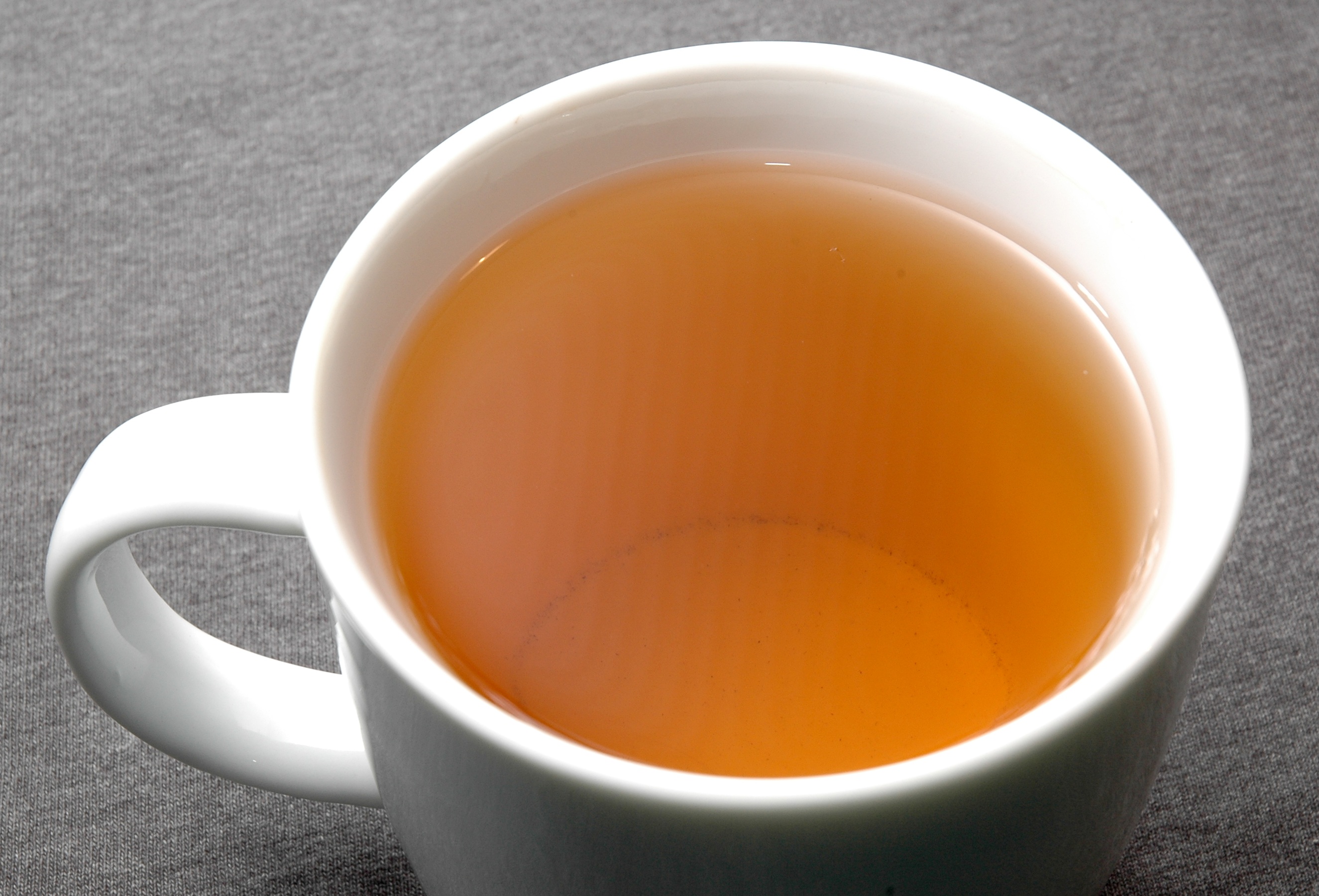
#3 Tea - There's nothing like an evening cup of tea. Not only can it help curb your appetite, it can be soothing and can help you relax. Who doesn't want that at night? Try a chamomile tea, or one of your favorites. Just remember to stay away from anything with a high amount of caffeine that'll keep you up all night.
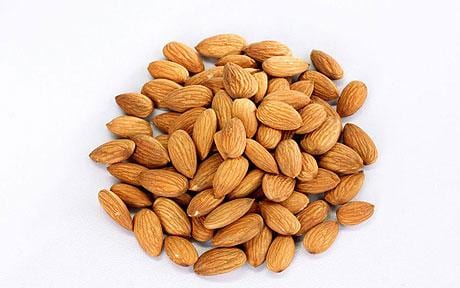
#4 Nuts - If you're not allergic, nuts are always a good choice for a midnight snack. Feel free to grab a hand full of nuts with a glass of water and it's sure enough to take off the hunger edge and not heavy enough to keep you up or make you feel uncomfortable. This food full of healthy fats is not only a good midnight snack, but a snack that's great anytime in moderation!
#5 Banana Ice Cream - If you're on a fitness journey, it's important to keep a few bananas around the house. Especially frozen. Not only are frozen bananas great to throw in for your smoothie, they're great to make ice cream with. Grab those frozen bananas, blend them up until they're creamy and there you have it... Banana Ice Cream. Definitely a fan favorite.
Skinny Up Your Soup With This Original, New Cookbook
SKINNY SOUPS 80 Flavor-Packed Recipes of Less Than 300 Calories
By Kathryn Bruton
“Totally delicious I could eat these soups forever.”
– Rachel Allen
Come winter, diets are the last thing on our minds. Warming bowls of comfort food is what everyone craves. Packed with a wide variety of substantial and nutritious soups, SKINNY SOUPS: 80 Flavor-Packed Recipes of Less Than 300 Calories (Kyle Books; January 2017; Paperback $19.95), the first book by food stylist and blogger Kathryn Bruton, offers creative and exciting ways to enjoy this most versatile of foods –with the added bonus of all the recipes having less than 300 calories!
SKINNY SOUPS will appeal to anyone, with or without dietary restrictions, who wants to be more health conscious but continue to eat delicious and satisfying meals. The book offers a variety of soups for everyone, from culinary novices to food experts, while many of the recipes cater for vegetarians and vegans, as well as those on gluten and dairy-free diets.
The book is filled to the brim with an exciting variety of soups fit for a main meal, a fantastically filling lunch options, start-the-day right breakfast bowls, and even delicious dessert options—a testament to how creative this wonderful dish can be. From simple recipes like Miso Roasted Butternut Squash, the restorative Hangover Soup, and tasty Turkey & Quinoa Soup with Peas to 15-Minute Mushroom Soup With a Kick and dessert soups such as Chilled Rhubarb, Orange and Chia Seed Soup, Kathryn minimizes the use of cream and substitutes fattening butter with nutritious olive, grapeseed, and nut oils, so that every soup in Skinny Soups is less than 300 calories per portion, but still jam-packed with flavor.
Whatever your ability in the kitchen, soup is a dish everyone can have a go at successfully. Every recipe is open to interpretation, ready for you to stamp with your own personality, if you so wish. So whether you use these recipes as guide to eat healthier, aid weight loss or simply enjoy some delicious bowls, the most important thing is that you enjoy doing it.
About the Author: Kathryn Bruton is a food stylist, recipe developer and blogger. Born in Ireland, she moved to Edinburgh to study fashion, but realized her real passion was food and switched to a diploma in cooking at Leith’s. She now lives in London. Visit her online at www.thelazybaker.co.uk
SKINNY SOUPS: 80 Flavor-Packed Recipes of Less Than 300 Calories
By Kathryn Bruton Photography by Laura Edwards
Kyle Books January 2017; Paperback; 978-1-909487-50-5; 160 Pages; 6 ½” x 9”; Full-Color Photographs Throughout; 80 Recipes; $19.95
Goodbye, Hurt & Pain:
7 Simple Steps to Health, Love and Success
By Dr. Deborah Sandella, PhD, RN
REGENERATING IMAGES IN MEMORY (RIM)
— A Cutting-Edge Approach to Understanding the Root of Your Emotions
“Every once in a while, you read a book that has a profound personal impact on you. This book will do that. It is written from the heart in a
down-to-earth way that will touch you intimately—and probably change your life.”
-Jack Canfield, Co-Creator of Chicken Soup for the Soul ® Series
Emotions and feelings are invisible and often ignored and, when not addressed, can have a toxic impact on your relationships and overall physical and mental health. It’s time to tackle our emotions, flush the negativity out of our system, and establish a self-understanding that will change the way we see the world, as well as how we interact and respond to people and situations.
In Goodbye, Hurt & Pain: 7 Simple Steps to Health, Love and Success [Conari Press], Dr. Deborah Sandella, PhD, RN uses cutting-edge neuroscience research and her revolutionary Regenerating Images in Memory (RIM) technique to show how blocked feelings can hold us back from getting what we want. Dr. Sandella teaches us to move destructive feelings such as fear, anger, hurt, resentment, and envy out of the body, which is not achieved through discussion but rather by understanding the unique inner connection of our left and right brains. Tapping into the right brain creativity, sensitivity and emotions through Dr. Sandella’s groundbreaking techniques helps identify the deep rooted inner feelings which feeds our left brain to deliver the message we truly desire.
“Once you know how to dial into your feelings, your native emotional intelligence begins to respond much like a self-cleaning oven, problem-solver, and success magnet,” says Dr. Sandella. “And results come quickly. You will find yourself resolving deep-rooted problems and manifesting your dreams at speeds as fast as Google drops search results.”
Through amazing real-life stories in Goodbye, Hurt & Pain, Dr. Sandella will expand your conscious thinking and unconscious beliefs to allow you to trust that saying goodbye to painful feelings and memories is easier than you’ve ever imagined. She teaches us that emotions are not good or bad but simply a radar of our inner emotional well being. “Feelings engage a process not a conclusion,” adds Dr. Sandella.
In this inspiring and motivating manual for managing and ramping up your emotional intelligence, you’ll discover:
- The secret to Dr. Sandella’s RIM technique, which is an inventive way to uproot emotional barriers and live your best life
- How letting go of old feelings and traumatic memories makes people feel and look younger, lighter, more energized, and less burdened
- Feelings are predictable and controllable—when you know how they work!
- Why it’s crucial to reduce overwhelming emotion into controllable form, and how to manage it effectively
- Seven simple and speedy tools for eliminating unnecessary suffering in your daily life
- How anyone can renew their emotional equilibrium whenever they need to and master their emotions in the blink of an eye
Dr. Deborah Sandella is an award-winning psychotherapist, university professor, and the originator of the groundbreaking RIM Method, which is a heavily-backed neuroscience tool for reducing stress and improving the quality of life. She has been called a “master healer,” and has been helping thousands of people find themselves over the past 40 years. Dr. Sandella has frequently shared the stage with Jack Canfield, originator of the Chicken Soup For the Soul series and, with him, she has co-authored Awakening Power, a guided meditation program and instruction booklet. She has been acknowledged with numerous professional awards, including Outstanding Clinical Specialist, Research Excellence, and an EVVY Best Personal Growth Book Award.
Learn more about Dr. Sandella at www.RIMinstitute.com and www.GoodbyeHurtandPain.com. Connect on @drdebsandella and Facebook.
Goodbye, Hurt & Pain: 7 Simple Steps to Health, Love and Success is currently available for pre-order on Amazon and will be available through all major booksellers on September 1, 2016.
Canada-wide competition seeks great new ideas to support healthy aging
Prizes total $75k in cash and in-kind services
A national ideathon competition launched by AGE-WELL and HACKING HEALTH will take place in five Canadian cities in 2017. The goal is to identify and invest in great new technologies and services to support healthy aging.
Prizes awarded at the AGE-WELL–HACKING HEALTH National Ideathon will total $75,000 in cash and in-kind services.
Local ideathons are being held in: Toronto (Feb. 3), Montreal (Mar. 3), Halifax (May 13) and Vancouver (date to follow). One winning project from each local event will be eligible for the final round at the AGE-WELL 2017 Annual Conference in Winnipeg on Oct. 17-19, 2017.
People interested in taking part can sign up here. Eligibility criteria and competition rules and regulations are posted on the competition main page.
An ideathon is a collaborative, workshop-like event where diverse stakeholders harness their collective knowledge and creativity to brainstorm innovative solutions to pressing challenges. Participants use user-centric design techniques and methodologies (such as ideation, journey mapping and prototyping), and the creation of an initial business case, to propose a novel solution.
"AGE-WELL and HACKING HEALTH share an interest in bringing people together to develop creative solutions to health-related challenges," says Dr. Alex Mihailidis, Scientific Director, AGE-WELL. "By partnering to host this competition, we will trigger more innovation and much-needed solutions to support the independence, health and quality of life of older people, and to support their caregivers."
Luc Sirois, Managing Director and Co-Founder of HACKING HEALTH, a global initiative, says the partnership and competition will help to bring together tech and medical communities and "catalyze the innovation spirit."
Generous sponsors of the national competition are: Bereskin & Parr, the Impact Centre, and Aging2.0 Toronto.
About AGE-WELL
AGE-WELL NCE Inc. (http://www.agewell-nce.ca/, @AGEWELL_NCE) is a pan-Canadian network of industry, non-profit organizations, government, care providers, end users, and academic partners working to drive innovation and create technologies and services that benefit older adults and caregivers. Its vision is to harness and build upon the potential of emerging and advanced technologies in areas such as artificial intelligence (AI), e-health, information communication technologies (ICTs), and mobile technologies to stimulate technological, social, and policy innovation. AGE-WELL was launched in 2015 through the federally funded Networks of Centres of Excellence program.
About HACKING HEALTH
HACKING HEALTH (http://hackinghealth.ca, @hackinghealthca) is a Canadian-based international non-for-profit organization. With over 40 cities across 5 continents, HACKING HEALTH's goal is to promote more innovation in healthcare through collaboration by putting healthcare professionals and patients at the centre of the innovation process, allowing participants to build realistic, human-centric solutions to front-line healthcare problems. HACKING HEALTH partners with renowned organizations and institutions such as AGE-WELL to develop a worldwide patient centered movement.
SOURCE AGE-WELL Network of Centres of Excellence (NCE)
The launch of Dexcom Canada will reshape how Canadians living with diabetes access and use continuous glucose monitoring
Dexcom Inc., the leader in Continuous Glucose Monitoring (CGM), has expanded with Canadian headquarters
Dexcom, Inc. (NASDAQ: DXCM) announced today that it is expanding its global presence with a new Canadian headquarters in Burnaby, British Columbia. The move aims to make it easier for more Canadians to get started with CGM.
The launch of Dexcom (Canada) Inc. means that Canadians living with diabetes can expect enhanced customer experience and support, and the ability to purchase CGM systems directly at Dexcom.com/Canada. This expansion reflects Dexcom's mission and commitment to make it easier for Canadians living with diabetes to experience the benefits of CGM for diabetes management. Unlike blood glucose testing which gives a number for a single point in time, CGM shows where glucose is, where it's going, and how fast it's getting there – so patients can take quick action to avoid dangerous glucose events or increase time spent in range.
"Dexcom is committed to transforming diabetes care and management by delivering best-in-class solutions and by responding to the needs of the community," explains Kevin Sayer, President and Chief Executive Officer of Dexcom. "We are excited to share our dedication to driving better outcomes and improved quality of life for people living with diabetes in Canada."
Dexcom's new Canadian operation coincides with the launch of the Dexcom G5 Mobile CGM system. It is the only CGM system in North America approved to replace painful fingerprick glucose testing for diabetes treatment decisions, making it a significant leap forward in diabetes management (fingerpricks are only needed every 12 hours to calibrate). The Dexcom G5 is also the first and only fully mobile CGM system that sends glucose data directly to a compatible smart device. Securely transmitted every five minutes, this glucose information allows for real-time diabetes management.
The Dexcom G5 Mobile CGM System is approved to use in patients as young as 2 years of age, without the need for confirmatory fingerpricks. And with the ability to share data, parents can remotely monitor their child's glucose information and receive alerts – for peace of mind while their child is beyond their supervision.
"When I'm running long distances, hypos are a constant danger," explains endurance athlete Sébastien Sasseville, who lives with Type 1 diabetes. "With the Dexcom G5, I get glucose readings every five minutes so I know right where I stand, and where I'm headed. I can act immediately to bring my levels into the right zone. And all of this data is right on my phone, so I don't have to carry around my receiver which was a hassle. But the best part is I don't have to stop mid-run and do annoying, painful fingerpricks – I can really just focus on the finish line." With the help of his Dexcom CGM system, Sasseville has completed six Ironman Triathlons, run the Sahara Race, and, most recently, run 7,200 kilometres across Canada, the equivalent of 170 marathons.
The Dexcom G5 Mobile CGM System will be available within the first quarter of 2017. And marking Dexcom's commitment to helping Canadians access this technology, the company will be offering monthly pricing options for the first time globally. Canadians interested in the Dexcom G5 Mobile CGM system and staying up to date on its launch are encouraged to visit Dexcom.com/Canada.
About Diabetes and Continuous Glucose Monitoring
With diabetes, the body cannot produce or use the hormone insulin effectively, causing a buildup of glucose, or sugar, in the blood. People with diabetes who take insulin must monitor their blood glucose levels frequently. Uncontrolled glucose can cause health complications and even death.i,ii
Continuous glucose monitoring (CGM) is considered the most significant breakthrough in diabetes management in the past 40 years.iii CGM is important because, in addition to providing the glucose level, it provides the direction and rate of glucose change with the push of a button and alerts users when glucose is too low or too high with built-in and customizable alarms. A recent study showed that after one year, patients with type 1 diabetes who used CGM alone had significant A1C reductions regardless of the type of insulin delivery method used, including insulin pumps.iv
About Dexcom, Inc.
Dexcom, Inc., headquartered in San Diego, CA, and has operations in Canada, is dedicated to helping people better manage their diabetes by developing and marketing continuous glucose monitoring (CGM) products and tools for adult and pediatric patients. With exceptional performance, patient comfort and lifestyle flexibility at the heart of its technology, users have consistently ranked Dexcom highest in customer satisfaction and loyalty.v For more information on the Dexcom CGM, visit www.dexcom.com.
References
i Hyperglycemia (High blood glucose). American Diabetes Association Web site. http://www.diabetes.org/living-with-diabetes/treatment-and-care/blood-glucose-control/hyperglycemia.html. Updated August 5, 2013. Accessed December 3, 2013.
ii Hypoglycemia (Low blood glucose). American Diabetes Association Web site. http://www.diabetes.org/living-with-diabetes/treatment-and-care/blood-glucose-control/hypoglycemia-low-blood.html. Updated July 16, 2013. Accessed December 3, 2013.
iii Clarke SF and Foster JR. A history of blood glucose meters and their role in self-monitoring of diabetes mellitus. Br J Biomed Sci. 2012;(3)2:83-93.
iv J. Soupal, J. Skrha Prazny, M. Flekac, L. Petruzelkova, J. Skrha, et al. Comparison of different treatment modalities for Type 1 diabetes including Sensor-Augmented Insulin Regimens (SAIR), in 52 weeks of follow ups: A COMISAIR Study. Diabetes Technology and Therapeutics. Vol 18, No. 9, Sept. 2016.
v dQ&A research, 2009-2016
Want to burn belly fat, build testosterone and get lean — by eating chili? You can even use fatty ground beef. [Recipe below.]
Men over 40 with higher testosterone levels have more energy, more strength and less belly fat, according to Clark Bartram, 53, Performance & Nutrition Industry Expert for Six Pack Abs, and Lead Advisor to the International Sports Sciences Association. When men’s testosterone levels are low, they face muscle loss, low energy and loss of sex drive. Additionally, their body stores most of the food they eat as belly fat.
Clark Bartram cooks testosterone boosting, belly fat burning chili.
When a man turns 30, his testosterone levels can decrease by 1-2% a year. By the time he reaches his 40s and 50s, his testosterone production can be down to half of what it once was, according to Bartram.
“Giving you half the testosterone production and double the belly fat – that’s not good,” he says. “That’s why it’s so important for us older men to start boosting our natural testosterone immediately.”
Rather than get testosterone treatments or “legal steroids” (with frequent side effects) from a physician, Bartram says, “Let food be your medicine.”
The fats in red meat as well as salmon and tuna boost testosterone, he said. Other such foods are: almonds, garlic, eggs, cabbage, spinach, asparagus, avocados, bananas, watermelon, citrus fruit, grapes, and honey.
For chili, adding white button mushrooms are a key ingredient to blocking estrogen, the female version of testosterone. Estrogen can cause a man to bloat, develop breast tissue and store more fat around the waist. Rising estrogen levels also cause your belly fat to start producing a testosterone killing chemical that creates even more estrogen.
At TestMaxMeals.com, Bartram offers more testosterone boosting food tips, 3 so-called “healthy” foods that can dramatically decrease testosterone levels, and 3 “cheat” foods that boost testosterone. He also explains how to quickly prepare and cook an entire week’s worth of your favorite testosterone boosting foods in less than an hour and at a low cost.
Clark Bartram’s Testosterone-Boosting Chili Recipe
2 lbs. ground beef (15% fat) 1 can kidney beans
1 cup white button mushrooms 1 can black beans
1/2 cup chopped onions 1 can organic chopped tomatoes
2 tbs. chili powder pinch of salt
jar organic tomato puree garlic to taste
1.) Sauté ground beef until it is brown.
2.) Place meat into big pot and add all other ingredients.
3.) Cook on medium heat, stirring occasionally, for 30-45 minutes.
7 steps to better posture to create a healthy workplace

Towards the end of “It’s a Wonderful Life!” Jimmy Stewart’s George Bailey inferred a painstaking situation with the excitement of a college graduate. However, nothing stimulates as the taxing hours at work. If the back hurts? We tend to let out a screen rant from the epiglottis. Same tactic comes in handy while tackling jittery legs as well. What is the solution to release stress I used to wonder since forever? Call it a magical spell or random thoughts in the crooked mind, the following 7 postures occurred to me outa nowhere. For lovers of mystery, they are the archetypes to replicate Bedford Falls at Office. More or less.
7 sitting posture to replicate Bedford Falls at Office
Posture #1. At Par with the Eye-Line of the Computer
There. Our focal point on the monitor to which we stare all the time. Limitations are endless since dimensions lie within the top-half and the bottom-half of the screen. Once you figure that out, all you need to do is adjust the recliner for better legibility. This is an ideal posture for techies especially or the slouches who prefer working all day along on a computer.
Posture #2. At an arm-stretch from the work desk
Keeping a bare-minimum distance between your body and the desk is easily doable if you have an armrest on the chair. And, working involves lots of stretching and leaning forward one time too many. Which means, this is ideal for those with crutches on either side. Others? Try out, Posture #3.
Posture #3. The Un-Jog Posture.
The toes and the brain have certain inklings as perceived in Biology. Whereas, at Office, the toes on the ground and uncrossed legs awaken brain receptors. An expertise in Biology would brag about blood circulation in the brain and such. For the Un-Jog posture, though, the immobility is the selling factor.
Posture #4. Laid-back posture with the help of lumbar support
A lumbar support is anything but a pillow-equivalent that slants into your chair and facilitates the natural curving. Pick a good lumbar support for no one needs a curving that proves to be counterproductive. Meaning, this is ideal for slouches whose lumbar is as strong as an elephant.
Posture #5. Upright Posture: Hips loosened, head steady, legs apart.
The edge of the seat is what’s being called a sweet-spot. For easy explanation, it is the verge or the far end of the seating. Arms on either side. Loosened hips. And, the legs apart would lead to a steady head. There is something called “Peripheral vision.” For that, one must sit in a way he/she is paying attention.
Posture #6. Boredom-Posture.
Boredom posture isn’t as easy as the title has it. The routine standing posture to shackle boredom requires workstation cubicle with a solid plateau. It works evenly no matter you use a computer at work. Or, anything likewise.
Posture #7. Anything that won’t leave you posted.
Cannot overrule the importance of deep breaths at work. Depending on the quality of the furniture, one might as well stop contemplating wily ideas to breathe. For the furniture, should compensate lumbar support and lurch forward with the same utmost ease of performing it. I mentioned this mostly because once you figure out a sweet-spot it is advisable to stay there forever as possible.
Statutory Warning: Tweaking the seat height to figure out a “couch-heaven” would eventually lead you into a strangle.
The Importance of Stranglehold and Wrestling
In wrestling, wrestlers pull off strangleholds when the bout boils down to its denouement. Why do they do that? To win the bout by way of preemptive measures of course. Apparently, Merriam-Webster has it - “It is a position of complete control that prevents something from developing.”
Okay. What sport teaches you is to master the uncontrollable stuff with a strong base, self-confidence, maneuvering of arms and legs in ways that leads to winning. Hope you have figured a way or two to come up with your own stranglehold. Thank You. Welcome Comments. Please don’t strangle me with gasp-induced questions, for I have a wonderful life ahead after this blog too.
Author- bio: Levin George is a Search Engine Optimizer at OfficeRock.com. He actively pursues interests related to latest internet marketing trends. He spends his leisure time reading, meditating and enjoying the joys of technology.