Doctors should know what supplements patients take to prevent interactions with medications
Botanical supplements are used by people around the world to treat a wide range of physical and mental ailments. Some of these botanical supplements have high levels of antioxidants, which may have some positive health effects for certain conditions. However, a new study from the University of Missouri in partnership with scientists in Africa has uncovered evidence that these supplements and their antioxidants may reduce the effectiveness of prescription medications. The researchers examined the effects of a widely used African botanical supplement, called Sutherlandia, and found that it may disrupt the effectiveness of a common anti-tuberculosis drug. This could lead to the development of active tuberculosis and perhaps drug resistant forms of the pathogen in some patients.
For the study, William Folk, a professor of biochemistry in the University of Missouri School of Medicine and College of Agriculture, Food and Natural Resources, and his colleagues monitored South African patients who were taking either Sutherlandia or a placebo, along with the world-standard anti-tuberculosis drug, isoniazid. Sutherlandia is a supplement commonly taken in Africa to fight symptoms of infection and some chronic diseases, such as diabetes. The researchers observed that several patients taking the Southerlandia supplement developed active tuberculosis despite taking Isoniazid.
“We believe that the antioxidants in Southerlandia can directly disrupt how Isoniazid functions within the body to prevent tuberculosis,” Folk said. “Isoniazid is very reliable in preventing the active form of this potentially deadly microbe, which is present in nearly one-third of all humans, but if individuals concurrently take a botanical supplement, they could undo the good that the scientifically proven drug is accomplishing. More than one-third of the world’s population is susceptible to active tuberculosis, so it is unfortunate that Sutherlandia, which traditionally is taken to prevent or treat infections, can actually cause them to develop the disease, and perhaps also cause the microbe to become a drug-resistant ‘super bug.’”
Folk says this finding could apply to many different botanical supplements and many different medications, including cancer-fighting drugs. He says it is important for future research to examine potential interactions between drugs and antioxidant-laden supplements.
“With so many people around the world turning to botanical supplements to help with a wide range of health issues, it is vital that we explore how these supplements interact with established medical drugs,” Folk said. “Many drugs use pathways that could be disrupted by antioxidants, so we need for physicians to better advise their patients. Many physicians do not know everything that their patients take, so it is important for people to inform their physicians, and for physicians to ask, so they can better advise their patients what is best for their health.”
The study, “Does Concurrent Use of Some Botanicals Interfere with Treatment of Tuberculosis?” was published in Neuromolecular Medicine DOI 10.1007/s12017-016-8402-1. Coauthors include Aaron smith, Hailong Song, Dennis Chuang, Jianlin Cheng, Sezong Gu and Grace Sun. This study was funded by grant P50AT006273 from the National Center for Complementary and Integrative Health (NCCIH) and the Office of Dietary Supplements (ODS) and the University of Missouri. The contents are solely the responsibility of the authors and do not necessarily reflect the views of the sponsors.
The Real-Time Nutritional Biosensor, One X, Nears $50K Funding Goal on Indiegogo to Give Individuals Control Over Diet and Lifestyle
One X measures antioxidant levels directly from one’s palm and helps individuals make healthier choices by tracking habits that impact their body
Mountain View, CA - One X’s Indiegogo campaign to raise funds for their nutritional biosensor has raised over $44K, putting them just $6K shy of their $50K funding goal. One X is designed with the most advanced materials and sensors to provide the most accurate insight on how habits, such as nutrition, sleep, exercise, stress, alcohol, pollution and sun exposure, impact the body and its health.
One X is the first real-time nutritional biosensor that measures skin carotenoids from fruit and vegetable consumption and the effects of eating well. By measuring skin carotenoids, One X’s feedback reflects what the body effectively absorbs and actually stores. One X has an elegant, functional design with a soft touch and ergonomic shape, and it’s the first non-invasive, consumer antioxidant tracking system.
“We believe in creating an accessible way for everyone to uncover how their lifestyle affects their daily wellness, and we want to provide them with ways to improve their health,” said One X CEO Anthony Weil. “One X is perfect for families, couples and anyone looking to improve their day-to-day health. We used the perfect blend of science and technology to develop something that’s simple, portable and affordable for most.”
Users activate the device through the finger-touch sensor to automatically pair their measurement with the One X ID. By using fingerprint recognition, it allows the tracking of up to five different individuals on one device. Users will then hold One X in the palm of their hand for 20 seconds and will start to see the lateral LED start displaying the ongoing measurement. One X automatically syncs with the mobile app so that users can easily check their previous antioxidant levels and quickly track their progress. Individuals can also set challenges with their friends and measure their family at home.
One X is available on Indiegogo and will give individuals control over their diet and lifestyle in ways that other diets, apps and tracking devices fall short. Early adopters can pre-order one for $109, which is over 50% less than the market retail price. For more information on all of One X’s features, visit http://bit.ly/OneXIndie.
ABOUT ONE X
Based out of Mountain View, California, One X was created with the vision to empower everyone to take back control of their health. One X’s non-invasive design was created to be simple and affordable so that everyone can measure how their lifestyle impacts their body. For more information, visit www.one-x.co.
Go Bananas Over Bananas
It’s no surprise that bananas are a fruit favorite around the world, packed with nutrients and antioxidants, rich in fiber and low in fat, they are little powerhouses of good nutrition. In our never-ending quest to stay healthy without sacrificing our taste buds, bananas are a clear go-to and they are quite versatile. Dr. Christopher Calapai D.O. a highly accredited New York City anti-aging and stem cell specialist, and long-time nutrition advisor to the New York Rangers hockey team explains, “Bananas are packed with health benefits throughout every stage of their lives, from green to fully ripe. As the banana ripens some of these health benefits change, making it a rare fruit that is enjoyable in many forms.”
Typically when we think of bananas we think of a lunch-box addition or a quick on-the-go snack, more so than a cooking staple? Here are 5 healthy ways to incorporate bananas into your meals and the health benefits of each.
When they’re green...
Fill Up on Mashed Plantains.
Green bananas are often referred to as plantains, they are not sweet like ripe bananas and they contain most of their fiber in the form of resistant starch. “Plantains are rich in starches that regulate appetite,” says Dr. Calapai. “Resistant starch may even slow stomach emptying, making you feel full longer and thus reducing the urge to eat sooner after a meal.”
Bonus! Mashed plantains could not be easier to whip up. Simply peel and cut the green plantains into chunks and boil in a full pot of water for 20-30 minutes or until tender, then mash with a fork until they achieve the consistency of mashed potatoes. Sautee garlic and onions in olive oil and add to the plantains along with salt and pepper and any other seasonings you enjoy. You can serve the dish with fish, chicken or meat, sprinkle with bacon bits or eat plain.
Satisfy your craving for something salty, crunchy with plantain chips.
“All bananas, green, ripe or in between are very low in calories, about 105 per fruit” explains Calapai “So you can get away with frying them in your choice of light, heart-healthy oil.” Plantain chips are a great snack or side dish and are also incredibly simple to whip up. Peel the plantain completely and cut off about half an inch on both ends, then thinly slice the rest of the plantain into chips. When the oil is piping hot fry your chips until golden and salt to taste. Voila!
When they’re semi-ripe...
Eat "Maduros" for younger, healthy skin.
"Maduro" (pronounced mah-doo-row) means "ripe" in Spanish and it’s what Latin Americans call this tasty plantain dish. You can eat plantains this way once they are very yellow and spotted, or have turned fully black. Simply peel, cut into thick diagonal slices and deep fry until golden brown in heart-healthy oil. Bonus! “Bananas at any stage of ripeness are very rich in Vitamin C, an antioxidant also known as called ascorbic acid,” says board certified dermatologist Dr. Kally Papantoniou. “Vitamin C assists in collagen production, which keeps your skin healthy and also blocks free-radical damage which is believed to potentially contribute to the aging process.”
When they’re ripe...
Manage blood sugar with a banana smoothie.
This one takes five minutes and a blender. Cut up two nice yellow, ready to eat bananas into chunks, add milk or yogurt of your preferred variety, some ice, and blend until thick! “Bananas have shown by studies to possibly regulate blood sugar as they are very moderate in the glycemic index, meaning they don’t cause dangerous spikes to your blood sugar levels,” says Dr. Calapai “Having a good banana smoothie for breakfast or as an afternoon snack, as opposed to high-sugar options make sure you are balanced throughout the day.”
Amp up the flavor!
If simply eating a banana starts to get boring amp up the flavor with a healthy pairing. Cut up your banana into chunks and add a healthy spoonful of peanut butter, sprinkle with some almonds or cinnamon, or mix with some dark chocolate chunks!
Bananas are a great, affordable way to add some goodness into your meal plan. Enjoy!
Bureau releases report questioning restrictions on health care advertising - International best practices shared with regulators
Restrictions on advertising in health care industries in Canada may be having unintended consequences, including higher prices, lower quality of service and reduced innovation.
In a report released today, the Bureau finds that most health care industry regulators tend to restrict advertising in some form, but there is insufficient evidence to assess whether these restrictions are achieving their policy objectives.
Regulators may restrict advertising to address legitimate concerns such as protecting consumer safety. However they may also restrict advertising for other reasons.
For example, when it comes to advertising low prices, regulators may be concerned that consumers associate low price with poor quality and this could damage the image of the profession. Regulators may respond by banning price advertising altogether, which makes it difficult for consumers to make informed purchasing decisions . This overly broad response could have the unintended consequence of driving prices up, reducing competition and stifling innovation.
The Bureau's report reviews economic literature related to the effects of advertising restrictions. The literature shows that when restrictions are lowered or removed, consumers do not experience significant quality reductions, and may even benefit from lower prices.
The report calls on governments and self-regulatory bodies to begin collecting and compiling data on the outcomes of their policies, such as changes in prices and consumer preferences, and to move toward evidence-based decision-making.
In support of this recommendation, the Bureau's latest issue of the Competition Advocate includes internationally-accepted best practices for regulators to follow when developing effective regulation.
Quick Facts
The four key principles for effective regulation that are outlined in the CompetitionAdvocate are:
Regulate only when really necessary,
Use the best available evidence to inform decisions,
Strike the right balance between policy objectives and minimal intrusion, and
Review regulations regularly.
Greater competition leads to innovation that can result in lower prices and increased choice for consumers.
Quote
"Competition is good for business and for consumers. The Bureau is calling on governments and other regulators to collect evidence on the impacts of their policies and to move toward more evidence-based regulation. Better regulation means more competition for the benefit of all Canadians."
The Competition Bureau, as an independent law enforcement agency, ensures that Canadian businesses and consumers prosper in a competitive and innovative marketplace.
SOURCE Competition Bureau
I may have always been an athlete. But since moving to Toronto to be a personal trainer and fitness expert I’ve had many ups and downs in my life on my personal fitness journey. Big set backs continuously seemed to occur. They always needed up preventing me from reaching my fitness goals each time. However never did I get down on myself. I always picked myself up each and every time and kept going. I did not complain and I did not blame anyone or anything for my circumstances.
First I had a full and complete ACL tear. When this happened at the same time I also ended up rupturing my meniscus while fracturing the tibia at its plateau. It took me over a month post op to even be able to do a full cycle on a pedal bike. I had to have a second surgery less than a year later to remove scar tissue and shots of synvisc (a synthetic synovial fluid) as well. To this day I still don’t have full range of motion. Did this stop me? No. Does it prevent me from doing anything? No. Do I use it as an excuse? No.
Then the following spring I was on my way to coach my track team and a cab driver cut me off as I was riding my motorcycle through an intersection. I t-boned him and flew over the cab. Hit my knee that I had the ACL repair on pretty bad, got whip lash, hurt my back, got road rash and also had my hand caught in the street car track as I was sliding. Did this stop me? No. Does it prevent me from doing anything? No. Do I use it as an excuse? No.
Finally, as I was still going through physio for my motorcycle accident I had some crazy symptoms.The biggest and most obvious one was that I was exhausted all day long and had no energy (very unusual for me). So I went to the doctor and they did some scans and said you have to go to emergency now! I still had no idea why. They admitted me and performed an emergency surgery to remove a mass of cells in my stomach. This mass was very rare. And no it wasn’t cancer. From September until November I had to have blood work every week to monitor my body and make sure it didn’t come back. And it came back. Again very rare. Based on where it was my only option was chemotherapy. I had 7 rounds before I got to ring the bell that I completed my chemo! Wahoo! The whole time I kept on training my clients and I even began my very first prep while still undergoing chemo. The chemo made me very puffy and swollen but I didn’t get down on myself. I honestly didn’t even tell many people. Did this stop me? No. Does it prevent me from doing anything? No. Do I use it as an excuse? No.
I hope that you realize that sometimes the journey can be hard and tiring. There may be obstacles in your way but persevere, follow the plan, find a support system and be honest! Good things will happen and your consistency will pay off! Don’t give up and don’t let anyone or any circumstance bring you down!
A Third of People Track Their Health or Fitness. Who Are They and Why Are They Doing it?
A recentinternationalGfK survey, conductedonlinein 16 countries,shows one in threepeople(33 percent)currentlymonitor or track their health or fitness via an online or mobile application, or via a fitness band, clip, or smartwatch.
China is well in the lead for monitoring health and fitness in this way, with 45 percent of the online population currently doing this. Brazil and the USA come next, with 29 percent each, closely followed by Germany (28 percent) and France (26 percent).
In most countries studied, men are ahead of women in this activity, but five countries stand out as having a higher percentage of their female than their male online population currently tracking their health and fitness in this way: China (48 percent of women, compared to 43 percent of the men), Russia (21 percent of women and 17 percent of men), France (27 percent and 25 percent), Australia (20 percent and 18 percent), and Canada (20 percent and 19 percent).
Looking at age, it is those aged 30-39 and 20-29 years old that are most keen on tracking their health and fitness - standing at 41 percent and 39 percent of each age group respectively. However, teenagers (15-19 year olds) and the 20-29 year olds both show almost a quarter of their numbers saying that, while they do not currently monitor their health or fitness in this way, they have done so in the past. This suggests potential for bringing this significant number of 'past users' back into the market, given the right offers or messages by retailers or manufacturers.
Reasons for tracking health or fitness
Over half (55 percent) of those who are currently tracking their health and fitness said one of the reasons they do it is "to maintain or improve my physical condition or fitness" - making this the most popular reason internationally.
The next most widespread reason is motivating themselves to exercise, selected by half (50 percent) of those currently tracking.
Several of the reasons given by those currently tracking health or fitness are a reminder that users of these trackers value them for benefits that are not exclusive to the world of sports. Over a third give "to improve my energy levels" or "to motivate myself to eat and drink healthily" as a reason for tracking their health or fitness, while 29 percent say "to improve sleep" and a quarter say "to be more productive". In addition, 22 percent say "because it's fun". Only 14 percent of those currently tracking their health or fitness say they are doing it "to train for an event."
Why are people tracking or monitoring their health or fitness?
To maintain or improve my physical
condition/fitness 55%
To motivate myself to exercise 50%
To improve my energy level 35%
To motivate myself to eat and drink
healthily 34%
To improve sleep 29%
Because it's part of my daily routine 29%
To lose weight 29%
To be more productive 24%
Because it's fun 22%
To monitor or track a specific health
condition 17%
To train for an event (race, sport, etc.) 14%
To compete with other people 8%
For some other reason 2%
Not sure 1%
Source: GfK survey of 4,900+ internet users (ages 15+) in 16 countries who currently track their health or fitness; multiple answers allowed. Fieldwork was conducted in the summer of 2016.
Jan Wassmann, global lead for wearables research at GfK, comments, "These findings demonstrate the attraction that health and fitness monitoring has within much wider groups than just the obvious young sports players. Manufacturers and retailers can use these insights - combined with our point-of-sales data on purchases of wearable devices - to understand who are their real-life users and why, and tailor their products to deepen that appeal."
GfK conducted the online survey with over 20,000 consumers aged 15 or older across 16 countries. Fieldwork was completed in summer 2016. Data are weighted to reflect the demographic composition of the online population aged 15+ in each market. Countries covered are Argentina, Australia, Belgium, Brazil, Canada, China, France, Germany, Italy, Mexico, Netherlands, Russia, South Korea, Spain, UK and USA.
Endangered But Not Extinct: A Doctor That TRULY Listens
What if we were to compare a typical visit to the doctor with a visit to your favorite local business: your hairstylist, banker, or real estate agent? If you regularly see these local professionals who have become a fixture in your schedule, then you have trust in their professional wisdom. I bet they spend some “quality” time with you -- making eye contact, perhaps a bit of small-talk, and even sharing some family updates. Usually, you would not feel rushed, and you may even enjoy the encounter.
In the world of healthcare, which requires intimate professionalism, you would, at least, expect that the same basic premise of the business/client relationship would apply. For example, you would not expect your accountant to see you (as his 65th client of the day) and still be able to address all of your needs in 15 minutes. Likewise, you would also not understand if your mechanic scheduled you to drop your car off at 2:00, but still required you to wait 2 hours before spending only 7 minutes with the car -- meaning yours most likely would not be adequately repaired. As well, you might move on to a new hairstylist if you had to wait more than 5 weeks just to have a basic haircut. And, when you did finally make it to the chair, I would expect that you would walk out if there were a computer that the stylist insisted typing on, with full attention to it, instead of you. The sad reality of our insane healthcare system is that we have come to expect and accept all of these behaviors in our appointment experiences with our healthcare providers.
“Wall Street”-style medicine ran by health insurance companies and executive CEOs without medical training has gradually taken over the reins of clinic management in all specialties. The quality of a patient encounter is currently based on factors that have little to do with the relationship between a doctor and a patient. Instead, measurable “metrics” are stressed which press the efficiency of the provider to get from room to room. Incentives are provided with increased pay to those providers who are able to force-fit more patients into their schedule. The administrative work generated from each visit from inefficient computer-based electronic health records keep the provider’s head down and attention distracted, so a personal conversation with real connection is virtually non-existent. The doctors who agree to work in this environment are not able to bring their compassionate selves to the visit with their patients due to the pressures of being a human calculator at warp speed to fulfill the demands from management.
So, how do you find a good doctor in the fast-food-style industry that healthcare has become? There are indeed some standing supporters of authentic, empathic doctors that doggedly retain the art of medicine in their practice. They are no further than your local towns, but you do have to look for them. Just as health food stores are not as populated as fast food restaurants, it might be a bit of a worthwhile hike to find a doctor who strives to make an empathic bond with each patient. In order to practice the type of medicine that is not dictated by insurance companies, some may have creative fee structures. But, those who truly care about the health of all most likely will have charges that agree to your budget, and often have ways you can be reimbursed by your insurance company if they are not under your coverage umbrella.
Why should we seek a doctor that “listens” to us? The truthful answer is that a problem is uncovered and often solved in a setting of a trusting relationship. The bond of empathy forms a connection that “plugs” the physician and the patient into a higher level of communal problem solving, together. Science has proven that compassion helps to restore a sense of peace and a resting state, as well. This “dose of ease” is often what we all seek in solving problems or curing any disease state -- from ulcers to high blood pressure, and much more. When there is a release of strain, body systems are able to shut off the frantic “fight or flight” modes that exhaust our body’s systems. In the sacred relationship between a patient and physician, the gears of natural healing and hope can begin to engage. Fear can be put to rest for peace of mind, and the collaborative, open space for discussion can mean that understanding and clarification can take place. This is not too much to ask for in your next visit with your healthcare provider.
In my book, “Discovering Your Own Doctor Within,” I include real patient stories that delve deep into what is possible when there is a commitment to listening with an open heart. No metrics, no computers, no rush… The ability to hone laser-like attention into deeper sources of symptoms arises naturally and easily. Often, when a person is truly heard, he/she begins to share clues that surprise even them. This saves money on unneeded procedures. More importantly, it also gives us hope that the human side of medicine is still maybe only endangered, but not extinct.
------
About the author
Dr. Amy E. Coleman is the CEO and founder of Wellsmart, a company that cultivates technologies and healthcare strategies that strengthen the patient/doctor relationship. She served as a United States Air Force flight surgeon, and was appointed the youngest and first female Commander of the U.S. Air Force Special Operations Clinic. There, she helped guide global medical missions and build creative clinic systems, including those employing complementary care methods still employed today throughout the Air Force.
National organization wants Canada to be the Silicon Valley of natural products
Natural Products Canada (NPC), the national centre of excellence for the commercialization of natural products, has completed its initial round of hiring, setting the stage for Canadians to benefit from a thriving natural products sector.
"We have formed a national team to help Canada benefit from the growing global demand for natural products," says Shelley King, CEO of NPC. "We're ready to help companies and researchers access the resources they need to bring validated ideas to market faster, cheaper, and more efficiently."
The initial hires will focus on NPC's mandate to align and optimize Canada's assets – natural resources, technologies, platforms, expertise, and world-class research – into a vibrant, pan-Canadian natural products ecosystem that can save time and effort for natural product companies.
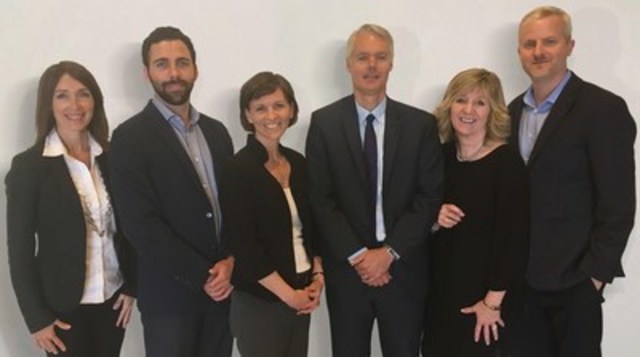
Along with King, the NPC team is comprised of Sue Coueslan, VP Communications and Stakeholder Relations; and Karen Wight, VP Investment and Finance. In addition, NPC has hired its first three regional directors: David Gauthier of NPC-West will work closely with the regional node, Ag-WestBio; Paul-Thomas Lacroix of NPC-Quebec will work closely with Quebec's regional node, the Institute of Nutrition and Functional Foods, Université Laval; and Stephen Ball of NPC-Atlantic will work closely with the Atlantic node, the PEI BioAlliance. Other regional directors will be recruited in the near future.
NPC was announced February 12, 2016 by the Honourable Navdeep Bains, Minister of Innovation, Science and Economic Development. Since then, King and the Board of Directors have been engaged in strategic planning and recruitment.
"There is real potential for Canada to be a global leader in the commercialization of natural products and technologies," says Board Chair, Robert Orr, a 35-year veteran of the food, nutritional ingredient, and private equity investment business. "We have spent the last few months working with stakeholders across the country to shape the plan that will turn that potential into reality."
Partnering with a wide range of private and public investors, experts, and organizations, NPC will create a unique commercialization system to help companies and researchers address the many factors involved in bringing high value products to the marketplace.
Key initiatives for the first year of operations include launching the NPC investment program and developing a database of the technologies, platforms, service providers, investors, and expertise essential to the successful commercialization of natural products.
Natural Products Canada (NPC) is a not-for-profit organization with a vision to make Canada flourish as the Silicon Valley of natural products. It aims to align, expand, and optimize the pan-Canadian natural products ecosystem to accelerate the development of products and technology platforms that bring real value to real customers. NPC was established in 2015, and is funded by a range of public and private investors, including the Government of Canada's Centre of Excellence in Commercialization and Research (CECR) program administered by the Networks of Centres of Excellence.
NPC
Image with caption: "Newly formed Natural Products Canada will align and optimize existing assets, expertise, and investments into a national ecosystem to accelerate the commercialization of natural products and technology platforms. From left to right: Sue Coueslan, Paul-Thomas Lacroix, Karen Wight, David Gauthier, Shelley King (CEO), and Stephen Ball. (CNW Group/Natural Products Canada)". Image available at: http://photos.newswire.ca/images/download/20160926_C4884_PHOTO_EN_780944.jpg
SOURCE Natural Products Canada
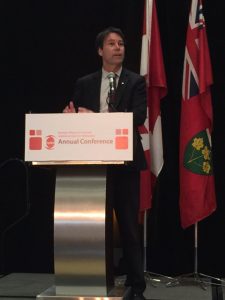
Dr. Eric Hoskins, Minister of Health and Long-Term Care speaks at the NPAO Annual Conference. (CNW Group/Nurse Practitioners' Association of Ontario)
Minister Hoskins affirms his $85 Million Funding Commitment to Primary Care Teams over the Next Three Years
TORONTO, Sept. 23, 2016 /CNW/ - Nearly 4 million Ontarians are now being served by inter-professional health care teams such as Community Health Centres, Nurse Practitioner Led-Clinics, Aboriginal Health Access Centres and Family Health Teams. However today, nearly 1 million people in Ontario are still unable to find a nurse practitioner or family physician for regular health care.
Minister Hoskins reaffirmed the government's commitment of $85 million in team-based primary care at Nurse Practitioners' Association of Ontario's 43rd Annual Conference held in Toronto today. This commitment is retroactive to April 1 of this year, and includes increases in benefits and wages. The Minister stated that the money is expected to flow within weeks. It is among his key results highlighted in his Mandate letter received today from Premier Wynne. Implementing this commitment will be vital to the Minister's ability to fulfill his renewed mandate to ensure that everyone in Ontario who wants a primary care provider is able to access one.
"On behalf of the people we serve, this investment is critical," says Theresa Agnew, NPAO Executive Director. "It means patients won't end up in an emergency department unnecessarily or a walk-in-clinic. Primary care is the front door of the health care system. This will stop it from becoming a revolving door by ensuring continuity of care, recruitment and retention of staff. Ontarians will receive primary care in their own communities by the right health care provider at the right time close to home. It puts patients first."
"This new funding demonstrates government's commitment to strengthen primary care as the foundation of Ontario's health system," says Angie Heydon, CEO, Association of Family Health Teams of Ontario. "This funding is an urgently-needed first step toward putting interprofessional primary care teams onto more equal footing, to attract and keep the skilled professionals needed to deliver better care, better health and better value for Ontarians."
"We are very heartened that the Government is stepping in the right direction to correct a serious imbalance in improving access to interprofessional primary health care. This funding is crucial to enable Ontario to do a better job ensuring people who face barriers to health can access the services they need from interprofessional teams." says Adrianna Tetley, CEO of the Association of Ontario Health Centres.
NPAO is the professional voice for 3,000 Nurse Practitioners in Ontario. Our mission is to achieve full integration of Nurse Practitioners to ensure accessible, high quality health care for all.
AFHTO provides leadership to promote high-quality, comprehensive, well-integrated interprofessional primary care for the benefit of all Ontarians. It is the advocate, resource and network for 181 Family Health Teams and 5 Nurse Practitioner-Led Clinics, and welcomes all who provide interprofessional comprehensive primary care in Ontario.
AOHC is Ontario's voice for community-governed primary health care. It represents 108 community-governed primary health care organizations, including Ontario's Community Health Centres, Aboriginal Health Access Centres, Community Family Health Teams and Nurse Practitioner-Led Clinics.
TRAIN IT RIGHT NEWSLETTER
Sign Up and get a free 7 day Train it Right HIIT Program!