Ontario Budget Fails to Save Eye Care for Patients
Pushed to the brink, optometrists vote to withdraw OHIP services starting September 1st
TORONTO, March 30, 2021 /CNW/ - After the Ontario Budget again ignored OHIP-insured eye care, an overwhelming 96% of Ontario optometrists have voted to withdraw OHIP services starting September 1, 2021 — unless the government agrees to legally-binding negotiations to fund these services at least to the cost of delivery.
After more than 30 years of underfunding, the government now covers an average of 55 per cent of the cost of an OHIP-insured eye exam, leaving optometrists' clinics to absorb the other 45 percent. With more than four million services delivered annually under OHIP and clinics under severe financial strain, the system is no longer sustainable.
"Government neglect has jeopardized access to eye care for those who need it most, undervaluing the eye health of Ontarians," said Dr. Sheldon Salaba, President of the Ontario Association of Optometrists (OAO). "Optometrists are being fair and reasonable: we ask only that government commit to cover at least the cost of service delivery, and we're giving them lots of notice to avoid any impact on patients."
Unlike other health care providers under OHIP, optometrists have never been given a formal negotiation process with the government. Despite multiple direct requests to the Minister of Health to address this chronic underfunding, the budget again ignored the dire warnings from eye care stakeholders of the impending crisis.
"Vision is our most important sense, and our political leaders must help us protect it," said Dr. Salaba. "After almost three years in office, it's time for action from Premier Ford and Minister Elliott. They must ensure Ontarians continue to receive the quality eye care they depend on and deserve."
ABOUT THE ONTARIO ASSOCIATION OF OPTOMETRISTS: The Ontario Association of Optometrists (OAO) is the leading professional organization, representing over 1,800 optometrists. We are dedicated to helping our members provide the highest standard of eye health and vision care for Ontarians while driving the profession of optometry forward.
Aservo™ EquiHaler™, industry-first therapy for severe equine asthma, now available in Canada
Aservo™ EquiHaler™ (ciclesonide inhalation solution) leverages synergies between the company's human pharma and animal health divisions to set new standards of care.
An industry first in equine medicine, the inhaler addresses an unmet need for horses with asthma.
The company continues to set new standards of care to strengthen its commitment to animal welfare.
BURLINGTON, ON, March 30, 2021 /CNW/ - Boehringer Ingelheim Animal Health Canada Inc. has been granted marketing authorization for Aservo™ EquiHaler™, an inhaled therapy for horses with severe asthma.
While inhaled therapies for the treatment of asthma are common in human health, the Aservo™ EquiHaler™ marks an industry first in equine medicine in Canada. Until now, there have been no approved inhalant therapies licensed for use in horses with equine asthma.
Equine asthma leads to inflammation of the airways which causes horses to experience coughing, wheezing, difficulty exercising, slow recovery from exercise and in severe cases horses struggle to breathe, even at rest.1 It affects 11-17 percent of horses.2,3
Developed after more than a decade of collaboration between Boehringer Ingelheim's Human Pharmaceutical and Animal Health businesses, the Aservo™ EquiHaler™ integrates the Soft Mist™ technology from the human Respimat® inhaler allowing medication to be inhaled deep into a horse's lungs. It is designed specifically for horses, with a nostril adaptor that fits gently in the nose of the horse for direct delivery of the medicated mist.
"Humans and animals are connected in deep and complex ways, and we know that when animals are healthy, humans are healthier too," said Randy Trumpler, Business Unit Director, Equine, Boehringer Ingelheim Animal Health Canada. "The Aservo™ EquiHaler™ is a great example of how Boehringer Ingelheim is helping enhance wellbeing through innovative solutions that truly benefit horses and their owners."
Equine asthma is often triggered by exposure to high concentrations of airborne dust particles, which leads to obstruction of the lower airways. These particles are commonly found in hay and bedding.
The active ingredient in the Aservo™ EquiHaler™ is ciclesonide, a corticosteroid that is only activated once it reaches the lung, where it reduces the lower airway inflammation associated with equine asthma.
Aservo™ EquiHaler™ was developed with sustainability in mind. The Soft Mist™ technology delivers medication in a fine mist generated by tension, not propellants, so it does not produce greenhouse gas emissions. The inhaler has been responsibly manufactured with the body of the inhaler made from up to 50% recycled materials.
In addition, Boehringer Ingelheim Canada has partnered with TerraCycle to introduce a national recycling program for used AservoTM EquiHalerTM devices. Veterinarians and horse owners can send in their used AservoTM EquiHalerTM to be processed and diverted from landfill sites. Once collected, the plastic material is melted down, formed into pellets and shaped into hard plastic to be used in items like shipping pallets and park benches.
"Aservo™ EquiHaler™ is an innovative therapy made possible by years of research and collaboration," Trumpler said. "Not only will it offer the promise of relief to horses with severe asthma, our commitment to sustainability ensures it is produced responsibly and can be kept out of landfill sites with our recycling program."
The approval of Aservo™ EquiHaler™ comes following a joint submission from Boehringer Ingelheim in Canada and the United States that saw regulatory agencies from both countries participate in a collaborative review process. The regulatory agencies for each country maintained the right to determine whether a product was approved for its own market. The joint submission and simultaneous review mark an important achievement in international regulatory cooperation.
AservoTM, EquiHalerTM and Soft MistTM are trademarks of Boehringer Ingelheim Vetmedica GmbH, used under license.
Boehringer Ingelheim Animal Health The lives of animals and humans are interconnected in deep and complex ways. We know that when animals are healthy, humans are healthier too. Across the globe, our 9,700 employees are dedicated to delivering value through innovation, thus enhancing the well-being of both.
Respect for animals, humans and the environment is at the heart of what we do. We develop solutions and provide services to protect animals from disease and pain. We support our customers in taking care of the health of their animals and protect our communities against life- and society-threatening diseases.
Boehringer Ingelheim Animal Health is the second largest animal health business in the world, with net sales of 4.1 billion euros in 2020 and presence in more than 150 countries.
Boehringer Ingelheim (Canada) Ltd. Boehringer Ingelheim is working on breakthrough therapies that improve the lives of humans and animals. As a leading research-driven biopharmaceutical company, the company creates value through innovation in areas of high unmet medical need. Founded in 1885 and family-owned ever since, Boehringer Ingelheim takes a long-term perspective. Approximately 52,000 employees serve more than 130 markets in the three business areas, Human Pharma, Animal Health and Biopharmaceutical Contract Manufacturing. The Canadian headquarters of Boehringer Ingelheim was established in 1972 in Montreal, Quebec and is now located in Burlington, Ontario. Boehringer Ingelheim employs approximately 600 people across Canada. Learn more at www.boehringer-ingelheim.ca.
1Couëtil, L.L., Cardwell, J.M., Gerber, V., Lavoie, J.P., Léguillette, R., Richard, E.A. (2016) 'Inflammatory Airway Disease of Horses – Revised Consensus Statement', Journal of Veterinary Internal Medicine, 30, pp. 503-515.
2 Couëtil, L.L., Ward MP. Analysis of risk factors for recurrent airway obstruction in North American horses: 1,444 cases (1990-1999). J Am Vet Med Assoc 2003;223:1645–50.
3 Wasko, A.J., Barkema, H.W., Nicol, J., Fernandez, N., Logie, N. and Léguillette, R., 2011. Evaluation of a risk–screening questionnaire to detect equine lung inflammation: results of a large field study. Equine veterinary journal, 43(2), pp.145-152.
SOURCE Boehringer Ingelheim (Canada) Ltd.
How to Decode the Lingo on Skincare and Beauty Products: What is merely marketing “Hype?”
No doubt you have seen buzzwords like "all natural," "hypoallergenic" and "patented" hundreds of times. But have you ever stopped to ask what they mean?
Beauty companies love terms like these because they suggest concrete benefits that don't have to be backed up by science. In fact, as long as they don't claim to change the body's structure or function, companies don't need FDA approval to market new products to the public and are not required to provide any research to prove their claims. These days, one would almost need a degree in chemistry to understand some of the catch phrases on skin care products. David Petrillo is an LA based beauty chemist and founder of skincare company www,perfectimage.com who wants to help consumers understand what this frequently used language means.
Gone are the days when simple statements such as "oil free" would suffice. Perhaps the most common phrase is clinical formula. As David Petrillo explains, "this has no real meaning. It does not necessarily indicate that the formula was produced in a medical clinic as the manufacturers would have people believe. Clinically tested could very well indicate that the product was tested, but what was it tested for? What were the results? Essentially, this marketing claim is meaningless."
Here are 10 more commonly misunderstood terms to watch for: "All natural" It doesn't mean the product is organic or chemical-free. After all, chemicals are "natural," too.
"Organic" The US Department of Agriculture certifies organic food ingredients found in cosmetics, but not essential oils or plants used for cosmetic purposes. To carry the USDA Organic seal, a product must contain at least 95% organic food. Other countries have their own organic certification labels, such as COSMOS and NaTrue in the European Union and NASAA in Australia. Read COSMOS Standardizes Organic Product Labels to learn more.
"Hypoallergenic" Think this guarantees you won't have a reaction? Think again. These products can still contain ingredients some people are allergic to, including preservatives and fragrance.
"Fragrance-free" These products may not have a noticeable smell, but can still contain "masking" scents to cover up ingredients with unpleasant odors. Look for the words "no fragrance added" instead.
"Non-comedogenic" While non-comedogenic products are usually oil-free and therefore less likely to cause breakouts, there's no guarantee they won't. In fact, many contain dimethicone, a known acne aggravator.
.Helps pre-mature aging." Perhaps the most appealing of all claims from a consumer standpoint is this statement. If a product truly prevented premature aging by affecting the structure of the skin, it would be classified as a drug and therefore would require FDA approval. Manufactures circumvent this by utilizing the fact that sunscreens prevent premature aging by decreasing the damaging effects of ultraviolet light on the skin. Therefore, if a product contains sunscreen, it may state "prevents premature aging' on the label."
Patented Technology
This is a marketing term used to provide, sometimes falsely, a sense that the consumer is buying something that is highly innovative. But patents aren’t necessarily a surefire sign that something is groundbreaking. Patents are sometimes authorized based on a technical change rather than a scientific breakthrough meaning new combinations of ingredients or methods of production can be promoted as being “patented technology.” What consumers really want to do is identify what their skin needs and buy products with ingredients that are proven to effectively improve the skin in that area.
Maximum strength
This is a term used often by skin cleansers and moisturizers. But this is a relative term, and consumers don’t exactly know what the maximum strength entails or how the product benefits their skin more than the competition.
Hydrating
Products and consumers often use hydrating and moisturizing interchangeably, but this is inaccurate. If you want to hydrate your skin, this means you have skin that has become dull and possibly dry -- you need a humectant such as hyaluronic acid or glycerin to draw water to the cells. If you need to moisturize your skin, you need a moisturizer that seals water in to prevent water loss. Today there are a variety of moisturizers, especially gel moisturizers, that have components that are both moisturizing and hydrating. These are good, but your choice of product depends on the individual condition of your skin. If you have extremely dry or dull skin, you may need one product that performs one function very well, rather than a jack of all trades.
FDA Cleared
The FDA has different protocols for skincare products that make cosmetic claims as opposed to those that make more medical claims, such as promising to increase the production of collagen in the skin. Since that is a body function, the FDA treats those differently than normal skincare products. However, the FDA just stipulates that the product being sold is safe to use in the manner in which it is directed to be used. FDA approval is not a credential that shows the superiority of results.
About David Petrillo
David Petrillo graduated in 2007 with a degree in Chemistry from Missouri University prior to working as a researcher in the cosmetics industry. His experiences in the lab led him to found his own company, Perfect Image, with a vision of making medical-grade peels and other cosmetic products more affordable.
With ten plus years of experience in the lab and equipped with the experience of formulating his own products to innovate the industry -- David is able to answer questions for the media on a variety of cosmetic chemistry questions.
Nexelis and JOINN Laboratories sign Letter of Intent entering partnership to support international sponsors in China in the bioanalytical field
LAVAL, QC and BEIJING, China, March 30, 2021 /CNW Telbec/ - Nexelis and JOINN Laboratories announced today that the two companies have signed a Letter of Intent ("LOI") to partner on supporting sponsors conducting bioanalytical studies in China.
Nexelis, a portfolio company of Ampersand Capital Partners, is a leading provider of advanced assay development and laboratory testing services in the infectious diseases, metabolic diseases and oncology fields working with leading pharmaceutical companies, innovative biotechnology companies, and prestigious governmental and non-governmental institutions who seek to include China in their international clinical programs.
JOINN Laboratories, publicly dual listed on the Shanghai (603127.SH) and Hong Kong (06127.HK) stock exchange markets, is one of the most experienced integrated CROs (non-clinical, clinical and testing lab services) and the largest non-clinical CRO in China with professional teams of more than 1,500 employees. JOINN Laboratories established high standard quality system and has been qualified by US FDA and other major regulatory agencies worldwide. The data and study reports generated by JOINN Laboratories have been supporting global filing of new drugs for the clients.
Nexelis conducted an exhaustive study of the bioanalytical market in China during the last year and concluded that JOINN Laboratories is the best qualified company in terms of capacity and quality of services to support international clinical trials led by Nexelis.
Both companies agreed upon the terms of a partnership ensuring international sponsors that their timelines and quality expectations will be met or exceeded in China. Due diligence, QA work, and training have been initiated with the aim to have several clinical grade fully validated assays by September 1st, 2021 followed by commencement of bioanalytical clinical testing.
Activities initially targeted include ELISA, neutralization, and qPCR testing on vaccine programs pre-ordered to Nexelis after a technology transfer from Nexelis sites, led on fully bridged platforms by dedicated Chinese scientists and analysts following the same training and SOPs as their North American and European colleagues.
Benoit Bouche, CEO of Nexelis, commented on the news: "We are currently receiving requests to support international programs in China almost every week and we are extremely happy to have reached this milestone in the development of a strategic relationship with a company having such an outstanding reputation for scientific expertise and quality work in numerous areas that will enable us to further develop our global footprint".
Conglin Zuo, Vice-Chairman of JOINN Laboratories Board added: "Nexelis' global leadership and expertise in the vaccine clinical field is impressive and we are proud to soon be in a situation to serve the clinical stage needs of international clients working on life-threatening illnesses including COVID-19. This partnership will also contribute to the ongoing transformation of our company from a leading nonclinical CRO into one with comprehensive capabilities from discovery through late clinical stages and post marketing service activities".
About Nexelis
With unrivaled expertise in immunology, 5 operating sites in North America and Europe, and a translational offer of services covering the needs of the pharmaceutical industry from the lead selection to the late clinical stage, Nexelis is a leading provider of assay development and advanced laboratory testing services in the infectious, metabolic and oncologic fields. Our versatile team of scientists, working with state of the art technology platforms, were instrumental in the development, qualification, validation, and large-scale sample testing of assays that supported the FDA filing of almost 100 new molecular entities, including blockbuster vaccines and biologics, anti-viral drugs, immunotherapy, gene and cell therapy products. Additional information about Nexelis is available at www.nexelis.com
About JOINN
JOINN was established in 1995 as the first privately owned Chinese nonclinical CRO. Headquartered in Beijing BDA with a "Heptagon" facility in Suzhou Taicang Biomedical Industrial Park. JOINN went public on August 25, 2017 on the Shanghai Stock Exchange (603127) and became dual listed on the Hong Kong Stock Exchange (6127) on February 26, 2021. Both facilities have been honored with numerous qualifications and certificates for their core businesses under GLP by CFDA and many major international regulatory bodies including USFDA, OECD and AAALAC. JOINN's clinical teams focus on early stage clinical research (generic BE, phase I, and PK research), with quality management system in line with international standards, and provides one-stop service to encompass clinical CRO / Phase I center management and clinical sample analysis. JOINN has completed the seamless connection between GLP and GCP and provides its international clients timely and quality products aimed at becoming the standard in the industry. Additional information about JOINN is available at www.joinnlabs.com
SOURCE Nexelis
Ontario's doctors: "It's time for one step back"
TORONTO, March 30, 2021 /CNW/ - Ontario's doctors are calling for every region in the province to go back one stage in the government's colour-coded pandemic framework to stop the worrying increase in COVID-19.
The Ontario Medical Association expressed concern about the spread of COVID and the increase in hospitalizations, especially to intensive care units. Yet at the same time, more people are travelling, including to and from hotspots, and gathering as restrictions loosen.
The OMA recommends that regions not be allowed to return to less restrictive parts of the framework until there are fewer than 1,000 new cases per day. The OMA expects the number of COVID cases and ICU admissions will rise for another two weeks and then level out for two weeks after that before dropping again.
"I know how hard it is to even think this, but we all need to take one step back," said OMA President Dr. Samantha Hill. "We have flattened the curve before and we will do it again. For now, every region in the province should go back one stage. We can reassess frequently. Today, Let's keep our eye on the long game. Vaccines are here. Summer is coming. I believe in Ontarians."
Regions that are still in the grey lockdown zone should remain there but with full restrictions, while waiting for their case counts to drop, the OMA recommends.
The troubling new facts include:
More than 2,000 new COVID cases reported Monday for the fifth day in a row. The number of patients in ICU is only 18 fewer than the record high during the entire pandemic.
More than 50 per cent of all new COVID cases are the variants.
More younger people are being infected and hospitalized.
Ontario's doctors say the two things every Ontarian can do to end the pandemic is get the first COVID vaccine offered to them and continue to follow public health guidelines. In particular, doctors urge people to celebrate Passover and Easter with members of their own household and not travel outside their region.
Canada is expected to receive more than 3 million doses of vaccines this week and Ontario's family doctors are ready to work with their public health colleagues to get as many of them into arms as soon as possible.
"Ontario's doctors are troubled by the steadily increasing spread of COVID and its variants," said OMA CEO Allan O'Dette. "Action needs to be taken now to get the Third Wave under control and save lives. We are asking all Ontarians to exercise an abundance of care and caution to stop the thread."
About the OMA
The Ontario Medical Association represents Ontario's 43,000 plus physicians, medical students and retired physicians, advocating for and supporting doctors while strengthening the leadership role of doctors in caring for patients. Our vision is to be the trusted voice in transforming Ontario's health-care system.
SOURCE Ontario Medical Association
Canadian Technology Platform BookJane Helping the Region of Peel Vaccinate 1.4 million Residents, 10% of Ontario's Population
The Region of Peel's partnership with BookJane has vastly accelerated vaccination efforts to immunize 1.4 million of its residents which began in March
TORONTO, March 30, 2021 /CNW/ - The Region of Peel in partnership with BookJane is on schedule to deliver vaccines to its 1.4 million residents. This partnership has vastly accelerated the vaccine rollout to immunize 10 per cent of Ontario's population, as the province enters its third wave.
In only two-weeks of partnering with BookJane, the Region of Peel was able to mobilize over 200 physicians in the first 72 hours to seven of its COVID-19 vaccination clinics across the region, with 100 per cent of all shifts filled and accepted. There was a 95 per cent adoption rate in only five days of initiating the platform.
In early February, the Region of Peel was faced with the arduous mission of immunizing 1.4 million residents. BookJane was quickly selected as the technology solution to assist with the vaccine's rollout. BookJane previously partnered with the Ontario Medical Association, where in April 2020, the platform mobilized over 2,000 physicians in less than a week to ensure hospitals were fully staffed, minimizing the shortage of physicians in the early days of the pandemic.
"The Region of Peel needed an easy to use system to schedule doctors at our COVID-19 vaccination clinics," says Rick Singh, Director Enterprise Resource Planning, Region of Peel. "BookJane set up our clinics, trained our staff and launched a user-friendly site that met our needs in only a few weeks. Working with BookJane was a pleasure; their staff were extremely responsive and helpful throughout this project. Thank you BookJane!"
Leveraging BookJane's powerful J360 technology solution and functionalities—like the ability to share staff resources with other clinics, instantly schedule and fill shifts—the Region of Peel has vastly accelerated it's COVID-19 vaccination efforts to immunize its 1.4 million inhabitants.
"BookJane is thrilled for the Region of Peel and we are committed to continue dedicated efforts to helping all Public Health Units mobilize their physicians and other frontline workers in their efforts to vaccinate all Canadians," says Curtis Khan, Founder and CEO of BookJane.
Ontario has entered its third wave of COVID-19, with new variants of concern leading the epidemic curve that pose more serious health threats to multiple age groups. The urgency for mass immunization remains a top global priority for all Public Health sectors and healthcare organizations. As demonstrated by the Region of Peel and BookJane, partnerships between the public and private sector can harness the skills and services of innovative businesses to ensure the rapid and effective rollout of vaccines to all populations.
About BookJane Inc. BookJane is an award-winning and innovative workforce management software solution that helps over 700 healthcare facilities across North America digitally manage their internal and external workforces, so they can optimize staff fulfilment and deliver the very best client care. For more information, visit www.bookjane.com or call 1-855-265-5263. Connect with us on LinkedIn @BookJane, Twitter @BookJaneInc, Facebook @BookJane, or Instagram @BookJaneInc
SOURCE BookJane
One Size Does NOT Fit All: The New Wave of Health and Wellness Solutions
VANCOUVER, BC, March 30, 2021 /CNW/ - How many times have you been looking for a certain health and wellness service, but weren't sure where to start? Chances are, you found yourself randomly searching on the internet, asking people around you, or going through trial-and-error treatments that may not even work out in the end.
Discover health and wellness options tailored to fit your needs
Prompt Health is an online tool revolutionizing the health and wellness experience. Created to bridge the gap between patient needs and the care they traditionally receive, the platform lets individuals personalize their search for health solutions with ease and confidence. It differentiates itself from other referral networks or directories with a recommendation system based on health needs and goals, rather than just treatment type.
"Finding care by provider type is not ideal. There is always more than one solution for a certain problem or goal. People don't always know who they should be looking for, and traditional referral systems are limited. That's why we developed Prompt Health, to start each search with the need and narrow it down to personalize the healthcare experience and make different, accredited options accessible to clients," described Hedieh Safiyari, CEO of Prompt Health.
The days of blindly searching for the right care is over. Prompt Health makes it easy for Canadians to find the care they need in health and wellness with a few clicks right on their phone.
"We live in an era where we have choices for the things that matter, so why not in health?. Everyone deserves choice in their healthcare solutions." explained Hedieh Safiyari, CEO of Prompt Health.
Prompt Health is for every practice: medical, dental, allied health, holistic services, wellness, nutrition, and fitness. It allows health and wellness providers or centers to get listed with a professional profile, showcase themselves with a video introduction, establish credibility with genuine ratings and reviews and have a booking option. In addition, Prompt Health offers marketing bundles for health professionals to help boost their online presence more effectively, all with a focus on helping professionals acquire and retain clients.
Looking for a health and wellness solution? PromptHealth is your home for health and wellness options tailored to fit your needs. The network is growing every day, be sure to check back often.
Download the App today to find options personalized to you! Search for "PromptHealth" on iOS or Android devices.
Canadians with chronic health conditions reluctant to seek care during pandemic, survey finds
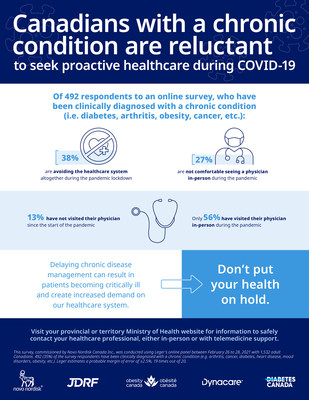
Almost four in ten Canadians (38%) surveyed, who have been clinically diagnosed with a chronic disease, say they are avoiding the health care system altogether during the pandemic.
MISSISSAUGA, ON, March 31, 2021 /CNW/ - Canadians living with chronic diseases - like arthritis, cancer, diabetes, heart disease or obesity - are reluctant to seek proactive care during COVID-19, a new national survey reveals. While Canadians may think they're reducing potential health risks, delaying care can increase negative health outcomes and impact demand on healthcare professionals and our medical system.
Don't Put Your Health on Hold – Canadians are encouraged to engage healthcare professionals safely and efficiently during COVID-19. Every province and territory offers telemedicine and virtual care offerings. For those who need in-person care, Canadians should feel comfortable accessing their healthcare providers who offer safe, sanitized, environments for treatment. Please visit your provincial or territory Ministry of Health website for information to safely contact your healthcare professional either in-person or with telemedicine support.
Survey results include:
Almost four in ten (38%) Canadians surveyed - who have been clinically diagnosed with a chronic disease - say they are avoiding the healthcare system altogether during the pandemic.
13% of survey respondents who have been clinically diagnosed with a chronic condition have neither visited their physician nor had a virtual/telephone visit since the start of the pandemic.
Just over half (56%) of survey respondents with a chronic condition visited their physician in-person during the pandemic.
Expert statements:
Offering virtual care is good for patients, health care providers and the system, too. Especially in this pandemic environment, virtual medicine can facilitate delivering care. It can always be beneficial for people who live in a remote area or if they have mobility limitations. Electronic consults can help primary care providers obtain the advice of specialists for their patients. Many people affected by diabetes find virtual visits to be convenient; they experience high quality clinical care and are able to access the support they need in the virtual setting. – Seema Nagpal, Vice-President, Science & Policy, Diabetes Canada
Don't delay visiting the hospital if you are worried about acute health concerns, especially if diabetic ketoacidosis (DKA) is suspected. DKA is a serious complication of type1diabetes that can be life-threatening if not treated promptly. In general, emergency departments and hospital wards are implementing all measures possible to prevent the spread of infection and are highly organized in terms of dealing separately with patients with established COVID-19, presumptive COVID-19, and without COVID-19. - Sarah Linklater, Chief Scientific Officer, JDRF Canada
Obesity is a serious chronic, progressive, and relapsing disease, similar to diabetes or high blood pressure, that can have a negative impact on your physical and mental health. Like any other chronic illness, long-term, continuous and interdisciplinary care is required to effectively manage obesity. We know that obesity care has been disrupted in many places in Canada. But, there are safe and reliable ways to speak to healthcare professionals during the pandemic, such as virtual care and in some cases, in-person consultations. Don't put your health on hold, speak to a qualified healthcare provider today. - Dr. Mary Forhan, Scientific Director Elect, Obesity Canada
About Survey This survey, commissioned by Novo Nordisk Canada Inc., was conducted using Leger's online panel between February 26 to 28, 2021 with 1,532 adult Canadians. 492 (35%) of the survey respondents have been clinically diagnosed with a chronic disease (e.g. arthritis, cancer, diabetes, heart disease, mood disorders, obesity, etc.). Leger estimates a probable margin of error of ±2.5%, 19 times out of 20.
About Novo Nordisk Novo Nordisk is a leading global healthcare company, founded in 1923 and headquartered in Denmark. Our purpose is to drive change to defeat diabetes and other serious chronic diseases such as obesity and rare blood and endocrine disorders. We do so by pioneering scientific breakthroughs, expanding access to our medicines and working to prevent and ultimately cure disease. Novo Nordisk employs about 44,000 people in 80 countries and markets its own products in around 170 countries. For more information, visit novonordisk.ca, Twitter, or YouTube.
SOURCE Novo Nordisk Canada Inc.
Sanofi to build new manufacturing facility in Toronto to strengthen domestic pandemic preparedness and increase global supply of high-dose influenza vaccine
Sanofi announces investment of approximately $925 million (CAD) to build a new vaccine facility in Toronto to increase supply of its differentiated influenza vaccines in Canada, the United States, and Europe
In partnership with the Governments of Canada, Ontario, and the City of Toronto, the new facility will enhance influenza pandemic preparedness efforts and vaccine manufacturing capacity
FLUZONE® High-Dose Quadrivalent has earned recommendations for use over standard-dose influenza vaccine in individual adults 65 years and older by the National Advisory Committee on Immunization (NACI) in Canadai
TORONTO, March 31, 2021 /CNW/ - Today, Sanofi announced an investment of approximately $925 million (CAD) in a new vaccine manufacturing facility at its existing site in Toronto, Canada. The investment in a new facility will provide additional antigen and filling capacity for Sanofi's FLUZONE® High-Dose Quadrivalent influenza vaccine, increasing supply availability in Canada, the United States, and Europe.
"As a leading vaccines Company, we continuously look ahead to address the fast-growing demand for those influenza vaccines that have demonstrated clinical superiority against standard-dose vaccines. This new investment to produce FLUZONE® High-Dose Quadrivalent will help ensure more seniors around the world are better protected against influenza. In addition, it will be a key resource to assist against future pandemics," said Paul Hudson, Chief Executive Officer, Sanofi. "We welcome the ongoing partnership with the Canadian authorities, who supported us to make today's great news a reality; this will make the country, which has a strong legacy in vaccines research and development, one of our key hubs in our effort to protect and improve human health across the globe."
In addition to producing Sanofi's FLUZONE® High-Dose Quadrivalent influenza vaccine, this new manufacturing facility will strategically grow Canada's bio-manufacturing sector and install industrial scale capacity to strengthen Canada's preparedness for future pandemics.
"Today's announcement demonstrates Canada's ability to attract foreign investment and to develop facilities with made-in-Canada solutions. This once-in-a-generation investment shows our government's commitment to rebuilding Canada's domestic biomanufacturing sector, focusing on both short-term strategic solutions and a long–term vision. By investing in this project, our government is helping to keep expertise in Canada, creating and maintaining highly skilled jobs, and securing the health and safety of Canadians. By fostering an environment where companies can invest and grow, leading life sciences firms like Sanofi are increasingly looking to this country to establish their manufacturing facilities." – The Honourable François-Philippe Champagne, Minister of Innovation, Science and Industry
"This is a critical investment as it will create 300 high quality jobs and increase Ontario's capacity to manufacture important vaccines. By supporting companies like Sanofi we will continue to strengthen our excellent pharmaceutical sector and ensure we are prepared for future public health events with Made in Ontario products." – The Honourable Doug Ford, Premier of Ontario
"This historic investment in Canadian life sciences cements our place as a leading manufacturer of vaccines in Canada and worldwide," said Fabien Marino, Vice President Industrial Affairs and Toronto Site Head. "With the help of our government partners, bringing this new facility on Canadian soil will increase domestic vaccine manufacturing capacity, strengthen future national pandemic preparedness efforts and bolster worldwide supply of our differentiated influenza vaccines."
Following design, construction, testing, and qualification of the facility and equipment, the new Toronto Site facility will be operational by 2026. Currently, Sanofi Pasteur's Toronto Site manufactures millions of doses of vaccines annually that help protect against pertussis, polio, diphtheria, and tetanus, among others, for more than 60 countries worldwide – including Canada.
Additional Quotes
"It has never been more critical that we build up our domestic production capacity to supply Ontario and all of Canada with flu vaccines. Ontario is the economic engine of Canada, and we can make anything here with our skilled workforce, life sciences sector and strong supply chains," said The Honourable Vic Fedeli, Ontario Minister of Economic Development, Job Creation and Trade. "This partnership will build on Ontario's bio-manufacturing capacity, save lives, create new jobs, and, help prepare us for any future pandemic emergency."
"The expansion of Sanofi's Toronto Site is a true testament to the strength of Toronto's medical and healthcare sector. This new vaccine manufacturing facility in Toronto will not only give confidence to Canadians that work is underway to address the ongoing need for vaccines now and in the future, but that Toronto is a city in which businesses can grow and thrive. I want to thank everyone involved including my colleague Deputy Mayor Michael Thompson for playing a role in bringing this partnership to fruition and helping us improve our ability to create vaccines domestically which will ensure that we are prepared in the future." – His Worship, John Tory, Mayor of Toronto
About the Sanofi Pasteur Canadian Facilities
Founded as the Connaught Antitoxin Laboratories and University Farm in 1917, Sanofi Pasteur's Canadian facility has supported numerous scientific breakthroughs while making significant public health contributions. One hundred years ago, the Toronto Site was home to some of the initial research for the discovery of insulin, as well as large-scale commercial insulin production for all of Canada until the 1980s. It also produced a highly accessible antitoxin for diphtheria, the leading public health threat to Canadian children in the early 1900s and was an important partner in the eradication of polio in North America and smallpox around the world.
In 2018, Sanofi made another historic investment at the Toronto Site, to establish one of the most advanced vaccine bulk manufacturing facilities in the world. At the time, this was the largest investment ever made by Sanofi globally into a single facility, more than $500M (CAD). This manufacturing facility will produce seven antigens: five-component-pertussis, plus diphtheria and tetanus, to help meet global demand for more life-saving vaccines for children and adults worldwide. License approval for Canada and the United States is expected in 2024 for the five-component-pertussis and in 2025 for diphtheria and tetanus. Link to press release.
About FLUZONE® High-Dose Quadrivalent
FLUZONE® High-Dose Quadrivalent influenza vaccine is available in the US and some European countries and will be available in Canada in 2021 for use in adults 65 years and older. FLUZONE® High-Dose Quadrivalent is also approved in Australia. This vaccine has received marketing authorizations in 25 countries in Europe (under the name Efluelda™ outside of the UK). Older adults have an elevated risk of pneumoniaii, heart attackiii and strokeiv following influenza and are at the greatest risk of influenza-related hospitalization and death. The high-dose influenza vaccine has four times more antigen than standard-dose vaccine and is intended to give people 65 years and older a better immune response and therefore, better protection against influenza.v NACI has recommended that high-dose influenza vaccine should be used over standard-dose influenza vaccine for individual adults 65 years and older.i
Sanofi Pasteur's commitment to improve influenza prevention
Sanofi Pasteur is committed to researching and developing differentiated solutions to protect people of all ages and risk groups against influenza and its complications.
As the largest manufacturer of influenza vaccines in the world, Sanofi Pasteur produces influenza vaccines each year across five international sites: Swiftwater (Pennsylvania, United States), Pearl River (New York, United States), Val-de-Reuil (France), Ocoyoacac (Mexico) and Shenzhen (China).
About Sanofi
Sanofi is dedicated to supporting people through their health challenges. We are a global biopharmaceutical company focused on human health. We prevent illness with vaccines, provide innovative treatments to fight pain and ease suffering. We stand by the few who suffer from rare diseases and the millions with long-term chronic conditions.
With more than 100,000 people in 100 countries, Sanofi is transforming scientific innovation into healthcare solutions around the globe.
Kwong JC, Schwartz KL, Campitelli MA, Chung H, Crowcroft NS, Karnauchow T, Katz K, Ko DT, McGeer AJ, McNally D, Richardson DC, Rosella LC, Simor A, Smieja M, Zahariadis G, Gubbay JB. Acute Myocardial Infarction after Laboratory-Confirmed Influenza Infection. N Engl J Med. 2018 Jan 25;378(4):345-353.https://www.nejm.org/doi/pdf/10.1056/NEJMoa1702090?articleTools=true
iv
Warren-Gash C, Blackburn R, Whitaker H, McMenamin J, Hayward AC. Laboratory-confirmed respiratory infections as triggers for acute myocardial infarction and stroke: a self-controlled case series analysis of national linked datasets from Scotland. Eur Respir J. 2018 Mar 29;51(3):1701794. https://pubmed.ncbi.nlm.nih.gov/29563170/
v
FLUZONE® High-Dose Quadrivalent Product Monograph. Sanofi Pasteur Ltd. June 2020.
SOURCE Sanofi Canada
COVID myth spreaders not who you might think, new OMA research shows
TORONTO, March 31, 2021 /CNW/ - Almost six per cent of Ontarians online are spreading misinformation about the COVID-19 pandemic, and the vast majority of them are older men and women, according to exclusive new research conducted on behalf of the Ontario Medical Association.
Ontarians ages 55-64 are the most engaged online across all COVID hoax topics, with men (52 per cent) and women (48 per cent) almost equally involved. While men who engage in spreading misinformation online tend to talk about government using COVID to further its own interests, women who do so are focused on variants and government as the source of COVID-19 and why the vaccine is to be feared. Both men and women ages 55-64 believe in the misinformation they are sharing, and are not on social media to dispel the myths.
It's not clear why this age group now is responsible for so much misinformation on social media, but it is concerning, given that many of them are now eligible for COVID vaccines.
"This new data demonstrates this ongoing issue of misinformation needs to be addressed in every community and demographic group," said OMA President Dr. Samantha Hill. "The best antidote is to provide clear, consistently high quality, factual information. Ontario's doctors have been combatting COVID misinformation throughout the pandemic, and these new insights make us even more committed to providing evidence-based facts to stamp down the misinformation on social media."
The research found that in many cases, Ontario's COVID-hoax theorists have been accessing right-leaning websites and blogs focused on U.S. politics. Twenty-six per cent of misinformation came from one website.
The new data was collected by Advanced Symbolic Inc., which used artificial intelligence methodology to build a representative sample of Ontarians from publicly available social media and glean insights into what people are saying about COVID.
Other findings:
COVID fears had been declining but are again increasing
Social media misinformation about COVID is also high among men in the 45-54 age range
There has been a rise in conversation about frustration over the vaccine rollout, and it coincided with the rise of concern about variants and the Third Wave.
Women are more likely to engage in online conversations about the Third Wave, while men are expressing their frustration about the vaccine rollout.
"We encourage everyone to seek facts from credible sources like doctors," said OMA CEO Allan O'Dette. "It's only by separating the facts from the fiction that we will make sound decisions that will protect us, our loved ones, and our communities."
About the OMA
The Ontario Medical Association represents Ontario's 43,000 plus physicians, medical students and retired physicians, advocating for and supporting doctors while strengthening the leadership role of doctors in caring for patients. Our vision is to be the trusted voice in transforming Ontario's health-care system.
SOURCE Ontario Medical Association
TRAIN IT RIGHT NEWSLETTER
Sign Up and get a free 7 day Train it Right HIIT Program!