Ocean Platform Joins apps.health Marketplace to Help Connect Patients with Healthcare Providers
TORONTO, Sept. 29, 2020 /CNW/ - The Ocean Platform, Canada's leading EMR-integrated digital health suite for patient engagement, is now available on apps.health, a digital health app marketplace and innovation hub from WELL Health. With this release, CognisantMD is also launching a series of powerful new tools and features for OSCAR Pro Electronic Medical Record (EMR) through its enhanced Cloud Connect API integration.
Over 13,000 healthcare providers across the country use the Ocean Platform to allow Canadians to securely share health information, update their patient record, and connect with their physicians each day. The Ocean library of editable intake forms, consent forms, and patient history tools connects directly to a suite of integrated patient tools, providing an easy way to collect information from patients and conduct eReferrals.
The first version of Ocean for OSCAR EMR was launched in 2015, with a focus on patient forms presented on waiting room tablets and patient forms at home. With the newly released Cloud Connect integration, OSCAR Pro EMR users now have access to a full suite of tools and features including secure patient messages, appointment reminders, check-in kiosks, website forms with patient attachments, patient surveys and seamlessly integrated eReferrals.
"COVID-19 forced physicians to reinvent the way they deliver patient care, virtually overnight. Today, every healthcare provider needs to have access to proven, secure digital health solutions that can support this continually evolving approach to healthcare," said Jeff Kavanagh, President, CognisantMD. "We're pleased to join with other innovative technology providers to address these urgent needs and connect with the healthcare community through the apps.health marketplace."
In addition to Ocean's Tablet, Patient Messages, and Studies product offerings, OSCAR Pro EMR users can now access the following products and features:
Check-In Kiosks - Streamline check-in and enforce social distancing on a kiosk with optional demographic updates, screening, consent forms and more;
Patient Reminders - Schedule automatic reminders about upcoming appointments, conduct patient experience surveys, and automate follow-up messages after appointments;
Patient Authenticated Website Forms - Securely accept photos and attachments from your patients;
Advanced eReferral Capabilities - Launch the Ocean Healthmap from the Consultations window, seamlessly send referrals and upload referral attachments, and allow Ocean to automatically update the consult in OSCAR as the status of the referral changes.
About CognisantMD CognisantMD is the nation's leading provider of EMR-integrated patient engagement and eReferral solutions. The cloud-based platform is used by over 13,000 healthcare providers across Canada to securely connect with patients, share patient health information, and seamlessly update patient records. With a library of thousands of clinical and administrative forms, the Ocean Platform supports the secure exchange of patient data through a full suite of tools including Online Booking, Check-in Kiosks, Patient Tablets, Patient Messages, Patient Reminders, Website Forms, Ocean Studies and eReferrals. To learn more about the Ocean Platform or request a demo, visit cognisantmd.com.
SOURCE CognisantMD
COVID-19 has significantly increased the use of many technologies among older Canadians: poll
TORONTO, Sept. 29, 2020 /CNW/ - From Facebook to food delivery apps and fitness trackers, older Canadians have upped their use of many technologies and online services during the COVID-19 pandemic.
A new AGE-WELL poll conducted by Environics Research in July 2020 shows that two-thirds (65%) of Canadians aged 65 and older now own a smartphone, compared to 58% in 2019, and most who own one (83%) use it daily.
During the pandemic, seniors have increased their use of video calls as a way to communicate with family and friends. About a quarter (23%) of Canadians 65+ now use video-calling on their smartphones, twice as many as in 2019; 6 in 10 of whom report increased use due to COVID-19.
When it comes to social media, so popular with a younger demographic, older adults are populating the platforms too. Over one-third (37%) say they use social media to communicate with family and friends (of whom 4 out of 10 report utilizing it more as a mode of communication due to COVID-19). Compared to 2019, they are more present on YouTube, WhatsApp, Instagram and Facebook (which 68% now use, up from 63% in 2019).
And with many seniors staying at home more during COVID-19, two in 10 (19%) of Canadians 65+ are using online shopping for essential items, like groceries, for "health, wellness and/or independence" (of whom 6 in 10 report utilizing it more due to COVID-19).
The survey results show that 72% of Canadians aged 65 and over feel confident using current technology.
"With these findings, we can set aside any notion that older adults are technophobic. Most are unfazed by technology and they are using a lot of it during these challenging times," says Dr. Andrew Sixsmith, Scientific Co-Director of AGE-WELL, Canada's Technology and Aging Network. "We were already seeing older adults using more technology, but COVID-19 is clearly a catalyst that is taking tech use to a new level."
The new poll was carried out July 16 to 27 with over 2,000 Canadians 50 years of age and older. AGE-WELL commissioned a similar survey in July 2019 of Canadians aged 50-64 and 65+.
Olive Bryanton, 83, of Hampshire, Prince Edward Island, can't imagine life in the time of COVID without technology. "It has kept me sane, especially in the early part when we couldn't go out and family couldn't come to visit." She's been on Zoom "almost constantly" since COVID-19 began, participating in and presenting at virtual meetings and webinars, and connecting with family. She takes to Twitter and Facebook more often, and attended a wedding via livestream. "I'm just so glad I'm able to use technology," says Dr. Bryanton, a member of AGE-WELL's Older Adult and Caregiver Advisory Committee.
The new survey also looks at the impact of COVID-19 on age-related concerns among older Canadians, who have been disproportionately affected by the pandemic. About half of respondents aged 50+ are now more concerned about health and about losing loved ones. Forty-six per cent are significantly or somewhat more concerned about moving to a nursing home, and 43% feel that way about moving to a retirement home.
On the positive side, over two-thirds (66%) of Canadians over 50 agree that technological advancements can help to lessen the impact of COVID-19 on daily life. The majority agree that technological advances can help them maintain relationships with family and friends, reduce social isolation, pursue hobbies, manage health, maintain mental health and stay safe, independent and active as they age.
The poll also found that half of Canadians aged 50+ are willing to pay out-of-pocket for technology that helps manage health and wellness. Almost 7 in 10 are willing to pay out-of-pocket for technology that allows them to stay at home as they age.
Among other key findings:
Technology Use
88% of Canadians aged 65+ use the Internet daily;
30% of those 65+ are streaming; over 4 in 10 (45%) of them report increased online streaming due to COVID-19;
52% of Canadians aged 50+ had a telehealth appointment in the past 3 months, and 79% of those who had one were satisfied with it. Experience with video appointments is still limited (7%);
Over a quarter (29%) of Canadians 65+ use social media for "health, wellness and/or independence" (of whom 42% report utilizing it more due to COVID-19);
Among those 65+, 68% use Facebook (up from 63% in 2019), 40% use YouTube (up from 37%), 19% are on Instagram (up from 15%), 18% use Twitter (up from 16%), and 16% use WhatsApp (up from 11%);
17% of Canadians 65+ use video calls on a desktop or laptop; 56% of whom report increased use due to COVID-19;
13% of Canadians 65+ now use exercise or activity apps or trackers; one in five (19%) of those have increased their use due to COVID-19;
13% of those 65+ engage in online activities such as book clubs and games; 50% of whom have ramped up these activities due to COVID-19;
11% of Canadians aged 65+ use voice-assisted tech, e.g., Google Home; 18% of whom are using this tech more due to COVID-19;
7% of those 65+ use food delivery apps; 45% of whom have increased their use of these apps due to COVID-19.
Current Attitudes
48% of Canadians over the age of 50 are optimistic about aging (compared to 56% in 2019);
66% of Canadians aged 50+ have felt isolated at least some of the time during COVID-19;
Half of respondents feel that technology has had a positive impact on their lives during COVID-19 (45% say neither positive nor negative);
Technology that "manages independence" is most popular, with over half of users of techs/services such as wearable digital devices, online shopping for essential items, exercise/activity trackers and webinars/online classes reporting a positive impact on their health and wellness.
"At a time when older adults face enormous challenges, it is encouraging to see that many are reaching for technologies, online services and apps to help," says Dr. Alex Mihailidis, AGE-WELL Scientific Co-Director and CEO. "They are receptive to technology that allows them to stay in their own homes, and open to virtual health and virtual community with family and friends."
AGE-WELL teams are developing a wide range of technologies, services and policies/practices to help older Canadians maintain their independence, health and quality of life. These include health apps, wearable therapies, smart-home systems and socially assistive robots.
Central to all of this is ensuring that new technologies are user-friendly and practical, including for people with disabilities. Connectivity is another challenge. "Despite the increasing use of technology by seniors, we need to remember that some people are still losing out and there is a digital divide between the technology haves and have-nots. We need to make sure that technologies are accessible, affordable and available to all. "
Commissioned by AGE-WELL, the Environics Research survey was conducted between July 16 and July 27, 2020, interviewing 2,026 Canadians over the age of 50. 1,576 (78%) participated via an online panel, and 450 respondents (22%) were contacted by telephone. This is the second AGE-WELL survey of its kind, the first being in 2019. A number of pandemic-related questions were added to the 2020 survey.
About AGE-WELL:
AGE-WELL NCE Inc. is Canada's Technology and Aging Network. The pan-Canadian network brings together researchers, older adults, caregivers, partner organizations and future leaders to accelerate the delivery of technology-based solutions that make a meaningful difference in the lives of Canadians. AGE-WELL researchers are producing technologies, services, policies and practices that improve quality of life for older adults and caregivers, and generate social and economic benefits for Canada. AGE-WELL is funded through the federal Networks of Centres of Excellence program. www.agewell-nce.ca.
SOURCE AGE-WELL Network of Centres of Excellence (NCE)
Toronto startup, Virdect, pioneers major advance in Covid-19 detection
New method provides advance warning, precise geotargeting, for huge potential savings in cost and lives
TORONTO, Sept. 29, 2020 /CNW/ - Toronto startup Virdect announced today that it is pioneering a new system for detecting Covid-19 that has enormous implications for identifying outbreaks and containing them quickly. Using wastewater as a testing bed, Virdect is able to detect the virus up to seven days before carriers show symptoms. And unlike other wastewater-testing technology, Virdect achieves an extraordinary level of geographic precision—with dramatic implications for everything from public health to school attendance and condominium maintenance.
The key distinguishing feature of Virdect is its site-specific testing technology. Other wastewater testing systems are designed for mass-scale sampling—wastewater plants, for example, which collect samples from hundreds of thousands of people. Virdect leapfrogs these systems by collecting samples upstream, at specific sites such as condo buildings, schools and long-term care facilities. Testing and communication of results are completed within 48 hours.
"Wastewater testing has been hailed recently by public health authorities and research scientists as "an early warning system" for Covid-19 detection," notes Dave Oswald, Founder of Virdect. "We think of ourselves as "an even earlier warning system." Virdect is so much closer to the precise location of an outbreak—potentially even down to a specific floor on a condo building—that we can advance an isolation schedule by days. In the case of an epidemic like Covid-19, that translates into massive savings in lives and money."
The implications of Virdect's technology become immediately apparent by examining the trajectory of the current pandemic. A study from Columbia University in May of this year estimated that the United States could have saved 36,000 lives if it had started social distancing one week earlier than it did. Early detection also allows more moderate, geographically limited lockdowns, thereby reducing the impact on the economy.
"Wastewater testing is a brilliant answer to the problem of detection," continues Oswald. "It draws on a steady, reliable source that captures everyone. And it detects shedding long before carriers even have a clue that they're infected. But testing wastewater at municipal facilities suffers from a major drawback: by aggregating the results of hundreds of thousands of people, it provides data that is too general to allow immediate action. That is not the case with Virdect. By testing wastewater upstream at the building level, Virdect obtains results for a very small community—allowing for the subsequent identification of carriers through targeted nasal or oral swabbing, all while maintaining privacy. As a result, the system delivers virus heat mapping that is more exact by several orders of magnitude. For public health authorities—not to mention residents of Virdect-monitored buildings—it's a massive leap forward in virus containment."
Virdect boasts a number of features that make it a true leader in virus testing:
Privacy: While Virdect can identify the presence of a virus in a specific building (or even floor), it does so without compromising anonymity
Compliance rate: As a passive collection system, Virdect attains 100% testing compliance
Cost: Virdect can test a whole building for a fraction of the cost of nasal or saliva swabs
Continuity: Virdect can test at any frequency desired (such as daily) for an indefinite period—something that is impossible with swabs
Reliability: Virdect's stringent laboratory testing ensures accurate results within 48 hours
Private-sector value: Unlike mass-wastewater testing solutions, Virdects' First AlerterTM solution can be implemented in individual buildings, such as schools, condos and long-term-care facilities
Community safety: By aggregating test results from building clusters, Virdect can create heat maps that can guide containment procedures
Virdect is launching a pilot program in the Greater Toronto Area, with a focus on schools, senior-care facilities and condominiums/apartments.
About Virdect Founded in 2020 in the wake of the Covid-19 global pandemic, the Company's vision is to use science in the service of society to enable people to live safely in their homes and communities. Its mission is to be the 'First Alerter' to the presence of Covid-19 and other infectious diseases, through science-driven, forensic-based technology focused on wastewater testing.
In an epidemic, every day counts.
SOURCE Virdect Ltd
Health Canada Approves REBLOZYL® (luspatercept), New Class of Treatment for Adult Patients Living with Beta Thalassemia
REBLOZYL® is the first and only erythroid maturation agent approved for use in Canada
MONTREAL, Sept. 29, 2020 /CNW/ - Bristol Myers Squibb Canada (BMS) and Acceleron Pharma Inc. announced today that Health Canada has approved REBLOZYL® (luspatercept) for the treatment of adult patients with red blood cell (RBC) transfusion-dependent anemia associated with beta(β)-thalassemia.1 REBLOZYL® is the first and only erythroid maturation agent in Canada, representing a new class of treatment for eligible patients.1
Beta thalassemia is a rare genetic blood disorder characterized by ineffective erythropoeisis, which results in the production of fewer and less healthy RBCs and low levels of hemaglobin.2 Patients living with beta thalassemia are often required to receive regular red blood cell transfusions to support normal growth and development, maintain quality of life and increase life expectancy.2
"Canadians living with beta thalassemia, who are often dependent on regular blood transfusions, now have a new treatment option in REBLOZYL® that may address the underlying issues caused by this serious disorder and can decrease their dependence on blood transfusions," said Riyad Elbard, President, Thalassemia Foundation of Canada.
REBLOZYL® works by regulating late-stage red blood cell maturation to potentially reduce the number of regular red blood cell transfusions.1 In preclinical studies, REBLOZYL® demonstrated the ability to address ineffective erythropoiesis by enhancing erythroid maturation, thereby increasing hemoglobin through the production of mature red blood cells.1
"As a first-in-class therapy, REBLOZYL® gives Canadians a new approach to treating transfusion dependent anemia associated with beta thalassemia," said Al Reba, General Manager, Bristol Myers Squibb Canada. "Regular red blood cell transfusions can cause abnormally high levels of iron in the blood and organs, potentially causing harm over time. The approval of REBLOZYL® is part of our commitment to Canadians living with serious blood disorders."
"Alongside our partners at Bristol Myers Squibb, we are proud to help meet the needs of Canadians living with disease-related anemias," said Habib Dable, President and Chief Executive Officer of Acceleron. "REBLOZYL® ultimately addresses the ineffective erythropoiesis associated with beta thalassemia and is an important advancement in the treatment of patients affected by this serious disorder."
Health Canada's approval of REBLOZYL® is based upon findings from the phase 3, double-blind, randomized, placebo-controlled BELIEVE study, which compared treatment with REBLOZYL® and best supportive care (BSC) to placebo and BSC in patients with anemia associated with beta-thalassemia requiring regular RBC transfusions.1 The results demonstrated significantly greater percentage of patients treated with REBLOZYL® achieving ≥33% reduction from baseline in RBC transfusion burden with a reduction of ≥2 units from Weeks 13-24 as compared to placebo (21.4% vs. 4.5%, P<0.001), primary endpoint.
The results of the BELIEVE trial were published earlier this year in the New England Journal of Medicine.
About Bristol Myers Squibb Canada
Bristol Myers Squibb Canada Co. is an indirect wholly-owned subsidiary of Bristol Myers Squibb Company, a global biopharmaceutical company whose mission is to discover, develop and deliver innovative medicines that help patients prevail over serious diseases. For more information about Bristol Myers Squibb global operations, visit www.bms.com. Bristol Myers Squibb Canada Co. delivers innovative medicines for serious diseases to Canadian patients in the areas of cardiovascular health, oncology, and immunoscience. Bristol Myers Squibb Canada Co. employs close to 400 people across the country. For more information, please visit www.bms.com/ca.
About Bristol Myers Squibb Bristol Myers Squibb is a global biopharmaceutical company whose mission is to discover, develop and deliver innovative medicines that help patients prevail over serious diseases. For more information about Bristol Myers Squibb, visit us at BMS.com or follow us on LinkedIn, Twitter, YouTube, Facebook and Instagram.
About Acceleron Acceleron is a biopharmaceutical company dedicated to the discovery, development, and commercialization of therapeutics to treat serious and rare diseases. Acceleron's leadership in the understanding of TGF-beta superfamily biology and protein engineering generates innovative compounds that engage the body's ability to regulate cellular growth and repair.
Acceleron focuses its commercialization, research, and development efforts in hematologic and pulmonary diseases. In hematology, REBLOZYL® (luspatercept-aamt) is the first and only erythroid maturation agent approved in the United States, Europe, and Canada for the treatment of anemia in certain blood disorders. REBLOZYL is part of a global collaboration partnership with Bristol Myers Squibb. The Companies co-promote REBLOZYL in North America and are also developing luspatercept for the treatment of anemia in patient populations of MDS, beta-thalassemia, and myelofibrosis. In pulmonary, Acceleron is developing sotatercept for the treatment of pulmonary arterial hypertension (PAH), having recently presented positive topline results of the Phase 2 PULSAR trial. The Company is currently planning multiple Phase 3 trials with the potential to support its long-term vision of establishing sotatercept as a backbone therapy for patients with PAH at all stages of the disease.
Report warns of potential increase in hospital admissions due to lack of dementia supportMental health of people living with dementia adversely affected by lockdown
29 September 2020 Dementia support services should be restored to pre-Covid levels to prevent a possible rise in costly hospital admissions, a new study suggests.The findings are published as part of a national survey looking at the impact of Covid on people living with dementia, including carers and former carers. The University of Bradford is a partner in the study, which is led by the University of Liverpool.Dr Kathryn Lord, Senior Research Fellow in the Faculty of Health Studies at the University of Bradford, said: “We need to consider safe ways to try and bring back the support that has been closed. Given the negative impact of the closures, this means providing necessary PPE for staff and people living with dementia. We would like to ensure that there is support available for family carers who are often picking up a lot more caring responsibilities.”Across the UK, over 850,000 people live with dementia. Support offered by family carers is estimated to save the healthcare services over £13 billion a year in the UK. The study notes that since the initial nationwide lockdown on March 23, dementia support services have been scaled back.The report, based on feedback from 569 participants across the UK, says: “Variations in social support service... increased levels of anxiety in people with dementia and older adults, and lower levels of mental well-being in unpaid carers and older adults.”It goes on: “Many people living with dementia living in the community have an unmet need for social company… There is evidence that social support reduces the risk of care home admissions and unplanned hospital admissions. Therefore, it is important to act now and enable pre-pandemic levels of social support, as otherwise health care and social care services will be overburdened with increased rates of cost-intensive care home admissions and healthcare visits.”It highlights closures to vital support services, such as day care centres and support groups, which it says have taken a huge toll on the mental wellbeing of people with dementia and their carers during the coronavirus pandemic.The study was funded by the University of Liverpool’s Covid-19 Strategic Research Fund and supported by the National Institute for Health Research Applied Research Collaboration North West Coast (NIHR ARC NWC). The University of Bradford provided funding for a researcher to help conduct the survey.Lead researcher Dr Clarissa Giebel, a Research Fellow at the University of Liverpool, said: “Our research highlights the significant negative impacts service closures are having on the lives of those affected by dementia. It is not viable to take away vital care any longer and policy guidance needs to address how activities and day care could be restarted based on individual circumstances in relation to Covid-19 risks and balancing them with the benefits of social support measures.“Access to social support services, such as day centres, is crucial for the wellbeing of those who care for people with dementia. The coronavirus lockdown meant that these opportunities were suddenly taken away, leaving many carers providing 24/7 care and struggling to adapt.”The Liverpool researchers worked with collaborators at UCLAN, Lancaster University, University of Bradford, and UCL to conduct the UK-wide survey.A large number of NHS Trusts and front-line care support providers supported the project, including Mersey Care NHS Trust, North West Boroughs NHS Trust, Lancashire & South Cumbria NHS Trust, Tide Carers, The Brain Charity, National Museums Liverpool, SURF Liverpool, Lewy Body Society, Liverpool and Wigan Dementia Action Alliance, Sefton Older People’s Forum, and Me2U Day Care Centre.See previous dementia related stories here and here. Pictures: 1) Some of the University's 'Experts by Experience', who work with The Centre for Applied Dementia Studies. Credit: Shy Burhan. 2) An image showing a conference at the University of Bradford to discuss dementia care support. Credit: University of Bradford.
Sweet Holiday Romance Will Have Readers Wrapped Up in Christmas Joy
Nashville, TN, September 29, 2020—When quilt shop owner Sophie Davis sorts through a box of books that had been donated to her church, she’s surprised to find a former marine’s journal. Sophie can’t help but peruse the entries, finding herself drawn to the stranger on the pages. As the daughter of a veteran and a seamstress who sews Quilts of Valor, she feels a deep connection to the former soldier who wrote the emotional entries, and she longs to heal his heart.
The man who wrote the journal, former Marine Cole Aaron, battled to find peace after returning to civilian life, and his journal was the conduit toward a truce with his past. Always needing to protect others, Cole now fights fires and is embracing his new life in Pine Hill, Kentucky. When Sophie shows up at the fire hall with his journal, he fears digging up the demons from his past and tells her to trash it.
Their paths continue to intertwine, with both Sophie and Cole volunteering for their community. But it’s hard for Cole to let down his guard, and he doesn’t need anyone’s pity. After all he’s been through in the past, can he find faith in a more hopeful future — one touched by joy?
Wrapped Up in Christmas Joy is the latest sweet romance from Hallmark Publishing author Janice Lynn. A sequel to her first story, Wrapped Up in Christmas, her new installment can also stand alone and is the perfect small-town Christmas romance to warm readers’ hearts during the holiday season.
Janice Lynn is a USA Today and Wall Street Journal Bestselling author. She strives to write characters who evoke strong emotions and make readers want to go along on their journeys.
Her first sweet romance, Wrapped Up in Christmas, was a bestseller on Barnes & Noble, Wal-Mart, Amazon (hit #13 overall in paid fiction in Kindle) and ibooks (hit number #1 paid ebook fiction); was Hallmark Publishing's first release to hit the USA TODAY and Wall Street Journal's bestseller lists; and was a finalist in the Bookseller's Best Award. Janice also writes contemporary Medical Romances for Harlequin, and her books have won numerous awards, including the National Readers' Choice Award, the Golden Quill for Best Short contemporary Romance and for Best First Book, Romantic Times Magazine's American Title, and the Holt Medallion Award of Merit.
Janice lives in Tennessee with her Prince Charming, their seven kids, her vivid imagination, an adorable Maltese named Halo who's the true princess of the house and a bunch of unnamed dust bunnies who took up permanent residence after Janice started her writing career. In addition to writing romance, Janice is a nurse practitioner, a quilter, an exercise queen, a military mama and a member of and an avid supporter of the Quilts of Valor Foundation. Just kidding on the exercise queen.
More action needed to end rabies by 2030 deadline says World Animal Protection
TORONTO, Sept. 28, 2020 /CNW/ - Global charity World Animal Protection says more needs to be done to stop the spread of rabies worldwide. It is estimated that every year, rabies causes 59,000 deaths and an economic cost of about 8.6 billion U.S. dollars.
World Rabies Day (September 28th) is a strong reminder that the goal of eliminating rabies by 2030 may not be met. In 2015, at the Rabies Global Conference in Geneva, the world called for action, setting a goal of zero dog-mediated human rabies deaths by 2030 worldwide. That deadline is rapidly approaching and there's still a lot of work ahead, mainly due to a lack of resources required for rabies elimination and coordination at a global, regional and national level.
However, by countries implementing a humane dog population management (DPM) system, the 2030 goal can still be reached says World Animal Protection.
The charity works to end the inhumane culling of millions of dogs around the globe and introduced humane DPM as an essential element of successful rabies elimination. The approach demonstrates that killing dogs and vaccinating humans will not stop rabies. Mass dog vaccination, along with responsible ownership, will. Effective DPM also includes the introduction of educational campaigns with community engagement, as a way to facilitate mass dog vaccination.
It's estimated about 900 million dogs exist in the world and the majority of these dogs are strays. Many communities around the world see large groups of dogs as a nuisance and are worried they may be carrying rabies. In a misguided attempt to stop the spread, they end up killing innocent dogs, who are poisoned, electrocuted or simply beaten to death. Approximately 10 million dogs are inhumanely killed out of fear they have rabies every year. Yet, there's no evidence that killings of dogs reduce numbers in the long term.
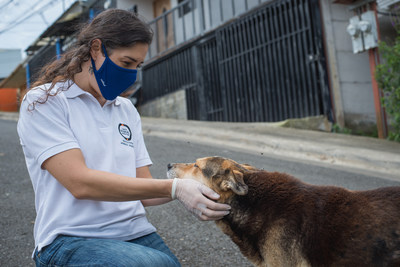
Communities around the world can also struggle with a lack of vets to provide vaccines and spay and neuter dog programs to manage the populations. World Animal Protection works in places such as India, China and Thailand with governments to develop and create national rabies eradication strategies that include humane DPM. Since 2013, World Animal Protection's Better Lives for Dogs Campaign has vaccinated 1.6 million dogs against rabies worldwide.
During COVID-19 this has been more challenging, but the charity is still managing to continue its work when possible, offering vaccinations, as well as feeding programs for dogs, including in Sierra Leone, India, Thailand, Costa Rica and Brazil.
Nina Devries with World Animal Protection Canada says, "Vaccinations have the power to transform life for dogs and for people. We must continue working with our vets around the world and other key partners to tackle this disease once and for all. Without swift treatment, this disease is deadly, yet it is preventable with the right approach. Culling dogs will not eradicate rabies, but vaccinations for dogs will."
World Animal Protection has also launched a new report All Eyes on Dogs which provides actions needed to eliminate rabies in dogs by 2030. The report demonstrates how humane rabies control can contribute to the Sustainable Development Goals. And it highlights the importance of focusing on dogs and strategies that Mexico has used to eliminate rabies, such as stabilizing dog populations through reproductive control and offering mass, free canine rabies vaccinations. In 2019, 18 million canine vaccines were administered and the country will continue to vaccinate in the future.
Here in Canada, canine rabies has been mostly eliminated, however, vets still face challenges. Rabies does occur, mainly in bats, skunks and foxes, but dogs can be affected too. And in Canada's northern remote communities, dog population management is a more pressing issue.
World Animal Protection encourages dog owners and others to treat animals with respect and love worldwide and urges pet owners to keep vaccinations up to date. By working together, we can continue to keep our dogs happy and healthy. After all, life is always better with dogs.
About World Animal Protection
From our offices around the world, including China, Australia, Brazil, Kenya and Canada, we move the world to protect animals. Last year, we gave more than 3 billion animals better lives through our campaigns that focus on animals in the wild, animals in disasters, animals in communities and animals in farming. For more information visit www.worldanimalprotection.ca.
SOURCE World Animal Protection
Clorox Canada's Total 360 Disinfectant Cleaner and Disinfecting Wipes are the First Disinfecting-Cleaning Products to Receive Approval/No-Objection Letter from Health Canada to Kill the COVID-19 Virus
Disinfecting Wipes effective against SARS-CoV-2, the virus that causes COVID-19, in 30 seconds
BRAMPTON, ON, Sept. 28, 2020 /CNW/ - Clorox Canada's Total 360® Disinfectant Cleaner and Disinfecting Wipes are some of the first disinfectant-cleaners to be approved by Health Canada as effective in killing SARS-CoV-2, the virus that causes COVID-19, on hard, non-porous surfaces. Utilizing approved disinfecting-cleaning products should be used as an aide to adhering to Public Health recommendations along with wearing a mask or face covering, frequent and proper hand washing, and maintaining physical distancing.
The Clorox Total 360® Disinfectant Cleaner kills SARS-CoV-2 (virus that causes COVID-19) in two minutes and the Clorox Disinfecting Wipes kill SARS-CoV-2 in 30 seconds. Both products are bleach-free, a key differentiator between other disinfecting-cleaning products. Instead, these Health Canada-approved Clorox products contain quaternary ammonium chemistry that have proven effective against SARS-CoV-2. The combination of the chemistries used and how the Total 360® System distributes them means there is no delayed re-entry time, allowing bystanders to enter the room once spraying is complete.
"Canadians have an interest in the efficacy of their disinfecting-cleaning products in fighting the COVID-19 virus. The positive and stringent regulatory review by Health Canada of Clorox products gives Canadians the confidence they're looking for when it comes to choosing the right product to protect them," said Clorox Canada President and General Manager Dave Iacobelli.
A study by the U.S.-based National Institute of Health (NIH) and published in the New England Journal of Medicine in March 2020, found that the virus may live on plastic and stainless-steel surfaces for up to three days. Indirect transmission through fomites (contaminated surfaces) is particularly relevant in settings with high concentration of COVID-19 patients, such as work-place outbreaks and hospitals where patients are treated.1
"Studies have highlighted the importance of disinfecting high-touch surfaces, and our Clorox Total 360® Disinfectant Cleaner, which can be used in conjunction with our unique and innovative Clorox Total 360® System, has been proven to kill SARS-CoV-2, the virus that causes COVID-19, in 2 minutes. We completed and compiled scientific efficacy data for Health Canada's review and now we have specific claims of scientifically proven, effective and fast disinfection-cleaning efficacy of CloroxPro disinfecting-cleaning products, which is welcome news as Canadians are returning to work and school," said Barley Chironda, Infection Control Specialist at Clorox Canada.
Clorox's Total 360® System uses unique electrostatic technology to wrap around an item or surface to clean and disinfect. This revolutionary cleaning system delivers superior coverage in an efficient, cost-effective way. The system uses 65% less solution, works 75% faster and can cover 18,000 square feet per hour. The Total 360® System is primarily used in institutional settings such as long-term care homes and hospitals, is proven to be safe to use on a variety of surfaces, and kills 99.9% of bacteria. Compared to other sprayers available, the Clorox Total 360® System gives more uniform, wraparound coverage, which helps provide better protection from the spread of germs.
In addition to providing Canadians with a safe, effective cleaning solution against COVID-19, Clorox Canada has also been supporting the long-term care sector through its Support With Strength initiative. This campaign will donate twenty-five Clorox Total 360® Systems and associated disinfecting-cleaning product to long-term care homes in Ontario. The organization is also supporting the 'Caring and Connecting Pen Pal Initiative,' a nationwide organization whose mission is to empower and uplift seniors in long-term care homes by connecting them with community volunteers, including a donation of 100 iPads® to long-term care homes.
These efforts build on a $1 million ongoing, nationwide product donation, the largest in Clorox Canada's history.
"As a family-friendly company, it's important to us that we do everything we can to help other families stay safe and connected during these difficult times. We're really proud of our work in this area, and we're excited to continue to work with partners like AdvantAge to make it come to life," concluded Iacobelli.
About CloroxPro Canada, a division of The Clorox Company of Canada CloroxPro encompasses professional healthcare, cleaning and specialty offerings. Their wide range of solutions reflect a tradition of research and experience in cleaning, sanitizing and infection prevention for professional environments. Built on a century-long legacy, CloroxPro is dedicated to providing proven commercial cleaning and disinfecting solutions to protect people and their environments. Where clean means everything.
Khalm™ Skincare Unveils Oud Essential Oil Infused Luxury Skincare Khalm™ introduces a new era in skincare with an old-world feel aimed to redefine skincare ritualsNew York, NY, September 28, 2020 - Khalm Skincare, a new line of multi-benefit skincare products launching today, Monday, September 28, 2020 delivers the time-honored signature ingredient, Oud essential oil, in luxury skincare form. Founded by Yasmin Charania Khan, Khalm™ Skincare launches with three foundational products infused with Oud essential oil and thoughtfully selected natural active ingredients to target specific skin concerns. They also help to release the skin from impurities, rebalance the skin's pH levels, provide long lasting hydration, and reassure a harmonious and radiant complexion. Combining South Asian and Arabic cultural influences with French elegance and scientific expertise, Yasmin's vision is to infuse culture with skincare by empowering consumers to redefine their skincare rituals and relish in the deep aromatic scent of the rare and precious elixir, Oud. From an early age, Yasmin suffered from a condition that caused excessive hair growth and found comfort by applying beauty products with precision to conceal her hair issues. Once cured as an adult, Yasmin focused on skincare and wellness, but was unable to find a luxury product line with her most-loved aromatic and therapeutic fragrance from her homelands of India and Pakistan; Oud. After years of market research, Yasmin began working alongside a French R&D Lab to create Khalm™ Skincare and translate the idea of Oud in luxury skincare. Khalm™ Skincare's signature launch collection features three core products with clinical results, ideal for maintenance and re-balancing the skin with plans for future product drops. The Foaming Cleanser, Mattifying Moisturizer, and Overnight Oil Elixir are housed in glass bottles with naturally derived ingredients and infused with a man-made Khalm™ Oud Science™ proprietary formulation, the essence of Oud reinvented through advanced skincare. Khalm™ Skincare is cruelty, gluten, and paraben free, vegan certified by PETA, CITES certified which protects endangered flora and fauna, and meets EU (European Union) formulations and manufacturing processes. Khalm™ Skincare prices range from $65 - $150 and is available direct to consumer at www.khalmskincare.com. Editorial Assets LINKED HERE
Follow Khalm Skincare on Instagram
Canadian-based digital health startups stand to benefit in a post-COVID world according to PwC Canada and CB Insights
Globally, startups in the space have already raised $17.8B USD year-to-date (YTD), well on track to outpace last year's levels.
So far this year Canada-based digital health startups have already raised more than $300M USD, roughly double the amount raised in all of 2019.
TORONTO, Sept. 28, 2020 /CNW/ - Digital health — the use of digital technology to drive improvements in the design of medical products and delivery of healthcare — has grown in popularity and potential over the last decade. The COVID-19 pandemic has taken digital health to the next level thrusting companies into the mainstream.
PwC Canada, in collaboration with CB Insights, mapped out the top 51 venture capital (VC) backed digital health companies in Canada. According to the Canadian Digital Health Market Map, digital health startups around the world have already raised $17.8B USD YTD, well on track to outpace last year's levels. So far this year Canada-based digital health startups have already raised more than $300M USD, roughly double the amount raised in all of 2019.
"The healthcare sector was significantly behind in terms of technology adoption, but COVID-19 accelerated this. Over the next few years, the sector will attract significant investment and we'll continue to see rapid innovation and openness to using new technologies from all stakeholders including patients, providers, as well as payers and public health. However, we will have to overcome how governments adopt these new technologies, specifically around privacy concerns for patients and citizens," says Andrew Popliger, National Technology sector Leader, PwC Canada.
COVID-19 — a catalyst for growth in the digital health space Prior to COVID-19, digital health startups across the globe saw impressive investment growth, with funding growing to $18.5B in 2019 from $1.6B in 2010. The challenges posed by the crisis have prompted broad-based development and adoption of digital health solutions — from telehealth to clinical intelligence to AI-enabled drug discovery — to help contain and combat the virus.
Provider- and patient-centric solutions have typically dominated Canada's digital health sector, but this year, life science R&D is gaining traction. The companies in this segment are now considered leaders as they raised $202.4M USD YTD in 2020.
This funding inflection is partially driven by the urgent need to develop effective diagnostics, vaccines, and treatments against it. Nevertheless, all signs point to the health ecosystem of the future continuing to align with the concept of 4P medicine, which means it will be predictive, preventative, personalized and participatory.
Nobody can affirm how the future system might look like in a few months. But some early signals show that virtual care, remote care monitoring, predictive analytics, data integration and privacy compliance, and digital mental health solutions are key areas to keep an eye on.
About PwC Canada At PwC, our purpose is to build trust in society and solve important problems. More than 7,850 partners and staff in offices across the country are committed to delivering quality in assurance, tax, consulting and deals services. PwC Canada is a member of the PwC network of firms with more than 276,000 people in 157 countries. Find out more by visiting us at www.pwc.com/ca.
PwC refers to the Canadian member firm, and may sometimes refer to the PwC network. Each member firm is a separate legal entity. Please see http://www.pwc.com/structure for further details.
About CB Insights At CB Insights, we believe the most complex strategic business questions are best answered with facts. We are a machine intelligence company that synthesizes, analyzes and visualizes millions of documents to give our clients fast, fact-based insights. Serving the majority of the Fortune 100, we give companies the power to make better decisions, take control of their own future—and capitalize on change.
TRAIN IT RIGHT NEWSLETTER
Sign Up and get a free 7 day Train it Right HIIT Program!