WestJet to offer guests no-charge COVID-19 travel insurance for air and vacation reservations
Guests can confidently book travel to Mexico, the Caribbean and Europe including the U.K. with coverage for COVID-19 medical and quarantine costs
CALGARY, AB, Sept. 11, 2020 /CNW/ - Today, WestJet is announcing no-charge COVID-19 travel insurance coverage for eligible guests booking travel to Mexico, the Caribbean and European destinations including the United Kingdom.
For reservations made on or after September 18, 2020, any WestJet air-only reservation including WestJet Vacations bookings for travel to and from Mexico, the Caribbean (excluding the U.S.), Europe (including U.K.) and inbound to Canada will provide eligible guests no-charge COVID-19 travel insurance through new partner TuGo®. Coverage will be automatically applied at no additional charge to eligible guests at the time of purchase for travel until August 31, 2021 for up to 21 days. One-way travel reservations will also be eligible for coverage for up to seven days.
"We know Canadians are seeking reassurance and our guests can now have confidence knowing they are protected against unforeseen medical costs related to the pandemic when choosing to book with WestJet," said Arved von zur Muehlen, WestJet Chief Commercial Officer. "Safety measures have been implemented across our entire travel journey and providing our guests peace of mind during their travels is worth the investment we are making to ensure the safest travel experience for our guests."
TuGo® Travel Insurance COVID-19 coverage for WestJet guests includes*:
Emergency medical and hospital costs for outbound travellers if diagnosed with COVID-19 while outside of Canada (excluding U.S) for up to a maximum limit of $100,000 CAD per insured person.
Emergency medical and hospital costs for inbound travellers visiting Canada diagnosed with COVID-19 while in Canada up to the maximum limit of $100,000 CAD per insured person.
Quarantine accommodation costs when the traveller tests positive for COVID-19 on the trip up to $150 CAD per insured person, per day to a maximum of 14 days for inbound and outbound reservations.
Ambulance transportation and air evacuation costs related to COVID-19, up to the maximum limit of $100,000 CAD per insured person for inbound and outbound guests.
COVID-19 repatriation costs in case of death of up to $5,000 CAD per insured person for inbound and outbound guests.
One-way economy airfare for the return of one travelling companion and dependent children when air evacuated back home for treatment.
"TuGo is excited to partner with WestJet to offer Canadians an opportunity to travel again," said Patrick Robinson, TuGo's CEO. "With our shared focus on the health, wellness and safety of travellers, it's a natural fit for our two Canadian-owned and operated companies to come together to equip and support Canadians in this 'next normal'."
WestJet has built a framework to ensure Canadians can continue to travel safely and responsibly. From the start of the COVID-19 pandemic, the airline invested quickly in hygiene and safety measures to mitigate the risk throughout the entire travel journey, investing millions of dollars' worth of equipment, cleaning and additional measures to protect those who had to fly. The airline continues to invest, test and trial multiple additional safety measures to ensure safety above all.
*Exclusions apply. Not available to residents of Saskatchewan or for travel including cruises. For full coverage details, please visit here.
About WestJet
WestJet and WestJet Encore continue to connect all 39 of the airline's domestic airports, with a reduced frequency, to ensure essential travel, trade and cargo can continue during the COVID-19 pandemic. During this time, WestJet has maintained its status as one of the top-10 on-time airlines in North America as named by Cirium.
For more information about everything WestJet, please visit westjet.com.
2019/2018/2017 Best Airline in Canada (TripAdvisor Travellers' Choice awards for Airlines) 2019 Winner Among Mid-Sized Airlines in North America (TripAdvisor Travellers' Choice awards for Airlines) 2019 Number-One Ranked Canadian Airline Loyalty Program in Member Engagement (Bond Brand Loyalty) 2019/2018 Number-One-Ranked Airline Credit Card in Canada (Rewards Canada)
About TuGo
Canadian-owned and operated for nearly 60 years, TuGo specializes in products and services that support travellers' health, wellness and safety across Canada and around the globe. As one of Canada's top insurance providers and a Platinum Club member of Canada's Best Managed Companies, TuGo offers 24/7 in-house emergency travel medical assistance, with support in 27 languages. TuGo recognizes the challenges and uncertainty Canadians are experiencing; that's why we're working to equip travellers with the services and support they need to travel again.
SOURCE WESTJET, an Alberta Partnership
Advisory - Canadian Microbial Leaders Available to Comment on Solution for COVID-19 Wastewater and Environmental Monitoring, and Need for Holistic Testing Solutions
FREDERICTON, NB, Sept. 11, 2020 /CNW/ - With much of the COVID-19 response to date focusing on human-to-human transmission of the virus, the importance of environmental monitoring remains largely unaddressed. In order to implement a holistic monitoring system for facilities and people, the world must turn its attention to wastewater as a surveillance testing system for detecting the presence of the novel coronavirus. This will allow for non-invasive insights into larger populations to better understand population health and resources needed for additional testing. With businesses and schools reopening this month across the country, understanding and monitoring the environment has never been more crucial for containing the spread of COVID-19.
LuminUltra, a Canada-based biotechnology front-runner has been testing wastewater for the presence of pathogens and microbes for over 20 years. In May 2020, LuminUltra launched its GeneCount Environmental Monitoring Solutions – an on-site environmental monitoring system that detects the presence of SARS-CoV-2, the virus that causes COVID-19, on surfaces, in the air, or in wastewater. This portable monitoring system includes the testing supplies and qPCR device needed to detect the presence of the virus. This enables a wide range of industries including schools, hospitality providers, healthcare services and manufacturing facilities to accurately verify disinfection protocols, as well as pinpoint potential asymptomatic and presymptomatic carriers on-site, within two hours – without needing to send samples to a lab.
LuminUltra has been recognized nationally and internationally for their research and innovation in wastewater, and their wastewater testing solutions have been relied upon by major Canadian cities including Calgary, Ottawa and Toronto.
What: Interview opportunities with LuminUltra President and CEO Pat Whalen, and/or Director of Product Applications Dr. Jordan Schmidt to discuss the need for widespread environmental testing, and LuminUltra's solutions
When and Where: Over the coming weeks, LuminUltra Leaders are available for comment or interview via phone or videoconference
Who: Pat Whalen, President and CEO of LuminUltra, has been at the helm of all of the major innovation and development of wastewater testing solutions to identify the presence of pathogens and microbes in sewage. Whalen is able to discuss wastewater testing protocols, LuminUltra's testing solutions and background science behind environmental testing.
Dr. Jordan Schmidt, Director of Product Applications, has worked in the water and wastewater industry for more than 10 years and holds a PhD in Civil Engineering from Dalhousie University. Dr. Schmidt is able to discuss the science behind wastewater testing, as well as ongoing research in partnership with Dalhousie University.
About LuminUltra:
Founded in 1995, LuminUltra is a biological diagnostic testing company headquartered in Canada with operations in 6 countries. It is widely recognized globally as a leader in developing tests and reagents for environmental, industrial, and diagnostic monitoring and is a key supplier of COVID-19 clinical testing reagents to the Government of Canada. Customers in over 80 countries trust LuminUltra's technology, production reliability and history of customer service excellence to deliver their essential services in a safe-state. To learn more, visit luminultra.com/clinical
SOURCE LuminUltra
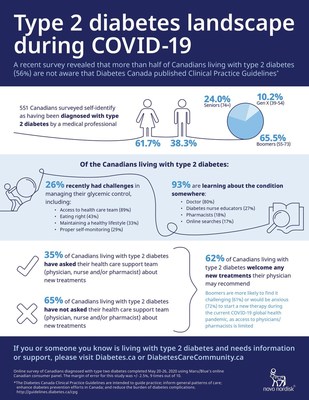
Type 2 diabetes landscape during COVID-19
MISSISSAUGA, ON, Sept. 10, 2020 /CNW/ - 551 Canadians, aged 18 to 80 diagnosed with type 2 diabetes, were surveyed between May 20 – May 26, 2020 with representation from every province. The margin of error is +/- 2.5%, 19 times out of 20. The online survey was supported by Novo Nordisk Canada Inc. and completed via Maru/Blue's online consumer panel.
Novo Nordisk is a leading global healthcare company, founded in 1923 and headquartered in Denmark. Our purpose is to drive change to defeat diabetes and other serious chronic diseases such as obesity and rare blood and endocrine disorders. We do so by pioneering scientific breakthroughs, expanding access to our medicines and working to prevent and ultimately cure disease. Novo Nordisk employs about 43,500 people in 80 countries and markets its products in around 170 countries. For more information, visit novonordisk.ca, Twitter, or YouTube.
SOURCE Novo Nordisk Canada Inc.
Precision Biomonitoring Announces its Submission to XPRIZE's Rapid COVID-19 Testing Competition
Canadian Company Presents its COVID-19 Digital Antigen Test to XPRIZE's Global Competition Searching for Innovative Testing Solutions
GUELPH, ON, Sept. 10, 2020 /CNW/ - Committed to ongoing innovation, Precision Biomonitoring, founded in Guelph, Ontario, announces its submission to the XPRIZE global rapid testing competition. XPRIZE is a nonprofit foundation that designs and executes competitions that inspire innovators and entrepreneurs to share their tools and technologies in the areas of space, oceans, health, energy, learning, environment, transportation, safety and robotics. In response to the COVID-19 pandemic, XPRIZE has put out a call to innovators worldwide to help find faster and easier to use COVID-19 testing solutions, which will support the safe reopening of schools, institutions and businesses across the globe.
Precision Biomonitoring has submitted an innovative COVID-19 digital antigen rapid saliva test for use in the home and at point-of-need. With very high sensitivity, the novel rapid testing solution uses a unique multi-spectral micro sensor to detect trace amounts of antigen in saliva by digitally capturing fluorescent signals in the UV spectrum. Using fluorescence significantly increases diagnostic sensitivity in comparison to conventional particles. Compatible with smart devices via Bluetooth, results are shared digitally through an app in less than 15 minutes.
"We are proud to be sharing our Canadian-grown solution on an international stage," says Dr. Mario Thomas, CEO, Precision Biomonitoring. "We have seen firsthand the positive impact that the other testing solutions we offer have for communities and industries across Canada and are confident that this new technology will support the much-needed investment in regular screening testing capabilities that will enable society to safely function."
Currently undergoing the final stages of development and testing, Precision Biomonitoring's digital rapid saliva test is non-invasive, disposable, cost-efficient and self-administered and operated. Similar to Precision Biomonitoring's SARS-CoV-2 TRIPLELOCKTM Test Strips technology which is currently under review by Health Canada, the rapid saliva test is ultra-portable, enabling Precision Biomonitoring to continue its focus on delivering innovative tools and resources to all Canadians, including those in rural and remote communities who need it most.
XPRIZE finalist teams will be announced in early October.
About Precision Biomonitoring Founded in 2016 by a team of scientists from the University of Guelph's Biodiversity Institute of Ontario, Precision Biomonitoring provides TripleLock™ onsite eDNA surveillance platform solutions that give customers earlier detection of organisms for a more rapid response. Customers are any organizations that need onsite surveillance and rapid identification of any organism in any environment. The Precision Biomonitoring team is at the forefront of technological innovations in the genomics industry. Our vision is a world where we can identify any organism on the spot, in an instant, anywhere on the planet. Learn more about Precision Biomonitoring at: https://precisionbiomonitoring.com/about-us/
SOURCE Precision Biomonitoring
Holistic, Science-Backed Program Helps Build a Healthier Relationship with Food, Eating and Weight
San Francisco, CA, Sept. 10, 2020 — Could a dietary lifestyle that nourishes us physically, emotionally, spiritually and socially be the answer to stemming America’s rising tide of overeating and obesity?
Original research points to yes, and in Whole Person Integrative Eating: A Breakthrough Dietary Lifestyle to Treat the Root Causes of Overeating, Overweight, and Obesity, nutrition researcher Deborah Kesten, M.P.H., and behavioral scientist Larry Scherwitz, Ph.D., offer documented proof that by nourishing ourselves multi-dimensionally each time we eat, we can develop deeper, healthier relationships with food and eating that leads to attaining and maintaining weight loss. The authors’ Whole Person Integrative Eating (WPIE) program is not a diet that a person goes on … then off. WPIE is a scientifically sound, dietary lifestyle designed to be practiced for a lifetime.
"If people follow the revolutionary program outlined in this game-changing, insightful book, it may be the most helpful step they can take toward losing weight and keeping it off," says bestselling author Kenneth Pelletier, M.D., clinical professor of medicine at University of California School of Medicine, San Francisco.
Divided into three parts, Whole Person Integrative Eating begins by describing seven root causes of overeating: Emotional Eating, Food Fretting, Fast Foodism, Sensory Disregard, Task Snacking, Unappetizing Atmosphere and Solo Dining. A Self-Assessment Quiz follows, with 76 questions to help readers identify their unique food choices and eating behaviors that lead to overeating and weight gain. Part Two provides a step-by-step guide to WPIE antidotes for each overeating style. It also explains why the elements of WPIE work and how they can be incorporated into daily life. And Part Three offers over 30 recipes based on the three main criteria of WPIE: fresh, whole and "inverse,” meaning mostly plant-based foods with small or no servings of animal-based foods.
An excerpt from the Foreword of Whole Person Integrative Eating by New York Times best-selling author Dean Ornish, M.D., Clinical Professor of Medicine, University of California:
“[The book] offers an evidence-based alternative to the conventional wisdom about attaining and maintaining weight loss. What’s groundbreaking about Kesten and Scherwitz’s research is twofold: They have created a scientifically sound, comprehensive, and integrative program for treating overeating, overweight, and obesity based on these principles. And in addition to what (food choices) and how(eating behaviors) we eat, they have identified seven statistically significant root reasons to explain why we overeat: what they call “new normal overeating styles” and eating behaviors that also have a profound influence on how much we eat and weigh.”
The authors’ paradigm-shifting message is that food influences not only the physical dimensions of health, but also our emotional, spiritual and social well-being. Their dietary lifestyle can build bridges between the millions who struggle with overeating and weight issues and the medical community. And it can inspire us all to re-envision our relationships with food, eating and weight, so that each time we eat, we are nourished … for life.
Deborah Kesten, MPH,is an international nutrition researcher, award-winning author, and medical/health writer, with a specialty in preventing and reversing obesity and heart disease. She served as Nutritionist on Dean Ornish, M.D.’s first clinical trial for reversing heart disease through lifestyle changes, the results of which were published in the Journal of the American Medical Association. She has served as Director of Nutrition at cardiovascular clinics in Europe and on the Board of Directors of the American Heart Association, San Francisco, for 10 years.
Kesten has published more than 400 nutrition and health articles. Her first book, Feeding the Body, Nourishing the Soul, received the first-place gold award in the Spirituality category from the Independent Publisher Book Awards. Whole Person Integrative Eating has been honored with the #1 gold, best-book award in the Health category by Book Excellence Awards. She is a VIP Contributor at Arianna Huffington’s Thrive Global, and is married to behavioral scientist and co-author of Whole Person Integrative Eating, Larry Scherwitz, Ph.D.
Research Reveals Daily Dose of Peanuts Delivers Body and Mind Benefits
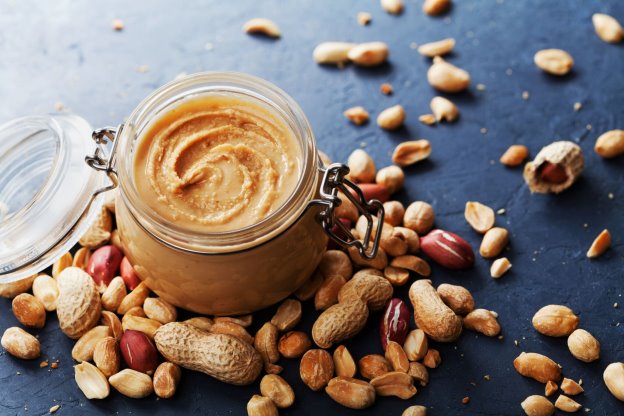
Americans Encouraged to Pause for PeanutsAlbany, Ga. (September 10, 2020) – For a health routine boost, add a dose of peanuts. Research shows pausing daily for peanuts or peanut butter does a body and mind good. Peanuts are a superfood so just a small amount can fend off mid-morning hunger, help eliminate the afternoon slump and deliver much-needed brainpower.To encourage better health, The Peanut Institute is launching a weeklong Pause for Peanuts program that kicks off on September 13, National Peanut Day. For seven days, the institute is suggesting everyone take a break to toss back some peanuts or enjoy a spoonful of peanut butter. “Research around the world has found that eating peanuts or peanut butter on a daily basis delivers numerous benefits, including sustained energy, improved mental cognition and, overall, a longer and healthier life,” says Samara Sterling, Ph.D., director of research forThe Peanut Institute. “Specifically, regular peanut consumption has been associated with a reduced risk of heart disease, diabetes and numerous kinds of cancer.” Peanut Protein Fuels the DayFor those who are looking to ward off hunger, an ounce of peanuts packs more protein than any other nut.1 A single serving of approximately 35 peanuts delivers seven grams of plant-based protein along with fiber and healthy fats, all of which contribute to satiety. In addition, peanuts stimulate peptide YY, a hormone that decreases appetite.“A study published in the British Journal of Nutrition found that participants who ate just three tablespoons of peanut butter with breakfast had a lower desire to eat 8-10 hours later,” explains Dr. Sterling. “Peanuts also have a low glycemic index that helps stabilize blood sugar to prevent the feeling of ‘crashing’ in the afternoon.”Snacking between meals is another way to avoid sluggishness. Dr. Sterling supports smart snacking that delivers nutritional benefits. For example, she suggests trading out a high-carbohydrate or “empty calorie” snack like pretzels with a serving of nutrient-dense peanut butter and carrots. “A healthy snack is a powerful tool that can deliver a much-needed boost of energy any time of the day,” says Dr. Sterling. More Power for the BrainThe benefits of peanut and peanut butter consumption go beyond the body and reach the brain.In addition to protein, a single serving of peanuts is packed with 19 vitamins and minerals, including the antioxidant resveratrol, which has been shown to increase blood flow to the brain.2 Peanuts also contain high levels of niacin and are a good source of vitamin E – two nutrients that support brain health and have long been known to protect against Alzheimer’s disease and age-related cognitive decline.3 Overall HealthPeanuts deliver both short-term and long-term health benefits. Research shows eating peanuts twice a week can reduce the risk of premature death by 12%4and reduce the risk for certain cancers, including colorectal, gastric, pancreatic and lung cancers5. Regular consumption can also reduce the risk of death due to heart disease by 24%, respiratory disease by 16%, infections by 32% and kidney disease by 48%.4“The advantage of peanuts is the fact that just a small amount can deliver significant benefits. What’s more, peanuts and peanut butter are affordable and convenient so they’re easy to incorporate into a daily diet,” says Dr. Sterling.For more information on the Pause for Peanuts program, visit peanutinstitute.com. The Peanut Institute website also features recipes that cover all parts of the day -- breakfast, lunch, dinner, dessert and snacks. # # #Sources:1. U.S. Department of Agriculture, Agricultural Research Service. 2013, USDA National Nutrient Database for Standard Reference, Release 26. Nutrient Data Laboratory Home Page, http://www.ars.usda.gov/ba/bhnrc/ndl.2. Kennedy DO, Wightman EL, Reay JL et al. Effects of resveratrol on cerebral blood flow variables and cognitive performance in humans: a double-blind, placebo-controlled, crossover investigation. Am J Clin Nutr. 2010;91(6):1590-97.3. Joseph JA, Fisher DR, Cheng V, Rimando AM and Shukitt-Hale B. Cellular and behavioral effects of stilbene resveratrol ana- logues: implications for reducing the deleterious effects of aging. J Agric Food Chem. 2008;56(22):10544-51.4. Bao Y, Han J, Hu FB. Association of nut consumption with total and cause-specific mortality. N Engl J Med. 2013;369:2001-11.5. Zhang D, Dai C, Zhou L, et al. Meta-analysis of the association between nut consumption and the risks of cancer incidence and cancer-specific mortality. Aging (Albany NY). 2020;12(11):10772-10794. doi:10.18632/aging.103292.
LOOKING REMOTELY GOOD: BEAUTY INDUSTRY STEPS UP TO MAKE STUDENTS & OFFICE WORKERS LOOK THEIR BEST ONLINE
TORONTO, ON – The shockingly sudden advent of the COVID-19 pandemic has forced a fundamental shift in how Canadians interact with friends & family, bosses & co-workers, and teachers & classmates. While much has been made of the virtual stampede to ZOOM, FaceTime, Skype and other video conferencing venues by employers and employees, teachers and students are about to join the rush as the nervously-anticipated 2020-21 school year is about to begin.
It’s certain to be a school year unlike any other – just ask college students at UNC-Chapel Hill, Michigan State or Notre Dame who were told their classes will be held remotely due to local COVID-19 outbreaks. At press time, universities in 19 U.S. states have reported COVID-19 outbreaks, despite having instituted protocols on campus. Could it happen here at U of T, Queens or even your local high school? If COVID-19 has taught us anything, it’s that we shouldn’t take anything for granted. Are you and your school-age children prepared for their time to shine online?
“Modern technology has enabled ‘alive but not live’ interactions that allow us to be up close and personal without getting in each other’s actual faces,” explains Jeff Alford, President and CEO of The CBON Group. “However, technology can be a double-edged sword. That’s because screen-time is very different from face-time and our appearance on-screen can vary dramatically from how we look in real life… all too often, it’s not a good look.”
Looking good on video has assumed newfound importance (and in some cases, notoriety) these days. While left-open doors and intruding pets & toddlers are part and parcel of working/studying from home, how you look when you “face” the world cannot be taken lightly. Here’s why:
Jeff Alford’s 5 TIPS on WHY YOU NEED TO LOOK GOOD ON VIDEO
Dressing for the Job: There’s an old cliché that goes something like “dress for the job you want, not the job you have.” Actually, both are true! Balancing home life with work/school life isn’t easy but some people are under the impression a video conference is a virtual extension of their home. Just the opposite: it’s an extension of their office or classroom. Dress, look and act accordingly – your job or your grades may depend on it.
Impressions Still Matter: You wouldn’t attend a budget meeting or a biology class wearing pyjamas and rocking some serious “bed head”, now would you? Yet it happens, more often then you’d think! The internet is chock-a-block with tales of office drones who apparently roll out of bed and right into a video conference… just because they can! Think your boss, professor, co-workers and/or classmates will be impressed by your “dreamy” look? Better think again.
Timing is Everything: One downside of working from home is the erosion of the traditional 9-to-5 (or 9-to-3, for many schools) day. Homework such as group projects are often conducted before or after the dinner hour and as for office workers, you’d best look bright-eyed and bushy-tailed when the boss wants something done and they want to see you NOW. Oh, and don’t forget to take off that lobster bib before answering your boss’s urgent late-evening ZOOM invite.
Appearance Pressure: For most kids these days, the pressure to fit-in socially at school can exceed the need to ace their studies. Unflattering lighting, a bad hair day, chipped or mismatched nails, even an untimely “maskne” breakout… what may be passing embarrassments for most of us could trigger major anxiety in your school-age child.
All of the above factors have now taken on even greater importance as summer vacation ends and the new school year begins. “The camera judges us without mercy,” states Cheryl Gushue, Professional Beauty Expert & Fashion Creative Curator at Beauty Hub. “If you’ve ever wondered why our favourite actors and actresses look so good, check out the credits at the end of the show. Professional makeup artists, lighting technicians and post-production engineers are paid handsomely to bring out the best in their subjects. If you had them on-call at home, you’d be the star of every video conference!”
Trouble is, you DON’T have them at home and even if you wanted them, they’re WAY out of your price range. As for slacking off and showing up for virtual class in PJs or worse, educators are unleashing their inner internet “fashion police” by enforcing dress codes to students who attend classes remotely. What to do?
What NOT to do, is trust your reputation to some self-important YouTube influencer who cares more about their subscribers than your social status. Instead, support your local salon by saying “so long” to amateur marketers. “Canada’s beauty industry employs over 200,000 Canadians, 85% of whom are women, many of whom are the sole financial support for their families,” states Alford. “They know their stuff – and they know how to make you look good whether it’s in person or in pixels.”
The CBON Group (Cosmetic Brands Of North America) is the largest master distributor in Canada for the professional beauty industry and is Canada’s largest supplier of professional infection control products. For more information, please visit CBON’s Infection Control Education Centre at infectioncontroleducation.com and the company’s home page at www.cbongroup.com
True Story of Survival Opens Minds and Dialogues about Mental Health
New York NY, Sept. 10, 2020 — Mark Henick stood precariously on the wrong side of the railing on a crumbling, concrete overpass. The bridge spanned two realities and, for Henick, had become a symbol of escape — in one form or another. A voice behind him tried to help. A crowd gathered. Siren lights flashed in his peripheral vision. Surrounded but still alone, Henick let go.
So-Called Normal: A Memoir of Family, Depression and Resilience from Mark Henick is a vital and triumphant story of perseverance and recovery by one of North America’s foremost advocates for mental health.
Henick’s near-death experience on the overpass that night would alter his emotional orbit just enough that his exit from a psychiatric ward following that suicide attempt in 2003 would be his last. His transformation didn’t happen overnight — it was a gradual process punctuated with new challenges and setbacks — but slowly, his patterns reversed and he began a profound, “upward” spiral toward recovery.
So-Called Normal chronicles Henick’s youth and the events that led to that fateful night on the bridge and the experiences and transformation that followed. It is a vivid and personal account of a boy who had to deal with the breakdown of his parents’ marriage, an abusive stepfather, bullying and trauma — all while trying to navigate his progressively worsening mental health. In the backdrop is a community that didn’t talk about mental illness, one where silence and maintaining the comforts of “normal” was paramount.
So-Called Normal is not a “misery memoir” about suicide — it’s a gripping, inspirational story of survival that has already touched the hearts of many, including television personality Rosie O’Donnell.
“Mark Henick is a powerful storyteller. His vivid account of his early years as a depressed, suicidal teenager is a page-turner. So-Called Normal is beautifully written, heart-wrenching, and hopeful. Necessary reading for anyone who wants a peek inside the mind of someone who journeyed through mental illness and found hope on the other side,” O’Donnell said.
Author Mark Henick’s TEDx talk about being saved from death by a stranger is one of the most watched in the world and has been viewed millions of times. His search for “the man in the brown jacket” whose bravery and strong arms kept him from falling to his death went viral around the world (and was successful!). Henick has been on television and radio and has written many articles on mental health. He has hosted more than 60 intimate conversations about mental health with notable public figures and celebrities on his podcast, So-Called Normal, and has executive produced and hosted the Living Well podcast for Morneau Shepell. Henick has served on the board of directors for the Mental Health Commission of Canada, and was the president of a provincial division of the Canadian Mental Health Association — the youngest person in either role. He has worked as a frontline clinician, a program manager and the national director of strategic initiatives for CMHA. Currently the CEO and principal strategist for Strategic Mental Health Consulting, Mark Henick is in high demand as an international keynote speaker on mental health recovery.
Eclectic Mix of Kosher Comfort Foods and Other Family Favorites Perfect for At Home Dining
Dallas, TX, September 10, 2020 — If homemade meals have become dull or repetitive, it may be time to broaden your repertoire. It’s possible for any cook — with the suggestions and guidance in Kenneth M. Horwitz’s award-winning book, Deep Flavors: A Celebration of Recipes for Foodies in a Kosher Style — to prepare delicious dinners and mouth-watering desserts. Perfect for those who love cooking kosher or vegetarian, or simply experimenting with new recipes, Deep Flavors features an abundance of tempting dishes drawing from many cultures, complete with helpful tips ranging from how to source ingredients to proper preparation.
“Cooking is worth some effort and attention to detail,” Horwitz writes. “The positive reactions from family or guests, as well as your own enjoyment, will make it worthwhile.”
“Effort” and “attention to detail,” however, don’t have to equate with “difficult.” In fact, throughout Deep Flavors, Horwitz shares his wisdom for breaking recipes into simple steps — and how to do some of this prep work well in advance so that delicious meals can be served even with a hectic schedule.
Between the covers of Deep Flavors, Horwitz offers an eclectic menu that includes traditional Jewish dishes plus other regional and international favorites reinterpreted to observe some or all of the rules for kosher foods. The result is a diverse anthology of recipes that will appeal to broad audiences everywhere — Jewish and otherwise.
Horwitz, an attorney and CPA by trade, explained in an interview with Today’s CPA that, “My approach to cooking is really an extension of what I do in my professional practice. I solve problems. One of the ‘problems,’ at least in my house, is that since we maintain a kosher house, but eat eclectically, is how to convert recipes so that they are kosher …”
Horwitz’s Texas State Fair Blue Ribbon-winning Spinach/Mushroom Lasagna, for instance, is a completely original vegetarian lasagna accessible to Jews and vegetarians, with a unique twist on ingredients that gives it a complex flavor profile. Even recipes for classic foods such as brisket and roast turkey contain newly imagined taste combinations and techniques to elevate them while maintaining recognizable hallmarks of each dish. Another recipe that epitomizes the standard set by Horwitz, yet remarkably simple to execute, is the Dill French Toast: savory, unique, and delicious.
Horwitz’s ultimate goal was to create recipes that are readable and easily followed by anyone with a basic knowledge of cooking. He provides detailed instructions with enhanced explanations and alternatives, helpful for both the novice and the more experienced cook.
A Readers’ Favorite reviewer, who gave Deep Flavors a 5-star rating, referred to the book as “… an essential addition to any cookbook fanatic's collection and to anyone who believes in spending the time and effort to make the ‘food’ experience a real work of art …”
With 52 years in a general tax and transaction practice as a CPA and lawyer, Ken Horwitz has a creative and focused approach to finding and fixing problems — a skill that translates well to the development of and modification of recipes based on traditional family favorites but tailored to one’s personal tastes and dietary needs. His professional drive and the care given to his work have earned him multiple awards, including the Honorary Fellow for a lifetime of distinguished service and the 2017 Chairperson of the Year by the Texas Society of CPAs. Currently residing in Dallas, Texas, Horwitz enjoys sharing his passion for cooking with his wife, children and grandchildren. Horwitz believes that one of the highest compliments he has received came from a longstanding client who uses numerous lawyers. He said, “Ken, you are the only lawyer we use whose work we have not had to fix.” Horwitz’s goal is for Deep Flavors to reach that same standard.
Deep Flavors Publisher: Inspire on Purpose ISBN-13: 978-1-941782-51-4 ISBN-10: 1-941782-51-5 Available from Amazon.com
###
The Train It Right Life - Stop Expecting Instant Results - Pro Debut Story - On this weeks episode I get personal. I tell a bit more about my pro debut story. And why I need to re-do it. I talk about peoples high expectations of results and expecting results instantaneously with their programs. I talk about the difference between a crash diet and a lifestyle. I hope you enjoy the realness! Don't forget to leave a review and some stars! Follow me on all social @trainitright or www.trainitright.com