Element Nutritional Sciences Inc. (Formerly PJ1 Capital Corp.) Acquires Element Nutrition Inc. and Hammock Pharmaceuticals, Inc.
Element Nutrition is a Burlington, Ontario-based nutraceutical company with exclusive access to a patented formulation (RejuvenateTM) demonstrated through 25+ clinical trials, to help prevent muscle loss due to aging (Sarcopenia).
Sarcopenia is an underserved market, expected to reach US$1.3 billion in annual revenue by 20251.
Element Nutrition already has 9,000 points of distribution for Rejuvenate (11,000 points of distribution by end of Oct-2020) with well-known U.S. retailers such as CVS and Walmart, and Canadian retailers such as Loblaw, Shoppers Drug Mart and Rexall.
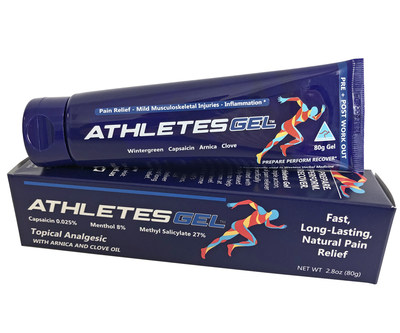
Hammock Consumer is a Charlotte, North Carolina-based consumer health company. Its lead product, Athletes GelTM, is an all-natural, topical analgesic that includes three FDA approved ingredients and is specifically designed for fast-acting and long-lasting pain relief.
The growing topical pain market is estimated to be over US$1 billion dollars in 2020.
VANCOUVER, BC, Sept. 2, 2020 /CNW/ - Element Nutritional Sciences Inc., a private company, today announced that it has acquired Element Nutrition Inc. ("Element Nutrition") and Hammock Pharmaceuticals, Inc. ("Hammock Consumer"), and changed its name from PJ1 Capital Corp. to Element Nutritional Sciences Inc. (the "Company" or the "Resulting Issuer"). Further details of the acquisitions are contained in the section "Business Combination".
Element Nutrition Element Nutrition is an innovative, research driven Canadian nutraceutical company specializing in the development of science-based products for the Global Consumer Packaged Goods ("CPG") market, with a portfolio focused specifically on men and women over the age of 50.
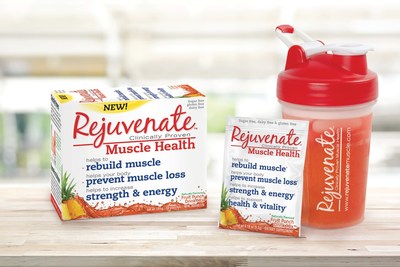
Element Nutrition's lead product, Rejuvenate is a proprietary, patented formulation that has clinically proven efficacy in helping prevent muscle loss due to Sarcopenia (muscle loss due to aging). Rejuvenate comes in pouches and the powder can be mixed with regular water. The Company will have Rejuvenate ready-to-drink available for purchase in the fall of 2020. Rejuvenate ready-to-drink offers 15 grams of organic plant protein in a 330ml tetra pak. It is sugar free, gluten free, dairy free and free of artificial sweeteners and colors.
Rejuvenate is already being sold through 9,000 points of distribution. Element Nutrition has received additional shelf space commitments for Rejuvenate, which will expand availability to a total of approximately 11,000 points of distribution by the end of October 2020. The Company currently has agreements with U.S. retailers such as: CVS Health Corporation and Walmart Inc.; and Canadian retailers such as: Loblaw Companies Limited, Shoppers Drug Mart Corporation, and Rexall Pharmacy Group.
1 Primary interviews, Zion Market Research
Element Nutrition has been built to scale efficiently and quickly, with established warehousing and infrastructure to enable seamless North America-wide distribution, and an operating e-commerce platform that guarantees shipment to 98% of the U.S. population within two business days.
Element Nutrition's portfolio also includes: JAKTRX, an elite brand of performance supplements.
Stuart Lowther, MSc., BSc. – Chairman and CEO of Element Nutrition
Element Nutrition was founded in Burlington, Ontario in 2015 by Stuart Lowther, a two-time nominee for Ernst & Young Entrepreneur of the Year and an experienced nutraceutical executive, with a proven track record of creating value for shareholders. Prior to founding Element Nutrition, Mr. Lowther was the founder, President and CEO of Life Science Nutritionals ("LSN"), which was consistently listed among Canada's fastest growing companies until its sale to Santa Cruz Nutritionals in 2015. Prior to LSN, he was International Sales Manager for Jamieson Laboratories, where his efforts resulted in an increase in revenue of greater than 14 times over a two-year period until the company's sale in 2014 to a U.S.-based private equity firm. Mr. Lowther was also an executive at IOVATE Health Sciences, where he played a key role in growing the business from $40 million in revenue to over $200 million annually.
Mr. Lowther's team is comprised of seasoned executives that bring experience growing and managing well-known CPG and nutraceutical brands.
Hammock Consumer
Hammock Consumer was formed to bring unique, safe and effective consumer health products to the U.S. and Canadian markets. Hammock Consumer's lead product, Athletes GelTM, was launched in January 2020. The company continues to build its U.S. distribution network through retail and wholesale channels. In addition, Hammock Consumer has a proprietary e-commerce platform for direct to consumer distribution. Hammock Consumer continues to develop pipeline products that will provide superior treatment options to consumers and healthcare providers, while pursuing product acquisition opportunities to further advance the company's portfolio.
William Maichle – CEO of Hammock Consumer William Maichle is the founder, CEO and President of Hammock Consumer, which was founded in North Carolina in February 2016. Mr. Maichle is an accomplished healthcare industry executive with 24 years of experience in product development, mergers & acquisitions, licensing, sales & marketing, and commercial operations. His career includes Chief Operating Officer at ProEthic Pharmaceuticals, and its successor company, Kowa Pharmaceuticals America, Inc. Mr. Maichle held the positions of CEO, Nautilus Neurosciences and President, Tribute Pharmaceuticals US (both of which were sold to publicly traded companies) prior to founding Hammock in 2016. Mr. Maichle has held numerous board and advisory board positions in the healthcare sector.
Management Commentary
Stuart Lowther, Chairman and CEO of Element Nutrition commented, "In a rapidly growing market already worth over $1 billion1 annually, there are limited offerings available to men and women over the age of 50 to directly counteract natural muscle loss due to aging. With exclusive access to the only formulation that has been proven through 25+ clinical trials to rebuild, restore and rejuvenate muscle tissue, Element Nutrition is stepping into that gap. Our team has already established a robust ecommerce platform and secured 11,000 points of distribution across the U.S. and Canada for October 2020. We are also engaged in active discussions to enter target jurisdictions in Europe and Asia."
Mr. Lowther added, "With a track record of building valuable brands from start-up to sale and driving profitable growth at some of the most recognizable CPG, wellness and nutraceutical companies globally, we have the right senior management team to create shareholder value as we build Element Nutrition into a leader in the global consumer packaged goods market."
William Maichle, CEO of Hammock Consumer commented, "We are excited about Element Nutrition and Hammock Consumer joining forces. The Element Nutrition team have a great track record in consumer health, and we look forward to bringing additional depth to the combined Company."
Business Combination
The Company acquired Element Nutrition and Hammock Consumer effective August 31, 2020 pursuant to: (i) a share exchange agreement (the "Element Share Exchange Agreement") under which the Company acquired all of the issued and outstanding shares of Element in consideration of the issuance of 24,375,000 common shares to the former shareholders of Element Nutrition; and (ii) a merger agreement (the "Hammock Consumer Merger Agreement") under which the Company acquired all of the issued and outstanding shares of Hammock Consumer in consideration of the issuance of 9,375,000 common shares to the former shareholders of Hammock Consumer. As part of the Element Share Exchange Agreement and the Hammock Consumer Merger Agreement, the Company reserved for issuance an aggregate of 24,000,000 management performance warrants (the "Management Performance Warrants"). Each of the Element Share Exchange Agreement and the Hammock Consumer Merger Agreement contains voluntary lock-up provisions that apply to the former shareholders of Element Nutrition and Hammock Consumer.
Capitalization of the Resulting Issuer
The Company has outstanding 55,983,162 common shares, 24,000,000 Management Performance Warrants each of which is exercisable at C$0.30 until August 31, 2025 in the event certain performance targets are met and 1,333,300 options each of which is exercisable at $0.30 until August 31, 2025.
About the Company
The Company commenced operations in June 2020 with the objective of completing the acquisition of Element Nutrition and Hammock Consumer.
About Element Nutrition Inc.
Element Nutrition is an innovative, research driven Canadian nutraceutical company specializing in the development of science-based products for the Global Consumer Packaged Goods ("CPG") market, with a portfolio focused specifically on men and women over the age of 50. Element Nutrition's lead product, Rejuvenate, is a proprietary formulation that is clinically proven to assist in the rebuilding, restoration and rejuvenation of natural loss of muscle mass due to aging or other medical conditions. Element Nutrition also offers JAKTRX, an elite brand of performance supplements. Element Nutrition was founded in 2015 and is located in Burlington, Ontario.
Hammock Consumer is a consumer-focused healthcare company located in Charlotte, North Carolina. The company is dedicated to finding and providing topical, non-allergenic, natural-based solutions to treat a variety of skincare needs. Due to health education and rising prescription costs, consumers are increasingly taking control of their healthcare decisions. Hammock Consumer endeavors to meet consumer demands by offering a variety of over-the-counter products via e-commerce, in select markets, and on a national retail basis.
This news release contains "forward-looking information" and "forward-looking statements" (collectively, "forward looking statements") within the meaning of the applicable Canadian securities legislation. All statements, other than statements of historical fact, are forward-looking statements and are based on expectations, estimates and projections as at the date of this news release. Any statement that involves discussions with respect to predictions, expectations, beliefs, plans, projections, objectives, assumptions, future events or performance (often but not always using phrases such as "expects", or "does not expect", "is expected", "anticipates" or "does not anticipate", "plans", "budget", "scheduled", "forecasts", "estimates", "believes" or "intends" or variations of such words and phrases or stating that certain actions, events or results "may" or "could", "would", "might" or "will" be taken to occur or be achieved) are not statements of historical fact and may be forward-looking statements. In this news release, forward looking statements relate, among other things, to: internal expectations; expectations of the industry in which the Company's products will be marketed and sold; the safety and efficacy of the Company's consumer health and nutraceutical products; expectations for future capacity, costs and opportunities; warehousing, distribution and delivery logistics for the Company's products; anticipated synergies resulting from the completion of the Business Combination; the effect of the transaction on the merged companies and their strategy going forward; and forecasts with respect to the size of the muscle loss and topical pain markets in the United States and Canada.
These forward-looking statements are based on reasonable assumptions and estimates of management of the Company at the time such statements were made. Actual future results may differ materially as forward-looking statements involve known and unknown risks, uncertainties and other factors which may cause the actual results, performance or achievements of the Company to materially differ from any future results, performance or achievements expressed or implied by such forward-looking statements. Such factors, among other things, include: fluctuations in general macroeconomic conditions; expectations regarding the size of the United States and Canadian health, nutraceutical and wellness markets and changing consumer habits; the viability of the Company's products; availability of distribution channels for the Company's product offerings; the ability of the Company to successfully achieve its business objectives; plans for expansion; successful development of the Company's proposed products; the presence of laws and regulations that may impose restrictions or recalls on the sale of the Company's products in the United States and Canada; customer and distributor relations; fluctuations in securities markets; and the inability of the Company to obtain adequate insurance to cover risks and hazards. Although the forward-looking statements contained in this news release are based upon what management of the Company believes, or believed at the time, to be reasonable assumptions, the Company cannot assure shareholders that actual results will be consistent with such forward-looking statements, as there may be other factors that cause results not to be as anticipated, estimated or intended. Readers should not place undue reliance on the forward-looking statements and information contained in this news release. The Company assumes no obligation to update the forward-looking statements of beliefs, opinions, projections, or other factors, should they change, except as required by law.
No stock exchange, securities commission or other regulatory authority has approved or disapproved the information contained herein.
A local drug and alcohol treatment center is hoping to prevent deaths of despair, which are deaths related to drugs, alcohol and/ or suicide by raising awareness about National Recovery Month this September.
TREASURE ISLAND, Fla. – According to recent reports, deaths of despair, inducing deaths related to drugs, alcohol and suicide, are skyrocketing this year due to the economic collapse caused by the response to COVID-19, which has forced millions of Americans into unemployment.
According to the report, which was published by Well Being Trust and the Robert Graham Center, experts are now predicting more than 150,000 additional deaths could be added to the yearly deaths of despair. To put things in perspective, when the economy was doing well in 2018 there were more than 180,000 deaths of despair. Now, doctors are worried that number could climb by more than 150,000 additional deaths.
“This news is absolutely heartbreaking and staggering, however, it doesn’t have to be this way,” said John Templeton, founder of Footprints Beachside Recovery Center a drug and alcohol rehabilitation facility in Treasure Island, Florida. “We’ve had hundreds of people successfully complete our drug and alcohol treatment programs, and with National Recovery Month kicking off tomorrow, we need to do all we can to help people find sobriety and claim recovery by letting them know that there is hope.”
September is National Recovery Month and experts from Footprints are hoping to encourage those who are struggling with drug and alcohol abuse and dependency.
“We absolutely know that many suicides are linked to alcohol and drug related problems, and we want those people to know that we are here for them, and we want to help,” Templeton said.
Footprints provides treatment options including day/night treatment, a men’s program, women’s program, outpatient treatment, relapse prevention, sober living, detox, treatment for professionals, and treatment for doctors, nurses and healthcare professionals. Some of the areas of treatment are for alcohol, heroin, meth, cocaine, opioids, ecstasy, marijuana, hallucinogens and dual diagnosis disorders.
National Recovery Month is a national observance held every September by the Substance Abuse and Mental Health Services Administration to educate Americans that substance use treatment and mental health services can enable those with mental and substance use disorders to live healthy and rewarding lives. Now in its 31st year, Recovery Month celebrates the gains made by those living in recovery.
Founded in 2008, Footprints Beachside Recovery Center is a small, private, holistic substance abuse treatment center for adults and is located in Pinellas County, Fla. Footprints provides specialized treatment plans for patients from throughout the U.S. and around the world. Opioid addiction recovery programs at Footprints focus on ensuring safe withdrawals and often combine holistic treatment with medication assisted therapies to reduce cravings and provide more successful recovery outcomes for patients.
Holistic, Science-Backed Program Helps Build a Healthier Relationship with Food, Eating and Weight
San Francisco, CA, Sept. 1, 2020 — Could a dietary lifestyle that nourishes us physically, emotionally, spiritually and socially be the answer to stemming America’s rising tide of overeating and obesity?
Original research points to yes, and in Whole Person Integrative Eating: A Breakthrough Dietary Lifestyle to Treat the Root Causes of Overeating, Overweight, and Obesity, nutrition researcher Deborah Kesten, M.P.H., and behavioral scientist Larry Scherwitz, Ph.D., offer documented proof that by nourishing ourselves multi-dimensionally each time we eat, we can develop deeper, healthier relationships with food and eating that leads to attaining and maintaining weight loss. The authors’ Whole Person Integrative Eating (WPIE) program is not a diet that a person goes on … then off. WPIE is a scientifically sound, dietary lifestyle designed to be practiced for a lifetime.
"If people follow the revolutionary program outlined in this game-changing, insightful book, it may be the most helpful step they can take toward losing weight and keeping it off," says bestselling author Kenneth Pelletier, M.D., clinical professor of medicine at University of California School of Medicine, San Francisco.
Divided into three parts, Whole Person Integrative Eating begins by describing seven root causes of overeating: Emotional Eating, Food Fretting, Fast Foodism, Sensory Disregard, Task Snacking, Unappetizing Atmosphere and Solo Dining. A Self-Assessment Quiz follows, with 76 questions to help readers identify their unique food choices and eating behaviors that lead to overeating and weight gain. Part Two provides a step-by-step guide to WPIE antidotes for each overeating style. It also explains why the elements of WPIE work and how they can be incorporated into daily life. And Part Three offers over 30 recipes based on the three main criteria of WPIE: fresh, whole and "inverse,” meaning mostly plant-based foods with small or no servings of animal-based foods.
An excerpt from the Foreword of Whole Person Integrative Eating by New York Times best-selling author Dean Ornish, M.D., Clinical Professor of Medicine, University of California:
“[The book] offers an evidence-based alternative to the conventional wisdom about attaining and maintaining weight loss. What’s groundbreaking about Kesten and Scherwitz’s research is twofold: They have created a scientifically sound, comprehensive, and integrative program for treating overeating, overweight, and obesity based on these principles. And in addition to what (food choices) and how(eating behaviors) we eat, they have identified seven statistically significant root reasons to explain why we overeat: what they call “new normal overeating styles” and eating behaviors that also have a profound influence on how much we eat and weigh.”
The authors’ paradigm-shifting message is that food influences not only the physical dimensions of health, but also our emotional, spiritual and social well-being. Their dietary lifestyle can build bridges between the millions who struggle with overeating and weight issues and the medical community. And it can inspire us all to re-envision our relationships with food, eating and weight, so that each time we eat, we are nourished … for life.
Deborah Kesten, MPH,is an international nutrition researcher, award-winning author, and medical/health writer, with a specialty in preventing and reversing obesity and heart disease. She served as Nutritionist on Dean Ornish, M.D.’s first clinical trial for reversing heart disease through lifestyle changes, the results of which were published in the Journal of the American Medical Association. She has served as Director of Nutrition at cardiovascular clinics in Europe and on the Board of Directors of the American Heart Association, San Francisco, for 10 years.
Kesten has published more than 400 nutrition and health articles. Her first book, Feeding the Body, Nourishing the Soul, received the first-place gold award in the Spirituality category from the Independent Publisher Book Awards. Whole Person Integrative Eating has been honored with the #1 gold, best-book award in the Health category by Book Excellence Awards. She is a VIP Contributor at Arianna Huffington’s Thrive Global, and is married to behavioral scientist and co-author of Whole Person Integrative Eating, Larry Scherwitz, Ph.D.
Holistic, Science-Backed Program Helps Build a Healthier Relationship with Food, Eating and Weight
San Francisco, CA, Sept. 1, 2020 — Could a dietary lifestyle that nourishes us physically, emotionally, spiritually and socially be the answer to stemming America’s rising tide of overeating and obesity?
Original research points to yes, and in Whole Person Integrative Eating: A Breakthrough Dietary Lifestyle to Treat the Root Causes of Overeating, Overweight, and Obesity, nutrition researcher Deborah Kesten, M.P.H., and behavioral scientist Larry Scherwitz, Ph.D., offer documented proof that by nourishing ourselves multi-dimensionally each time we eat, we can develop deeper, healthier relationships with food and eating that leads to attaining and maintaining weight loss. The authors’ Whole Person Integrative Eating (WPIE) program is not a diet that a person goes on … then off. WPIE is a scientifically sound, dietary lifestyle designed to be practiced for a lifetime.
"If people follow the revolutionary program outlined in this game-changing, insightful book, it may be the most helpful step they can take toward losing weight and keeping it off," says bestselling author Kenneth Pelletier, M.D., clinical professor of medicine at University of California School of Medicine, San Francisco.
Divided into three parts, Whole Person Integrative Eating begins by describing seven root causes of overeating: Emotional Eating, Food Fretting, Fast Foodism, Sensory Disregard, Task Snacking, Unappetizing Atmosphere and Solo Dining. A Self-Assessment Quiz follows, with 76 questions to help readers identify their unique food choices and eating behaviors that lead to overeating and weight gain. Part Two provides a step-by-step guide to WPIE antidotes for each overeating style. It also explains why the elements of WPIE work and how they can be incorporated into daily life. And Part Three offers over 30 recipes based on the three main criteria of WPIE: fresh, whole and "inverse,” meaning mostly plant-based foods with small or no servings of animal-based foods.
An excerpt from the Foreword of Whole Person Integrative Eating by New York Times best-selling author Dean Ornish, M.D., Clinical Professor of Medicine, University of California:
“[The book] offers an evidence-based alternative to the conventional wisdom about attaining and maintaining weight loss. What’s groundbreaking about Kesten and Scherwitz’s research is twofold: They have created a scientifically sound, comprehensive, and integrative program for treating overeating, overweight, and obesity based on these principles. And in addition to what (food choices) and how(eating behaviors) we eat, they have identified seven statistically significant root reasons to explain why we overeat: what they call “new normal overeating styles” and eating behaviors that also have a profound influence on how much we eat and weigh.”
The authors’ paradigm-shifting message is that food influences not only the physical dimensions of health, but also our emotional, spiritual and social well-being. Their dietary lifestyle can build bridges between the millions who struggle with overeating and weight issues and the medical community. And it can inspire us all to re-envision our relationships with food, eating and weight, so that each time we eat, we are nourished … for life.
Deborah Kesten, MPH,is an international nutrition researcher, award-winning author, and medical/health writer, with a specialty in preventing and reversing obesity and heart disease. She served as Nutritionist on Dean Ornish, M.D.’s first clinical trial for reversing heart disease through lifestyle changes, the results of which were published in the Journal of the American Medical Association. She has served as Director of Nutrition at cardiovascular clinics in Europe and on the Board of Directors of the American Heart Association, San Francisco, for 10 years.
Kesten has published more than 400 nutrition and health articles. Her first book, Feeding the Body, Nourishing the Soul, received the first-place gold award in the Spirituality category from the Independent Publisher Book Awards. Whole Person Integrative Eating has been honored with the #1 gold, best-book award in the Health category by Book Excellence Awards. She is a VIP Contributor at Arianna Huffington’s Thrive Global, and is married to behavioral scientist and co-author of Whole Person Integrative Eating, Larry Scherwitz, Ph.D.
ODS Medical, Inc. closes a new financing round to further support product development diversification of applications
MONTREAL, Sept. 1, 2020 /CNW/ - ODS Medical, Inc., a Montreal based medical technology company, is pleased to announce a new financing round to support product engineering and regulatory work. ODS Medical is bringing together the power of machine learning and molecular imaging to develop optical biopsy tools based on Raman spectroscopy. These tools are bringing real time tissue characterization to operating rooms and diagnostic suites, detecting the presence of invasive cancer directly in the patient during procedures. The amount of funding has not been disclosed.
The round was led by a strategic investor and supported by MEDTEQ+ other new and current investors. ODS will use the new funds to further develop its neurosurgical application for regulatory approval, add to its engineering and regulatory teams and launch new clinical sites in Canada and the US.
"The ODS Medical team is very excited to welcome new investors to our efforts to provide more data-driven surgical oncology care to cancer patients," said Christopher Kent, President & CEO of ODS Medical. "With this added support, we are focused on our next chapter of scaling operations to support multiple clinical studies in various indications and get our SentryTM system into the hands of neurosurgeons in Canada, the EU and the US."
ODS is already expanding their applications into multiple tumor types through meaningful co-development partnerships, proving that ODS Medical is building a tumor detection platform able to scale across numerous indications.
About ODS Medical ODS Medical Inc. is a Montreal-based medical technology company dedicated to bringing the next generation of diagnostic tools to the hands of physicians. The SentryTM Raman spectroscopy system for real-time tissue characterization is pushing the limits of cancer detection in many procedures. By integrating cutting edge optical probes with sophisticated AI software, ODS Medical empowers doctors to make critical decisions, in real-time, to improve patient safety and outcomes. You can find out more at www.odsmed.com
About MEDTEQ+ MEDTEQ+ (www.medteq.ca) is the pan-Canadian Consortium for Industrial Research and Innovation in Medical Technology. Its mission is to accelerate the development of innovative technological solutions to improve patients' health and quality of life. MEDTEQ+ relies on the financial support of the Government of Quebec, the Government of Canada (delivered through the Centres of Excellence for Commercialization and Research (CECR)), the private sector and complementary partners to foster research-industry relations.
SOURCE MEDTEQ+
Therapy Dogs Offer New Fibromyalgia Management Option
Better Together Study from Purina and Mayo Clinic found people with fibromyalgia experienced a more positive emotional-physiologic state after single session with therapy dog
For condition with no known cure, researchers identify animal-assisted activity is an effective tool to help manage the physical and mental health of fibromyalgia patients
Therapy dogs studied too; physiologic readings suggest dogs calmer at the end of patient sessions
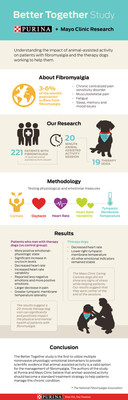
TORONTO, ON, Sept. 1, 2020 /CNW/ - New research from Purina and Mayo Clinic brings a pet-centered treatment option to the forefront for patients with fibromyalgia, a chronic centralized pain sensitivity disorder characterized by widespread musculoskeletal pain accompanied by fatigue, sleep, memory and mood issues. A newly published study by Mayo Clinic and Purina researched the impact of animal-assisted activity sessions in patients with fibromyalgia and found benefits of the interaction to patients and the therapy dogs working to help them.
The Arthritis Society estimates that 800,000 or roughly 2 percent of Canadians suffer from fibromyalgia. Purina and Mayo Clinic designed the Better Together study to investigate the direct effects of animal-assisted activity in patients with fibromyalgia. At the same time, the study measured the emotional state of the therapy dogs during the treatment session to better understand the impacts on these specially trained canine companions. For both patients and the therapy dogs, researchers used multiple non-invasive physiological biomarkers, including salivary oxytocin and cortisol concentrations, tympanic membrane temperatures and various cardiac parameters.
"The Better Together study showed therapy animals could be an evidence-based treatment option, and healthcare professionals should strongly consider utilizing animal-assisted activity in the care of their patients with fibromyalgia," said Arya Mohabbat, M.D., assistant professor of medicine in the Division of General Internal Medicine at Mayo Clinic, and lead Mayo Clinic researcher on the project.
While fibromyalgia has some effective treatment strategies, most individuals live with chronic symptoms and look for non-conventional treatments in search of relief. For 221 patients, each enrolled in the Mayo Clinic Fibromyalgia Treatment Program, an outpatient program staffed by physicians from the Mayo Clinic Division of General Internal Medicine, the Better Together study provided reprieve for those in the treatment group and hope for those in the control group.
The Better Together study found the patients in the treatment group were in a more positive emotional-physiologic state as a result of the animal-assisted activity session compared to the control group. People who interacted with therapy dogs saw their oxytocin levels increase significantly, while their heart rates decreased. They reported less negative emotions and more positive emotions. The results suggest a 20-minute therapy dog visit can significantly and positively impact the physical and mental health of patients with fibromyalgia.
Therapy Dogs Calmer
Despite the widespread use of therapy dogs in clinical settings, there's a lack of understanding of the impact of animal-assisted activity sessions on the emotional state of the dogs. In addition to interacting with patients of all ages in varying physical and emotional states as part of their work, therapy dogs are exposed to novel environments that may include new sights, sounds and textures that require ongoing focus and adaptation.
The study found the dogs – all members of the Mayo Clinic Caring Canines Program, which varied in breed, age and size – did not show signs of stress during the animal-assisted activity session and may have been in a more relaxed state at the end of the session. For most parameters, there were no changes in the dogs, signaling contentment; however, for those that did change, they pointed to a more positive emotional and physiological state, such as a significantly lower heart rate, at the end of the session. This signals the dogs were not only good at their jobs, but in many cases, enjoyed the work they were doing with patients.
"We need to expand our understanding of how animal-assisted activity impacts therapy dog's wellbeing, and this sizeable study with 19 dogs of various breeds provided solid evidence that animal-assisted activity done in the right condition does not have negative impacts on well-trained therapy dogs," said François Martin, M.A., Ph.D., Applied behavior and welfare research section leader at Purina, and lead Purina scientist on the project. "This only encourages us to do more research to continue to demonstrate the power of the human-animal bond on people while ensuring assistance animals also experience positive wellness as a result of their work."
The Better Together study is the first one to utilize physiologic parameters to provide scientific evidence that animal-assisted activities is a valid option for the management of fibromyalgia. The authors of the study believe that animal-assisted activity should become a standard treatment strategy to help patients manage this chronic condition.
About Nestlé Purina PetCare Nestlé Purina PetCare creates richer lives for pets and the people who love them. Founded in 1894, Purina has helped dogs and cats live longer, healthier lives by offering scientifically based nutritional innovations. Purina manufactures some of the world's most trusted and popular pet care products, including Purina ONE, Pro Plan, Fancy Feast and Tidy Cats. Our more than 8,000 U.S. associates take pride in our trusted pet food, treat and litter brands that feed 49 million dogs and 66 million cats every year. More than 500 Purina scientists, veterinarians, and pet care experts ensure our commitment to unsurpassed quality and nutrition.
Purina promotes responsible pet care through our scientific research, our products and our support for pet-related organizations. Over the past five years, Purina has contributed more than $150 million towards organizations that bring, and keep, people and pets together, as well as those that help our communities and environment thrive.
Purina is part of Nestlé, a global leader in Nutrition, Health and Wellness. For more information, visit purina.com or subscribe here to get the latest Purina news.
SOURCE PURINA
Fullscript is now a Certified Carbon Neutral Organization
Fullscript announces it is now proudly a certified carbon-neutral organization, neutralizing its carbon footprint from January 1st, 2020 onwards.
SCOTTSDALE, Ariz., Sept. 1, 2020 /CNW/ - Every day, thousands of people start their wellness journeys. Today, Fullscript starts its own. Fullscript is now certified by Carbonzero as a carbon-neutral organization, offsetting emissions from January 1st, 2020 onwards.
Fullscript will offset approximately 3364 tons of CO2 equivalent emissions in 2020 and will invest further in projects to directly reduce its carbon footprint as the company continues to grow. Going forward, any emissions that Fullscript can't eliminate will be offset through investments in verified greenhouse gas reduction projects, such as those provided by Carbonzero.
"Fullscript is proud to be certified carbon neutral as of 2020. This is the first big step in our sustainability journey, but it's far from the end. We're committed to continually reinventing our practices to help our planet get better," said Fullscript Chief Executive Officer Fran Towey. "Together, we're tackling climate change for the health of our planet and of all people."
Climate change is a major threat to global health, and today's announcement represents a commitment from Fullscript to act as a leader in the healthcare industry on climate issues.
"Environmental conditions are key to a holistic approach to wellness. Climate change threatens key determinants of health such as clean air to breathe, safe drinking water, and access to quality food," said Fullscript Chief Medical Officer, Dr. Jeffrey Gladd, MD. "Carbon-neutrality is an excellent example of proactive measures to ensure the health of our planet, and by extension, the health of our people."
Fullscript is the ultimate free platform for those who want to do wellness the right way — the personal way — from anywhere. This virtual dispensary has the most comprehensive catalog, integrates with EHRs, automates refill reminders, and offers evidence-based resources. It's an always-accessible solution that helps people get better.
SOURCE Fullscript
This Fall, Couture Meets Eco-Conscious Swimwear in an All-New SWIMINISTA Collection Featuring Iconic Prints From The House of Christian Lacroix
SWIMINISTA founder Andréa Bernholtzannounces a collaboration with The House of Christian Lacroix, the iconic brand known for shaping global fashion
LAGUNA BEACH, Calif. September 1st, 2020: This fall, SWIMINISTA is taking The House of Christian Lacroix’s iconic prints from the catwalk to the cabana in an all-new collaborative collection of swimwear. Designed by Rock & Republic co-founder and serial mom-preneur Andréa Bernholtz, the SWIMINISTA line of comfortable, supportive swimwear features eco-luxury Italian recycled fabrics in adjustable, personalized fits in sizes A-DD. Now, the eco-conscious brand teams up with one of the biggest names in fashion to develop a haute couture-inspired swim line built to suit every unique body.
“I have always admired The House of Christian Lacroix,” says Bernholtz. “The brand’s bold designs and prints have long been a favorite of mine - they caught my eye back in 2000 at Paris Fashion week, the first catwalk show I ever attended. It's truly surreal for me to collaborate with one of my dream designers in launching The House of Christian Lacroix X SWIMINISTA Collection.”
“Partnering with Andréa and SWIMINISTA on an upscale beachwear collection was a natural choice for us,” says Nicolas Topiol, Chief Executive Officer of the House of Christian Lacroix. “Our relationship with Andréa extends back to her innovative work on the Rock & Republic line. Now, her unique approach to swimwear with SWIMINISTA provides a wonderful opportunity to combine her inclusive shapes with our rich prints.”
Known for his vibrant and colorful approach, Lacroix’s characteristic prints and pieces have helped to shape global couture, interior design, and fashion culture. Their designs are theatrically inspired, described as “unexpected,” “opulent,” and “exuberant.” Influenced by history and world culture, The House of Christian Lacroix brings an artistic flair to everyday pieces with trademark elegance and sophistication. The House of Christian Lacroix collections Women’s apparel, fashion accessories, home furnishings, tabletop and lifestyle products.
Bernholtz initially connected with The House of Christian Lacroix in her role as Co-founder and President at Rock & Republic, the infamous denim brand. When she discovered that they were open to collaborations, she flew to Paris to propose a partnership with SWIMINISTA. The collection will go live this October, debuting two new prints on eight chic, eco-friendly silhouettes with plans to add more in January 2021. Each piece will feature SWIMINISTA’s characteristic adjustable elements and incredible support, in addition to sexy, elongated bottoms with ruching for an ultra-flattering fit.
Shop the SWIMINISTA line of eco-conscious, comfortably supportive swimwear online, complete with care tips and essential accessories like the Multi-Purpose Three-Way Mask/ Scarf/ Headband. Choose the “Try At Home” option to explore all your favorite styles in comfort and privacy, decide which to keep, and send back the rest. Standard shipping is always free anywhere in the US on orders over $100, or enjoy an $8 standard flat rate on orders under $100. Next-day and two-day options are also available. Learn more about the revolutionary and philanthropic SWIMINISTA brand and shop the collection exclusively at SWIMINISTA.com. Follow on Instagram @SWIMINISTA for style ideas, new releases, and brand updates. SWIMINISTA: Meet your new favorite suit… finally!
About SWIMINISTA:
From Rock & Republic Co-Founder Andréa Bernholtz comes SWIMINISTA,an all-new collection of comfortable, ultra-chic swimwear made from luxury recycled fabrics and featuring adjustable, personalized fits in sizes A-DD. In an effort to give women the confidence to celebrate their own bodies while reducing the swim industry’s impact on the planet, SWIMINISTA relies on high-quality fabric made from post-consumer plastics to create sexy, supportive pieces made for movement. Using the SWIMINISTA personalized fit guide, shoppers can select their ideal style and enter details about their jeans and bra sizes to easily find the right suit to complement their unique body. Through the company’s discrete “Try At Home” option, shoppers can choose a selection of suits to try, decide which to keep and send back the rest. Discover the new era of eco-conscious, supportive swimwear in the SWIMINISTA online shop, along with care tips and updates on the company’s efforts to give back, both globally and locally. Shop the SWIMINISTAcollection exclusively at SWIMINISTA.com and follow on Instagram @SWIMINISTAfor style ideas, new releases, and brand updates.
About The House of Christian Lacroix
Ever since the creation of the couture house in 1987, The House of Christian Lacroix style is unique, exuberant, colorful and baroque. The Hispanic and “Arlésiennes” inspirations, colors, innovative forms borrowed from theatrical make a sensation and are a breath of freshness in the fashion circles. From their inception, Christian Lacroix’s creations have been coveted and embraced by many great international fashion editors and stars. Mr Lacroix has given the Couture House 25 years of unrivalled creations. Today, the House of Christian Lacroix conserves a heritage of unparalleled richness.
The House is evolving under a new creative direction with Sacha Walckhoff, Mr Lacroix’s design assistant from 1992 to 2009, and creative director of multiple successful lines in the House. With creativity and innovations, the Studio of the House is reinventing the signature themes of the Lacroix House in order to reach out to a new public.
The Christian Lacroix fashion brand is sold worldwide, from apparel collections to fashion accessories such as leather goods, eyewear, scarves, jeweller, and fragrances. The House of Christian Lacroix has also successfully launched lifestyle collections for home decoration with furnishings, wallpapers, porcelain tableware, stationery and gifts.
The Christian Lacroix brand subsists through timeless values. The result is a fabulous and richly entwined universe, which can be continually reinterpreted, re-mixed and illuminated.
Health Canada Authorizes ENSPRYNG® for Canadians Living with Neuromyelitis Optica Spectrum Disorder
ENSPRYNG is a targeted IL-6R treatment that is administered every four weeks by subcutaneous injection[1]
MISSISSAUGA, ON, Aug. 31, 2020 /CNW/ - Hoffmann-La Roche Limited (Roche Canada) announced today that Health Canada has granted market authorization for ENSPRYNG® (satralizumab) as monotherapy or in combination with immunosuppressive therapy (IST) for the treatment of neuromyelitis optica spectrum disorder (NMOSD) in adult and adolescent patients who are anti-aquaporin 4 (AQP4) seropositive. The treatment is not intended for acute treatment of an NMOSD relapse.[1] Canada is the first country to receive health authority approval for ENSPRYNG, offering a new treatment option for people living with NMOSD.
The Health Canada market authorization of ENSPRYNG was based on data from two phase 3 randomized, multicenter, double-blind, placebo-controlled clinical trials, SAkuraSky and SAkuraStar.[1]
"The impact that NMOSD can have on patients is extensive where even one sudden relapse may result in blindness and paralysis," said Dr. Anthony Traboulsee, Director, MS and NMO Clinic, Djavad Mowfaghian Centre for Brain Health, the University of British Columbia. "In clinical trials we witnessed the benefits that ENSPRYNG can provide people living with NMOSD in preventing relapses, and I believe this treatment can potentially improve the future outlook of Canadians who live with this serious neurological condition, decreasing the fear and uncertainty of when and how severe their next relapse may be."
NMOSD is a rare autoimmune disorder of the central nervous system where antibodies can damage the spinal cord and/or optic nerves during attacks. There are approximately 1,000 to 3,000 Canadians living with NMOSD[2], with the disease being most commonly diagnosed among non-Caucasian women[3] in their 20s to 40s.[4] People with NMOSD experience unpredictable, severe relapses causing cumulative, permanent, neurological damage and disability.[4],[5] The condition can be confused with multiple sclerosis (MS), however NMOSD is less common than MS and its attacks can be more severe.[4] In fact, studies have found that 62 per cent of patients are blind within five to six years of disease onset and approximately 50 per cent of patients need assistance with walking short distances after five years.[6],[7],[8]
"We are pleased that Canadians with NMOSD, one of the allied diseases we support, have an additional option available to manage their disease. Access to new treatments is critical in disease management throughout a person's journey with NMOSD," said Dr. Pamela Valentine, President and CEO, MS Society of Canada.
About the Health Canada Approval The Health Canada market authorization of ENSPRYNG was based on data from the SAkuraSky and SAkuraStar studies. The SAkuraStar study was a randomized, multicenter, double-blind, placebo-controlled clinical trial to evaluate the effect of ENSPRYNG monotherapy compared to placebo in 95 NMOSD patients from the age of 18 to 74. The SAkuraSky study was a randomized, multicenter, double-blind, placebo-controlled clinical trial that included 83 NMOSD patients, including adolescents from the age of 12 to 74, to evaluate the effect of ENSPRYNG in combination with stable immunosuppressive therapy.[1] Data from the studies demonstrated the following:
SAkuraStar: Patients treated with ENSPRYNG achieved a 74 percent reduction in the risk of relapses compared to placebo in the AQP4-IgG seropositive patient population (HR:0.45; 95% CI: 0.23, 0.89; p=0.0184).[1]
SAkuraSky: Patients achieved a 79 percent reduction in the risk of relapses in AQP4-IgG seropositive patients when used in combination with baseline therapy compared to baseline therapy plus placebo (HR: 0.38; 95% CI: 0.16, 0.88; p=0.0184).[1]
In both the SAkuraStar and SAkuraSky studies, the rates of adverse events and serious adverse events were comparable between ENSPRYNG and placebo groups, as monotherapy or in combination with baseline therapy. The most common adverse events in both treatment groups were headache (24.4 and 15.9 per cent), arthralgia (9.8 and 15.9 per cent), and injection related reactions (12.2 and 12.7 per cent). None of the injection related reactions required dose interruption or discontinuation.[1]
About Neuromyelitis Optica Spectrum Disorder NMOSD is a demyelinating condition, meaning, it damages the protective myelin sheath around the nerve fibres.[4] NMOSD is commonly associated with pathogenic antibodies that target and damage a specific cell type called astrocytes resulting in inflammatory lesions of the optic nerve(s), spinal cord and brain.[9],[10] AQP4-IgG antibodies are detectable in the blood serum of around two-thirds of NMOSD patients.[5]
About ENSPRYNG (satralizumab) ENSPRYNG is a monoclonal antibody that targets the IL-6R receptor, [5] which is thought to be a key driver in NMOSD.[9]People with active NMOSD can have higher levels of IL-6R, so blocking IL-6R signaling is believed to reduce inflammation, dampen production of AQP4-IgG, decrease blood-brain barrier permeability, and prevent astrocyte damage which therefore may limit NMOSD disease activity.[5],[6],[11]
ENSPRYNG is given by injection under the skin (subcutaneously). The first injection is given under the supervision of a healthcare professional. The first three injections are given once every two weeks and are known as 'loading doses.' After this, the injection is given every four weeks. This is called a 'maintenance dose.' ENSPRYNG is then taken once every four weeks as prescribed by a healthcare professional.[1]
About Roche Roche is a global pioneer in pharmaceuticals and diagnostics focused on advancing science to improve people's lives. The combined strengths of pharmaceuticals and diagnostics under one roof, combined with a focus on innovation, have made Roche the leader in personalized healthcare – a strategy that aims to provide patients with timely access to their best possible healthcare solution.
Roche is the world's largest biotech company, with truly differentiated medicines in oncology, immunology, infectious diseases, ophthalmology and diseases of the central nervous system. Roche is also the world leader in in vitro diagnostics and tissue-based cancer diagnostics, and a frontrunner in diabetes management.
Founded in 1931, Roche Canada is committed to searching for better ways to prevent, diagnose and treat diseases while making a sustainable contribution to society. The company employs more than 1,200 people across the country through its Pharmaceuticals division in Mississauga, Ontario and Diagnostics, as well as Diabetes Care divisions in Laval, Quebec.
Roche aims to improve patient access to medical innovations by working with all relevant stakeholders. Roche Canada is actively involved in local communities through its charitable giving and partnerships with organizations and healthcare institutions that work together to improve the quality of life of Canadians. For more information, please visitwww.RocheCanada.com.
All trade-marks mentioned are the property of their respective owners.
Traboulsee A, et al. Safety and efficacy of satralizumab monotherapy in neuromyelitis optica spectrum disorder: a randomised, double-blind, multicentre, placebo-controlled phase 3 trial. 2020; 19:5; 402-12.
[6]
Kitley J, Leite MI, Nakashima I, et al. Prognostic factors and disease course in aquaporin-4 antibody-positive patients with neuromyelitis optica spectrum disorder from the United Kingdom and Japan. Brain : a journal of neurology 2012;135:1834-49.
[7]
Kessler RA, Mealy MA, Levy M. Treatment of Neuromyelitis Optica Spectrum Disorder: Acute, Preventive, and Symptomatic. Current treatment options in neurology 2016;18:2.
[8]
Wingerchuk DM, Weinshenker BG. Neuromyelitis optica: clinical predictors of a relapsing course and survival. Neurology 2003;60:848-53.
[9]
Chihara N, Aranami T, Sato W, Miyazaki Y, Miyake S, Okamoto T, et al. Interleukin 6 signalling promotes anti–aquaporin 4 autoantibody production from plasmablasts in neuromyelitis optica. Proc Natl Acad Sci USA. 2011; 108: 3701–6.
[10]
Fujihara, K. Neuromyelitis optica spectrum disorders – still evolving and broadening. Curr. Opin. Neurol. 2019;32(3):385-394.
[11]
Hillebrand S, et al. Circulating AQP4-specific autoantibodies alone can induce neuromyelitis optica spectrum disorder in the rat. Acta Neuropathologica. 2019; 137: 467-485.
SOURCE Roche Canada
Dr. Lisa Calder begins her leadership of the CMPA
OTTAWA, ON, Aug. 31, 2020 /CNW/ - Today Dr. Lisa Calder becomes the CEO of the Canadian Medical Protective Association (CMPA). Dr. Calder also assumes the position of Board Chair of Saegis, the CMPA's subsidiary.
An award winning emergency physician, researcher, and teacher, Dr. Calder is an authentic and collaborative leader who is committed to improving healthcare for Canadian physicians and patients. Since graduating from her emergency medicine residency at the University of Ottawa 15 years ago, Dr. Calder has steadily honed her knowledge and leadership skills—including obtaining a Master of Science in Epidemiology, completing fellowships in patient safety leadership, serving as an award winning associate professor, practising emergency medicine, and joining the CMPA as the director of Medical Care Analytics.
"We are here for our 100,000+ physician members; we will continue to evolve our services and modernize the CMPA so that they feel supported; and will be doing this in collaborative ways," said Dr. Calder. "I look forward to leading this organization into the future, and I am confident in the deep talent and skills we have at the CMPA to protect the professional integrity of Canadian physicians and promote the safety of medical care."
About the CMPA
The CMPA delivers efficient, high-quality physician-to-physician advice and assistance in medical-legal matters, including the provision of appropriate compensation to patients injured by negligent medical care. Our evidence-based products and services enhance the safety of medical care, with the goal of reducing harm and costs. As Canada's largest physician organization and with the support of our more than 100,000 physician members, the CMPA collaborates, advocates, and effects positive change on important healthcare and medical-legal issues. The Association is governed by an elected council of physicians.
About Saegis
Saegis, the CMPA's wholly owned subsidiary, is a provider of safety programs and practice management solutions to physicians, healthcare professionals, teams, hospitals and clinics. Saegis' high quality, specialized professional development programs, safety initiatives and practice management services are designed to reduce risk and improve safety in healthcare.
SOURCE Canadian Medical Protective Association
TRAIN IT RIGHT NEWSLETTER
Sign Up and get a free 7 day Train it Right HIIT Program!