Hannah’s War: The Story Of The Remarkable Woman Who Won The Race To Develop The Atomic Bomb
Los Angeles, CA, July 22, 2020 ̶ With Hannah’s War, her debut novel, award-winning screenwriter and film director Jan Elias berg wanted to give an unsung, brilliant female scientist her due. Eliasberg’s re-imagining of the race to build the atomic bomb brings cinematic scope, unforgettable imagery, pitch-perfect dialogue, and rich, complex characters to a compelling story full of action and unexpected plot twists.
Based on the life and genius of Jewish-Austrian physicist Lise Meitner,Hannah’s Waris Eliasberg’s nuanced answer to those and other important questions about scientific discovery, patriotism, morality, love, and loyalty. In giving voice to Dr. Meitner’s experiences, Eliasberg wanted to correct the historical record and to enable her own daughter and her peers to see that “history is filled with remarkable women of towering achievement and of deep humanism; we need only look beyond the authorized texts to see them. I wrote to shine a light on one of these women, and I hope Hannah’s War will be a beacon for all women.”
In 1945, Dr. Hannah Weiss, an Austrian-Jewish physicist, is removed from her essential work with the Critical Assemblies Team at the Los Alamos National Laboratories and is taken for interrogation. Major Jack Delaney, a rising star in the shadowy world of military intelligence, is convinced that someone in the Top-Secret Manhattan Project is a spy; the captivating, brilliant and mysterious female scientist soon becomes his primary suspect.
As World War II reaches its crescendo, the Allies and the Germans are racing to complete and test the atomic bomb — a weapon powerful enough to end WWII and, perhaps, all future wars. A weapon that, in the wrong hands, could destroy the world. As Jack questions Hannah about her involvement with the infamous Kaiser Wilhelm Institute in Berlin ten years earlier, and her apparently friendly relationships with high-ranking members of the Nazi party, he slowly becomes seduced by her intelligence and quiet confidence. Is Hannah a Nazi spy, or is she protecting a far more personal and dark secret of her own? When Jack finally uncovers the truth about her life in Berlin before the war, Hannah must compromise her political allegiance, and choose between two lovers, and two versions of history.
A vivid, page-turning and inspiring re-imagination of the final months of World War II, and the brilliant researchers behind the first atomic bomb, Hannah's War is an unforgettable love story about an exceptional woman, and the dangerous power of her greatest discovery.
In writing Hannah’s War, Jan Eliasberg wanted to remind the world that history is filled with remarkable women of towering achievement and of deep humanism; we need only look beyond the authorized texts to see them. By shining a light on one of these women, she hopes this story will be a beacon for all women to live not only with authenticity and pride, but also with the support and acknowledgement of the wider world.
Jan Eliasberg’s prolific career includes writing and directing dramatic pilots for CBS, NBC, and ABC. She was hand-picked by Michael Mann as the first woman to direct Miami Vice and Wiseguy; as well as countless episodes of TV series, including Thirteen Reasons Why,Bull, Nashville, Parenthood, The Magicians, Blue Bloods, NCIS: Los Angeles, Supernatural, and numerous others. Her debut feature film Past Midnight, starred Paul Giamatti, the late Natasha Richardson, and the late Rutger Hauer. Throughout her tenure as a celebrated screenwriter, Eliasberg has written films driven by strong female leads, including Fly Girls about the Women Air Service Pilots in World War II for Nicole Kidman and Cameron Diaz.
Eliasberg received her B.A. from Wesleyan University, Magna Cum Laude, and holds
MFAs from the Yale School of Drama in Directing and the MFA Program for Writers at Warren Wilson in Fiction. A native New Yorker, Eliasberg currently lives in New York City.
Hannah’s War: A Novel
Back Bay Books
ISBN: 9780316537445
###
Bradford Professor appointed to UNESCO bodyProf Mahendra Patel will deliver ‘first of its kind’ webinar to global experts
22 July 2020 A Bradford professor has been appointed as Faculty and Teaching Member to the United Nations Educational, Scientific and Cultural Organisation's (UNESCO's) Department of Education's International Programme of the UNESCO Chair in Bioethics.Visiting Honorary Professor Mahendra Patel, from the Faculty of Life Sciences at the University of Bradford, is also a national board member of the Royal Pharmaceutical Society and International Fellow of the Indian Pharmaceutical Association.He was appointed to the new role in April but began working with UN organisation’s international programme this month, as a panel of esteemed global leaders in the world of pharmacy in helping to deliver its 16th webinar and the first of its kind to involve pharmacy.In his role as Teaching Faculty Member, he will be leading on pharmacy bioethics in the International Programme of the Department of Education of the UNESCO Chair of Bioethics Australia Asia Pacific Division.Professor Patel, who lives in Wakefield, described the appointment as a “great privilege and honour” and said he wanted to use the position in the first instance to help highlight at an international level the ethical issues faced by the pharmacy profession in responding to Covid-19.He recently conducted a tour of mosques and other venues in Batley and Dewsbury in a bid to make people aware of the dangers of coronavirus.He said: “The appointment is not something I have shouted about but it’s a significant role in terms of the level of influence it brings and the ability to reach a global audience. Part of my national work at the moment is largely focused around educating people in relation to Covid-19, particularly those from BAME and underprivileged communities, where I think we need to be much more proactive in terms of effectively engaging with people from various religious and cultural backgrounds.“We need to provide culturally competent and targeted education to these communities, advising and supporting them on how and what they can do better to minimise the risks of catching coronavirus. This means more testing and closer working with the various communities to ensure they have the trust and confidence to engage with us as healthcare professionals about the health status of individuals. It’s about building a genuine and meaningful relationship with those higher risk groups and overcoming the cultural, language and behavioural barriers which exist - and there’s a way to do that.”Prof Patel said he was advocating the wider “mobilisation” of local pharmacists to help “build bridges between communities and government health advice”, with a view to improving people’s health in general and reducing health inequalities.Prof Patel’s appointment will last until 2023. Pictures show: Visiting Honorary Professor Mahendra Patel, from the Faculty of Life Sciences at the University of Bradford, who has been appointed to a UNESCO body. Credit: University of Bradford
Rexall to Offer PrescribeIT® National e-Prescribing Service
TORONTO, July 22, 2020 /CNW Telbec/ - Rexall Pharmacy Group Ltd. (Rexall) and Canada Health Infoway (Infoway) are pleased to announce that PrescribeIT®, Infoway's national e-prescribing service, will soon become available in more than 250 Rexall pharmacies across Canada.
PrescribeIT® enables prescribers and pharmacists to electronically create, receive, renew and cancel prescriptions, while improving overall patient care through secure clinician messaging.
"Rexall is an important addition to the PrescribeIT® roster of partners and we are very pleased to have them on board," noted Jamie Bruce, Executive Vice President, Canada Health Infoway. "Together we can help improve patient care through more effective medication management."
"At Rexall, we strive to build partnerships aimed at providing our pharmacists with innovative solutions to help improve overall patient care," said Nicolas Caprio, President, Rexall. "PrescribeIT® is a great opportunity for us to continue strengthening our digital offering, allowing pharmacists and physicians to increase their communication and ultimately positively impact patient health."
In anticipation of the agreement, Rexall has already introduced the service in key locations in Ontario, Alberta and New Brunswick. Additional sites will start to offer PrescribeIT® starting in the next several weeks.
About Canada Health Infoway Infoway helps to improve the health of Canadians by working with partners to accelerate the development, adoption and effective use of digital health across Canada. Through our investments, we help deliver better quality and access to care and more efficient delivery of health services for patients and clinicians. Infoway is an independent, not-for-profit organization funded by the federal government. Visit www.infoway-inforoute.ca/en/.
About PrescribeIT® Canada Health Infoway is working with Health Canada, the provinces and territories, and industry stakeholders to develop, operate and maintain the national e-prescribing service known as PrescribeIT®. PrescribeIT® will serve all Canadians, pharmacies and prescribers and provide safer and more effective medication management by enabling prescribers to transmit a prescription electronically between a prescriber's electronic medical record (EMR) and the pharmacy management system (PMS) of a patient's pharmacy of choice. PrescribeIT® will protect Canadians' personal health information from being sold or used for commercial activities. Visit www.prescribeit.ca.
About Rexall Pharmacy Group Ltd. With a heritage dating back over a century, Rexall is a leading drugstore operator with a dynamic history of innovation and growth, dedicated to caring for Canadians' health…one person at a time. Operating over 400 pharmacies across Canada, Rexall's 8,500 employees provide exceptional patient care and customer service. Rexall is part of the Rexall Pharmacy Group Ltd. and a proud member of the global McKesson Corporation family. For more information, visit rexall.ca. Follow us on Twitter: @RexallDrugstore, on Instagram at @RexallDrugstoreOfficial and on Facebook at @RexallDrugstore.
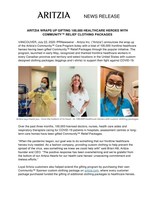
Aritzia Wraps Up Gifting 100,000 Healthcare Heroes With Community™ Relief Clothing Packages
VANCOUVER, BC, July 22, 2020 /CNW/ - Aritzia Inc. ("Aritzia") announces the wrap up of the Aritzia's Community™ Care Program today with a total of 100,000 frontline healthcare heroes having been gifted Community™ Relief Packages through the popular initiative. The program, launched in early May, recognized and thanked frontline healthcare workers in every Canadian province and territory and select locations in the United States with custom-designed clothing packages (leggings and t-shirts) to support their fight against COVID-19.
Over the past three months, 100,000 licensed doctors, nurses, health care aides and respiratory therapists caring for COVID-19 patients in hospitals, assessment centres or long-term care homes have been gifted Community™ Relief Packages.
"When the pandemic began, our goal was to do something that our frontline healthcare heroes truly needed. As a fashion company, providing custom clothing to help prevent the spread of the virus, was something we knew we could help with" said Brian Hill, Aritzia founder and CEO. "The positive response has been overwhelming and we're grateful from the bottom of our Aritzia Hearts for our health care heroes' unwavering commitment and tireless efforts."
Loyal Aritzia customers also helped extend the gifting program by purchasing their own Community™ Sponsor custom clothing package on aritzia.com, where every customer package purchased funded the gifting of additional clothing packages to healthcare heroes.
While the online gifting of Community™ Relief Packages has now finished, Aritzia continues its efforts to support both frontline healthcare workers in the face of the virus. A limited number of exclusive Community™ Sponsor clothing packages remain available for purchase at aritizia.com, with each package generating more gifting packages to frontline healthcare workers.
In addition, Aritzia has designed custom reusable protective face masks for the general public as COVID-19 protective measures evolve and demand grows. Late last week Aritzia launched a branded Community™ Adjustable Face Mask, which has quickly become popular among clients. The mask, which retails for $10, is made with breathable cotton poplin or linen, comes in myriad colors and is adjustable to comfortably fit the face's natural contours.
ARITZIA GIVING
The Community™ Care Program is an extension of Aritzia's overall commitment to organizations that help women and girls succeed at work and in life. Aritzia does so through three pillars of impact: poverty alleviation, mentorship and job readiness. To-date, Aritzia has contributed more than $32 million in product donations, financial support and volunteer hours to non-profits and Aritzia Community™ partners that share its values. This has positively impacted more than 325,000 women. For additional details on Aritzia's giving program visit https://www.aritzia.com/en/aritzia/corporate-responsibility/sustainability-communities.html.
ARITZIA X GOOD360
Aritzia is proud to have built a multiple year partnership with Good360. Good360 has managed Aritzia's seasonal product donation program in the United States since 2018, including the recent gifting of frontline healthcare custom clothing packages. Learn more at https://www.good360.org.
ABOUT ARITZIA
Aritzia is an innovative design house and fashion boutique. We conceive, create, develop and retail fashion brands with a depth of design and quality that provides compelling value. Each of our exclusive brands has its own vision and distinct aesthetic point of view. As a group, they are united by an unwavering commitment to superior fabrics, meticulous construction and relevant, effortless design.
Founded in Vancouver in 1984, Aritzia now has more than 95 locations in select cities across North America, including Vancouver, Toronto, Montreal, New York, Los Angeles, San Francisco and Chicago. We pride ourselves on creating immersive, human and highly personal shopping experiences, both in our boutiques and on aritzia.com — with a focus on delivering Everyday Luxury.
ASRM Task Force Announces Plans for Diversity, Equity and Inclusion in Reproductive Medicine
July 21, 2020 -Washington, DC- The American Society for Reproductive Medicine (ASRM) is passionately committed to promoting diversity within our membership and leadership, and promoting access to quality reproductive care for all patients without regard to race or ethnicity. We know that, not only does racism interfere with the ability of individuals to access proper and equal medical care, it also represents a pervasive barrier to educational, economic, and social success.
As codified in our mission and values statement, ASRM values and prioritizes integrity and inclusivity. As part of our continued and unambiguous commitment to diversity and inclusivity, we have established a task force to address and produce tangible recommendations on how to best address health disparities and non-inclusivity in our field and organization.
To address these issues, ASRM has appointed the Diversity, Equity and Inclusion Task Force, which will be chaired by Board Member Dr. Michael A. Thomas. “I am honored to be the Chair of the ASRM Diversity, Equity and Inclusion task force,” Dr. Thomas stated. He continued, “This is an important committee that will make recommendations to the ASRM President, Board of Directors and CEO on how we can put initiatives in place to have a more diverse workforce in reproductive medicine; and how to decrease the barriers that prevent women of color from starting a family or continuing family building."
The Task Force is charged with:
Enhancing opportunities to increase and support diversity and equity, and the inclusion of underrepresented minority populations, in the profession and leadership of reproductive medicine; and
Reducing and eventually eliminating health disparities in access to and outcomes from reproductive care.
Members of ASRM’s Diversity, Equity and Inclusion Taskforce include:
Michael A. Thomas, MD (Chair) Professor and Chair, Department of Obstetrics and Gynecology University of Cincinnati College of Medicine
Tia Jackson-Bey, MD, MPH Reproductive Endocrinologist, Reproductive Medicine Associates of New York Assistant Clinical Professor, Icahn School of Medicine at Mount Sinai
Janetta Darno, SPHR Chief Diversity Officer, UC Health
Mikesha Middlebrook, RN, BSN Director of Nursing, Atlanta Center for Reproductive Medicine
Ruben Alvero, MD Professor of Obstetrics and Gynecology, Stanford University
Camille T.C. Hammond, MD, MPH CEO and Co-Founder, The Cade Foundation
Kim Thorton, MD Reproductive Endocrinologist; Clinical Professor, Boston IVF and Harvard Medical School
Mark Leondires, MD Founder, Medical Director, and Partner in Reproductive Endocrinology Reproductive Associates of Connecticut (RMACT) and Gay Parents to Be (GPTB)
Yanett Anaya, MD Reproductive Endocrinologist, University of California, San Francisco
Morine Cebert, PhD, FNP-C National Clinicians Scholars Program Post-Doctoral Fellow, The University of Pennsylvania Perelman School of Medicine
Arthur Chang, PhD, HCLD/ELC/CC Professor and Director, ART Labs Department of Obstetrics and Gynecology, University of Texas Health Science Center
LTC Torie Comeaux Plowden, MD, MPH, FACOG Medical Center Chief, Ob/Gyn Department Womack Army Medical Center
Jennifer M. Wood RN, BSN Clinical Education and Operations, Shady Grove Fertility
The Task Force will provide recommendations to the ASRM President, Board of Directors (BOD), and CEO regarding enhancing opportunities to increase and support diversity and equity, and inclusion of underrepresented minority populations, in the profession and leadership of reproductive medicine; and reducing, with the goal of eventually eliminating, health disparities in access and outcomes to reproductive care.
Timely recommendations to ensure ASRM remains on the cutting edge of nationwide diversity, equity and inclusion initiatives will be based on a thorough review of ASRM policies related to diversity, equity and inclusion, as well as ASRM policies on health disparities and inclusion in the care of our patients.
President, Dr. Catherine Racowsky, stated “ASRM values inclusion and diversity in all aspects of our operations.” She continued, “As part of the global community, we cannot divorce ourselves from the reality that many of our members and patients are facing today. Nor would we want to.”
To learn more about the Diversity, Equity and Inclusion Task Force, click here.
About ASRM
For almost a century, the American Society for Reproductive Medicine (ASRM) has been the global leader in multidisciplinary reproductive medicine research, ethical practice, and education. ASRM impacts reproductive care and science worldwide by creating funding opportunities for advancing reproduction research and discovery, by providing evidence-based education and public health information, and by advocating for reproductive health care professionals and the patients they serve. With members in more than 100 countries, the Society is headquartered in Washington, DC, with additional operations in Birmingham, AL. www.asrm.org
Leave Your Past Behind And Enjoy A Freedom You Never Imagined
Los Angeles, CA, July 21, 2020 — How do you let go of your past when it follows you wherever you go? Is it even possible to move beyond your darkest moment and live the life you were meant to live?
Linda A. Olson, an international bestselling author, reveals the answer in her newest release, Transform Your Story: Letting Go of the Past When it Won’t Let Go of You.
“The question isn’t whether you can enjoy freedom and inspiration every day, it’s claiming the gift available to you and using the tools to embrace it,” she explains.
Transform Your Story shares with compelling honesty a tragic accident in 1966 that forever defined Olson’s life. The valuable lessons she learned during her 45-year-long journey of self-forgiveness will empower readers with strategies to help them transform their own stories and enjoy freedom, peace and inspiration every day.
In Transform Your Story, readers will discover:
The number one tool to letting go of the past and embracing a new freedom
Simple secrets to going from stuck in your story to unstoppable
Tools to set you free when you feel like you’re going down
The power of breakthrough and how to get it
How to find answers when there are only questions
Transform Your Story is a must read for anyone who wants to enjoy complete freedom from their past so they can empower their future and do what they have been called to do. Tucked inside the book are tools valued at over fifteen hundred dollars to help you transform your story. One story, one transformation could impact millions. Why not yours?
Linda Olson is the go-to story expert who helps authors, speakers and entrepreneurs impact millions with their stories. She is a TEDx speaker, multiple bestselling author and founder of Wealth Through Stories.Her mission is “To Impact a Million People a Year Through Story.” Linda and her husband, Rick, reside in sunny California. They enjoy their two married daughters and their spouses and five adorable grandchildren, who are the best part of their story.
New Study from Ipsos Shows 82% of Consumers Concerned that Relaxed Health & Safety Protocols at Brick-and-Mortar Retail will Lead to COVID-19 Resurgence
Ipsos Mystery Shoppers gearing up to conduct thousands of in-store visits at retailers across the U.S. — from Trader Joe’s to Walmart and 7-Eleven to Taco Bell — to gauge which brands are successfully implementing health and safety measures and which ones are not.
New York, NY, July 17, 2020 — Today, Ipsos, the global research firm, revealed new data from their Consumer Health & Safety Index: a health and safety benchmarking study introduced in May that evaluates how retailers across five industries are operating amid the COVID-19 pandemic.
Ipsos first surveyed 2,000 Americans in May to understand which health and safety attributes are most important to consumers in the current COVID-19 retail environment. Now, with spikes of cases happening across the country, Ipsos recommissioned the survey during the first week of July, with new data revealing that consumers are even more concerned about their safety than they were in May.
“Wave 1 of the Consumer Health and Safety Index revealed that brands could be doing more to keep Americans safe. For example, 82% of stores audited across 45 national brands did not have hand sanitizing options available at or near checkout,” said Nick Mercurio, Executive Vice President and service line head of U.S. Channel Performance at Ipsos.
“Consistent and visible execution of health and safety protocols drives consumers to return to stores. The second wave of our Index will help brands measure where they stand against evolving consumer expectations, benchmark against competition, and take action to ensure the health and safety of their customers and employees.
Key Findings from the July Consumer Study:
More than ever customers are eager to see visible efforts from retailers to implement health and safety protocols. As the pandemic reaches the six-month mark in the U.S., there has been a slight dip in confidence from customers, weary of how things will continue. But, customers who feel businesses are adhering to responsible precautions are willing to return, and – as long as retailers are consistently implementing those safety measures – consumers will eventually find their way back to pre-pandemic normalcy:
Grocery remains the most trusted industry across those measured, with 25% of consumers saying they trust grocery retailers the most for its health and safety protocols.
29% of consumers would stop shopping a retailer altogether if they knew the brand was not implementing health and safety measures.
27% of consumers would pay up to 10% more for products at stores they feel are doing a superior job ensuring their customers’ health and safety.
94% of consumers say that “stores that are doing a good job in health and safety compliance will earn my business.”
Trust is highest among retailers that are making visible efforts in their stores to implement health and safety protocols, including clear reminders and signage, employees actively cleaning, and clear investments from the brand including company issued employee safety equipment.
While 25% of consumers say they trust the grocery industry the most, grocery also ranks highest in implementation with 32% of consumers ranking grocery as “best at implementing health and safety protocols.”
Pharmacy ranks second on trust, whereas wireless stores, quick service restaurants, and gas stations are ranked lowest by consumers on both trust and implementation.
Health and safety protocols remain the most important factor for returning to a store, increasing in importance from 42% in May to 48% in early July.
Similar to the first installment of the Consumer Health & Safety Index, Ipsos will be conducting mystery shops that measure brand compliance to health and safety attributes across major U.S. brands, including but not limited to:
As a leading market research and mystery shopping firm, Ipsos is launching the second wave of the Consumer Health & Safety Index: a health and safety benchmarking study that helps you:
Measure: Measure your brand’s performance against current consumer expectations via mystery shops.
Benchmark: Benchmark your brand against industry & cross-industry standards.
Take Action: Access your brand’s site-level compliance data so you can take action and improve.
The study is designed in two stages:
Stage 1: Ipsos has conducted a survey of 2,000 Americans between July 7th and 8th to understand which health and safety attributes are most important to consumers in the current retail environment.
Stage 2: Ipsos will now conduct mystery shops to measure brand compliance to these health and safety attributes across 25+ brands in 4 key industries to report on their performance. A random sample of 125 locations per brand will be audited during this study, while ensuring geographical representation and a margin of error of 5-7%. While the results presented in the study have a 90% confidence level, observations contrary to the findings reported in the study may be found at individual locations and should be used as an opportunity to further improve the customer experience at these locations.
For more information on this news release, please contact:
Ipsos is now the third largest market research company in the world, present in 90 markets and employing more than 18,000 people.
Our research professionals, analysts and scientists have built unique multi-specialist capabilities that provide powerful insights into the actions, opinions and motivations of citizens, consumers, patients, customers or employees. Our 75 business solutions are based on primary data coming from our surveys, social media monitoring, and qualitative or observational techniques.
“Game Changers” – our tagline – summarizes our ambition to help our 5,000 clients to navigate more easily our deeply changing world.
Founded in France in 1975, Ipsos is listed on the Euronext Paris since July 1st, 1999. The company is part of the SBF 120 and the Mid-60 index and is eligible for the Deferred Settlement Service (SRD).
The publication of these findings abides by local rules and regulations.
GONE PLANT BASED? GET READY FOR SOMEONE TO POP THE QUESTION
As a health coach, nutritionist and personal trainer, I’ve experienced first-hand the shift toward more people turning to plant based nutrition rather than animal-based foods. And when they do, the first question that converts face from friends, relatives and naysayers is what I call The Protein Question.
The question is so ubiquitous for those that adhere to a plant based diet that one would think the hospitals are filled with ashen-skinned, protein deprived vegans. Ironically it is quite the opposite. Following a whole food plant-based diet has many health benefits, including lowering your risk of obesity, diabetes and inflammation.
Back to the question. I’m sure you have already guessed that it is....drum roll....“but where do you get your protein from?”
We are definitely a country obsessed with protein and lately we seem to be on protein overload. So here’s a piece of information which might surprise you—and silence those protein fanatics once and for all—the recommended daily allowance (RDA) for protein, as of now, is .8 grams per kg of body weight. Elite athletes, body builders may require a bit more. However, this is pretty standard for most people. And it’s fairly easy to get that amount of protein from a plant-based diet.
At this point it may be worth taking a closer look at what protein actually is. Protein is a concentrated source of amino acids which are the building blocks of muscle and other functions and all plant foods contain various amounts of amino acids. Animal protein is just a more concentrated source, but, and here’s the key, more isn't necessarily better. Because most animals are not carnivores, and certainly all animals that we as humans consume fall into that category, they get their nutrition from plant foods, so animals end up just being the middle man.
What all of the above means is that eating a wide variety of whole plant foods (vegetables, beans, whole grains, nuts, seeds, legumes, fruits) along with a proper amount of calories according to individual needs will ensure that you get all the protein and amino acids you need to sustain healthy muscle mass. It’s as simple as that and, in addition, plant-based foods also contain fiber, antioxidants, phytonutrients and polyphenols, things that animal protein products do not.
The good news is that absolutely anyone can go plant-based as there are no nutrients found in animals that aren't already found in plants. The only exception is B12, which is actually a bacteria found in diminishing amounts due to the recent concerning trend toward worldwide soil depletion. As such, animal feed has had to be supplemented with B12. The ironic part of this is that B12 deficiency can actually be found in anyone, not just vegans. This is easily addressed by taking a daily or weekly supplement (as found in our Future Kind multivitamin).
I’m not entirely sure where this fascination with ensuring that vegans get their protein came from. It’s lovely to imagine that meat-eaters have such a worry about our daily nutrient intake because of some concern for our health. But I tend to think it’s because they want to rationalize their own carnivorous diets by dismissing plant-based as lacking in protein and nutrients.
So when the next person asks where you get your protein—and you know they will—tell them to speak up because your hearing is gone from lack of protein. I kid. Tell them you get your protein from everything you eat on your plant-based diet with a little help from a nutritional supplement or two.
Roxanne Lavin is a health coach and plant-based nutritionist based in Las Vegas, NV.
Do you need a hobby that sets you apart from the rest? These sports may be unusual, but they have rich traditions and will set you down a new social and athletic path.
Underwater Hockey
What better way to spend the summer than in the water? Underwater hockey is exactly what it sounds like: a game that involves swimming and moving a hockey puck along the bottom of a pool. The “hockey sticks” are small, and players are permitted to wear snorkels and flippers.
Underwater hockey is also known as “Octopush.” Teams are more common than you think; if you’re a good swimmer, this might be just the sport for you.
Pickleball
Pickleball is a game that combines the best qualities of tennis and badminton. Because the balls are hollow and plastic, the resulting sport has a lower intensity and is better for casual play. Like tennis, you can play pickleball in either singles or doubles.
If you’re interested in pickleball, start by getting a pair of rackets and a pack of pickleballs to practice with. When you’re ready to play with someone else, look for active pickleball groups at your local rec center.
Horse Dressage
Horses aren’t just a hobby, they’re a lifestyle. If riding always interested you but races never seemed like your thing, consider giving horse dressage a try. This sport involves rider and horse working together to complete a predefined routine. Professional horse dressage may also involve “freestyling” at the end of the competition.
A large part of horse dressage is choosing the right horse. German dressage horses are a reliable place to start. Look for a horse who has the skills and gets along well with you as their rider. At the end of the day, this sport is truly about working in sync with your new best friend.
Wall Ball
Wall ball is a schoolyard sport that has picked up professional popularity in recent years. Playing only requires a solid wall and a paved surface. Once you get good, you might be able to join a team or a league in your area.
One of the best parts of wall ball is that the rules are simple. Bounce the ball once on the ground before it hits the wall, and let it bounce again before you grab it. Basketballs are a good choice when you’re starting out, but you can also get balls made especially for this sport.
Before you get involved in any unique sport, check to see if other people are playing it in your area. Hobbies are always more fun when an entire community is involved.
How to Build Lasting Motivation to Push You Through Your Fitness Training
We've all been cooped inside baking, cooking, and eating. Also, most gyms have been closed. Now that things are opening up, you may realize when you trade the pajamas for regular clothes that they are a little tighter than you remembered. Don't panic. Instead, just get back on track when it comes to your workout routine. If you aren't as motivated as usual, here are some tips on how to build lasting motivation to push you through your fitness training.
Hire a Trainer
People hire trainers for their knowledge about exercise and the human body. However, people also hire trainers for motivation. Every time you meet with your trainer, you are forced to work out. They will also push you to your limits during every session. You'll get way more out of your fitness training with professional help than if you try to manage it yourself.
Workout With Friends
You don't necessarily need a trainer to encourage you to workout. Try going to the gym with friends or family members a couple of times a week. Knowing that you have plans to hang out with a friend can help actually get you to the gym. Afterwards, go out together for a smoothie.
Find Fun Ways to Exercise
Many people exercise at the gym, but there are a number of other options available to you. If you find a type of exercise you really enjoy doing, it can help motivate you to actually workout. Some fun alternative options to exercising at the gym include:
Hiking outside
Swimming
Playing sports
Playing at the park with your kids
Dancing
Boxing
Exercise doesn't have to be miserable. Any of these options can help with both cardiovascular health as well as strength training.
Set Realistic and Measurable goals
Pick a goal for yourself. For example, you may want to fit into a cute dress or a pair of jeans again. Or you can set a specific weight loss goal. Just make sure you set a realistic goal. You need to understand that weight loss takes time. If you try to lose too much weight in a short amount of time, you may try unhealthy methods to meet your goal, or you may get discouraged. If you have a larger goal that you want to reach, break it down into smaller more manageable pieces, and celebrate each of those milestones.
Fitness training is essential for weight management and overall health. However, it can be hard to find the motivation to do it. These tips will help light a fire inside of you and produce results.
TRAIN IT RIGHT NEWSLETTER
Sign Up and get a free 7 day Train it Right HIIT Program!