Trait Biosciences to Present at Canaccord Genuity 4th Annual Global Cannabis Conference
LOS ALAMOS, NM, May 11, 2020 / -Trait Biosciences Inc., a leading biotechnology research organization providing innovative technology to the hemp and cannabis industry, is pleased to announce that Peter J. McDonough, Chief Executive Officer, will be presenting at Canaccord Genuity’s 4th Annual Global Cannabis Conference. The presentation will take place, via webcast, Tuesday, May 12, at 1:20 pm Eastern time (11:20 am Mountain time). McDonough and other company leaders will also be conducting virtual meetings with institutional investors.
A live webcast of McDonough’s presentation can be accessed May 12, via the Canaccord Genuity virtual event site.
About Trait Biosciences
With a team of internationally recognized scientists who are applying best-in-class technology and agricultural science, Trait Biosciences is an emerging biotechnology leader in the hemp and cannabis industries. Its consumer technology platforms provide breakthrough IP and science which produce enhanced cannabinoids featuring predictable onset timing, superior bioavailability, extended stability, and improved taste. Trait's patent pending technologies include a process for generating water-soluble cannabinoids that does not rely on emulsion or nanotechnology. The company's agricultural technologies increase crop yields and plant safety, including ultrahigh yield Amplified™ plants which dramatically increase a plant's natural cannabinoid productivity, and its Defence™ RNAi crop protection technology, which eliminates the need for pesticides or fungicides, providing higher quality, safer, CBD-infused nutraceutical and pharmaceutical products. For more information, see www.TraitBio.com.
Cautionary Statement on Forward-Looking Information
Certain information contained in this press release, including any information as to Trait Bioscience Inc.'s (the "Corporation") strategy, projects, plans or future financial or operating performance, constitutes "forward-looking statements". All statements, other than statements of historical fact, are forward-looking statements. The words "will", "expect", "continue", "assess", "anticipate" and similar expressions identify forward-looking statements. Forward-looking statements are necessarily based upon a number of estimates and assumptions; including material estimates and assumptions that, while considered reasonable by the Corporation as at the date of this press release in light of each of management's experience and perception of current conditions and expected developments, are inherently subject to significant business, economic and competitive uncertainties and contingencies. Known and unknown factors could cause actual results to differ materially from those projected in the forward-looking statements and undue reliance should not be placed on such statements and information.
Any forward-looking statements included in this document are made as of the date of this document and the Corporation disclaims any intention or obligation to update or revise any forward-looking statements, whether as a result of new information, future events or otherwise. Although management of the Corporation believes that the expectations represented in such forward-looking statements are reasonable, there can be no assurance that such expectations will prove to be correct.
# # #
Curated care packages for those who care for us: over 13,000 Ontario nurses to be surprised at their doorsteps for Nursing Week (May 11-17)
Coalition of companies join Registered Practical Nurses Association of Ontario in rallying Ontarians to demonstrate gratitude for nurses on social media using the hashtag: #ThankYouNurses
TORONTO, May 11, 2020 /CNW/ - The Registered Practical Nurses Association of Ontario (WeRPN) commissioned a provincial study recently with Angus Reid that measured public sentiment about nurses. It found that more than half of Ontarians had intended to send a special thanks to a nurse for the great care they had received in the past – but they never got the chance to do it.
This week, Ontarians will have their chance.
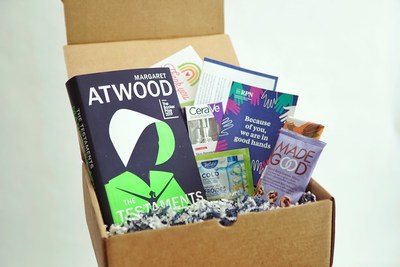
A coalition of companies, including CeraVe, Penguin Random House Canada, Tetley Tea, UPS, Well.ca, WINNERS, HomeSense and Marshalls are helping WeRPN surprise its over 13,000 registered practical nurse members with specially curated care packages for Nursing Week (May 11-17, 2020). They are also encouraging Ontarians to join in, with messages of thanks on social media through posts, pictures and videos, using the hashtag #ThankYouNurses. The goal is to celebrate Ontario's dedicated nurses for the incredible work they do to keep us all safe.
The International Council of Nurses and World Health Organization declared 2020 as the Year of the Nurse and Midwife in honour of the 200th birthday of nursing icon, Florence Nightingale, who discovered that handwashing is a critical tool in combating illness - a discovery that is more relevant today than ever. Amidst recent events surrounding the COVID-19 pandemic, the burden nurses face is greater than ever, making it the perfect time to give thanks and show gratitude.
"Nurses often care for us during life's most difficult times, and we're encouraging Ontarians to send love back to them when they need it most," said Dianne Martin, CEO, Registered Practical Nurses Association of Ontario (WeRPN). "Many nurses' current COVID-19 reality is such that they are working extremely long hours, playing an integral role alongside so many others, at the frontline of healthcare during the pandemic. I know this initiative will mean the world to our family of nurses, and we can't wait to surprise them with these packages."
The surprise care packages will include:
The critically acclaimed book, The Testaments by Margaret Atwood (sequel to The Handmaid's Tale), courtesy of Penguin Random House Canada
Premium chocolates and confectionary products from Winners, HomeSense and Marshalls
All of which will be delivered directly to RPN members by UPS
Other participating companies include Baird MacGregor, Johnson Insurance, Optimus SBR, Sensyst and Speakers Bureau of Canada.
The combined value of these corporate donations is greater than $1.1 million. This coalition of brands have also participated in a video that speaks to the impact that nurses have on all of us, and the meaning behind the initiative.
Kicking off the #ThankYouNurses social media initiative during Nursing Week, Canadian music icons, Sam Roberts Band, lent their song "We're All In This Together" to WeRPN for the creation of a special video tribute dedicated to nurses, as they continue to battle the COVID-19 pandemic. Canadians are encouraged to post pictures, videos or simple words of thanks to let nurses know just how much they are appreciated.
"I want to offer my heartfelt thanks to all of these wonderful companies, and their leaders, for working so hard to coordinate this incredible initiative," adds Martin. "We've always known that it takes a special kind of person to be a nurse and every thank you message from Canadians online this week will fuel our nurses even more, to continue their important work of taking care of us."
About WeRPN The Registered Practical Nurses Association of Ontario (WeRPN) is the professional voice of Ontario's 45,000 Registered Practical Nurses (RPNs). WeRPN builds the profile and professional capacity of RPNS so we can better care for our patients and better support our fellow health-care workers.
SOURCE Registered Practical Nurses Association of Ontario (WeRPN)
Telehealth Cognitive Rehabilitation Can Be Effective for Multiple Sclerosis
(San Francisco CA) – An independent review of the scientific literature found that certain telehealth rehabilitation treatments can be effective in addressing cognitive deficits associated with multiple sclerosis (MS). The reviewers found that BrainHQ cognitive exercises made by Posit Science Corporation “demonstrated both good feasibility and efficacy” and that “patient adherence across studies was impressive, indicating the practicality of such home-based training.”
The review, authored by research experts at the Kessler Foundation and at the University of Alabama, was published in Nature Reviews Neurology and looked at studies published in recent years on cognitive rehabilitation, physical exercise, and pharmacological treatments targeting the cognitive deficits of people with MS.
The reviewers note that while about two-thirds of MS patients experience cognitive impairment as a result of the disease, regular assessment and treatment of cognitive function of such patients in clinical practice is “rare.”
In addition to favorably reviewing studies of BrainHQ in populations with MS, the reviewers also reference positive results in studies of BrainHQ in aging populations that improve everyday life (specifically citing studies showing a reduced incidence of car crashes and dementia risk) as evidence that cognitive rehabilitation can have other long-term benefits.
At the end of their review, the authors conclude that “cognitive rehabilitation has shown consistent beneficial effects in patients with MS and currently represents the best approach for treating MS-related cognitive impairment.”
They also conclude there is currently “insufficient evidence” to support pharmacological approaches, and that the evidence for physical exercise, “although promising, remains preliminary and more work is needed to establish a clear role in clinical practice.”
“We are heartened by this literature review — not just for its complimentary review of BrainHQ studies, but especially for its recognition that more needs to be done to translate recent study results into standard clinical practices,” said Dr. Henry Mahncke, CEO of Posit Science. “We are in discussions with leading medical providers about establishing centers of excellence to refine clinical best practices in the use of our tele-rehabilitation tools.”
More than 100 published studies of BrainHQ exercises have shown benefits across varied populations, including gains in standard measures of cognition (attention, speed, memory, executive function, social cognition), in standard measures of quality of life (mood, confidence and control, managing stress, health-related quality of life), and in real world activities (gait, balance, driving, everyday cognition, maintaining independence). BrainHQ is now offered, without charge to users, as a benefit by leading national and 5-star Medicare Advantage plans; by the Department of Defense for all servicemembers; and by hundreds of clinics, libraries, and communities. Consumers can also try BrainHQ for free at http://www.brainhq.com.
This Courageous Young Woman’s Story Is Testament That One Life Really Can Impact The World
Fort Wayne, IN, May 11, 2020 — One thing most of us can’t get enough of right now are inspiring stories that put all the stress, fear and worry of the current pandemic into perspective. How about a story of an incredible young woman who lived a life without limits and managed to enrich every life she touched – regardless of the fact she had a rare and incurable disease? Brittany Moser and her best friend, her dad, set out on the journey of a lifetime and their unforgettable adventure became the backdrop for Philip Moser’s book, Free and Fearless: The Amazing Impact of One Precious Life.
“This book is not about the grief of losing a child, but about making the most out of what we are given and living our lives positively and not out of fear,” writes author (and Brittany’s father) Philip Moser. “Brittany inspired me, an ordinary farm boy, to explore life, to climb mountains and to write a book.”
In 2015, Brittany was diagnosed with Addison’s disease, a rare condition that can lead to adrenal failure. She passed away in 2017.
The book is an honest, poignant account of Brittany’s legacy and the ripple effect that her outlook on life had on those around her. Among Brittany’s valuable life lessons that Philip shares with readers are:
1. How precious life is and how we can affect the people around us; 2. How an open mind and a positive attitude can inspire us to do things we never thought possible; 3. How to move out of our comfort zones and into a challenging existence that can turn each day into an exciting gift to be explored; 4. How to not let fear control us, and to use our abilities to seek unique, positive and inspiring adventures; 5. To embrace change as a natural part of life; 6. And finally, that we won’t be remembered by our things or our savings accounts, but by how we made other people feel.
“I want to share the same inspiration that I received for 32 years,” Philip added. “In the end, love truly does conquer all, and Brittany wanted us to know that.”
Author Philip Moser grew up on a farm in Angola, Indiana. After high school, he began working in different aspects of the grocery business, a career that continues to this day. He and his wife, Marilyn Wells, raised two incredible daughters, Camille and Brittany.
Dancing to the Darkest Light: Turning Tragedy Into Something Positive To Enrich The Lives Of Others
Los Angeles, CA, May 11, 2020— Arriving in New York after fleeing the terror of the Islamic revolution in Iran, Soheila Adelipour and her family believed the worst was behind them. Life was great for a while; the kids went to college, worked hard and were successful – then one tragedy after another hit and within a relatively short period of time Soheila had lost her son and two siblings. Determined to survive in spite of unspeakable loss, she established a foundation in her son’s name that provides healing and salvation for those less fortunate. Receiving accolades from broadcast journalist Barbara Walters, Soheila’s book, Dancing to the Darkest Light, tells her remarkably inspiring story of finding happiness in the face of unbearable tragedy.
Chronicling their experiences in Dancing to the Darkest Light, Adelipour recounts how her only brother became a neurosurgeon while others followed different paths. But their successful relocation and the joy they felt over each triumph was soon shattered when the Adelipour's second son, Stefan, was killed in a dorm room fire before his scheduled graduation from Boston University.
Adelipour channeled her grief into the foundation she established in his name. Soon after, her older sister had to undergo five brain surgeries that left her blind and deaf before ultimately claiming her life. The same week, their only brother who was supervising her care was diagnosed with leukemia. Adelipour gave him her bone marrow and 60 percent of her liver when his liver stopped functioning. Doctors ultimately announced he was cancer-free with a perfectly functioning liver, but the week he was to come home, he died from pneumonia.
How one perseveres under the weight of all this loss is at the core of Dancing to the Darkest Light. “When life plays different music, we have to be fluid and dance to the new tune,” Adelipour said.
Adelipour received her bachelor's degree in business and her master's degree in Art Gallery Management while her first two children were in diapers. She was involved with the World of Arts and Antiques in New York City and followed that by operating high-end gift stores.
Dancing to the Darkest Light Released: September 2019 ISBN-10: 173371264X ISBN-13: 978-1733712644
Moderna’s mRNA COVID-19 Vaccine ready for Phase II as vaccine development picks up pace, says GlobalData
Following the news that Moderna’s mRNA COVID-19 vaccine candidate received FDA approval to start Phase II clinical studies;
Philipp Rosenbaum, PhD, Infectious Diseases Analyst at GlobalData, a leading data and analytics company, offers his view:
“With plans to start Phase III trials in early summer, Moderna’s ambitious timeline leaves some skepticism, as no data has been published to date. mRNA-based vaccines have yet to be proven to work in humans, and the history of vaccine development shows that setbacks and roadblocks are almost certain.
“Companies that have begun clinical trials of their COVID-19 vaccine candidates include BioNTech, which partnered up with Pfizer to develop its mRNA vaccine; and Oxford University’s Jenner Institute, which recently teamed up with AstraZeneca for the development and production of the viral vector vaccine, ChAdOx1.
“Inovio Pharmaceutical’s COVID-19 DNA-vaccine candidate INO-4800’s Phase I trial has a scheduled end date of April 2021, and Inovio’s novel delivery method using dermal electroporation has not yet been proven successful. Furthermore, several vaccine candidates started clinical studies in China, including CanSino Biologics’ recombinant vector vaccine, as well as Sinovac’s and Sinopharm’s inactivated virus vaccines.
“All of these developments increase the chance for a successful vaccine to emerge. However, the timeframe to global mass-market readiness for such a vaccine remains unclear. Successful candidates would first need to be distributed to healthcare workers and the high-risk population. At this early stage in vaccine development, it is hard to predict which vaccine candidate will be successful and the first to be widely available, but a launch in 2020 is very optimistic.”
How Sleep and Diet Work Together in Your Weight Loss Plan
When it comes to losing weight, there are many things that people say can help. It can get quite confusing to weed through the good information and the bad. When it comes to sleep and diet, we're going to share with you how these two interact with one another to assist you in achieving your weight loss goals.
Sleep
When it comes to losing weight, sleep is highly underrated. It's important to realize just how imperative sleep is to your overall body. First, it's not hard to realize that when you wake up with little sleep under your belt, you tend to make bad food choice decisions throughout the day. Scientifically, this is defined as your brain's frontal lobe not functioning to its fullest capacity due to lack of sleep. When you make bad decisions, you eat sugary food to get yourself through the day and you're more likely to skip out on exercise.
Dieting
When it comes to food consumption, it plays a huge role in your weight loss plan. It comes down to the simple equations of calories in and out. When you eat too many calories that your body can't use, it stores the excess as fat. When you eat fewer calories than your body needs to function throughout the day, you lose weight. Being strategic with your meal plan makes all the difference. Places like Plan 7 Coaching can assist you in structuring a meal plan that works to keep your calories low but your hunger fed.
The Metabolic Connection
On a metabolic level, too little sleep triggers an overproduction of cortisol. Yes, this is the stress hormone in the body. What this nasty hormone does is signal to your body that it needs to be conservative concerning energy in the body. So, it will have your body hanging onto more fat throughout the day as a conservative measure. To make things even worse, it will slow down the insulin production in your body. This is a necessary hormone for changing sugar and other foods into energy.
The Bottom Line
When it comes to sleep and dieting, they go hand in hand. While you could have the best diet laid out, a sleep-deprived state can have your efforts go to waste. Making bad decisions and slowing down your body's ability to burn excess fat are both side effects of not having enough sleep.
Hopefully, you've learned that your weight loss plan is affected by both your sleep levels and dieting. When it comes to getting rid of as much weight as possible, you need to set up both a diet and a sleeping schedule. They go hand and hand in allowing you to reach your weight loss goals.
Adhering to Strict COVID-19 Safety Measures, Autumn Brands Releases Bold New Strain
Sustainable farming operation Autumn Brands continues commitment to customer safety, product purity, and innovation in release of citrus-inspired Mandarin Glue
LOS ANGELES, California – (May 8th, 2020): In the wake of COVID-19, Autumn Brands announces the release of a potent new strain, as well as a look at the clear strategic measures taken to ensure that customer safety, product purity, and innovation remain top priorities. Backed by decades of sustainable farming expertise, 50% woman-owned Autumn Brands stands out as a sixth-generation, family-run operation with a health-centered holistic focus and refreshingly artisanal approach. Now, the Santa Barbara-based cannabis cultivator works tirelessly to maintain a safe and healthy farming operation for its employees while providing a steady supply of potent, quality strains backed by the latest research.
“We continuously seek to learn as much as possible about the various cannabinoids in our unique strains and the healing properties they provide,” explains Autumn Brands Owner and Head of Sales Hanna Brand. “While THC is often the main focus for buyers, the presence of other cannabinoids adds to the overall experience of a strain.” Carefully examining the Certificate of Analysis from each batch they send out, Brand makes sure to note not only THC levels but also the detectable amounts of CBG (cannabigerol) and CBC (cannabichromene). Recent research suggests that CBG could help to reduce intraocular pressure. Both CBG and CBC are thought to reduce bodily inflammation and inhibit the growth of certain cancer cells.
Always paying close attention to quality and sustainability, Autumn Brands takes additional steps to maintain customer safety during the COVID-19 pandemic. Along with masks and gloves for all farm employees, hand sanitizer is required each time staff enters or leaves a room. Lunch breaks are staggered for all workers, ensuring enough time to adequately clean common areas between uses. The facility is currently closed to all visitors and tour groups. Any buyers or drivers picking up product must remain with their vehicles in a designated loading area, rather than entering the office space.
Adhering to these strict quality control measures and keeping customer safety top of mind, Autumn Brands proudly releases a bold new strain: Mandarin Glue. A hybrid cross of NYC Diesel Mandarin and GG#4, Mandarin Glue’s dense nuggets are a vibrant lime green with beautifully contrasting bright orange hairs awash in sparkling trichomes. Aromas of classic “glue” from the GG#4 lineage mingle with sweet ripe citrus for a mouthful of fruity, citrus flavor on the exhale. Higher in THC, this strain’s medicinal uses include combatting chronic pain, insomnia, stress, and anxiety. The West Coast cultivator’s highly anticipated Orange Crush strain - released for testing in January - is also now available for sale at partner dispensaries. The plant’s Certificate of Analysis reports 25.7% total cannabinoids with 21.5% THC content.
Learn more about Autumn Brands’ commitment to customer safety at AutumnBrands.com and discover new citrus-inspired, pesticide-free Orange Crush and Mandarin Glue strains, available now at select California dispensaries. Visit the company’s website to locate the nearest participating seller and browse a full selection of premium flower, pre-rolls, and pre-filled cartridges made from sun-grown, hang-dried buds, each hand-trimmed and cured to preserve maximum potency and full healing benefits. Follow on Instagram @AutumnBrands for the latest product releases and updates.
About Autumn Brands:
Autumn Brands is a licensed California cannabis cultivator dedicated to the synergy of health and wellness. The Autumn Brands’ family farm started in Holland more than a century ago, and today, sixth-generation farmers apply the same expertise garnered in growing the world’s finest tulips to producing pure and potent strains of cannabis in sunny, coastal Santa Barbara County. Autumn Brands is proud to be 50 percent woman-owned, united by the vision of two families, free of pesticides and other harmful chemicals. For more information, visit www.autumnbrands.com or email leighanne@anderson-pr.com.
For Nurses, the "New Normal" Is Really Not All That New (A Message for Nurses Week) Nurses Week is May 6-12. It's not going to be a "normal" week this year...but then again, says Rich Bluni, nurses don't do normal. He offers a few tips—along with a special video—to help nurses stay inspired during the pandemic.
Pensacola, FL (May 2020)—There's a lot of talk these days about the "new normal." But here's the thing about nurses, says Rich Bluni, RN: We never had an old normal. From the intense days of nursing school to the crazy things we see on those 12-hour shifts, we're used to chaos. The fact that life isn't normal these days doesn't scare us. What does scare us about the pandemic is that we are "not enough" and what that could mean for those around us.
But in honor of Nurses Week (actually, it's Nurses Month this time), Bluni wants us to know that we are enough. In fact, we are more than enough.
"Nurses are used to living with fear—whether we're running down the hall to a Code Blue, or having to give a family member bad news," says Bluni, himself an RN with over 25 years of experience in the ER, Trauma, and ICU and author of best-selling books Inspired Nurse (Huron|Studer Group Publishing, 2009, ISBN: 978-0-9749986-7-1, $24.95) andInspired Nurse Too (Huron|Studer Group Publishing, 2016, ISBN: 978-1-6221804-6-2, $28.00).
"But for us, the fear doesn't come only from worrying about what will happen to us," he adds. "It comes mostly from the prospect that we might harm someone else."
The fear that you might get sick and expose a patient to the virus can be pretty tough to live with when you're mission-driven by nature. But striving for perfection is an impossible bar to reach.
Bluni says that while we can't be "perfect," maybe today all we can hope for is beingpanderfect—a term he coined that essentially means "pandemic perfect." For Nurses Week, we need to give ourselves the gift of realizing and accepting that.
In fact, Bluni has created a special Nurses Week video on fear, the "new normal," and what we can do to make it through these extraordinary times with our inspiration intact. Click here to view it.
He offers the following tips:
Go easy on yourself. This Nurses Week, give yourself a break from trying to be perfect. Accept that you are doing the best you can.
Consciously reward yourself a little each day. When you're having a tough time, when you get a "moment," pop in your earbuds and listen to your "jam" or FaceTime your family.
Tell others they matter. Find one of your nurse peers, look them straight in the eye, and say, "You know, you really inspire me." Get specific about why: "I really admire the way you managed that family who was so scared."
But don't stop there. Look in the mirror and tell yourself, "You. Are. Inspiring!"Remind yourself of something you did that was great.
Write down your stories. When times get really, really stressful, write down what you did and how it felt. The most challenging times often bring out the best in you. Bluni recalls a time, during a hurricane, when he had to carry pond water to flush the hospital toilets.
"If somebody had told me that would bring out my best, I might have dumped that pond water on their head!" he says. "But looking back, I can see it's true. That's why you need to write it down. You'll forget it later if you don't."
If you're really struggling, talk to a friend or seek professional help. Don't try to endure this by yourself. Help is available, and you owe it to yourself to get it when you need it.
"Being a nurse means being part of one of the most trusted and loved professions," says Bluni. "This has always been true. And it's never been truer than it is at this moment."
# # #
About the Author: Rich Bluni, RN, is the author of the best-selling books Inspired Nurse, Oh No...Not More of That Fluffy Stuff!, and Inspired Nurse Too. He has an active and popular Facebook page called Inspired Nurse.
Rich has been an RN since 1993. He has worked as a nurse in Adolescent Oncology, Pediatric ICU, and Trauma ICU departments as well as serving as a pediatric flight and transport nurse. He has served as an ED nursing manager as well as a senior director of risk management, quality, and patient safety.
He came to Studer Group in 2007 as a coach working with dozens of healthcare organizations and leaders to drive outstanding results. He is presently a senior director with Huron and a Studer Group national speaker, having traveled across North America to speak in front of hundreds of thousands of healthcare workers and leaders in hundreds of healthcare organizations, large healthcare conferences, as well as virtual webinars.
About the Books: Inspired Nurse Too (Huron|Studer Group Publishing, 2016, ISBN: 978-1-6221804-6-2, $28.00) and Inspired Nurse (Huron|Studer Group Publishing, 2009, ISBN: 978-0-9749986-7-1, $24.95) are available from major online booksellers and the Huron|Studer Group website.
Japan will stamp out recent COVID-19 surge, but future surges are likely, says GlobalData
Japan has already witnessed a significant downturn in the number of new daily COVID-19 cases since the national emergency was declared. However, the country is likely to see additional surges in the future, according to an infection trajectoryforecast model by GlobalData, a leading data and analytics company. Kasey Fu, Director of Epidemiology at GlobalData, comments: “As COVID-19 continues to spread around the world, analyzing differences in the infection trajectory is important to understand how the virus will continue to spread.” GlobalData has forecasted Japan’s trajectory in the next several weeks, along with the country’s historical data of daily new cases plotted against general transmission risk models.GlobalData has produced three-scenario peak-week models for all countries experiencing more than 100 cases of the COVID-19. While the peak-week models fit the epidemiology curves in markets such as the US and Western Europe, several Asian countries do not fit the expected exponential curves of a typical epidemiology outbreak in an immune-naïve population. Fu continues: “GlobalData’s epidemiology team used its experience in modeling the global COVID-19 outbreak to examine the factors causing Asian countries to have different outbreak trajectories and produced an alternate forecast model for Japan. One-size-fits-all recommendations to counter the outbreak will not be effective, as the pandemic is showing different outcomes in each country. Governments need to tailor solutions to their own unique situations.”A new severe viral infection with the number of new infections originating from a single case that is higher than 1, such as COVID-19, would be expected to spread rapidly after being introduced into an immune-naïve population. The general transmission risk models follow this expectation. Countries like the US, Italy and Spain experienced this type of trajectory, with cases in these markets doubling every two to five days during the first few months of the outbreak. However, this scenario did not play out in Japan because of the fast, strong, early counter measures that were taken. Japan responded rapidly in the beginning stages of the outbreak, likely due to its experience with past viral outbreaks such as severe acute respiratory syndrome (SARS) and Middle East respiratory syndrome (MERS), as well as the nation’s general hygiene practices and citizens’ tendency to wear masks when out in public.Fu concludes: “It is unclear what has caused the second surge in cases, but it is likely due to a combination of uncontrolled imported cases, undetected domestic transmission, and failure to meet testing demands. Unlike South Korea, testing in Japan was not scaled up to the general public and was limited to those fitting specific criteria.” ENDSFor more informationTo gain access to our latest press releases: GlobalData Media CentreAnalysts available for comment. Please contact the GlobalData Press Office:
EMEA & Americas: +44 (0)207 936 6400 Asia-Pacific: +91 40 6616 6809Email:pr@globaldata.comFor expert analysis on developments in your industry, please connect with us on:
GlobalData | LinkedIn | TwitterNotes to Editors:Quotes provided by Kasey Fu, Director of Epidemiology at GlobalDataThis press release is written using data and information sourced from proprietary databases, primary and secondary research, and in-house analysis conducted by GlobalData’s team of industry expertsAbout GlobalData4,000 of the world’s largest companies, including over 70% of FTSE 100 and 60% of Fortune 100 companies, make more timely and better business decisions thanks to GlobalData’s unique data, expert analysis and innovative solutions, all in one platform. GlobalData’s mission is to help our clients decode the future to be more successful and innovative across a range of industries, including the healthcare, consumer, retail, financial, technology and professional services sectors.
TRAIN IT RIGHT NEWSLETTER
Sign Up and get a free 7 day Train it Right HIIT Program!


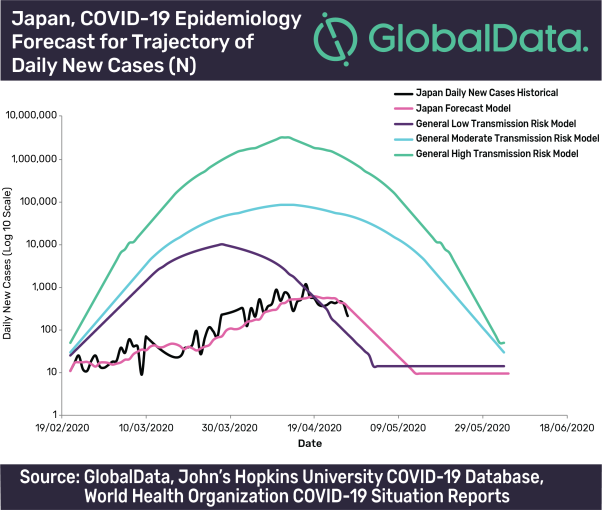 GlobalData has produced three-scenario peak-week models for all countries experiencing more than 100 cases of the COVID-19. While the peak-week models fit the epidemiology curves in markets such as the US and Western Europe, several Asian countries do not fit the expected exponential curves of a typical epidemiology outbreak in an immune-naïve population. Fu continues: “GlobalData’s epidemiology team used its experience in modeling the global COVID-19 outbreak to examine the factors causing Asian countries to have different outbreak trajectories and produced an alternate forecast model for Japan. One-size-fits-all recommendations to counter the outbreak will not be effective, as the pandemic is showing different outcomes in each country. Governments need to tailor solutions to their own unique situations.”A new severe viral infection with the number of new infections originating from a single case that is higher than 1, such as COVID-19, would be expected to spread rapidly after being introduced into an immune-naïve population. The general transmission risk models follow this expectation. Countries like the US, Italy and Spain experienced this type of trajectory, with cases in these markets doubling every two to five days during the first few months of the outbreak. However, this scenario did not play out in Japan because of the fast, strong, early counter measures that were taken. Japan responded rapidly in the beginning stages of the outbreak, likely due to its experience with past viral outbreaks such as severe acute respiratory syndrome (SARS) and Middle East respiratory syndrome (MERS), as well as the nation’s general hygiene practices and citizens’ tendency to wear masks when out in public.Fu concludes: “It is unclear what has caused the second surge in cases, but it is likely due to a combination of uncontrolled imported cases, undetected domestic transmission, and failure to meet testing demands. Unlike South Korea, testing in Japan was not scaled up to the general public and was limited to those fitting specific criteria.” ENDSFor more informationTo gain access to our latest press releases: