Proposed Settlement of Canadian BSC Transvaginal Mesh Litigation
TORONTO, March 28, 2020 /CNW/ - Siskinds LLP and Siskinds, Desmeules s.e.n.c.r.l. announced today that a Canada-wide settlement has been reached in a class action related to certain transvaginal mesh devices for treatment of Pelvic Organ Prolapse ("POP") and Stress Urinary Incontinence ("SUI") manufactured and distributed in Canada by Boston Scientific Ltd. and Boston Scientific Corporation ("BSC"). The class action, which was commenced in 2012, alleges various injuries associated with BSC Transvaginal Mesh Devices.
The proposed settlement applies to all women resident in Canada who were implanted with one or more of these devices on or before February 28, 2020 and provides for the payment by the Defendants of $21,500,000.00, for eligible claims as well as administration costs, legal fees and payments to the Provincial Health Insurers.
The proposed Settlement is not an admission of liability on the part of the Defendants, nor has there been any finding of liability by the Court against them. The Defendants deny the allegations made in the lawsuits.
Class Expanded
As part of the settlement of the action, the Class Definition has been expanded to include women who were implanted with the Defendants' BSC Transvaginal Mesh Devices on or after February 17, 2017 and on or before February 28, 2020. A copy of the amendment order, and the amended class definition are available at www.canadabscmeshclassaction.com.
If you were implanted with a BSC Transvaginal Mesh Device prior to February 17, 2017 and did not opt out of the action prior to September 6, 2017 you may not opt out now.
If you were first implanted with a BSC Transvaginal Mesh Device on or after February 17, 2017 and on or before February 28, 2020, you may "opt out". Opting out means that you will not be entitled to any compensation if the settlement is approved, but you will be able to commence your own lawsuit or continue any lawsuit you already have brought.
If you would like to opt out, you must do so no later than May 27, 2020. More information about how to opt out is available online at www.canadabscmeshclassaction.com or by requesting it from Class Counsel. For assistance, contact Class Counsel at 1-800-461-6166.
Court Approval Required
The proposed settlement requires the approval of the Ontario Superior Court of Justice and a hearing has been scheduled to proceed on June 12, 2020 at 10:00 A.M. at Osgoode Hall in Toronto. At the same time, the Court will be asked to approve the Compensation Protocol, which sets out how Class Members will be compensated, and Class Counsel's fees and disbursements.
Class Members may object to the settlement, the Com3pensation Protocol and/or Class Counsel fees by email to Siskinds LLP at BSCmesh@siskinds.com by no later thanMay 27, 2020.
Further information relating to the proposed settlement, including the long form notice, Compensation Protocol and the Settlement Agreement and related exhibits, is available at www.canadabscmeshclassaction.com.
The law firms of Siskinds LLP and Siskinds, Desmeules s.e.n.c.r.l. represent the Class Members and may be contacted as follows:
Siskinds LLP 680 Waterloo Street London, ON N6A 3V8 Elizabeth deBoer Tel: 1-800-461-6166
Siskinds, Desmeules s.e.n.c.r.l. Les Promenades du Vieux-Québec 43, rue Buade, bur 320 Québec, QC G1R 4A2 Erika Provencher Tel: 418-694-2009
SOURCE Siskinds LLP
Hand-Sanitizer Manufacturing Exchange Is Launched
OTTAWA and TORONTO, March 27, 2020 /CNW/ - Cosmetics Alliance Canada, the Canadian Consumer Specialty Products Association and Spirits Canada today launched the Hand-Sanitizer Manufacturing Exchange as part of their efforts to stop the spread of COVID-19.
Hand-sanitizers are recognized as one of the effective tools in combatting the transfer of the COVID-19 virus and a measure that can be easily and safely utilized by everyone in stopping the spread of this disease.
"Our three organizations have come together to aid in faster, safer and effective scale-up of hand-sanitizer production across Canada", said Cosmetics Alliance Canada CEO, Darren Praznik.
"People are coming together to do what they can in this crisis but Canadians need access to safe products. DIY hand-sanitizers, the latest trend on social media is at best ineffective against COVID-19 and at worst potentially dangerous. We pledge to do our best to ensure that Canadians have an adequate supply of safe and effective hand-sanitizer for you and your family," says Shannon Coombs, President of CCSPA.
Developed in collaboration with Health Canada, the Exchange provides a single platform where firms interested in making hand-sanitizer or contributing to its manufacture will be able to exchange information to locate available materials, services or manufacturing capacity needed for production.
The initiative parallels Health Canada action expediting approvals of companies interested in making hand-sanitizer, a product regulated under Health Canada's Natural Health Product Regulations, part of Canada's Food and Drugs Act.
The Exchange reminds all interested parties that they should consult Health Canada's March 24, 2020 bulletin outlining how hand-sanitizer products and the companies making them may seek expedited approvals.
Jan Westcott, CEO of Spirits Canada noted that, "As governments all across Canada are mobilizing to ensure the supply of critical medical equipment and health products, we and our Cosmetics and Consumer Specialty Products partners are pleased to be able to do our part in helping with the disinfectant component of the fight."
Joining the three Exchange developers are the Canadian Manufacturers and Exporters (CME) who will host the Exchange on their web-site.
On behalf of:
Darren Praznik
Shannon Coombs
Cosmetics Alliance Canada
Canadian Consumer Specialty Products Association
Jan Westcott
Spirits Canada
Cosmetics Alliance Canada is the national trade association of the cosmetics and personal care products industry in Canada. Our over 150 member companies manufacture and distribute cosmetics and other personal care products including hand-sanitizers, anti-microbial soaps and other critical personal hygiene products. Our membership also includes companies that provide goods and services to the industry including suppliers of ingredients, components and services required in manufacturing, as well as distributors and retailers. More information can be found at www.cosmeticsalliance.ca.
CCSPA is a national trade association that represents 35 member companies in 87 facilities across Canada. Our companies manufacture, process, package and distribute consumer, industrial and institutional specialty products such as soaps and detergents, pest control products, aerosols, hard surface disinfectants, deodorizers and automotive chemicals. We are a $20 billion industry directly employing over 12,000 people, with annual exports of $1 billion. CCSPA also provides an excellent website – a one-stop source of information for Canadians about our products and their benefits – at http://www.healthycleaning101.org/
Spirits Canada is the sole national trade association representing Canadian manufacturers and marketers of consumer branded distilled spirits. Member companies produce a wide range of spirits with Canadian Whisky and Canadian Rye Whisky being the Industry's signature products. Canadian Spirits manufacturers are "grains-to-glass" primary manufacturers with over 150 years of experience and knowledge transforming Canadian-grown barley, corn, rye and wheat into premium distilled spirits including Gin, Vodka, Whisky. Liqueurs and ready-to-drink refreshment beverages. Canadian Spirits manufacturers have a global reputation for the production of safe, reliable and authentic premium spirits brands enjoyed by discerning consumers across Canada and in over 150 foreign markets.
Trying to overcome an eating disorder can be one of the toughest things that you’ve ever done in your life. While you may be shying away from physical activity, it’s definitely something that you should be investing in during your recovery. Let’s take a look at some of the basics of why exercise is an essential part of your recovery and how you can perform it successfully.
Realize Exercise Effects All Realms of Health
When it comes to your health, there are many areas to focus on. Some of these include mental, emotional, and physical health. Exercise works to enhance all these realms of health during your recovery period. The trick is finding a proper balance between using exercise as a healing aid and overutilizing it and hindering your recovery.
Eliminate Old Beliefs
Many people who have dealt with an eating disorder have created some false beliefs between exercise and weight control. The truth is that while exercise can be utilized to help control weight, it provides so much more. It’s essential to create mental peace. Don’t attribute burning calories to exercise. Rather, consider exercise one of many treatment options for eating disorders.
Look into inpatient programs as well to help you overcome these old beliefs and habits.
Listen to Your Body
Your body is very adept at alerting you of when there’s an issue. The tricky part is actually listening to what your body is telling you. If your body is telling you that it’s tired after 20 minutes of yoga, then stop. Don’t push your body beyond its limit for the sake of getting exercise in. You may find that you need to start your exercise intensity with a slow walk. Then, increase the duration over time. At the beginning, you may not be able to tell when you need to push yourself or rest, so take it slow.
Bring Curiosity to Your Exercise
If you used to spend hours running on the treadmill so you could burn the exact amount of calories you ate, then tracking your exercise is not a great idea. Instead, bring some curiosity to your exercise. Try starting a different type of exercise routine. Yoga is a great form of exercise that can allow you to focus on mastering poses instead of constantly tracking the calories that you burn.
Having an eating disorder can change the way you live your entire life. Overcoming that eating disorder all starts with utilizing exercise as a necessary recovery tool. The above are four great tips that you can implement to turn exercise into a healthy way to overcome your disorder instead of looking at it as a necessity for weight control.
Brooke Chaplan is a freelance writer and blogger. She lives and works out of her home in Los Lunas, New Mexico. She loves the outdoors and spends most of her time hiking, biking, and gardening. For more information, contact Brooke via Facebook at facebook.com/brooke.chaplan or Twitter @BrookeChaplan
Coronavirus: A Challenge and Lesson for Families Karen Kaye, LMHC and Hara Wachholder, LMHC
It is terrifying when you do not have all the answers, especially when you are a parent and your children are looking to you for safety. We are living in a very chaotic time due to the fear of the unknown while a feeling of powerlessness and despair creeps over us. Some of us have many questions while others are not sure what to ask or what to do during this difficult time. The issue is that human beings seek comfort and once they receive that comfort, they either experience life lessons, are destined to repeat patterns until they learn from the lesson, or never understand the lesson at all.
While in crisis mode, we have the opportunity to recognize how to make improvements in our lives, but once the crisis is over, we often return to our typical behaviors such as disconnecting from face-to-face communication and quality time to focusing on technology and “socializing” online with strangers. As we are currently being asked to avoid unnecessary trips outside, the universe is asking us to go inward and identify areas in need of our attention that we have been neglecting. Now comes the test of our inner abilities of adapting and handling change as well as dealing with being out of control and powerless. We are going back to an era where family is a necessity for survival. Some families will break down further, while other families will rise to the occasion and hopefully work through their differences by focusing on what is most important to them.
Bear in mind that panicking is not equivalent to being prepared. Fear can result in illness. We highly recommend that you utilize this time wisely. First, it is imperative to do what we call a “self-check-in,” to identify personal concerns and worries in order to avoid instilling those fears in your children and others. Once identifying your personal concerns, fears, thoughts, and feelings, we recommend that each household establishes routine family meetings with age-appropriate information. Prior to providing information to your children, we recommend asking them what they have already heard, what they are thinking and feeling, and whether they have any questions they would like to ask prior to adding more to their plate.
From there, you can provide a general overview of the situation such as stating, “There is an illness going around. Many will recover as there are many helpful nurses and doctors, but some will have it worse than others, so it is important to be careful not to spread germs.” An overview of proper handwashing would be beneficial as well as teaching ways to interact with others while promoting social distancing, i.e., staying six feet away from one another, waving hello rather than shaking hands, etc.
It is important for children to have guidance and the facts as well as a safe place to share their own concerns and fears. When researching answers to questions that you or your children may have, utilize credible sources such as the Centers for Disease Control and Prevention (CDC) as well as additional .gov and .org sources. Be mindful of overexposure for children, as the media can sensationalize these situations. Keep in mind that even adults can be overexposed to the chaos, so take breaks from the news for your own well-being. Some healthy ideas for taking breaks would involve quality family time such as: playing board games, building an indoor fort, reading, doing a puzzle together, cooking a meal, exercising, going for a walk, drawing or painting, etc. Children can also be encouraged to identify creative and healthy activities that they would like to do on their own as well as with their siblings, parents, and additional family members.
Should you want to process your concerns and fears with a professional, we highly recommend that you reach out to local therapists and mental health/family therapy centers in your area, as many have established telehealth sessions to accommodate the needs of the public. If you are located in the State of Florida and would like to schedule a phone session with Karen Kaye, you can email her at karenkayecares@bellsouth.net or call her at 954-384-1217.
Karen Kaye, LMHC and Hara Wachholder, LMHC are a mother-daughter team of therapists as well as coauthors of My Parents Are Getting a Divorce . . . I Wonder What Will Happen to Me, an interactive discussion book that helps provide a bridge of understanding between parents and their children based on the personal and professional experience from the authors. The book creates a safe space for children to share their innermost thoughts and feelings while also teaching healthy coping skills for children to empower themselves during a chaotic and confusing time in their lives. The goal is to take children out of the middle and provide them with a voice as well as the tools that will allow them to grow into healthy, balanced individuals. For further information, please visit www.imstillmebook.com.
Karen Kaye is a licensed mental health counselor with the State of Florida and received her master's degree in family therapy from the University of Maryland. For fifteen years she has written a column titled, "Ask the Therapist" in the Natural Awakenings Magazine of Broward County, Florida. My Parents Are Getting a Divorce came to life through Karen's efforts to keep her own child out of the middle of her divorce when Hara was young. The book has been an evolutionary healing process for her and her daughter.
Hara Wachholder is a licensed mental health counselor with the State of Florida and received her master's degree in counseling from Nova Southeastern University. It was after the resolution of the long-winded custody battle between her parents that Hara recognized her calling to help others going through the same struggle. Hara Wachholder is currently the clinical director for a family therapy center located in Fort Lauderdale, Florida.
Precise Information About Helmet-Based Ventilation Helps Patients, Medical Staff and Decision Makers Amidst COVID-19 Crisis
Helmet-based ventilation proved itself efficient in Italy, where the new coronavirus COVID-19 has hit the hardest so far. As various regions of the world gear towards the biggest pandemic spread, hospitals, investors and manufacturers need precise information related to this revolutionary method of non-invasive ventilation.
March 27, 2020. As the COVID-19 virus is fast spreading throughout the world, the search for faster and more efficient solutions to help its victims is more important than ever. Most recently, more than 545,000 people have tested positive around the globe and 24,862 have died. These numbers are growing daily. Andrew Cuomo, the governor of New York, has stressed the extreme shortage of ventilators calling them “single greatest challenge.”
To better address the problem of oxygen delivery and to reduce “the work of breathing” to patients with acute hypoxemic respiratory failure, a group of expert volunteers have founded a website dealing with the helmet-based ventilation technology. The method of helmet-based non-invasive positive pressure ventilation helps avoid the more invasive endotracheal intubation. Non-invasive ventilation using helmets shortens recovery time, reduces the need to intubate and results in minimum or no sedation.
“Our aim is to share the expertise on helmet-based non-invasive ventilation and to do it fast,” explained Aurika Savickaitė, MSN, APN at University of Chicago Medical Center, one of the experts behind the initiative. “In the face of the present crisis we seek to share our highly focused and niche expertise in this field, and to connect healthcare professionals, manufacturers, funders and decision-makers to enable fast development and wider application of this technology. We believe it minimizes the spread of the virus, and we want to do what we can to contain the COVID-19 pandemic.”
The initiative grew out of the three-year trial study conducted at the University of Chicago. The results of the study were published in 2016. Researchers concluded that non-invasive ventilation using a helmet is much more effective than ventilation with a face mask. Despite the advantages of non-invasive ventilation, up to forty percent of patients fail facemask trials in part because of mask intolerance and severity of disease. Also, the intubation rate was much lower among patients who used helmets. Helmet-based ventilation is superior not only to other non-invasive methods - for some patients it gives another option to avoid the intubation.
Amidst the COVID-19 crisis these findings are especially valuable. Helmet-based ventilation can be used in non-ICU hospital settings. It requires less staffing and puts less stress on the patient. Helmet-based ventilation is cheaper and easier to administer. Clear air-tight device with a soft collar is sealed around the patient’s neck. The patient with a helmet can see, speak and cough - the transparency allows the patient to interact with the environment, while the lack of contact to the face lowers the risk of skin necrosis, among other benefits.
Helmet-based ventilation has been successfully used in Bergamo, Italy. It is the second-largest focal point of COVID-19. While this is not a new practice in Italy, the results of non-invasive ventilation were very satisfactory in fighting the virus. But the problem with ventilation helmets is their short supply.
“It is crucial that we all move fast. We need to establish working connections between professionals, hospitals, state institutions, manufacturers and funders. They all have to be on board if we want to enable progress and provide relief to victims of the pandemic,” said Aurika Savickaitė.
Ms. Savickaite and her colleagues have put together a website helmetbasedventilation.comhoping it can address several groups of people as an informational marketplace. Nurses and other healthcare professionals may find the know-how they need to use helmet-based ventilation. Potential manufacturers and investors will be better informed about the technology, new inventions, costs and market potential. And finally, the decision-makers in state institutions and hospitals can see the benefits of the helmet based ventilation and immediately contact the manufacturers for ordering.
-END-
ABOUT HELMET-BASED VENTILATION INITIATIVE
Helmet-based ventilation initiative was born as a private endeavour of experts and professionals in the field, most of them based in Chicago. The initiative strives to curate, consolidate and share the most niche and up-to-date information about helmet-based ventilation, while connecting professionals in need of this know-how | www.helmetbasedventilation.com
Butterfly iQ Now Approved by Health Canada
The world's first whole-body portable ultrasound continues its rapid global expansion and distribution, while demonstrating significant clinical utility in fighting the COVID-19 pandemic
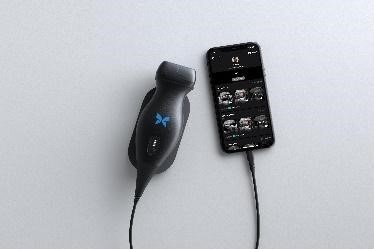
GUILFORD, CT, March 27, 2020 /CNW/ - Butterfly Network, the company helping to transform healthcare with its disruptive, Ultrasound-on-Chip™ technology, announced today that after priority review by Health Canada, it has received medical device licensing for its point-of-care ultrasound device. The Butterfly iQ is now available to Canadian healthcare practitioners and health systems.
"As healthcare practitioners work to combat the COVID-19 pandemic that is overwhelming our healthcare systems, it is more important than ever that they have access to tools and resources to help them in this fight. Aligned with our mission of democratizing medical imaging, we are proud to offer Canada access to affordable, portable and state-of-the-art technology to better help them monitor and triage affected patients both quickly and effectively," said Laurent Faracci, who assumes his role as Butterfly CEO on April 1.
Butterfly Network is working closely with both Health Canada and leading physicians and healthcare systems across the provinces to ensure proper access and use of Butterfly iQ devices, particularly at this critical health moment.
"A growing body of evidence shows that point-of-care ultrasound is a critical tool for triaging and monitoring patients impacted by COVID-19 and we have heard the same from hundreds of clinicians from around the world," said Dr. John Martin, Butterfly's Chief Medical Officer. "Canadian healthcare practitioners, on the front lines of this pandemic, can now access the Butterfly iQ to perform lung ultrasound at the point of care which has been effective in detecting pulmonary involvement in suspected COVID-19 patients."
Dr. Adam Thomas, emergency physician in Island Health, Victoria BC and ICU fellow in Vancouver BC, is using the Butterfly iQ for rapid pulmonary involvement assessment of COVID-19 patients.
"Given current constraints on healthcare, from timing to surge capacity, we are not going to be able to use some of the traditional assessments and treatment options. We must turn to solutions that can help us be more efficient and effective, and focus on helping patients. No tool may do that better than Butterfly," said Dr. Thomas. "The Butterfly iQ has the ability to complete essential functions quickly and safely and in a way that integrates smoothly with hospital workflow. This tool can help us combat the spread of this pandemic."
In just one year since its commercial launch, Butterfly expanded its commercial presence to 20 markets and has become a leader in handheld ultrasound. It is currently used by over 15,000 healthcare practitioners around the world. To date, the company has raised more than $350 million of capital from leading investors, including Fidelity, Fosun Pharma and the Gates Foundation.
To learn more about Butterfly's launch in Canada or to purchase a device (for healthcare practitioners only), visit:
About Butterfly Network Founded by Dr. Jonathan Rothberg in 2011, Butterfly Network has created the world's first handheld, single-probe whole-body ultrasound system, Butterfly iQ, making ultrasound technology universally accessible and affordable. Butterfly Network's mission is to democratize healthcare for the 4.7 billion people around the world lacking access to medical imaging. Through their patented Ultrasound-On-Chip™ technology, Butterfly Network is paving the way for earlier detection and remote management of health conditions around the world.
SOURCE Butterfly Network, Inc.
Harris County Public Health and Local HealthTech Company Luminare Partner to Launch COVID-19 Self-Assessment Tool to Help Prioritize Testing for High-Risk Individuals
HOUSTON, TX -- Harris County Public Health (HCPH) andLuminare, Inc., in collaboration with Microsoft for Startups, developed QuickScreen, an online assessment tool designed for individuals to provide guidance on whether they should be tested for coronavirus disease (COVID-19).
“We understand that there are a lot of questions and misinformation about coronavirus disease,” said Umair A. Shah, MD, MPH, executive director and local health authority for Harris County Public Health. “This innovative tool will help individuals self-assess to understand if they are truly at risk for COVID-19 or if their symptoms could be related to another health condition.”
QuickScreen is an online, confidential and secure self-assessment tool that can be used at home. This web-based software is designed initially to serve the public in the Greater Houston area in accordance with the Center for Disease Control and Prevention Coronavirus guidelines.
The goal is to empower individuals to understand if they are at risk for COVID-19 and to seek medical attention accordingly so exposure to the community can be limited. In addition, the COVID-19 self-assessment platform will help decrease potential exposure to healthcare workers, avoid emergency room overcrowding, and allow efficient communication between the health department and the population at large.
“After years spent tackling sepsis, we have considerably built up our core product at Luminare and are now leveraging our expertise and understanding in that area to develop QuickScreen for COVID-19,” stated Luminare CEO & Co-Founder Dr. Sarma Velamuri. He added, “Our hope is that the QuickScreen web portal can help alleviate the stresses being placed on our community’s healthcare facilities and its workers who are on the front lines battling the spread of Coronavirus in Harris County and the region by giving individuals a better indication of whether or not they may need further testing.”
QuickScreen will provide an individual with recommendations, based on Centers for Disease Control and Prevention (CDC) guidelines, on their symptoms and risk factors related to COVID-19. The screening takes less than two minutes on average to complete when an individual has relevant health history available prior to accessing the web portal.
QuickScreen will be another step in keeping the Harris County community safe by quickly and accurately identifying who may need escalated testing and potential medical care to treat the onset of COVID-19. You can access QuickScreen by going www.hcphtx.org\COVID-19 and www.readyharris.org/
Luminare, Inc. is part of the Texas Medical Center Innovation community and is officed at the TMC Innovation campus. Luminare provides software solutions to improve hospital efficiency, with their first product to reduce sepsis mortality and morbidity in the hospital setting.
Parties interested in obtaining access to the software platform should contact covid19@luminaremed.com.
ABOUT LUMINARE
Luminare specializes in building software that automates processes in hospitals so that patients receive timely and appropriate care. Luminare is recipient of the “Most Promising Web & IT Company” by the Rice University Jones School of business ‘17 and was participating in the CDC’s Interoperability Showcase at HIMSS 2020 on “Stopping sepsis through early detection” and is alumnus of the TMC’s Innovation Accelerator. Our primary mission is to stop 250,000 deaths a year in US hospitals from sepsis. When COVID hit we decided to repurpose our sepsis platform and expertise to provide this service. The tool is free and available to communities, government organizations, and healthcare entities beyond Harris County for the purposes of COVID-19 self-assessment. For more information, please visitwww.luminaremed.com.
ABOUT HARRIS COUNTY PUBLIC HEALTH
Harris County Public Health (HCPH) is the health department for Harris County, the third most populous county in the nation. Throughout the years, HCPH has responded to public health issues such as rabies, mosquito-borne illnesses, air and water pollution, disease outbreaks, water and food-borne illnesses, natural disasters, tuberculosis, polio, and other communicable diseases. For its efforts, HCPH was named the 2016 Local Health Department of the year by the National Association of County and City Health Officials (NACCHO).
HCPH is the local public health agency for the Harris County, Texas jurisdiction. It provides a wide variety of public health activities and services aimed at improving the health and well-being of the Harris County community.
Sophie Desmarais donates $500,000 to COVID-19 research at the Jewish General Hospital, urges those who can to "donate generously"
MONTREAL, March 27, 2020 /CNW Telbec/ - A major $500,000 donation from Sophie Desmarais, a passionate philanthropist and member of the well-known Desmarais family, will help propel four high-impact COVID-19 research projects at Montreal's Jewish General Hospital (JGH).
Ms. Desmarais is determined to be a part of the solution in the fight against the worldwide COVID-19 pandemic by providing scientists in the lab with the funding they need to make game-changing discoveries. The results of this research will benefit the global healthcare and scientific communities and advance the development of life-saving drugs, a biobank to predict the treatment of COVID patients, artificial intelligence tools to better predict where the virus will hit, and faster diagnostic tools.
"The Jewish General Hospital is one of the top Hospitals in Quebec, and when they informed me of these projects, I immediately decided to get involved. I am compelled to support our hometown research expertise in the face of this global epidemic," stated Ms. Desmarais when asked why she chose to support the JGH and COVID research in particular. "We are all in this together. We need to come together and support the exceptional efforts made by medical professionals and researchers. It is essential everyone contributes what they can. However, today I am turning to others who, like me, are from families in a position to give more and asking them to donate generously to the Jewish General Hospital to fund COVID-19 research. It is our responsibility. Together we will get there," concluded Ms. Desmarais.
"The JGH is part of a global community and there are no borders when it comes to COVID‑19. We are striving to strengthen efforts in the face of this virus. Ms. Desmarais' commitment toward funding our researchers will change the course of this worldwide pandemic. Funding research projects such as these four initiatives has the potential to save thousands of lives," said Bram Freedman, President and CEO of the JGH Foundation.
Specifically, $150,000 will be dedicated to Dr. Brent Richards' (McGill University and JGH's Lady Davis Research Institute) project to build a biobank that will make predicting optimal treatment for COVID patients possible. Mandated by le Fonds de recherche en santé du Québec (FRSQ) and the Québec Health Ministry, this province-wide bank of data and biological samples will help answer the three pressing questions; which patients can be sent home safely; which will require hospitalization; and how genetics and risk factors can help to develop successful therapies.
Another $150,000 will serve to fund artificial intelligence to predict where the coronavirus will hit and warn at-risk people. Dr. Justin Cross, Chief Digital Health Officer at the JGH and his team, are creating an analytical tool to respond proactively to the pandemic in a data-driven fashion.
$100,000 will be dedicated to developing the right drugs to combat COVID-19. Dr. Chen Liang (McGill University and JGH's Lady Davis Research Institute) and his team are investigating what makes this new coronavirus transmit so rapidly. This project is currently supported by an operating grant from the Canadian Institutes of Health Research. These additional funds will allow the JGH to assemble a stronger research team with more resources to understand the cause of this devastating disease quickly.
Lastly, $100,000 will serve to develop a faster diagnostic tool. Dr. Mark Trifiro (McGill University and JGH's Lady Davis Research Institute) and his team have introduced a completely novel and straightforward way to generate thermocycling, which will reduce the time and footprint required to diagnose COVID-19. Thanks to this project, tests can be performed where the patients are. This additional funding will allow the JGH to jump to a generation 2 prototype where much smaller volumes are used and can allow even faster results (<5 minutes).
ABOUT THE JEWISH GENERAL HOSPITAL FOUNDATION Since 1969, the Jewish General Hospital Foundation has led a dynamic fundraising program in support of the Jewish General Hospital (JGH), one of the province's largest and busiest acute-care hospitals. A McGill University teaching hospital, the JGH is renowned for the excellence of its healthcare and the calibre of its medical and research staff. Thanks to our passionate and generous donors, volunteers and supporters, the JGH can continue to deliver awe-inspiring medical breakthroughs and keep pushing forward, improving lives and patient-centred care. Our donors and supporters can be proud: Newsweek Magazine rated the JGH the #1 hospital in Quebec, #5 in Canada and among the top hospitals in the world.
ABOUT SOPHIE DESMARAIS See separate bio and photo
Ms. Desmarais is available for interviews.
SOURCE Jewish General Hospital Foundation
There is a lo going on right now in the world and even though you may not be sick there are tons of things that you can do to boost your immune system. Here is one of them!
Train It Right Immune Boosting Elixir
-1/4 cup organic NOT FROM CONCENTRATE cranberry juice - 5 pure oil of oregano drops - 5 pure ginger drops - 1/4 teaspoon of turmeric - Sprinkle of cayenne pepper - 1/2 fresh squeezed lemon - 1 tablespoon of apple cider vinegar - sweeten with raw stevia if needed
Directions:
Mix all ingredients together and take as a shot, cold.
Suggest getting ingredients at a health food store such as healthy planet, organic garage , natures emporium, or whole foods.
In addition you can add in pill form of
Zinc – 100 mg Vitamin C – 2000 mg
From Clone to Jar, Autumn Brands Offers a Fascinating Inside Look at the Lifecycle of a Quality, Pesticide Free Cannabis Plant
Overseeing the entire cultivation process, Autumn Brands’ Quality Control and Facilities Manager Justin Lough ensures a consistent, exceptional toke customers trust
LOS ANGELES, California – (March 26th, 2020): From clone to jar, 50% woman-owned Autumn Brands meticulously controls every part of the cannabis cultivation process, ensuring a consistently high quality, pesticide-free product from start to finish. Backed by decades of hard-won sustainable farming expertise, Autumn Brands stands out as a sixth-generation, family-run operation with a health-centered, holistic focus and refreshingly artisanal approach. Now, Quality Control and Facilities Manager Justin Lough offers an inside look at the lifecycle of an Autumn Brands cannabis plant.
“Customers know they can trust Autumn Brands to provide consistent, powerfully potent cannabis strains,” explains Lough. “We take immense pride in the quality of our product, paying close attention to every detail of our clean grow process.” That process starts with a cutting from a mother plant which, after cloning, enters a vegetative phase. Then, each plant is moved from the nursery to the greenhouse for flowering. Once fully flowered, they are hand-harvested and hang-dried for up to 12 days. This part is essential to remove excess moisture and activate the plant’s terpenes and THC content.
After drying, the Autumn Brands team begins the bucking and trimming process, removing flowers from their stems by hand with extreme care. Next, plants enter the two-week curing phase, in which they are kept at a low temperature and medium humidity level to help preserve their unique potency and ensure a smooth, flavorful toke. Then, they are placed in eco-friendly glass jars and transported by Autumn Brands’ distribution partner, Yerba Buena Logistics, for lab testing to verify THC and CBD levels, along with other beneficial cannabinoids. Finally, after passing the rigorous testing process, plants are ready to be delivered to dispensaries and enjoyed by consumers.
Every aspect of the Autumn Brands cultivation process requires strategic, hands-on precision and an uncompromising commitment to quality. Discover their top-notch collection of sustainably sourced, farm-to-consumer flower, pre-rolls, and pre-filled cartridges at select California dispensaries and online at www.AutumnBrands.com. Follow on Instagram @AutumnBrands for the latest product releases and updates.
About Autumn Brands:
Autumn Brands is a licensed California cannabis cultivator dedicated to the synergy of health and wellness. The Autumn Brands’ family farm started in Holland more than a century ago, and today, sixth-generation farmers apply the same expertise garnered in growing the world’s finest tulips to producing pure and potent strains of cannabis in sunny, coastal Santa Barbara County. Autumn Brands is proud to be 50 percent woman-owned, free of pesticides and other harmful chemicals. For more information, visit www.autumnbrands.com or email leighanne@anderson-pr.com.
TRAIN IT RIGHT NEWSLETTER
Sign Up and get a free 7 day Train it Right HIIT Program!