L’Oréal Paris launches international training program: Stand Up Against Street Harassment
In partnership with Hollaback!, L’Oréal Paris develops initiative to train one million people in bystander intervention to tackle street harassment* TORONTO, March 4, 2020 - L'Oréal Paris Canada today announced a global commitment to address street sexual harassment through the development of a bystander training program – Stand Up Against Street Harassment. In partnership with Hollaback!, a non-governmental organization (NGO) co-founded by Emily May in 2005, both organizations reaffirm their commitment to ending street sexual harassment and transforming the culture that perpetuates the behaviour and discrimination.
“L’Oréal Paris stands for empowerment in every walk of a woman’s life. By removing obstacles preventing women from fulfilling their ambitions, we are committed to elevating their sense of self-worth,” said Delphine Viguier-Hovasse, Global Brand President of L’Oréal Paris. “With Hollaback! and other local NGO partners, we are committed to creating a world for girls and women to march confidently forward into a future free from street harassment.”
An international survey was recently conducted in partnership with Ipsos, researchers from Cornell University and L’Oréal Paris, on experiences of sexual harassment in public spaces - as both victims and witnesses. The study investigated harassment on a large scale through online interviews with 15,000 individuals, across eight different countries representing a diversity of societies and cultures. The findings of the study indicate a staggering 48 per cent of Canadian respondents identified sexual harassment as the number one issue facing women and girls in our country. Equally alarming, 78 per cent of women globally,have experienced sexual harassment in public spaces; only 25 per cent of victims say someone helped and a shocking 86 per cent of participants worldwide did not know what to do when witnessing an incident occur. The results from this study affirmed L’Oréal Paris’ determination to stand up for the self-worth of all women and counter street sexual harassment in their everyday lives.
On Sunday March 8, 2020 - International Women’s Day, L’Oréal Paris will launch the Stand Up program in five countries**, with a roll-out in six additional countries planned for later this year, to drive awareness of street harassment with a call-to-action on a global scale. Through a dedicated training website: standup.lorealparis.com, Stand Up will grow a global community of 1 million upstanders, trained in the 5D’s: Direct, Distract, Delegate, Document, Delay, the expert-approved bystander intervention training program pioneered by Hollaback!. Bystander intervention is the term for witness action to defuse situations and make public spaces safer. To build this global movement, Stand Up will take its training into the heart of local communities in partnerships with key NGOS, working for gender equality in each country.
“How many of us look the other way because we simply don’t know how to help?” said Emily May, co-founder and executive director of Hollaback. “We’re partnering with L’Oréal Paris to train people around the world – individuals of all orientations, origins and generations, with simple tools they need in their everyday lives to first recognize and then to intervene. We have the power to really transform this issue and together end harassment and make the public space safe for girls and women.”
Embodying its revolutionary and famed signature phrase “I’m Worth It,” L’Oréal Paris has developed multiple brand initiatives dedicated to breaking down the barriers that prevent women from fully believing in and realizing their self-worth. Leveraging its’ global reach, the Stand Up movement takes the brand’s support for women into the public space by tackling the intimidating behaviours that impact girls’ and women’s very sense of freedom to move through the world.
About L’Oréal Paris L’Oréal Paris, the world’s no.1 beauty brand, is dedicated to empowering women and men by offering the most luxurious and innovative products and services available in the mass market. For most, the name “L’Oréal” is immediately evocative of the brand’s signature phrase, “Because I’m Worth It.”— the tagline behind the legendary advertising campaign for the Superior Preference® hair colour launch in 1973. Today, it represents the essence of the L’Oréal Paris brand as a whole, a spirit which is about helping every woman – and man - embrace their unique beauty while reinforcing their inner sense of self-worth. For more than 100 years, L’Oréal Paris has held an unparalleled commitment to advancement in technology, innovation and research, providing ground-breaking, high-quality products for women, men, and children of all ages and ethnicities in five major beauty categories: cosmetics, skincare, hair color, haircare, and men’s grooming.
Novartis receives Health Canada approval for Mayzent™ (siponimod) to treat secondary progressive multiple sclerosis with active disease
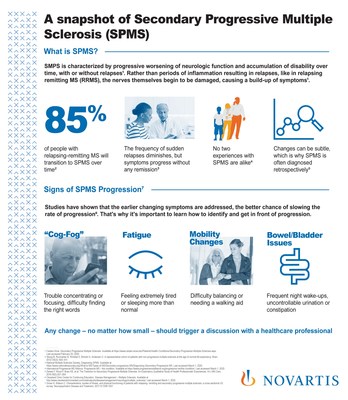
MayzentTM (siponimod) is the first oral treatment approved for people living with secondary progressive multiple sclerosis (SPMS) with active disease, and the first treatment approved for SPMS with active disease in almost 15 years1
Most people living with relapsing remitting MS (RRMS) will develop SPMS2
Approval is based on the Phase III EXPAND trial, the largest controlled clinical study of people living with SPMS, showing MayzentTM significantly reduced the risk of disease progression, including impact on physical disability3
DORVAL, QC, March 3, 2020 /CNW/ - Novartis Pharmaceuticals Canada Inc. (Novartis) is pleased to announce that Health Canada has approved MayzentTM (siponimod) for the treatment of adults with secondary progressive multiple sclerosis (SPMS) with active disease evidenced by relapses or imaging features characteristic of multiple sclerosis inflammatory activity, to delay the progression of physical disability. SPMS follows a relapsing-remitting (RRMS) course of multiple sclerosis (MS) and is characterized by progressive worsening with fewer, or no relapses, and nerve damage or loss4. SPMS is defined as active when individuals experience relapses or there is evidence of new MRI activity5.
"One of the top treatment goals for individuals with MS is delaying disability progression and we're delighted to deliver the first and only oral treatment proven to slow disease progression in those with active SPMS," said Dawn Bell, Chief Scientific Officer and VP Medical Affairs, Novartis Canada. "The approval of MayzentTM is a testament to our relentless commitment to reimagine MS treatment."
People living with SPMS experience changes in their MS symptoms with fewer or no relapses, and there can be minor remissions and plateaus6. Progression most frequently includes mobility issues, which may lead to the need for walking aids, bladder dysfunction, and cognitive decline7.
"We are pleased to see that Health Canada has approved an additional therapeutic advancement targeting progressive forms of the disease. MS is unpredictable. The more treatment options for people with MS, the more opportunities they have in managing their individual symptoms throughout their MS journey," said Dr. Pamela Valentine, President and CEO, MS Society of Canada.
"As the first oral therapy specifically approved for SPMS, MayzentTM may help those living with active SPMS by slowing disease progression," said Dr. Mark S. Freedman, Professor of Medicine, Department of Medicine, University of Ottawa.
About the EXPAND Study and Multiple Sclerosis EXPAND is a randomized, double-blind, placebo-controlled Phase III study comparing the efficacy and safety of MayzentTMversus placebo in people with SPMS. The study included 1,651 people with a diagnosis of SPMS from 31 countries, including 47 participants in Canada3. Those enrolled in EXPAND were representative of a typical SPMS population: at study initiation, participants had a mean age of 48 years, had been living with MS for approximately 16 years and more than 50% had a median Expanded Disability Status Scale (EDSS) score of 6.0 and relied on a walking aid3. EXPAND included a subset of patient with active disease (n=779), defined as patients with relapses in the two years prior to the study and/or presence of gadolinium-enhancing T1 lesions at baseline. The baseline characteristics were similar except for signs of activity compared to the overall population.
About Multiple Sclerosis and MayzentTM(siponimod) MS is a chronic, often disabling disease that attacks the central nervous system (CNS), made up of the brain, spinal cord and optic nerve8. It affects over 77,000 Canadians – one of the highest prevalence rates in the world9,10. MS is currently classified as an autoimmune disease of the CNS8. The disease attacks and destroys myelin – the protective fatty insulation around the nerve fibres of the brain and spinal cord – interrupting signals between the brain and the body8.
There are three main forms of MS: RRMS (the most common form of the condition at diagnosis), SPMS and primary progressive MS (PPMS)11. The disease progression rate, severity, and specific symptoms of MS are unpredictable and vary from one person to another8.
MayzentTM is a sphingosine-1-phosphate (S1P) receptor modulator indicated for the treatment of SPMS in adults with active disease. MayzentTM targets two separate receptors involved in the immune response of the CNS3. Siponimod binding to S1P1 receptors on lymphocytes prevents lymphocyte from egressing the lymph nodes and as a consequence, from entering the CNS of patients with MS.
About Novartis Pharmaceuticals Canada Novartis Pharmaceuticals Canada Inc., a leader in the healthcare field, is committed to the discovery, development and marketing of innovative products to improve the well-being of all Canadians. In 2018, the company invested $52 million in research and development in Canada. Located in Dorval, Quebec, Novartis Pharmaceuticals Canada Inc. employs approximately 1000 people in Canada and is an affiliate of Novartis AG, which provides innovative healthcare solutions that address the evolving needs of patients and societies. For further information, please consult www.novartis.ca.
About Novartis Novartis is reimagining medicine to improve and extend people's lives. As a leading global medicines company, we use innovative science and digital technologies to create transformative treatments in areas of great medical need. In our quest to find new medicines, we consistently rank among the world's top companies investing in research and development. Novartis products reach more than 750 million people globally and we are finding innovative ways to expand access to our latest treatments. About 109,000 people of more than 145 nationalities work at Novartis around the world. Find out more at www.novartis.com
MAYZENTTM is a trademark of Novartis Pharmaceuticals Canada Inc.
References
1.
MayzentTM Canadian Product Monograph February 20, 2020.
2.
Skoog B, Runmarker B, Winblad S, Ekholm S, Andersen O. A representative cohort of patients with non-progressive multiple sclerosis at the age of normal life expectancy. Brain. 2012;135(3); 900–911.
3.
Kappos L, Cree B, Fox R, et al. Siponimod versus placebo in secondary progressive multiple sclerosis (EXPAND): a double-blind, randomized, phase 3 study. Lancet. Published online March 22, 2018. http://dx.doi.org/10.1016/S0140-6736(18)30475-6.
Gross H, Watson C. Characteristics, burden of illness, and physical functioning of patients with relapsing- remitting and secondary progressive multiple sclerosis: a cross-sectional US survey. Neuropsychiatric Disease and Treatment. 2017;13:1349-1357.
A meta-analysis combines and analyzes data from many different studies, using advanced mathematical and statistical methods. It is a quantitative analysis that is considered more scientifically rigorous than commentary or review articles on a group of studies.
This meta-analysis was conducted by researchers at the University of Texas at Dallas and included 215 studies, making it the largest analysis of cognitive training ever conducted. It included studies among healthy older adults and among people with Mild Cognitive Impairment (a pre-dementia condition), who received either computerized or manual cognitive training. The researchers also looked at transfer of benefits to measures closely related to the training (sometimes called “near transfer”) and at transfer to measures of real-world function (sometimes called “far transfer”).
The authors wrote: “Our results show that cognitive training had a moderately large net-gain effect on near transfer and a smaller, but significant, net-gain effect on far transfer… In addition to these far transfer effects, we specifically investigated transfer to everyday functioning. Everyday functioning, an index of functional independence, is considered to be the far transfer task in most targeted cognitive interventions. We found that cognitive interventions indeed had a significant effect on everyday functioning…”
This finding provides further support for recent recommendations from clinical organizations, such as the American Academy of Neurology and the World Health Organization, which have included cognitive training in recent guidelines for cognitive health.
“These researchers truly advanced the science by casting a wide net in looking at studies, and then using sound statistical methods to identify what is most effective,” observed Dr. Henry Mahncke, CEO of Posit Science. “This represents a substantial advance over some previous reviews that looked at only a small number of studies. However, every rigorous meta-analysis published in the past five years has shown efficacy. Policymakers and healthcare professionals should take note – cognitive training works, and its time to put it to use.”
The meta-analysis included studies of many different types of cognitive training, including those developed for studies, as well as commercialized programs.
“Studies involving BrainHQ contributed more to this meta-analysis than any other specific type of brain training and helped tip the overall conclusion for the field in a favorable direction,” Mahncke continued. “A number of brain training companies had zero studies, and others had studies with negative results. Our global team of collaborators has made enormous investments in science, and people picking a brain training program should pick one that’s been shown to work.”
More than 100 published studies of the exercises in BrainHQ have shown benefits, including gains in standard measures of cognition (e.g, attention, speed, memory, executive function, social cognition), in standard measure of quality of life (e.g., mood, confidence and control, managing stress, health-related quality of life) and in real world activities (e.g., gait, balance, driving, everyday cognition, the ability to live independently). Recent workplace studies have shown BrainHQ training improved worker efficiency and safety.
BrainHQ is now offered without charge as a benefit by leading national and 5-star Medicare Advantage plans; by the Department of Defense to every soldier, sailor, airman, and marine; and by hundreds of clinics, libraries, and communities. Consumers can try different BrainHQ exercises for free, and all of BrainHQ is available for as little as $8 per month to subscribers.
Fluff, cutting the cheese, breaking wind, booty belch, whoopee, and anal salute are all different ways to refer to the standard and embarrassing fart. Did you know the average person farts approximately 14 to 23 times per day? As awkward as it may be, everyone needs to release gas from their body. It is part of the digestive process and is a necessary bodily function. What do your farts (passing gas) reveal about your general health?
What is a fart? Flatulence, also known as a fart, is something everyone experiences. It's the release of intestinal gas, which forms as a result of digesting food. Gas can be found throughout the digestive tract, including the stomach, small intestine, colon, and rectum.
New York-Based Internist and Gastroenterologist, Dr. Niket Sonpal, explains what your flatulence is trying to tell you.
1. Do you have a balanced diet?
A balanced diet should provide the body with the proper number of vitamins and nutrients. Consuming the appropriate amount of fiber and healthy foods helps keep the digestive system working correctly. If you tend to pass gas more often than you would like, this could mean that the body is not receiving the correct nutrients. Avoiding foods that are processed and harder to digest and sticking to more natural ingredients, could decrease how often you toot.
2. You may have a food intolerance.
Not all food allergies can be life-threatening; however, they can still cause conflict day-to-day for some individuals. Food intolerances mainly affect the digestive system making it harder for the stomach to digest food properly. This can lead to smelly and awkward bloating, reflux, and diarrhea after a meal. For example, people with a dairy intolerance struggle to digest lactose, which results in the stomach becoming extraordinarily bloated and sends out foul smells out of the anus.
3. Irritable Bowel Syndrome
Constantly farting throughout the day could be a sign of a health issue such as irritable bowel syndrome, diabetes, or, in extreme cases, colon cancer. Typically, these health issues cause extreme flatulence, odors or odd pressure on the rectum when they are about to be released.
4. You are stressed.
Symptoms of irritable bowel syndrome go hand in hand with stress. Stress and anxiety can lead to excessive swallowing of air, oxygen release, and digestion issues. These are three causes of having more gas than usual. When people are panicking or stressed, they often swallow more air than necessary, leading to bloating and pressure that needs to be released. On the other spectrum, hyperventilating allows an excess of oxygen to enter the bloodstream, which can also lead to gas problems.
5.Pre-Menstrual Women
That time of the month is already painful enough. There are changes in your bowel habits during this time caused by fluctuations in hormones. The shift in your hormones and bowel movements cause farting to become more frequent and smellier during this time of the month. Be mindful of accidentally passing wind while you are pre-menstrual.
6. You might have harmful gut bacteria.
Regular farting is an indicator of healthy gut bacteria and a properly working digestive system. Your body needs good bacteria in your intestine for it to remain healthy. Microbes in your gut are a positive thing because they eat up excess fiber and carbohydrates we do not use. Also, they produce beneficial bacteria. If you do not have any good bacteria, it can lead to constipation and bloating, which is unhealthy for your digestive system.
About Dr. Sonpal
Dr. Niket Sonpal is a native of Long Island NY and a graduate of the Medical University of Silesia – Hope Medical Institute in Poland. After completing his residency in Internal Medicine at Lenox Hill Hospital, he was selected to be the 2013‐2014 Chief Resident at Lenox Hill Hospital–Northshore LIJ Health System. He is an Adjunct Assistant Professor at Touro College of Osteopathic Medicine and Clinical instructor at Kingsbrook Jewish Medical Center, Brooklyn. Dr. Sonpal has completed his Fellowship in gastroenterology at Lenox Hill Hospital and will continue his work in the field of medical student and resident test preparation.
Dr. Sonpal has spoken and presented at over 25 national and regional conferences on his research and is a regular participant in national courses, as well as offering presentations to medical students, graduates, and residents on the match process. Recently Dr. Sonpal was chosen as one of the top ten national residents for the Medelita–‐Dupont Honoring Excellent Resident Observations also known as the H.E.R.O. Campaign. He is the co‐author for the best-selling Master the Boards: USMLE Step 2 CK, Master the Boards Step 3, And Master the Boards: Internal Medicine. He is also the Chief Operating Officer for Medquest Test Prep, Director of Medical Education for Picmonic Test Prep, and a recognized expert on medical test prep.
Dr. Sonpal is also on the board of the NY‐ American College Of Physicians (NYACP), and AAPI–‐NYC–‐METRO as the MSRF liaison. He has recently become a board member for NYCMS (New York County Medical Society).
Ontario Government to Fund Talk Therapy, Improve Integration in Mental Illness Treatment
TORONTO, March 3, 2020 /CNW/ - The Ontario Medical Association (OMA) welcomes today's announcement by the Ontario Government to improve quality, address gaps and increase services in treating mental illness and addictions.
One in 5 Canadians experiences a mental illness or addiction problem, in any given year. One in 2 have—or have had—a mental illness, by the time they reach 40.
"We applaud the launch of the Roadmap to Wellness: A Plan to Build Ontario's Mental Health and Addictions System. Doctors see patients every day who suffer from mental illness" said Dr. Sohail Gandhi, OMA President. "But too often people experiencing mental illness fall through the cracks. I applaud Minister Elliott and Associate Minister Tibollo for taking an integrated approach to make sure patients have greater access to quality care."
The OMA has developed a series of white papers on key health-care issues and will soon be releasing the first one on Physician Leadership in Mental Health and Addiction Care. The white paper will recommend the government establish and implement standards for equitable, connected, timely and high-quality mental health and addictions service delivery throughout the province, which the government has taken positive steps towards today.
"The OMA advocated for the government to expand and enhance mental health services in our pre-budget submission" said Gandhi. "We are pleased to see the government focus on Cognitive Behavioural Therapy (CBT) as a first step and look forward to learning more about it, and contributing to the development of this initiative."
Mental illnesses are often multi-faceted and complex, and patients may require treatment for extended periods of time or throughout their entire illness. CBT is often successful in treating a number of conditions including the most commonly diagnosed mental illnesses in Canada.
Untreated or undertreated mental illness increases other medical costs and is a barrier to patients regaining a meaningful personal life and returning to work. Today, many patients must wait to receive mental health services. Increased funding for this area is welcome.
About the OMA
The Ontario Medical Association represents Ontario's 43,000 plus physicians, medical students and retired physicians, advocating for and supporting doctors while strengthening the leadership role of doctors in caring for patients. Our vision is to be the trusted voice in transforming Ontario's health-care system.
SOURCE Ontario Medical Association
Ontario psychiatrists respond to Ontario's new plan for mental health and addictions
ONTARIO, March 3, 2020 /CNW/ - The Ontario Psychiatric Association (OPA) welcomes the new plan for mental health and addictions in Ontario. The strategy entitled "Roadmap to Wellness: a plan to build Ontario's mental health and addictions system" is a much needed first step towards a more comprehensive and connected mental health and addictions system capable of serving the needs of all Ontarians.
While today's announcement marks a step in the right direction, the OPA strongly agrees with the Minister of Health that there is still a lot more work to be done by government to construct a mental health and addictions system that addresses the existing gaps, and that is capable of meeting the unique needs of people with complex mental health and addictions challenges. Ontario's front-line psychiatrists continue to see first-hand how a lack of resources and services including a finite number of psychiatrists, and a growing demand for services is failing patients with complex mental illness.
Better integration, improved access and navigation, as well as innovations in digital health are all important for a comprehensive and connected system, but without deliberate and sustained investments in the sector, the needs of Ontario's most vulnerable will continue to be unmet.
We are optimistic that the newly created Centre of Excellence for Mental Health and Addictions will work closely with providers and mental health and addictions professionals, and with psychiatrists to tackle long wait lists and the access challenges that remain for youth and adults who have complex mental health challenges. Ontario psychiatrists have several solutions and look forward to being active participants in those discussions going forward.
Only by working together can we build an equitable system for Ontarians across the province.
ABOUT ONTARIO PSYCHIATRIC ASSOCIATION (OPA) The Ontario Psychiatric Association is the provincial voice of Ontario's Psychiatrists. The OPA serves to facilitate the exchange of scientific information, promote the optimal level of professional development and practice, advocate for the mentally ill and their families, represent members to governments, universities, and other medical associations, and promote the prevention of mental disorders in the province of Ontario. You can follow the OPA on Twitter @OntPsychAssoc or visit the website at https://www.eopa.ca/
SOURCE Ontario Psychiatric Association
New Arthritis Research Education Series launches with pilot video addressing Knee Osteoarthritis and Running
VANCOUVER, March 2, 2020 /CNW/ - Arthritis Research Canada's volunteer Patient Advisory Board proudly present the new Arthritis Research Education Series. By taking an in-depth look at specific research studies through the use of video and other tools, the Education Series shares important expert knowledge from leading arthritis scientists on the latest findings in arthritis research. The Series kicks off with the popular topic of Knee Osteoarthritis and Running.
Arthritis Research Canada research scientists work in partnership with our arthritis patient advisors to conduct practical arthritis research for everyday living. Our research is aimed at arthritis prevention, early diagnosis, better treatment, and improved quality of life. Our goal is to get research results into the hands of those who need it most, right now!
The Series pilot on Knee Osteoarthritis and Running includes an interactive Tweet Chat event to allow the exchange of questions and answers between the public and a panel of expert research scientists and patient advisors at Arthritis Research Canada. Everyone is invited to join the Tweet Chat on Wednesday, March 4, 2020 from 1:00-2:00 pm (PST). Be sure to use our special Tweet Chat hashtag, #ArthritisIsSerious.
Is it safe to run when you have knee osteoarthritis? Are knee braces and other knee support aids helpful? Does it help or inhibit the knee's ability to function in the future? Experts will answer these questions and more. Be a part of the conversation. More details at: https://www.arthritisresearch.ca/arthritis-research-education-series/. We look forward to your participation in our #ArthritisIsSeriousTweet Chat!
Dr. Linda Li BSc(PT), MSc, PhD, FCAHS - Senior Research Scientist of Clinical Epidemiology, Arthritis Research Canada
Dr. Jackie Whittaker BScPT, PhD - Research Scientist of Musculoskeletal Rehabilitation, Arthritis Research Canada
About ARTHRITIS RESEARCH CANADA: Arthritis Research Canada is the largest clinical arthritis research institution in North America. Our mission is to transform the lives of people living with arthritis through research and engagement. Led by world-renowned rheumatologist, Dr. John Esdaile, Arthritis Research Canada's scientific team of over 100 are creating a future where people living with arthritis are empowered to triumph over pain and disability. With four centres across Canada in British Columbia, Alberta and Quebec (Laval and McGill Universities), Arthritis Research Canada is leading research aimed at arthritis prevention, early diagnosis, new and better treatment, and improved quality of life.
SOURCE Arthritis Research Canada
Cablivi® (caplacizumab) approved by Health Canada for adults living with acquired thrombotic thrombocytopenic purpura (aTTP)
Cablivi® is the first treatment approved in Canada for aTTP, a life-threatening blood clotting disorder
It's estimated that up to 20% of patients die from TTP episodes, despite currently available treatments1,2
TORONTO, March 2, 2020 /CNW/ - Following a priority review, Health Canada has approved Cablivi® (caplacizumab) for the treatment of adults with acquired thrombotic thrombocytopenic purpura (aTTP) in combination with plasma exchange and immunosuppressive therapy. aTTP is a rare blood disorder that causes clots to form in blood vessels throughout the body, which may lead to damage to critical organs and can cause fatal complications.3 Cablivi® is the first therapeutic specifically indicated for the treatment of aTTP in Canada.
"aTTP is a devastating disease that can lead to death if not treated effectively. While current treatment options have improved patient outcomes, mortality still occurs due to complications," says Dr. Katerina Pavenski, a haematologist and apheresis doctor at St. Michael's Hospital in Toronto. "In clinical studies, caplacizumab led to quicker platelet recovery and disease remission, and had a significant impact on disease complications. With the approval of caplacizumab, we now have an additional therapeutic option to help improve outcomes in aTTP patients."
Cablivi® prevents microthrombi (blood clots) from forming in the body, allowing the patient to recover quicker, reducing some of the complications associated with aTTP, and lowering disease recurrences.4
"Sanofi Genzyme is committed to developing innovative products in areas of healthcare where we can make a significant difference to patients' lives," says Marissa Poole, General Manager, Sanofi Genzyme Canada. "The approval of Cablivi® offers a much needed, new approach to treating this serious and potentially life-threatening disorder."
A Critical Gap in Rare Blood Disorder Treatment
aTTP is a rare blood clotting disorder in which clots form in small blood vessels.5 Vessels can be blocked by these clots and have the potential to damage the brain, heart, kidneys or other organs.6 Patients may experience an array of symptoms from living with aTTP such as fatigue, fever, bleeding (i.e., from the nose or gums), diarrhea, chest pain, abdominal pain, neurologic symptoms (i.e., confusion, headaches, visual changes) or thrombocytopenia (bruising, purpura, petechiae).7
"Those living with aTTP face significant and potentially fatal hurdles including challenges with treatment," says Sydney Kodatsky, Chair, Answering TTP Foundation. "Early detection is critical to prevent irreversible damage to the organs and minimize the risk of death. Canadian patients with aTTP can now have access to this targeted drug and the hope it brings for a faster recovery from an aTTP crisis. Answering TTP Foundation is looking forward to working with provincial and territorial partners to ensure that this therapy is quickly made available at TTP treatment centers across the country and receives timely reimbursement by public and private plans."
About Cablivi®
The approval of Cablivi® by Health Canada is based on the results of the multi-centre, randomized, double-blind placebo-controlled Phase 3 clinical study known as HERCULES.
In the HERCULES study, treatment with caplacizumab in combination with plasma exchange and immunosuppression resulted in a statistically significant reduction in time to platelet count response versus plasma exchange and immunosuppression alone (p=0.01).8 Patients treated with Cablivi® demonstrated a 1.55 times higher likelihood to achieve platelet count response compared to patients treated with placebo.9
The most frequently reported adverse reactions (>15%) were epistaxis, headache and gingival bleeding. Seven patients (7%) in the CABLIVI group experienced an adverse reaction leading to study drug discontinuation. None of the adverse reactions leading to discontinuation were observed in more than 1% of patients.10
Cablivi® was developed by Ablynx, which was acquired by Sanofi in 2018. Cablivi® was approved in the European Union in August 2018 and in the United States in February 2019.11 Cablivi® is part of the company's rare blood disorders franchise within Sanofi Genzyme, the specialty care global business unit of Sanofi.12
About Sanofi
Sanofi is dedicated to supporting people through their health challenges. We are a global biopharmaceutical company focused on human health. We prevent illness with vaccines, provide innovative treatments to fight pain and ease suffering. We stand by the few who suffer from rare diseases and the millions with long-term chronic conditions.
With more than 100,000 people in 100 countries, Sanofi is transforming scientific innovation into healthcare solutions around the globe.
Sanofi entities in Canada employ approximately 2,000 people. In 2018, we invested more than $127 million in R&D in Canada, creating jobs, business and opportunity throughout the country.
Scully, M et al. Guidelines on the diagnosis and management of thrombotic thrombocytopenic purpura and other thrombotic microangiopathies. Br J Haematol. 2012; 158(3): 323-35
2
Joly B, et al. Thrombotic thrombocytopenic purpura. Blood. 2017; 129(21):2836-46
The W. Garfield Weston Foundation makes one-of-a-kind, $16.7-million philanthropic grant to revolutionize the treatment of brain disorders
TORONTO, March 2, 2020 /CNW/ - The W. Garfield Weston Foundation, through its Weston Brain Institute, has made a landmark $16.7-million philanthropic grant to establish the Weston Family Focused Ultrasound Initiative at Sunnybrook.
This initiative is set to revolutionize the treatment of brain disorders such as Alzheimer's disease, brain cancer and ALS.
With this grant, the Foundation is spearheading a $33-million initiative to develop and bring novel focused ultrasound technology to Canadians. The Weston Family Initiative will accelerate development of a powerful new focused ultrasound device to enable the personalized treatment of brain disorders as never before. This initiative will culminate in the launch of three world-first clinical trials and bring this breakthrough technology to more patients faster.
In what is believed to be the largest single philanthropic contribution to focused ultrasound in the world, this one-of-a-kind grant will also ensure a steady stream of resources for ongoing development of this game-changing technology and other related endeavors. That means if the device is commercialized, a portion of the income generated will be reinvested in Canadian focused ultrasound research and innovation.
The creative structure of this grant serves as a new template for philanthropic grant-making in Canada, one that may be scaled and modeled by other Canadian charitable foundations for the purposes of fueling discovery and potential reinvestment in homegrown innovation.
"We are delighted to make this contribution to improve the treatment of brain diseases," says Galen G. Weston, president of The W. Garfield Weston Foundation. "This initiative is a unique opportunity to accelerate the development of this breakthrough technology while encouraging leadership and innovation in the Canadian medical technology sector. The prospect of readying this device to benefit so many people in Canada and around the world is very exciting."
"We are deeply grateful to The W. Garfield Weston Foundation for their early support for Sunnybrook's pioneering work in focused ultrasound, and for taking this exciting next step," says Dr. Andy Smith, Sunnybrook's president & CEO. "On behalf of Sunnybrook, and so many Canadians who stand to benefit from better treatment for brain disorders, thank you for sharing our vision for a more hopeful future."
About the technology A team led by Sunnybrook's Dr. Kullervo Hynynen, physicist and vice president of research & innovation, is completing a prototype of a powerful new focused ultrasound device. This breakthrough technology is nothing short of revolutionary. From one-size-fits-all to made-to-measure, the new device offers an unprecedented level of precision.
This extraordinary device is being designed specifically to harness focused ultrasound to open the blood-brain barrier, the brain's tightly packed network of vessels that both protects it from toxins and prevents potentially helpful agents from entering − such as chemotherapy, antibodies, stem cells or gene therapy.
"The new device is based on a model of personalization and portability," explains Dr. Hynynen. "Each device will be custom-produced based on scans of individual patients. It's also frameless, making it more economical for clinical use since it does not require the real-time use of MRI. Finally, it is more comfortable for the patient. Not only is it completely non-invasive, but it can treat multiple locations in the brain at one time, making the procedure shorter."
About the Initiative With funds from the Weston Family Initiative, Sunnybrook's experts can conduct research and device development on an accelerated timeline and achieve key outcomes in considerably less time than would otherwise be possible.
The primary goal of this initiative is to complete a prototype of the new device and demonstrate its efficacy in Canadians with various brain diseases. The Initiative's ultimate ambition is to advance focused ultrasound technology so that treatments can be delivered quickly and without the need for MRI guidance, and to bring it to Canadian patients faster through clinical trials.
As part of the initiative, Sunnybrook's clinical team, led by neurosurgeon Dr. Nir Lipsman, will test the device across three brain disorders: Alzheimer's disease, breast cancer that has spread to the brain, and glioblastoma (the deadliest and most common brain tumour).
"This technology holds tremendous promise for patients with difficult-to-treat brain disorders like Alzheimer's disease, brain cancer and ALS, where the blood-brain barrier is a major obstacle," says Dr. Lipsman. "These are some of the most complex disorders that have no effective treatments, so we're excited to move closer to testing the device in clinical trials. The impact of this technology on patient care will be felt across Canada and around the world."
Sunnybrook Foundation will look to the generosity of the community to raise the remaining funds required to complete this bold new vision for the treatment of brain disorders.
About The W. Garfield Weston Foundation For three generations, The W. Garfield Weston Foundation has pursued its mission to enhance and enrich the lives of Canadians. With a focus on health and landscapes, the Foundation aims to catalyze inquiry and innovation to bring about long-term change. Now in its sixth decade, the Foundation continues to collaborate with a broad range of Canadian charities to further world-class research, explore new ideas, and create tangible benefits for the communities in which it works.
About Sunnybrook Sunnybrook Health Sciences Centre is inventing the future of health care for the 1.3 million patients the hospital cares for each year through the dedication of its more than 10,000 staff and volunteers. An internationally recognized leader in research and education and a full affiliation with the University of Toronto distinguishes Sunnybrook as one of Canada's premier academic health sciences centres. Sunnybrook specializes in caring for high-risk pregnancies, critically-ill newborns and adults, offering specialized rehabilitation and treating and preventing cancer, cardiovascular disease, neurological and psychiatric disorders, orthopaedic and arthritic conditions and traumatic injuries. The Hospital also has a unique and national leading program for the care of Canada's war veterans.
Global poll shows people think fewer die from diseases but more die from other causes
On average, people underestimate deaths from heart disease by almost three times
Poll, February 25, 2020 — Benjamin Franklin once famously wrote “in this world nothing can be said to be certain – except death and taxes.” And while death is still certain, there seems to be a lot of confusion about how we die, according to latest Ipsos survey.
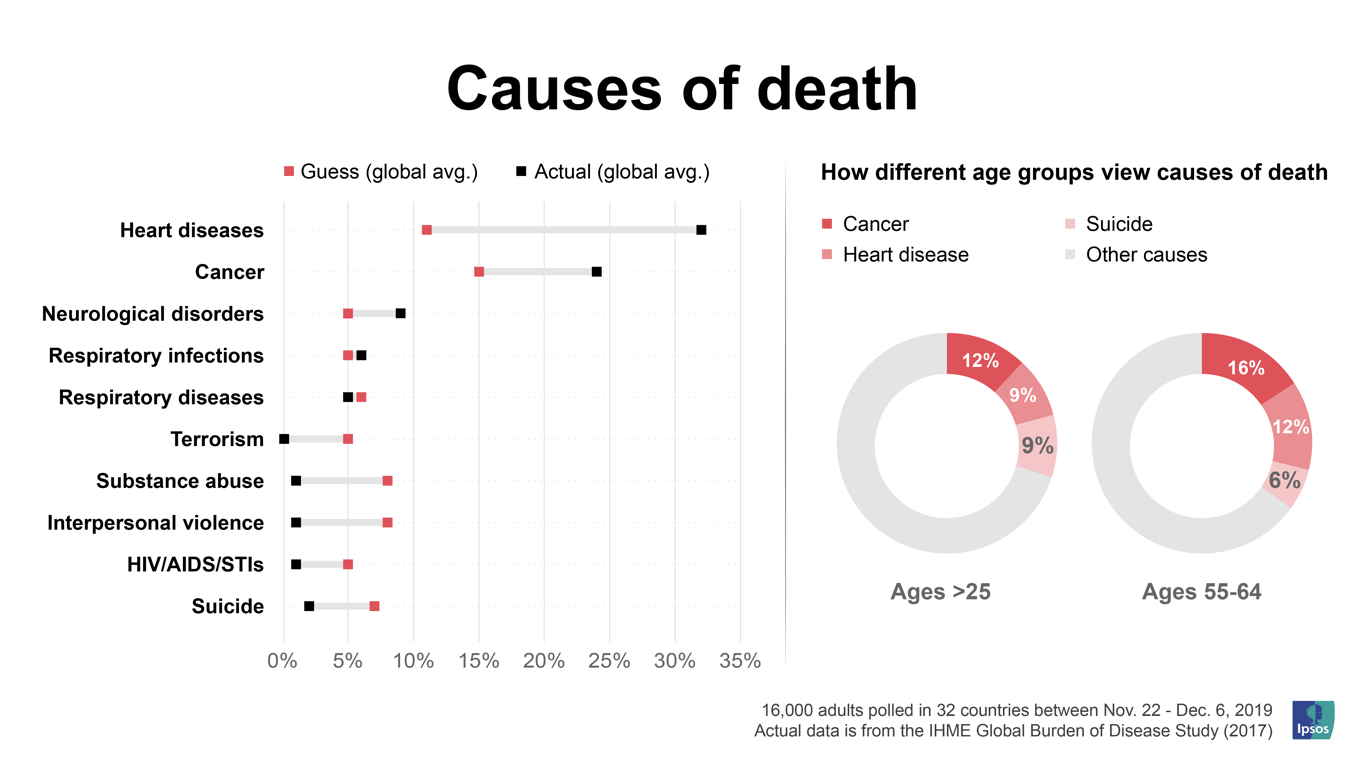
In a poll of 16,000 people across 32 countries, people on average tend to underestimate how many deaths are caused by diseases like heart disease, cancer and neurological disorders in their country, while they vastly overestimate how many people die from other causes like car crashes, violence, suicide, substance abuse and terrorism.
Cardiovascular diseases are the leading cause of death worldwide with almost one-third (32%) of people dying from this every year, according to the Institute for Health Metrics and Evaluation (IHME). But the average guess on deaths in all the countries surveyed was just 11%.
Cancer is the second biggest cause of death globally with a quarter of people (24%) dying from this each year – respondents thought the number of deaths is 15%.
About 9% of deaths occur from neurological disorders like Parkinson's disease or dementia, but people guessed it was about half that at 5%.
On the other end, people think 10% of deaths every year are from transport injuries, when the figure is just 2%. People thought 8% of deaths are from violence and substance abuse like drugs and alcohol, but the actual number is just 1% a year globally.
Experts say a combination of how the media reports on death, the dramatization of vivid scenes of death available to us, and the recency of such information – which may make it more salient or important – are influences affecting the way we think about dying.
Namika Sagara, President of Ipsos Behavioral Science Center in New York, said deaths from car crashes, gun violence and terrorism are usually very dramatic, and therefore people are likely to remember them more.
“These likely to come to mind more easily, and leads people to think it happens more often,” said Sagara. “This is related to availability bias.”
Sheldon Solomon, Professor of Psychology at Skidmore College in the U.S., backed this by adding that we tend to overestimate the frequency of events that are salient to us.
“We are more likely to die falling in our bathrooms than by being murdered by terrorists or in an airplane crash, but people probably never see news about someone falling in their bathrooms and dying,” said Prof. Solomon.
“Moreover, crashes, terrorism and violence are more immediate whereas high blood pressure and cancer happen more slowly over time such that we might underestimate their frequency as a result.”
More than a third of people surveyed said they see transport injuries such as accidents (38%), violence such as murder (37%), and terrorism and conflict (35%) most frequently in the news – the highest among all 14 causes of death. But the top three causes of death that the majority of people said they have been personally affected by are cancer (70%), heart disease (60%) and diabetes or kidney diseases (58%).
The entire story on the findings and what influences our view on causes of death can viewed here.
About the Study
These are the findings of the Ipsos MORI Perils of Perception Survey 2020. 16,000 interviews were conducted between 22 November and 6 December 2019.The survey is conducted in 32 countries around the world, via the Ipsos Online Panel system in Argentina, Australia, Belgium, Brazil, Canada, Chile, SAR China, Colombia, France, Germany, Great Britain, Hong Kong, SAR, China, Hungary, India, Italy, Japan, Malaysia, Mexico, Netherlands, Peru, Poland, Romania, Russia, Saudi Arabia, Singapore, South Africa, South Korea, Spain, Sweden, Turkey and the USA.
For more information on this news release, please contact:
Ipsos is the world’s third largest market research company, present in 90 markets and employing more than 18,000 people.
Our passionately curious research professionals, analysts and scientists have built unique multi-specialist capabilities that provide true understanding and powerful insights into the actions, opinions and motivations of citizens, consumers, patients, customers or employees. We serve more than 5,000 clients across the world with 75 business solutions.
Founded in France in 1975, Ipsos is listed on the Euronext Paris since July 1st, 1999. The company is part of the SBF 120 and the Mid-60 index and is eligible for the Deferred Settlement Service (SRD).