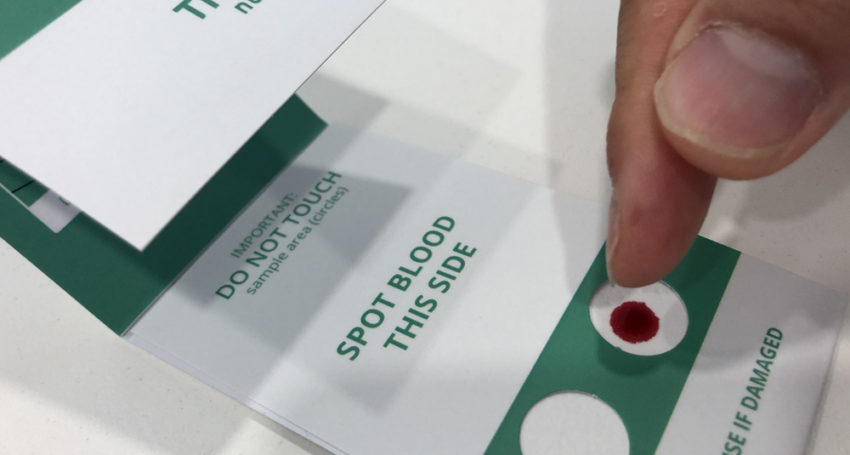
Blood testing technology developed by South Australian medical researchers is poised to transform the nutrition industry.
Adelaide-based Trajan Nutrition is starting to market its new nutrition testing globally after proving the technique can replace costly and time-consuming vial blood testing with a simple finger prick.
The team is looking to break into the United States, European and Asian markets targeting five key customer groups: researchers, pathology labs, vitamin supplement companies, health insurers and corporations.
“After preparatory work we are now at development stage, we’re almost ready to start training our global team to start promoting,” Trajan Nutrition chief executive officer Marco Baccanti said.
Baccanti said the technique would have a major impact on the nutrition industry by cutting testing costs, improving efficiencies and reducing the need for invasive blood testing for patients.
He said the blood spot testing had numerous potential income streams.
Vitamin supplement companies for example could provide customers with a testing kit where they could make a blood spot at home, dab it onto specially created paper, then send it to a lab for testing before they bought their products.
“This could offer people the opportunity to first see if their diet is imbalanced,” Baccanti said.
“Pathology labs can also now start using this methodology with far less invasive collection of blood of patients and using faster analytics and more cost effective techniques.”
The breakthrough includes the development of special contaminant-free paper to protect the specific blood compounds being tested. Solvents have also been developed to help transfer the dried blood samples from the paper to testing instruments.
University of Adelaide Professor of Functional Food Science Robert Gibson began work on the technology 10 years ago with Professor Maria Makrides.
Prof Makrides is one of Australia’s leading research experts into the nutritional needs of mothers and their babies, she leads the Healthy Mothers, Babies and Children Theme of the South Australian Health and Medical Research Institute (SAHMRI) in Adelaide.
Both professors now also lead Trajan Nutrition, after making the breakthrough while overseeing large clinical nutrition trials of mothers and babies throughout the ...
TO READ THE ENTIRE STORY AND USE IT ROYALTY-FREE IN YOUR PUBLICATION SIMPLY CLICK HTTP://BIT.LY/2V85H3K
This is a Creative Commons story from The Lead South Australia, a news service providing stories about innovation in South Australia. Please feel free to use the story in any form of media. The story sources are linked in with the copy and all contacts are willing to talk further about the story.
Sixty-two organizations recognized as Employee Recommended Workplaces for 2020
Morneau Shepell and The Globe and Mail to announce category winners on March 24
TORONTO, Feb. 20, 2020 /CNW/ - Today, Morneau Shepell and The Globe and Mail announced 62 Employee Recommended Workplaces for 2020. Now in its fourth year, the Employee Recommended Workplace Award recognizes workplaces with proven success creating a healthy environment and one that supports employee well-being. The award, which was created by Morneau Shepell and The Globe and Mail, is the only award of its kind that is based entirely on employee feedback.
This year's winners, representing organizations in 12 business categories from across Canada, will be announced on March 24 at The Globe and Mail Solving Workplace Challenges Conference, to be held at The Globe and Mail Centre in Toronto. The category winners will also be profiled nationally in The Globe and Mail, Canada's leading news media organization. All recipients have earned the right to use the Employee Recommended Workplace badge in their communications materials to identify them as employers of choice.
"It is encouraging to see that a wide variety of organizations across Canada are taking the necessary steps to ensure their employees' well-being is a top priority for their business," said Stephen Liptrap, president and chief executive officer, Morneau Shepell. "We are delighted to once again partner with The Globe and Mail to acknowledge these organizations as they continue to demonstrate the importance of understanding the value of employee well-being."
The Employee Recommended Workplace Award recognizes excellence in achieving a healthy, engaged and productive workforce. Employees of participating organizations were asked to complete a short confidential survey, from which they received a personal assessment identifying potential areas for improvement across all elements of well-being. Participating organizations also received a report with insights on their Total Health scores – across physical, mental, work and life – highlighting strengths and areas of improvement in order to be identifiable as an employer of choice.
"The growth that we've seen in both this program and improvements in employers' adoption of well-being programs is remarkable," said Phillip Crawley, publisher and chief executive officer, The Globe and Mail. "It's been incredibly rewarding to see that the well-being of employees is not only being talked about, but also put into action. We congratulate these organizations on their truly great work."
The list of the 62 Employee Recommended Workplaces for 2020 is provided below.
About Morneau Shepell Morneau Shepell is the leading provider of technology-enabled HR services that delivers an integrated approach to well-being through our cloud-based platform. Our focus is providing everything our clients need to support the mental, physical, social and financial well-being of their people. By improving lives, we improve business. Our approach spans services in employee and family assistance, health and wellness, recognition, pension and benefits administration, retirement and benefits consulting, actuarial and investment services. Morneau Shepell employs approximately 6,000 employees who work with some 24,000 client organizations that use our services in 162 countries. Morneau Shepell is a publicly traded company on the Toronto Stock Exchange (TSX: MSI). For more information, visit morneaushepell.com.
About The Globe and Mail The Globe and Mail is Canada's foremost news media company, leading the national discussion and causing policy change through brave and independent journalism since 1844. With our award-winning coverage of business, politics and national affairs, The Globe and Mail newspaper reaches 6 million readers every week in our print and digital formats, and Report on Business magazine reaches 2 million readers in print and digital every issue. Our investment in innovative data science means that as the world continues to change, so does The Globe. The Globe and Mail is owned by Woodbridge, the investment arm of the Thomson family.
2020 Employee Recommended Workplaces
Organization
Location
Active International
Ontario
Administration portuaire de Québec
Quebec
Advisor Websites
British Columbia
Aéroport de Québec Inc.
Quebec
Allnorth Consultants Limited
British Columbia
Barreau du Québec
Quebec
Baylis Medical
Ontario
Benefits by Design
Ontario
CAA Club Group
Ontario
Canadian Mental Health Association of New Brunswick
New Brunswick
CBCL Limited
Nova Scotia
Citron Hygiene
Ontario
Credit Union Central of Manitoba
Manitoba
Data Innovations LLC
Ontario
Dejero
Ontario
Dixon Mitchell Investment Counsel Inc.
British Columbia
Doctors Nova Scotia
Nova Scotia
École Lucien-Guilbault
Quebec
EfficiencyOne
Nova Scotia
Endy
Ontario
FIRST Insurance Funding of Canada
Ontario
FormHero Inc.
Ontario
Frontier College
Ontario
Will Davidson LLP
Ontario
Gemstone Logistics
Alberta
GeoSpectrum Technologies Inc.
Nova Scotia
Humania Assurance
Quebec
Innovative Automation
Ontario
Intercon Messaging Inc.
Alberta
Killam Apartment REIT
Nova Scotia
Klick Inc.
Ontario
KTI Limited
Ontario
LivingWorks Education Inc.
Alberta
Loopio Inc.
Ontario
MacLean Law
British Columbia
Municipal Insurance Association of British Columbia
British Columbia
Municipality of the County of Cumberland
Nova Scotia
NB Power
New Brunswick
Nestlé Canada Inc.
Ontario
New Brunswick Association for Community Living
New Brunswick
Northwestern Health Unit
Ontario
OCAS Application Services Inc.
Ontario
Olive Fertility Centre
British Columbia
OnDeck Canada
Quebec
Orix Geoscience Inc.
Ontario
Pason Systems Corp.
Alberta
Pfizer Canada Inc.
Quebec
Prime Data Inc.
Ontario
Protrans Personnel Services
Ontario
Raymond James Ltd.
British Columbia
Ronald McDonald House Charities Southwestern Ontario
Ontario
SBI-Fabricant de poêles international inc.
Quebec
Segic
Quebec
Shaw Communications Inc.
Alberta
Sklar Wilton & Associates
Ontario
Tall Tree Health Centre
British Columbia
TD Bank Group
Ontario
Trafalgar Castle School
Ontario
Triovest Realty Advisors Inc.
Ontario
Util-Assist
Ontario
Wirefire Solutions Inc.
British Columbia
Zimmer Biomet Canada
Ontario
SOURCE Morneau Shepell - Corporate
Existing models of mental health service delivery and funding are failing Ontarians
Patients with complex mental health challenges need access to a range of services which requires coordination, say Ontario's psychiatrists.
ONTARIO, Feb. 20, 2020 /CNW/ - Ontario's front-line psychiatrists are seeing first-hand how a lack of resources and services, a finite number of psychiatrists, and a growing demand for services is failing patients with complex mental illness.
"There simply aren't enough of us to provide that level of support," says Dr. Javeed Sukhera, president of the Ontario Psychiatric Association (OPA) and one of the authors of a new policy paper outlining key recommendations for the province to consider.
With the latest figures from Health Quality Ontario showing that timely assessments and follow-up care rates are getting worse, the paper, Towards Integrated Care: 8 Ways for Ontario to Better Connect Patients with Mental Health and Addictions Treatment, points out that patients in need of specialized service are likely to have even more problems accessing basic care.
This includes individuals with a dual diagnosis of a developmental disability combined with psychiatric illness, individuals with a concurrent substance use disorder combined with a psychiatric illness, or someone with a complex illness.
"When people have serious and complex mental illnesses in Ontario, they can encounter services that are fragmented and restrictive. Mental health is not funded in the same way other services are and, as a result, there are complicated inclusion and exclusion criteria," explains Dr. Sukhera.
Immigrants, refugees, ethno-cultural and racialized groups, Indigenous Peoples, individuals living in northern and remote communities, minority official language communities and LGBTQ2+ individuals also experience particular issues with access to the mental health services they need.
The newly released paper outlines several recommendations for system improvement, drawn from the suggestions and insights of psychiatrists across Ontario.
The eight recommendations range from specific ones such as allowing psychiatrists to work at the top of their skill set with adequate supports in place to focus on community-based care in team-based settings, to broader calls to action such as increased investments in a health human resource strategy to address service shortages, rather than simply realigning existing resources.
"As psychiatrists, we are important contributors to the delivery and organization of mental health and addictions services in Ontario," says Dr. Sukhera. "This is a system in crisis and as an organization, the Ontario Psychiatric Association is pushing the envelope for change."
ABOUT ONTARIO PSYCHIATRIC ASSOCIATION (OPA) The Ontario Psychiatric Association is the provincial voice of Ontario's Psychiatrists. The OPA serves to facilitate the exchange of scientific information, promote the optimal level of professional development and practice, advocate for the mentally ill and their families, represent members to governments, universities, and other medical associations, and promote the prevention of mental disorders in the province of Ontario. You can follow the OPA on Twitter @OntPsychAssoc or visit the website at https://www.eopa.ca/
SOURCE Ontario Psychiatric Association
Locking in and preserving your healthy stem cells has never been easier and more accessible as Acorn Biolabs partners with Coverdale Clinics.
Appointments for stem cell & DNA collection now available.
TORONTO, Feb. 20, 2020 /CNW/ - With the rapid emergence of regenerative medicine therapies and genetic analysis testing reaching mainstream medicine, consumers are demanding increased opportunities to prepare for their future healthcare needs, including banking a viable source of cells to preserve their current health.
To meet this growing demand, Acorn Biolabs, the leading non-invasive stem cell collection, cryopreservation and analysis company, today announced its partnership with Coverdale Clinics Inc., a premium network of specialty care clinics in Canada. Together, Acorn and Coverdale will help make stem cell collection more accessible and affordable in the West Greater Toronto Area.
Through their partnership, Coverdale Clinics' Oakville location be offering Acorn's non-invasive stem cell collection services. The simple process involves plucking a few hair follicles from a client's head, which are then analyzed and cryopreserved for future use.
Acorn's innovative solution for live cell collection enables the collection of stem cells without the need for surgery or other painful and invasive procedures, making stem cell collection for life-long storage significantly more affordable and accessible for everyone.
"Our partnership with Acorn Biolabs opens up a great opportunity for us to expand Coverdale Clinics service offering into the emerging regenerative medicine and genetics market. We're pleased to be able to leverage our specialty clinic in Oakville to offer a service that improves access to exciting and novel health care technologies," said Chris Dalseg, BioScript Solutions' Vice President of Strategic Growth and Marketing. "We have always been at the forefront of providing innovative health care services to Canadians, and adding stem cell collection services from Acorn exemplifies our ongoing commitment."
Once stem cells are collected, Acorn uses its proprietary capabilities to keep cells alive during transportation before going into long term cryogenic storage. The process turns collected hair follicles into a highly valuable and accessible resource for further regenerative medicine and genetics. Not only are these stem cells securely stored for future use, but the company's scientists will also be able to extract critical genetic information through DNA tests, for clients that want it, that will unlock valuable data about a person's health over their lifetime.
"We are excited to bring Acorn's preventative, personalized healthcare services to more people through this partnership with Coverdale Clinics. The cells collected are a life-long resource for these clients, not only in regenerative medicine, but also for advanced analytics, helping to identify diseases even before the first symptom," said Dr. Drew Taylor, Co-founder and CEO at Acorn Biolabs Inc. "The partnership is an important extension for Acorn to serve health-minded individuals in more geographies, freezing the clock on their stem cells so they can use them later in life, when they will need them most."
Clients can book their non-invasive stem cell collection appointment in Oakville, Ontario through Acorn's website today at www.acorn.me
About Acorn Biolabs, Inc.
Acorn helps you live a longer, healthier tomorrow by freezing the clock on your cells today. Founded in 2017 by Steven ten Holder, Patrick Pumputis and Dr. Drew Taylor and borne out of years of research, Acorn is a healthcare technology company based at Johnson & Johnson INNOVATION JLABS in Toronto. Acorn is focused on giving everyone the best chance to experience more healthy years with its easy, affordable and non-invasive stem cell collection, analysis and cryopreservation service. For more information, visit acorn.me.
About Coverdale Clinics
Coverdale Clinics is a premium network of specialty care clinics, providing patients with a safe, comfortable environment to receive specialty medications by infusion or injection. With more than 100 clinics nationwide, our nurses take a personalized approach to patient care that includes education and counselling to better support medication adherence.
About BioScript Solutions
BioScript Solutions is committed to helping patients with chronic illnesses achieve the best possible health outcomes. With our total care approach, we simplify access to complex, specialty drug therapies and deliver full-service specialty care solutions at every stage of the patient's treatment journey. Through our specialty pharmaceutical distribution, pharmacies, patient support programs and clinical services, BioScript has the capability to manage the needs of manufacturers, payors, prescribers and health care practitioners across Canada ― today, and tomorrow. To learn more, please visit bioscript.ca.
SOURCE Acorn Biolabs
The fitness label that began as a niche brand with a cult following in the United States has launched its workout app to help open up global markets.
Ryderwear was founded in Adelaide, the capital of South Australia, in 2009 by bodybuilder David Lukic and partner Natalie Lukic after noticing a shortfall in fitness clothing.
The brand grew slowly at first, developing a range of apparel designed to mould to athletes’ bodies rather than hanging loose, which was the style of the time. But following the launch of its signature D-Mak lifting shoe, Ryderwear attracted collaborations with fitness influencers and gained a cult following by weightlifters and crossfit trainers in the United States.
A decade later, Ryderwear has partnered with more than 500 influencers across social media platforms such as Instagram, Snapchat and Tick Tock and will launch its first workout app PUSHH today (February 20).
Ryderwear chief marketing officer Mal Chia said the mobile application was the natural next step for the brand in its bid for global expansion.
“In the last few years we’ve grown overall but it’s been organic rather than having a deliberate focus on one market, and most of that growth has come from Australia,” Chia said.
“At the moment, Australian customers make up about 50 per cent, the US makes up about 35 per cent and then the UK and the rest of the world make up the rest.
“So we’ve been looking at how we exponentially grow, particularly with a strong focus on international markets.”
PUSHH is the latest mobile fitness app developed in South Australia, following the launch of fitness superstar Kayla Itsines’s SWEAT program in 2015 by design company PixelForce.
Chia said while the SWEAT app was aimed at women, PUSHH was designed for everyone, with a focus on people who had been training at a high level for a long time.
“The whole SWEAT team are doing an incredible job. But, if you’re training and you want to do a boxing workout, we’ve got a workout by Dave McIntosh, who’s a former British Royal Marines commando so you can train like him. We’ve got Kai Greene who is one of the top body builders, we’ve got MMA fighters, so we’ve got a lot of variety,” he said.
PUSHH athlete marketing coordinator Olivia Parker said the app would feature 18 athletes and focus on training correctly.
“The app starts off asking for people’s measurements: their weight, their goals, what they want to achieve. Then it suggests athletes’ programs that they might really like and links with their goals,” Parker said.
“There’s also blogs on nutrition, training advice and that kind of stuff. Programs range from eight to 12 weeks and you can track your workouts, so how you start and how you’re progressing with everything.
“We have an entire exercise science team who review all of the programs and make sure that everything we put on the app is evidence-based as well.”
Parker said in the past decade Ryderwear had grown from ...
TO READ THE ENTIRE STORY AND USE IT ROYALTY-FREE IN YOUR PUBLICATION SIMPLY CLICK HTTP://BIT.LY/37MEWLH
This is a Creative Commons story from The Lead South Australia, a news service providing stories about innovation in South Australia. Please feel free to use the story in any form of media. The story sources are linked in with the copy and all contacts are willing to talk further about the story.
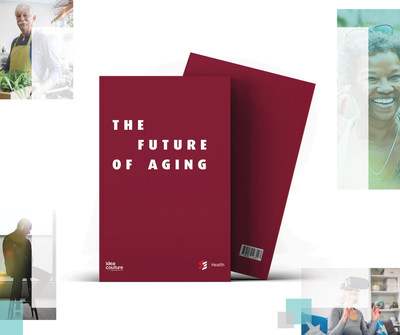
SE Health and Idea Couture Pen Provocative Publication That Puts People First: The Future of Aging
Canada's largest social enterprise, in collaboration with a global, strategic innovation design firm, showcases the positive impact of aging and the remarkable future of health at home
TORONTO, Feb. 20, 2020 /CNW/ - SE Health is fueling the feeling of home and changing the perception of aging – one chapter at a time. Yesterday, the award-winning, not-for-profit health care organization, in partnership with Idea Couture, part of Cognizant Interactive, launched The Future of Aging – a book that shines a unique lens on the meaning of aging for everyone.
The book presents answers and opportunities to rich and provocative questions related to aging. Written by subject-matter experts, in collaboration with strategic innovators, and supported by extensive research, the book outlines the complex realities and possibilities around aging and what the future holds for older adults. Using unique personas, each chapter provides thought-provoking scenarios for what it means to age at home; and redefines what it means to age well.
"The Future of Aging is the culmination of SE Health's commitment to care and putting people first," says Shirlee Sharkey, President and CEO of SE Health and one of the book's authors. "The book challenges the cultural norms and stereotypes of aging and captures SE Health's ongoing dedication to reimagining aging through innovation, collaboration and curiosity for change. It also highlights the commendable work of our SE Futures Team – dedicated to co-creating a future where Canadians age with health, vitality and dignity."
"The Future of Aging provides a nuanced, thoughtful and compassionate view of what it means to age with purpose," says Alexis Wise, Director of Health at Sidewalk Labs. "As we look to innovation to improve the experience of aging, this book reminds us that the human experience is core to that work and challenges us to think deeply about what matters to people as they age. Whatever your industry or expertise, there are insights for everyone in The Future of Aging. Congratulations on raising the bar in the global conversation about aging and innovation."
The Future of Aging will be available to purchase on Amazon in the coming weeks. All proceeds from the book will go to the Saint Elizabeth Foundation and will be used to strengthen community health care. Please visit https://sehc.com/foundation/ to learn more.
To download the complimentary introduction of the book – written by Shirlee Sharkey – and for more information on The Future of Aging visit https://futureofaging.sehc.com/.
About SE Health
SE Health is a not-for-profit social enterprise applying knowledge, vision and drive to impact how people live and age at home, today and into the future. With Canadian roots and 110+ years of expertise, the organization brings quality excellence and innovation to home care, seniors' lifestyle, and family caregiving. Through its team of 9,000 Leaders of Impact, SE Health delivers 21,000 care exchanges daily, totaling 50 million in the last decade alone. Visit us online at sehc.com.
About Cognizant
Cognizant is one of the world's leading professional services companies, transforming clients' business, operating and technology models for the digital era. Our unique industry-based, consultative approach helps clients envision, build and run more innovative and efficient businesses. Headquartered in the U.S., Cognizant is ranked 193 on the Fortune 500 and is consistently listed among the most admired companies in the world. Learn how Cognizant helps clients lead with digital at www.cognizant.com or follow us @Cognizant.
SOURCE SE Health
Patients most at risk of overdose at the beginning and immediately after the end of methadone treatment, RCSI study
Change of methadone provider not associated with increased risk of death in Irish system
DUBLIN, Feb. 20, 2020 -- A new study, led by RCSI researchers, has found that patients receiving methadone treatment are most at risk of overdosing in the month following the end of methadone treatment and during the first four weeks of treatment.
However, the study did not observe transfers between services as high risk periods, with no deaths occurring following a transfer. This suggests that the current structures in Ireland promote a smooth transition of patients between services.
The study, published in the current edition of Addiction, was funded by the Health Research Board and was a collaboration between the School of Pharmacy and Biomolecular Sciences in RCSI, HRB Centre for Primary Care Research in RCSI, the HSE Addiction Services, Trinity College Dublin and the HSE National Social Inclusion Office.
People with opioid dependence have more than 10 times the risk of premature death than the general population. The most effective treatment is the prescription of legal, substitution drugs, most commonly methadone.
The researchers analysed data from 2,899 people who were prescribed and dispensed methadone in addiction services between January 2010 and December 2015. They observed 154 deaths, and 55 (35.7%) of those were identified as drug-related poisonings.
The rate of drug-related poisoning deaths was more than four times higher in the month following the end of treatment and over three times higher in the first four weeks of treatment when compared to the remaining time in treatment. These findings are consistent with growing evidence from other international studies.
“Identifying a higher risk at the beginning and immediately after the end of treatment highlights that retaining patients in treatment for longer periods will save lives. People often cycle in and out of treatment, thereby increasing their exposure to repeated periods of high risk,” said Dr Gráinne Cousins, senior lecturer at RCSI’s School of Pharmacy and Biomolecular Sciences and the study’s lead author.
“Close monitoring of opioid tolerance before starting treatment and more effective methods of preventing relapse during the induction period may reduce this risk. Additionally, increasing patient awareness of the risk of overdose and increasing the availability of take-home naloxone may mitigate the risk of overdose during the high risk periods, particularly following treatment cessation.”
No deaths were observed in the first month following transfer between treatment providers. Transfers between addiction services and primary care are facilitated by GP Coordinators employed by the addiction services. The GP Coordinator provides all relevant clinical details on the patient being transferred to the new treatment provider. The provision of opioid substitution treatment is also available in Irish prisons; if a prisoner is in treatment prior to incarceration, their treatment is continued in prison.
“Any inferences regarding risk must be cautious as less than half our sample experienced a transfer, and among those who did, it was most frequently a transition to and from prison. Further investigation of the impact of transfers between services is warranted,” said Louise Duran, an RCSI postdoctoral research Fellow in the School of Pharmacy and Biomolecular Sciences.
RCSI University of Medicine and Health Sciences is ranked among the top 250 (top 2%) of universities worldwide in the Times Higher Education World University Rankings (2020) and its research is ranked first in Ireland for citations. It is an international not-for-profit university, with its headquarters in Dublin, focused on education and research to drive improvements in human health worldwide. RCSI has been awarded Athena Swan Bronze accreditation for positive gender practice in higher education.
With $3 Million NIH Grant Renewal, Mariana Figueiro Pushes the Frontiers of Light Therapy
Lighting Research Center drills down on how light affects Alzheimer’s and dementia patients
TROY, N.Y. — With the support of a recent $3 million grant renewal from the National Institute on Aging (NIA), Mariana Figueiro is perfecting a treatment she developed for older adults with Alzheimer’s disease and related dementias that helps to regulate sleep and reduce symptoms of depression — and requires no drugs, only light.
With over 20 years of study and success in real-world settings, Figueiro, the director of the Lighting Research Center (LRC) at Rensselaer Polytechnic Institute, has demonstrated that providing light exposure of certain amounts and qualities throughout the day improves sleep patterns, sociability, and agitation, while decreasing symptoms of depression.
“What we have proven is that light therapy is a non-pharmacological intervention that makes a significant difference in the overall health of older adults living with Alzheimer’s and dementia,” she said. “People we talk to are hoping to be able to reduce the number of pills these individuals must take every day. And we tend to forget how hard this disease is on caregivers. In addition to helping the patient, finding ways to help caregivers is very important.”
The NIA, which is a division of the National Institutes of Health (NIH), awarded Figueiro $3 million in 2010 to begin her research with elderly Alzheimer’s and dementia patients, followed by a first grant renewal in 2015 to continue her work. With this latest grant renewal, Figueiro and her team will fine-tune their approach to dosage of light, working in long-term health care facilities to find the optimum brightness and duration that makes a quantifiable difference in a patient’s day-to-day life.
“It validates the research we’ve done in the past,” Figueiro said of the renewal, “and it’s a step forward on being able to embark on large clinical trials.”
Figueiro’s work has shown that exposure to bright, blue-hued light throughout the day signals to the body’s internal clock that it is daytime, promoting wakefulness. Then as evening approaches, dim, warmer orange-hued light tells the body that it’s time to rest. The flat, constant light found in most nursing homes just isn’t strong enough to properly regulate the body’s circadian rhythms.
“What’s happening with Alzheimer’s patients is that they are in constant biological darkness when it comes to their circadian systems,” she said. “They have enough light to see, but lighting in nursing homes is typically too weak to contribute to good health. There are two ways to increase the amount of light. One is to increase the intensity, and the other is to tune it to a more bluish color, because we are more sensitive to that. We could do a combination or either one — that’s what we’ll be studying with this grant renewal.”
Figueiro envisions a future in which all rooms in assisted-living facilities and nursing homes have bright lights automatically providing patients with the light therapy she is perfecting. But the concepts being developed through her work are not solely applicable to populations in those settings. Whether a patient has a traumatic brain injury, cancer, or some other malady, or is simply a child or teenager still in the process of developing, her findings are consistent: Light is a key factor in establishing and maintaining the body’s circadian rhythms, which are critical to overall health.
“The science is solid,” she said. “The work with the Alzheimer’s patients is where we’re learning everything about how we can implement these solutions, but I think the future is to expand the range of applications by utilizing our research in a wide spectrum of populations.”
Her team at the LRC is already investigating other uses. For example, they are testing personal sensors and apps that can be used to prescribe optimum lighting schemes to maintain an internal routine. Beyond that, she sees the science behind light therapy applied to the general population as a kind of “light fitness.”
“It could be very similar to your personal trainer,” she said. “I think that’s where we’re going in the future. The key is understanding how light affects different individuals and different populations, and using our engineering and our technical background in order to develop solutions for people.”
This most recent grant renewal is just one source of support for Figueiro’s ongoing work. She will combine it with a five-year $1.5 million training grant she received from the NIA in 2017 that allows eight pre-doctoral engineering students to work at Rensselaer in collaboration with the Icahn School of Medicine at Mount Sinai in New York City each year in data translation and clinical applications as the university continues to push forward in the field of Alzheimer’s research.
For more information about Figueiro’s work, watch this video.
About the Lighting Research Center The Lighting Research Center (LRC) at Rensselaer Polytechnic Institute is the world's leading center for lighting research and education. Established in 1988 by the New York State Energy Research and Development Authority (NYSERDA), the LRC conducts research in light and human health, transportation lighting and safety, solid-state lighting, energy efficiency, and plant health. LRC lighting scientists with multidisciplinary expertise in research, technology, design, and human factors, collaborate with a global network of leading manufacturers and government agencies, developing innovative lighting solutions for projects that range from the Boeing 787 Dreamliner to U.S. Navy submarines to hospital neonatal intensive-care units. In 1990, the LRC became the first university research center to offer graduate degrees in lighting and today, offers a M.S. in lighting and a Ph.D. to educate future leaders in lighting. Learn more at https://www.lrc.rpi.edu/.
Ford Government Taking Hard-Earned Wages Away From Frontline Long-Term Care Workers
RICHMOND HILL, ON, Feb. 13, 2020 /CNW/ - Doug Ford's government at Queen's Park is taking away modest, fairly negotiated wage increases, from nearly 100 frontline healthcare workers at Mariann Home, a not-for-profit long-term care facility in Richmond Hill, despite the employer's willingness to provide them.
On average, personal support workers (PSWs) will lose 32 cents per hour, while RPNs will lose 19 cents per hour, as a result of Minister Bethlenfalvy's draconian enforcement of Bill 124.
Despite the mutually negotiated and agreed upon contract, Ford's ministers are refusing to allow it, pointing to Bill 124, which was forced through the legislature by PC MPPs in November 2019 and limits all non-profit public sector employees to a 1 per cent compensation cap per year.
Mariann Home's willingness to provide a greater than 1 per cent total compensation increase per year is rooted in the acute challenge of recruiting and retaining frontline healthcare workers who earn less than $40,000 per year in most cases. Bill 124 excludes for-profit nursing homes, which gives them a recruitment and retention advantage over not-for-profit facilities like Mariann Home, who can't because they are being forced by the Ontario Government to provide lower wages.
"Shame on the Ford government for literally taking money right out of the pockets of frontline healthcare workers in need for a raise," said Sharleen Stewart, President of SEIU Healthcare. "It's simple, when healthcare workers cannot support their own families, they leave in search of more secure employment. While we applaud the employer's willingness to take steps to remedy the causes that contribute to the ongoing retention crisis, Doug Ford's actions mean there will be fewer workers on the frontline to deliver quality care for seniors. With fewer healthcare workers on the job, he's literally putting everyone's safety at risk. Doug Ford has shown us once again that he doesn't care about working-class people."
SEIU Healthcare represents more than 60,000 healthcare and community service workers across Ontario. The union's members work in hospitals, homecare, nursing and retirement homes, and community services throughout the province. SEIU Healthcare has a strong track record of improving wages, benefits and working conditions for healthcare workers, supporting the training and development needs of its members, and strengthening standards in the management and delivery of patient and client care. www.seiuhealthcare.ca
SOURCE SEIU Healthcare
Ohio University study intends to improve rehabilitation techniques of ACL injuries in the military and beyond
ATHENS, Ohio (Feb. 13, 2020) – While ACL injury rehabilitation programs often focus on the physical recovery of the knee and the muscle groups around it, research from Ohio University’s College of Health Sciences and Professions indicates the brain also plays a major role in successful returns after an ACL injury.
Dustin Grooms, PhD, associate professor in OHIO’s School of Applied Health Sciences and Wellness, and his team recently completed the first phase of a $750,000 research grant from the United States Department of Defense with the goal of improving the orthopedic healthcare for the war fighter and civilian populations.
Phase II of Grooms’ research project is underway; upon completion of the study, Grooms believes rehabilitation techniques will “drastically” change and its results will benefit many population types.
As a military member, athlete or even weekend warrior, suffering an injury to the anterior cruciate ligament (ACL) can be devastating physically and also mentally. Medical studies have reported that as many as an estimated 200,000 ACL injuries occur annually in the United States; Grooms said about 70 percent of those are non-contact injuries and approximately one-third of them experience reinjury.
“Most of these people had the physical strength to keep their knee in a good position as they ran, cut or jumped — it was their brain that was responsible for the error that led to the rupture,” said Grooms. “When it’s non-contact, your nervous system has likely let you down.”
In the case of military personnel, the modern soldier is often required to carry large amounts of equipment that can affect their center of mass and impact the load on the knees. Grooms said a common knee injury predictor tends to be related to control of upper body center of mass because of the effect it has on the ability to control the torque or rotational movements of the lower extremities.
Phase I of Grooms’ research focused on analyzing established techniques and lessons from orthopedic and sports medicine to develop a tactical performance assessment. Members of OHIO’s ROTC program — mostly from the elite ranger team — performed various movements, including box landings, walking and 180-degree turns with a simulated AR-15 rifle and interactive targeting simulation while being electronically marked and recorded.
The subjects fired simulated shots at a digital screen during cognitive tests while being asked to target certain numbers or colors; they also responded to various auditory cues. Virtual reality tests were also conducted in an effort to introduce disconnects between what an individual’s brain sees and their body feels.
Results from the first phase have been developed into manuscripts that can provide athletic trainers or injury risk screeners who work with the military insight into which soldiers could experience a higher level of injury risk or who simply might need more training or therapy.
“It is very exciting to be a part of this research study as this is one of the first studies to quantify biomechanics, strength, proprioception, and brain imaging during ACL rehabilitation,” said Janet Simon, PhD, assistant professor with AHSW, and co-investigator for the study. “Many studies to date have collected these measures after individuals have returned to their activity so we do not fully understand what is happening during the rehabilitation process. This study will inform future ACL rehabilitation as healthcare professionals will know what to specifically target throughout the rehabilitation process.”
Phase II of the study, which is anticipated to occur over a three-year period, involves the testing of 36 physically active subjects who have suffered an ACL injury and had it surgically repaired.
The study partners with Dr. Sergio Ulloa of OhioHealth to screen and recruit subjects. Grooms said patients who agree to participate in the study will visit Ohio University at various points during their rehabilitation phase to undergo both biomechanical and behavioral testing that includes imaging of the brain.
“We see a shift in the brain imaging data of people with this injury. Their brain unconsciously shifts to use vision more during their rehabilitation and they’re not as efficient with motor performance, especially under high stress,” said Grooms.
Grooms explained that an ACL injury can result in the loss of proprioception, which is the perception or awareness of the position and movement of the body in space.
“The brain then starts using cognitive or thinking resources to control the knee and that can impair your reaction time or ability to interact with the world,” he said. “That can also lead to a greater risk of reinjury.”
Phase II’s behavioral testing ultimately hopes to explain to see how the brain changes over the course of therapy.
“The hope is that if we can identify something that’s changing in the brain over time, we would know when to do an intervention,” Grooms said.
Grooms also noted that data from this study could be used to create clinical trials to help increase a patient’s reliance on proprioception rather than vision during rehabilitation.
“I think four or five years from now, how we train physical therapists, athletic trainers and other professionals and how we implement musculoskeletal therapy will all change,” said Grooms. “It needs drastically improved and, by the conclusion of this project, I believe it will be.”
“Drs. Grooms, Simon, Ulloa and their team are conducting ground-breaking research. This work, which is through a partnership with Holzer’s Department of Radiology, is a great example of the high impact work being done by a large number of the scientists working in our research institute,” said Brian Clark, director of the Ohio Musculoskeletal and Neurological Institute, and co-investigator for the study. “This is clinically significant research as it will have a direct and durable impact on both the treatment and prevention of a common, debilitating musculoskeletal injury.”
This work also benefits from collaborations with Dr. Jae Yom, now at the University of Illinois Springfield, Dr. David Russ, now at the University of South Florida, Dr. Matt Tenan, formally at the Army Research Laboratory, now at Optimum Performance Analytics, and Dr. James Onate of Ohio State University.
-30-
i. “The U.S. Army Medical Research Acquisition Activity, 820 Chandler Street, Fort Detrick MD 21702-5014 is the awarding and administering acquisition office” and; ii. “This work was supported by the Office of the Assistant Secretary of Defense for Health Affairs endorsed through the Department of Defense through the FY17 Peer Reviewed Orthopedic Research Program, Applied Research Award under Award No. W81XWH1810707. Opinions, interpretations, conclusions and recommendations are those of the author and are not necessarily endorsed by the Department of Defense. iii. “In conducting research using animals, the investigator(s) adheres to the laws of the United States and regulations of the Department of Agriculture.” iv. “In the conduct of research utilizing recombinant DNA, the investigator adhered to NIH Guidelines for research involving recombinant DNA molecules.” v. “In the conduct of research involving hazardous organisms or toxins, the investigator adhered to the CDC-NIH Guide for Biosafety in Microbiological and Biomedical Laboratories.”
Media Contact: Dan Pittman, associate director of communications at pittmand@ohio.edu or 740.566.0212, or Jim Sabin, media relations manager, at 740-593-0858 or sabin@ohio.edu. Visit OHIO's official media page for the latest University news and updates, or follow us on Twitter @ohioumedia.
About the College of Health Sciences and Professions Ohio University’s College of Health Sciences and Professions (CHSP) is a place where innovative education and research happen every day. Each year, more than 3,600 students graduate from our Athens and Dublin-based campuses prepared to serve as passionate professionals who are ready to change the world. As one of the largest health-focused colleges in the country, CHSP has a growing portfolio of degree and certificate programs housed in six academic units: the School of Applied Health Sciences and Wellness; the School of Nursing; the School of Rehabilitation and Communication Sciences; the Department of Social and Public Health; the Department of Social Work and the Department of Interdisciplinary Health Studies. All six connect faculty and students across multiple disciplines to explore the best approaches to addressing health and wellness in various settings. Find out more at: www.ohio.edu/chsp.
About Ohio University Ohio University strives to be the best student-centered, transformative learning community in America, where students realize their promise, faculty advance knowledge, staff achieve excellence, and alumni become global leaders. OHIO is committed to fostering, embracing, and celebrating diversity in all its forms. Our Athens Campus offers students a residential learning experience in one of the nation’s most picturesque academic settings. Additional campuses and centers serve students across the state, and online programs further advance the University’s commitment to providing educational access and opportunity. Visit www.ohio.edu for more information.
TRAIN IT RIGHT NEWSLETTER
Sign Up and get a free 7 day Train it Right HIIT Program!