Have You Suffered a Minor Exercise Injury? Here’s 4 Tips for Recovery
It is a good idea to exercise as much as possible, but you may suffer an injury that will sideline you for several days or for a few weeks. To help you recover faster, there are multiple tips that are recommended by health care experts. Use these four methods to have a shorter recovery time so that you can return to your regular exercise routine.
Use Ice Packs or a Heating Pad
With your physician’s approval, you can use an ice pack or a heating pad on your injured body part. It is important to use these methods for only a few minutes every hour to reduce your pain. You can find ice packs and a heating pad at a local drugstore. Keep the ice packs in a freezer overnight so that the items are ready to use the next day. Place a heating pad over the injured body part while you are sitting in a chair or reclining on a bed. To avoid any problems, don’t use these items while you are sleeping.
Rest as Much as Possible
It is important to rest as much as possible when you have an injury after exercising. While you sleep, your body’s immune system is replenished, creating natural hormones that will promote healing. Don’t try to overcome an exercise injury by continuing the physical activity or by performing strenuous chores at home.
Wearing a Brace to Help Your Body Heal
If you sprain an ankle while running, then you must support the body part with a high-quality ankle compressionbrace. These are available in a variety of sizes so that the item fits comfortably while also applying pressure on the sprained ankle. With the pressure from elastic, it is possible to reduce the swelling and pain in the ankle while also continuing to walk occasionally during the healing process.
Consume a Nutritious Diet Each Day
During the healing process, it is vital to consume a nutritious diet, so this is not the time to enjoy greasy hamburgers or pizza. Begin eating more fruits and vegetables that will contain the vitamins and minerals that your body requires for healing an injury. Lean protein consumption is also essential, so you can continue to eat poultry, pork or beef.
Last, you should drink a lot of water to avoid any dehydration. Additional water consumption can help with the removal of the toxins in your body that can increase after an injury occurs.
3 Ways New Runners Can Meet Their New Year’s Resolutions
If you’ve always wanted to get in the habit of running and decided that this year is the year it’s going to happen, we applaud you. It’s times like these that you get a refreshed new beginning for your life. However, to ensure that you meet your new year’s running-related resolution, here are some helpful tips to follow.
Acquire a Running Buddy
You’ve probably heard people talk about having a gym or workout buddy. This is a person that has goals similar to yours that can help hold you accountable for reaching them. It can be very difficult to start a new habit. Having someone that you have to show up for makes a world of difference in your commitment on those days that you just don’t feel like running. You’ll find that just having another person to rely on will help you to stay on track to meet your goals and you can share in the joy of each other hitting goal milestones.
Get Comfortable Clothing
If you’ve ever noticed that some people just seem to be good at everything they started, it’s because they invest in good equipment from the start. If you want running to be a new habit, then you need to invest in that habit. Get comfortable clothing and shoes. What’s comfortable for you is likely different than someone else. If you find that you like to listen to your tunes while running, consider buying running shorts with pockets. As you continue your running, you may notice that you may need different clothing. For example, your shirt may chafe underneath your armpits and you may need to get a short sleeve shirt to replace that muscle shirt. Just continue to invest in your habit of running to ensure that it becomes long term.
Breakdown Your Goals Into Manageable Chunks
Another common reason that many New Year’s resolutions fail is that people bite off more than they can chew. Do yourself a favor and break down your goals into manageable chunks. Manageable chunks are those that you feel you can accomplish with ease. It’s better to continue to accomplish small feats over the long-term than fail at accomplishing larger feats over and over again. Motivation comes from past successes.
Running is a great new habit to develop to stay fit and mentally healthy. However, reaching your new year’s resolutions isn’t always an easy feat to accomplish. By employing the three tips above, you should be well on your way to achieving all the goals you want this upcoming year.
Brooke Chaplan is a freelance writer and blogger. She lives and works out of her home in Los Lunas, New Mexico. She loves the outdoors and spends most of her time hiking, biking, and gardening. For more information, contact Brooke via Facebook at facebook.com/brooke.chaplan or Twitter @BrookeChaplan
Tobacco users likely to use regulation loopholes as 34% of global consumers still smoke regularly/occasionally, says GlobalData
Following recent news of changes in UK and US regulation surrounding cigarettes and e-cigarettes, respectively;
Hakan Demirci, Consumer Analyst at GlobalData, a leading data and analytics company, offers his view on the matter:
“The UK’s restrictions of methanol and the US’s ban on flavoured vape cartridges comes as no surprise, especially following the UK’s 2017 ban on ten-pack cigarettes and the US’s 2019 scandal of teens smoking Juul’s. However, both sets of legislation will be relatively easy to bypass.
“Both smoking tobacco and e-cigarettes are still prevalent among consumers. GlobalData notes that 34% of global consumers smoke tobacco products regularly/occasionally and 18% smoke e-cigarettes regularly/occasionally*, a trend that will continue to grow. Many of these consumers will not wish to quit due to regulations, and if loopholes are presented, they will most likely capitalize on it to satiate their appetite.
“In the UK, the ban on menthol cigarettes and tobacco is already being curtailed by Imperial Tobacco’s Rizla brand, which has released menthol strips to put into the tobacco. Likewise, in the US, the ban only covers prefilled flavored cartridges, still leaving the possibility for consumers to fill their own flavored cartridges – a relatively straightforward and cheaper process.
“Changes to UK and US regulations suggest that these governments are seeking to not only restrict the consumption of tobacco, but also tobacco alternatives. It is not all doom and gloom however, with heat-not-burn technology gaining traction and becoming US Food and Drug Administration (FDA) approved in April 2019. The process is marketed as a healthier alternative, producing less tar and carcinogens compared to traditional combustion methods.”
*GlobalData Consumer Survey 2018 Q4
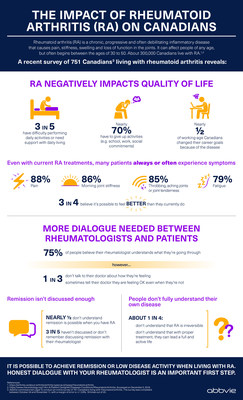
AbbVie Receives Health Canada Approval of RINVOQ® (upadacitinib), an Oral Medication for the Treatment of Adults with Moderate to Severe Active Rheumatoid Arthritis
Approval supported by efficacy and safety data from the pivotal Phase 3 SELECT rheumatoid arthritis (RA) program, one of the largest registrational Phase 3 programs in RA with approximately 4,400 patients evaluated across five studies1-5
About one in every 100 adult Canadians, or approximately 300,000 people, are living with rheumatoid arthritis, the majority of whom don't achieve remission6,7
MONTREAL, Jan. 7, 2020 /CNW/ - AbbVie (NYSE: ABBV), a research-based global biopharmaceutical company, today announced that Health Canada has approved RINVOQ® (upadacitinib) for the treatment of adults with moderately to severely active rheumatoid arthritis who have had an inadequate response or intolerance to methotrexate (MTX). RINVOQ is a 15 mg, once-daily oral Janus kinase (JAK) inhibitor and may be used as monotherapy or in combination with MTX or other nonbiologic disease-modifying anti-rheumatic drugs (DMARDs).
"While there has been tremendous progress in the treatment of rheumatoid arthritis over the past two decades, too many patients still don't reach remission and continue to suffer from pain, fatigue and morning joint stiffness," said Dr. Edward Keystone, MD, FRCPC, Professor of Medicine, University of Toronto. "RINVOQ had one of the largest Phase 3 clinical trial programs in rheumatoid arthritis, and this medicine has the potential to significantly improve signs and symptoms of the disease."
Gaétane Lepire, who lives with rheumatoid arthritis, explained the impact the disease has had on her life: "It affected me because I had pain in my feet, my knees, my back and my hands 24 hours a day, seven days a week. I tried to function as if everything were okay, but it affected me, and sometimes I couldn't do the things I was used to doing. I had trouble getting out of bed, going up and down three steps, getting in and out of the car, etc."
"Rheumatoid arthritis affects 1 in 100 Canadians and causes disability in many. RINVOQ has been approved for the treatment of moderate to severe active rheumatoid arthritis and offers hope for patients with this destructive autoimmune disease," explained Dr. Janet Pope, MD, MPH, FRCPC, Professor of Medicine, Division of Rheumatology, the Schulich School of Medicine & Dentistry at Western University, and Medical Director of the Rheumatology Centre at St. Joseph's Health Care London.
Designed to help accommodate the physical limitations of people living with RA, the packaging for RINVOQ includes a bottle cap with a wide, easy-to-grip texture and an embedded tool that punctures the foil liner to simplify medication access.
"For many people living with arthritis, the act of opening a medicine bottle or picking up a tablet can be extremely difficult, and AbbVie designed the RINVOQ tablet, bottle and cap with this in mind," said Ken Gagnon, Vice President, Corporate Partnerships, The Arthritis Society. "We are pleased to give this medication our Ease of Use designation, which recognizes products that are designed to make life easier for people with arthritis."
"AbbVie has been dedicated to discovering and delivering innovative therapies for people living with rheumatic diseases for nearly two decades," added Stéphane Lassignardie, Vice President and General Manager, AbbVie Canada. "We are proud to expand our portfolio of treatment options for Canadians living with RA, particularly by offering people the convenience of a medication taken orally, in a once-daily extended-release tablet."
About the Phase 3 SELECT Rheumatoid Arthritis Program
The Health Canada approval of RINVOQ was supported by data from the global Phase 3 SELECT rheumatoid arthritis program, which evaluated nearly 4,400 patients with moderate to severe active rheumatoid arthritis in five pivotal studies.1-5
The studies include assessments of efficacy, safety and tolerability across a variety of patients, including those who were methotrexate naïve or had an inadequate response to methotrexate (MTX), patients who were intolerant to conventional synthetic disease-modifying anti-rheumatic drugs (csDMARDs), and patients who failed or were intolerant to biologic disease-modifying anti-rheumatic drugs (DMARDS).1-5
SELECT-EARLY was a 48-week trial in 947 patients with moderately to severely active rheumatoid arthritis who were naïve to methotrexate.
SELECT-MONOTHERAPY was a 14-week monotherapy trial in 648 patients with moderately to severely active rheumatoid arthritis who had an inadequate response to methotrexate.
SELECT-NEXT was a 12-week trial in 661 patients with moderately to severely active rheumatoid arthritis who had an inadequate response to conventional synthetic disease modifying anti-rheumatic drugs.
SELECT-COMPARE was a 48-week trial in 1,629 patients with moderately to severely active rheumatoid arthritis who had an inadequate response to methotrexate.
SELECT-BEYOND was a 12-week trial in 499 patients with moderately to severely active rheumatoid arthritis who had an inadequate response or intolerance to biologic disease-modifying anti-rheumatic drugs.
About RINVOQ® (upadacitinib)8 RINVOQ® (upadacitinib) is a 15 mg, once-daily oral medication in an extended-release tablet. It is a Janus kinase (JAK) inhibitor that interferes with the JAK-STAT signaling pathway, which is thought to play a role in inflammatory response.
RINVOQ is indicated for the treatment of adults with moderately to severely active rheumatoid arthritis who have had an inadequate response or intolerance to methotrexate. RINVOQ may be used as monotherapy or in combination with other nonbiologic DMARDs.
For important safety information, please consult the RINVOQ Product Monograph at www.abbvie.ca.
About AbbVie Care Canadians prescribed RINVOQ will have the opportunity to be enrolled in AbbVie Care, AbbVie's signature care program. The program is designed to provide a wide range of customized services such as reimbursement and financial support, pharmacy services, lab work reminders and coordination, as well as personalized education and ongoing disease management support from a dedicated AbbVie Care nurse, throughout the treatment journey. For more information, consult www.abbviecare.ca.
About AbbVie AbbVie is a global, research and development-based biopharmaceutical company committed to developing innovative advanced therapies for some of the world's most complex and critical conditions. The company's mission is to use its expertise, dedicated people and unique approach to innovation to markedly improve treatments across four primary therapeutic areas: immunology, oncology, virology and neuroscience. In more than 75 countries, AbbVie employees are working every day to advance health solutions for people around the world. For more information about AbbVie, please visit us at www.abbvie.ca and www.abbvie.com. Follow @abbviecanada and @abbvie on Twitter or view careers on our Facebook or LinkedIn page.
References:
1
Genovese MC, et al. Safety and efficacy of upadacitinib in patients with active rheumatoid arthritis refractory to biologic disease-modifying anti-rheumatic drugs (SELECT-BEYOND): a double-blind, randomised controlled phase 3 trial. Lancet. 2018 Jun 23;391(10139):2513-2524. doi: 10.1016/S0140-6736(18)31116-4. Epub 2018 Jun 13
2
Smolen JS, et al. Upadacitinib as monotherapy in patients with active rheumatoid arthritis and inadequate response to methotrexate (SELECT-MONOTHERAPY): a randomised, placebo-controlled, double-blind phase 3 study. Lancet. 2019. May 23. doi: 10.1016/S0140-6736(19)30419-2. Epub 2019 May 23
3
Fleischmann R, et al. Upadacitinib versus placebo or adalimumab in rheumatoid arthritis and an inadequate response to methotrexate: Results of a Phase 3, Double-Blind, Randomized Controlled Trial. Arthritis and Rheumatology. 2019. Jul 9. doi: 10.1002/art.41032
4
van Vollenhoven R, et al. A Phase 3, Randomized, Controlled Trial Comparing Upadacitinib Monotherapy to MTX Monotherapy in MTX-Naïve Patients with Active Rheumatoid Arthritis. 2018 ACR/ARHP Annual Meeting; 891
5
Cohen S, et al. Safety profile of upadacitinib in Rheumatoid Arthritis: Integrated analysis from the SELECT Phase 3 Clinical Program. EULAR 2019; THU0167
Ajeganova S. and Huizinga T. Sustained remission in rheumatoid arthritis: latest evidence and clinical considerations. Ther Adv Musculoskelet Dis. 2017 Oct;9(10):249-262. doi: 10.1177/1759720X17720366
Are your children sleeping enough? New research points to blood test that might hold the answer
UNDER STRICT EMBARGO UNTIL 01.00 GMT 9 JANUARY 2020
Not for publication or broadcast before this time
A simple blood test could provide a reliable metric to tell if children are sleeping enough – which is also a marker for general health as sleep affects susceptibility to many diseases – according to new research published in Experimental Physiology this week.
It is commonly recognised that sleep is essential for children's health, and that insufficient sleep duration is associated with negative health outcomes, such as heart disease and diabetes. In humans, sleep duration and quality are influenced by genetic, environmental and social factors.
Researchers at the Institute of Food Sciences of the National Research Council in Italy studied children and adolescents of normal weight (based on body mass index) from eight European countries (Spain, Italy, Cyprus, Germany, Belgium, Estonia, Hungary and Sweden) who were either “short sleepers” or “normal sleepers,” according to self-reporting.
“Short sleepers” included children sleeping less than 9 hours per day, and adolescents sleeping less than 8 hours per day. “Normal sleepers” included children sleeping at least 9 hours per day, and adolescents sleeping at least 8 hours per day.
They looked at microRNAs in their blood, which are molecules that influence which of our genes are switched on, and found that certain microRNAs had significantly different levels depending on whether the children were short or normal sleepers. The researchers took country of origin, age, sex, pubertal status, average daily screen time, and highest educational level of parents into account, showing that none of these factors was affected the microRNA levels.
These results could provide the basis for a test that could serve not only to assess sleep hygiene, but to determine susceptibility to a range of health conditions. Rather than relying on self-reporting, as we don’t often remember how much we slept farther back than a few days, this blood test could provide a more reliable metric.
Fabio Laura, one of the authors of the study said:
“Our findings show for the first time that the sleep duration reflects the profile of specific circulating microRNAs in school-aged children and adolescents. This could allow clinicians to easily determine if children are sleeping enough by using a simple blood test and use this as an indication of other aspects of their health.”
Full paper title: Circulating miRNAs are associated with sleep duration in children/adolescents: results of the I.Family Study https://physoc.onlinelibrary.wiley.com/doi/abs/10.1113/EP088015 (link will only work after the embargo date. Before then, please email the press office for a copy of the paper)
Experimental Physiology publishes advances in physiology which increase our understanding of how our bodies function in health and disease. http://ep.physoc.org
The Physiological Society brings together over 4,000 scientists from over 60 countries. The Society promotes physiology with the public and parliament alike. It supports physiologists by organising world-class conferences and offering grants for research and also publishes the latest developments in the field in its three leading scientific journals, The Journal of Physiology, Experimental Physiology and Physiological Reports. www.physoc.org
Smart Choices for a Good Health Reset Research Shows Peanuts Support a Healthy Diet
Albany, Ga. (January 7, 2020) – When it comes to health and wellness, it’s OK to start small. In fact, a good health reset is often most successful when smart, small, sustainable changes are made.
Dr. Samara Sterling, research director with The Peanut Institute, says it’s best to begin by focusing on increasing good habits.
“Set yourself up for success by building on the healthy habits you already have,” says Sterling. “For example, if you typically eat one serving of fruit a day, identify a way to increase that to two servings.”
Another smart move is to incorporate foods that are high in protein and fiber in order to feel full longer.
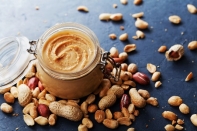
Peanuts are an example of a powerful plant protein. Just one serving of peanuts delivers seven grams of protein, 19 vitamins and minerals, fiber and heart-healthy fats.
“Studies have shown that protein is the most filling macronutrient and actually changes the levels of several satiety hormones,” says Sterling. “When you have foods like peanuts and peanut butter that deliver plant protein, fiber and healthy fats, you’re making a smart choice that will keep you feeling full, help power you through the day and eliminate the urge to snack and consume empty calories,” explains Sterling.
Peanuts are known as a superfood because they deliver significant nutritional value in a small amount. One serving of peanuts is an ounce or approximately 35 peanuts and a serving of peanut butter is two tablespoons.
“Research has shown that the consumption of small amounts of peanuts or peanut butter has been associated with a reduced risk of cancer, heart disease and diabetes,” says Sterling. “Since peanuts and peanut butter are affordable, it’s easy to incorporate either one into a meal or snack.”
For even more health benefits, Dr. Sterling recommends combining superfoods.
“Having a kale salad mixed with quinoa and peanuts is a smart way to load up on vitamins and minerals,” says Sterling.
Finally, as part of a good health reset, Dr. Sterling advises following an inclusionary approach because it’s more sustainable than an exclusionary one.
“Once people start excluding foods, they tend to fixate on what they can’t have, which can lead to a relapse of the previous bad habits,” says Sterling. “A more positive and realistic way is to focus on making smart choices like including more fruits, vegetables and legumes.”
Peanuts can be considered both a nut and a legume. Peanuts, lentils, peas and beans are all legumes and are healthy, protein-rich substitutes for meat, which has more fat and cholesterol.
“The more you know about your food choices and the health benefits they deliver, the easier it becomes to implement a good health reset,” says Dr. Sterling. “Each week, make it a point to try a new recipe that incorporates a plant-based protein. In just a few months, you’ll have a number of go-to recipes that are based on a healthy choice.”
For breakfast, lunch, dinner, dessert and snack recipes that incorporate peanuts, peanut butter, peanut flour and peanut oil, visit peanutinstitute.com.
10 QUESTIONS ABOUT COSMETIC SURGERY YOU HAVE ALWAYS WANTED TO KNOW- ANSWERED BY A BOARD- CERTIFIED PLASTIC SURGEON
How long do breast implants last until they have to be removed and done again? Although the implants themselves last forever, their structural integrity does not. Over time, the average wear and tear could cause a rupture or leak. In general, saline or silicone implants should be replaced or removed every 10 to 15 years if you notice any changes. A rupture in a saline implant tends to be more noticeable, as the deflation is visible. While that may sound scary, it’s actually quite harmless, as the saline is just absorbed by the body. However, it is not as easy to notice if a silicone implant has ruptured. For this reason, most doctors will recommend an MRI every 2 years for their patients with silicone implants to check for leaks. Implants may need to be removed or replaced for other reasons too, but in general, should last from 10 to 25 years.
If I have fat removed through liposuction, will it reappear elsewhere? Technically, yes, it is possible for the fat to return, but only if you let it come back. If the patient maintains their weight, the fat will not return or appear somewhere else on your body. A little bit of weight gain is fine, such as 5 to 10 pounds, as long as patients stay close to their “post-lipo weight”. Because fat cells accumulate in an evenly distributed manner, weight gain tends to be more noticeable in areas that are untreated than treated. So, even patients who gained a considerable amount of weight post-lipo look better than they did if they had not undergone surgery.
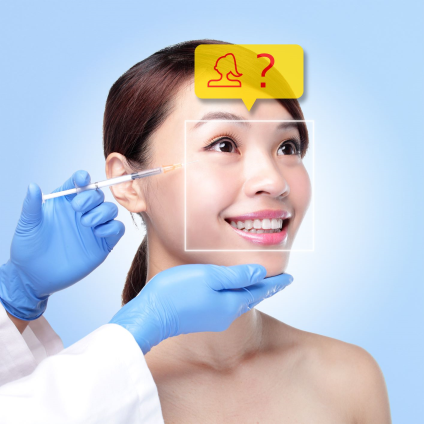
After repeated Botox injections, will facial muscles ever lose the ability to frown? Even though one of the side effects of Botox is difficulty smiling or frowning, the effects of Botox wear off in 3 to 4 months. Repeated use of Botox causes the muscles treated to atrophy and thin out. When they "wake" back up they tend to be weaker and less likely to make wrinkle. This is why many consider Botox a great anti-aging treatment. Botox can be administered in a way in which it does not freeze the muscle completely. This is something you would discuss with your injector.
Discuss with the injector what your goals are. Some people such as actors need to be able to express themselves. In this case, Botox can be administered so as not to freeze the muscle completely. Others want certain muscles not to move at all. An experienced injector has the knowledge to make adjustments. We also have the ability to combine Botox with other treatments to assist your goals.
I thought silicone breast implants can rupture, so why are they still used? Both saline and silicone implants can leak. But, it is much harder to tell when a silicone implant has ruptured over a saline implant. Someone with silicone implants may go months or even years without noticing. This is due to the very thick and viscous silicone filling, moving only at very slow rates. It will generally stay within the capsule of breast tissue surrounding your implant, which makes for a simple replacement. Additionally, silicone is the gold standard against which other implantable materials get compared. It is a safe material when used in the human body.
Will liposuction eliminate cellulite? Although patients used to think liposuction could eliminate cellulite, today doctors are not recommending it for that use. In some cases, liposuction can actually make the cellulite worse by creating more dimples in the skin. While it is true that excess fat can make cellulite worse, it’s not the real cause. Liposuction on the thighs and butt only marginally improve the appearance of cellulite. On the contrary, thin skin in these areas can exacerbate the problem, especially in older women where the skin tends to be less elastic.
Doctors have found that ultrasound and laser-assisted liposuction can effectively reduce cellulite because it tightens the skin as it removes fat. But again, these alone will not rid you of cellulite.
Will I have to wear my hair over my ears to cover face-lift scars? On average, face-lift scars around the ears take about six months to fade and become almost invisible. You probably are going to want to wear your hair down for the first month for recovery purposes. It’s best to choose a hairstyle within this time that will not apply added pressure to the area of incision while still helping to cover up the scar at the same time. Ask your doctor how soon it is safe for you to wear makeup over the scar as a cover up option until they fully fade.
Can my breast implants pop? Unfortunately, yes breast implants can “pop”, but it is rare and easily treatable. Both saline and silicone implants have an outer shell that can potentially develop a tear, called a rupture. The rupture could be caused by a variety of things such as normal aging of the implant, trauma caused by a car accident, a needle insertion during a biopsy, or other factors. If you experience any changes in breast shape and size, and increased pain, firmness, and swelling over a period of weeks, these may be signs that your implant has ruptured. Most corrective surgeries include removing both implants and replacing them in the same surgery. Your surgeon might also recommend that you switch to a different type of implant. In any case, discuss with your doctor in detail the best option to avoid risk of rupture in the future.
What happens if I’m not happy with my surgical results? The first step is to be patient. Some patients look good in as fast as three weeks, others three months, and, for some, the full results aren’t apparent until six months after surgery. You should wait for all the post-surgical swelling and bruising to go away completely before fretting over the end result.
With that being said, speak up if you are feeling anxious. At your follow-up appointment, it is perfectly fine to voice to your surgeon that you are feeling disappointed. A good doctor will address your concerns, walk you through the recovery process, and if necessary, talk about the next steps.
How soon after my lipo can I have sex? After having a procedure like liposuction or a tummy tuck, you will definitely feel some moderate soreness and swelling. It’s normal. When it comes to resuming sexual activity, your personal level of comfort plays a large factor as there is no specific body structure you can damage after liposuction. This means your soreness or the healing process of your incisions may be the only thing stopping you from being intimate. As soon as you feel both physically and emotionally ready, you are safe to resume having sex. For most patients, it takes about a week. But if we removed excess fat on large areas of your thighs, belly, and/or buttocks, you might have to wait a week to ten days. Before then, your body will be tender and that could make the experience painful.
What is the youngest age you would consider performing a facelift?
When evaluating a patient for facelift surgery, age is only a relative consideration. I've performed facelifts on patients under 40 years of age who lost a lot of weight causing their face to deflate and sag. That being said, most facelift or neck lift procedures are performed on patients between 45-70 years old. If the volume loss can be managed by treatments other than facelift surgery, patients will opt for them. However, once those minimally invasive or noninvasive treatments no longer cut it, a patient can choose to have a facelift. For some patients that may be in their early 40's.
Is there a trendy cosmetic procedure that you feel is a waste of money and time?
The procedure that I find a waste of time and money is Kybella. It is so expensive for patients and has significant social downtime. I can get better results, more quickly with neck liposuction. Also, I am still waiting to see if patients can get decent results with Sculptra injections for buttocks augmentation. For doctors that can't perform surgical procedures, or for patients who want to avoid surgery, these may be their only choices.
Put A Brake On Booze For Dry January and Reap the Mental and Physical Benefits
Psychologist Explains What To Expect From A Month-long Booze Break
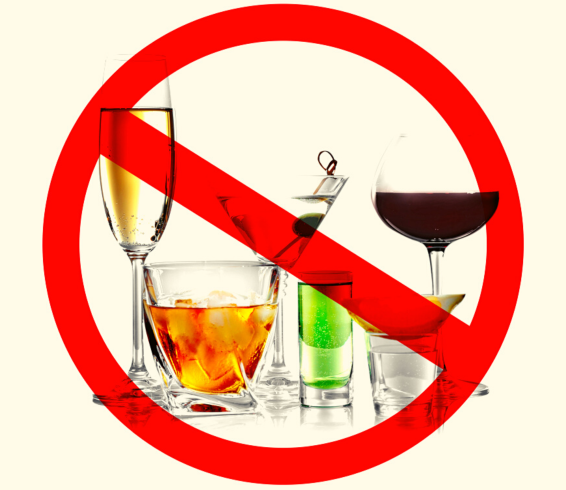
By January, many people are saturated with the parties, get-togethers, and drinking that comes with the holidays. Odds are at some point in the 2019 holiday season you had a bit of a hangover from too much champagne, egg nog, or cocktails. In comes the dry-January trend to help bring in the new year by putting a brake on alcohol for the whole month. We turned to NYC neuropsychologist, Dr. Sanam Hafeez, for insight into the benefits of taking a month-long booze-free challenge for a fresh start to the new year.
Research shows that a month-long respite from alcohol can significantly benefit one’s mental and physical health. Here are some of the benefits Dr. Hafeez outlines.
1. You Save Money On Alcohol.
According to Fortune magazine in 2018, overall price averages for alcoholic beverages increased thanks to craft cocktail trends. The same can be expected for 2019. A survey by OnePoll last year estimated that Americans’ social spending around the holiday season more than doubles and alcohol is part of that spending. So if your wallet has felt the alcohol as much as you have this season, the math could be reason enough to pause the drinks and close your tab for a month.
“Think of the stress you could take off your back by cutting back on the money you spend on alcohol during January,” says Dr. Hafeez. “An average person could hit the bar twice a week, spending about $30-$75 dollars depending on what drinks you are purchasing. Add tip, and your expenses for a night of drinking could reach or surpass $100 easily. Throughout a single month, this could cost you a good chunk of change.” Add more money saved if you’re also a weekend social drinker. Add way more money if you are inclined to purchase bottles in the VIP section for hundreds of dollars.
2. In The Absence of Alcohol, Your Skin Rejuvenates.
While alcohol consumption doesn’t directly cause acne, it destabilizes hormone levels and immune functions, which lead to dull skin, breakouts, flushed complexion, and puffiness. If you like to “rosé all day” or consume mixed drinks with more sugars, syrups, and other additives, you can start seeing the toll of these habits on the texture and tone of your skin. “A part of being successful when reducing alcohol intake is the compliments you receive, the energy you feel, and the changes you see in the mirror. These can all be fuel to help you live a healthier life in the new year,” says Dr. Hafeez.
3. Get A Headstart on Your Weight Loss Resolution.
Research in the Journal of Obesity says people who don’t drink, eat less, simply because alcohol heightens the senses and numbs reasoning. It makes the sauce and cheese on a pizza or those late-night tacos tastier. When you remove alcohol intake, it diminishes the calories you consume. Think about three beers or glasses of wine at about 150 calories each. Those calories add up. Dr. Hafeez explains that “any person seeking help with weight management has heard the advice ‘don’t drink your calories,’ alcoholic beverages are some of the drinks that most easily overwhelm your caloric consumption. Drinking less, or not at all for a month, will leave you with improved blood sugar and cholesterol levels and help optimize your organ function, which will help you be more active and in a better mental state.”
4. More Energy, More Creativity, More Endurance
The last thing you want is to be tired into the new year. “One great benefit of going alcohol-free is renewed energy. You will not be giving up your day to recover from last night’s drinking. Waking up earlier will help you establish better morning habits that prime your brain for productivity and creativity,” says Dr. Hafeez. “You will also see improved concentration and endurance as the day goes on because your energy level will not be in a deficit before the day even begins,” she says.
5. Less Alcohol Can Lead to Improvement in Depression
Depression is a mood disorder that can cause feelings of sadness, rage, grief, and emptiness. More than 16 million Americans suffer from Major Depression Disorder while anxiety disorders affect about 40 million adults according to the Anxiety and Depression Association of American. “The problem comes when depression and anxiety, even at the mild levels, begin to be alleviated momentarily with alcohol. This can become dangerous because it will work in a negative cycle. Alcohol intake will get worse which will heighten the depression which will cause the person to drink more,” explains Dr. Hafeez. The NYC psychologist explains that alcohol is actually a depressant and it affects the neurotransmitters in the brain. “Seratonin is a neurotransmitter that helps us feel joyful and stabilizes our mood. Drinking alcohol can temporarily boost serotonin levels, therefore making you feel upbeat, but the long-term excessive consumption of alcohol can actually lower serotonin levels, and therefore either cause or worsen depression,” she says.
6. Better Sleep
Alcohol affects your sleep pattern by inhibiting your REM sleep and affects your circadian rhythm. “REM sleep is incredibly important to the quality of your rest. When blocked by alcohol, you could lose out on the most restorative part of your sleep, which can affect the way you think, concentrate, and process information the next day,” explains Dr. Hafeez. Another issue with alcohol is that it makes you wake up during the night to go to the bathroom. “Alcohol is a diuretic, meaning an agent that prompts the passing of urine. This means that at nighttime, instead of sleeping throughout the night, you may need to get up repeatedly to relieve yourself. This will make it even harder to get the rest you need. In the absence of alcohol, your sleep is more comfortable and energizing,” says Dr. Hafeez.
7. More Time for Yourself and New Friends
“It is important to note that when our friendships and relationships rely on social drinking, a booze-free month can affect how those interactions happen. While we have more time and energy, we might need to invest it in ourselves or new friends. This is not to say that you have to break up with your friends when you pause the alcohol, but it means you can try new activities and endeavors with new people and plant new friendships as well,” explains Dr. Hafeez. The NYC psychologist also talks about the opportunity to focus on you, explaining that “self-care is important yet often neglected over a good night out for drinks. Suddenly, happy hour is not an option, but a fitness class after work is, or a workshop on a topic that interests you. The time will add up, and you can use it to promote your self-confidence and personal development.
A Cautionary Note From The Expert.
“One thing to consider is that people who label themselves “social drinkers” may feel these improvements within days. Meanwhile, people who battle with alcoholism can often cause harm to themselves if they decide to stop drinking cold turkey. If you are a frequent/binge drinker, speak with your physician before abruptly ceasing alcohol consumption.
Committing to going without alcohol may reveal there actually is a bigger issue going on. “If someone can’t last the week without alcohol and feels physical repercussions like nausea, headaches, night sweats, and tremors, or insomnia, consulting a doctor would be an important next step,” cautions Dr. Hafeez.
About the Expert:
Dr. Sanam Hafeez PsyD is an NYC based licensed clinical psychologist, teaching faculty member at the prestigious Columbia University Teacher’s College and the founder and Clinical Director of Comprehensive Consultation Psychological Services, P.C. a neuropsychological, developmental and educational center in Manhattan and Queens. Dr. Hafeez masterfully applies her years of experience connecting psychological implications to address some of today’s common issues such as body image, social media addiction, relationships, workplace stress, parenting and psychopathology (bipolar, schizophrenia, depression, anxiety, etc…). In addition, Dr. Hafeez works with individuals who suffer from post-traumatic stress disorder (PTSD), learning disabilities, attention and memory problems, and abuse. Dr. Hafeez often shares her credible expertise to various news outlets in New York City and frequently appears on CNN and Dr.Oz. Connect with her via Instagram @drsanamhafeez or
4 Enjoyable Ways to Soothe Your Aching Muscles After a Workout
Hitting the gym is likely a regular practice for you. It keeps you feeling healthy and looking your best. However, after a tough workout, you can find yourself stricken with some aching muscles. Here are four enjoyable ways you can soothe those muscles to get them geared up for another amazing workout session.
Get A Massage
A massage can be one of the most enjoyable ways to soothe your aching body after a tough workout session. There are various massage techniques that you can choose from and the one you select is mainly up to your individual preference. By getting a massage post-workout, you can prevent fibrosis and break up those tight muscles. Studies have shown that getting a massage right after a workout can be more beneficial than waiting 48 hours after your workout to do so.
Use Some CBD
The world's wonder drug, CBD has been shown to have positive benefits on joint inflammation. After your workout, your joints will become inflamed as DOMS sets in. By using CBD from somewhere like Mary's Nutritionals, you can work to reduce the inflammation from the very start. This will soothe the aches that come along with inflammation post-workout. There are various ways that you can utilize CBD from inhalation and ingestion to topical ointment. The choice is really up to you.
Take A Nap
If you're feeling overly sore from your recent workout, then consider getting some extra sleep. The body's natural process during sleep is to clear out joint inflammation and repair cell damage. You need to give your body the opportunity to undergo these processes by getting some shuteye. If possible, just extend your normal sleeping schedule. So, if you sleep seven hours a night consider upping that to eight or nine hours. If you're feeling particularly achy, take an hour or two nap in the middle of the day to give your body a chance to rejuvenate and reduce your muscles soreness.
Foam Roll
Foam rolling can be a very soothing way to get rid of those achy muscles. Just the traction of rolling those sore muscles over the roller can be enough to provide some level of relief from the tightness that you feel. This activity can be particularly beneficial when trying to zero in on specific areas of discomfort throughout your body.
As you can see, relieving muscle soreness doesn't have to be too difficult of a process to do. The biggest problem is that most people tend to do nothing and endure the pain instead of trying to actively recover from it. The above are four great methods you can employ to eliminate your aching muscles after your next tough workout session.
4 Unexpected Ways to Help Keep Up Your Exercise Routine
Everyone resolves to start exercising at some point, but actually following through is a different question entirely. Try these tips to help keep your promise and get the body you deserve.
Let Go of Early Mornings
If you adore your 4:00 am run, then this bit of advice isn’t for you. But if you constantly oversleep your workout session and groan at the thought of getting up while the sun is still in bed, you should think about scheduling your workout for a different time of day.
Getting an adequate amount of sleep is extremely important for your overall health. A full night’s sleep improves brain function, gives you more energy throughout the day, and even lets your muscles repair from yesterday’s workout.
So instead of setting your alarm clock back an hour, consider planning to exercise at lunchtime or in the evening. Pick a time when your energy levels are at their highest to get the most out of your workout session.
Choose Exercises That You Love
Unless you’re trying to achieve a specific body shape, the main goal of exercise is to get your body moving. As you’re planning your workout routine, fill it with activities that you know you’ll have fun doing again and again.
Standbys like yoga, weight lifting, and aerobics are all popular for a reason. You can also try something interesting like hula hooping or dance. If you have the time, consider signing up for tennis, pickle ball, or another indoor sport. Once you’ve picked an activity, fill your routine with stretches exercises that will make you better at your new favorite hobby.
Buy the Equipment You Need
Don’t expect yourself to go jogging in old sweats and a pair of running shoes that don’t fit. If you really want to get involved with a hobby, you should buy yourself the proper equipment to go with it. Get a nice gym bag, find a water bottle you like, and wear workout clothes that make you feel comfortable.
You don’t have to spend a lot of money to get a few nice pieces of workout gear. Don’t buy more items than you need; you can always plan to wash your clothes between sessions. But if you own the right gear for your favorite sport, you’ll be infinitely more likely to follow through on your routine.
Reward Yourself for Success
Exercise might be its own reward, but that’s not always enough motivation to hit the gym. Plan a way to treat yourself after you’ve successfully followed your routine for a few weeks.
One unique way to reward your body for all the hard work is to make an appointment at a medical spa. From laser therapy to cosmetic treatments, the services at a medical spawill improve the way you look and boost the effects of your exercise routine. And since most services require monthly appointments, you’ll have a great excuse to keep exercising until your next visit rolls around.
As you’re planning a new exercise routine, it’s important to set reasonable expectations for yourself. Don’t expect to work out every day of the week when you’re just starting out. Plan three to four weekly sessions with fun activities that you’re excited to do. If you go slow, you’ll soon be able to make exercise a normal part of your daily life.
TRAIN IT RIGHT NEWSLETTER
Sign Up and get a free 7 day Train it Right HIIT Program!