Thelander is available to speak to PAACS’ 23-year history of training male and female African physicians to become surgeons in their home countries, as well as the success PAACS has had with its female surgeon graduates.
Keir Thelander, Chief Medical Officer of the PAACS, a non-denominational, multinational service organization that trains African physicians to become surgeons, said:
“The emphasis on bringing more women into the fold of surgical training is one component of a larger and more comprehensive approach to improving the perception of a woman’s value within a culture. We must be very careful that we do not oversimplify the causes that have impacted the gender disparity in the medical field without addressing the larger discussion of cultural norms that contribute to the result.”
“PAACS’ will continue its 23-year history has been driven by the belief that education and engagement within the training of physicians in their home countries is the best way to serve a nation’s long term needs. To date, PAACS has issued 88 graduate certificates to African surgeons who have gone on to serve across twenty countries on the African continent. A little over 10% of our trainees are women — we would like to see that number increase. The balance of that is a greater impact of PAACS for the world.”
Keir Thelander, Chief Medical Officer of the PAACS, a non-denominational, multinational service organization that trains African physicians to become surgeons, said:
“The emphasis on bringing more women into the fold of surgical training is one component of a larger and more comprehensive approach to improving the perception of a woman’s value within a culture. We must be very careful that we do not oversimplify the causes that have impacted the gender disparity in the medical field without addressing the larger discussion of cultural norms that contribute to the result.”
“PAACS’ will continue its 23-year history that has been driven by the belief that education and engagement within the training of physicians in their home countries is the best way to serve a nation’s long term needs. To date, PAACS has issued 88 graduate certificates to African surgeons who have gone on to serve across twenty-one countries on the African continent. A little over 10% of our trainees are women — we would like to see that number increase and continue to implement strategies to achieve that goal. The balance of that is a greater impact of PAACS for the world.”
ThePan-African Academy of Christian Surgeons (PAACS) is a strategic response to the need for surgeons in Africa. We are a non-denominational, multinational service organization training African physicians to become surgeons who are willing to remain in Africa to meet this need. PAACS also disciples these residents to share the love and gospel of Jesus Christ with their patients. The surgical and spiritual training of these residents is offered at several well-established mission hospitals in Africa, under the direction of experienced, board-certified missionary surgeons.
Do You Know Where Your Cannabis Comes From? This Family-Owned Farm Encourages, Empowers Customers to “Know Thy Source”
Committed to purity, sustainability, Autumn Brands’ sixth-generation Dutch farmers encourage, empower customers to “know thy source”
LOS ANGELES, California – (August, 2019): As consumer awareness and concern rises over the health and environmental impacts of commercial farming, Autumn Brands stands out as a sixth-generation family-run, farm-to-consumer agricultural business. The first to receive a California Provisional Annual Cultivation license in Santa Barbara County, Autumn Brands is a 50% woman-owned company known for its holistic focus and artisanal approach to producing powerfully potent strains of pesticide-free cannabis. Today, the same sustainable farming practices which originated with the Brand family in Holland over a century ago produce the premium, estate-grown cannabis that is reshaping the future of plant medicine.
In an age of expansive, complicated supply chain operations, where consumers must work hard to pinpoint the source of their food or medicine, Autumn Brands encourages and empowers medicinal and recreational cannabis users to “know thy source.” A recent study reports that over 60% of American consumers actively research the source of their food. Concerns about environmental impact as well as personal health benefits are greatly affecting the way consumers think about what goes into their bodies and how it connects to the greater good.
With the meteoric rise of commercially-farmed cannabis, government agencies are working harder than ever to keep up with explosive demand, leaving room for troubling quality control and environmental impact issues. Fortunately, companies like Autumn Brands, committed to both sustainable, quality cultivation practices and production transparency, are making it easier than ever for consumers to know and trust the source of their cannabis.
“We respect cannabis as a powerful earth medicine - one which offers untold benefits to so many people in every walk of life and lifestyle” explains Hans Brand, fifth-generation farmer and co-founder of Autumn Brands, “But with that power comes the responsibility to uphold clean cultivation practices and, above all, source transparency. It’s important for our customers to know what they’re putting in their bodies, and with our premium products, buyers can have peace of mind that they absolutely do.”
Autumn Brands brings an uncompromising work ethic, informed by generations of family farming, to the task of producing hand-selected, sun-grown buds, each hang-dried, hand-trimmed and cured to preserve maximum potency and full healing benefits. Determined to stand out in a fast-growing cannabis industry, the company aims to deliver sustainably sourced, farm-to-consumer cannabis to an eager health and wellness market. Visit www.AutumnBrands.com to learn more and discover their full selection of premium flower, pre-rolls, and pre-filled cartridges. Follow on Instagram @AutumnBrands for new product releases and updates.
About Autumn Brands:
Autumn Brands is a licensed California cannabis cultivator dedicated to the synergy of health and wellness. The Autumn Brands’ family farm started in Holland more than a century ago, and today, sixth-generation farmers apply the same expertise garnered in growing the world’s finest tulips to producing pure and potent strains of cannabis in sunny, coastal Santa Barbara County. Autumn Brands is proud to be 50 percent woman-owned, free of pesticides and other harmful chemicals. For more information, visit www.autumnbrands.com or email leighanne@anderson-pr.com.
Portable ECG monitors next to hit US market driven by 27% of the population owning a wearable device by 2024, says GlobalData
Innovative technology companies such as Apple, AliveCor, Qardio and Withings are pushing to release electrocardiogram (ECG) monitoring devices to access the growing US wearables market. However, these ECGs will not replace doctor’s visits until technology improves and more clinical evidence has been gathered for data accuracy, says GlobalData, a leading data and analytics company.
Wearable devices are gaining huge traction. GlobalData estimates that 13.8% of the US population aged 12–100 owned a wrist-worn wearable in 2018, and that this ownership will almost double to reach 27% by 2024.
Ashley Young, Medical Device Analyst at GlobalData, says, “This is expected to grow at a compound annual growth rate (CAGR) of 12% between 2018 and 2024, driven by an increased focus on patient-centered, preventative healthcare.”
ECG tests are usually carried out in hospitals, physician offices or lab clinic settings to detect heart abnormalities. Portable ECGs allow patients to self-monitor the heart’s electrical activity.
Young continues, “In 2012, AliveCor received FDA 510(k) clearance for its medical device and smartphone app combination that was designed to record, store, transfer and evaluate single-channel ECG readings. Since then, AliveCor has added more diagnostic functionality, and is FDA approved to detect atrial fibrillation (Afib), brachycardia and tachycardia. It is being sold across North America and Europe.”
More recently, Apple has entered the portable, personal ECG market with its Apple Watch Series 4. It received FDA 510(k) clearance for ECG functionality in 2018.
Young adds, “The advantage of Apple’s device is its integration with other built-in health features such as an activity tracker, a fall detector and a menstrual tracker. However, since it is newer to market, the Apple Watch ECG function is currently only commercially available in the US and some countries in Europe, with further global releases planned in the future.”
If You Want Nice Hair, Eat Like You Care
A Poor Diet Leads To Bad Hair Days — And Hair Loss —Says A Hair Restoration Leader.
Proper Nutrition Restores The Look. Poor nutrition literally impacts people from head to toe because diet can significantly affect your hair — and that includes losing it. Healthy, attractive hair is often due to a combination of factors, including genetics, physical health, hair care, and eating habits. But if someone is experiencing hair breakage, hair loss, or lost luster, their poor diet may be mostly to blame, says Dr. Chris Varona, a hair restoration specialist and the owner of Varona Hair Restoration in Newport Beach, Calif. “If you’re not putting the right fuel in, your hair may not be getting the nutrition that it needs to thrive,” says Varona (www.varonahairrestoration.com). “But for some, a few simple changes in their diet can have a dramatic effect on their hair’s appearance and health. “And in many cases, if the diet deficiencies are addressed, hair loss stops or reverses.” Varona discusses the most important nutrients for healthy hair and the foods that supply them:
Essential fatty acids. These are vital for healthy skin, hair, and nails. “Omega-3 fatty acids nourish and protect hair, help in regrowth, and add a silky shine,” Varona says. “Fatty fish like salmon has lots of omega-3, and walnuts, chia seeds, flaxseeds, and soybeans are also a good source of this healthy hair nutrient.”
B vitamins. B vitamins are essential for hair growth, provide extra support to healthy hair, and help it maintain lustrous integrity. “They help create red blood cells, which carry oxygen and nutrients to the scalp and hair follicles,” Varona says. “Many vegetarians and vegans have a deficiency of vitamins B6, B12, and folic acid, important nutrients for healthy hair. You can find B6 in bananas and potatoes, B12 in meat and dairy products, and folic acid in citrus fruits and tomatoes.”
Protein. Hair is composed of a protein called keratin. “If you’re short on protein, your hair won’t thrive,” Varona says. “Animal products like meat, fish, and eggs are a good source of protein. You can also get protein from plants, including beans, lentils, nuts, and grains.”
Vitamin D. “Vitamin D keeps the skin, bones, and hair healthy,” Varona says. “Some studies have linked vitamin D deficiency to hair loss. You can find vitamin D in fatty fish, liver, egg yolks, and in fortified foods like milk.”
Iron. Severe iron deficiency, also called anemia, causes hair loss in some patients. “It is especially common in women with heavy menstrual periods and is easily mistaken for female pattern baldness,” Varona says. “Meats including chicken, fish, and red meats are good sources of easily absorbable iron. Plant sources of iron include beans and lentils, dark leafy greens, and potatoes. Many breads and cereals are also enriched with iron.”
Trace minerals. These include iron, chromium, copper, zinc, iodine, manganese and selenium. “A daily multivitamin can be helpful to ensure you’re getting those vitamins and minerals that your body, and your hair, need most,” Varona says.
“A healthy, well-rounded diet often contains all the foods and nutrients needed for beautiful, healthy hair,” Varona says. “A simple blood test can check for nutritional deficiencies, and if they are found, a change in diet or supplementation may improve your hair and stop hair loss.” About Dr. Chris Varona Dr. Chris Varona (www.varonahairrestoration.com) is a leading hair restoration specialist and the owner of Varona Hair Restoration in Newport Beach, Calif. One of the few hair surgeons who perform FUE graft extractions manually himself,Varona focuses on follicular unit extraction (FUE surgery) and also performs follicular unit transplantation (FUT). He has performed over 5,000 cases.
Statistics Canada to examine the health of Toronto residents
Some residents in Toronto will soon take part in an important surveyOttawa, July 23, 2019 — Approximately 500 households will be randomly selected to participate in the Canadian Health Measures Survey (CHMS), a national survey conducted by Statistics Canada. In Toronto, the survey will begin on July 30th, 2019. Two-phase surveyThe first phase involves an in-home interview with the selected individuals. They will be asked questions about, among other things, nutrition, alcohol and tobacco consumption, medical history, and level of physical activity. In the second phase, participants go to a mobile examination center, temporarily located in the parking lot Ontario Science Centre (OSC) in North York, to undergo a number of tests. Mobile examination centerAt the mobile examination center, health professionals employed by Statistics Canada will take participants’ physical health measures, including height, weight, neck and waist circumference. The specialists will also do tests to measure blood pressure, fitness level, vision and musculoskeletal health. Finally, biospecimens will be collected to assess participants’ cardiovascular health, nutritional status, and exposure to environmental contaminants. The participation of selected individuals is importantData from the CHMS help provide an accurate portrait of the health of Canadians. Various health care stakeholders, including professionals, researchers and public health planners, use this data to adapt programs and services to the population’s needs. Moreover, well-known national organizations such as the Canadian Public Health Association and the Heart and Stroke Foundation have shown their support for the survey. Our priority: Confidentiality and securityThe CHMS is conducted under the authority of the Statistics Act, which guarantees that all the information provided by participants remains confidential. The health specialists hired by Statistics Canada are fully qualified and certified. About the CHMSStatistics Canada has been conducting the CHMS, in partnership with Health Canada and the Public Health Agency of Canada, across the country since 2007. For each cycle, 16 sites are randomly selected to participate in the survey. The participants from Toronto will take part in Cycle 6 of the CHMS.
LOS ALAMOS, NM, July 30, 2019 / - Trait Biosciences Inc. ("Trait" or the "Company"), a biotechnology leader in the cannabis industry, is pleased to announce that it has generated the first engineered hemp plants with a value-added trait. The Company has successfully developed hemp plants that are producing four times the amount of cannabidiol (CBD) than conventional hemp plants. These Amplified™ hemp plants also had a 35% increase in the number of trichomes on the leaves of the plant, relative to the control plants.
These results were achieved using only one of the many strategies that comprise Trait’s Amplified™ technology, and demonstrate its commercial potential. When all strategies are incorporated, Amplified™ plants are expected to grow faster and more efficiently than conventional plants, produce cannabinoid yields far in excess of conventional plants, and produce water-soluble cannabinoids naturally in the plant.
The achievement was completed by Trait’s scientific team, led by Dr. Richard Sayre, in its licensed facility in Los Alamos, New Mexico, and was accomplished just over a month after Trait announced the first successful stable transformation of a hemp plant.
“Trait’s Amplified™ technology is comprised of a series of strategies that are designed to dramatically increase the production and yield of cannabinoids in hemp and cannabis plants, while at the same time greatly reducing the cost of production and extraction,” said Dr. Richard Sayre, Chief Science Officer of Trait. “The results we are announcing today reflect the work of only one of our Amplified™ strategies, which was specifically designed to increase cannabinoid production, as well as increase the number of trichomes that form on the plant.”
The actual cannabinoid yields in the Amplified™ plants were as follows (cannabinoid amounts are expressed in mass units per equivalent amount of leaf material extracted):
Plant
THCA/THC(mg/l)
CBDA/CBD(mg/l)
Total Cannabinoids (mg/l)
Amplified™
1.75 ± 0.64
28.51 ± 8.37
45.69 ± 8.26
Conventional
0.43 ± 0.14
8.95 ± 2.06
25.50 ± 3.64
Peter McDonough, CEO of Trait, added: “What is truly remarkable about our team’s achievement is that these results were achieved using only one of the many strategies that comprise our Amplified™ cultivation technology. We had been conservatively estimating that our Amplified™ technology would increase yields by 2x - 4x, but based on the results of this initial strategy, we now feel confident that Trait’s breakthrough technology will more than quadruple the plant’s traditional yield.”
“As we introduce the other strategies -- which include technologies that have been shown in field trials to double photosynthetic efficiency of the plant, technologies that eliminate the production of hydrogen peroxide during the synthesis of cannabinoids and, of course, our technology that enables hemp and cannabis plants to produce water-soluble cannabinoids naturally in the plants themselves -- we are confident that we will exceed our expectations in the yield increases that can be achieved by our Amplified™ technology.”
Ronan Levy, Chief Strategy Officer of Trait, summed up the achievement as follows: “When you look at the totality of what our Amplified™ technology can do, you start to understand why the entire industry is excited about what Dr. Sayre and his team are achieving. Put simply, you get cannabis and hemp plants that grow faster, require less light and water, have a shorter growing period, and produce vastly more cannabinoids. On top of that, the cannabinoids that Amplified™ plants are synthesizing are truly water-soluble, which means they have higher bioavailability, faster and more predictable onset, and do not require toxic solvents to be extracted.”
About Trait Biosciences
With a team of internationally recognized scientists who are applying best-in-class technology and agricultural science, Trait Biosciences is an emerging biotechnology leader in the hemp and cannabis industries. Its consumer technology platforms provide breakthrough IP and science which produce enhanced cannabinoids featuring predictable onset timing, superior bioavailability, extended stability, and improved taste. Trait's patent pending technologies include a process for generating water-soluble cannabinoids that does not rely on emulsion or nanotechnology. The company's agricultural technologies increase crop yields and plant safety, including ultrahigh yield Amplified™ plants which dramatically increase a plant's natural cannabinoid productivity, and its Defence™ RNAi crop protection technology, which eliminates the need for pesticides or fungicides, providing higher quality, safer, CBD-infused nutraceutical and pharmaceutical products.
Cautionary Statement on Forward-Looking Information
Certain information contained in this press release, including any information as to Trait Bioscience Inc.'s (the "Corporation") strategy, projects, plans or future financial or operating performance, constitutes "forward-looking statements". All statements, other than statements of historical fact, are forward-looking statements. The words "will", "expect", "continue", "assess", "anticipate" and similar expressions identify forward-looking statements. Forward-looking statements are necessarily based upon a number of estimates and assumptions; including material estimates and assumptions that, while considered reasonable by the Corporation as at the date of this press release in light of each of management's experience and perception of current conditions and expected developments, are inherently subject to significant business, economic and competitive uncertainties and contingencies. Known and unknown factors could cause actual results to differ materially from those projected in the forward-looking statements and undue reliance should not be placed on such statements and information.
Any forward-looking statements included in this document are made as of the date of this document and the Corporation disclaims any intention or obligation to update or revise any forward-looking statements, whether as a result of new information, future events or otherwise. Although management of the Corporation believes that the expectations represented in such forward-looking statements are reasonable, there can be no assurance that such expectations will prove to be correct.
Harper Wilde Expands to Offer All Core Essentials
Female Founded Brand Launches the Softest Bralette and Sports Bra Yet
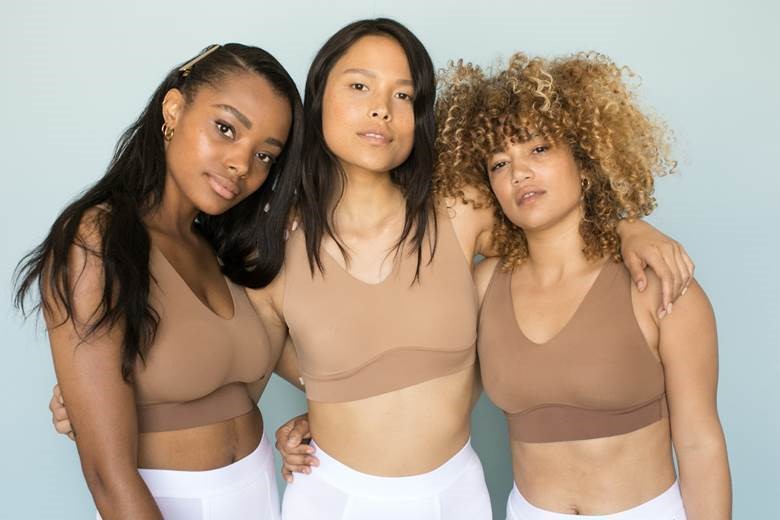
New York, NY (July 30, 2019)- Harper Wilde, the brand that continues to empower and celebrate all women, is thrilled to expand its core offering to two new product categories today: sports bras and bralettes. Soft as butter and supporting her in all the right places, the sports bra and bralette were designed to be the most comfortable options on the market. Driven by new technology and customer needs, these products reflect the brand's commitment to high quality at accessible prices. Similar to the rest of Harper Wilde's line, the new products will come in a variety of shades of nude to suit different skin tones, range in size from XS - XXXL, and retail for $45. Continuing with the Harper Wilde brand mission to become the go-to for all intimates for all women, co-founders Jenna Kerner and Jane Fisher surveyed their customer community and found a sports bra and bralette were the top two requested products. From there, the duo set out to create the most comfortable sports bra and bralette known to woman. Embracing this era of body positivity and comfort, the bralette was a natural product progression for the brand. Harper Wilde's new bralette, The Bliss, has a clean, seamless look with a v-neck front and back. It lays flush with her body, matching her skin tone to complement any look. With a butter-soft touch for lounging around all weekend or for a long day's work, the fabric allows her natural curves to show, while the proprietary band construction provides lift, without the underwires.
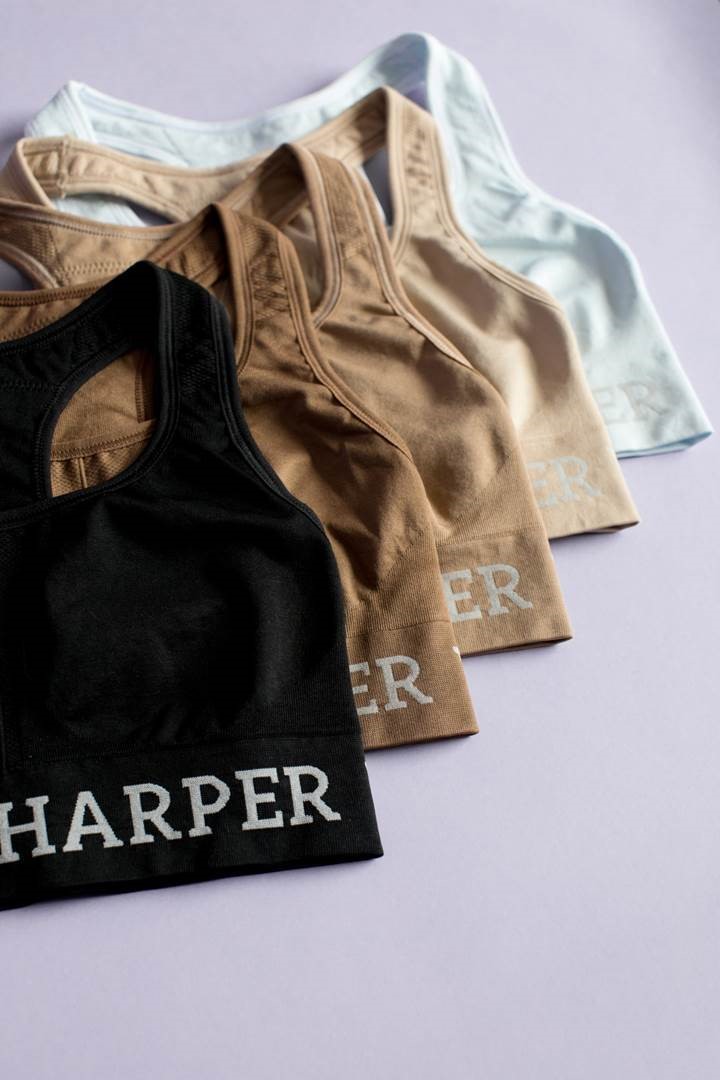
The Move, the brand's core sports bra, marries extreme comfort with solid support, inspired by a woman's real needs during her daily workouts.This compression-style racer-back bra has a flexible lightweight fabrication of nylon and spandex, with specialized technology that quickly absorbs sweat and reduces odor. The long-line body sits lower on her core and won't ride up, while the knit-in details on the straps and between the boobs provide extra support and allow for wide range of motion. The inside band reads "Lift Up The Ladies," a reflection of the brand's core mission, to power up her work outs or power her through her every day. In line with the brand's focus on convenience and thoughtful designs, there is a pocket in back, perfect for keys, a phone, or a credit card. The medium intensity bra will support her through every deadlift, hill climb, and 102 degree chaturanga.
With the launch of these new silhouettes, Harper Wilde continues its commitment to comfort, convenience, and quality at fair prices. The new styles are available exclusively on HarperWilde.com. The Bliss retails at $45, The Move at $45; both products are nearly half the price of existing options.
NEW TREND IN HOLISTIC HEALTH: OXYGEN, EXERCISE & THE ART OF BREATHING
Expert Shares Breathing Tips to Improve Health & Enhance Workouts & Offers Insight into the "Oxygen-Enhanced Exercise" Trend
Have you heard of oxygen-enhanced exercise? It's a holistic approach to fitness that has recently skyrocketed in popularity. Once available and common only with Olympians and pro athletes. this training method has hit the mainstream and now at-home-exercisers and workout warriors across the country are using it as an all-natural way to gain an athletic advantage. We all know oxygen and exercise go hand-in-hand, but it's easy to underestimate just how much it impacts our overall health and fitness. Oxygen helps the body maintain pH balance, boosts metabolism, detoxifies the blood, and plays a huge role in the recovery process. According to expert, Michael Grant White, not all breathing is created equal and there are breathing techniques you can do to enhance your workout.
"Breathing is an art. Since oxygen is crucial for peak athletic performance, proper breathing should be one of your main focuses during exercise...”
...says White who trains athletes (and those with challenged breathing) to use proper breathing techniques and has seen first-hand how better breathing can help strengthen endurance, lower lactic acid production, and improve stamina for cardio-centric activities (like running, swimming, biking, etc.) In addition, simple breathing techniques can help people (at any level of fitness) recover more quickly from high-intensity activities.
In case you missed this high school biology lesson, here's a quick recap of the science: During exercise, your muscles have to contract and work harder, which increases their demand for oxygen. The amount needed is much more than you are taking in. Your body first burns the existing oxygen in the red blood cells and when this runs out, the body turns to fermentation for its energy needs. Instead of using oxygen, the muscles convert glucose into lactic acid and this is when fatigue sets in. Oxygen-enhanced exercise leverages the body's already-existing system for oxygenating the blood before this happens. It is a scientifically proven phenomenon that’s said to benefit the body by reducing the physical stress of exercise, accelerating recovery, helping you sleep, giving you more energy, and improving your metabolism.
"Playing sports, weight-lifting, circuit training, or any other intense physical activity, of course, burns calories and builds muscle, but many people don't consider the wear and tear it has on their body. Lack of oxygen ages the body at a much greater rate..."
...says White, who has studied breathing over the past 24 years and has seen a rapid rise in interest for oxygen-enhanced exercise. As anti-doping initiatives spread across the country, and athletic drug testing becomes more prevalent, many athletes are turning to oxygen-enhanced exercise as a way to amplify their workouts without the use of drugs, chemicals, surgery, or invasive techniques. In short: better breathing = better health.
Michael Grant White is on a mission to awaken the breathing consciousness of the world. He can share breathing tips people can use to improve their health and their workout and has insight into the oxygen-enhanced exercise trend.
BALANCED BRAINWAVES = HEALTHY MARRIAGE?
Neuroscience Expert Shares Fascinating Link Between Brainwave Training & Romance Dating and relationships are hard work - especially in 2019. The changing face of modern romance has led to some pretty depressing stats: A recent survey found that more than 50% of sexually active individuals are dissatisfied with their sex lives; only 30% of Internet daters are in search of true love as opposed to hookups; and a staggering 23% of women aren’t happy in their relationships! It's no wonder nearly half of all marriages today end in divorce.Before you lose all faith in modern romance and turn your back on love, there may be some hope. Though some argue technology is the leading culprit in romantic demise, new tech has also given us incredible insight into love and relationships. According to Neuroscience expert Dr. Patrick Porter, there is a fascinating link between brainwaves and romance.We can't see it, but brains hum with these waves of electrical activity. At the root of all our thoughts, emotions, and behaviors is the communication between neurons within our brains. Changing our brainwaves has a dramatic effect on our physical, mental, and emotional health."Brainwave training has been found to help people de-stress and achieve emotional balance. It is proven to help people who struggle with stress, anxiety, difficulty sleeping, fatigue, - all of which are extremely important factors when it comes to romance and relationships..."...says Dr. Porter, who recently presented research along with Arianna Huffington at the National Biohacking Conference in Los Angeles. According to research, sleep plays a major role in relationships. When we sleep poorly, the parts of our brain devoted to emotional empathy don’t function as well. Sleep loss causes social withdrawal and loneliness and it helps us to be less angry and aggressive. Not surprisingly, anxiety and stress can also negatively impact your relationship. It can lead to inappropriate suspiciousness or paranoia, overthinking, being indecisive, and an appropriate need for reassurance and support.Though there are several methods of brainwave entrainment, one of the most effective is "braintapping" which uses auditory and visual stimulation to synchronize and balance brainwaves. As the light and sound frequency changes, so does the frequency in the brain. Brainwave training stabilizes the limbic system which is involved in motivation, emotion, learning, and memory. Your body is calmed, your breathing becomes rhythmic, your hands warm, and your muscles relax. "The light and sound stimulation boost brain levels of serotonin, beta-endorphins, and norepinephrine. These are the same chemicals that are released during attraction and make us giddy, energetic, and euphoric," says Porter. Brainwave training and biohacking have made tremendous advances in treating mental health conditions which are closely tied to relationships. Although in the past, brainwave training and biohacking have received criticism for being unregulated, biohackers argue that's exactly why it needs to be studied and have close attention by the public. Dr. Porter is sharing the fascinating link between brainwave training and its impact on romance and emotional health and he can also explain why balancing brainwaves may improve your love life.IN AN INTERVIEW OR ARTICLE, DR. PORTER CAN DISCUSS:Brainwaves and relationships: the science of love.The fascinating link between brainwave training and its impact on romance and emotional health.Why balancing brainwaves may improve your love life.Biohacking - the latest trend in health and wellness.How to biohack your brain with light, sound, and vibration.What mainstream biohacking means for the healthcare industry. ABOUT DR. PATRICK PORTER:Dr. Patrick K. Porter, PhD, is an award-winning author and speaker who has devoted his career to neuroscience and brainwave entrainment. As the creator of BrainTap Technology™, Porter has emerged as a leader in the digital health and wellness field. BrainTap’s digital tools and mind development apps use Creative Visualization and Relaxation, a biohacking technique that has made tremendous advances in treating mental, physical, and emotional health issues. Braintap has been praised for helping people overcome stress and insomnia, lose weight, stop smoking, manage pain, accelerate learning, and much more. FOR MORE INFORMATION, VISIT: www.braintap.com
4 Types of Gentle Exercises for Getting Back in Shape after an Injury
Getting back into shape after an injury is going to be hard, but it is doable. You just have to approach it with the right attitude and motivation. I have a few tips on how you can get back to where you used to be without it doing more harm to your recently injured body.
Running
This is going to be hard for some people, but you should skip the high impact running until you are completely rehabilitated. Do you plan on being sidelined for more than two weeks? You are going to notice a reduction in muscle mass and endurance. You need to get back slowly. Focus on a combination of running and walking in small intervals.
Do you normally run for an hour or so? You can still do the hour or so, but you should use that time productively. Rest when you can. Build up your endurance slowly. Brisk walking might be a good solution for some of you. It offers the same results, but it is less intense. Save the intense running for when your body is rehabilitated and the doctor says it is okay.
Carry a Lighter Load
It’s a good idea tostay away from weights until the doctor gives you the green light. Now that might not be feasible for some of you, but try to if you can.
Say, for example, Max has been out for a month due to a back injury. Max is a jock and therefore cannot avoid the weights during rehabilitation. He could try to reduce the intensity by 70%.
His workout should include cardiovascular endurance, resistance training, and flexibility. That way Max can reach your goals in a timely fashion. Max needs to stretch his muscles before the workout. He also needs to do a cool down.
Stretching
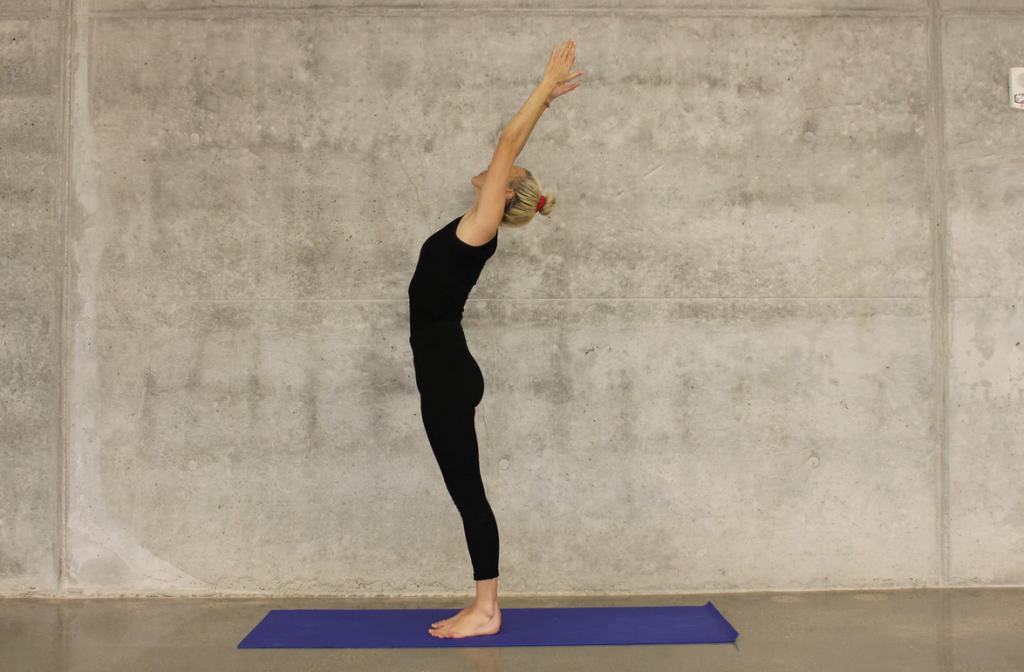
Stretching is one of the best things you can do the body. Dancers warm up their bodies before getting into a routine. Stretching should be done before your workout anyway. More importantly, it is especially vital after an injury. It builds the body up, preparing it for what lies next.
Yoga
A restorative yoga class could be just what you need while recovering from an injury. It will be gentle enough to prevent further injury by pushing yourself too hard. There are several benefits of yoga for injuries and pain. Once you are recovered, try power yoga to help begin building up your strength again.
When you’re recovering from an injury, it’s important to take it slow. Take to your rehab doctorto make sure you aren’t overdoing it.
TRAIN IT RIGHT NEWSLETTER
Sign Up and get a free 7 day Train it Right HIIT Program!