Affinity Living Group rolls out mandatory vaccines for more than 4,000 employees
May 14, 2019 – North Carolina-based Affinity Living Group is taking a major step toward safer practices by requiring mandatory influenza vaccinations for its more than 4,000 employees.
ALG manages more than 120 communities in six states, and will be providing free flu and other immunizations, including pneumococcal and shingles, administered by local CVS Pharmacists for each community it manages. ALG, headquartered in Hickory, NC., is the first long-term care provider in North Carolina to provide mandatory employee vaccinations on this scale.
“Affinity Living Group is taking the bold step of making this mandatory for all staff as we move forward,” said Dr. Kevin O’Neil, chief medical officer for ALG. “Probably the single greatest advance in the history of medicine has been the introduction of vaccines. When you look at the impact vaccines have had in protecting large numbers of individuals – it’s monumental.”
Mandating the immunization of its team members is an essential step toward preventing potentially life-threatening illnesses for the older adults who reside in ALG communities as well as its employees. The vaccines will be offered at no cost to the employees through a voucher program.
“At ALG, we are not only responsible for providing care to the seniors who live in our communities, but also for caring for the individuals that work at each of those communities and at our headquarters,” said Mary Raddant, vice president of human resources. “We want each of those employees to remain safe and healthy year-round, and ensuring that each employee receives the flu shot at no charge is one extra step toward that goal.”
Ahead of flu season, CVS Pharmacists will hold a flu clinic at their respective ALG community. Employees can redeem their flu shot vouchers during this clinic, or any time at any CVS Pharmacy location, including those located within Target stores. Through an opt-out program, residents will also be able to receive their flu shots during these ALG clinics, and citizens from the surrounding area are welcome to participate with proof of insurance.
This initiative is an additional precautionary measure exemplifying ALG’s commitment to caring for its residents and employees.
“Our residents are our top priority,” said CEO Charles Trefzger. “We will do whatever it takes to be certain they are provided the best care, and this initiative is just one example of the preventative measures we take to keep our residents and staff safe and healthy.”
Along with providing the flu shot itself, ALG plans to educate ALG staff and the broader community on the importance of receiving the flu vaccine, debunking myths surrounding the perceived dangers of the vaccine, along with how the flu clinic program works. CVS Pharmacists will also attend ALG community events to serve as an educational resource to residents, family members and other guests on why the flu vaccine is critical, especially in the senior living space.
“More than 30 thousand people a year die from influenza, and it’s more significant in the older age group,” O’Neil said. “It’s important for us as people who work in this field to understand the moral responsibility that we have to be vaccinated.”
For more information on this press release, contact Tiffany Fields, Communications Specialist, at tfields@affinitylivinggroup.com or (828) 442-3621.
*********************
With more than 120 communities in 6 states, Affinity Living Group, based in Hickory, NC, is the largest senior housing provider in the southeastern United States. Affinity’s mission is to provide a full continuum of housing and care services for older adults, delivered by a team of passionate and respectful professionals, at locations throughout the United States. We strive daily to create the best life for all we serve.
ALG Chief Medical Officer Dr. Kevin O'NeilDr. Kevin O'Neil Bio: Dr. O'Neil holds certifications in Internal Medicine and Geriatric Medicine from the American Board of Internal Medicine. He is a Fellow of the American College of Physicians and a member of the American Geriatrics Society. He was awarded his Certified Medical Director (CMD) from the American Medical Directors Association, and also serves on the Board of Directors of AMDA's Society for Post-Acute and Long-Term Care Medicine. Hailed as a leader in the area of geriatric medicine and health, Dr. O'Neil also serves on the Board of Directors of the Senior Friendship Centers of Southwest Florida and First Step in Sarasota, Florida. Since joining ALG, Dr. O'Neil has visited many of its assisted living and memory care communities to offer training to staff and families. Dr. Kevin O'Neil is available for interviews related to this story and vaccinations overall on May 14-15, 2019.
Pharmascience Inc. launches Royalmount Laboratories, a new analytical service division in Montreal
MONTREAL, May 10, 2019 /CNW Telbec/ - Pharmascience Inc. is proud to announce the launch of its new division in Montreal, Royalmount Laboratories. Royalmount Laboratories specializes in contract research services for both local and international companies. This new division leverages Pharmascience's strength in bioanalytical operations with a new competency in Cannabis testing for third parties.
"Pharmascience has been testing pharmaceutical products for over 35 years and doing its own bioanalysis on clinical trials for over 25 years. Offering our expertise and regulatory knowledge in analytical and bioanalytical testing to now help clients obtain cannabis testing is a bold new business expansion driven by our continued internal drive to be at the technical foreground of new markets." said David Goodman, Chief Executive Officer at Pharmascience Inc.
In March 2019, Pharmascience's licence to test cannabis was transitioned to the new Cannabis Regulations. Fully equipped with state-of-the-art equipment supplied by Shimadzu Corporation, the cannabis testing laboratory has the capability and capacity to perform all Health Canada required tests, including the full spectrum of pesticides in both dried flower and oil products with Pharmascience's usual turnaround times.
"Our existing bioanalytical business has expanded significantly this past year. We completed a Food and Drug Administration audit confirming that our procedures meet FDA regulatory requirements in 2018. We are very excited to add cannabis testing to complement our existing bioanalytical operation. We hope to become Quebec's premier testing laboratory in the very near future." added Adrien Musuku, Royalmount Laboratories Director of Operations. The bioanalytical operation is currently working with external clients for the biological drug quantification in preclinical and clinical studies.
Founded in 1983, Pharmascience Inc. is the largest pharmaceutical employer in Quebec with 1,500 employees proudly headquartered in Montreal. Pharmascience Inc. is a full-service privately-owned pharmaceutical company with strong roots in Canada and a growing global reach with product distribution in over 60 countries. Ranked 56th among Canada's top 100 Research & Development (R&D) investors with over $43 million invested in 2018, Pharmascience Inc. is the 4th largest manufacturer of over-the-counter generic drugs in the country.
Pharmascience Inc. is a leading manufacturer and marketer of prescription generic, over-the-counter, and behind-the-counter products as well as FDA approved Canadian-made injectables. The company commercializes nearly 300 product families in 20 different dosage forms for over 2,000 products. In Canada alone, more than 45 million prescriptions a year are filled with Pharmascience products. Pharmascience, through its Royalmount Laboratories division also specializes in contract research services.
In 2018, the prestigious Forbes magazine ranked Pharmascience Inc. among its list of top 300 employers. Pharmascience Inc. has strong long-standing philanthropic ties with its communities, both locally and internationally. For more than 20 years, Pharmascience has been working through Health Partners International of Canada (HPIC) as a partner of choice to increase access to medicine. Pharmascience's total donations of essential medicine is close to $70 million.
Canadian innovation from BC, Ontario, and Quebec recognized at PwC Canada's V2R Awards
TORONTO, May 10, 2019 /CNW/ - British Columbia's Ministry of Health, GHGSat Inc., Sun Life Financial, and Vancouver Airport Authority were named winners of PwC Canada's 2019 Vision to Reality (V2R) Awards. The awards ceremony took place at the Arcadian Court in Toronto on May 9, 2019.
"Congratulations to all winners and finalists! They are a testament to the endless possibilities that come from thinking big," says Chris Dulny, Chief Innovation Officer, PwC Canada. "Innovation affects every part of our lives and we hope that these awards help spur further innovative thinking in the rest of the Canadian business community which can strengthen the country's economy."
The awards are open to organizations within the four categories and then judged by anindependent panel of judges. The four categories include The visionary (CA$0 - $50M), The builder (CA$50M - $1B), The reinventor (CA$1B+) and The accelerator (public sector).
The 2019 Vision to Reality Awards winners include: The visionary (up to $50M): GHGSat Inc. developed a nano-satellite technology to cost-efficiently detect and quantify greenhouse gas emissions from industrial facilities, anywhere in the world.
The builder ($50M-$1B): Vancouver Airport Authority created the world's first self-service biometric-enabled kiosks to expedite border clearance, reduce wait times for travelers, and allow officers to focus on maintaining border safety.
The reinventor ($1B+): Sun Life Financial developed Lumino Health, a digital platform, which empowers Canadians to find health-care providers and health innovations they need. By using credible ratings, cost information and other criteria, it ensures that Canadians find their best match in a quick and easy manner.
The accelerator: British Columbia's Ministry of Health developed a Home Health Monitoring (HHM) program that uses virtual care technology to enable remote monitoring of patients from the comfort of their homes.
For more information about V2R Awards, winners, and finalists, please clickhere.
About PwC Canada At PwC, our purpose is to build trust in society and solve important problems. More than 7,000 partners and staff in offices across the country are committed to delivering quality in assurance, tax, consulting and deals services. PwC Canada is a member of the PwC network of firms with more than 250,000 people in 158 countries. Find out more by visiting us at www.pwc.com/ca.
PwC refers to the Canadian member firm, and may sometimes refer to the PwC network. Each member firm is a separate legal entity. Please see http://www.pwc.com/structure for further details.
SOURCE PwC (PricewaterhouseCoopers)
Cipher Pharmaceuticals Reports First Quarter 2019 Financial Results
Revenue increased by 12% to $5.1 million
OAKVILLE, ON, May 10, 2019 /CNW/ - Cipher Pharmaceuticals Inc. (TSX:CPH) ("Cipher" or "the Company") today announced its financial and operating results for the three months ended March 31st, 2019. Unless otherwise noted, all figures are in U.S. dollars.
Q1 2019 Financial and Corporate Highlights (all figures compared to the relative prior year period, unless otherwise noted)
The Company continues to execute on its corporate strategy focusing on long-term growth. Utilizing cash flows from its profitable global licensing business, Cipher is building a diversified portfolio of prescription products with near term value catalysts. For 2019, the Company is focussed on execution against three priorities: achieving key milestones across the portfolio, optimizing resource deployment to strengthen EBITDA and cash and delivering organic growth and profitability in the Canadian business.
Key highlights during and subsequent to the quarter include:
Total revenue increased 12% to $5.1 million for the three months ended March 31, 2019 up from $4.6 million for the three months ended March 31, 2018.
Product revenue increased by 5% to $1.9 million for the three months ended March 31, 2019 up from $1.8 million for the three months ended March 31, 2018 (adjusted for foreign exchange fluctuations).
Net income from continuing operations increased to $0.8 million for the three months ended March 31, 2019 up from a loss of $1.0 million for the three months ended March 31, 2018.
Adjusted EBITDA increased 80% to $1.8 million for the three months ended March 31, 2019 up from $1.0 million for the three months ended March 31, 2018.
Generated $1.6 million in cash from operating activities while retiring $2.0 million in debt.
Q1 2019 Financial Review (All figures are in U.S. dollars)
Total revenue was $5.1 million for Q1 2019 compared to $4.6 million for Q1 2018. The year-over-year increase mainly reflects higher licensing revenue from Absorica®.
Licensing revenue for Q1 2019 was $3.3 million compared to $2.8 million for Q1 2018. Absorica licensing revenue was $2.7 million for Q1 2019, compared to $2.1 million for Q1 2018. Licensing revenue from Lipofen® products was consistent with the comparative period at $0.5 million. Licencing revenue from tramadol products (Conzip® and Durela®) was consistent with the comparative period at $0.1 million.
Product revenue was unchanged at $1.8 million for Q1 2019 compared to Q1 2018. Adjusting for the impact of foreign exchange in Q1 2019 compared to Q1 2018, product revenue would have increased by 5% to $1.9 million.
The increase was primarily driven by Epuris®, which generated revenue of $1.6 million in the period compared to $1.4 million in Q1 2018. According to IQVIA, Epuris total prescriptions for the quarter grew by 29.4% compared to Q1 2018 and achieved market share of more than 37% during the quarter, compared to 31% for the same period last year.
Total operating expenses decreased to $3.6 million for Q1 2019 compared to $5.8 million for Q1 2018. The decrease related to a $1.8 million impairment charge on intangible assets in Q1 2018 and a $0.4 million decrease in selling, general and administrative expenses related to transaction costs that were incurred in the comparative period.
Income from continuing operations was $0.8 million, or $0.03 per basic and diluted share in Q1 2019, compared to a loss from continuing operations of $1.0 million, or $0.04 per basic and diluted share in Q1 2018. Adjusted EBITDA for Q1 2019 increased to $1.8 million compared to $1.0 million in Q1 2018.
The Company had $7.9 million in cash at March 31, 2019 compared with $10.4 million at the end of 2018. The Company generated $1.6 million in cash from operating activities and used approximately $2.5 million in cash during the quarter for debt payments and a milestone payment. The Company had $15.5 million in debt at March 31, 2019.
Management Commentary
"The first quarter of 2019 was focussed on execution against key value catalysts for our business. We are pleased with the progress that we are making against our priorities for 2019. We are on track with the achievement of key milestones for our recent transactions, our lead brand within our Canadian Commercial business, Epuris is growing year to date at over 29% in total prescriptions and our EBITDA is strengthening through optimized resource deployment."
Outlook
Cipher anticipates several key milestones in 2019 that will continue the growth of its Canadian commercial platform, including:
Regulatory approval for plecanatide from Health Canada in Q4 2019
Regulatory approval for A-101 from Health Canada in Q4 2019
Commercial launch of XYDALBA (dalbavancin)
North American top line results for MOB-015 in Q4 2019
Advance DTR-001 through IND enabling studies
The Company expects its licensing business to continue to provide a solid base of high-margin royalty revenue.
Financial Statements and MD&A Cipher's Financial Statements for the three months ended March 31, 2019 and Management's Discussion and Analysis ("MD&A") for the three months ended March 31, 2019 are available on the Company's website at www.cipherpharma.com in the "Investors" section under "Financial Reports" and on SEDAR at www.sedar.com.
Notice of Conference Call Cipher will hold a conference call today, May 10, 2019, at 8:30 a.m. (ET) to discuss its financial results and other corporate developments. To access the conference call by telephone, dial (416) 764-8609 or (888) 390-0605 and use conference ID 57384393. A live audio webcast will be available at https://event.on24.com/wcc/r/1993654/201373E95BBD2B7681680DAEA05EDB66 or the Investor Relations section of the Company's website at http://www.cipherpharma.com. An archived replay of the webcast will be available for 90 days.
About Cipher Pharmaceuticals Inc. Cipher (TSX:CPH) is a specialty pharmaceutical company with a robust and diversified portfolio of commercial and early to late-stage products. Cipher acquires products that fulfill unmet medical needs, manages the required clinical development and regulatory approval process, and markets those products either directly in Canada or indirectly through partners in Canada, the U.S., and South America. Cipher is focused on a three-pronged growth strategy – including acquisitions, in-licensing, and selective investments in drug development – to assemble a broad portfolio of prescription products that serve unmet medical needs. For more information, visit www.cipherpharma.com.
Forward-Looking Statements This document includes forward-looking statements within the meaning of applicable securities laws. These forward-looking statements include, among others, statements with respect to our objectives, goals and strategies to achieve those objectives and goals, as well as statements with respect to our beliefs, plans, expectations, anticipations, estimates and intentions and statements relating to Cipher's acquisition of Cardiome Pharma Corp. ("Cardiome") pursuant to which Cipher acquired the Canadian business portfolio of Cardiome, including statements in respect of the anticipated strategic and/or financial benefits of the arrangement, anticipated regulatory approvals of products and the timing thereof. The words "may", "will", "could", "should", "would", "suspect", "outlook", "believe", "plan", "anticipate", "estimate", "expect", "intend", "forecast", "objective", "hope" and "continue" (or the negative thereof), and words and expressions of similar import, are intended to identify forward-looking statements.
By their very nature, forward-looking statements involve inherent risks and uncertainties, both general and specific, which give rise to the possibility that predictions, forecasts, projections and other forward-looking statements will not be achieved. Certain material factors or assumptions are applied in making forward-looking statements and actual results may differ materially from those expressed or implied in such statements. We caution readers not to place undue reliance on these statements as a number of important factors, many of which are beyond our control, could cause our actual results to differ materially from the beliefs, plans, objectives, expectations, anticipations, estimates and intentions expressed in such forward-looking statements. These factors include, but are not limited to, our ability to enter into in-licensing, development, manufacturing and marketing and distribution agreements with other pharmaceutical companies and keep such agreements in effect; our dependency on a limited number of products; our dependency on protection from patents that will expire; integration difficulties and other risks if we acquire or in-license technologies or product candidates; reliance on third parties for the marketing of certain products; the product approval process is highly unpredictable; the timing of completion of clinical trials, regulatory submissions and regulatory approvals; reliance on third parties to manufacture our products and events outside of our control that could adversely impact the ability of our manufacturing partners to supply products to meet our demands; we may be subject to future product liability claims; unexpected product safety or efficacy concerns may arise; we generate license revenue from a limited number of distribution and supply agreements; the pharmaceutical industry is highly competitive; requirements for additional capital to fund future operations; products in Canada may be subject to pricing regulation; dependence on key managerial personnel and external collaborators; no assurance that we will receive regulatory approvals in the U.S., Canada or any other jurisdictions and current uncertainty surrounding health care regulation in the U.S.; certain of our products are subject to regulation as controlled substances; limitations on reimbursement in the healthcare industry; limited reimbursement for products by government authorities and third-party payor policies; products may not be included on list of drugs approved for use in hospitals; hospital customers may make late payments or not make any payments; various laws pertaining to health care fraud and abuse; reliance on the success of strategic investments and partnerships; the publication of negative results of clinical trials; unpredictable development goals and projected time frames; rising insurance costs; ability to enforce covenants not to compete; risks associated with the industry in which it operates; we may be unsuccessful in evaluating material risks involved in completed and future acquisitions; we may be unable to identify, acquire or integrate acquisition targets successfully; legacy risks from operations conducted in the U.S.; inability to meet covenants under our long term debt arrangement; compliance with privacy and security regulation; our policies regarding returns, allowances and chargebacks may reduce revenues; certain current and future regulations could restrict our activities; additional regulatory burden and controls over financial reporting; reliance on third parties to perform certain services; general commercial litigation, class actions, other litigation claims and regulatory actions; the difficulty for shareholders to realize in the United States upon judgments of U.S. courts predicated upon civil liability of the Company and its directors and officers who are not residents of the United States; the potential violation of intellectual property rights of third parties; our efforts to obtain, protect or enforce our patents and other intellectual property rights related to our products; changes in U.S., Canadian or foreign patent laws; litigation in the pharmaceutical industry concerning the manufacture and supply of novel and generic versions of existing drugs; inability to protect our trademarks from infringement; shareholders may be further diluted if we issue securities to raise capital; volatility of our share price; the actions of a significant shareholder; we do not currently intend to pay dividends; our operating results may fluctuate significantly; and our debt obligations will have priority over the common shares of the Company in the event of a liquidation, dissolution or winding up.
We caution that the foregoing list of important factors that may affect future results is not exhaustive. When reviewing our forward-looking statements, investors and others should carefully consider the foregoing factors and other uncertainties and potential events. Additional information about factors that may cause actual results to differ materially from expectations, and about material factors or assumptions applied in making forward-looking statements, may be found in the "Risk Factors" section of this MD&A and the Annual Information Form for the year ended December 31, 2018, and elsewhere in our filings with Canadian securities regulators. Except as required by Canadian securities law, we do not undertake to update any forward-looking statements, whether written or oral, that may be made from time to time by us or on our behalf; such statements speak only as of the date made. The forward-looking statements included herein are expressly qualified in their entirety by this cautionary language.
1)
Source: IQVIA
2)
EBITDA is a non-IFRS financial measure. The term EBITDA (earnings before interest, taxes, depreciation and amortization,) does not have any standardized meaning under IFRS and therefore may not be comparable to similar measures presented by other companies. Rather, these measures are provided as additional information to complement IFRS measures by providing a further understanding of operations from management's perspective. The Company defines Adjusted EBITDA as earnings before interest expense, income taxes, depreciation of property and equipment, amortization of intangible assets, loss on debt extinguishment, non-cash share-based compensation, changes in fair value of derivative financial instruments, impairment of intangible assets and goodwill and foreign exchange gains and losses from the translation of Canadian cash balances.
(IN THOUSANDS OF U.S. DOLLARS)
Three months ended March 31, 2019
Three months ended March 31, 2018
$
$
Income (loss) from continuing operations
816
(951)
Add back:
Depreciation and amortization
299
226
Interest expense, net
222
130
Income taxes
423
(141)
EBITDA
1,760
(736)
Change in fair value of derivative financial instrument
(12)
(321)
Loss (gain) from the translation of Canadian cash balances
(26)
41
Impairment of intangible assets
—
1,832
Share-based compensation
32
156
Adjusted EBITDA
1,754
972
SOURCE Cipher Pharmaceuticals Inc.
International Food & Beverage Companies Align with WHO Standard in Global Commitment on Industrially Produced Trans Fat
Twelve of the largest global food and beverage companies pledge to enhance their commitment to the World Health Organization’s goal of phasing out industrially produced trans fat from the global food supply by 2023.
Geneva, Switzerland, 7 May 2019 – After a constructive discussion hosted by WHO Director General Dr. Tedros Adhanom Ghebreyesus on 2 May 2019,members of the International Food and Beverage Alliance (IFBA) have taken a further step in progressing the commitments they first made to the WHO in 2008, with the adoption of an enhanced worldwide commitment to phase out industrially-produced trans fats (iTFAs) from their products.
At the end of 2018, IFBA members had met the target of their 2016 commitment to reduce iTFAs in their products to nutritionally insignificant levels (less than 1 gram of fat per 100 grams of product) across 98.5% of their products worldwide.
Now, they have committed to align their global standard with WHO’s recommendation for a maximum iTFA threshold in food products not exceeding 2 grams of iTFA per 100 grams of fat or oil by 2023. The new IFBA commitment includes McDonald’s, which was not part of the 2016 commitment.
In support of both WHO Guidelines recommending a maximum 1% total energy intake from all trans fat and an intake of saturated fat not exceeding 10% of total energy intake, IFBA member companies will seek wherever possible to avoid that reformulation efforts to meet this iTFA commitment result in increases in saturated fat content.
“Working closely with the WHO under Dr Tedros’ leadership, the CEOs of IFBA have made a strong commitment on industrially produced trans fats. This is a demonstration of effective partnerships, leveraging the authority of WHO and the scale and commitment of the private sector for tangible public health outcomes”, said Rocco Renaldi, IFBA Secretary-General. “We hope our commitment inspires our suppliers and partners along the value chain to join us too. We will share our know-how with governments, civil society and the broader industry to ensure that the objective can be met by all food manufacturers in all countries”, he added.
The text of IFBA’s statement can be accessed here.
# # # #
About The International Food & Beverage Alliance (IFBA): IFBA is an alliance of twelve multinational food and non-alcoholic beverage companies - The Coca-Cola Company, Danone, Ferrero, General Mills, Grupo Bimbo, Kellogg’s, Mars, McDonald’s, Mondelēz International, Nestlé, PepsiCo and Unilever – who share a common goal of helping people around the world achieve balanced diets and healthy lifestyles. IFBA is a non-commercial, non-profit-making organization in special consultative status with the UN’s Economic and Social Committee (ECOSOC).
DDL Diagnostic Laboratory and ENPICOM join forces to deliver unique immune repertoire sequencing and data analysis service
A full-service offering to accelerate immunotherapy discovery and development
Rijswijk /‘s-Hertogenbosch, The Netherlands, May 9, 2019 – Two Dutch companies - DDL, a state-of-the-art laboratory specializing in molecular diagnostic testing and assay development and ENPICOM, an innovative immunomics data analysis company - today announced that they have started a collaboration to jointly deliver immune repertoire sequencing and analysis service to organizations studying immune system related diseases or developing drugs influencing this system.
Immune repertoire sequencing is a powerful way to analyze hundreds of thousands to millions of T or B cell receptors swiftly and in a cost-effective way. This new technology is rapidly gaining interest from researchers and physicians who want to unravel the adaptive immune responses in areas like basic and translational immunology, immuno-oncology, autoimmune disorders, inflammatory and infectious diseases, vaccine research and transplantation. From target discovery to patient stratification in clinical trials with immunotherapies, repertoire sequencing is becoming an important addition to accelerate the different drug development processes and make it more cost-effective.
“DDL is very pleased to start this partnership with ENPICOM in this new and challenging field of immunomics”, says Jan Lindeman, DDL’s Chief Executive Officer. “It further expands DDL’s portfolio of tailor-made molecular diagnostic services for our (bio)pharmaceutical customers. ENPICOM’s expertise and know-how are highly complementary to DDL’s expertise and we are confident that this partnership will offer a unique opportunity to accelerate immunotherapy discovery and development.”
Jos Lunenberg, ENPICOM’s Chief Executive Officer comments: “Last month we launched our IGX platform to manage, store, analyze, visualize and interpret immune repertoire sequencing data from T and B cell receptors. Now we are also able to support organizations lacking the specific expertise or capabilities to perform repertoire sequencing with our smart new analysis and visualization methods. In DDL we have found a highly respected business partner with an excellent track record as molecular diagnostic testing laboratory for the biopharmaceutical industry. I’m very pleased to be able to go public with this partnership today.” He continues: “There are a few other kits and services for this specific form of targeted sequencing available in the market, but none or very limited data analysis is included. Clonality analysis is just a first step to bridge the existing gap between producing raw sequencing data and obtaining important insights from the data. So, in essence, we start where others stop.”
About DDL Diagnostic Laboratory
DDL Diagnostic Laboratory is a state-of-the-art laboratory specialized in (molecular) diagnostic testing and diagnostic assay development. DDL performs advanced assays (including next-generation sequencing) on behalf of pharmaceutical companies and clinical laboratories, primarily, within the complex framework of preclinical studies and Phase II-IV clinical trials. Currently, DDL serves multiple international pharmaceutical companies, including 10 of the global Top-20. DDL also designs, develops and validates diagnostic assays, which can be customized for specific diagnostic purposes.
Our fascination for science, solving complex problems, and making the world a healthier place, drives us. We focus on quality, knowledge and customer service. It is our mission to enable our customers to make a positive impact on human health today and for next generations.
ENPICOM is an innovative immunomics data analysis company with an outstanding team of professionals. They focus on supporting immunotherapy developers with groundbreaking products and customized solutions to improve and accelerate discovery and development of novel immunotherapies. Clinical validation projects to stratify patients and monitor treatment responses to immunotherapies under development are ongoing.
ENPICOM’s first product on the market is a world-class repertoire sequencing data analysis solution, the ImmunoGenomiX (IGX) platform. IGX is an innovative platform to manage, store, analyze, visualize and interpret immune repertoire sequencing data from T and B cell receptors. The smart new analysis and visualization methods are also offered as IGX-service. In collaboration with DDL Diagnostic Laboratory also in a full-service proposition to organizations lacking the specific expertise or capabilities to perform repertoire sequencing.
OptiSolve Germ Report on Hotels reveals which surfaces have the most germs in a hotel
TORONTO, May 8, 2019 /CNW/ - We all know how dirty hotel rooms can be but where are the worst places for germs? Join the OptiSolve® Germ Report team and host, Jason "The Germ Guy" Tetro as they unleash the powers of their Pathfinder® technology to make the invisible visible in hotel rooms. Get ready to discover how hazardous hotel rooms might be. On May 14 the OptiSolve Germ Report on Hotels is premiering at the Canadian Sustainability Conference, booth 432 in Toronto and on the web at https://germreport.com.
This investigative report utilizes OptiSolve's ground-breaking process to image and assess high touch surfaces in hotel rooms. The results show that a star rating has nothing to do with cleanliness.
According Brad Evans, CEO of OptiSolve, the results are more than surprising. "It is frightening when we consider that germs known to thrive in hotel rooms like the antibiotic resistance superbug Acinetobacter baumannii from the dirty dozen of pathogens can survive on a surface for up to three weeks." It's why OptiSolve has developed a proprietary process to transform the cleaning industry. "OptiSolve provides a breakthrough that facilitates precision cleaning to improve environmental health and safety in all types of facilities from hotels to hospitals to food manufacturing plants to educational facilities and offices."
OptiSolve is a division of the family-owned Canadian company Charlotte Products Ltd. It is an environmental monitoring system that utilizes a unique optical sensor technology, called Pathfinder, to image and assess surfaces for microbial contamination (see photo).
In February, OptiSolve was awarded a $4.5 million Genome Canada grant to further enhance the Pathfinder technology to allow for recognition and identification of specific pathogen species to make the invisible visible. As Evans points out," This grant takes us to the next level where we will be able to identify deadly pathogens such as C. difficile and Listeria on surfaces in real time."
Visit https://germreport.com to find out more about the OptiSolve Pathfinder and how it can help reduce the risks of infection in hotels and everywhere germs can be found.
SOURCE OptiSolve, a division of Charlotte Products Ltd.
First and Only Parp Inhibitor, Lynparza® (Olaparib) Approved as a First-line Maintenance Therapy Treatment in BRCA-Mutated Advanced Ovarian Cancer
AstraZeneca and Merck's Lynparza reduced the risk of disease progression or death by 70% compared to placebo following response to platinum-based chemotherapy
MISSISSAUGA, ON, May 8, 2019 /CNW/ - AstraZeneca Canada and Merck Canada today announced the Health Canada approval of Lynparza (olaparib) as a monotherapy maintenance treatment of adult patients with advanced BRCA-mutated (BRCAm) high-grade epithelial ovarian, fallopian tube or primary peritoneal cancer who are in response (complete or partial) to first-line platinum-based chemotherapy. Patients must have confirmation of BRCA mutation (identified by either germline or tumour testing) before treatment is initiated.
This is the first and only regulatory approval for a poly ADP-ribose polymerase (PARP) inhibitor in Canada in the first-line maintenance setting for patients with this disease.
"Until now, women diagnosed with BRCA-mutated ovarian cancer have had limited options for first-line treatments. The approval of Lynparza is an exciting milestone as it provides a new first-line treatment option that offers the potential of sustained remission," said Dr. James Bentley, President, The Society of Gynecologic Oncology of Canada. "This new approval reinforces the importance of BRCA testing for all patients with an ovarian and fallopian tube cancer. No woman should be left behind."
"This is tremendous and welcome news for women diagnosed with BRCA-mutated ovarian cancer," added Elisabeth Baugh, CEO of Ovarian Cancer Canada. "Survival rates for this disease have remained too low for 50 years, and for roughly the last 20 years, there has been significant challenges in arriving at new treatments. Women have run out of treatment options very quickly. Today's announcement brings the hope and possibility of saving more lives through new therapies that allow earlier treatment for ovarian cancer patients."
About the SOLO-1 Trial
The Notice of Compliance was granted based on positive results from the pivotal Phase III SOLO-1 trial, in which Lynparza reduced the risk of disease progression or death by 70% in patients with BRCAm advanced ovarian cancer, who were in complete or partial response to platinum-based chemotherapy compared to placebo (HR 0.30 [95% CI 0.23-0.41], p<0.0001).i With a median of 41 months follow-up, median progression-free survival (PFS) in the Lynparza arm was not reached versus 13.8 months with placebo.ii The SOLO-1 trial also showed 60% of patients receiving Lynparza remained progression-free at 3 years compared to 27% of patients receiving placebo .iii
The safety profile of Lynparza was consistent with previous clinical trials.iv The most common adverse drug reactions (ADRs) (of >20% any grade) were nausea (77%), fatigue (63%), vomiting (40%), anemia (39%), diarrhea (34%), constipation (28%), dysgeusia (26%), neutropenia (23%) and headache (23%).v
This approval is the third regulatory approval for Lynparza in the first-line maintenance setting for BRCAm advanced ovarian cancer, following FDA approval in the US in December 2018 and in Brazil earlier this year.
About Lynparza (olaparib)
Lynparza was the first Health Canada-approved oral (PARP) inhibitor that may exploit tumor DNA damage response (DDR) pathway deficiencies to potentially kill cancer cells.vi
AstraZeneca and Merck are conducting multiple Lynparza phase III studies across a variety of indications and tumour types.
Lynparza is a registered trademark of AstraZeneca AB, used under license by AstraZeneca Canada Inc. and Merck Canada Inc.
About Ovarian Cancer in Canada
Ovarian cancer is one of the fifth most common cancers for Canadian women.vii An estimated 2,800 Canadians will be diagnosed with the disease this year, and 1,800 women will die from it.viii The majority of cases are high-grade epithelial ovarian cancer. Approximately 25 per cent of Canadian women with this type of ovarian cancer have an abnormality in their BRCA1/2 genes, which increases their risk of developing ovarian cancer.ix
With genetic testing, women who carry the BRCA gene can determine whether increased observation and preventive action (e.g. removal of the fallopian tubes and/or ovaries) are viable options. Women already diagnosed with BRCA-mutated or high-grade ovarian cancer should speak to their doctor about new treatment options available to them.
About the AstraZeneca and Merck strategic oncology collaboration
In 2017, AstraZeneca and Merck, announced a global strategic oncology collaboration to co-develop and co-commercialize Lynparza, the world's first PARP inhibitor, and potential new medicine selumetinib, a MEK inhibitor, for multiple cancer types. Working together, the companies will develop Lynparza and selumetinib in combination with other potential new medicines and as monotherapies. Independently, the companies will develop Lynparza and selumetinib in combination with their respective PD-L1 and PD-1 medicines.
About AstraZeneca
AstraZeneca is a global, innovation-driven biopharmaceutical business with a primary focus on the discovery, development and commercialization of primary and specialty care medicines that transform lives. Our primary focus is on three important areas of healthcare: Cardiovascular and Metabolic disease; Oncology; and Respiratory, Inflammation and Autoimmunity. AstraZeneca operates in more than 100 countries and its innovative medicines are used by millions of patients worldwide. In Canada, we employ more than 675 employees across the country and our headquarters are located in Mississauga, Ontario. For more information, please visit the company's website at www.astrazeneca.ca.
About Merck
For over a century, Merck, a leading global biopharmaceutical company known as MSD outside of the United States and Canada, has been inventing for life, bringing forward medicines and vaccines for many of the world's most challenging diseases. Through our prescription medicines, vaccines, biologic therapies and animal health products, we work with customers and operate in more than 140 countries to deliver innovative health solutions. We also demonstrate our commitment to increasing access to health care through far-reaching policies, programs and partnerships.
Today, Merck continues to be at the forefront of research to advance the prevention and treatment of diseases that threaten people and communities around the world - including cancer, cardio-metabolic diseases, emerging animal diseases, Alzheimer's disease and infectious diseases including HIV and Ebola.
Based in Kirkland, Québec, Merck employs approximately 765 people across Canada. Merck is one of the top R&D investors in Canada, with investments totaling $69 million in 2018 and more than $1 billion since 2000. For more information about our operations in Canada, visit www.merck.ca and connect with us on YouTube and Twitter @MerckCanada.
Forward-Looking Statement of Merck & Co., Inc., Kenilworth, N.J., USA
This news release of Merck & Co., Inc., Kenilworth, N.J., USA (the "company") includes "forward-looking statements" within the meaning of the safe harbor provisions of the U.S. Private Securities Litigation Reform Act of 1995. These statements are based upon the current beliefs and expectations of the company's management and are subject to significant risks and uncertainties. If underlying assumptions prove inaccurate or risks or uncertainties materialize, actual results may differ materially from those set forth in the forward-looking statements.
Risks and uncertainties include but are not limited to, general industry conditions and competition; general economic factors, including interest rate and currency exchange rate fluctuations; the impact of pharmaceutical industry regulation and health care legislation in the United States and internationally; global trends toward health care cost containment; technological advances, new products and patents attained by competitors; challenges inherent in new product development, including obtaining regulatory approval; the company's ability to accurately predict future market conditions; manufacturing difficulties or delays; financial instability of international economies and sovereign risk; dependence on the effectiveness of the company's patents and other protections for innovative products; and the exposure to litigation, including patent litigation, and/or regulatory actions.
The company undertakes no obligation to publicly update any forward-looking statement, whether as a result of new information, future events or otherwise. Additional factors that could cause results to differ materially from those described in the forward-looking statements can be found in the company's 2017 Annual Report on Form 10-K and the company's other filings with the Securities and Exchange Commission (SEC) available at the SEC's Internet site (www.sec.gov).
_______________________________
i AstraZeneca Canada Inc., Lynparza® (olaparib) tablets. Product Monograph. May 2019.
Hospice Palliative Care Week 2019 - "Busting the Myths" about Hospice Palliative Care
OTTAWA, May 7, 2019 /CNW/ - In the wake of Canada's evolving Hospice Palliative Care landscape, it is paramount to bust myths that surround Hospice Palliative Care. Hospice Palliative Care week is observed from May 5th – 11th and aims to celebrate and share achievements in the hospice palliative care field, while also providing an opportunity to recognize areas needing improvement.
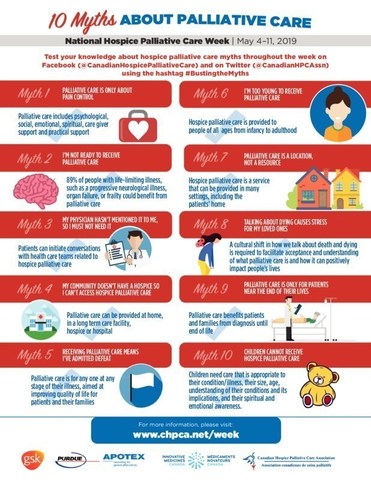
This year, the Canadian Hospice Palliative Care Association (CHPCA) designed a "Busting the Myths" campaign as a response to the need to educate Canadians including caregivers, physicians, citizens and political leaders around common myths about hospice palliative care. The "Busting the Myths" campaign aims to empower Canadians through education by identifying and clarifying misperceptions about Hospice Palliative Care in Canada.
Sharon Baxter, Executive Director of CHPCA affirms that "people still tend to think that hospice palliative care is offered only for seniors with advanced illness – which is really not the case. In reality, hospice palliative care is provided to people of all ages – from children, teens, to younger, older and senior adults". Age is not the only topic that is misled by myths. Rather, myths about accessibility, ease of access, illness criteria and cultural misperceptions of Hospice Palliative Care impacts the care that is accessed. These topics, among others, are addressed within the "Busting the Myths" campaign.
For the "Busting the Myths" campaign, CHPCA has created a downloadable poster that debunks 10 popular myths about hospice palliative care as well as a backgrounder and resource list. To continue the conversation online, social media users are invited to test their knowledge to debunk myths by engaging with CHPCA's Facebook (CanadianHospicePalliativeCare ) and Twitter(@CanadianHPCAssn) 'Debunking Myths Poll' throughout the week. In addition, Canadians are encouraged to use the hashtag #BustingtheMyths to share myths they've encountered.
Working together to educate one another is a vital step in the pursuit of excellent Hospice Palliative Care in Canada. CHPCA urges Canadians to share the "Busting the Myths" poster whether it's with a friend or a provincial Minister of Parliament – it is time for us to bust myths permanently.
Hospice Palliative Care Week is coordinated by the Canadian Hospice Palliative Care Association. Funding for National Hospice Palliative Care Week is provided by GlaxoSmithKline, Purdue, Apotex and Innovative Medicines Canada. For more information and downloadable resources for National Hospice Palliative Care Week, please visit www.chpca.net/week.
The Canadian Hospice Palliative Care Association – the national voice for hospice palliative care in Canada – is dedicated to the pursuit of excellence in care for persons approaching death so that the burdens of suffering, loneliness and grief are lessened. The CHPCA operates in close partnership with provincial hospice palliative care organizations and other national organizations and continues to work to ensure "that all Canadians have access to quality hospice palliative care."
SOURCE Canadian Hospice Palliative Care Association
#BIOHACKING: LATEST TREND IN HEALTH & WELLNESS
Neuroscience Expert Shares How Biohacking Will Change the Wellness IndustryIf you haven't heard of "biohacking" yet, you will soon. It brings the concept of mindfulness to the next level and its development has been rapid and recent. Biohacking combines science, biology, and self-experimentation to optimize health, well-being, and focus. Simply put, it's a DIY approach to wellness that refers to a wide range of activities including meditation, yoga, cleanse diets, and more. Once considered new-age and radical, these practices have risen in popularity. With more research and investment dollars being spewed into the industry, this health trend is dominating the wellness space and is on the verge of changing the industry. At the forefront of the biohacking community is neuroscience expert Dr. Patrick Porter. "Biohacking has hit the mainstream and whether you believe in these practices or not, they will undoubtedly impact the health industry..." ...says Dr. Porter, who presented research along with Ariana Huffington and other notable biohackers last month at the National Biohacking Conference in Los Angeles. Biohacking has made tremendous advances in treating conditions like mental health and addiction. Although in the past, biohacking has received criticism for being unregulated, biohackers argue that's exactly why it needs to be studied and have close attention by the public. "It's all about open access to science and what works for you. When it comes to health, you are your own best advocate. No one can watch over you better than yourself," says Porter. Porter's contribution to biohacking involves research on brainwaves and technology. A pioneer in this area, Porter has emerged as a leader in the digital health and wellness field. He is the creator of the BrainTap Pro mobile app, a mind-development tool designed to help users de-stress while achieving physical, mental, and emotional balance. Using frequency-following technology as well as guided visualization, the app gives anyone the ability to achieve the mental state they want in mere minutes (unlike traditional meditation which can take years to master.) While other apps only focus on one brainwave (such as alpha waves that calm and soothe) BrainTap is based on the understanding that no complex human task has only one brainwave state but rather a symphony of waves working together. "You can actually trigger neurotransmitter production through brainwave entrainment and this is a game changer for mental and physical health," says Dr. Porter. Dr. Porter has been instrumental in the nationwide movement to optimize healthcare through biohacking. He is sharing information with the public on what mainstream biohacking means for the wellness industry.IN AN INTERVIEW / ARTICLE, DR. PORTER CAN DISCUSS:Facts and myths about biohackingBiohacking - the latest trend in health and wellnessHow to trigger neurotransmitter production through brainwave entrainmentHow to biohack your brain with light, sound, and vibrationWhat mainstream biohacking means for the healthcare industry ABOUT DR. PATRICK PORTER:Dr. Patrick K. Porter, Ph.D., is an award-winning author, entrepreneur, and speaker. He is the creator of BrainTap Technology™ a company that produces digital tools for health and wellness. BrainTap’s mind development apps and accessories use Creative Visualization and Relaxation to help people overcome stress and insomnia, lose weight, stop smoking, manage pain, accelerate learning, and much more. BrainTap Tech has produced over 800 custom sessions and has sold more than 3-million books and recordings worldwide. With stress-related health and lifestyle issues at an all-time high, BrainTap has emerged as a leader in the digital health and wellness field. For more information visit:https://braintaptech.com/
TRAIN IT RIGHT NEWSLETTER
Sign Up and get a free 7 day Train it Right HIIT Program!