Startup competition will recognize top innovators in Canada's technology and aging sector
Winners to receive $15,000 in cash plus in-kind prizes
TORONTO, April 10, 2019 /CNW/ - AGE-WELL is pleased to announce a national competition for Canadian startups whose technologies or services can improve quality of life for older adults or their caregivers.
The AGE-WELL National Impact Challenge: Startup Edition will recognize top startups in Canada's technology and aging sector, and support entrepreneurship in the sector.
Applicants from across the country will be challenged to explain how their solution can positively impact older Canadians and/or caregivers.
Five finalists will compete in each of three regional pitch competitions (held in Vancouver, Toronto and Montreal), attended by thought leaders. Travel support will be provided.
The winner of each regional competition will receive $15,000 in cash plus in-kind prizes. For competition terms and conditions, please see the competition main page.
"We're excited to be launching this challenge, which will increase awareness of top startups in the tech and aging space – and support innovations that can help shape the future of aging," says Dr. Alex Mihailidis, Scientific Co-Director and CEO of the AGE-WELL Network of Centres of Excellence (NCE).
As Canada's Technology and Aging Network, AGE-WELL brings together researchers, older adults, caregivers, partner organizations and future leaders to accelerate the delivery of technology-based solutions that make a meaningful difference in the lives of Canadians.
"AGE-WELL has a broad mandate designed to respond to the pressing challenges of an aging population and to seize the opportunity that technology offers," says Dr. Mihailidis. "The AGE-WELL National Impact Challenge: Startup Edition aligns perfectly with our focus on practical solutions that help people in everyday life and bring social and economic benefits to Canadians."
Sponsors of the competition are: CARP, Fasken, The Impact Centre at the University of Toronto, MEDTEQ, Ontario Brain Institute, and YouAreUNLTD.
About AGE-WELL:
AGE-WELL NCE Inc. (http://www.agewell-nce.ca/, @AGEWELL_NCE) is a pan-Canadian network that brings together researchers, older adults, caregivers, partner organizations and future leaders to accelerate the delivery of technology-based solutions that make a meaningful difference in the lives of Canadians. AGE-WELL researchers are producing technologies, services, policies and practices that improve quality of life for older adults and caregivers, and generate social and economic benefits for Canada. AGE-WELL is funded through the federal Networks of Centres of Excellence program.
SOURCE AGE-WELL Network of Centres of Excellence (NCE)
4 Essential Training Tips for Beginning Mountain Bikers
They say that once you learn to ride a bike, you never forget. While that may be true, becoming a great mountain biker is about more than just knowing how to pedal. It’s also about training yourself to be a strong, well-rounded athlete.
Play Balance Games
Being able to balance well will help you keep your bike upright, even when you’re not pedaling quickly. This may allow you to put on the brakes and then start pedaling again without taking the time to rest your feet on the ground. You’ll also get better at hopping your bike as you navigate rough ground.
You can improve your balance skills by challenging yourself to ride carefully. For example, trace the lines on the pavement as you ride around a parking lot. Guide your bicycle along a curb. Steer your bike in repeated figure-eight patterns; each should be just a bit smaller and tighter than the last. As you do these exercises, intentionally go slowly so that you’ll have to focus on balancing.
Build Core Strength
Although it seems like your legs might be the most important muscles for cycling, the truth of the matter is that your whole body contributes to your biking skills. Therefore, it’s just as important to build your core strength as it is to tone your legs.
Planks are a valuable exercise for core training. Start by holding your position for 30 seconds at a time. Squats and lunges will help tone important cycling muscles as well.
Increase Endurance
If you want to be a great cyclist, you must maintain your stamina over long distances. Therefore, you need endurance in both your muscles and your lungs.
There are two types of exercises that can help you build endurance: long, steady rides and short, intense rides. As a beginner, you should go back and forth between the two types on different days. As you become more skilled, you’ll be able to combine them.
Join Group Rides
Spending time with experienced cyclists is one of the best ways to improve your own skills. In a cycling group, you’ll have the opportunity to ride with people of all ability levels. You can observe those who have been cycling longer to pick up on the tricks they use when riding, especially in tricky situations or over rough terrain. You’ll have opportunities to ask questions and share tips with one another.Of course, the value of improving your pedaling skills can’t be underestimated. With practice, you can learn to spin your feet in smooth, steady rotations. With indoor winter training, you can work on spinning and other valuable cycling
Saturday, April 13 in San Diego: U.S. tour continues for renowned painter proving Multiple Sclerosis won’t stop her
Lydia Emily’s works to culminate in national art project for World MS Day in May 2019 with artworks inspired by messages from fellow MS survivors"If I can paint a million faces with one eye and half of a hand, you can do anything.”— Lydia Emily, visionary street artist and muralist who was diagnosed with MS in 2012
LOS ANGELES - You are invited to interview Lydia Emily, a dynamic and outspoken street artist whose passion for life has only grown since her 2012 diagnosis with multiple sclerosis. Refusing to allow her disease to dictate her life, Emily instead uses MS as a bridge that connects her to others who live with the disease. By defiantly creating art on her own terms — even if she needs to tie her brushes to her fingers on the days that an MS-related tremor makes it difficult to paint — Emily inspires her fellow MS patients while attracting vital attention to a frustratingly “invisible” disease.
“People look at me and I look fine, but that doesn’t capture everything that’s going on under the surface,” says Lydia Emily. That’s partly because MS presents differently in every person. For Lydia, it means she’s lost vision in her left eye and lives with chronic pain and fatigue. “When I have really bad MS days, it feels like I have fire ants under my skin and in my gums. But through my art, I’m making life with MS visible so people can see what it means.”
Now Lydia Emily shares her talents in a new project with EMD Serono called MS on My Mind which aims to raise awareness of the emotional toll that the disease can take. The campaign encourages individuals with MS and their caregivers to share their experiences through pictures, poetry, and prose. Lydia Emily is making a collection of oil paintings drawn from 6 of the stories, and will also make one overarching piece that interweaves the themes from all the submitted stories.
Emily’s work is guided by her own personal philosophy, which she calls “Us Theory”: “Right now, life is all about taking selfies. It’s a me, me, me world. But what if, instead of breaking out your selfie stick, you took a photo of you with someone else — someone who needs you? This project is about changing our focus and getting us outside of ourselves.”
Lydia Emily’s commitment to helping and advocating for others has helped sustain her through a lifetime of hardship, including sexual assault, becoming a single-parent to a child with severe autism, surviving cervical cancer, and now battling multiple sclerosis. But rather than allowing life’s obstacles to keep her down, Lydia Emily greets each new day knowing that MS has numbered her days, so she intends to make them count. Interview this incredible woman for an intimate portrait of resilience, courage, and compassion in action, and a reminder that our hardships don’t have the power to deny us our dreams.COMING EVENTS FOR LYDIA EMILY April 13th, San Diego,California: Live mural painting for MS WalkApril 27th, Charolotte, North Carolina: Live mural painting for MS WalkApril 28-29th, Washington, D.C.: Speaking at the On the Move Conference for MS SocietyMay 2-12 at the Indianapolis Museum of Art, Newfields, IN, Seeing MS from the Inside Out will screen as part of the 2019 Indy Film FestMay 7th, Philadephia, Pennsylvania: debut the 3 most recent MS Walk murals (Tampa, San Diego, Charlotte) together at the AAN (American Assoc. of Neurologists) Conference.
ABOUT LYDIA EMILY
As a female pioneer In a street art field that is primarily dominated by men, Emily’s powerful work has been featured nationally and worldwide, with shows in Milan, Berlin, Los Angeles, New York, Washington DC, and San Francisco. She frequently uses her art to highlight human rights issues, such as sex trafficking and girls’ education in Tibet. She has also created murals for Gucci charity Chime For Change and for the award-winning 2013 Ryan Coogler film Fruitvale Station. More of Lydia Emily’s work can be seen at http://www.lydiaemily.com/
ABOUT THE EMERGING ART OF THE M.S. ON MY MIND INITIATIVE
To date, Lydia Emily has created five oil paintings for the MS on My Mind Campaign. Each work depicts the ways Multiple Sclerosis reshapes a person’s everyday life. The paintings are each based on the experiences of people with Multiple Sclerosis and their caregivers. Individuals have shared their stories through words and images that Lydia Emily has then interpreted on canvas.
The first piece she created shows how MS makes simple tasks arduous. A woman is shown blow drying her hair, but instead of a plastic blow dryer, she’s holding a solid metal anvil. Lydia Emily says, “the anvil shows the the weight, but she looks normal—because people with MS have to look normal. No one can see what it looks like for us.”
Lydia Emily notes that some of the pieces will be more appreciated by niche audiences. One contributor to MS on My Mind shared how hard it was for her to do needlepoint that she used to do. Lydia Emily explains, “Anyone who does embroidery would look at this and know it’s all wrong: there’s an excess of fabric, the materials are bulky, and the needle is far too big.” She explains this is meant to depict how difficult MS makes it feel to engage in once-ordinary tasks. “A simple action like picking up a hoop or controlling a needle becomes cumbersome,” she reflects.
A vibrant painting in blue and green tones shows a woman surrounded by water, her head rising above the frothy peaks. The beach is usually depicted as a carefree vacation spot, but MS mediates those experiences. Lydia Emily explains, “A lot of us with MS can’t swim anymore.” She painted the woman's face at peace. She notes, “She’s not supposed to be happy to be in the water, she’s not supposed to be sad—she’s just relaxed: ‘I’m here; it’s okay.’” MS teaches you not to take anything for granted.
Another painting shows two feet in fluid motion, arched and on their toes like a pointe dancer. One foot is wrapped in flowing ribbons, the other with an Ace bandage. Lydia Emily explains, “I wanted to show how painful it is to walk normally with MS.” An individual with MS may still appear to function normally, but that may belie reality. Lydia Emily shares, “we look like we’re still dancing around fine, but we’re not. We’re in pain. We’re in terrible pain.”
A common symptom of Multiple Sclerosis is Drop Foot. “A lot of times, it’s the first symptom someone has,” Lydia Emily explains. When someone with Drop Foot goes to lift up their foot, it feels heavy and the toe drags. Even a simple task like crossing your legs becomes laborious. Lydia Emily depicts this in her image of a man posed for a portrait, but in place of his left foot is an anchor. “This is our new normal—a normal that’s constantly changing as you try to go through the world.”
EMD Serono - the biopharmaceutical business of Merck KGaA, Darmstadt, Germany, in the U.S. and Canada – is engaged in the discovery, research and development of medicines for patients with difficult to treat diseases. The business is committed to transforming lives by developing and delivering meaningful solutions that help address the therapeutic and support needs of individual patients. Building on a proven legacy and deep expertise in neurology, fertility and endocrinology, EMD Serono is developing potential new oncology and immuno-oncology medicines while continuing to explore potential therapeutic options for diseases such as psoriasis, lupus and multiple sclerosis. Today, the business has approximately 1,300 employees around the country with commercial, clinical and research operations based in the company’s home state of Massachusetts.
If you would rather not receive future communications from Carrie Butler, let us know by clicking here. Carrie Butler, box 4508, Pittsburgh, PA 15057 United States
Toronto Marriott Markham Chosen to Host TED Conference Livestream
Toronto, April 10, 2019 – The Toronto Marriott Markham is pleased to announce that it has been awarded the unique opportunity to livestream this year’s TED conference taking place in Vancouver, B.C. The award-winning hotel was among 12 Marriott properties globally selected to host a livestream event, and one of the two hotels in Canada to receive the honour. Guests and visitors to the hotel will be able to watch the conference at the property from April 15 to April 19.
The Toronto Marriott Markham will be livestreaming all twelve sessions starting on Monday April 15th at 8:00 pm. The main livestreaming site will be Draco Restaurant, the Marriott’s eatery specializing in delicious cocktails and locally inspired fare. The livestream event coincides with the one-year anniversary of the property, which opened its doors to significant fanfare in April of 2018.
The TED Conference brings together the world’s best thinkers and influencers in technology, science, finance, art, politics, and psychology to curate TED’s famous 18-minute talks. Notable speakers of TED 2019 include: Jack Dorsey (CEO and co-founder of Twitter and Square), Jon Chu (Director of the highly popular film Crazy Rich Asians), Adena Friedman (President and CEO of Nasdaq), and Joseph Gordon-Levitt (Actor, filmmaker and entrepreneur).
Members of the media and public are invited to join us at Draco for this rare opportunity to listen to some of the world’s best thinkers speak on today’s most relevant topics/issues. The full livestreaming schedule is as follows:
Monday April 15th
• Session 1: 8:00 pm – 10:00 pm
Tuesday April 16th
• Session 2: 11:45 am – 1:30 pm
• Session 3: 2:15 pm – 4:00 pm
• Session 4: 8:00 pm – 10:00 pm
Wednesday April 17th
• Session 5: 11:45 am – 1:30 pm
• Session 6: 2:15 pm – 4:00 pm
• Session 7: 8:00 pm – 10:00 pm
Thursday April 18th
• Session 8: 11:45 am – 1:30 pm
• Session 9: 2:15 pm – 4:00 pm
• Session 10: 5:30 pm – 7:00 pm
• Session 11: 8:00 pm – 10:00 pm
Friday April 19th
• Session 12: 12:00 pm – 2:30 pm
We hope to see you there! With Markham having such a strong business community especially in the world of high-tech and life sciences, and the great diversity found within the city, TED 2019 is sure to educate and inspire.
You are receiving this correspondence because you have previously received emails from Jesson + Company Communications. To continue to receive electronic communications from Jesson + Company including: news, invitations, announcements and any other correspondence please click consent@jessonco.com to indicate we have expressed consent to contact you. You may withdraw consent at any time by clicking remove@jessonco.com
Volunteering can make everyone's lives a little richer
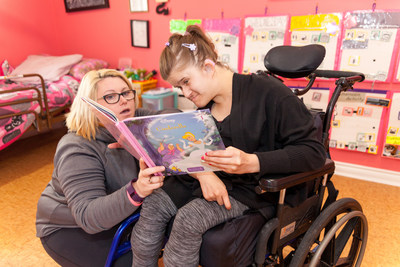
NEWMARKET, ON, April 8, 2019 /CNW/ - "Volunteering makes me feel connected to something bigger than just myself," explained Tiffany Barker, board member and chair of the Client Services Committee at DeafBlind Ontario Services.
Six years ago, when she was first approached about a board role, Tiffany admits she knew little about the deafblind community and the unique supports DeafBlind Ontario Services provides.
DeafBlind Ontario Services is a not-for-profit organization that helps individuals with deafblindness increase their independence and improve their quality of life through specialized services. Their volunteer board of directors, consisting of members like Tiffany, are responsible for providing strategic leadership, and ensuring the organization's mission, vision, and values are at the core of everything they do.
"I started learning more and was very excited to get involved. As a new board member, I had the honour of touring one of DeafBlind Ontario Services' locations… I will never forget that day! I was impressed by the individualized program plans and the breadth of planning that went into the accessible design of the house. As a nurse, I have been in many care facilities, but none has felt or looked like this one. It is truly a home."
Tiffany also learned more about deafblindness, a combined loss of hearing and vision that impacts access to information, communication, as well as mobility. The number of individuals who are deafblind in Canada is 368, 412.[1] This number is based on prevalence estimates of 1% (average number based on all age groups) using Census 2016 population data.
"At first, I was unaware of the important role that intervenors play in the lives of people with deafblindness," explained Tiffany.
Individuals with deafblindness have the capacity to build their life skills, gain independence and contribute to the greater community with the support of professional intervenors. The philosophy of DeafBlind Ontario Services' intervenors is "do with, not for". They work with people with deafblindness, helping them learn through experience, empowering them to make informed decisions and be active participants in all areas of their lives.
"As I learned more about the work of the organization and got to know some of the employees and management team, I saw how committed and driven they are. I have learned a lot about how passion, innovative thinking, and diligence can lead to success."
A year after joining the board, Tiffany made the move out west to British Columbia. "Even though I was moving across the country, I requested to stay on the board of directors. Although I am geographically far, I haven't felt disconnected… video conferencing for meetings is great; it's nice to see people 'face-to-face'."
Volunteering is often seen as a selfless act; a person gives their time, skills, experience, and passion to help others, without expecting anything in return. And while volunteering is a form of service, many volunteers will tell you that "you get more than you give". "Giving to others is something that I strive to do and volunteering one's time is such an important way to give. It makes me feel happy and valued at the same time", said Tiffany.
"Being a nurse and working in the area of Public Health and Health Promotion, I care deeply about the work DeafBlind Ontario Services does to advocate, support, and enrich the lives of people with deafblindness. I relate to the values of the organization and recognize the importance of their work. Volunteering with DeafBlind Ontario Services is a good 'fit' for me."
"Our volunteers, like Tiffany, are so important to our entire team, especially to the people we support. Her dedication to the board and community-minded spirit are at the heart of what volunteerism is all about," said DeafBlind Ontario Services' Chief Executive Officer, Roxanna Spruyt-Rocks.
Tiffany is one of 12.7 million volunteers making a difference in Canada. This National Volunteer Week, April 7-13, join Volunteer Canada in celebrating and recognizing the contributions of volunteers in our communities. "It is important to contribute in big and small ways; together we can make everyone's lives a little richer," explained Tiffany.
For thirty years, DeafBlind Ontario Services has been enriching lives, one touch at a time for individuals with deafblindness. Since their beginning in 1989, they have made it their mission to inspire the spirit and determination of the people they support. To learn more about how you can make a difference, visit www.deafblindontario.com.
__________________________________ 1 Open Your Eyes and Ears – To Estimates of Canadian Individuals with Deafblindness and Age-Related Dual Sensory Loss, 2018
SOURCE DeafBlind Ontario Services
APRIL IS ALCOHOL AWARENESSS MONTH
ARE YOU REALLY A SOCIAL DRINKER OR COULD YOU BE AN ALCOHOLIC?
Increasingly, women are going head to head with men when it comes to binge drinking. It’s not surprising: society normalizes, encourages, and promotes drinking so heavily that it can be nearly impossible, at times, to know what’s “normal” or not. A 2015 report by the National Institutes of Health, says an exploding number of Americans are in the drinking danger zone. According to the report, published in the journal JAMA Psychiatry, nearly one-third of American adults at some point in their life have an Alcohol Abuse Disorder, and only 20% seek treatment. Drinking may seem harmless but overindulging in alcohol is responsible for more than 80,000 deaths in this country per year and is the third leading cause of preventable deaths. We turned to NYC Neuropsychologist Dr. Sanam Hafeez to outline the differences between social, problem and alcoholic drinking.
Addicted alcoholics hide their habit
Dr. Sanam Hafeez says, “When people veer from social drinking to alcoholism, they usually try to conceal their drinking from those who are close to them. This is a warning sign because they deliberately wish to hide their drinking habit from their loved ones so as not to alarm or disappoint them. The fact is, the more they try to hide their drinking habit, the more serious their drinking problem becomes.”
Missing work
Alcoholics tend to miss work, damage other people’s lives, and not fulfill obligations because they stay busy drinking. Social drinkers will drink at specific times when they are usually free so that no important work is hampered. Social drinkers make sure that they do not over-drink, which ensures that they can tend to important obligations. “If they start ignoring these obligations because of drinking, they have likely become alcoholic,” says Dr. Hafeez.
You’re a weekend warrior.
“If you don’t drink daily, but are drinking regularly, such as binges every Friday night, that’s a red flag,” says Dr. Hafeez. While research shows that having about seven alcoholic beverages per week lowers your risk of diabetes and cardiovascular disease, abstaining all week only to guzzle five or six glasses in a single sitting negates any of alcohol’s potential health benefits. Moreover, binge drinking can raise blood pressure and interfere with certain medications.
Drinking just “creeps up on you.”
Have you ever told yourself you were going to have only a drink or two at happy hour, and before you knew it you’d downed five? One of the clues that you may be a binge drinker is not knowing your limits—or feeling surprised when you've "suddenly" passed them. “Like diabetes, heart disease, and other health problems, drinking problems develop gradually and alcoholism is progressive,” says Dr. Hafeez.
Drinking and driving
Alcoholics end up in alcohol-related accidents, while social drinkers do not. However, for a social drinker, they know that drinking and driving is not permitted and can be fatal. So, even if they over-drink on a particular social occasion, they don’t get behind the wheel.
You wonder if there will be enough alcohol available
“This most likely means that you are probably chasing the buzzed feeling and are unable to enjoy yourself without the fear of losing that high” says Dr. Sanam Hafeez. “It is most definitely a warning sign of addiction and it can be a sign of obsessive thinking around alcohol, which should absolutely raise red flags.”
You “Pre-Game It”
Perhaps you are going on a blind date and don’t want your date to think you drink too much so you have 2 drinks at home and 2 drinks while on the date. You know you’ve had 4 drinks, but your date perceives you as a “normal” drinker. You are aware of your true quantity and have the buzz to go along with it.
You hide alcohol
If you don’t want your spouse, roommate or family member to see you drinking, perhaps you hide alcohol in a closet or bathroom cabinet and put your drinks in a colored paper cup so only you know you’re drinking. Dr. Sanam Hafeez says, “alcoholics will do this to be able to indulge in their addiction while attempting to “act sober” and deceive others around them.”
You switch drinks or try to make rules for yourself that you don’t follow
Many people will negotiate with themselves. For example, “I will switch from 4 glasses of wine to two Vodkas” or “I will only drink on weekends,” “I will only go to happy hour when I have a new client win.” “Normal” drinkers don’t make these kinds of bargains with themselves because their lives don’t revolve around alcohol or attempts to control consumption of it,” says Dr. Hafeez.
A ”problem drinker” versus an alcoholic
Dr. Sanam Hafeez explains that, “A problem drinker is able to self-correct when they are given sufficient reason to do so – negative consequences, painful hangovers, birth of a child, new responsibilities, etc. An alcoholic, on the other hand, is unable to permanently cut back or stop drinking even when they have numerous reasons to do so. When faced with serious consequences and reality, an alcoholic may temporarily stop or limit themselves, but they will invariably return to their regular excessive drinking patterns.”
What to do if you’re not sure you have a problem
Dr. Sanam Hafeez suggests, “If you are not certain you are an alcoholic, seek the advice of a therapist, or attend an AA meeting and speak with those who have long term sobriety to see if they share similar thoughts and experiences. If you feel that you need more than therapy to stop drinking, in patient treatment (rehab) may be the course of action you need to get both the therapy and tools to live a sober life.
Sanam Hafeez Psy.D
New York State Licensed Neuropsychologist and School Psychologist
Dr. Hafeez graduated from Queens College, CUNY with a BA in psychology. She then went on to earn her Master of Science in Psychology at Hofstra University. Following that she stayed at Hofstra to receive her Doctor of Psychology (Psy.D.) She later completed her post-doctoral training in Neuropsychology and Developmental Pediatrics at Coney Island Hospital.
Dr. Hafeez’s provides neuropsychological educational and developmental evaluations in her practice. She also works with children and adults who suffer from post traumatic stress disorder (PTSD), learning disabilities, autism, attention and memory problems, trauma and brain injury, abuse, childhood development and psychopathology (bipolar, schizophrenia, depression, anxiety, etc…) In addition, Dr. Hafeez serves as a medical expert and expert witness by providing full evaluations and witness testimony to law firms and courts.
Dr. Hafeez immigrated to the United States from Pakistan when she was twelve years old. She is fluent in English, Urdu, Hindi and Punjabi (Pakistani and Indian languages.) She resides in Queens, New York with her husband and twin boys.
Honors and Publications:
April 2013Main Speaker at Learning Disabilities Awareness Conference, New York City at Baruch College, CUNY
“Evaluating and Accommodating Students with
Disabilities”
June 2008Appointment to the New York City 18-B panel Assigned Counsel Plan
Appointed as a preferred and approved Neuropsychologist and Clinical Psychologist in the New York City Court System for low cost or pro bono criminal, civil and family law cases
January 2008CUNY Proficiency Exam Waiver Position Paper
Hafeez, S. (2008)
Commissioned by CUNY to advocate for the Learning Disabled population and the bias of the CUNY Assessment.
Research based paper presented to the Board of CUNY Student Disabilities to waive requirement.
1998-2000Doctoral Fellowship, Hofstra University
*Awarded a stipend in exchange for a research assistant position with core faculty member
Clinical Experience:
Director and FounderFebruary 2003-Present
Comprehensive Consultation Psychological Services
Provide quality monolingual and bilingual psychological, educational, neuropsychological and speech and language evaluations
Early Intervention, Pre-School and School Age Special Education Services
Awarded a competitive contract through bidding with the New York City Department of Education (NYC DOE)
Awarded an assessment and interpreting contract with Putnam-Westchester BOCES
Provide evaluations and services to college level students with educational disabilities
Also provide occupational and physical therapy evaluations as well as therapeutic services in all areas.
Contract with school district and various agencies to provide evaluations and related services
Provide neuropsychological, psychological and forensic evaluations for legal purposes to individuals, law firms, agencies and courts
Teaching Experience:
Faculty Appointment September 2011-Present
Columbia University, Teacher’s College, New York, NY
PhD program in Psychology
Instruction of neuropsychological and cognitive testing measures (SB-5, WJ-III, WISC-IV, etc)
Supervision and training of graduate students for clinical testing at university clinic
CANNAISSEUR BRANDS LAUNCHES NEW CBD ESSENTIALS
“Therapy Designed by Nature”
Topically Applied Farm-to-Skin CBD Products Featuring the Brand’s Award-Winning FlowerLOS ANGELES, CALIF. (SUMMER 2019)—This season, Cannaisseur Brands is re-launching its topically applied terpene-rich CBD Essentials product line with new branding, logo and packaging. The brand was founded by CBD industry expert and advocate Aryn Sieber, who consults with physicians and patients nationwide on the responsible use and medicinal benefits of cannabis. Sieber became a sought-after professional leader in the industry after using cannabis during his own battle with Stage IV cancer. CBD Essentials topically applied products are lab-formulated, third-party tested, and batch numbered to ensure quality and consistency. All CBD Essentials products feature Sieber’s award-winning flower and meet the federal requirements of the 2018 Farm Bill, which mandates that all CBD-infused products are derived from dried Cannabis Sativa L. plant material that contain less than 0.3 percent THC to be legal in the United States.
“CBD Essentials is dedicated to developing the highest quality therapeutic cannabis-infused products available,” said Ayrn Sieber, Founder of Cannaisseur Brands. “Using premium CBD flower and select terpenes in our award-winning farm-to skin formulas, the products are designed to optimize and support personal health and well-being.”
Real-world testing has shown CBD to have antioxidant and anti-inflammatory properties and to act as an antibacterial, antitumoral and antimicrobial. Studies also have shown that CBD can balance oil production in the skin. Furthermore, because the human body’s endocannabinoid system (ECS) is critically responsible for the life cycle of basal skin cells, some treatments encourage the ECS with topically applied CBD in an effort to help regulate the production of healthy skin. (It is important to note that therapeutic statements for CBD products are not yet evaluated by the Food and Drug Administration and are not intended to diagnose, treat, cure, or prevent any disease.)
CBD is non-psychoactive. Cannabinoids are chemical compounds found in the cannabis plant that act on cannabinoid receptors in cells in the human body that alter neurotransmitter release in the brain. Ligands or bonding molecules for these receptor proteins include endocannabinoids which are naturally produced in the body. Terpenes refer to a class of compounds found in nearly every plant species including cannabis. They have been shown to influence many biological activities—including reduction of inflammation, reduced sensitivity to pain, and reduced anxiety. Terpenes and cannabinoids share a common biochemical precursor, giving them the ability to bind with different biological substances in the body, including receptors and enzymes.
The Cannaisseur Brands Summer 2019 collection features six key products:
CBD Essentials Pain Cream—This body cream, formulated to offer pain relief for sore muscles, aching joints, and chronic skin conditions, won the Les Nouvelles Esthétiques & Spa “Best New Product” award in 2018. A therapeutic blend of premium CBD, select terpenes, and organic hydrators such as coconut oil and shea butter facilitate muscle rejuvenation and replenish moisture for dry skin conditions. The product uses 50 mg. per oz. of premium CBD. CBD Essentials Pain Relief Cream is available in Green Tea Cucumber and Natural in sizes 1.5 oz. at a retail price of $24; 3 oz. at a retail price of $80; and 6 oz. at a retail price of $160. CBD Essentials Pain Cream is now offered in the same sizes in Extra-Strength at 100 mg. per oz.
CBD Essentials Salt Soak Concentrate—This therapeutic blend of immune-boosting, mineral-rich sea salts, combined with premium CBD and select terpenes was formulated to soothe sore muscles, reduce stress, and induce relaxation. This product won the Les Nouvelles Esthétiques & Spa “Best New Product” award in 2019. CBD Essentials Salt Soak is available in Green Tea Cucumber, Eucalyptus, Lavender and Natural in sizes 1 oz. at a retail price of $16; 3 oz. at a retail price of $40; 5 oz. at a retail price of $70; and 6 oz. at a retail price of $80.
CBD Essentials Body + Massage Oil—This product features organic coconut oil infused with premium CBD to reduce discomfort associated with muscle and joint inflammation. This non-greasy topically applied product helps to rejuvenate tired muscles and aching joints, enhancing recovery and relieving pain. It was formulated to be used for therapeutic and oncology massages, and has been shown help reduce inflammation associated with arthritis, fibromyalgia, tendonitis and psoriasis in hundreds of real-world test cases. Designed for all skin types, the CBD EssentialsBody + Massage Oil also can improve dry skin, deeply hydrating for maximum benefit and long-lasting protection. CBD Essentials Body + Massage Oil is available in Green Tea Cucumber, Peppermint, Eucalyptus, Lavender and Natural in sizes 1 oz. at a retail price of $29; and 4 oz. spray at a retail price of $90.
CBD Essentials Massage Roll-On—This product features the same formulation of CBD Essentials Body + Massage Oil, in the convenience of a roll-on applicator. CBD Essentials Massage Roll-On is available in Green Tea Cucumber, Peppermint, Eucalyptus, Lavender and Natural in sizes 0.3 oz. at a retail price of $12; and 3 oz. at a retail price of $70.
CBD Essentials Transdermal Patch—This THC-free time-released product delivers 70 mg. of premium CBD via a 2.5 in. by 3.5 in. waterproof adhesive patch (so it can be worn in the shower and during a workout) and is effective for up to 36 hours. CBD Essentials Transdermal Patch is unscented and available at a retail price of $30.
CBD Essentials Lip Balm—The first lip balm launched by the brand, CBD Essentials Lip Balm is formulated to moisturize the lips from discomfort associated with dryness and deeply hydrate dry skin for maximum benefit and long-lasting protection. CBD Essentials Lip Balm is available in Tropical Punch, Grape, Coconut, Vanilla and Peppermint in 0.15 oz. at a retail price of $8.
CBD Essentials products are available at CannaisseurBrands.com and select spas, wellness centers and specialty retail outlets nationwide.### About Cannaisseur Brands Cannaisseur Brands was launched by cannabis industry advocate Aryn Sieber,who consults with physicians nation-wide on the legal use of medical cannabis and CBD for their patients. Sieber became a sought-after professional leader in the CBD and medical cannabis industry after using medical cannabis and CBD during his own battle with Stage IV cancer. The topically applied products in the Cannaisseur Brand line are lab-formulated, third-party tested, and batch numbered to ensure quality and consistency. All products in the line feature the brand’s award-winning flower.
Veterans Suffering from Both Traumatic Brain Injuries and PTSD
Find Relief with Accelerated Resolution Therapy
Tampa, Florida (April 5, 2019) – Veterans who suffered both traumatic brain injuries and post-traumatic stress disorder (PTSD) found relief from their trauma symptoms using Accelerated Resolution Therapy (ART) in an average of four sessions—and at about the same rate as those who did not have brain injuries, according to a recent study published inCounselling and Psychotherapy Research.
The findings indicate that ART, an innovative and rapid treatment for psychological trauma, is a suitable treatment for a significant and growing population, veterans who are coping from the effects of brain injuries and PTSD, according to principal investigator, Kevin E. Kip, Ph.D., FAHA, a professor of epidemiology at the University of South Florida, College of Public Health.
“This is a very challenging group because they have a concussion history and have experienced significant psychological trauma,” said Dr. Kip. “Yet this combination of conditions is also increasingly common. About 70 percent of veterans who we have been treated in the studies of ART have suffered a concussion at some point.”
The study also showed that Special Forces veterans who underwent ART for trauma experienced significant improvements in their symptoms. ART provides some desirable treatment advantages for Special Forces veterans. Specifically, unlike traditional talk therapy, clients treated with ART do not need to divulge details of their traumatic experiences (verbally or in writing), which makes ideally suited for processing of trauma details from classified operations that cannot be disclosed within session
ART is an innovative treatment that empowers clients to resolve traumatic memories through a combination of relaxation techniques and memory visualization. The treatment employs a series of horizontal eye movements to enable clients to effectively rewrite troubling memories. ART provides effective relief from the strong physical and emotional reactions associated with PTSD, trauma, anxiety, and depression.
Since ART was developed in 2008 by Laney Rosenzweig, MS, LMFT, there have been six research studies completed and several more are in progress. These studies have produced more than 10 published papers about the therapy in scientific peer-reviewed journals including those written by researchers at the University of South Florida. The ART research conducted to date has been federally funded by the Department of Defense and is currently funded by the National Institutes of Health. In 2015, ART was been recognized as an evidence-based therapy by the SAMHSA National Registry of Evidence-Based Programs and Practices.
Restauranteur and entrepreneur Chris T. Sullivan formed and is funding ART International Training and Research, Inc., a nonprofit organization dedicated to making ART more widely available to individuals in need of professional help in order to ameliorate the devastating effects of PTSD and other psychological traumas. The nonprofit is headed by Executive Director Kelly Breeding and is headquartered in Tampa, Florida.
This year, the nonprofit is hosting more than 100 training sessions throughout the United States offering local clinicians an opportunity to be trained and certified in ART. More information on ART International’s training sessions can be found on their website at artherapyinternational.org.
An abstract of Dr. Kevin Kip’s manuscript can be viewed at the following link: https://onlinelibrary.wiley.com/doi/abs/10.1002/capr.12210. To schedule an interview with Dr. Kevin Kip, ART International executive director Kelly Breeding, therapists who employ ART or clients who have benefitted from the treatment, contact Julie Scharper at jscharper@hillmanpr.com.
Is an Aspirin A Day A Good Idea?
Fairleigh Dickinson University, April 4, 2019 – For years, Americans have been told about the benefits of daily aspirin usage. Eighty-one milligrams of aspirin daily can be helpful in warding off a host of ailments in some patients, according to research. A quarter of all Americans use or have used aspirin on a daily basis at some point in their life due to a widespread campaign to promote its impact on heart health, over-the counter accessibility, and its perceived safety due to the name “baby aspirin.”
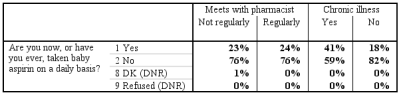
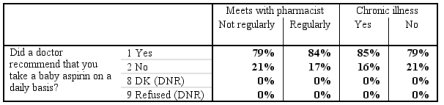
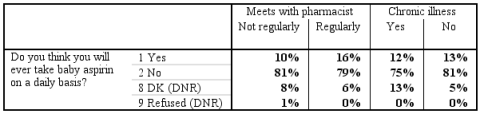
The Fairleigh Dickinson University School of Pharmacy and Health Science’s National Health Survey finds 24 percent of adults nationwide are now or have taken baby aspirin on a daily basis. Among those who have not taken the pill daily, thirteen percent believe they will at some point in their lives. Most (81%) take aspirin at the recommendation of their doctor, and another 18 percent arrived at the decision without speaking with a health professional.
Over half of aspirin users take the pill for prevention purposes, as 56 percent do not report having a chronic disease or illness. Aspirin can be used as a primary prevention agent - to preclude disease(s) from occurring in the future, and a secondary prevention agent - to decrease risk of disease recurrence, in addition to other usage indications.
Polling data showed that those suffering from a chronic illness or disease were twice as likely than those without an illness to take baby aspirin (41% versus 18%). A racial divide exists in daily usage as well. A third (31%) of white respondents use the drug for primary prevention as compared with 14 percent of non-white respondents.
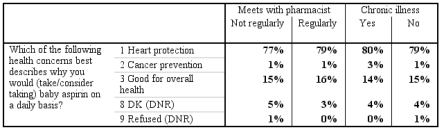
Although daily baby aspirin usage can be used for a variety of reasons, the public believes heart protection is the primary reason. Seventy-eight percent reportedly take, have taken, or think they will take it at some point in their lives in order to help prevent heart disease. Another sixteen percent say taking baby aspirin is beneficial to one’s overall health. Even though the research indicates the drug can provide benefits in protecting against certain forms of cancer, only one percent say this is the reason they take or would consider taking the drug.
“In view of recent evidence published in the New England Journal of Medicine, as well as updated American College of Cardiology/American Heart Association Guidelines released on March 17, 2019, aspirin should not be used routinely for the primary prevention of cardiovascular disease. In many patients, the risk of bleeding may be similar or greater compared to the benefit of preventing a cardiovascular event,” said Dr. Anastasia Rivkin, Assistant Dean for Faculty and Professor of Pharmacy Practice at the FDU School of Pharmacy and Health Sciences. “Individual patient parameters, such as age, overall cardiovascular risk assessment, and other factors should be thoroughly discussed with the patient’s health care provider before considering aspirin to prevent heart disease.”
“There is more data to support use of baby aspirin for colorectal cancer prevention than other types of cancer. The 2016 U.S. Preventive Services Task Force guidelines recommend low-dose aspirin to prevent colorectal cancer in patients who are also at risk for cardiovascular diseases and are not at increased risk for bleeding,” continued Rivkin. “Based on research, long-term aspirin use can result in up to a 40 percent reduction of colorectal cancer risk. What we found in this survey is that the general public is not aware of aspirin benefits for cancer prevention.”
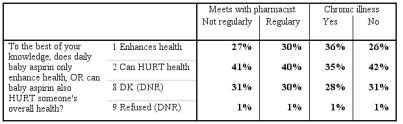
As with all drugs, complications can arise from daily baby aspirin use. The public has mixed views about the safety of baby aspirin, despite a fair degree of usage or planned usage. A quarter (27%) of Americans believe daily baby aspirin use only has health benefits, 40 percent believe it can also hurt someone’s overall health, while a third (32%) remain unsure.
“Eighty-one milligram baby aspirin has both benefits and risks associated with daily use. The assumption that aspirin only has health benefits is incorrect. One meta-analysis published in the Annals of Internal Medicine and the U.S. Preventive Services Task Force which showed daily or every other day baby aspirin use increased risk of major gastrointestinal bleeding and hemorrhagic stroke, especially with increasing age and among men. Before this medication is recommended to a patient, healthcare providers decide whether the primary prevention benefits outweigh the risk of bleeding. The answer to this question will vary widely from one patient to another,” noted Dr. ElifÖzdener, Assistant Professor of Pharmacy Practice.
Methodology – The National Health Survey was conducted by The Fairleigh Dickinson University Poll on behalf of the FDU School of Pharmacy and Health Sciences. A random sample was drawn of adults nationwide, including in Alaska and Hawaii, and interviews were conducted on landlines and cellphones between January 28 - February 13, 2019. Respondents were screened in order to interview an adult, 18 or older.
A total of 1000 interviews were administered by ReconMR in San Marcos, Texas. 296 interviews were conducted on landlines and 704 were conducted on cellphones by professionally trained interviewers using a CATI (Computer Assisted Telephone Interviewing) system. All interviews were conducted in English. Telephone numbers were purchased by ReconMR through Marketing Systems Group.
Results for the total sample have a margin of sampling error of +/- 4.03 percentage points, including the design effect.
Survey results are also subject to non-sampling error. This kind of error, which cannot be measured, arises from a number of factors including, but not limited to, non-response (eligible individuals refusing to be interviewed), question wording, the order in which questions are asked, and variations among interviewers.
Weighting was applied to the sample to more accurately treat the respondents are representatives of the total population of the United States. 2019 estimates of the U.S. population by Claritas were used to weight the data. In this case, the proportions of three characteristics were used; Race, Age and Gender. Each respondent falls into one, and only one, set and no respondent is left out.
For the second year, the FDU Poll received an “A” rating from statistician Nate Silver’s FiveThirtyEight blog. The ratings measure both accuracy and bias for all major polling services in the United States, providing an update to similar research the poll watchers conducted in 2014. FDU’s “A” rating puts it in the top 15 of the more than 380 polling institutes reviewed and graded from A+ through F. The FDU poll was found to have a 94 percent accuracy rate for predicting election results, and is one of only three A-rated polling institutes with zero bias to their rankings.
Tables
Are you now, or have you ever, taken baby aspirin on a daily basis?
1 Yes 24%
2 No 76%
8 DK (vol) 0
9 Refused (vol) 0
Did a doctor recommend that you take a baby aspirin on a daily basis? [N = 238]
1 Yes 81%
2 No 19%
8 DK (vol) 0
9 Refused (vol) 0
Do you think you will ever take baby aspirin on a daily basis? [N = 762]
1 Yes 13%
2 No 80%
8 DK (vol) 7%
9 Refused (vol) 1%
At what age did you begin taking baby aspirin on a daily basis? [At what age do you think you should begin taking baby aspirin?] [N = 300]
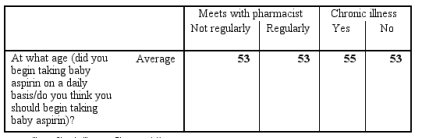
Average age 54
Which of the following health concerns best describes why you would take [would consider taking] baby aspirin on a daily basis? [N = 336]
1 Heart protection 78%
2 Cancer prevention 1%
3 Good for overall health 16%
8 DK (vol) 4%
9 Refused (vol) 1%
To the best of your knowledge, does daily baby aspirin only enhance health, OR can baby aspirin also HURT someone’s overall health?
1 Enhances health 28%
2 Can hurt health 40%
8 DK (vol) 31%
9 Refused (vol) 1%
Question wording and order
ASP1Are you now, or have you ever taken baby aspirin on a daily basis?
1 Yes Ask ASP2
2 No Ask ASP3
8 DK (vol) Ask ASP3
9 Refused (vol) Ask ASP3
ASP2Did a doctor recommend that you take a baby aspirin on a daily basis?
1 Yes Ask ASP4
2 No Ask ASP4
8 DK (vol) Ask ASP4
9 Refused (vol) Ask ASP4
ASP3Do you think you will ever take baby aspirin on a daily basis?
1 Yes Ask ASP4
2 No Ask ASP6
8 DK (vol) Ask ASP6
9 Refused (vol) Ask ASP6
ASP4At what age did you begin taking baby aspirin on a daily basis? [At what age do you think you should begin taking baby aspirin?]
Enter age
8 DK (vol)
9 Refused (vol)
ASP5Which of the following health concerns best describes why you would take [would consider taking] baby aspirin on a daily basis? [rotate options]
1 Heart protection
2 Cancer prevention
3 Good for overall health
8 DK (vol
9 Refused (vol)
ASP6To the best of your knowledge, does daily baby aspirin only enhance health, OR can baby aspirin also HURT someone’s overall health? [rotate options]
1 Enhances health
2 Can hurt health
8 DK (vol
9 Refused (vol)
Weighted Sample characteristics
N (%)
MoE
Male
487 (49%)
+/- 4
Female
513 (51%)
+/- 4
40 & <
358 (38%)
+/- 5
41-49
120 (13%)
+/- 9
50-59
163 (18%)
+/- 8
60-69
149 (16%)
+/- 8
70+
142 (15%)
+/- 8
Refused
69 (7%)
+/- 12
White
569 (57%)
+/- 4
Black
105 (11%)
+/- 10
Hispanic
184 (18%)
+/- 7
Other
141 (14%)
+/- 8
White
569 (57%)
+/- 4
Non-white
431 (43%
+/- 5
1
Carrot Rewards Further Expands Strategic Footprint
Popular Canadian wellness program partners with private sector and broadens its impact mission
TORONTO, April 4, 2019 /CNW/ - Carrot Rewards, Canada's most popular wellness app today announced a further significant expansion of its mission and partnerships, as it continues to nudge well over a million Canadians towards living healthier lives.
Carrot is deepening its strategic private sector and NGO engagements in a growing effort to positively influence consumer behaviour. New partnerships with leading insurance and pharmaceutical firms are harnessing the unique engagement and power of this innovative platform to boost consumer education in important behavioural areas as diverse as road safety or respiratory health management. Some of Carrot's newest mission partners include Boehringer Ingelheim, The Lung Association and Onlia.
At the same time, the popular app is rapidly broadening its public impact work into the critically important area of civic wellness. More specifically, a key new mission element of the Carrot platform will be to educate Canadians on key immigration topics such as newcomer integration, transition support and access to a wide range of resources, from language skills training to financial literacy tools for new Canadians.
"Three short years into our accelerating journey, it is so rewarding for us all to see our relevance, recognition and impact spread in so many important directions," said Andreas Souvaliotis, Founder & CEO of Carrot Rewards. "We are changing lives for the better every day and we are constantly adding to our uniquely and proudly Canadian story."
Rodney Ghali, Assistant Cabinet Secretary at the Privy Council Office in the Government of Canada stated "I have had the pleasure of watching Carrot Rewards grow from an initial pilot project to an internationally recognized digital platform for promoting health. It represents a unique example of the power of innovative and authentic partnerships between the public and private sectors in our country."
About Carrot Rewards
Carrot Rewards is an AI-driven wellness app and brand engagement platform that leverages behavioural economics and nudge theory to motivate and reward users for making better lifestyle choices. Carrot maximizes appeal and engagement by offering users a choice of rewards from the most popular consumer loyalty programs - in Canada users can earn Aeroplan® Miles, SCENE® points, Petro-Points™, More Rewards® points, Drop points or RBC Rewards each time they interact with the app.
With well over one million users in this country, Carrot was recognized as Canadian App of the Year by MobileSyrup, ranked by Bond Brand Loyalty as a Top 10 Canadian Loyalty Program in the Loyalty Report, named one of the Top Fastest Growing Companies by Canadian Business and Maclean's Magazine and was the most recent Global Innovation Award winner at the World Government Summit.
The Carrot Rewards platform was created in collaboration with Canadian government agencies, health NGOs and the private sector.
For more information, please visit: www.carrotapp.com Twitter & Instagram: @carrot_rewards Facebook: /carrotrewards
Available for Interviews: Andreas Souvaliotis, Founder and CEO, Carrot Rewards
SOURCE Carrot Insights
TRAIN IT RIGHT NEWSLETTER
Sign Up and get a free 7 day Train it Right HIIT Program!