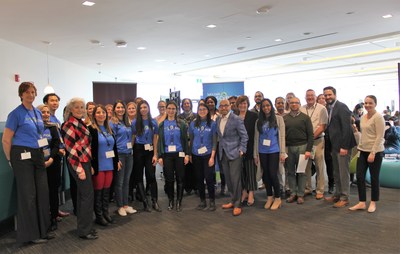
HealthPRO's Cynthia Valaitis named one of the 100 Influential Women in Canadian Supply Chain
MISSISSAUGA, ON, March 8, 2019 /CNW/ - Today, Cynthia Valaitis, President and CEO of HealthPRO, Canada's procurement services organization, was named one of 100 Influential Women in Canadian Supply Chain.
Launched for the first time this year by the Supply Chain Management Association (SCMA), the top 100 list celebrates achievers in Canada's supply chain sector and key contributors to the success of their organizations who serve as role models for others within the profession.
"I am both humbled and honoured by this recognition," says Ms. Valaitis. "At HealthPRO, we are privileged to work with an incredible group of supply chain experts and clinicians from across Canada's healthcare system, whose expertise contributes to delivering healthcare contracts for the highest quality products at the best value."
Cynthia has led the organization since 2013 and has been a key contributor to its success since 1996. The 100 women will be recognized at the SCMA Gala on May 30thin Montreal.
About HealthPRO Procurement Services Inc.
HealthPRO is Canada's healthcare procurement services organization, representing the purchasing interests of more than 800 hospitals across the country. Through our national collective efforts, we source high quality products and services at the best value, while advancing issues that matter, including patient safety, innovation and assurance of supply. For more information, please visit www.healthprocanada.com.
SOURCE HealthPRO Procurement Services Inc.
The Best Spring Fitness Retreats for Self-Improvement
The Easter break is the best time to emerge from winter hibernation and venture abroad to kick-start your health and fitness regime with Health and Fitness Travel, the wellness holiday specialists.Reconnect to your passion and purpose by embarking on a R&R getaway to make sustainable changes along with like-minded people. Discover the best global wellness retreats to escape to in the Easter break this year. From local to long haul, and from the affordable to the luxurious, ditch the Easter eggs in favour of one of these Fusion Fitness™ Holidays. It’s never too late to set your wellness goals.
Fulfil those wellness goals on the idyllic location of the Estoril coast, known as the Portuguese Riviera. With a warm, dry climate, scenic views, and a team of specialist trainers and therapists, finding motivation to restore your health is only a hop, skip and jump away. Recover from beach circuits, resistance and cardio training in the Asian-inspired spa.
Health and Fitness Travel (0203 397 8891 healthandfitnesstravel.com) offers 7 nights at Palacio Estoril from £1,140pp or £1,580 for singles. Price includes breakfast, our Fusion Fitness programme and return private transfers.
Improve your stamina this Spring by blending high intensity training with soothing spa treatments while experiencing the rich beauty and culture of this vibrant destination. Set in a private landscape of pristine beaches and hills blanketed with olive trees, there are activities to suit all abilities and tastes including yin yoga, mountain biking, scuba diving and hiking.
Health and Fitness Travel (0203 397 8891 healthandfitnesstravel.com) offers 7 nights at Kaplankaya from £2,140pp or £3,050 for singles. Price includes breakfast, our Fusion Fitness programme and return private transfers.
Kick-start your fitness goals amongst the charming beaches and rolling hills of Cyprus, by creating a personal fitness regime that suits your body type. Power walk along the coast and explore the beautiful Cypriot landscape, before boosting your metabolism with strengthening TRX training. For the perfect recovery, soothe your muscles and release tensions with therapeutic treatments adjacent to fragrant gardens.
Health and Fitness Travel (0203 397 8891 healthandfitnesstravel.com) offers 7 nights at Aphrodite Hills from £925pp or £1,170 for singles. Price includes breakfast, our Fusion Fitness programme and return private transfers.
Boost your energy levels and spring into shape in the enchanting woodlands and stunning Monchique mountains of the Algarve. Choose from a range of personalised activities from boot camp training, yoga, Pilates and walking tours. Enhance your physical endurance and reach a new level of consciousness, for a truly bespoke wellness experience as you get close to nature.
Health and Fitness Travel (0203 397 8891 healthandfitnesstravel.com) offers 7 nights at Monchique Resort from £640pp or £965 for singles. Price includes breakfast, our Fusion Fitness programme and return private transfers.
Boasting the world’s top sports and fitness coaches, make a huge difference to your training with Muay Thai boxing, weight training TRX and tennis to leave you confident in your future game. Create your own fitness programme in the state-of-the-art fitness centre alongside nutritional advice and physiotherapy to help you hit your goals.
Health and Fitness Travel (0203 397 8891 healthandfitnesstravel.com) offers 7 nights at Thanyapura from £840pp or £1,060 for singles. Price includes breakfast, our Fusion Fitness programme and return private transfers.
Stay in shape and try a new sports discipline in sunny Sardinia, including boxing, fencing, triathlon courses or wreck diving. There’s a choice of al fresco training throughout the 47 acres of natural surroundings, a multi-faceted gym, yoga, tennis and cycling. Make like the Romans and melt away woes in the revolutionary world of thalassotherapy.
Health and Fitness Travel (0203 397 8891 healthandfitnesstravel.com) offers 7 nights at Forte Village from £2,485pp or £3,090 for singles. Price includes half-board, our Fusion Fitness programme and return private transfers.
Challenge yourself to Bootcamp training, bolster your cardio and focus on mindfulness within 40 acres of Indian wildlands. Push your limits with a kick-boxing workout designed for total body toning and reward yourself with deep tissue massages, acupuncture and moxibustion. Receive guidance on postural alignment and integration, a keystone in overall health and well-being.
Health and Fitness Travel (0203 397 8891 healthandfitnesstravel.com) offers 7 nights at Atmantan from £2,115pp or £3,360 for singles. Price includes breakfast, our Fusion Fitness programme and return private transfers.
Embark on a tailored wellness getaway with azure blue waters on the island of Madeira. Offering unrivalled choice, this healthy break allows you to design your own bespoke fitness experience with an array of activities from mountain biking, dancing, cross-fit, and sea-kayaking. Soothe weary muscles with indulgent treatments, physiotherapy and yoga.
Health and Fitness Travel (0203 397 8891 healthandfitnesstravel.com) offers 7 nights at Galo Resort from £740pp or £935 for singles. Price includes breakfast, our Fusion Fitness programme and return private transfers.
Health and Fitness Travel is a global luxury wellness travel company that originated in the UK in 2010 and is committed to providing healthy holidays that enhance and change lives. Created by Paul Joseph and Adam Heathcote as a result of their passion for health and fitness travel and offering bespoke holidays to improve people’s well-being to lead happier and healthier lives.
Health and Fitness Travel offers clients a tailor-made seamless service with the very best health and fitness holidays, handpicked by its expert team, together with exclusive and added value packages with the best deals. As leading specialists, Health and Fitness Travel has also created their own collection of trademark healthy holidays in various destinations which include Fusion Fitness™ Mindful Triathlon™, BodyBreaks™ and Discover Recover™, offering clients the best value and holiday experience. For more information visit: www.healthandfitnesstravel.com
Elsevier Launches Assessment Capabilities on Its All-new ClinicalKey Student Platform
ClinicalKey Student equips medical faculty and students with the resources they need to enhance the teaching and learning experience
LONDON, March 7, 2019 /CNW/ - Elsevier, the information analytics business specializing in science and health, announced today the launch of new assessment capabilities available on its refreshed and rebranded ClinicalKey Student platform (formerly ClinicalKey Medical Education). These new capabilities support medical faculty and students by enhancing the teaching and learning experience with tools tailored to develop and assess the knowledge of aspiring medical professionals.
Building upon the platform's successful history of helping students to learn by giving them access to evidence-based medical content, the assessment capabilities enable faculty to easily build and assign assessments in a way that supplements their curriculum. It also helps them to identify topics their students are struggling with through detailed performance dashboards and cumulative data. Faculty have the freedom to select questions, building bespoke assessments based on the wide array of content and the needs of their class. In addition, students can supplement their learning by creating their own quizzes to address areas of weakness identified while using the platform or though standard examinations.
"Medical education and learning habits have changed dramatically," said Elizabeth Munn, Managing Director, Education, Elsevier. "We believe that providing students and faculty with the tools to deliver frequent formative assessments that give faculty insights into their students learning strengths and weakness is critical to the development of the medical professionals of the future."
To understand student and faculty needs, over 200 hours of user research were conducted globally to develop the new assessment capabilities, ensuring the platform delivers on the promise to the user and provides an experience that can be seamlessly integrated into their day-to-day learning.
The new assessment capabilities on ClinicalKey Student will be available March 2019 in the following regions: Europe, the UK, Australia and New Zealand. Further launches are planned in the Middle East and Africa.
Elsevier is a global information analytics business that helps institutions and professionals advance healthcare, open science and improve performance for the benefit of humanity. Elsevier provides digital solutions and tools in the areas of strategic research management, R&D performance, clinical decision support and professional education, including ScienceDirect, Scopus, SciVal, ClinicalKey and Sherpath. Elsevier publishes over 2,500 digitized journals, including The Lancet and Cell, 38,000 e-book titles and many iconic reference works, including Gray's Anatomy. Elsevier is part of RELX Group, a global provider of information and analytics for professionals and business customers across industries. http://www.elsevier.com
SOURCE Elsevier
“SLEEP AWARENESS WEEK” BEGINS MARCH 10TH
10 Sleep Hygiene Tips from a NYC Neuropsychologist
Lack of sleep is such a universal problem that the National Sleep Foundation has proclaimed the week of March 10th as Sleep Awareness Week.
How do you assess your bedroom habits and optimize your nighttime routine for better sleep? To find out, we turned to Dr. Sanam Hafeez, a New York-based neuropsychologist and faculty member at Columbia University.
Studies show that sleep quality is directly related to sleep hygiene. So could it be that your nighttime habits are causing you to lose out on the benefits of quality sleep?
Dr. Hafeez says that “not only are people unaware of why they are suffering from insomnia or not getting quality sleep but they are unaware of the effects this has on their health, daily functions and brain.” The New York-based Neuropsychologist explains that a large part of insomnia is a result of poor sleep hygiene.
The National Sleep Foundation defines sleep hygiene as “a variety of different practices and habits that are necessary to have good nighttime sleep quality and full daytime alertness.”
Here are 10 behaviors that could be causing a decline in your sleep quality and tips from our neuropsychology expert explaining how to fix them!
Working Out Too Late Into The Night
Working out can help de-stress the body and reduce anxiety. However, “if done too close to your bedtime your body might still feel the adrenaline and pump of the workout and it might be difficult to fall into a sedative state,” says Dr. Hafeez.
Having A Smoke Or Some Caffeine Too Close To Bedtime
“Nicotine is a stimulant and it is well known to cause insomnia. Depending on how your body processes nicotine you could be putting yourself at risk for low quality sleep which means a lack of REM sleep,” warns Dr. Hafeez. This stage of sleep is where we recharge the most throughout the night. In other cases, people unassumingly snack on chocolate or have a soft drink that contains caffeine and that caffeine will keep you in a state of alert and it will be more noticeable that you are alert as you stare at the roof without any other activity. “Caffeine is great at work when you need a little help staying alert, but at night it can cause you to miss out on that much-needed recharge,” Dr. Hafeez says.
Using Your Bed For More Than Just “Bed” Functions
Much like productivity professionals advise maintaining a designated area
for studying or work, sleep experts say your bed should be used almost exclusively for sleeping and sharing intimate moments with our spouse or lover. This is because, “the brain has a hard time adjusting to sleep mode if it gets used to being on the bed all the time, eating, watching tv, studying or just hanging out. You’ll have a harder time shifting into actual ‘bedtime,’ explains Dr. Hafeez.
Eating Too Late Into The Night
For late night munchers, it is no strange notion that after a binge session at 3 a.m it may be a little difficult to fall asleep. “Your system is stuffed. Depending on how much you eat you may feel bloated or hyperactive. This can result in you feeling uncomfortable. If you’re on a diet you may feel guilty for breaking your regimen,” says Dr. Hafeez. All of these things cause your brain and system to be preoccupied with all but falling asleep.
Though It Is A Sedative, Alcohol Will Ruin Your REM Sleep
Many people say they sleep better after drinking. That may be true for a glass of wine with a light dinner but “a restful sleep is not the same as blacking out or drinking so heavily that you find yourself inebriated prior to sleep,” explains Dr. Hafeez. Alcohol disrupts the way our body absorbs liquid, thus causing urgent and frequent needs to go to the restroom to urinate. Dr. Hafeez also says alcohol tends to disrupt the restful stage of REM.
Going To Bed Angry Will Make It More Difficult To Fall Asleep
Not only is “don’t go to bed angry” good relationship advice, it turns out it ’s great psychological and sleep hygiene advice. Dr. Hafeez explains that “if you are able to leave things off with someone in a better place or in a place of ‘we will work this out in the morning because we care for each other,’ you have a better chance of letting your body relax into sleep.” If you aren’t able to calm your frustration for the night you may find your mind circling the problem until the sun comes up.
Clinging to Your Cell Phone While Trying To Doze Off
This is a major issue in today’s digital age. People are tuned in to their phones too late into the night, reports show. “As more and more people opt to have their phone by their bedside and go to bed staring at their screens there is an increase in phone-related insomnia. Our eyes stay alert with the light of the screen explains Dr. Hafeez. “The constant scrolling and continued processing of information make it so your brain never begins relaxing,” she says. Tips for avoiding this issue are to leave your phone across the room. This also helps when waking up in the morning and having to walk across the room to turn your alarm off.
The Room Temperature Is Not Optimized For Sleep
Optimal room temperature is commonly thought to be 60-67 degrees according to the national sleep foundation. “Your body has a way of regulating temperature relative to the temperature of the room in order to relax you into sleep,” says Dr. Hafeez. If the room temperature is too hot or too cold it can cause discomfort that will wake you up throughout the night or keep you from falling asleep at all.
Poor Lighting Environment
If a room is getting too much light coming in from the window or from your bedroom hallway it can be difficult to sleep. “Many people with light sensitivity will use blackout curtains to optimize the room for sleep. When clocks move forward and the sun rises at an earlier time people often struggle to acclimate themselves to the new time because the sunlight is waking them up,” says Dr. Hafeez
Napping During The Day
Sleep is a recharge for the day's activities. If you are constantly napping or napped too heavily during the day, your mind won’t be as tired as it usually is once it’s time to tuck into the sheets for the night. “Napping if necessary is not a bad thing. But one 20 to 30-minute nap is very different than sleeping all day and then struggling at night to sleep,” says Dr. Hafeez.
About the Doctor:
Dr. Sanam Hafeez PsyD is an NYC based licensed clinical psychologist, teaching faculty member at the prestigious Columbia University Teacher’s College and the founder and Clinical Director of Comprehensive Consultation Psychological Services, P.C. a neuropsychological, developmental and educational center in Manhattan and Queens. Dr. Hafeez masterfully applies her years of experience connecting psychological implications to address some of today’s common issues such as body image, social media addiction, relationships, workplace stress, parenting and psychopathology (bipolar, schizophrenia, depression, anxiety, etc…). In addition, Dr. Hafeez works with individuals who suffer from post-traumatic stress disorder (PTSD), learning disabilities, attention and memory problems, and abuse. Dr. Hafeez often shares her credible expertise to various news outlets in New York City and frequently appears on CNN and Dr.Oz. Connect with her via Instagram @drsanamhafeez or
Perrin Conferences Announces Cutting-Edge Issues in Asbestos Litigation Conference
The Cutting-Edge Issues in Asbestos Litigation Conference will take place on March 11-12 at the Beverly Wilshire, A Four Seasons Hotel, in Beverly Hills, CA.
WAYNE, PA—March 7, 2019—Perrin Conferences, the leading national provider of joint plaintiff/defense litigation conferences, is hosting the Cutting-Edge Issues in Asbestos Litigation Conferenceon March 11-12, 2019, at the Beverly Wilshire, A Four Seasons Hotel, located in Beverly Hills, California.
This year’s conference will cover various aspects of the top emerging trends in asbestos litigation, including an overview of the most significant developments from 2018, the leading factors that will drive the industry in 2019, and a discussion on the national filing trends and statistics. In addition, the conference will also feature sessions focusing on talc litigation, in-house counsel and insurance perspectives, and jurisdictional updates from CA, IL, MO, NY, and PA.
“The entire Perrin Conferences team, along with this year’s co-chairs, have been working diligently to put together an impressive agenda for the Cutting-Edge Issues in Asbestos Litigation Conference this March,” said Lynnsey Perrin, President & CEO of Perrin Conferences. “The Beverly Wilshire Hotel provides the perfect venue for attendees to network and to openly share their knowledge, insights, and ideas regarding the issues currently facing asbestos litigation.”
Lynnsey Perrin also commented on Nicholas J. Vogelzang, Esq. of Vogelzang Law in Chicago, IL, “We are excited to have Nick Vogelzang as Moderator of the panel An Update on Personal Jurisdiction: Where is Daimler Driving the Litigation? as well as lending his expertise to the panel titled Hot and Emerging Jurisdictions: Illinois, New York, Oregon & Washington.”
The Cutting-Edge Issues in Asbestos Litigation Conference offers CLE accreditation for all states requested by attendees and is pending approval for approximately 9.0-10.8 adjuster credits in the following states: NH, OK, and TX. Please contact Katie Milnes to submit your CLE requests.
In addition to the educational benefits received from attending, attendees also receive exclusive opportunities for networking, information sharing, and career development. For more details on registration and hotel accommodations, please visit the Perrin Conferences website or contact Lynnsey Perrin.
About Perrin Conferences
The leading national provider of joint plaintiff/defendant litigation conferences, Perrin Conferences offers comprehensive and specialized continuing legal education in an atmosphere of learning, networking, and sharing. Bringing together preeminent national talent in specialty legal fields, Perrin Conferences ensures its conferences deliver innovative content, networking opportunities, and career development. Attendees gain insights that cannot be found anywhere else. Follow the latest news from Perrin Conferences on Twitter @PerrinConf. For more information on the company and upcoming conferences please visit www.perrinconferences.com.
Promising new drug shows potential to stop progression of sepsis
Pre-clinical trial of InnovoSep presented at RCSI Research Day 2019
DUBLIN, March 7, 2019: Research into a new breakthrough therapy in the fight against sepsis has shown that the drug has potential to stop all sepsis-causing bacteria from triggering organ damage in the early stages of the condition.
The pre-clinical trial of InnovoSep, carried out by researchers at RCSI (Royal College of Surgeons in Ireland), has demonstrated that the drug also has the potential to stop progression of sepsis to multiple organ failure in the later stages.
The study is being presented today at RCSI Research Day 2019 by Dr Sinéad Hurley, a Postdoctoral Fellow at the School of Pharmacy and Irish Centre for Vascular Biology, RCSI.
Principal Investigator on the research, Professor Steve Kerrigan, Associate Professor in Pharmacology at RCSI and inventor of InnovoSep said: “Sepsis occurs when an infection gets into the bloodstream and our own body’s defence system spins out of control trying to fight the infection, which results in multiple organ failure if untreated.
“There is only a short window of opportunity for treatment of sepsis with the early administration of antibiotics and fluid. However, in many cases antibiotics are not effective due to drug resistance or delays in identifying the type of bacteria that has caused the infection. Therefore, there is a need for a non-antibiotic therapy that can be used at all stages of infection against all bacterial causes of sepsis”.
Identification of a new therapy such as the InnovoSep drug candidate is critical as current research from the World Sepsis Alliance suggests that the incidence of sepsis is growing annually by 8%.
Professor Kerrigan continued “Our research has shown the InnovoSep candidate drug can prevent sepsis progression early or indeed treat advanced sepsis. The drug appears to act by preventing the bacteria from getting into the bloodstream from the site of infection by stabilising the blood vessels so that they cannot leak bacteria and infect the major organs.”
“The promising results of the InnovoSep pre-clinical trial gives hope for a new non-antibiotic treatment of this condition that could be effective in both the early and more advanced stages of sepsis which results in almost 3000 deaths in Ireland each year,” Professor Kerrigan said.
Sepsis, otherwise known as blood poisoning, is a silent killer because it is unpredictable, rapid and can go undiagnosed due to its non-specific signs and symptoms. It is critical that the public are empowered with the knowledge of spotting signs and symptoms of sepsis so that rapid treatment can be initiated. The signs and symptoms of sepsis mimic those of the flu - high temperature, rapid heart rate, rapid breathing, pain, pale or mottled skin, and feeling generally very sick. The main difference between sepsis symptoms and flu is that sepsis will come on very quickly whereas flu comes on over days.
Any type of infection can cause sepsis ranging from seemingly minor infections on the skin, urinary tract infections, pneumonia or appendicitis - even a simple cut, scrape, or break in the skin can allow bacteria to enter the body and potentially lead to sepsis.
Currently there are almost 15,000 cases of sepsis each year in Ireland with almost 3000 deaths. In Ireland sepsis kills more people than either heart attack, lung cancer, colon cancer or breast cancer. A staggering 60% of all hospital deaths has a sepsis or infection diagnosis.
The Innovosep pre-clinical trial is supported by the Enterprise Ireland Commercialisation Fund. The intention is to form a spin out company for the further clinical development of this technology.
ENDS
Notes to editors
About RCSI
RCSI is ranked among the top 250 (top 2%) of universities worldwide in the Times Higher Education World University Rankings (2019) and its research is ranked first in Ireland for citations. It is an international not-for-profit health sciences institution, with its headquarters in Dublin, focused on education and research to drive improvements in human health worldwide. RCSI has been awarded Athena Swan Bronze accreditation for positive gender practice in higher education.
Bayer Inc. investing $500,000 in STEM education for Canadian youth through Let's Talk Science
MISSISSAUGA, ON, March 6, 2019 /CNW/ - Bayer Inc. a Canadian leader in life sciences, is excited to announce a $500,000 investment over four years to Let's Talk Science, an award-winning organization focused on helping youth thrive as citizens in a workforce increasingly shaped by science and technology.
"As a nation, Canada continues to be a global leader, but tomorrow will bring about new challenges," said Alok Kanti, President and CEO of Bayer Inc. "To ensure our youth have the skills needed to meet the demands of tomorrow, it is important that we invest in their education today."
Bayer's investment will ensure that Canadian children continue to have access to free, hands-on science, technology, engineering and mathematics (STEM) based programming offered through Let's Talk Science.
"Bayer's investment enables Let's Talk Science to continue shaping Canadian youth into creative critical thinkers and knowledgeable citizens who are prepared to participate and thrive in a complex global environment," said Bonnie Schmidt, President and Founder, Let's Talk Science. "Over the past 25 years Let's Talk Science has inspired and engaged over 7 million children, youth, educators and volunteers in all regions of Canada through meaningful programs that build critical skills."
Science, technology and innovation are increasingly important to Canada's economic well-being and quality of life. As more businesses and organizations seek to innovate, modernize and grow their businesses, the demand for people who can fill STEM-related jobs will continue to increase.
About Bayer
Bayer is a global enterprise with core competencies in the life science fields of health care and nutrition. Its products and services are designed to benefit people by supporting efforts to overcome the major challenges presented by a growing and aging global population. At the same time, the Group aims to increase its earning power and create value through innovation and growth. Bayer is committed to the principles of sustainable development, and the Bayer brand stands for trust, reliability and quality throughout the world. In fiscal 2018, the Group employed around 117,000 people and had sales of 39.6 billion euros. Capital expenditures amounted to 2.6 billion euros, R&D expenses to 5.2 billion euros. For more information, go to www.bayer.ca
About Let's Talk Science
Let's Talk Science – a leading partner in Canadian education – is a national charitable organization committed to inspiring and empowering Canadian youth to develop the skills they need to participate and thrive in an ever-changing world. To accomplish this, Let's Talk Science offers a comprehensive suite of science, technology, engineering and math (STEM) based programs to support youth, educators and volunteers across Canada. Let's Talk Science's national office is located in London, Ontario. For more information about Let's Talk Science, visit www.letstalkscience.ca.
Forward-Looking Statements
This news release may contain forward-looking statements based on current assumptions and forecasts made by Bayer management. Various known and unknown risks, uncertainties and other factors could lead to material differences between the actual future results, financial situation, development or performance of the company and the estimates given here. These factors include those discussed in Bayer's public reports which are available on the Bayer website at www.bayer.com. The company assumes no liability whatsoever to update these forward-looking statements or to conform them to future events or developments.
SOURCE Bayer Inc.
THE MYSTERIOUS BUSINESS OF CANCER
Billions Donated to Research so Why does only 2% go Toward Treatments?
By Cancer Researcher Joshua Mansour, M.D.
Millions of people are affected by cancer and according to the International Agency for Research on Cancer, each year 18.1 million cancer new cases are diagnosed worldwide and approximately 9.6 million deaths occur from the disease. This number will only continue to rise with increased lifespan, improved diagnostics, and environmental influences. By 2030 these numbers are expected to grow to 21.7 million new cases and 13 million cancer deaths. This devastating illness continues to effect patients and their families in several ways. While these patients are struggling for their lives, at the same time many of them are struggling to pay the bills for their treatments and make ends meet. A typical cancer patient’s treatment can exceed $100,000 dollars a year with medical office bills, prescriptions, cancer treatments, and testing, in addition to the other miscellaneous items.
Cancer testing and cancer therapy continue to evolve at a rapid pace in hopes of helping as many patients as possible rid this terrible monster. Although it may be a faux pas to discuss this, as much as we hope it is only science and discovery that we need to worry about, unfortunately there are financial concerns that must be addressed: funding for research, expense of diagnostic and genetic testing, drug development, treatment regimens, and patient’s expenses.
Billions of dollars globally are donated to cancer research yearly. However, only approximately 2% of this money will actually be used on developing a treatment that can be used in practice. In addition, much of the money that is spent on cancer research in pursuit of promising new treatments is unfortunately spent pursuing dead ends. In May 2016 the largest study of clinical development success rates showed that only about 5.1% of the treatments will even pass clinical trials. Although not all research will at first succeed, and this part of the process, what remains concerning is funding for projects that may make outlandish claims without scientific evidence to back them up.
This then raises another economic question - are eccentric assertions of the success of tests and treatments being made for financial gains for further additional funding? Recently a company participated in an interview where they have claimed to find the “cure for cancer” in one year. Although this may grab headlines, this statement is likely premature and does not have the backing yet for such a claim. Is it possible that the goal of such statements is to receive further funding for continued research and development and is this the best use of the money without more evidence? False positives and exaggerated results have reached alarming rates. There will have to be further due diligence and accountability prior to shelling out these research funds.
Lately the development of a more personalized approach with genetic and mutation specific testing has been implemented to determine if particular treatments will be beneficial to a patient. This precision testing has proved to be effective for certain cancers that may have germline and somatic alterations that can be targeted. In certain situations, approval of off-label drugs can be approved to treat the patient. While this can many times save a patient from unnecessary chemotherapy that may not benefit them or point them in a direction towards a regimen that will be more effective, it is unfortunately expensive to develop, run, and process and there is no guarantee that there is a treatment available that is specific to the patient’s disease.
Currently the development of new cancer drugs that target specific pathways, molecules that interrupt signal transmission, activation/inhibition of proteins, antibody therapy, immunotherapy, and other cellular therapy have been rising. These therapies can stop cancer cells from multiplying, induce cellular destruction, or lead to a dynamic immune response to attack. Companies and organizations are investing more and more in these complex drugs that will hopefully decrease the need of older cytotoxic drugs that are designed to kill rapidly proliferating cells with little expense to the type of cell. This archaic (yet many times still effective) non-specific method may lead patients to experience severe adverse effects nausea, diarrhea, fatigue, and decreased cell counts requiring transfusions and hospitalizations.
The affordability of these new drugs that are being released raises another concern. Just because a new drug passes clinical trials doesn’t mean that it will be approved to be immediately administered, and cost plays a large part in this process. Analysis of the new cancer drug approvals by NICE shows that only about 51% of approved therapy is affordable for routine use and patient’s may not be benefitting from them. Ideally physicians would be able to administer a drug that they believe would give their patient the best chance of survival with the least amount of suffering. However, this is not the case and the financial logistics concerning this can be improved just as much as the therapies we currently have to treat cancer.
At the end of the day patients are living longer as there diagnosis is being made earlier and the treatments are improving. For good reason money is being poured in to the research and development of better tests and managements. Every person knows a person that has been affected by cancer and has seen what they have gone through. It is safe to say that everyone would like to find a cure for cancer and see the evolution of our treatment and care.
Although we all would not like to think about the business and finances in the testing and treatment of cancer, as well as in the care for our patients, there is no question that it plays a monumental role and needs to be addressed. Contrary to some of the conspiracy theories, no one is suppressing cancer treatment from reaching its full potential and finding a cure as millions of people are working tirelessly to help cancer patients. People are losing sleep over this, missing their kid’s soccer games, and sacrificing much in their lives for the better good of humanity.
About Joshua Mansour, MD:
Joshua Mansour, M.D. is a board-certified hematologist and oncologist in Stanford, California doing research work in the field of Hematopoietic Stem Cell Transplantation and Cellular Immunotherapy in Stanford, California. He has made countless presentations at conferences, has dozens of published abstracts and manuscripts, and has helped design and implement clinical studies to evaluate current cancer treatment plans.
The Impact of Stress on Your Heart
Stress can have a substantial effect on your health, especially if it’s chronic or severe. Unfortunately, it’s an unavoidable part of life. When your job is a struggle, you have a family to take care of, and you encounter various challenges on a day-to-day basis, it’s inevitable to start feeling stretched too thin.
Excessive stress contributes to a myriad of health risk factors and conditions, including asthma, irritable bowel syndrome, hypertension, and ulcers. What’s more, stress can also severely impact your heart health, as your response to stress might drive certain behaviors that aren’t good for your heart. Let’s have a look at how stress impacts your heart and how you can protect it:
Stress Response that Affects Heart Health
People respond to stress differently, and this response largely determines the effect of it on health. Some people might experience tension headaches, a lack of energy, sleep pattern disruptions, or stomach and digestion issues.
Of course, our immediate reaction to a stressful event can also impact the heart, if the state of high agitation is prolonged. An increase in adrenaline allows us to react to an unexpected and stressful chain of events, but with constant stress, the heart is in a steady state of exertion.
There’s also the aspect of unhealthy stress management, such as indulging in alcohol or cigarettes, and even overeating. That’s especially dangerous, considering the harmful effects of these habits on your cardiovascular health like increased blood pressure and artery wall damage. Overeating can also saddle you with high cholesterol, which can escalate the problem further.
Stress Management and Remedies for a Healthy Heart
Unfortunately, stress isn’t that easy to manage. The main issue is that while it’s easy to tell yourself, you’ll walk away from stressful situations, sometimes it’s isn’t possible. What’s more, we tend to fall into a stressful lifestyle and become its hostages, so even replacing a bad habit with a relaxing one like yoga can seem like too much work.
However, there are a couple of techniques you can try out when you find yourself in a high-stress situation or environment. For example, take a few deep breaths to settle down, as this slows down the racing of your heart by decreasing the influx of adrenaline. Alternatively, you could try to count to five or ten before you speak. If you’re facing a problem that’s difficult to solve, try changing your approach and coming up with ways to break it down into manageable tasks.
Stress is a significant health concern and can cause major changes in the gut and in the brain, which can cause changes in behavior. Also eating high fiber foods may reduce the effects of stress on our gut and behavior, according to new research published in The Journal of Physiology.
Becoming aware of stress is the first step in defeating it and decreasing its harmful impact on your health. Even though active relaxation and taking time for yourself might seem like a luxury you can’t afford, your heart will thank you for it.
Staying healthy requires us to regularly and conscientiously make good decisions for ourselves. Only this can keep the numerous harmful influences at bay. It’s essential to maintain a healthy lifestyle to protect your heart both from the stress and its physical manifestations. It’s an effort, but it will be worth it.
If you want to learn more about heart health and to maintain healthy levels of cholesterol, visit cholesterade.com.
CLHIA welcomes interim report of Advisory Council on the Implementation of National Pharmacare
TORONTO, March 6, 2019 /CNW/ - The Canadian Life and Health Insurance Association welcomes the interim report of the Advisory Council on the Implementation of National Pharmacare.
"Today's interim report is an important contribution to the current discussions on how to ensure access to affordable prescription medicines for all Canadians," CLHIA President and CEO Stephen Frank said.
"Prescription drug reform requires a collaborative effort among insurers, provincial and territorial governments and the federal government," Frank said. "Improvements must ensure that all Canadians can access affordable prescription medicines no matter where they live and work in Canada. A balanced solution will ensure that the system is sustainable into the future and protects the health benefit plans that Canadians value."
More than 25 million Canadians access prescription medicines through workplace health benefit plans. These plans provide thousands of pharmaceuticals – including current treatments – that are not currently provided by even the most generous public plans.
"We appreciate the work of Dr. Hoskins and the advisory council and look forward to the opportunity to engage further with them in the months ahead," Frank added. "It is important that governments work with private insurers to meet the objectives of ensuring access to affordable prescription medicines and long term sustainability of public and private benefits plans."
In its submission to the Advisory Council, the life and health insurance industry called for three key elements for a sensible approach to national pharmacare:
Drug coverage for everyone: Governments should establish a list of proven and cost-effective medicines that everyone should be covered for through workplace plans for those that have them, and by government for those that don't.
Protecting and enhancing benefits: Private health benefit plans provide more coverage and choice than even the best public plan. National pharmacare should seek to improve coverage for those that need it rather than weakening existing workplace benefits.
Affordability for consumers and taxpayers: No Canadian should suffer undue financial hardship due to the cost of prescription drugs. Reform should be balanced to make effective use of taxpayer dollars. This can be achieved through planned modernization of the Patented Medicine Pricing Review Board and by allowing governments and insurers to negotiate jointly with drug companies to secure the best prices possible by leveraging the entire Canadian market, so that all Canadians pay the same low price for the same drug.
About the CLHIA
The CLHIA is a voluntary association whose member companies account for 99 per cent of Canada's life and health insurance business. The industry provides a wide range of financial security products such as life insurance, annuities (including RRSPs, RRIFs and pensions) and supplementary health insurance to more than 29 million Canadians. It also holds over $860 billion in assets in Canada and employs more than 155,000 Canadians.
SOURCE Canadian Life and Health Insurance Association Inc.
For further information:
Kevin Dorse, Assistant Vice President, Strategic Communications and Public Affairs, (613) 691-6001 /kdorse@clhia
TRAIN IT RIGHT NEWSLETTER
Sign Up and get a free 7 day Train it Right HIIT Program!