How to Get Back to the Gym When Suffering from Bronchitis
Bronchitis can be a nasty illness. It can be awful to experience incessant coughing, congestion, and breathing difficulties. If you’re dealing with a bout of bronchitis, your goal should be to get back to normal as soon as possible. If you look after yourself well, you can return to your workout sessions after a reasonable amount of time has passed. Proper healing should always be your number one aim.
Pamper Yourself for a While
Refrain from the urge to hit the gym until you’re recovered fully from bronchitis. Going back to the gym prematurely may actually inhibit the full healing process. If you want to recover perfectly, then you need to pamper yourself for a while. Rest at home. Eat a good and healthy diet. Avoid overexerting yourself and tiring your body out.
Ask Your Doctor for Feedback
If you have bronchitis, then you need to seek treatment from a doctor. Speak with your doctor about your workout objectives. Ask him or her when he thinks you should be able to resume your typical workout duties. Be sure to take his or her guidance, too. Going back to the gym before you’ve healed properly can only be detrimental to you and to your well-being. If you feel awful, your workout sessions won’t be too effective, either.
Get Tips from Other Workout Buffs
Most workout buffs have experienced sicknesses such as bronchitis at some point. If you want to get back on track, you should reach out to a workout enthusiast who truly knows what he or she is doing. Request tips about suitable timelines for getting back to working out. Tried and tested exercise lovers may be able to help you make a timeframe choices that’s sound and that makes complete sense.
Head to an Urgent Care Clinic
Bronchitis symptoms can feel practically unbearable at times. If you want to manage bronchitis discomfort, heading to an urgent care cliniccan give you a lot of relief. It can also give you the opportunity to get suggestions from capable and experienced doctors and healthcare professionals in general. Request counsel from the clinic’s doctors and nurses with regard to suitable exercise options for people who are recovering from bronchitis.
Working out is a vital part of staying healthy. Proper recovery, however, is something that calls for a certain amount of time. Rushing back into workouts is never optimal. Time is an undeniable recovery asset.
Dr. Levi Inspires Audiences To Adopt Fitness As A Lifestyle
Los Angeles, CA, February 6, 2019 ― Dr. Levi Harrison is hoping that people everywhere will resolve to make 2019 their healthiest year yet by incorporating fitness into their daily lives in a way that is both effective and sustainable. True fitness is about much more than a gym membership, Dr. Levi emphasizes. It's about adopting a lifestyle that balances mind, body, soul and spirit.
Dr. Levi is an orthopedic surgeon specializing in hand, wrist and shoulder injuries. He is passionate about overall health and fitness and has developed a multi-faceted, multi-media approach to sharing his healthy lifestyle strategies.
His first book, The Art of Fitness: A Journey to Self Enhancement, is an encyclopedia of core-stabilizing and body-building exercises, with easy-to-follow instructions and photographs.
The DVD, The Art of Fitness Cardio Core Workout, is a great accompaniment to the book. The DVD demonstrates aerobic, core and abdominal exercises that can elevate and improve any fitness level, with a bonus workout, Perfect Abs, for those who want additional abdominal work.
Dr. Levi also provides ESPORTS coaching, motivational speaking and nutritional counseling.
Dr. Levi Harrison earned his medical degree at The University of California at Davis School of Medicine and completed his fellowship at the internationally renowned Indiana Hand to Shoulder Center in Indianapolis. His practice in Los Angeles is a center of excellence for sports-related upper extremity and shoulder injuries as well as hand rehabilitation.
He has appeared as a medical authority on The Dr. Oz Show, CNN, Fox TV, Studio 11 LA and the KTLA Morning News. Dr. Levi has also been featured in multiple gaming communities, including Yahoo Games, Kotaku, Geek & Sundry, Vice's Motherboard, Machinima, IGN, XM Radio and countless others for his groundbreaking work in preventing repetitive stress injury in the competitive ESPORTS community.
The Art of Fitness: A Journey to Self Enhancement Publisher: Brio Press ISBN-10: 1937061825 ISBN-13: 978-1937061821 Available from Amazon.com. Available from http://drleviharrison.com/.
"Danielle takes us on a passionate, heartbreaking to humorous road from rock bottom to recovery. The challenge of managing the secrecy and intimacy of eating disorders...this is a journey we will all learn from.” - Robert Tuchman, author of 100 Sporting Events You Must See Live Price $19.95 | ISBN 9781633538740View on Amazon!
What is living a FULL life exactly? Having anorexia, bulimia, or vacillating between the two, you are emptying yourself or trying to achieve an empty feeling through starvation or purging. Living a FULL life is a life where you aren’t starving anymore―starving for acceptance and love from others and yourself. It’s a life where you are feeding your mind and soul with good thoughts and foods. It’s a life without your eating disorder. This is my journey from starving to letting myself become FULL–physically & emotionally. Imagine waking in a hospital bed to find your frail, pale arm punctured by an IV transferring fluids and nutrients into your weak, stiff body. What happened? You’re an adult, age twenty-six, and you just had a seizure precipitated by your chronic secretive decades-long struggle with unacknowledged eating disorders (ED). You have no friends and no normal young-adult experiences. Living FULL exposes the rarely talked about behind-the-scene triggers and treatments, embarrassment and guilt, and even coexisting addictions that go undetected in adult women today. Living FULL is written by a woman who has passed through the crucible of ED to recovery. Danielle Sherman-Lazar shares the most intimate and shameful details of her mental illness through humor, pop culture references and raw honesty. She is now a mother with a fierce commitment to raise healthy daughters who may well carry the ED gene.
Danielle Sherman-Lazar is an eating disorder advocate, Vice President of a transportation company, and a mother to two daughters, Vivienne and Diana. She has been published on Scary Mommy, ellenNation, Project Heal, Love What Matters, Cafemom.com, Beating Eating Disorders, Her View From Home, Motherly, Sammiches and Psych Meds, Recovery Warriors, Humorwriters.organd many more. She has also contributed and has been featured on Today Parents and the Today Show. Follow her on her blog Living a Full Life After ED (https://livingafulllifeaftered.com/) and follow it on Facebook (https://www.facebook.com/StrivingToBeFULLeveryday/). She loves to be in touch with her readers and anyone that needs hope or guidance in eating disorder recovery. She writes about recovery from eating disorders and motherhood---a lot of time both together--her two passions in life. Danielle writes, works and lives with her family in the Tri-State area.
Growing up Different By Celia Belt
We all grow up differently. For some of us it’s the home we live in and the circle of friends we associate with. For others—those in the military world—it’s constant moving and adjustments. Some of us grow up rich, while others struggle financially. None of us is alike, yet each of us forges his or her way through this world.
For me, different was being the little burned kid. Each morning I stood motionless as my mother lathered Dermablend on my scars in an attempt to cover them up. After that came the careful selection of clothing; it was important to choose just the right items that might hide the frightening burn scars my body carried. When spring arrived, things became more difficult. With the warmer weather, I knew I would be forced to wear clothing that allowed a greater view of my scars. Summer for me was nearly nonexistent—the thought of joining in on the fun at the local pool, in a swimsuit, was beyond any of my wildest dreams. It was not my reality and never would be.
The scenario went on, year after year. This was in addition to the yearly surgeries I underwent to correct the scarring. The simple fact that I was absent from school yearly and would arrive back in bandages and casts gave way to me once again being an outcast. There was no escape; I was different, and to most, I was disfigured and frightening.
Children at school were cruel. I was ostracized for my burned body and had not a friend in the world. I was beaten and humiliated because I was different. I did not choose to be different and all I could do was live with it and pray that one day it would get better. I spent countless hours on my porch, dreaming of a world that was different from the one I knew, a world where people were kind and I was invited to be a part of the games and activities. I found solace in books and the occasional teacher who took interest in me and recognized that beyond the scars lay a child with a hunger for learning and acceptance. I excelled in all the work they gave me, which offered me the confidence to know that I was more than the little burned kid. I was somebody—with a good mind and a work ethic to match.
Through all of this I developed a strength that I would not fully understand until later in life. The beatings, comments, and sneers only made me stronger. I became forged of steel, unstoppable in the business world, empathetic to all those I came across who were a bit “different,” and kind to all those I knew. Eventually, those scars led me to a higher purpose, and in 1998 I founded the Moonlight Fund, a 501c3 nonprofit for burn survivors and their families that has served nearly 12,000 people in its first twenty-one years. There exists very little nonprofit support for burn survivors and Moonlight Fund leads the way in providing support coast to coast.
As I reflect on the torment I endured in my young life, what those scars represented and how they made my life a living hell, I am grateful. There would have never been a Moonlight Fund without the pain and sacrifices I endured as a child and young adult.
I’ve found it much easier to find the humor in my experiences than to dwell on the negative. I’ve lived much of my life by my friend’s words, “laugh you live, cry you die.” My path to a life of meaning may not have been straight or easy, but I am fortunate to have found my personal stepping stones, laid out before me like a masterpiece. There is not one stone, not one memory or one experience that I would have changed. I am grateful for the good and the bad, for I am the sum of all my experiences.
For many years, I avoided becoming close to those I assisted through my work with the Moonlight Fund. Yet, eventually they would and have become so dear to me and occupy a place in my heart and my life that can be shared with no other. I’m extremely blessed to walk that path among my family. No, not my blood family, but my burn family. In them I have found the love and acceptance that had always eluded me. My time spent with them, even during times of my own turmoil, brings me back to the center and reminds me of just how powerful survival and love can be. I will be forever grateful to them, for they have provided me a life of servitude and meaning. For in the end, kindness is all that matters, and it is through our selfless acts and kind ways, that each of us will remain . . . Remarkably Intact.
###
Celia Belt, a burn survivor, is the founder of the award-winning Moonlight Fund Inc., a non-profit organization that provides financial and emotional assistance to burn survivors and their families. She
New Healthcare Clients Drive SCI Growth
SCI Launches New Healthcare Facility in Mississauga
TORONTO, Feb. 5, 2019 /CNW/ - SCI (www.sci.ca), a leading Canadian 3PL logistics company, has announced the launch of its new healthcare-dedicated facility in Mississauga, Ontario, Canada.
The 150,000-ft2 fully-licensed distribution centre (DC) represents SCI's latest investment in healthcare logistics aimed at helping over-the-counter healthcare product and medical device companies manage their omni-channel supply chains within Canada. This latest facility increases SCI's overall footprint to over 4 million square feet across Canada with a total of 30 distribution centres.
The multi-client DC is equipped with state-of-the-art technology for storing temperature-sensitive healthcare products such as drugs and natural health products; as well as offering a high throughput automated order-to-kit operation designed for the OTC and Consumer Packaged Goods industries. In addition, SCI can provide distribution services, warehouse management, transportation management and late-stage customization solutions such as labeling, product kitting and configuration, and repackaging.
This new distribution centre will be managed under SCI's Quality Management System, which operates rigid process controls through all areas of the supply chain. This ensures healthcare clients will effectively comply with Canadian regulatory standards and safety protocols. Sensitivity and security of the customer product and reputation are paramount to SCI.
"This announcement demonstrates SCI's continued investment in the integrated healthcare network. Our goal is to help manufacturers lower costs, streamline inventory, and meet increasing demands posed by ecommerce, trading partners and Health Canada" says Peter Tostevin, Vice President Healthcare, SCI. "This investment comes on the heels of a year of significant growth in our healthcare logistics division."
"We're thrilled to be opening our brand new Healthcare facility", says Chris Galindo, President and CEO of the SCI Group. "This is a continuation of our strategy to invest in leading technology, resources and infrastructure to support client growth." As more healthcare companies diversify into new markets, we can play a significant role in the evolution of this important sector.
About SCI SCI is one of Canada's leading providers of supply chain solutions that go beyond traditional logistics services. SCI's tagline "We'll make you even better" is a commitment today from a business that's leading clients into tomorrow.
Trusted by clients in the retail, e-commerce, technology, and healthcare sectors, SCI operates the most extensive national distribution and transportation network in Canada, consisting of 30 distribution centres coast to coast along with over 40 critical parts stocking locations and specialized white glove shipping hubs.
SCI shares the learnings from the sectors they operate in, providing the audience with information to guide their supply chain to success through blog posts, case studies and white papers.
SOURCE SCI Group Inc.
Record Breaking Year for Donation and Transplant in Ontario
TORONTO, Feb. 5, 2019 /CNW/ - New data released by Trillium Gift of Life Network, Ontario's organ and tissue donation and transplant agency, reveals that last year in Ontario, more people than ever before gave the gift of tissue. In 2018, there were 2,413 tissue donors, an increase of 85 per cent over the last 10 years.
Trillium Gift of Life Network credits this improvement to the expansion of routine notification to more hospitals, requiring the hospitals to notify Trillium Gift of Life Network when a patient has died.
A single tissue donor has the potential to help up to 75 people: a cornea transplant can restore sight, a skin graft can help burn patients, and a heart valve replacement can help a child with a congenital heart condition play and thrive.
In 2018, Ontario also set a record for the most organ donors after death by circulatory determination (DCD) with 118 giving the gift of life. Donation after DCD is an option when a patient has a severe illness, with no chance of recovery, and the family has decided to withdraw life-sustaining treatment. Over the last 10 years, the number of DCD donors has increased by 219 per cent, which has transformed the lives of patients waiting for an organ transplant in Ontario.
Last year similarly marked a banner year for transplantation in Ontario. Heart transplant patients waited, on average, fewer days than ever before; experiencing a 42 per cent decrease in the average wait time in one year alone (from 214 days in 2017 to 120 days in 2018). And lung transplants saved an unprecedented number of lives, with 195 patients receiving the gift of life, a 75 per cent increase in the last five years.
"Because someone took two minutes to register as a donor, and because a family made the selfless decision to donate their loved one's organs and tissues, the lives of many Ontarians were forever changed in 2018," says Ronnie Gavsie, President and CEO, Trillium Gift of Life Network. "But despite all the progress, it is not enough. Every three days someone dies waiting for an organ transplant."
As of December 31, 2018, 4.2 million Ontarians have registered their consent to organ and tissue donation. To register or learn more, visit www.BeADonor.ca.
2018 by the numbers:
333 deceased organ donors and 2,413 tissue donors
1,236 organ transplants
1,630 people on the transplant waitlist (as of December 31, 2018)
252,581 new registered organ and tissue donors
Trillium Gift of Life Network is the Government of Ontario agency responsible for planning, promoting, coordinating and supporting organ and tissue donation and transplantation across the province and for continually improving the system so that more lives can be saved.
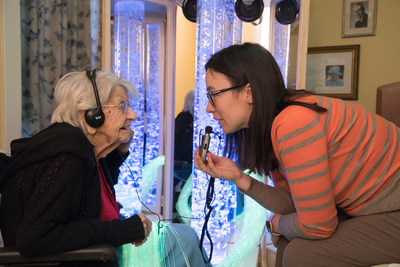
New results: Province-wide expansion of innovative program helps improve lives of New Brunswick seniors living with dementia
FREDERICTON, Feb. 5, 2019 /CNW/ - Today, the Canadian Foundation for Healthcare Improvement (CFHI), the New Brunswick Association of Nursing Homes (NBANH) and Government of New Brunswick have announced results of a successful province-wide expansion of person-centred dementia care to all 68 nursing homes organizations in New Brunswick. Over the two phases of the program, more than half of participating residents who were prescribed antipsychotics without a diagnosis of psychosis had these medications safely reduced or discontinued.
Through the New Brunswick Appropriate Use of Antipsychotics (AUA) Collaborative, which began in May 2016, nursing home staff identified residents who could benefit from non-drug therapies to treat symptoms related to dementia. Using a person-centred approach to care, staff engaged residents and their families in developing approaches to care that reflect the resident's preferences and that ensure the resident feels safe and comfortable. This included offering therapies and recreational activities that are meaningful and enjoyable, like exercise, pet or music therapy.
Final results of the initiative included:
52 percent of residents who were prescribed antipsychotic medication but did not have a psychosis diagnosis* had their medication reduced or discontinued (34 percent discontinued, and 18 percent reduced dose) and,
No increase in aggressive behaviours among these residents, such as resistance to care, and physically or verbally abusive behaviours.
Over half a million Canadians live with dementia, with 25,000 new cases diagnosed every year. Antipsychotic medications are often prescribed to help manage symptoms related to dementia, such as agitation and aggression. However, there is a lack of evidence to support their effectiveness for this purpose and a risk that they can cause significant side effects such as confusion, dizziness and stroke. By reducing the inappropriate use antipsychotics, residents in long term care tend to be better able to eat independently, and are more wakeful, which benefits residents, families, and staff.
Rates of potentially inappropriate antipsychotic use to manage symptoms of dementia continue to fall across Canada thanks to the efforts of providers, provincial health quality councils, associations, governments and many others in New Brunswick and elsewhere who are expanding appropriate use of antipsychotics programs. In 2013-2014, about 1 in 3 (30 percent) long term care residents who did not have a psychosis diagnosis was prescribed an antipsychotic. By 2017-2018, that number had dropped to 1 in 5 (21 percent).
*Of those still participating in the program at the end of Phase 1 and Phase 2.
Since 2014, CFHI has supported 191 long term care organizations from across Canada to improve the appropriate use of antipsychotic medication and the quality of life for residents through a pan-Canadian collaboration, as well as major provincial scale collaborations in New Brunswick, Quebec, Newfoundland and Labrador, and Prince Edward Island.
Quick facts
84 percent of program participants had Alzheimer's or other dementia
62 per cent of residents were female and 38 percent were male
The average age of participating residents was 85
Quotes
"The Government of Canada is pleased to support CFHI's evidence-based approach to ensuring the appropriate use of prescription antipsychotic drugs for seniors, especially those living in nursing homes," said the Honourable Ginette Petitpas Taylor, federal Minister of Health. "This innovative program demonstrates how focusing on person-centered care can improve the lives of Canadians with dementia, as well as the lives of their families and loved ones."
"We're delighted to celebrate New Brunswick's leadership in improving care of people living with dementia. Residents, along with their families, nursing home staff, and other partners are working together to spread proven approaches to care that promote appropriate medication use," said Jennifer Zelmer, President and CEO of CFHI. "The results show clearly that these efforts are improving care and quality of life in nursing homes across the province."
"We are extremely pleased to have played a supporting role with CFHI and the Government of New Brunswick in bringing this innovation opportunity to New Brunswick Nursing Homes," said Jodi Hall, Executive Director of the New Brunswick Association of Nursing Homes. "The nursing home teams fully embraced the process for this care improvement, and we congratulate them on their leadership and staff commitment. It is very exciting to see the residents experience an improved quality of life."
About the Canadian Foundation for Healthcare Improvement CFHI works shoulder-to-shoulder with partners to identify proven innovations and accelerate their spread across Canada, improving patient care, the health of everyone in Canada and value-for-money. CFHI is a not-for-profit organization funded by Health Canada. Visit cfhi-fcass.ca for more information.
About the New Brunswick Association of Nursing Homes Leading excellence in long term care, the mission of the New Brunswick Association of Nursing Homes is to lead member homes through a united voice by advocating excellence in long term care and service delivery in New Brunswick.
The views expressed herein do not necessarily represent the views of Health Canada.
SOURCE Canadian Foundation for Healthcare Improvement
How to Get Back to the Gym When Suffering from Bronchitis
Bronchitis can be a nasty illness. It can be awful to experience incessant coughing, congestion, and breathing difficulties. If you’re dealing with a bout of bronchitis, your goal should be to get back to normal as soon as possible. If you look after yourself well, you can return to your workout sessions after a reasonable amount of time has passed. Proper healing should always be your number one aim.
Pamper Yourself for a While
Refrain from the urge to hit the gym until you’re recovered fully from bronchitis. Going back to the gym prematurely may actually inhibit the full healing process. If you want to recover perfectly, then you need to pamper yourself for a while. Rest at home. Eat a good and healthy diet. Avoid overexerting yourself and tiring your body out.
Ask Your Doctor for Feedback
If you have bronchitis, then you need to seek treatment from a doctor. Speak with your doctor about your workout objectives. Ask him or her when he thinks you should be able to resume your typical workout duties. Be sure to take his or her guidance, too. Going back to the gym before you’ve healed properly can only be detrimental to you and to your well-being. If you feel awful, your workout sessions won’t be too effective, either.
Get Tips from Other Workout Buffs
Most workout buffs have experienced sicknesses such as bronchitis at some point. If you want to get back on track, you should reach out to a workout enthusiast who truly knows what he or she is doing. Request tips about suitable timelines for getting back to working out. Tried and tested exercise lovers may be able to help you make a timeframe choices that’s sound and that makes complete sense.
Head to an Urgent Care Clinic
Bronchitis symptoms can feel practically unbearable at times. If you want to manage bronchitis discomfort, heading to an urgent care cliniccan give you a lot of relief. It can also give you the opportunity to get suggestions from capable and experienced doctors and healthcare professionals in general. Request counsel from the clinic’s doctors and nurses with regard to suitable exercise options for people who are recovering from bronchitis.
Working out is a vital part of staying healthy. Proper recovery, however, is something that calls for a certain amount of time. Rushing back into workouts is never optimal. Time is an undeniable recovery asset.
YOUR MOST EMBARRASSING HEALTH QUESTIONS ANSWERED BY A NEW YORK INTERNIST AND GASTROENTEROLOGIST
Many conditions like cancer and diabetes are difficult to talk about with your doctor because of the burden of these diseases and the hardship of the symptoms and treatment. Other ailments are just plain embarrassing. Not to worry, you are not alone in feeling bashful about certain issues you may be experiencing. The good news is, most of these embarrassing conditions are not life threatening and if you have the courage to speak to your doctor, “you will find that your doctor is trained to talk about sensitive issues in a manner that is both considerate and informative,” says New York Based Internist and Gastroenterologist, Dr. Niket Sonpal.
While you are still working up the courage to make an appointment with your doctor, here are the top 5 embarrassing questions you may have with insight from our expert.
1.I’m still young and I get hemorrhoids. Why is this happening and what can I do?
Though hemorrhoids are more prevalent in adults 40 - 65 years old, young people may still have symptoms associated with hemorrhoids. It is estimated that 75% of the population gets them at some point. Hemorrhoids are common and usually not life-threatening. “What you need to keep in mind is that Hemorrhoids are a symptom of a variety of conditions,” says Dr. Sonpal. “Observe your symptoms and report to your doctor what you feel. Especially in the case of extreme rectal bleeding, lower stomach pain, and unexpected weight loss. These are all symptoms of a more serious condition like colon or rectal cancer, which is most common in people over 40.
2.I have a cold sore on my mouth, if I perform oral sex on my partner will I transmit to them?
“Yes, it is possible and common for someone with oral herpes to unknowingly transmit the virus to their sexual partner through oral sex,” explains Dr. Sonpal. Using protection is the safest way to prevent this from happening even during oral sex. Herpes is transmitted through skin contact so barriers like condoms are effective in reducing the risk to your partner. Usually, people are more cautious about unplanned pregnancies and diseases transmitted through fluids than they are about oral sex and it’s common for them to have oral sex without condoms. This can lead to, not just the transmission of herpes but other viruses like the previously mentioned HPV. Dr. Sonpal’s advice is to stay tested and don’t be afraid to ask your doctor for the pertinent exams if you know you’ve been exposed.
3.Why is my stool green?
Dr. Sonpal explains that, “It can be jarring for people when they experience it the first time but it is rarely related to anything serious. Green is under the umbrella of acceptable stool colors. Most commonly stool will be brown but depending on what you eat you may have occasions where the volume of vegetables you eat affect the color of your poop due to the chlorophyll.”
Other causes can be food coloring, “Children are often exposed to the experience sooner or later because of cereals. Some kids think it’s cool. This is not related to something serious,” says Dr. Sonpal.
Other causes could be medications, coffee, alcohol, and spicy foods. Dr. Sonpal elaborates that if the green stool is not accompanied by diarrhea, nausea, or pain, which could indicate food poisoning, then you shouldn’t worry too much about it.
4.Why am I gassier during my period?
Studies have shown that high percentages of women, with and without Irritable Bowel Syndrome (IBS), complain about increased gas and bloating during their menstruation. “Your body’s hormones are acting up and you may be more sensitive to certain foods than normal,” explains Dr. Sonpal. He recommends avoiding foods high in fiber. These foods tend to increase the bloating as they are meant to keep you full for longer. “If you live a sedentary lifestyle your digestive system might already be slow. Don’t skip out your fitness routine or your late afternoon walk as it can be a key part of keeping your digestive system working during your period, says Dr. Sonpal. He also recommends cutting off the sugary and carbonated drinks which increase the bloat.
5.I’m young, why am I having the constant urge to go urinate throughout the day and most of all at night?
This is a tough subject for many people. For older people, it is a sign of aging and they see it as such. The stigma of urinary incontinence keeps them from speaking to their doctors about it until the problem gets out of their control completely. For young people, experiencing urinary incontinence or hyperactive bladder is shocking. We grow up not realizing that these types of issues can affect people at a younger age. Urinary incontinence most commonly affects women and people over 40 but it is totally possible that a person in their 20’s can be dealing with this issue.
6.I’m a woman- why do I have hair on my nipples?
Dr. Sonpal states that, “Hairy nipples are normal for women. Seeing black, wiry hairs growing around the areolas can be surprising, but you’re not alone. The percentage of women who have hairy nipples is unclear, and many women don’t report it to their doctor.
In most cases, hairy nipples aren’t cause for concern. For most people, they’re a normal part of bodily changes.” You don’t need to remove the dark hairs around your nipples. They won’t cause any issues. However, you can remove them for aesthetic reasons if you choose. Several treatment options may help. One can choose laser hair removal, electrolysis, waxing, trimming etc. Speak with your doctor about what is safest.
7.Is it supposed to smell “down there?”
“Your vagina and its discharge should have a smell, but it shouldn’t be a bad smell and you shouldn’t be able to smell it from a distance,” says Dr. Sonpal. He adds, “Vaginal discharge and smells are dependent upon hormonal changes, mood changes, hygiene habits, sexual activity, physical activity and clothing.” If you’re sweating or you’ve recently had sex, you may notice an odor, but it’s normally nothing to worry about. However, if you experience odor plus itching, burning or irritation, it might be a treatable vaginal infection like bacterial vaginosis or the STI trichomoniasis. “Don’t douche,” cautions Dr. Sonpal. That will just remove the healthy bacteria your body needs to naturally clean your vagina.
About Dr. Niket Sonpal: Dr. Niket Sonpal is an Adjunct Assistant Professor at Touro College of Osteopathic Medicine and Clinical instructor at Kingsbrook Jewish Medical Center, Brooklyn who specializes in Gastroenterology. He is a graduate of the Medical University of Silesia – Hope Medical Institute in Poland. After completing his residency in Internal Medicine at Lenox Hill Hospital, he was selected to be the 2013‐2014 Chief Resident at Lenox Hill Hospital–Northshore LIJ Health System. Dr. Sonpal has completed his Fellowship in Gastroenterology & Hepatology at Lenox Hill Hospital and continues his work in the field of medical student and resident test preparation. He now serves as the associate program director for the Internal Medicine Residency Program at Brookdale University medical center.
He is the co‐author for the best-selling Master the Boards: USMLE Step 2 CK, Master the Boards Step 3, And Master the Boards: Internal Medicine. He is also the Chief Operating Officer for Medquest Test Prep, Director of Medical Education for Picmonic Test Prep, and a recognized expert on medical test prep.
World Cancer Day: Celebration of cross-Canada support for modernized cancer strategy
TORONTO, Feb. 4, 2019 /CNW/ - The Canadian Partnership Against Cancer (the Partnership) is joining with organizations across the world to mark World Cancer Day 2019 and thanking Canadians for their recent input to modernize the Canadian Strategy for Cancer Control (the Strategy).
This year's World Cancer Day, an initiative of the Union for International Cancer Control (UICC), marks the launch of a new, three-year campaign, "I Am and I Will", offering an empowering call to action that urges personal commitment to cancer control and represents the power of individual action to reduce the impact of cancer for ourselves, the people we love, and the world.
Musicians from around the world are showing their support for this year's campaign in videos released today. Shawn Mendes, Canadian Grammy-nominated artist, said: "I am Shawn Mendes and I will use my voice for a positive change. Who are you and what will you do this World Cancer Day?"
Cancer remains the leading cause of death in Canada,i with one in two Canadians developing cancer in their lifetime.ii Canada has made considerable progress since the Strategy was launched in 2006, but the cancer system faces new and pressing challenges to meet the growing need for cancer services.
The Partnership recently led broad consultations in all provinces and territories, both in-person and online, with the cancer control community, cancer patients and their families, First Nations, Inuit and Métis and the general public in urban and rural communities to explore opportunities to improve how Canada prevents and treats cancer for all and ensure Canada remains a leader in delivering high-quality cancer care.
Nearly 7,500 Canadians provided their advice to the Partnership by taking #30MinutesThatMatter and completing the Choicebook or participating in in-person consultations. The campaign was an example of the World Cancer Day theme of individual action having a larger impact by shaping Canada's future approach to reducing the burden of cancer.
The initial results of the consultation reaffirm strong support for a pan-Canadian cancer strategy and call for a stronger plan to achieve improved equity, access and integration of patient care throughout the cancer journey. With the information and insight gathered and lessons from international successes, the Partnership will identify key themes from the consultations and priority areas where a Canada-wide strategy will help address the more urgent cancer control issues.
The modernized Canadian Strategy for Cancer Control will be delivered to the federal Minister of Health and Canadians in May 2019. With the shared commitment of all levels of government to meaningful change, the Partnership will translate that Strategy into practice and system delivery change with our partners.
Quotes
"We appreciate the time Canadians from coast-to-coast-to-coast have given us over the past few months, as we look to modernize the Strategy. It was a historic effort that will have a lasting impact. We are excited to share the modernized Strategy along with the full results of the consultation, our expert advice and international best practices with the Minister of Health and all Canadians." Cindy Morton, CEO, Canadian Partnership Against Cancer
About World Cancer Day 2019 World Cancer Day takes place every year on February 4 and is the single initiative that allows the world to unite to raise the profile of cancer in a positive and inspiring way.
Coordinated by UICC, World Cancer Day is this year taking place under the tagline "I Am and I Will" and celebrates the power of individual action to reduce the global burden of cancer. World Cancer Day is a chance to reflect on what you can do, pledge your support, and take action against cancer.
This year, World Cancer Day will be recognized across Canada with the following landmarks lit in orange and blue on February 4, 2019:
Calgary Tower in Calgary, Alberta
Canada Place Sails of Light in Vancouver, British Columbia
CN Tower in Toronto, Ontario
The Forks Winnipeg Sign in Winnipeg, Manitoba
Halifax City Hall in Halifax, Nova Scotia
High Level Bridge in Edmonton, Alberta
Newfoundland and Labrador Confederation Building in St. John's, Newfoundland
Niagara Falls in Niagara, Ontario
Olympic Cauldron at Jack Poole Plaza in Vancouver, British Columbia
About the Canadian Strategy for Cancer Control The Strategy serves as an important pan-Canadian framework to tackle difficult-to-solve challenges that require new solutions and to address the needs of diverse populations spread across Canada's provinces and territories. The Canadian Strategy for Cancer Control is more than a decade old. It was developed to create excellence and efficiencies across provincial and territorial health systems in managing this complex disease with more than 200 types, many risk factors, and continually advancing diagnostic technologies and treatments. Canada's Minister of Health called for modernizing the Canadian Strategy for Cancer Control so that it remains adaptive to, and reflective of, changes in technology and innovation, population demographics, the economy and the political climate.
About the Canadian Partnership Against Cancer The Canadian Partnership Against Cancer was created by the federal government in 2006 with funding from Health Canada to work with Canada's cancer community to reduce the incidence of cancer, lessen the likelihood of Canadians dying from cancer, and enhance the quality of life of those affected by cancer.
This work is guided by the 2006 Canadian Strategy for Cancer Control, which was developed by hundreds of healthcare and cancer leaders, patients and advocates. Today there is strong evidence that the Strategy is resulting in concrete and significant action by partners across the country to improve cancer control. Working together over the last decade, Canada has improved cancer survival rates, established screening programs, adopted exciting innovations and emerging research, standardized the collection of patient data and created one of the world's largest population health databases among many other advances.
About the Union for International Cancer Control (UICC) UICC is the largest international cancer-fighting organization, with over 1,000-member organizations across 160 countries representing the world's major cancer societies, ministries of health, research institutes, treatment centres and patient groups. The organization is dedicated to taking the lead in convening, capacity building and advocacy initiatives that unite the cancer community to reduce the global cancer burden, promote greater equity, and integrate cancer control into the world health and development agenda.
UICC and its multi-sectoral partners are committed to encouraging governments to look towards the implementation and scale-up of quality and sustainable programs that address the global burden of cancer and other noncommunicable diseases (NCDs). UICC is also a founding member of the NCD Alliance, a global civil society network that now represents almost 2,000 organizations in 170 countries. For more information, please visit: www.uicc.org
TRAIN IT RIGHT NEWSLETTER
Sign Up and get a free 7 day Train it Right HIIT Program!