|
|
|
|

|
|
|
|
|

|
|
|
|
|
|
|
|
|
TORONTO and CAMBRIDGE, MA, Aug. 22, 2018 /CNW/ - ProMIS Neurosciences, Inc. (TSX: PMN) (OTCQB: ARFXF), a biotechnology company focused on the discovery and development of antibody therapeutics selectively targeting toxic oligomers implicated in the development of neurodegenerative diseases, today announced that it will be featured as a presenting company at the 20th Annual Rodman & Renshaw Global Investment Conference, sponsored by H.C.Wainwright & Co. The conference is being held on September 4-6, 2018 at the St Regis New York Hotel in New York City.
Eugene Williams, Executive Chairman of ProMIS Neurosciences will provide a corporate overview in the Fontainebleau Foyer on Thursday, September 6, 2018, at 2:10 p.m. EDT, and will be available to participate in one-on-one meetings with investors who are registered to attend the conference.
If you are an institutional investor and would like to attend the Company's presentation please visit www.rodmanevents.com to register for the conference. Once your registration is confirmed, you will be able to log into the conference website to request a one-on-one meeting.
A live webcast of ProMIS' presentation may be accessed through the company website www.promisneurosciences.com, via this link and from the conference site at www.rodmanevents.com. Please log on to the webcast prior to the scheduled event to ensure adequate time for any software downloads that may be required. A replay of the webcast will be available on ProMIS' website following the presentation.
About ProMIS Neurosciences
ProMIS Neurosciences, Inc. is a development stage biotechnology company focused on discovering and developing antibody therapeutics selectively targeting toxic oligomers implicated in the development and progression of neurodegenerative diseases, in particular Alzheimer's disease (AD), amyotrophic lateral sclerosis (ALS) and Parkinson's disease (PD). The Company's proprietary target discovery engine is based on the use of two complementary techniques. The Company applies its thermodynamic, computational discovery platform — ProMIS™ and Collective Coordinates — to predict novel targets known as Disease Specific Epitopes on the molecular surface of misfolded proteins. Using this unique precision medicine approach, the Company is developing novel antibody therapeutics for AD, ALS and PD. ProMIS is headquartered in Toronto, Ontario, with offices in Cambridge, Massachusetts. ProMIS is listed on the Toronto Stock Exchange under the symbol PMN, and on the OTCQB Venture Market under the symbol ARFXF.
For further information please visit us at: www.promisneurosciences.com
SOURCE ProMIS Neurosciences Inc.
ATLANTA, GA, Aug. 22, 2018 /CNW/ - For people suffering from severe depression, the road to remission just became a lot shorter: The treatment is known as Transcranial Magnetic Stimulation (TMS), and MagVenture has now, as the only TMS provider in the US, received FDA clearance for a newer and much faster treatment protocol which will cut down treatment time to just 3 minutes per session*. Before that, the required treatment time per session was up to 37 minutes.
(Photo: https://mma.prnewswire.com/media/733551/Picture_magventure.jpg )
TMS has been FDA cleared for treatment-resistant major depressive disorder since 2008. Since then, over 1,000 psychiatric clinics have emerged in the US. Most private health insurance companies also cover the treatment. The relatively long treatment sessions have, however, not only limited the treatment capacity for TMS practices but also hindered a more widespread dissemination. Until now, each session has been up to 37 minutes long, with 20-30 sessions needed in total. The new treatment form, which is known as Theta Burst Stimulation (TBS), offers one significant advantage: Time. A TBS treatment session lasts only 3 minutes and thus has the potential to revolutionize the clinical field of TMS.
"We have named it "Express TMS[®]" because that's what it is: a treatment which is just as safe and effective for the treatment of depression as conventional TMS, only much, much faster. We are happy and proud to be the first in the US to receive an FDA clearance for this revolutionary treatment which is backed up by substantial scientific evidence. Our current treatment system, MagVenture TMS Therapy, can easily be upgraded with the new Express TMS option. This will enable our many customers to treat far more patients per day without having to invest in another TMS device. For people needing treatment, this will also be a huge benefit, as treatment will now take up less of their time," says Kerry Rome, Vice President of Sales, MagVenture Inc.
The new FDA cleared treatment protocol, currently only offered by MagVenture, is based on a new clinical study, named the THREE-D trial, and led by a partnership of three leading research hospitals in Canada (CAMH, UHN, and UBC). It is the largest, double-blinded, randomized TMS trial to date, with 414 participants suffering from major depressive disorder. Response/remission rates were 33% for those receiving the TBS protocol, whereas 50% had an improvement in their depressive symptoms. These rates are similar to the standard, longer TMS protocol. The article was published in The Lancet in 2018.
What is TMS?
Transcranial Magnetic Stimulation, or TMS, is an effective, non-invasive alternative for the large number of patients not responding to medication. It does not require anesthesia - and is not to be confused with ECT (Electro Convulsive Therapy).
MagVenture TMS Therapy delivers magnetic pulses to stimulate nerve cells in the part of the brain controlling the mood. The rapid change in the magnetic field induces a current, and if the current induced is of sufficient amplitude and duration, it will excite neurons.
Both TMS and TBS are based on these principles. The difference lies in the way the magnetic pulses are delivered.
MagVenture is the only company with an FDA cleared Theta Burst solution for the treatment of depression, "Express TMS"®.
MagVenture's FDA clearance: *The MagVita TMS Therapy system is indicated for the treatment of Major Depressive Disorder in adult patients who have failed to receive satisfactory improvement from prior antidepressant medication in the current episode.
FDA clearance
MagVenture is a Danish medical device company, established in 2007, specializing in non-invasive magnetic stimulation systems for the treatment of major depressive disorder. As we are founded in research, we have collaborations with most of the leading TMS researchers in the world, in the areas of neurophysiology, neurology, cognitive neuroscience, rehabilitation and psychiatry.
Our advanced series of coils and magnetic stimulators are sold on the world market through direct sales subsidiaries in Germany, the UK and the USA, and through a global network of distributors in Europe, Asia, Middle East and the Americas.
SOURCE MagVenture, Inc
Powerful Story Shares One Woman's Struggle To Overcome Abandonment And Abuse
Raleigh, NC, August 21, 2018 ― Deja' was dealt a losing hand, and no one would have blamed her for simply accepting her fate. Her father died before she was born, and her mother chose drug addiction over her daughter. With loneliness consuming her, Deja' could have folded. Should have folded. But instead, she learned how to recycle her pain, and she began drawing from every source of positive influence that entered her life: a God-loving grandmother, a supportive godmother and a street-savvy godfather who taught her how to redirect her pain and survive in this world.
But the challenges just kept coming, and Deja' encountered countless betrayals and abuses along the way, which lead to an unhealthy marriage, and ultimately, a pattern of unhealthy relationships with men that lasted for several years. Aware that she is repeating a family cycle of poor choices, Deja' needs to rally what's left of her strength and determination to break that cycle. Will her fortitude be enough? Or will this final test break her spirit once and for all?
Overcoming the Hand You Were Dealt is the powerful new book from Kisha Taylor. Cultivated from her personal experience with abandonment, Overcoming weaves an authentic and captivating story of struggle, pain, hope and faith that culminates in a heartwarming climax of healing and restoration.
In addition to the book, Taylor's website, lifeunlimited1.com, enables her to continue her passion for women's emotional health, with courses that tap into the warrior in every woman, that cover abandonment issues and that help survivors understand why they act and feel the way they do. The website also houses inspirational items like T-shirts and mugs with messages of empowerment, and a blog with videos and messages of encouragement.
Author Kisha Taylor was born in Brooklyn, NY, and from a young age, she learned how to navigate the real world of hard knocks. She attended Binghamton University and Baruch College, where she studied accounting and psychology. She became counsel to many, sharing principles on surviving abuse, overcoming life's challenges, healthy ways of handling personal mistakes and how to not surrender to self-defeat.
She is most proud of the lives her journey has impacted, as well as the happiness, confidence and emotional health she now has, which enables her to be a testament of, "You can, if you just don't give up.”
To read more from Taylor, or to view her motivational videos, please visit www.lifeunlimited1.com.
Overcoming the Hand You Were Dealt
Pendium publishing
Release date: February 5, 2018
ISBN-10: 1944348409
ISBN-13: 978-1944348403
Available at www.lifeunlimited1.com, Amazon.com, and all other online outlets.
Excerpts from Reviews:
"… Every woman can relate to the situations in this book.”
"… Anyone that reads it would benefit from it. … It's definitely a self-help book.”
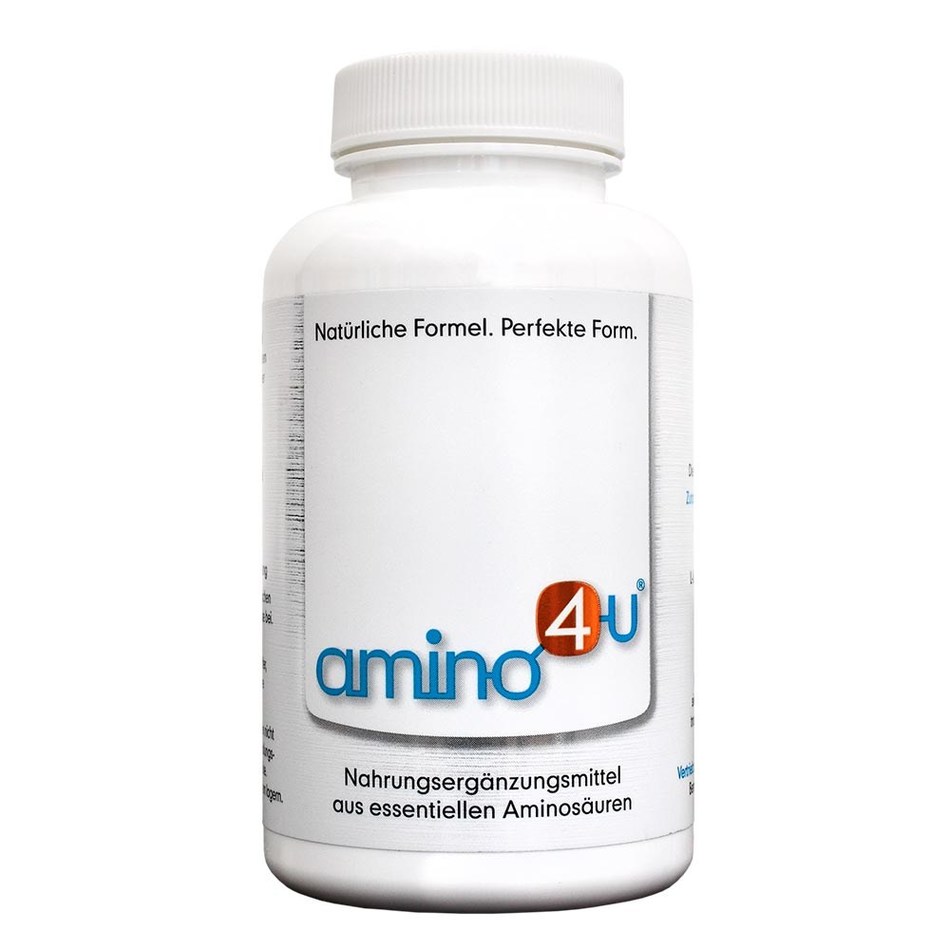
BOCA RATON, Fla., July 24, 2018 /PRNewswire/ -- German-based Sveru Sport is bringing its vegan-friendly Amino4u capsules and homogenous powder supplements that contain all eight essential amino acids to e-commerce site www.vitabeauti.com.
The body can't make all the essential amino acids it needs so Amino4u has made it easy to get your body what it needs with vegan amino powder and capsules. Amino acids are necessary for functions including repairing tissue, removing waste deposits in the body's metabolic process and other processes which benefit muscle, bone, skin and hair health.
"Amino acids are crucial to movement, strength and agility," Sveru Sport CEO Sven Rueprich said. "They are the building blocks of protein, and proteins are involved with almost all biological functions. They are also a major component of cells, muscles and tissues. So, whether you are an athlete looking for gains, someone wanting to make their hair stronger or just looking for better nutrition, Amino4u is an easy solution."
These amino acids are in the cleanest, purest form, without binders or other additives. The supplements are also suitable for people with gastrointestinal and insulin problems, including diabetics who require Arginine to increase insulin sensitivity.
It's also easy on the digestive tract. "Amino4u guarantees easy digestion, without any pain or bloating feeling, due to its design with split aminos," added Rueprich."
Both Amino4u powder and capsules are hypoallergenic. The supplements take just 23 minutes to fully enter the bloodstream, where it begins to produce regenerative effects.
For more information on Sveru Sport and Amino4u products, visit www.amino4u.de/en/.
Simplify back-to-school season meal planning with Avocados from Mexico
|
||
|
Conference Board of Canada reports calories are down from non-alcoholic beverages consumed by Canadians across all ages and regions.
TORONTO, Aug. 21, 2018 /CNW/ - The Canadian beverage industry's Balance Calories Initiative is helping to reduce the calories consumed from beverages across all ages and regions according to The Conference Board of Canada newest report – Counting the Calories. The report looks deeper into consumption rates of non-alcoholic beverages based on Statistics Canada's latest Canadian Community Health Survey – Nutrition Survey data. A collaboration between StatsCan, Health Canada and provincial health ministries, the Canadian Community Health Survey is the largest Canadian government survey to assess what Canadians are eating and drinking.

As leaders in innovation in the beverage sector, CBA members are working to help reduce the number of calories that Canadians consume from non-alcoholic beverages by reducing sugars in recipes, introducing smaller portion sizes and providing more low and no-calorie beverage options.
Report highlights:
"This report helps to dispel persistent myths about over-consumption of non-alcoholic beverages by Canadians," said Jim Goetz, President of the CBA. "Children, obese/overweight persons and Canadians as a whole are seeing reductions in the calories they are consuming from beverages – our industry is doing our part to address the portion of calories we represent, but, it is clear a holistic approach to the diet of Canadians is needed to continue to support better health outcomes."
About the Balance Calories Initiative:
Balance Calories Initiative (BCI) -- a voluntary initiative by members of the Canadian Beverage Association -- was launched in 2015 with the goal of reducing calories consumed from non-alcoholic beverages per capita/per day by 20% by 2025. In just three years, the initiative is more than half-way (10.2%) to its goal of 20%.
The Canadian beverage industry has a successful track record of leading voluntary initiatives. They include: voluntarily restricting marketing to children; eliminating full-calorie soft drinks from schools; and implementing front-of-pack calorie labeling, an initiative known as Clear on Calories.
The Conference Board of Canada, an evidence-based, action-oriented research organization with a non-partisan perspective, has partnered with Canadian Beverage Association and its members to benchmark and verify progress of this program.
SOURCE Canadian Beverage Association
TORONTO, Aug. 21, 2018 /CNW/ - Carrot Rewards — the world's first public engagement platform that rewards users for making healthier lifestyle choices — is thrilled to announce that its almost one million registered app users across Ontario, British Columbia and Newfoundland have tracked a combined one trillion steps on the Carrot Rewards platform since its launch in June 2016. That's equivalent to 18,000 walking trips around the earth!
In turn, Carrot Rewards' fiercely loyal and highly engaged users have earned 1.5 billion free rewards points from their favourite loyalty programs including Aeroplan® Miles, SCENE® Points, Petro-Points, More Rewards® Points, Drop points and RBC Rewards points — perks that are equivalent to 600,000 free movie tickets and much more.
"We are thrilled to see the impact that Carrot is having in the lives of Canadians. Half of our users engage with us every single day to learn more about improving their health and wellness, and our users walk 20% more within their first six months on Carrot," said Andreas Souvaliotis, Founder and CEO of Carrot Rewards.
This announcement comes as Carrot Rewards prepares to make the free platform available across the rest of Canada on November 1, 2018. Currently the popular app has 12% penetration in downtown Toronto, 10% penetration in Newfoundland and Labrador and 8% penetration in Vancouver. The company also recently launched several new app features, completed a landmark campaign with Health Canada in light of heat warnings in British Columbia, and sent six lucky Carrot Rewards users on trips across Canada as part of its Step into Summer contest.
About Carrot Rewards
Powered by AI, Carrot Rewards harnesses the power of mobile technology, Canada's favourite loyalty rewards programs and behavioural science to educate and motivate users towards healthier choices for themselves, their families and the planet. Carrot Rewards users earn their choice of rewards — including Aeroplan® Miles, SCENE® Points, Petro-Points, More Rewards® Points, Drop points and RBC Rewards points — every time they meet daily step goals, group activity challenges or complete quizzes and calls-to-action about health and wellness. Carrot's partners including the Public Health Agency of Canada, Health Canada, SickKids, Toronto Public Health, BC Cancer and Heart and Stroke Foundation of Canada earn the power to influence consumer behaviour by educating an engaged and attentive audience.
Currently available in Ontario, British Columbia and Newfoundland, Carrot Rewards users have tracked one trillion steps and completed 25 million healthy lifestyle and micro-learning quizzes and surveys. In return, users have earned 1.5 billion rewards points.
For more information, please visit: www.carrotapp.com
Twitter & Instagram: @carrot_rewards
Facebook: /carrotrewards
Available for interviews:
Andreas Souvaliotis, Founder and CEO, Carrot Rewards
Lorne Solway, Chief Marketing and Strategy Officer, Carrot Rewards

SOURCE Carrot Rewards
|
||||||||
TSX: PMN; OTCQB: ARFXF
Lack of PMN310 binding to amyloid deposits in Alzheimer's brain tissue may eliminate dose-limiting brain swelling seen with BAN2401 and aducanumab
TORONTO, and CAMBRIDGE, MA, Aug. 21, 2018 /CNW/ - ProMIS Neurosciences, Inc. (TSX: PMN; OTCQB: ARFXF), a biotechnology company focused on the discovery and development of antibody therapeutics selectively targeting toxic oligomers implicated in the development of neurodegenerative diseases, today announced that its lead antibody candidate for Alzheimer's disease (AD), PMN310, showed no binding to amyloid beta (Aß) plaque in AD brain samples in stark contrast to BAN2401 and aducanumab which both displayed robust Aß plaque reactivity. These findings extend the results ProMIS announced in January 2018, showing greater selectivity of PMN310 for Aß oligomers compared to aducanumab. Binding of therapeutic antibodies to Aß deposits in brain tissue, in particular blood vessels, is believed to underlie the development of ARIA (amyloid-related imaging abnormalities; brain swelling and microhemorrhages) in treated AD patients.
Commenting on these results, ProMIS President and CEO, Elliot Goldstein, MD, stated: "PMN310 was designed to selectively target soluble toxic Aß oligomers, now widely believed to be a root cause of AD. By not targeting Aß plaque, especially in and around blood vessels in the brain, we anticipate PMN310 may not be associated with the dose-limiting brain swelling seen with plaque-binding antibody therapeutics like BAN2401 and aducanumab. Confirmation of such an improved safety profile in clinical trials would allow for administration of higher doses to AD patients, thereby potentially leading to greater therapeutic potency of PMN310."
The binding profile of PMN310 in human AD brain tissues was directly compared to that of BAN2401 and aducanumab in a preclinical study using the technique of immunohistochemistry (IHC). Results of the study showed binding of BAN2401 and aducanumab to Aß plaque throughout the brain and in association with blood vessels. Conversely, binding of PMN310 to Aß plaque was not observed in any region of the AD brain tissues.
BAN2401 (Esai/Biogen) and aducanumab (Biogen) appear to target both Aß plaque and soluble Aß oligomers. Recent clinical trials with both BAN2401 and aducanumab, reporting a dose-related response curve (i.e., higher doses enabling greater efficacy) support the targeting of Aß oligomers for the treatment of AD and at the same time indicate that treatment with antibodies also targeting Aß plaque is associated with dose-limiting brain swelling in a significant percentage of AD patients. We have shown in multiple preclinical studies that PMN310 has the advantage of selectively targeting toxic Aß oligomers, with no "off-target" binding to Aß plaque, potentially allowing for the safe administration of higher effective doses of PMN310 compared to BAN2401 or aducanumab.
According to Dr. Goldstein, "Although both BAN2401 and aducanumab have shown encouraging phase 2 clinical results, the greater selectivity and avoidance of plaque binding with PMN310 may confer significant advantages in the clinic supporting PMN310 as potential 'best in class' therapy."
IHC is the process of selectively imaging antigens (e.g. proteins) in cells of a tissue section by exploiting the principle of antibodies (such as PMN310, aducanumab, BAN2401) binding specifically to their antigen targets in biological tissues. In the study referred to above, IHC was used to assess binding of Aß-directed antibodies to Aßplaque in AD brain tissue.
About ProMIS Neurosciences
ProMIS Neurosciences, Inc. is a development stage biotechnology company focused on discovering and developing antibody therapeutics selectively targeting toxic oligomers implicated in the development and progression of neurodegenerative diseases, in particular Alzheimer's disease (AD), amyotrophic lateral sclerosis (ALS) and Parkinson's disease (PD). The Company's proprietary target discovery engine is based on the use of two complementary techniques. The Company applies its thermodynamic, computational discovery platform—ProMIS™ and Collective Coordinates — to predict novel targets known as Disease Specific Epitopes on the molecular surface of misfolded proteins. Using this unique precision medicine approach, the Company is developing novel antibody therapeutics for AD, ALS and PD. ProMIS is headquartered in Toronto, Ontario, with offices in Cambridge, Massachusetts. ProMIS is listed on the Toronto Stock Exchange under the symbol PMN, and on the OTCQB Venture Market under the symbol ARFXF.
For further information please consult the Company's website at: www.promisneurosciences.com
Follow us on Twitter
Like us on LinkedIn
The TSX has not reviewed and does not accept responsibility for the adequacy or accuracy of this release. This information release contains certain forward-looking information, including about the timing and completion of the Offering, the receipt of TSX approval and the expected use of proceeds from the Offering. Such information involves known and unknown risks, uncertainties and other factors that may cause actual results, performance or achievements to be materially different from those implied by statements herein, and therefore these statements should not be read as guarantees of future performance or results. All forward-looking statements are based on the Company's current beliefs as well as assumptions made by and information currently available to it as well as other factors. Readers are cautioned not to place undue reliance on these forward-looking statements, which speak only as of the date of this press release. Due to risks and uncertainties, including the risks and uncertainties identified by the Company in its public securities filings, actual events may differ materially from current expectations. The Company disclaims any intention or obligation to update or revise any forward-looking statements, whether as a result of new information, future events or otherwise.

Sign Up and get a free 7 day Train it Right HIIT Program!



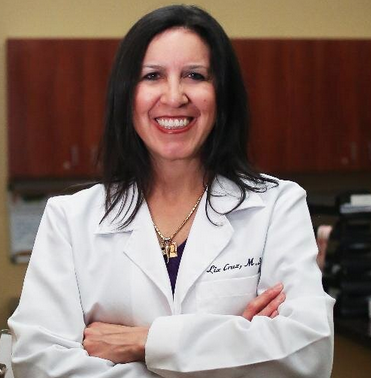 Dr. Liz Cruz is a gastroenterologist, an author, and (most importantly,) a parent of four children. She is the creator of wellness products designed to promote all-natural, holistic wellness. Cruz's products have received critical acclaim and are widely praised for effectively reducing the need for prescription medicine. Cruz is a Diplomat of the American Board of Internal Medicine and the American Board of Gastroenterology. She is a member of the American Gastroenterological Association and the American Society for Gastrointestinal Endoscopy.