Riders raise $1.83 million to support a judgment-free Canada and vital mental health programs and services


Thousands support Canadian Mental Health Association's 7th annual Ride Don't Hide

TORONTO, June 26, 2018 /CNW/ - On Sunday, more than 7,750 Canadians in 31 communities across the country cycled in the 7th annual Ride Don't Hide event, raising an estimated $1,830,000 for the Canadian Mental Health Association (CMHA).

The largest mental health bike ride in Canada, Ride Don't Hide raises much-needed funds for a variety of community mental health programs and services, and helps to eliminate the stigma of mental illness by inviting participants to "ride in plain sight."

"Accepting, understanding and talking about mental illness can help alleviate the pain of stigma and stereotypes," says Dr. Patrick Smith, national CEO, CMHA. "In order to thrive in life, we all need to feel hope, build resilience and a strong sense of connection and belonging, which the community spirit around Ride Don't Hide really fosters. Thank you for your incredible support."

The annual ride creates a safe, open community where individuals can talk about their mental health free of judgment.

"When I'm not mentally healthy, I'm not really living," says Neil Paterson, a three-year returning rider from Victoria, BC. "I'm 56, but I've only lived about 45 of those years. Ride Don't Hide has given me a place to try and pull a positive out of my own patchy mental health."

Ride Don't Hide started in 2010 after Michael Schratter, a Vancouver teacher who had experienced stigma while living with bipolar disorder, embarked on a 40,000 km ride around the globe for mental health.

"It occurred to me that, if approximately twenty per cent—or one in five—Canadians experienced a mental health issue in a given year, then where are those 7 million Canadians?" asked Schratter. "Stigma stops when we, the twenty per cent, reveal ourselves… mental illness is so common and so varied, it is nothing but an integral part of what it is to be human."

Seven years later, many high-profile Canadians are cycling or speaking up about mental illness as Ride Don't Hide ambassadors, including Olympic rower Silken Laumann, indie rock band the Elwins, Olympic hurdler Noelle Montcalm and 23-year-old Ryan Martin, cycling across Canada, and chronicling his experience online at www.mindcycle.ca and on Instagram @mindcycle_canada.

"It's not easy to talk about your struggles—it's nerve racking, it's the ultimate vulnerability, but it's also the most liberating and empowering thing you can do. Once you start opening up, you are slowly releasing the built-up pressure inside of you. Less pressure equals less suffering," says Martin.

Canadians can still donate to this year's Ride Don't Hide until July 31, 2018. They can do so in person at their local CMHA branch or region, or by visiting www.ridedonthide.com.

Ride Don't Hide returns next year on June 23rd, 2019. Follow @CMHANational on Facebook for more information about the event.

About Ride Don't Hide

Ride Don't Hide is the Canadian Mental Health Association's flagship fundraising campaign focused on reducing stigma and raising money for mental health. First launched with Michael Schratter's 40,000 km ride around the globe in 2010, the 7th annual Ride Don't Hide is a national event held on June 24th in 31 communities, across seven provinces, from Tofino, BC, to St. John's, NL. The Ride has raised $7.8 million in funding for mental health programs and services in communities across Canada. For more information, visit www.ridedonthide.com.

About the Canadian Mental Health Association

Founded in 1918, the Canadian Mental Health Association (CMHA) is the most established, most extensive community mental health organization in Canada. Through a presence in more than 330 communities across every province, CMHA provides advocacy, programs and resources that help to prevent mental health problems and illnesses, support recovery and resilience, and enable all Canadians to flourish and thrive. For more information, visit www.cmha.ca

SOURCE Canadian Mental Health Association

CARE Canada is Walking the Talk on Canada's Feminist International Assistance Policy


Launches "Feed Her Future" Awareness Campaign

OTTAWA, June 26, 2018 /CNW/ - Following a successful G7 Summit earlier this month, where gender equality and Canada's feminist international assistance policy were key points of discussion, CARE Canada and its partners are launching the "Feed Her Future" public awareness campaign. Today's launch also marks just under one-year to the Women Deliver Conference – the world's largest gathering on the health, rights, and wellbeing of women and girls, set to take place on June 3, 2019 in Vancouver.

"Feed Her Future" shows Canadians that CARE's gender and nutrition programming is an important example of Canadian aid projects that put women and girls first.

Over the past two years, CARE Canada and its project partners – Cuso International, the Interagency Coalition on AIDS and Development (ICAD), and McGill University – have been working directly with communities in Malawi, Mozambique and Zambia to improve the nutritional status of women and children. The project, known as the Southern African Nutrition Initiative, is funded by the Government of Canada and is shining the light on women and girls' access to proper nutrition as a basic human right.

CARE aims to reach over 575,000 individuals by working with women, men, healthcare providers and community volunteers in each of the project countries to foster an environment where women and girls can become champions of their own futures. This is the foundation of our gender transformative nutrition programming – we take a human rights approach to women and girls' right to food.

Gender inequality is a significant determinant of women's nutritional status and one of the key barriers to women exercising their right to food. Inequality determines who eats first, who eats last, whose right to food is protected, and whose right to food is discriminated. We have seen first-hand that providing health and nutrition education creates healthier individuals and stronger communities.

"The goal of the Feed Her Future campaign is simple: we want to raise awareness and engage with Canadians about the importance of giving women and girls access to proper nutrition – and everything that 'access to nutrition' entails," said CARE Canada's CEO Gillian Barth on behalf of all program partners. "Canadians feel a strong sense of pride in our ability to drive positive change at home and globally. It's because of Canadians that CARE is able to provide this dedicated programming to women and girls in in Malawi, Mozambique and Zambia."

"By seizing the global spotlight that comes with serving as host country, Canadians have a unique opportunity to power progress for girls and women at home and around the world. Women Deliver is thrilled to see so many individual Canadians and Canadian organizations stepping up for gender equality and the health, rights, and wellbeing of girls and women," said Katja Iversen, President/CEO of Women Deliver.

The Women Deliver Conference, to be hosted next June in Vancouver, will focus on accelerating progress for girls' and women's health matters, education, environment, political participation, economic empowerment, and access to resources; including nutrition. CARE looks forward to engaging in the discussion, to sharing our experiences, and highlighting best practices.

With the help of our partners, our teams on the ground, and the generosity of Canadians, our goal is to uncover the social and gender norms that are affecting women's access to nutrition so women and girls are empowered to create sustainable change. This is how Canadians can help to #FeedHerFuture.

Connect with us and join in the conversation @FeedHerFuture. Read, like, share and comment. To learn more about the Feed Her Future programming, visit us at www.FeedHerFuture.ca.

For the campaign backgrounder, please click here.

SOURCE CARE Canada

Substance Use in Canada Costs $38.4 Billion a Year - Alcohol and tobacco together cause the most harm-by a large margin


OTTAWA, June 26, 2018 /CNW/ - Substance use costs Canadian society $38.4 billion a year, or almost $1,100 for every person in Canada, according to a new study. Alcohol and tobacco use contributed over two thirds (70%) of these costs, with opioids ranked a distant third. These costs have been rising in recent years, especially for alcohol, opioids and cannabis.

Released today, the Canadian Substance Use Costs and Harms study was produced by the Canadian Centre on Substance Use and Addiction (CCSA) and the University of Victoria's Canadian Institute for Substance Use Research (CISUR). This comprehensive study examined the costs and harms associated with substance use. Estimates span four broad areas: health care, lost production, criminal justice and other direct costs, and cover a broad range of substances including alcohol, tobacco, cannabis, opioids and central nervous system (CNS) depressants, cocaine and CNS stimulants, and other substances such as hallucinogens and inhalants. The study provides national, provincial and territorial estimates for the cost and harms of substance use between 2007 and 2014—the latest year for which comprehensive data was available.

"Alcohol causes more substance use-related costs for Canadians than either tobacco or all other drugs combined. This is particularly the case when it comes to lost productivity due to premature deaths and disabling injuries," says Dr. Tim Stockwell, director of CISUR. "The alcohol industry has been extensively deregulated in Canada over the past decade. While we urgently need to address harms from opioid use, policymakers should not overlook critical policies needed to reduce harms from the legal substances we now take for granted."

Costs related to lost productivity amounted to $15.7 billion or 41 percent of the total, while healthcare costs were $11.1 billion or 29 percent of the total. The third highest contributor to total substance-related costs was criminal justice with a cost of $9.0 billion or 23 percent of the total.

"We are in a critical period for Canadian policy making about substance use, given the opioid crisis and the impending legalization of cannabis. These data provide evidence we can use to develop and evaluate the success of such substance use policies," says Dr. Matthew Young, senior research and policy analyst at CCSA and one of the principal investigators.

Drawing from a variety of national, provincial and territorial databases, the data will be updated annually to help inform decision makers, policy advisors and researchers. To view the full Canadian Substance Use Costs and Harms report, visit www.ccsa.ca.

Dr. Tim Stockwell, director of the University of Victoria's CISUR and a psychology professor at the University of Victoria, has published over 400 research papers, book chapters and monographs, as well as several books on the prevention and treatment of substance use issues. He worked in clinical and research work in the United Kingdom before spending 16 years with Australia's National Drug Research Institute as director. Stockwell received the 2013 E.M. Jellinek Memorial Award, an international prize for outstanding research on social, cultural and policy aspects of alcohol, as well as a 2014 Health Research Leadership Award from Research Canada on behalf of CISUR.

Dr. Matthew M. Young is a senior research and policy analyst at CCSA and an adjunct research professor of psychology at Carleton University. He leads CCSA's drug use epidemiology research activities. Young is a senior advisor on the Canadian Community Epidemiology Network on Drug Use (CCENDU) and the Student Drug Use Surveys Working Group, and leads CCSA's work on novel psychoactive substances.

The Canadian Centre on Substance Use and Addiction (CCSA) was created by Parliament to provide national leadership to address substance use in Canada. A trusted counsel, CCSA provides national guidance to decision makers by harnessing the power of research, curating knowledge and bringing together diverse perspectives. To learn more visit www.ccsa.ca.

The University of Victoria's Canadian Institute for Substance Use Research (CISUR; formerly the Centre for Addictions Research BC or CARBC) is a network of individuals and groups dedicated to the study of substance use and addiction in support of community-wide efforts to promote health and reduce harm. Their research is used to inform a broad range of projects, reports, publications and initiatives aimed at providing all Canadians and beyond with access to happier, healthier lives, whether using substances or not. To learn more visit www.uvic.ca/cisur.

CCSA was created by Parliament to provide national leadership to address substance use in Canada. A trusted counsel, we provide national guidance to decision makers by harnessing the power of research, curating knowledge and bringing together diverse perspectives.

CCSA activities and products are made possible through a financial contribution from Health Canada. The views of CCSA do not necessarily represent the views of the Government of Canada.


SOURCE Canadian Centre on Substance Use and Addiction

FDA APPROVED NON-SURGICAL BALLOON WEIGHT LOSS METHOD

HELPS PEOPLE SHED UP TO 50 POUNDS


Americans spend almost 60 billion dollars annually in pursuit of weight loss with gastric bypass surgery being the most common type of weight-loss surgery; an option that isn’t for everyone. Like any major procedure, gastric bypass has significant health risks and side effects. In addition, to be a candidate for the procedure, one must have a BMI (body mass index) of 40 or higher. The fact is, a huge percentage of the population are only between 15 to 50 pounds overweight without any other options besides diet and exercise.  Dr. Stanley Poulos, a San Francisco board certified plastic surgeon is an early adaptor of the non -surgical balloon weight loss method approved by the FDA in 2016. Following the two-part program, patients lost an average 3.1x the weight compared with diet & exercise alone.


Dr. Poulos stresses that, “there is a direct correlation between those patients who stay connected to their program and their weight loss success.” Dr. Poulos is highly experienced in body contour plastic surgery which is sometimes required after major weight loss. Sometimes, due to skin laxity after weight loss, procedures such as thigh lift, breast lift, liposuction or “tummy tuck” are desired by patients.


Who is an ideal candidate for the balloon weight loss method?

It is appropriate for patients with a BMI of 30 to 40 that have not had previous weight loss surgery. Patients diagnosed with bulimia, binge eating, compulsive overeating, high liquid calorie intake habits or similar eating related psychological disorders are not good candidates.


How does the balloon method work?

This non-surgical outpatient procedure begins with a diagnostic endoscopy to ensure that there are no contraindications and that it is safe to perform. Once the patient is mildly sedated and comfortable, the procedure can begin. The deflated gastric balloon is inserted through the esophagus and into the stomach. A syringe is then used to fill the balloon with a sterile saline solution. Once the weight loss balloon has been filled with saline, it expands to approximately the size of a grapefruit. The entire procedure takes about 20 minutes. Patients can usually return home after the placement or removal procedures within 30 minutes. Over the last 20 years this procedure has helped over 277,000 people. The gastric balloon encourages portion control while patients make healthy changes to diet and lifestyle.


How long does the balloon stay in place?

The balloon remains in the stomach for the first six months after the procedure. With the stomach balloon and Dr. Poulos’ support team, patients usually see the most drastic results in the first six months. It is very important to use this time to develop healthy habits that will continue for not only the 12-month weight loss program, but for the rest of one’s life.


What to expect after the balloon placement.

Over the first 14 days after placement, patients may experience nausea or vomiting. Dr. Poulos recommends a liquid diet for his patients during the first week to help manage these symptoms.  Also prescribed are effective anti-nausea drugs to help the patient through the initial stage.


How is the balloon removed?

Once the stomach balloon has been in place for six months the balloon is removed. The simple and non-surgical procedure is very similar to the placement process. Once the gastric balloon has been removed, it is very important to continue working closely with Dr. Poulos’ team and coaches to follow the personal diet and exercise plan provided. This will help to keep you in a positive and healthy mindset while achieving your weight loss goals.


Additional benefits of the balloon weight loss method.

ü  It’s been shown that the average person loses 3x more weight with this procedure than with diet and exercise alone. Here are some of the reasons why:

ü  Diets can leave you feeling hungry or dissatisfied. This procedure helps by taking up room in the stomach and encouraging portion control.

ü  When you’re overweight, exercise can be challenging and uncomfortable. With The Balloon Weight Loss Method aiding your weight loss, physical activity can be more comfortable.

ü  There are no incisions, stitches, or scars.

ü  Unlike gastric bypass surgery, this procedure is not solely for the morbidly obese.

ü  The procedure takes 20 minutes and most patients return home the same day.

ü  The balloon is only placed temporarily.

ü  The procedure is intended to work with a fitness and nutrition regimen for optimal results.


Cost: The general cost for the procedure is $8,000 to $10,000 nationwide and can be used with patients 22 and older who fit all of the medical criteria.


About Dr. Stanley Poulos

Dr. Poulos specializes in cosmetic breast surgery and body contouring procedures. He helped pioneer the quick lift facial rejuvenation surgery in California and is recognized as one of the leading plastic surgeons in Marin County and the entire San Francisco Bay area.  Dr. Poulos and Plastic Surgery Specialists have extensive experience in body contour procedures. A graduate of the University of Texas Medical School, Dr. Poulos completed his internship and residency at UC San Francisco. He completed a plastic surgery fellowship at St. Francis Hospital in San Francisco and is certified by the American Board of Plastic Surgery. www.psspecialists.com


An estimated $970,000 raised for charity at the 2018 Scotiabank Vancouver Half-Marathon and 5k


Kip Kangogo defends his title with seventh win in 10 races

VANCOUVER, June 24, 2018 /CNW/ - More than 6,700 people took part in the Scotiabank Vancouver Half-Marathon and 5k, raising an estimated $970,000 for 70 local charities through the Scotiabank Charity Challenge. This brings the grand total since 2007 to over $8 million.

"Thanks to the commitment of the Scotiabank Charity Challenge participants and the generosity and support of the people of Vancouver, we've seen our fundraising efforts make a meaningful impact in the community, year after year," said Larry Clements, District Vice President of Vancouver and Richmond District at Scotiabank. "Scotiabank's goal has always been to help create a better life for people in the communities we serve. That's why we're so excited to celebrate the 12th annual Scotiabank Charity Challenge during the Scotiabank Vancouver Half-Marathon and 5k."

Lethbridge Alberta's Kip Kangogo cruised to his seventh victory at the Scotiabank Vancouver Half-Marathon, while Vancouver's Dayna Pidhoresky had an impressive win over pre-race favourite Sasha Gollish.

Kangogo started out with an easy pace and took an early lead over a pack of eight runners at the eight kilometre mark. He extended his lead at Jericho beach and never looked back, clocking in at 1:07:24. He was able to hold on to the win by beating Vancouverite, Anthony Tomsich, who came in second with a time of 1:08:04. Calgary's Benard Onsare, who is coming off a lengthy injury, was third with a time of 1:09:37. Dayna Pidhoresky, who took the women's title with a time of 1:13:06, was able to hold off current series leader, Sasha Gollish with a time of 1:15:05. Cold Lake Alberta's Emily Setlack was third with a time of 1:16:46.

Scotiabank believes in helping young people reach their infinite potential, and many organizations who take part in the Scotiabank Charity Challenge have a direct impact on our local youth. Young people are our future leaders and Scotiabank aims to help provide them with the skills and resources they need to succeed. This year's top fundraising charity is Cassie & Friends, with 170 participants raising $215,000 to support juvenile arthritis and other rheumatic diseases.

The Scotiabank Charity Challenge is a turnkey fundraising program that provides a simple way for runners in these races to support local causes that make a significant impact on Canadian communities. Participating charities keep 100 per cent of the proceeds raised, as Scotiabank pays for all related transaction and credit card fees. Scotiabank offers the Scotiabank Charity Challenge at six sponsored marathon events across Canada including Montréal, Halifax, Ottawa, Calgary, Vancouver and Toronto.

Participants who raised $2,500 as part of the Scotiabank Charity Challenge will receive 1000 SCENE® Points. Learn how to take part in this offer.

2018 Scotiabank Vancouver Half-Marathon and 5k Results

Half-Marathon Results 

Half-Marathon Male

1. Kip Kangogo 1:07:24
2. Anthony Tomsich 1:08:04
3. Benard Onsare 1:09:37


Half-Marathon Female

1. Dayna Pidhoresky 1:13:06
2. Sasha Gollish 1:15:05
3. Emily Setlack 1:16:46


5k Results

5k Male

1. Mark Klassen 16:36
2. Thomas Ditchfield 16:57
3. Ricardo Escalante Carrillo 17:14


5k Female

1. Stephanie McGregor 19:19
2. Megan McPhee 20:13
3. Megan Watt 21:58


To see a list of charities involved in the Scotiabank Charity Challenge, please visit the Scotiabank Vancouver Half-Marathon and 5k website.

For more highlights and complete race results, please visit www.vancouverhalf.com.

Twitter and Instagram Hashtags: #ScotiaHalf #RunScotia #InfinitePotential

About the Scotiabank Vancouver Half-Marathon & 5k
The Scotiabank Vancouver Half-Marathon & 5k is organized by the Canada Running Series, the nation's premier running circuit with 7 events: 4 in Toronto, 2 in Vancouver and 1 in Montreal.  It annually attracts some 60,000 participants and raises more than $6 million for some 320 mostly-local charities.  The Series includes the IAAF Gold Label Scotiabank Toronto Waterfront Marathon, and the Athletics Canada National Marathon Championships. Since 1999, CRS has gained international recognition for innovation and organization.

We are passionately committed to staging great experiences for runners of all levels from Canadian Olympians and International stars, to healthy lifestyle people and charity runners; and to making sport part of sustainable communities and the city-building process.  Our mission is "building community through the sport of running."

About Scotiabank
Scotiabank is Canada's international bank and a leading financial services provider in North America, Latin America, the Caribbean and Central America, Europe and Asia-Pacific. We are dedicated to helping our 24 million customers become better off through a broad range of advice, products and services, including personal and commercial banking, wealth management and private banking, corporate and investment banking, and capital markets. With a team of more than 89,000 employees and assets of over $926 billion (as at April 30, 2018), Scotiabank trades on the Toronto (TSX: BNS) and New York Exchanges (NYSE: BNS). For more information, please visit www.scotiabank.com and follow us on Twitter @Scotiabank.

SOURCE Scotiabank

Major Operational Milestones for Spectrum Cannabis in Europe: Plants and Product on the Move


FRANKFURT, ODENSE, Denmark, PRAGUE and MADRID, June 25, 2018 /CNW/ - Canopy Growth Corporation (TSX: WEED) (NYSE: CGC) ("Canopy Growth" or the "Company") is pleased to provide an update on the operations of its European subsidiaries as the company continues its pursuit of sustainable market expansion, ranging from production and processing to distribution in federally legal European markets.

Successful clone transfer brings Spectrum Cannabis Denmark significantly closer to producing European-grown cannabis

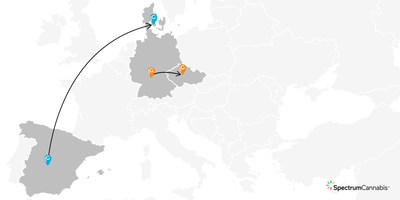
With the successful transfer of live cannabis clones from Madrid-based partner, Alcaliber SA ("Alcaliber") to Spectrum Cannabis Denmark ApS ("Spectrum Cannabis Denmark"), the Company continues its expansion in Europe. Soon, export from Canada to Europe will be replaced with European GMP production. With legal frameworks in place in the major economies of Germany and Italy, the Company is applying its proven strategy of investing early in best-in-class GMP production platforms to offer patients and regulators a reliable source of medical cannabis close to home.

Having sustainable regional production capacity sufficient to meet demand is core to the European strategy for Spectrum Cannabis and growing operations have now begun at the Company's greenhouse facility in Odense, Denmark.

First European Transfer Completed from Germany to the Czech Republic

Representing a significant step forward for European distribution capabilities, the Company has completed a transfer of high quality medical cannabis from Spektrum Cannabis Germany to Annabis Medical s.r.o., both wholly-owned subsidiaries of the Company.

In addition, as part of growing a consistent operation across Europe, the recently acquired Annabis Medical will be operating as Spectrum Cannabis Czech s.r.o. ("Spectrum Cannabis Czech").

Finalizing the product transfer only two months after acquiring Annabis speaks to the Company's desire to quickly serve new markets such as the Czech Republic, and cement its position in the minds of physicians and pharmacists as the preeminent cannabis producer operating within the European continent.

Comment on operations and strategic growth across Europe

"We have been and continue to be focused on being the medical cannabis leader in Europe, by bringing the expertise and credibility we have established in Canada to European markets," said Mark Zekulin, President, Canopy Growth. "These achievements involving four countries that are not Canada reflect our commitment to establishing a strong foundation in Europe, focused not only on high quality production but also medical education and a grounded dialogue about cannabis.''

In addition to its European operations, Spectrum Cannabis' established presence in Australia, South Africa, South America, and of course Canada, represent the world's largest and most diversified cannabis business.

Spectrum Cannabis - Medical Cannabis. Simplified. (Even if the operations are complex.)

About Canopy Growth Corporation
Canopy Growth is a world-leading diversified cannabis and hemp company, offering distinct brands and curated cannabis varieties in dried, oil and Softgel capsule forms. From product and process innovation to market execution, Canopy Growth is driven by a passion for leadership and a commitment to building a world-class cannabis company one product, site and country at a time.

Canopy Growth has established partnerships with leading sector names including cannabis icon Snoop Dogg, breeding legends DNA Genetics and Green House Seeds, and Fortune 500 alcohol leader Constellation Brands, to name but a few. Canopy Growth operates ten licensed cannabis production sites with over 2.4 million square feet of production capacity, including over 500,000 square feet of GMP-certified production space. The Company has operations in nine countries across five continents. The Company is proudly dedicated to educating healthcare practitioners, conducting robust clinical research, and furthering the public's understanding of cannabis. Through its partly owned subsidiary, Canopy Health Innovations, Canopy Growth has invested millions of dollars toward cutting edge, commercializable research and IP development. Through its partly owned subsidiary Canopy Rivers Corporation, the Company provides resources and investment to new market entrants in order to build a portfolio of stable investments in the sector. From our historic public listing on the Toronto Stock Exchange and New York Stock Exchange to our continued international expansion, pride in advancing shareholder value through leadership is engrained in all we do at Canopy Growth. For more information visit www.canopygrowth.com

About Spectrum Cannabis
Spectrum Cannabis, a wholly-owned subsidiary of Canopy Growth, is dedicated to simplifying medical cannabis for patients and healthcare practitioners. Spectrum Cannabis is an international medical business which interfaces with healthcare professionals and patients around the world. Founded in Canada, Spectrum Cannabis operates in Australia, South America, Africa and across Europe. Spectrum Cannabis products are available in a wide range of potencies and formats designed to simplify the dialogue around strength and dosage by applying a colour-coded Spectrum to categorize medical cannabis according to THC and CBD levels. Its product lineup includes whole flower cannabis, oils and new innovations such as Softgels. Through product simplification, easy dosing formats, its Compassionate Pricing Program, in addition to ongoing education of healthcare professionals, Spectrum is committed to improving the lives of medical cannabis patients around the globe.

Notice Regarding Forward Looking Statements
This news release contains "forward-looking statements" within the meaning of the United States Private Securities Litigation Reform Act of 1995 and "forward-looking information" within the meaning of applicable Canadian securities legislation. Often, but not always, forward-looking statements and information can be identified by the use of words such as "plans", "expects" or "does not expect", "is expected", "estimates", "intends", "anticipates" or "does not anticipate", or "believes", or variations of such words and phrases or state that certain actions, events or results "may", "could", "would", "might" or "will" be taken, occur or be achieved. Forward-looking statements or information involve known and unknown risks, uncertainties and other factors which may cause the actual results, performance or achievements of Canopy Growth or its subsidiaries to be materially different from any future results, performance or achievements expressed or implied by the forward-looking statements or information contained in this news release. Examples of such statements include "export from Canada will be replaced with European production", "having sustainable regional production capacity to meet demand is core to the European strategy for Spectrum Cannabis", and "product is fully approved and available following completion of all required control testing within the Czech Republic". Risks, uncertainties and other factors involved with forward-looking information could cause actual events, results, performance, prospects and opportunities to differ materially from those expressed or implied by such forward-looking information, including the successful cultivation of cannabis in Denmark, European medical cannabis regulations and such risks contained in the Company's annual information form dated June 28, 2017 and filed with Canadian securities regulators available on the Company's issuer profile on SEDAR at www.sedar.com. Although the Company believes that the assumptions and factors used in preparing the forward-looking information or forward-looking statements in this news release are reasonable, undue reliance should not be placed on such information and no assurance can be given that such events will occur in the disclosed time frames or at all. The forward-looking information and forward-looking statements included in this news release are made as of the date of this news release and the Company does not undertake an obligation to publicly update such forward-looking information or forward-looking information to reflect new information, subsequent events or otherwise unless required by applicable securities laws.


SOURCE Canopy Growth Corporation

Star-studded Joe Carter Classic hits a home run for 9th Annual golf tournament and VIP After-Party

Wyclef Jean delivered an epic performance in support of
the Children’s Aid Foundation of Canada

TORONTO, ON – The Joe Carter Classic Celebrity Golf Tournament closed the three-day charity event with a celebration at the Ritz Carlton Hotel in Toronto. Celebrities, legendary athletes and VIPs joined baseball superstar Joe Carter to celebrate the success of this year’s efforts.
Joe Carter and host, Johnny Gill, hit the stage to start off the VIP After-Party
Photo Credit: George Pimentel
Sponsored by Biion Footwear and hosted by Jeremy Piven and Johnny Gill, the VIP After-Party was the final destination for golfers and celebrities who participated in the 9th Annual charity event. Wyclef Jean, Maestro Fresh Wes, Kardinal Offishall and Ivana Santili hit the stage to treat attendees to a night of special performances.
Wyclef Jean
Photo Credit: George Pimentel
Over the last nine years, the Joe Carter Classic Golf Tournament has raised over $2.5 million benefiting the Children’s Aid Foundation’s Joe Carter Family Support Fund and the Joe Carter Scholarship Endowment Fund, along with other local children's charities. Prior to last night’s show-stopping event, Carter joined the participants for two days on the links for the annual Joe Carter Classic Golf Tournament.

VIP After-Party images are available here

#JoeCarterClassic 
Twitter: @JoeCarterGolf
Facebook: JoeCarterGolfClassic

About Joe Carter Classic Golf Tournament
The annual Joe Carter Classic charity golf tournament pairs avid golfers with top name celebrities from the worlds of sport and entertainment. Proceeds from the event go towards supporting post-secondary attainment and social development programs for Canadian youth. Since 2010, the Joe Carter Classic has raised $2.5 million to benefit the Children’s Aid Foundation and other local children’s charities.

About The Children’s Aid Foundation of Canada
The Children’s Aid Foundation is Canada’s leading national charity dedicated to improving the lives of our country's most vulnerable youth - those who have experienced abuse, neglect, and abandonment. With the support of generous donors, we have been helping children reach their potential against all odds since 1979. Last year, we delivered a wide range of high– impact programs and services, transforming the lives of over 23,000 children and youth. They depend on us. We depend on you. Join us and help Canada’s most vulnerable kids define a vision for themselves of a successful future. Learn more at www.cafdn.org.

De Gasperis and Kohn Families Donate $20 Million for New Mackenzie Vaughan Hospital


VAUGHAN/RICHMOND HILL, ON, June 21, 2018 /CNW/ - Today, the largest single donation in Mackenzie Health Foundation's history was announced: a $20-million joint gift from the De Gasperis and Kohn families to help build and equip the new Mackenzie Vaughan Hospital. The gift was announced at the City of Vaughan's Mayor's Gala by Maurizio Bevilacqua, Mayor of Vaughan and co-Chair of the Foundation's Exceptional Care Belongs Here campaign.

The De Gasperis family, founders of TACC Group of Companies, and Kohn family, founders of Fieldgate Group of Companies, have each contributed to the growth and spirit of York Region for more than a quarter of a century. Building on their community leadership, the De Gasperis and Kohn families are helping to create a world-class health experience in southwest York Region and beyond. This gift will be dedicated to the new Learning Centre at Mackenzie Vaughan Hospital.

The Giovanni De Gasperis ♦ Eugene Kohn Learning Centre will be the most technologically advanced education facility within a Canadian community hospital, featuring clinical teaching and simulation labs, conference and learning spaces, and a state-of-the-art auditorium for transformative and large-scale health care forums, complete with high-tech innovations. Mackenzie Health physicians, nurses, staff and health care providers from across Ontario will be able to stay up-to-date on the latest information and practice new skills and best clinical practices, leading to improved patient care and outcomes.

The centre will extend beyond the hospital walls, using technology to link the Mackenzie Health team with educational opportunities and experts outside the region and allowing health care providers across the GTA, province and country to consult and collaborate within Mackenzie Vaughan Hospital.

Construction of the new hospital began in October 2016. The project is on schedule to open in late 2020.  Once complete, the 1.2 million sq. ft., state-of-the art health care facility will feature fully integrated "smart" technology systems and medical devices – a first for a community hospital in Canada.

This $20-million gift is a major step in Mackenzie Health Foundation's fundraising campaign, which is being spearheaded by a dedicated 33-member cabinet co-chaired by Vaughan Mayor Maurizio Bevilacqua and Greg Sorbara. The Foundation has committed to raising $250-million in community contributions toward the total $1.6 billion project cost. Thanks to a number of generous donations already received, including this most recent gift from the De Gasperis and Kohn families, the Foundation has raised $103 million to date.

QUOTES:

"On behalf of my brothers Carlo and Michael, the TACC family is so proud to call the City of Vaughan home. The TACC Group has the privilege of building great communities for families to live, work and play and it is our honour to give back to the City through the creation of the state-of-the-art Learning Centre at the Mackenzie Vaughan Hospital in honour of our father Giovanni De Gasperis and the late Mr. Eugene Kohn. We are proud of the legacy that our father Giovanni De Gasperis has built. It is one that continues to inspire all of us and the importance of public service and giving back to the community. We congratulate Mayor Bevilacqua for his continued leadership and dedication to the City of Vaughan and Mackenzie Vaughan Hospital."
- Silvio De Gasperis, on behalf of the De Gasperis Family and TACC Group of Companies

"On behalf of our family, we are proud to recognize my father, the late Mr. Eugene Kohn, for his contributions to the GTA by creating the state-of-the-art Learning Centre at the Mackenzie Vaughan Hospital. We established the Fieldgate Cares Foundation to recognize Mr. Eugene Kohn's legacy and to give back to the communities that Fieldgate services. We are proud to contribute to the Mackenzie Vaughan Hospital in honour of Mr. Giovanni De Gasperis and Mr. Eugene Kohn. Congratulations to Mayor Bevilacqua for his continued commitment to the growth of the City of Vaughan."
- Tom Kohn, on behalf of the Kohn, Gunsburg, Eisenberger and Jakubovic Families and the Fieldgate Group of Companies

"As a result of the incredible generosity demonstrated by the De Gasperis and Kohn families, the 2018 Mayor's Gala will be remembered, cherished and celebrated because of their selfless, historic and record-setting $20 million donation to the Mackenzie Vaughan Hospital. Once completed, the Giovanni De Gasperis and Eugene Kohn Learning Centre will stand as a testament to the spirit of generosity that radiates in people, businesses and neighbourhoods throughout our community. Building this hospital is about investing in the health and well-being of our citizens and ensuring we all have access to the best possible care for generations to come. The philanthropic leadership of the De Gasperis and Kohn families will continue a long history of community building by helping to further shape Vaughan's promising future."
- Mayor Maurizio Bevilacqua, City of Vaughan

"The Learning Centre will provide health care professionals with enhanced, state-of-the-art clinical education and training, which is critical to creating a world-class health experience for the people of Vaughan and neighbouring communities. Today's announcement of the De Gasperis and Kohn family gift helps further Mackenzie Health's commitment to exceptional care and foster continuous and innovative learning – which are vital to building the future of quality care close to home."
- Altaf Stationwala, President and CEO, Mackenzie Health

"Learning is at the heart of Mackenzie Health's commitment to our patients and our future. The leadership and generosity shown by the De Gasperis and Kohn families truly is exceptional. This historic gift will support the transformational and continued growth of Mackenzie Vaughan Hospital and provide the most technologically advanced education and training within any Canadian community hospital."
- Ingrid Perry, President and CEO, Mackenzie Health Foundation

ABOUT MACKENZIE HEALTH
Mackenzie Health is a dynamic regional health care provider which includes the existing Mackenzie Richmond Hill Hospital and the future Mackenzie Vaughan Hospital, as well as a comprehensive network of community-based services. In March 2017, the organization received its second consecutive award of Accreditation with Exemplary Standing from Accreditation Canada for its commitment to safety and quality patient care. This is the highest rating a Canadian health care provider can receive. Guided by a vision to create a world-class health experience, Mackenzie Health has an unrelenting focus on the patient and is dedicated to patient needs now and in the future. With over 500,000 residents in southwest York Region, Mackenzie Health is proud to serve one of the fastest growing and most diverse communities in Canada. For more information, please visit mackenziehealth.ca

The Mackenzie Health Foundation is spearheading the Exceptional Care Belongs Here campaign – the largest fundraising drive ever led by a community hospital in Canada – which is committed to raising $250-million in community contributions toward the total $1.6-billion project cost of the new Mackenzie Vaughan Hospital. Since 1977, Mackenzie Health Foundation has raised more than $142 million for capital projects, medical equipment, technology and educational opportunities for Mackenzie Health.

For more information, please visit mackenziehealthfoundation.ca

ABOUT TACC GROUP OF COMPANIES
The TACC Group of Companies is owned and operated by the De Gasperis Family and employs over 2,500 people. The group of companies have solid reputations in the industry as bold innovative leaders in their various areas of expertise. The TACC Group of Companies includes: TACC Developments, TACC Construction, ARISTA Homes, DECO Homes, OPUS Homes, Trans Power Utility, DiCrete Construction, DECAST Ltd., and Copper Creek Golf Group.

ABOUT FIELDGATE GROUP OF COMPANIES
At its core, Fieldgate is about providing families, businesses and communities with the spaces they need to get the most out of life. From award-winning homes and condominiums, to visionary commercial properties and beyond, Fieldgate has consistently demonstrated its ability to develop superior quality properties that exceed the expectations of our many satisfied clients and homebuyers.

The Fieldgate Group of Companies includes: Fieldgate Homes, Fieldgate Urban, Fieldgate Land Development, Fieldgate Commercial Properties, Fieldgate Property Management, Fieldgate Construction Management Limited, Fieldgate Retirement Living and Fieldgate Golf Group.


SOURCE Mackenzie Health

Tresiba® demonstrated significantly improved blood sugar control and lower rates of hypoglycemia versus insulin Toujeo® in real-world evidence study


Adults with type 2 diabetes treated with Tresiba® (insulin degludec injection) had a significant reduction in HbA1c and a 30 per cent lower rate of hypoglycemic episodes compared with those treated with Toujeo® (insulin glargine U300) after starting basal insulin

TORONTO, June 23, 2018 /CNW/ - Findings from CONFIRM – a large real-world evidence (RWE) study comparing the effectiveness of Tresiba® (insulin degludec injection) versus Toujeo® (insulin glargine U300) – will be presented on Monday, June 25, 2018 at the American Diabetes Association's 78th Scientific Sessions (ADA) in Orlando, US. The retrospective, non-interventional comparative effectiveness study, which included more than 4,000 adults with type 2 diabetes who were starting basal insulin for the first time, showed that after six months those treated with Tresiba® had significantly lower HbA1c compared to those treated with Toujeo® (-1.5 per cent vs. -1.2 per cent respectively; p=0.029).1

As a secondary endpoint, there was a 30 per cent lower rate of hypoglycemic episodes with Tresiba® compared to Toujeo® (p=0.045).1 In this study, hypoglycemic events, ranging from mild to severe, were registered using the International Classification of Diseases (ICD) codes 9/10 following diagnosis from a physician.2

This real world study also showed in another secondary endpoint that people treated with Tresiba® were more likely to stay on their treatment. Those treated with Toujeo® had a 37 per cent higher rate of discontinuing treatment after two years (p<0.001).1

"Real-world studies are important to understanding how clinical trials may translate into real value for patients in everyday clinical practice," said Todd Hobbs, vice president and US chief medical officer of Novo Nordisk. "The CONFIRM results add to the body of evidence on Tresiba® for adults with type 2 diabetes."

About the CONFIRM study
The CONFIRM study is a retrospective, non-interventional comparative effectiveness study that investigated Tresiba® and Toujeo® in 4,056 insulin-naïve (defined as no evidence of basal insulin use at least 365 days prior to index date) adults with type 2 diabetes in the US. Study groups were equal in size (n=2,028) and patients in each group were comparable after matching for baseline characteristics.

Patients were uncontrolled on one or more oral antidiabetic drugs or a GLP-1 (glucagon-like peptide-1 receptor agonist) and prescribed Tresiba® or Toujeo® according to local practice. Electronic health records were sourced from multiple health systems in the U.S. The primary endpoint was change in HbA1c (blood sugar control) from baseline to six months follow-up. Secondary endpoints included rate of hypoglycemia, proportion of patients with at least one hypoglycemia episode and the rate of treatment discontinuation.

As with all real-world studies, CONFIRM was not randomised and it carries the limitations of real-world evidence. This includes potential under-reporting of hypoglycaemia (however, this is the case in both treatment arms in CONFIRM meaning that the rate ratio as well as the odds ratio are expected to be preserved), and the short follow-up period of 3-6 months (though this corresponds to when the largest changes in HbA1c tend to occur and is commonly used in many trials). Additionally, in CONFIRM there is only evidence of prescribed basal insulin and not actual use (whether the medication was picked up at the pharmacy).

About hypoglycemia
Hypoglycemia occurs when blood sugar levels are too low and cannot provide the body's organs with the energy they need. Hypoglycemia can cause a range of symptoms including confusion, trembling, sweating, increased heart rate, difficulty with concentration and speech and in severe cases can lead to a seizure or coma.3-6

About Tresiba®
Tresiba® (insulin degludec) is a once-daily basal insulin that provides a duration of action beyond 42 hours with a flat and stable glucose-lowering effect.7,8 It has been shown to provide a lower risk of overall, nocturnal and severe hypoglycemia, and low variability in blood sugar levels versus insulin glargine U100.8,9,10 Tresiba® received its first regulatory approval in September 2012 and has since been approved in more than 80 countries globally. It is now commercially available in more than 61 countries.

About Novo Nordisk
Novo Nordisk is a global healthcare company with 95 years of innovation and leadership in diabetes care. This heritage has given us experience and capabilities that also enable us to help people defeat obesity, haemophilia, growth disorders and other serious chronic diseases. Headquartered in Denmark, Novo Nordisk employs approximately 42,700 people in 79 countries and markets its products in more than 170 countries. For more information, visit novonordisk.ca, Facebook, Twitter, LinkedIn, YouTube.

References

  1. Tibaldi J, Haldrup S, Sandberg V, et al. Clinical Outcome Assessment of the Effectiveness of Insulin Degludec (Degludec) in Real-life Medical Practice (CONFIRM): A Comparative Effectiveness Study of Degludec and Insulin Glargine 300U/mL (Glargine U300) in 4,056 Insulin-Naïve Patients with Type 2 Diabetes (T2D) Oral/poster presentation. 78th Annual Scientific Sessions of the American Diabetes Asosciation (ADA), Orlando, Florida, US;22-26 June 2018.
  2. Ginde AA, Blanc PG, Lieberman RM, et al. Validation of ICD-9-CM coding algorithm for improved identification of hypoglycemia visits. BMC Endocr Disord. 2008; 8:4.
  3. Seaquist ER, Anderson J, Childs B, et al. Hypoglycemia and diabetes: a report of a workgroup of the American Diabetes Association and the Endocrine Society. Diabetes Care. 2013; 36:1384-1395.
  4. International Hypoglycaemia Study Group. Diagnosis of hypoglycaemia. Available online at http://ihsgonline.com/understanding-hypoglycaemia/diagnosis. Last accessed: June 2018.
  5. Cryer PE. Hypoglycemia, functional brain failure, and brain death. J Clin Invest. 2007; 117:868-870.
  6. Ahrén B. Avoiding hypoglycemia: a key to success for glucose-lowering therapy in type 2 diabetes. Vasc Health Risk Manag. 2013; 9:155-163.
  7. Haahr H, Heise T. A review of the pharmacological properties of insulin degludec and their clinical relevance. Clin Pharmacokinet. 2014; 53:787–800.
  8. EMA. Tresiba® Summary of Product Characteristics. Available at: http://www.ema.europa.eu/docs/en_GB/document_library/EPAR_-_Product_Information/human/002498/WC500138940.pdf. Last accessed: June 2018.
  9. Marso SP, McGuire DK, Zinman B, et al. Efficacy and safety of degludec versus glargine in type 2 diabetes. N Engl J Med. 2017; 377:723–732.
  10. Tresiba® (insulin degludec injection) Product Monograph. Novo Nordisk Canada Inc. August 25, 2017. http://www.novonordisk.ca/content/dam/Canada/AFFILIATE/www-novonordisk-ca/OurProducts/PDF/tresiba-product-monograph.pdf


SOURCE Novo Nordisk Canada Inc.

Doctor Gives Patients Veggies
With Cooking Instructions

Just Saying “Eat Your Vegetables” Wasn’t Enough

Dr. Joseph Galati was talking to one of his patients about the need to put more vegetables into her diet and mentioned that cooking eggplant would probably be a good idea. The patient had never cooked eggplant before and had no idea how to do it.

“That is when I realized that I had to do more than just tell people to eat more vegetables,” says Galati (www.drjoegalati.com), author of Eating Yourself Sick: How to Stop Obesity, Fatty Liver, and Diabetes from Killing You and Your Family. “My patients that did try to eat more vegetables would rely on only one or two kinds and they got bored with it so they stopped. They were unaware of the variety of vegetables available and how to prepare them.”

With more knowledge about what kinds of vegetables to select and how to cook them, Galati believed more of his patients would comply with his prescription that they eat more vegetables.

So he started the “Great American Produce Giveaway” promotion in his office. He bought a bushel of squash, and then gave his patients a squash in a brown paper bag along with instructions on how to cook it. Different types of vegetables were given away regularly when his patients visited his office. It resulted in more of his patients eating a greater variety vegetables. Patients reported back that this was the jumpstart they needed to improve their nutrition and health.

“We had to give them really specific recommendations,” he says. “We have to realize that we are living in a new era of an under-educated and under-informed public when it comes to nutrition.”

Dr. Galati offers these tips on getting more vegetables into your diet:
Snack with veggies and fruit. Instead of chips or cookies, have healthy alternatives around the house like baby carrots and hummus, celery and peanut butter or a piece of fruit. And leave these healthy snacks in plain sight. You are more likely to snack on fruits and veggies if they are on the counter instead of tucked away in the cupboard.
Make soup. Homemade soups can be a great way to increase your vegetable intake.

New veggie of the week.Try to experiment with a new fruit or vegetable each week. Experiment and find interesting recipes for this week’s selection.

Vegetable kabobs. Grill colorful vegetable kabobs packed with tomatoes, green and red peppers, mushrooms and onions.
Galati says many of his patients enjoyed learning more about vegetables and how to cook them. He added that everybody knows they should eat more vegetables, but a surprising amount of people don’t know how to prepare those vegetables with a meal.

But, he says, with a little research on the internet or with a cookbook, preparing vegetables can be fun, tasty and easy.

About Dr. Joseph Galati

Dr. Joseph Galati (www.drjoegalati.com) author of Eating Yourself Sick: How to Stop Obesity, Fatty Liver, and Diabetes from Killing You and Your Family, is a hepatologist who specializes in caring for patients with liver diseases, obesity and nutrition-related disorders based in Houston’s famed Texas Medical Center. He is currently Medical Director of the Sherrie and Alan Conover Center for Liver Disease and Transplantation at Houston Methodist Hospital. He attended medical school at St. George’s University of Medicine, and received further training in Internal Medicine at SUNY-Health Science Center-Brooklyn/Kings County Hospital Center. He obtained further expertise in Liver Disease and Transplant Medicine at the University of Nebraska Medical Center. He has been involved in clinical research in liver disease for more than 30 years. Since 2003, Dr. Galati has hosted “Your Health First,” a one-hour radio program each weekend on iHeart Radio’s 740 am KTRH, and streamed globally on the iHeart app.