Ontario Nurses' Association Launches New Campaign: 'RN Proud' Celebrates the Skills, Experience, Education of Registered Nurses


TORONTO, May 14, 2018 /CNW/ - The Ontario Nurses' Association (ONA) has launched a new public awareness campaign that celebrates the education, skills, experience and compassion that Ontario's registered nurses (RNs) bring to the health-care system.

"We know that our patients benefit from the critical thinking and skills registered nurses bring to the health-care system," said ONA President Vicki McKenna, RN. "We know that research shows that patient care provided by an RN results in better patient health outcomes, fewer hospital readmissions, and saves the health-care system money. 'RN Proud' is intended to both highlight that care and call for the province's 10,000 vacant RN positions in our hospitals to be filled so we can continue to provide high-quality patient care."

The multi-faceted campaign launches today and includes transit shelter ads highlighting the role RNs play in health care, print ads in select publications, and a social media component.

McKenna encourages the public to visit http://nursesknow.ona.org to participate in a poll. Radio ads will also roll out later this month.

"As president of ONA and an RN, I hope that the public will learn more about the role of RNs in their health care, and support our call for more front-line RNs," she said. "Ontario continues to have the lowest RN-to-population ratio in Canada, and we know that there are more than 10,000 RN positions sitting vacant in our hospitals. Our patients count on us to provide quality patient care, and we want to ensure there are enough of us on the front lines to do just that."

ONA is the union representing more than 65,000 registered nurses and health-care professionals, as well as 18,000 nursing student affiliates, providing care in hospitals, long-term care facilities, public health, the community, clinics and industry.

Visit us at: www.ona.org; Facebook.com/OntarioNurses; www.Twitter.com/OntarioNurses

SOURCE Ontario Nurses Association


How Can Physical Therapists Verify Patient Data?

Physical therapists provide care in such a way as to avoid the traditional prescriptions for pain management. In order to be successful, you have to verify the medical history of the patient. This often means that you have to perform your own health assessment prior to beginning treatment. Here are some of the methods that physical therapists can use to verify patient data.

Electronic Records Transfer

The digital age is making obtaining medical records easier. Some of these records may already be linked into a centralized database. This allows you to see what information has been collected on your patient. You don’t want to cause your patient harm by missing a very basic diagnosis. Examining their medical history will give you a good jumping off point for where to start your treatment plan.

Patient Tracking Programs

There are software applications that allow you to track the patient’s information. You can determine the effectiveness of your treatment plan and solicit feedback from the patient. Certain companies, such as MedPro Systems, know that this allows you to be able to tailor your treatment to the needs of the patient in a more efficient manner. Modifications can be made without having to schedule another consultation with your patient. You can also perform a follow-up if you notice that another issue has arisen.

Insurance Verification Process

Many types of insurance will cover physical therapy up to a certain point. Discuss the options with your patient so that they’re aware of the stipulations of their insurance plan. They may be willing to cover some of the costs out of their own pocket in order to continue seeing you. Formulate a plan together so that the patient can receive the maximum amount of benefit in the time that you have together. Use insurance to verify that the patient is qualified to visit you.

Primary Care Referrals

Some physical therapy sessions may require a referral. This will ensure that only patients that need your assistance are seen by you. It also gives you an opportunity to look over their health records before their first visit. You can verify that the data that you’re receiving reflects the situation. For instance, using simplified HCP data capturecan help with verification purposes. Even with this safeguard in place, you may still want to perform your own assessment. This will protect you from any liability concerns.

The verification of patient data is an important step for any healthcare professional. Use the resources that are at your disposal so that you can best serve the needs of the patient.

Transforming post-pregnancy diabetes care for women at risk


Sun Life Financial and Sinai Health System to launch innovative prevention program for women with gestational diabetes

TORONTO, May 10, 2018 /CNW/ - Pregnancy is an exciting time in a woman's life; however, many women experience complications throughout their pregnancies that can have lasting effects, including gestational diabetes. This form of diabetes develops during pregnancy when a woman's body is not able to produce enough insulin. While it can be managed and often goes away after birth, women who have experienced this complication are at an increased risk of developing type 2 diabetes later in life.

To help prevent type 2 diabetes in women following childbirth, Sun Life Financial Inc. (TSX: SLF) (NYSE: SLF) is proud to announce a $750,000 commitment to Sinai Health System to launch the Sun Life Financial Program to Prevent Diabetes in Women. This specialized program will help Sinai Health's diabetes experts improve women's health by developing risk assessment tools to help prevent the onset of type 2 diabetes in the future.

"The Sun Life Financial Program to Prevent Diabetes in Women has the ability to alter the course of type 2 diabetes for women whose risk has increased because of their diagnosis during pregnancy," said Linda Dougherty, Executive Vice-President, Corporate Strategy & Global Marketing, Sun Life Financial. "We are thrilled to be at the forefront of post-natal diabetes care through our global commitment to diabetes and to be working with Sinai Health System to ensure a healthy future for women."

The Sun Life Financial Program to Prevent Diabetes in Women will aim to transform treatment for women by:

  • Developing a risk calculator and risk assessment tools that will screen, monitor for, and prevent the onset of type 2 diabetes post-pregnancy for a pilot group of women affected by gestational diabetes.
  • Hiring a nurse practitioner as a key resource to support the program.

"It's critical for women who've had gestational diabetes to get checked regularly after pregnancy, but unfortunately, only 20 to 40 percent of women come back for follow up," said Dr. Denice Feig, Head of the Diabetes in Pregnancy Program at Mount Sinai Hospital, part of Sinai Health System. "Gestational diabetes rates are also on the rise in Ontario, with one in 10 pregnant women over 30 now affected."

"These funds will help us develop better screening and monitoring tools and provide more opportunities to intervene post-pregnancy," said Dr. Ravi Retnakaran, Endocrinologist at The Leadership Centre for Diabetes at Mount Sinai Hospital. "Diabetes is a progressive disease and these tools will help prevent the development of type 2 diabetes in women."

"Corporate partnerships allow our world-class diabetes experts to remain at the forefront of battling this challenging disease and we are very grateful to Sun Life Financial for this generous gift," said Louis de Melo, CEO, Sinai Health Foundation. "Sinai Health is a leader in managing all forms of diabetes during pregnancy and this new program will translate into better outcomes for women at risk of developing type 2 diabetes after pregnancy."

Sun Life Financial is focused on helping people achieve lifetime financial security and live healthier lives, taking a holistic approach to supporting the well-being of our Clients, Employees and communities with the end goal of helping to achieve physical, mental and financial resiliency both now and in the future. Sun Life Financial has proudly committed more than $22 million in support of diabetes awareness, prevention, care and research initiatives since announcing support of the cause.

Sun Life Financial in the community
At Sun Life Financial, we are committed to building sustainable, healthier communities for life and we're proud to hold the Caring Companydesignation from Imagine Canada. Community wellness is an important part of our sustainability commitment and we believe that by actively supporting the communities in which we live and work, we can help build a positive environment for our Clients, Employees, advisors and shareholders. Our philanthropic support focuses on two key areas: health, with an emphasis on diabetes awareness, prevention, care and research initiatives through our Team Up Against DiabetesTM platform; and arts and culture, through our award-winning Making the Arts More AccessibleTM  program. We also partner with sports properties in key markets to further our commitment to healthy and active living. Our Employees and advisors take great pride in volunteering over 29,000 hours each year and contribute to making life brighter for individuals and families across Canada. Read more about Sun Life Financial in the community.

Sun Life Financial Inc. trades on the Toronto (TSX), New York (NYSE) and Philippine (PSE) stock exchanges under the ticker symbol SLF.

About Sinai Health System
Sinai Health System is comprised of Mount Sinai Hospital, Bridgepoint Active Healthcare, Lunenfeld-Tanenbaum Research Institute, and Circle of Care. As an integrated health system, it delivers exceptional care from healthy beginnings to healthy aging, especially for people with specialized and complex health needs, in hospital, community, and home. Sinai Health System discovers and translates scientific breakthroughs, develops practical health solutions, educates future clinical and scientific leaders, and leads efforts to eliminate health inequities. Its Lunenfeld-Tanenbaum Research Institute ranks in the top ten biomedical research institutes in the world. Sinai Health System is a full affiliate of the University of Toronto. www.sinaihealthsystem.ca

SOURCE Sun Life Financial Canada

Nail Biting, Skin Picking, Hair Pulling: More Than Just Bad Habits

www.comprehendthemind.com


image.jpeg

Sometimes it can be hard to explain why we do the things we do. It is common to experience stress, anxiety or frustration in our lifetime, but what we do to cope with these things matters the most. There are times where you may catch yourself biting your nails, picking at your skin, or even avoiding physical interactions due to germs. But how far is too far? Dr. Sanam Hafeez, a NYC based neuropsychologist and Teaching Faculty Member at Columbia University Teacher’s College, gives insight on behaviors that are more dire than merely bad habits.   


Onychophagia (Nail Biting)


Nail biting is an oral compulsive habit and that can develop from stress, nervousness, or excitement. A study published this year in Scientific American puts nail biting in another realm of behavior: body-focused repetitive disorders, like scratching or patting your own hair. And it seems to tie into one particular personality type that has a higher potential for boredom, stress, and anxiety than many others: perfectionists. Excessive nail biting can lead to infections, inflammation, and even tooth problems. The usual method for beating this habit? Dr. Hafeez says, “Override your old habit with a new one by "tricking" your brain using rewards, awareness exercises, and other methods. A typical strategy is to get subjects to note whenever they feel the urge to bite their nails, a feeling called a "cue," and reward them with something else whenever they feel it, like stroking one's hands.”


Germaphobia


President Trump is an admitted germaphobic and has confessed that he dreads shaking hands. Germaphobia, also known as Mysophobi , is a fear of contamination and germs. This is a form of obsessive compulsive disorder. You may feel the need for excessive washing and cleaning, constantly focusing on a way to sanitize everything you come in contact with. Germaphobia can lead to irritated skin and discomfort over time. Dr. Sanam Hafeez suggests medication that moderates serotonin in the brain known as SSRIs or Cognitive Behavior Therapy.


Excoriation (Skin Picking)  


Skin picking is a repetitive “Self-grooming” behavior. This disorder can develop in two ways, through stress and after some kind of rash or minor injury. Skin picking can lead to tissue damage, infection, and even scarring. Dr. Sanam Hafeez suggests exercising as a way to distract yourself and improve your mood. “Taking care of any scars you have already with essential oils will also lessen the urge.”


Trichomania (Hair Pulling)


Trichotillomania is a disorder that urges individuals to pull out body hair. This is usually triggered by anxiety and can provide a feeling of temporary satisfaction. “The exact cause of trichotillomania isn't known. It may be related to abnormalities in brain pathways that link areas involved in emotional regulation, movement, habit formation, and impulse control,” says Dr. Hafeez.  Excessive hair pulling from the scalp, eyebrows, and eyelashes can lead to patches and bald spots. ”Distract yourself with sensory toys which allow your body to focus on other things.” Adding petroleum jelly to problem areas will allow you to be less likely to put the hair because it is slippery,” says Dr. Hafeez.  The main treatment for trichotillomania is a type of behavior therapy called habit reversal training. Basically, this means replacing a bad habit with something else that's not harmful.


About the Doctor:

Dr. Sanam Hafeez PsyD is a NYC based licensed clinical psychologist, teaching faculty member at the prestigious Columbia University Teacher’s College and the founder and Clinical Director of Comprehensive Consultation Psychological Services, P.C. a neuropsychological, developmental and educational center in Manhattan and Queens. 


Dr. Hafeez masterfully applies her years of experience connecting psychological implications to address some of today’s common issues such as body image, social media addiction, relationships, workplace stress, parenting and psychopathology (bipolar, schizophrenia, depression, anxiety, etc…). In addition, Dr. Hafeez works with individuals who suffer from post-traumatic stress disorder (PTSD), learning disabilities, attention and memory problems, and abuse. Dr. Hafeez often shares her credible expertise to various news outlets in New York City and frequently appears on CNN and Dr.Oz.

Connect with her via twitter @comprehendMind or www.comprehendthemind.com

CNW Group Ltd

Achieving your goals with the right supports in place

NEWMARKET, ON, May 8, 2018 /CNW/ - Like many of life's challenges, deafblindness is on a spectrum. Some individuals who receive services from DeafBlind Ontario Services require individualized supports to be independent. Some, like Dawnelee Wright, just need a hand to live their best lives. Which, in the case of this Thunder Bay resident, is as rich and accomplished as many – if not most – who enjoy full sight and hearing.

DeafBlind Ontario Services is a not-for-profit organization that helps individuals who are deafblind increase their independence and improve their quality of life through specialized services.

Ms. Wright has congenital glaucoma; in other words, she was born visually impaired. But she only acquired hearing loss in 2016. Her mom "always wanted her to be as 'normal' as possible."

"We exposed her to a lot of things like horseback riding and downhill skiing," continued her mother Linda. "Activities that other children were doing – but we had to modify. And she went to a regular school rather than one for the visually impaired."

This continued through to University, where Dawnelee moved to Ottawa and scored top marks for the first of three Bachelor degrees – thanks in part to support from friends. And then back to Lakehead University, for two more degrees, where her mom became her primary reader of text books.

"And that's how she ended up pursuing her own degree," added Dawnelee. "She kicked my butt in the course we took together."

Looking back, Dawnelee credits her mom for helping not only with the necessities, but in socializing and building relationships with peers. "That encouragement and support has always been there, right from when I was little to raising my own children, and in navigating life as a middle-aged adult."

Indeed, Dawnelee is the primary caregiver for nine-year-old Brynn and 11-year-old Carter, and it has been a full-time job where she's had to be "really hands on."

"You literally have to follow them around – you're exhausted by the end of the day," she adds.

"And I've had to adapt how to do things and be creative, for example, when chasing and feeding a toddler."

All of the above may seem overwhelming for someone with 20/400 vision in one eye (and a prosthesis in the other), not to mention hearing impacted by tinnitus, which makes understanding sound difficult in crowded environments.

Yet Dawnelee manages to carry on a fast-paced conversation by phone.

She explains that she works with an intervenor 10 hours a week. Her intervenor serves as a communication bridge, supporting her to make informed decisions and be an active participant in all areas of her life. This includes providing communication support at medical appointments, shopping, "and anywhere I might have difficulty navigating. She acts as my eyes and ears in the community."

But this is a shared relationship, with Dawnelee giving back as a volunteer by serving on several committees and projects. She has written one book, is working on a bill of rights for individuals who are deafblind, and has been in discussions with DeafBlind Ontario Services to write a patient advocacy guide.

As for goals, she is optimistic about the future. "Maybe run for public office – that's sort of on the bucket list. I'm looking at rebooting my career now that the kids are getting older. Public office has always intrigued me."

Dawnelee adds: "My main message is that we all have challenges – and mine is vision and hearing loss. You can still achieve all of your goals as long as you have the drive – and support – which make all the difference."

To learn more, visit www.deafblindontario.com.

Website: www.deafblindontario.com
Facebook: www.facebook.com/deafblindontarioservices
Twitter: @DeafBlindON
Instagram: @DeafBlindON

SOURCE DeafBlind Ontario Services

Nine out of 10 long-term care residents have some form of cognitive impairment, provincial long-term care association's new report says


TORONTO, May 8, 2018 /CNW/ - With the Ontario election less than four weeks away, and all eyes looking to the parties' plans to improve the province's most pressing issues, the Ontario Long Term Care Association released its annual report, This is Long-Term Care 2018, which highlights the increasing care needs of residents and the compassionate care that long-term care home staff provide to seniors across Ontario.

"The demographic of seniors that come into long-term care today has changed over the last five years," says Candace Chartier, CEO of the Ontario Long Term Care Association. "Our report shows that the majority of seniors coming into long-term care require extensive or complete support with their daily activities as a result of their cognitive or physical condition."

The report outlines that 90% of long-term care residents have some form of cognitive impairment, with one in three severely affected. In addition, since 2011, the proportion of residents that have Alzheimer's or other forms of dementias has grown, with 64% of residents affected today. These conditions, coupled with increasing health challenges and frailty of residents, require a specialized care approach.

"When seniors can no longer live at home, our long-term care homes provide the care and services they need," says Chartier. "Our staff have the expertise in dementia and end-of-life care to help seniors live comfortably and with a meaningful quality of life. But staff are often providing care with limited resources and under difficult circumstances."

The report also provides context on challenges impacting the long-term care sector, such as availability of staff, out-of-date infrastructure, inspections, in-home altercations and incidents, and antipsychotics.

"To date, the Ontario government has made a number of commitments to improving seniors' care across the province," adds Chartier. "These are a step in the right direction, but more needs to be done, and collaboration between government and the sector must continue in order to create a system that meets the needs of seniors today and tomorrow."

To help prepare the province for the number of seniors that will require access to long-term care, the Ontario Long Term Care Association is calling for:

  • 10,000 new long-term care beds over the next five years;
  • funding for additional registered nursing staff and personal support workers;
  • expanding in-home Behavioural Supports Ontario teams to every long-term care home in Ontario; and
  • taking steps to modernize the 40% of long-term care homes that require renovations or to be rebuilt.

This is Long-Term Care 2018 is available at oltca.com.

About the Ontario Long Term Care Association
The Ontario Long Term Care Association is the largest association of long-term care providers in Canada and the only association that represents the full mix of long-term care operators – private, not-for-profit, charitable, and municipal. We represent nearly 70% of Ontario's 630 long-term care homes, located in communities across the province. Our members provide care and accommodation services to more than 70,000 residents annually.

SOURCE Ontario Long Term Care Association

FitSpirit and Scotiabank empower Canadian girls to stick with sports


Scotiabank donates $1 million to FitSpirit to help build teenage girls' confidence through physical activity

TORONTO, May 8, 2018 /CNW/ - Today, Canadian not-for-profit FitSpirit announced the Scotiabank FitSpirit Celebration in Toronto. The Celebration is the culmination of FitSpirit's 10-week program where participating young women run a five or 10 kilometre race, encouraging them to push their limits while having fun being active.

For more than ten years, FitSpirit has inspired teenage girls to rediscover their love of physical activity through fun challenges and programs that foster an empowering environment. Past programs have included school-based running programs, motivational speaker events and student-run charitable fundraisers.

"FitSpirit's work is incredibly important for the future of Canadian girls' physical and mental health," says Sophie Grégoire Trudeau, official spokesperson for FitSpirit. "By encouraging participants to stay active and have fun at a young age, we are empowering them to put their health and wellness first as they mature into adults."

To help support the important work of FitSpirit, Scotiabank is donating $1 million, becoming the title sponsor of the FitSpirit Celebrations. Scotiabank's support will result in an increased number and size of Celebration events in Canada, enabling even more young women to celebrate their accomplishments through sport.

"We understand that staying active is an integral part of young women's physical, mental and emotional health," says Claudine Labelle, Founder and President of FitSpirit. "If girls commit to an active lifestyle in their teenage years, they are more likely to continue to be active in adulthood. The best way to encourage them is to provide a safe and supportive space to pursue the fun of physical activity."

Research shows that half of Canadian girls feel pressure to please others and appear "perfect" when they hit puberty, resulting in them taking on less challenges and avoiding new things.i This coincides with many young women abandoning athletics and other physical activities in high school. By the time they graduate, nine out of 10 girls fail to meet Canadian exercise standards. FitSpirit knows this trend can be reversed by encouraging young women to build their self-esteem and confidence.

"At Scotiabank we are passionate about helping young people reach their infinite potential," says Gillian Riley, Executive Vice-President, Canadian Commercial Banking, Scotiabank. "We believe our donation to FitSpirit is an investment in the long-term security, stability and growth of our communities. We hope our support will help inspire girls to stay involved with sport, gaining further confidence, skills and resources to support their success."

Scotiabank FitSpirit 2018 Celebrations will take place in the following locations:

  • Toronto (May 8)
  • Gatineau (May 10)
  • Montreal (May 15)
  • Quebec (May 17)
  • Rimouski (May 29)
  • Sudbury (June 3)
  • Rouyn-Noranda (June 3)

For more information about the Celebrations, please visit www.fitspirit.ca/participate/celebrations.

About FitSpirit
Founded in 2007 by Claudine Labelle, FitSpirit's mission is to help Canadian girls discover the benefits and fun of being physically active. To do this, FitSpirit partners with schools and community organizations to provide a variety of activities to girls aged 12 to 17 that get them moving and keep them physically active over the long term. It offers tools and services within a holistic approach based on flexible, individualized support to help schools engage girls through physical activities tailored to their challenges and their lives. Supervised by school representatives and FitSpirit ambassadors (athletes-speakers, kinesiologists, mentors), the girls live a rewarding experience in a relaxed atmosphere. No competition, no concern for performance: the only goal is to have fun trying new physical activities.

Scotiabank
At Scotiabank, we aim to support organizations that are committed to helping young people reach their infinite potential. Young people are our future leaders and Scotiabank's goal is to help ensure that they have the necessary skills and resources they need to support their success. Together with our employees, the Bank supports causes at a grassroots level. Recognized as a leader for our charitable donations and philanthropic activities, in 2017, Scotiabank contributed more than $80 million to help our communities around the world.

Scotiabank is Canada's international bank and a leading financial services provider in North America, Latin America, the Caribbean and Central America, and Asia-Pacific. We are dedicated to helping our 24 million customers become better off through a broad range of advice, products and services, including personal and commercial banking, wealth management and private banking, corporate and investment banking, and capital markets. With a team of more than 89,000 employees and assets of over $923 billion (as at January 31, 2018), Scotiabank trades on the Toronto (TSX: BNS) and New York Exchanges (NYSE: BNS). For more information, please visit www.scotiabank.com and follow us on Twitter @Scotiabank.

i Source: Key Canadian Always Confidence & Puberty Wave V Study https://www.multivu.com/players/English/8160351-always-like-a-girl/

Protecting Kidneys from Obesity

University of Houston Researcher Activates Kidney Cell to Protect It

HOUSTON, May 7 – UH professor of pharmacology Tahir Hussain has received $1.6M from the National Institutes of Health to examine a kidney cell that could prevent damage from inflammation caused by obesity. The targeted cells express a protein called the angiotensin type 2 receptor (AT2R), which recently has been indicated to have anti-inflammatory and reno protective actions. Hussain says, if activated, the AT2R will protect against chronic and acute kidney injury.

He will study the impact of inflammation in kidneys with the active the AT2R as well as kidneys with no AT2R.

“What I’m proposing in this grant is that certain cells in the kidney can protect the kidney itself,” said Hussain.

Inherently in the body the expression of AT2R is low. “It’s weak,” said Hussain, “but because we know it has anti-inflammatory activity, we want to pump it up.” To strengthen it, Hussain will use a drug that binds to it and activates it.

Obesity brings on inflammation

One-third of the US population is obese, and the annual cost to manage/treat obesity-associated disorders is estimated by NIH to be as high as $125 billion. These disorders include chronic as well as acute kidney injury (AKI). Chronic kidney injury is the result of progressive loss of kidney function leading to irreversible damage, while AKI occurs as an abrupt loss of kidney function and usually is reversible. In both processes, inflammation plays a significant role in the initiation and maintenance of the injury.

“Obesity is associated with low grade chronic inflammation in the body,” said Hussain. “Up to half of the body’s inflammation comes from fat cells.” While everyone has fat cells, in obese people the cells can expand to the point of bursting. When that happens, immune cells are disbursed to clean up the mess, guarding against infection and illness. That process, said Hussain, is the cause of much inflammation. The larger fat cells also release inflammatory chemicals.

In the meantime, the kidney filters 45 gallons of blood every day and some of that blood contains the inflammatory molecules. That exposure can injure the kidneys.

“Once kidney injury starts, it does not stop. You can slow it down but you cannot stop it,” said Hussain.

Hussain is hopeful that his research will one day work to stop kidney disease caused by inflammation. “Once we study and better understand the AT2R as a target, making new prevention drugs would be easy,” he said.

Hussain earlier has shown that AT2R activation with drugs promotes sodium excretion into urine, helping to lower blood pressure. This is the first time the receptor’s role will be investigated to protect kidney structure and function against injury in obese subjects.

About the University of Houston

The University of Houston is a Carnegie-designated Tier One public research university recognized with a Phi Beta Kappa chapter for excellence in undergraduate education. UH serves the globally competitive Houston and Gulf Coast Region by providing world-class faculty, experiential learning and strategic industry partnerships. Located in the nation's fourth-largest city and one of the most ethnically and culturally diverse regions in the country, UH is a federally designated Hispanic- and Asian-American-Serving institution with enrollment of more than 45,000 students.


Looking to Lose Weight: 5 Helpful Tips to Make Sure You are Successful

Losing weight can be difficult for you. You may have a slow metabolism, insulin resistance or simply love to snack on sugary products. There is a lot to know about losing weight, and the following are a few tips that will help you get on the right path to shedding pounds.


Dump the Sugar

Sugar is found in a lot of foods, but overweight people tend to get way too much of it. Typically people overlook how much sugar is in the beverages they drink, thinking that it is mostly found in junk food. By kicking the sugar habit, you will find that it is easier to get rid of unwanted pounds.


Up Your Healthy Fats

When you cut sugar out of your diet, the next step is to up your fats. Generally the fats you want to increase are saturated and monounsaturated fats. Since fats burn slower than sugar, you will have far more energy on a low sugar, high fat diet. You will notice cravings go away too.


Get off the Gluten

Wheat is a huge part of a western diet. Yet, wheat may be the cause of significant weight gain. This weight gain has sometimes been attributed to gliadin protein in wheat. Studies performed on ratshave shown that removing gluten from your diet can help to reduce fat and improve absorption of other nutrients that will make your work out sessions more productive.


High Intensity Interval Training

If you are looking to lose weight through exercise, then high intensity interval training (HIIT) may be your new exercise approach. Not only does this type of exercise get the benefits of a 2-hour workout in about 15-minutes, but it helps to improve blood sugar too. This means you should lose weight easier, because you are less prone to being insulin resistant.


Physician Supervised Weight Loss

Working with nutrition experts and physicians, something clients of weight loss programs like Chronos are doing, provides the supervision necessary to help people get rid of troubling fat. Customizing the weight loss approach with favorable meal plans and other tweaks helps you to stick with your weight loss goals. Sometimes you need the help provided by third party weight loss servicesto reach the weight loss goals you have set for yourself.


Weight loss is a big deal in the modern approach to health. Obesity is generally one of the greatest obstacles to living a healthy, productive lifestyle. Once your excess weight is eliminated, you will feel fit, trim and on top of your game once again.

Max Domi Partners with Contour®Diabetes to Launch a Smarter Solution to Help Support Self-Management for People with Diabetes


TORONTO, May 8, 2018 /CNW/ - Today, Ascensia Diabetes Care announced the launch of its upgraded CONTOUR®DIABETES app in Canada, including the new My Patterns feature, which intelligently analyzes the results of blood glucose tests to provide personalized meaningful advice to help people with diabetes manage their health.

For many, diabetes is a lifelong disease that requires dedicated self-management in all aspects of life from the choices made in the kitchen to the amount of physical activity in a day. Diabetes management extends beyond receiving the correct dosage of insulin throughout the day; it's also about understanding how life choices impact blood glucose levels. The new My Patterns feature elevates diabetes self-management and empowers those living with diabetes to live a healthier and smarter lifestyle.

"I was diagnosed with diabetes at age 12 and it never stopped me from achieving my goals of being a professional hockey player. Living with diabetes is just something I've always had to be mindful of on and off the ice and I've had to make lifestyle changes to balance my career and diabetes," says Max Domi, professional hockey player with type 1 diabetes (T1D). "The new My Patterns feature on the CONTOUR®DIABETES app is a game changer, it's like I have a personal coach in my pocket – notifying me when I'm not on track and giving actionable advice on how to improve my blood glucose levels."

The new My Patterns feature on the CONTOUR®DIABETES app was developed using a behavioural science concept - Information, Motivation and Behavioural Skills model for chronic diseases. This concept was pioneered by psychologist Dr. William Fisher who's proven people with diabetes need actionable information, motivation to act and specific behavioural skills, to make changes to improve the self-management of their diabetes1. My Patterns is designed to use digital technology to help the person with diabetes with each of these aspects, and therefore support more effective self-management.

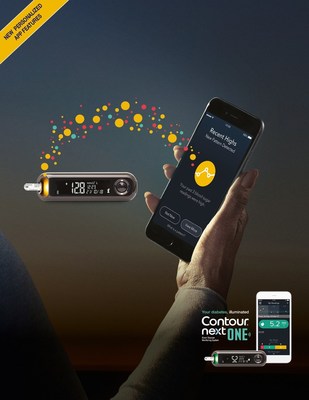
The new CONTOUR®DIABETES My Patterns feature uses test results from the meter to identify patterns in blood glucose readings, suggests possible causes of changes and provide guidance and personalized advice to help address it. It allows patients to set reminders or use structured testing plans to help improve their blood glucose readings and will track their progress to see if the pattern improves over time*.

This latest upgrade to the CONTOUR®DIABETES app provides a smarter tool that can help to make self-management of diabetes easier. The latest version of the app includes the ability to recognize 14 different patterns and use 11 different structured testing plans, with more patterns and testing plans will be added in the future. The new version will be available from today in the Apple App Store (iOS) and Google Play (Android).

The CONTOUR®DIABETES app is designed to seamlessly connect to the CONTOUR®NEXT ONE meter. The CONTOURNEXT ONE BGMS is also the most accurate system that has been developed by Asencia Diabetes Care to-date. Published study data has shown the CONTOURNEXT ONE BGMS to be remarkably accurate2, meeting the latest global accuracy standards, the EN ISO 15197:2015 accuracy criteria3.

About Ascensia Diabetes Care

Ascensia Diabetes Care is a global specialist diabetes care company, dedicated to helping people living with diabetes. Our mission is to empower people living with diabetes through innovative solutions that simplify and improve their lives. We use our innovation and specialist expertise in diabetes to develop high quality solutions and tools that make a positive, daily difference for people with diabetes.

Home to the world renowned CONTOUR® portfolio of blood glucose monitoring systems, our products combine advanced technology with user-friendly functionality that help people with diabetes to manage their condition. We are committed to continued research, innovation and development of new products and solutions. As a trusted partner in the diabetes community, we collaborate closely with healthcare professionals and other partners to ensure our products meet the highest standards of accuracy, precision and reliability, and that we conduct our business compliantly and with integrity.

Ascensia Diabetes Care was established in 2016 through the sale of Bayer Diabetes Care to Panasonic Healthcare Holdings Co., Ltd. Ascensia Diabetes Care products are sold in more than 125 countries. Ascensia Diabetes Care has around 1,700 employees and operations in 31 countries.

For further information, please visit the Ascensia Diabetes Care website at: http://www.ascensia.com.

Ascensia and Contour are trademarks and/or registered trademarks of Ascensia Diabetes Care. The Bluetooth word mark and logos are registered trademarks owned by Bluetooth SIG, Inc., and any use of such marks herein is under license. Apple and the Apple logo are trademarks of Apple Inc., registered in the U.S. and other countries. App Store is a service mark of Apple Inc. Google Play is a trademark of Google Inc.

About the CONTOUR®NEXT ONE Blood Glucose Monitoring System:

The CONTOUR®NEXT ONE system features an easy-to-use wireless-enabled smart meter that seamlessly connects to a smart mobile device via Bluetooth® connectivity. The meter provides immediate feedback through smartLIGHT technology and the CONTOUR®DIABETES app collects, stores and analyses patient blood glucose results received from the meter.

The app combines these results with other data recorded by the user, to provide detailed information about their condition that can help them understand how their everyday lives may impact their blood glucose readings. Through the app, users can also share the reports of their blood glucose results with their healthcare professionals, helping to create more informed and insightful discussions during their visits.

1 Fisher WA, Kohut T, Schachner H, Stenger P. The Diabetes Educator (2011) 37;1:85-94
2 Christiansen et al. Poster presented at the 15th Annual Meeting of the Diabetes Technology Society, October 22-24, 2015, Bethesda, Maryland
3 International Organization for Standardization (2015). In vitro diagnostic test systems—requirements for blood-glucose monitoring systems for self-testing in managing diabetes mellitus (EN ISO 15197:2015)


SOURCE Ascensia Diabetes Care