Alicia Bell - Road To The Arnold Amateurs - 14 Weeks Out

Hey Guys! Its been a while since I actually posted a personal blog on my blog. And I was doing a little bit of thinking this week. Actually a lot of thinking since I started this prep. My blog way back when I was going by a different business name and not train it right started as my thoughts, recipes, workouts and thoughts about the fitness industry. So I wanted to bring back a little bit more of a personal touch to my blog.
Therefore weekly during this prep I want to sit down and write out my thoughts on my week, how training went, my mind set, anything exciting that happened and overall just the experience of being a figure competitor.
I feel that with social media today we are all just posting our highlights and no one is personable. Thats kind of why almost a year ago I started my youtube vlog: www.youtube.com/trainitright But I also want to talk to my readers and share with you all my journey to the stage for Arnold Amateurs.
Soooo here it goes:
15 weeks out until Today
I feel great to be honest. Im focused, loving my training plan and my nutrition is going good. I don't have many cravings and the ones that I do I have been able to fight them off with teas, coffees and being creative with my food.
Sometimes I feel like Im the crazy person in the room because Im always thinking about my goals, workouts or when I can exit a convo and go to the gym. Im so forever thankful that Sean is my boyfriend and my coach because he understands my drive, goals and dreams.
Im writing this at 6:07pm on Sunday and I still have some abs and another 45 minutes of cardio to get to and Im not dreading it at all. Im excited. I want this and I want to do well. And Im going at this prep with tenacity, determination and a mind set that is far superior then any other prep that I have done to date.
This is my time. I know I have what it takes and Im not going to waste any second of it.
Anyway thats just kind of where my head is at. I am definitely going to commit to 1x a week of blogs like this but there may be more because Im going to write when I feel like writing and even give you guys details on my cardio, training and nutrition.
Thanks for reading! Thanks for the support and keep an eye out for something cool so that you guys can join in with me at 12 weeks out!
Innovative Medicines Canada and Astellas Announce Grant to the University Health Network's Transplant Innovation Fund
MONTREAL, Nov. 23, 2017 /CNW/ - A $100,000 grant to support the University Health Network's (UHN) Transplant Program, in honour of outgoing Innovative Medicines Canada Chair Michael Tremblay, was announced today. Innovative Medicines Canada made an initial pledge of $25,000 and Astellas Pharma made a matching pledge of $25,000. In addition, UHN announced another matching pledge of $50,000, making the total amount of the Michael Tremblay Grant to UHN's Transplant Innovation Fund $100,000.
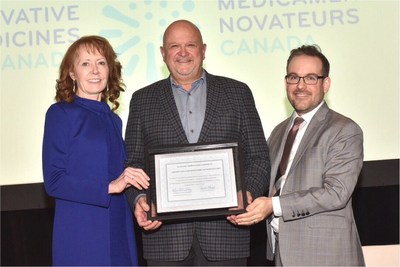
"I am extremely proud to support the incredible work done through the UHN Transplant Program, which has saved countless lives and improved care for transplant patients in Canada and around the world. Furthermore, I am committed to its mission of being a world leader in providing excellence in donor transplantation and innovative, cutting-edge research and discoveries. The goal of this grant is to continue the advancement of research in this very important field," said Michael Tremblay, outgoing Innovative Medicines Canada Chair.
The grant will support the UHN Transplant Innovation Fund, a fund that the Transplant Program has established through investments from philanthropic donors and partners. The goal of this Fund is to continue to foster high-level, interdisciplinary innovation throughout UHN's Transplant Program. The Michael Tremblay Grant will assist this Fund in fostering high-level, interdisciplinary innovation throughout UHN's Transplant Program.
Each year, Innovative Medicines Canada contributes $25,000 toward an Outgoing Chair's Scholarship or Grant announced at the Association's Annual General Meeting. The outgoing Chair is given the choice of allocating Innovative Medicines Canada's scholarship/grant funds to an institution of their choice.
"This thoughtful grant, provided in recognition of Michael Tremblay, will help the UHN's Transplant Program to continue to effectively turn new research from the laboratory to the clinic, develop unparalleled advances to provide the best medical and surgical care for our patients from all over the world," said Pamela Fralick, President of Innovative Medicines Canada.
ABOUT INNOVATIVE MEDICINES CANADA
Innovative Medicines Canada is the national voice of Canada's innovative pharmaceutical industry. We advocate for policies that enable the discovery, development and commercialization of innovative medicines and vaccines that improve the lives of all Canadians. We support our members' commitment to being valued partners in the Canadian healthcare system.
SOURCE Innovative Medicines Canada
Twenty-nine Ontario hospitals compare themselves to international peers on surgical quality
TORONTO, Nov. 23, 2017 /CNW/ - A new report by Health Quality Ontario focuses on 29 Ontario hospitals who are participating in an international quality improvement program for surgery. Hospitals in Ontario performed just as well or better than their international peers on key metrics before, during and after surgery. Nearly 700 other hospitals around the world participate in this program.
The report, Quality Surgery: Improving Surgical Care in Ontario also shows areas for improvement.
This international program collects and compares surgical data on 14 indicators. More than data, it also provides hospitals with best practices and programs to reduce the risks of post-treatment complications, and to make every stage of surgery as safe as possible.
"Ontario hospitals are stepping up to deliver on patient safety, showing a clear commitment to reduce complications after surgery and improve care," says Dr. Timothy Jackson, Provincial Surgical Lead at Health Quality Ontario. "They are using high quality data to benchmark performance and identify areas for quality improvement."
All 29 participating Ontario hospitals are performing at expected levels or better than expected on:
- C. difficile: a common hospital-acquired infection that affects the colon
- Extended ventilation: patients needing ventilation longer than 48 hours after surgery (which can increase the risk of pneumonia)
- Unplanned intubations: patients unexpectedly needing a breathing tube during or after surgery
Areas where the majority of the 29 hospitals highlighted in this report are performing as expected or better than expected are:
- Mortality: a measure of the overall rate of death during or in the 30 days following surgery (96% of the 29 hospitals were as expected or better than expected)
- Return to the operating room: patients needing another surgery to address a complication (96% of the 29 hospitals were as expected or better than expected)
- Pneumonia: breathing devices like ventilators can increase the risk of lung infections (96% of the 29 hospitals were as expected or better than expected)
- Blood clots (venous thromboembolism or VTE): patients generating blood clots because they aren't as active during recovery and their blood flows more slowly (96% of the 29 hospitals were as expected or better than expected)
- Heart complications: heart attacks or cardiac arrest because of stress on the heart due to surgery (92% of the 29 hospitals were as expected or better than expected)
- Hospital readmissions: patients readmitted to hospital due to complications like infections or blood clots (96% of the 29 hospitals were as expected or better than expected)
- Kidney failure: kidney injury during surgery which can affect the kidney's function or even lead to kidney failure (92% of the 29 hospitals were as expected or better than expected)
- Sepsis: a life-threatening illness caused by the body's response to infection (85% of the 29 hospitals were as expected or better than expected)
Areas where most of the 29 participating hospitals have the most room for improvement are:
- Surgical site infections: different levels of infection setting into the incision or body part involved in the surgery (50% of the 29 hospitals needed improvement)
- Morbidity: the overall rate at which patients experience common complications (38% of the 29 hospitals needed improvement)
- Urinary tract infections: infections in the bladder and urinary tract that have an increased risk due to catheters (35% of the 29 hospitals needed improvement)
"During their time in the operating room and in the days of recovery that follow, surgical patients are vulnerable and their safety is of prime importance," says Dr. Joshua Tepper, President and CEO of Health Quality Ontario. "Hospitals are to be commended for embracing a proven program of data gathering, program enhancements and culture change to improve the quality of care they provide to surgery patients."
The program is already helping to improve care at hospitals like Oakville Trafalgar Memorial Hospital where they have reduced surgical site infections by 50% using the program's data and best practices. For example, a new change implemented by the hospital is that patients must use antiseptic body wash the day before and day of their surgery.
"If you want to make things better, you have to measure them," says general surgeon Dr. Duncan Rozario at Oakville Trafalgar Memorial Hospital. "Sometimes you need a protocol and program to make real change."
For a closer look at how quality improvement efforts have been implemented at Ontario hospitals, see the full Quality Surgery: Improving Surgical Care in Ontario report for patient stories and surgeon insights at www.hqontario.ca/surgicalquality.
Additional Facts:
- Surgeons performed over 600,000 adult surgeries in Ontario in 2016-2017.
- 46.4% of Ontario's adult surgeries now take place in a hospital that is part of this surgical quality improvement program.
- 29 Ontario adult hospital facilities were included in the Health Quality Ontario comparison after voluntarily participating. 31 Ontario hospitals are now participating in the program
- This is the largest quality improvement network of its kind in Ontario.
- Worldwide, nearly 700 hospitals are taking part in the program.
- Hospitals in the following provinces are also taking part: British Columbia, Alberta, Saskatchewan, Quebec and Newfoundland.
About Health Quality Ontario
Health Quality Ontario is the provincial advisor on the quality of health care. With the goal of excellent care for all Ontarians, Health Quality Ontario reports to the public on how the system is performing, develops standards for what quality care looks like, evaluates the effectiveness of new health care technologies and services, and promotes quality improvement aimed at sustainable positive change. Visit www.hqontario.ca for more information.
SOURCE Health Quality Ontario
Blitz Facial Bar announces launch of online shop
Toronto’s leading facial bar debuts e-commerce in time for the Holidays
TORONTO – Blitz Facial Bar, Toronto’s leading facial bar, is proud to announce the launch of its e-commerce website. Beginning November 22, the full Blitz Skin Care line will be available for purchase via www.blitzfacialbar.com/cdn-shop-face/, with shipping across Canada and the U.S.
Already sold in-store at their four Toronto locations and Park Slope, Brooklyn, NY outpost, high customer demand for the Blitz Skin Care line sparked the need to expand into the online market. The solution arrives just in time for the holidays, bringing a wide range of skin care products formulated with pure essential oils to Blitz Facial fans across Canada and the US. The web store will also feature a skin type search option, taking the guessing out of shopping and directing customers to their perfect skin care regimen.
“We are thrilled to launch our e-commerce website,” says Laura Polley, founder of Blitz Facial Bar and Body Blitz Spa. “With clients who visit us from all over the country, we want to provide a platform for our clients to easily purchase our cleansers, exfoliants, masks, serums, moisturizers and advanced skin care products, no matter where they are.”
To mark the arrival of the e-commerce website, Blitz Facial Bar will also introduce two new products: Blitz Facial Bar’s advanced Phytoplankton High Potency Serum ($80) – with concentrated phytoplankton, this advanced serum was created to deliver extreme results for all skin types; also being introduced is their much anticipated Blitz Facial Bar Sheet Masks ($14). The sheet masks will be on special for a limited time, three for $35, allowing holiday shoppers to give the gift of glowing skin.
Throughout the year, the online store will highlight different products and offer reduced prices on the skincare line. The site will also continue to be a source of skin care advice provided by Tina Griffin, Director of Blitz Facial Bars and resident skincare expert. This December, Griffin will pick her top five Body Blitz products for ageless and glowing skin throughout the festive season.
Blitz Facial Bars have become the city’s leading beauty destination. Revolutionizing the skincare rituals of Canadians since 2015, Blitz Facial Bar aims to make facial treatments accessible to everyone and anyone, offering a menu of high-quality yet quick and convenient facials at affordable prices. Their in-house product line, Body Blitz Skin Care, combines natural elements from the earth, sea and various botanicals to help cleanse, nourish and hydrate the skin, allowing consumers to maintain their glowing skin at home.
About Blitz Facial Bar:
Founded in 2015 by sister-entrepreneurs, Laura and Rena Polley, Blitz Facial Bar is an extension of Body Blitz Spa. Continuing the practice of beauty through health, Blitz Facial Bar is committed to servicing convenient and affordable facials, with a mission for everyday people to incorporate skin treatments into their regular beauty routine. To ensure the highest-quality skin care, registered estheticians will use exclusive skincare products and Blitz Facial Bar’s in-house product line. Blitz Facial Bar has four locations in Toronto (Leslieville, Trinity-Bellwoods, Roncesvalles and The Path) as well as one in Park Slope, Brooklyn, NY.
Website: www.blitzfacialbar.com
Twitter: @blitzfacialbar
Facebook: /blitzfacialbar
Instagram: @blitzfacialbar

How to Live a Healthy Life Without Spending Too Much Money
Life seems to move along, and so does our health. When money is tight, it’s difficult to eat as healthy as you should. Yes, eating organic food is healthier but can become costly if you’re not careful. There are ways to get the high cost of food and gym memberships down. Here are some ideas to help.
Eating Affordable Organic Food
You can grow organic fruits and vegetables in your very own garden. If this is not feasible, purchase them from other farmers that grow organic foods. You will want to look for a farmer that grows their food organically but are not organic certified. They cost about 50 percent less than buying your fruits and vegetables elsewhere. Most grocery stores raise the price to pay for their employees and supplier.
Organic is not necessary with fruits and vegetables that have protective layers such as melons and bananas. Some places can verify that the supplier didn’t use heavy pesticides on the fruits and vegetables they’re selling. Take time to check! Eating healthy on a budget is possible when you look carefully at the meat and produce sales. If you find meat or product sales, buy them first, and you will save money.
Don’t Eat Out
Eating out cost extra, don’t get me wrong this statement doesn’t mean you should never go out to eat. It merely means in moderation. Cooking a meal at home that serves a family of six will cost around $4 a person to prepare, compared to eating out at a restaurant for approximately $15 a person. Naturally, the prices vary depending on what you feel like cooking or where you go out to eat. If you watch what you buy when getting groceries, you will lower your food cost while eating healthier.
Cost Effective Ways to Exercise
Set up a gym at home. Look for gym equipment that people are tired of being in their homes. You can do this by looking at yard sales, checking on Craig’s list, or at the gym. For those individuals who can afford to update their gym equipment, they sometimes will give their old stuff away. Others will sell them cheaper than you would get them new. In fact, some still look just as new depending on how often they were used, by the owner.
For aerobics, you could get an affordable exercise DVD or go for a fast pace walk, jog, or run. Nothing says more about exercise than climbing a mountainside. These exercise activities also will build endurance and strength as well. If a home gym isn’t for you, shop around for the cheapest gym membership. For that matter, you should see if your employer offers a gym membership discount.
Go to Social Events
Social events help you stay connected with others and have a healthy inner core. Some social events provide food, games, and other activities that will help you to stay healthy and keep the cost down. Keeping yourself healthy is not just about eating correctly, but also has to do with emotional and spiritual connections. Being out in a social atmosphere can also prevent you from becoming depressed, emotionally drained, or disconnected. You can find these types of events at churches, social dances, family gatherings, or just a simple get together with friends.
These ideas will help you efficiently stay healthy while keeping the family budget intact. When leading a healthier lifestyle, it can be rewarding to you and the people around you. Why wait until New Years to begin a more robust lifestyle change, when you can start today. It will become a reality when you are utilizing these helpful information methods.
Esteemed Mindfulness Teacher Shinzen Young Launches Brightmind
New mindfulness application leverages advanced data analytics and cues that will evolve with users’ practice
For nearly 40 years, esteemed mindfulness teacher and neuroscience researcher Shinzen Young has been doing R&D on meditation techniques and this is now available to the public in an app called Brightmind. Google's former Chief Happiness Officer, Chade Meng Tan, has described Shinzen as 'one of the very best meditation teachers I have ever worked with' and 'a unique visionary who embodies the essence of science'." Shinzen's research has been conducted at Harvard Medical School, University of Vermont, and Carnegie Mellon University, along with years of teaching meditation and retreats. “When I leave retreats it is always bittersweet,” says Shinzen. “As group and individuals, the participants each grow a great deal during our time together, but I know that if I could split myself into pieces and help each of them on a daily basis, their practices would grow with great rapidity and be incredibly transformative.” While the Brightmind application does not offer quite the same experience as 1 on 1 or group sessions, the application helps users to establish an effective meditation practice through tailored instruction, a personal relationship, and a systematic approach. With the addition of advanced data analytics and planned incorporation of artificial intelligence, the cues in the application will evolve with the user and expand the boundaries of human potential through tailored meditation instruction and human support. With this functionality, there may be additional prompts that get cycled out so that no meditation is ever the same twice and the application will be able to adjust which sessions users receive based on the previous techniques that have been selected.
Shinzen began his journey by attending a Japanese ethnic school when he was 14 years old in his hometown of Los Angeles. He went on to study Asian languages at UCLA and then began a PhD program in Buddhist Studies at the University of Wisconsin. As a part of his thesis research, he lived as a Shingon (Japanese Vajrayana) monk for three years at Mount Koya, Japan, where he received the name Shinzen. When Shinzen returned to Los Angeles to teach meditation, he replaced the religious explanations with conceptually clear explanations inspired by modern math and science. Shinzen then carefully tracked which explanations helped his students and which didn’t, and used this information to iterate and improve his teaching approach. Shinzen trained eventual Brightmind CEO Christian Stiller in Vermont. Stiller was introduced to meditation originally through his father, who had always extolled the virtues of meditation to his son, then brought in Shinzen for their company meditation session. After continuing for years of practice with Shinzen, meditation completely changed Stiller’s life, from troubled and unfocused youth to being a leader in corporate marketing. When Christian read an article in the New Yorker about the growth of meditation apps, he realized that meditation instruction - something that had profoundly changed his life - could scale. Developing technology to make his research and methods available to people around the world had been something Shinzen had considered for many years and he introduced Stiller to Toby Sola to collaborate on the project. The two worked together to develop Brightmind, along with Shinzen and CEO-coach/meditation teacher, Julianna Raye. Brightmind is headquartered in Los Angeles, CA.
About Brightmind
Brightmind is like having a master meditation teacher in your pocket. The meditation application provides users with an advanced tool to practice Unified Mindfulness from esteemed mindfulness teacher Shinzen Young. Brightmind is unlike most other meditation applications in that it leverages advanced technologies to evolve cues to each user’s practice and it offers a truly disciplined, systematic approach with the potential to be profoundly transformative. To learn more, go to www.brightmind.com.

 I would like to announce the launch of "Worthy of Love" leggings by Four Athletics, benefiting girls rescued from sex trafficking via non-profit organization Saving Innocence. For every "Worthy of Love" leggings purchase, Four Athletics will donate a pair of its best-selling black 7/8 Omni leggings directly to Saving Innocence to give to a rescued girl in need.
During this upcoming holiday season, this is the brand's way of saying thanks by giving to those most in need.
- Over 100,000 girls under 18 years of age are bought and sold for sexual exploitation every year in America
- The average entry age for girls is 12 years old
- 70% of minors recruited into sex trafficking are from the foster care system
- Once trafficked, a girl's life expectancy is 7 years more years if not rescued
- Sex trafficking has grown at a rate of 35% from 2015 to 2016, making it one of the fastest growing crimes in America

Please click here for more information:
FOUR ATHLETICS x Saving Innocence Launch _FINAL
ALS Canada awards $3 million for 12 new research projects to help make amyotrophic lateral sclerosis (ALS) a treatable, not terminal disease
2017 funding competition completes $20 million research partnership with
the Brain Canada Foundation following the Ice Bucket Challenge
TORONTO, Nov. 22, 2017 /CNW/ - Today, the ALS Society of Canada announced 12 exciting new research projects being funded in 2017 through the ALS Canada Research Program, which is supported by ALS Societies across Canada. The research being funded includes a multi-year study of a promising drug combination, three trainee grants that will help to nurture the next generation of Canadian ALS researchers currently pursuing their PhDs, two projects that explore how ALS treatments could be delivered through the bloodstream, and an initiative that seeks to understand why the muscles of the eyes are often more resistant to ALS as other muscle groups shut down. The announcement was made in partnership with the Brain Canada Foundation, which through the Canada Brain Research Fund (with financial support from Health Canada) is co-funding the largest grant of $1.8 million through matching funds committed following the Ice Bucket Challenge.
Approximately 3,000 Canadians are living with ALS, a disease that paralyzes the body, taking away the ability to move, talk, swallow and eventually breathe. Each year about 1,000 Canadians are diagnosed with the disease and a similar number die. Most people die within two to five years of their ALS diagnosis because the disease has no cure and few treatment options.
"ALS is an incredibly complex disease, but the research community is making tremendous headway and has come very far with very little in comparison to annual funding levels of diseases that have treatment options," says Dr. David Taylor, Vice President of Research, ALS Canada. "For the ALS Canada Research Program this has only been possible because of the generosity of donors, partnerships with provincial ALS Societies across Canada, and organizations like Brain Canada, which by matching donations made through the Ice Bucket Challenge has essentially doubled Canada's ALS research investment over the past several years."
Combined with research grants jointly awarded by ALS Canada and Brain Canada in 2015 and 2016, the grants awarded in 2017 are putting to work the $20 million earmarked for Canadian ALS research following the Ice Bucket Challenge that in 2014 raised unprecedented awareness for the disease and funds for ALS charities including ALS Societies across Canada. With Brain Canada's commitment of matched funds now complete, the ALS Canada Research Program will soon return to its historic funding levels with $1.5 million to $2 million in research grants awarded each year.
"Canadians responded generously to the Ice Bucket Challenge, and by matching the $10 million earmarked for research through our partnership with Health Canada, Brain Canada doubled the impact of this generosity," said Inez Jabalpurwala, President and CEO, Brain Canada Foundation. "Since 2015, in partnership with the ALS Canada Research Program, we have funded 20 grants for novel, outside-the-box research; nine grants for collaborative, translational research projects that will move discovery from the lab to the clinic; and five grants that enable the next generation of researcher professors to start or continue research in promising areas of investigation. While the focus of all these research investments remains ALS, Brain Canada has brought its one system approach, whereby researchers from other areas were encouraged to apply their knowledge, and every discovery carries the potential to impact other neurodegenerative disorders which share common underlying mechanisms with ALS."
Of the research grants announced today, the $1.8-million project co-funded by ALS Canada and Brain Canada will seek to find out whether a promising drug combination can address misfolded proteins, one of the defining biological characteristics of ALS. It was awarded to a research team led by Dr. Heather Durham from McGill University, with collaborators Dr. Josephine Nalbantoglu (McGill University); Dr. Richard Robitaille (Université de Montréal), and Dr. Chantelle Sephton (Université Laval).
The other 11 projects were funded through the ALS Canada Research Program through two different grant competitions as a direct result of donations and partnerships with ALS Societies across Canada including 40% of net proceeds from the WALK for ALS fundraising events that take places across the country.
The research being funded in 2017 seeks to answer the following questions that will help to move us from greater understanding of ALS to the development of therapies for human use:
- Can adjusting the levels of a "guardian" protein protect a protein that becomes toxic in most cases of ALS? $125,000 awarded to Dr. Marco Prado with collaborators Dr. Martin Duennwald and Dr. Flavio Beraldo, all from Western University
- Can image-guided focused ultrasound technology be used safely in people living with ALS as a means of delivering future treatment? $124,948 awarded to Dr. Lorne Zinman with collaborators Dr. Nir Lipsman, Dr. Kullervo Hynynen, Dr. Sandra Black, Dr. Todd Mainprize, and Dr. Agessandro Abrahao, all from the University of Toronto
- Can microscopic bubbles in our bodies be used to deliver ALS treatments through the bloodstream? $125,000 awarded to Dr. Derrick Gibbings with collaborators Dr. Baptiste Lacoste and Dr. Maxim Berezovski, all from the University of Ottawa
- Could targeting the activity of motor neurons in the spinal cord be a new way to diagnose and treat ALS? $125,000 awarded to Dr. Yves De Koninck, Université Laval
- Could the change in communication processes between motor neurons and the immune cells of the nervous system after an ALS diagnosis help to identify new treatment targets? $124,930 awarded to Dr. Stefano Stifani, McGill University
- Could touchscreen technology help to improve testing for the cognitive impairment that occurs in some cases of ALS? $110,770 awarded to Dr. Flavio Beraldo with collaborators Dr. Marco Prado and Dr. Vania Prado, all from Western University
- Could whole genome sequencing reveal new areas of genetic mutations that make some people more likely to develop ALS? $75,000 awarded to Jay Ross, a PhD student in Dr. Guy Rouleau's lab at McGill University
- How might misfolded proteins that occur in ALS cause cells to die? $50,000 awarded to Sonja Di Gregorio, a PhD student in Dr. Martin Duennwald's lab at Western University
- What can we learn from mice that are able to walk almost normally despite significant loss of motor neuron function? $125,000 awarded to Dr. Turgay Akay, Dalhousie University
- Why are eye muscles more resistant to ALS, and what can we learn about this that could help to preserve the function and use of other muscles? $121, 048 awarded to Dr. Richard Robitaille with collaborator Danielle Arbour, both from Université de Montréal
- Will probiotics that improve ALS symptoms in worms also work in mice? $75,000 awarded to Audrey Labarre, a PhD student in Alex Parker's lab at the Université de Montréal
The funding of these 12 research projects follows a rigorous scientific assessment by global ALS experts who evaluated a larger pool of applications to identify the projects that are grounded in scientific excellence and have the potential to most quickly advance the field of ALS research in order to develop effective treatments. The scientific evaluation was observed by people who have personal experience with ALS.
About Canada's ALS Societies and the ALS Canada Research Program
ALS Societies across Canada fundraise on a regional basis to provide services and support to people and families living with ALS in their province and contribute to the funding of the ALS Canada Research Program. The ALS Canada Research Program funds peer-reviewed research grants and fosters collaboration amongst Canadian researchers, helping to nurture new ideas and build capacity. ALS Societies advocate federally, provincially and locally on behalf of people and families living with ALS for better government support and access within the healthcare system.
About Brain Canada and the Canada Brain Research Fund
Brain Canada is a national registered charity headquartered in Montreal that enables and supports excellent, innovative, paradigm-changing brain research in Canada. For nearly two decades, Brain Canada has made the case for the brain as a single, complex system with commonalities across the range of neurological disorders, mental illnesses and addictions, brain and spinal cord injuries. Looking at the brain as one system has underscored the need for increased collaboration across disciplines and institutions, and a smarter way to invest in brain research that is focused on outcomes that will benefit patients and families. Brain Canada's vision is to understand the brain, in health and illness, to improve lives and achieve societal impact.
The Canada Brain Research Fund is a public-private partnership between the Government of Canada and Brain Canada, designed to encourage Canadians to increase their support of brain research, and maximize the impact and efficiency of those investments. Brain Canada and its partners have committed to raising $120 million, which is being matched by Health Canada on a 1:1 basis for a total of $240 million. For more information, visit www.braincanada.ca.
SOURCE ALS Canada
After months & months of taste-tests, elxr Juice Lab is excited to share with you their long-awaited
hot drinks menu, now available at the Yorkville location!
All four flavours are loaded with superfoods, are plant-based, dairy-free and refined sugar-free, and will also be launching at elxr's second permanent Toronto location opening inside Campo Food Hall beginning November 27th.
RAW HOT CHOCOLATE house toasted coconut milk, cashew milk, raw cacao, reishi, maca, dates, vanilla, himalayan salt
- Your new favourite hot chocolate. Toasty and chocolate-y, not too sweet – but hits the spot
- Good to Know: Super energizing and stress relieving
THE FIX
cold-pressed pineapple, camu berry, ginger, echinacea, lime, lemon, allspice, cloves, liquid cayenne
- Sweet and a bit spicy, with pleasing aromatics
- Good to Know: Feeling sick? Sip slowly for sore throats to help decrease pain, and add turmeric for extra anti-inflammatory potential and an immune boost
MATCHA BOOST LATTE
house cashew milk, ceremonial grade matcha, medjool dates, cinnamon, cordyceps, vanilla, himalayan salt
- Sweet, creamy and spiced with cinnamon
- Good to Know: For when you need that boost of endurance or boost of focus
CUP OF YOUTH ($6.95)
house cashew milk, cold-pressed beet, maple syrup, goji, raw cocao, schisandra, vanilla, himalayan salt, TruMarine collagen
- Balanced sweetness with hints of berries, you can’t beet it
- Good to Know: Stress-busting, skin, nail and hair enhancing, the Cup of Youth is designed to help you feel and look your best. Plant-based? No problem! Order this latte without the collagen and still enjoy tons of health benefits
View the menu here:
elxr - Menu Items 2017 (2)
WWE Hall of Famer Diamond Dallas Page Unveils "DDPY Rebuild" For Those 55 Plus & Limited Mobility
Diamond Dallas Page, WWE Hall of Famer and 3 time WCW World Heavyweight Champion, is probably the last person you'd expect to develop a fitness program you can do in a bed or a chair, but that's exactly what he's done.
DDP is in the process of releasing a new variation of the DDPY program catered toward those age 55+ and those with physical limitations. Dubbed "DDPY Rebuild," the new program starts with individuals lying down in a bed and strategically stretching, flexing, and engaging muscle to get moving again. The series progresses with individuals building their way up to doing workouts sitting in a chair, and eventually end with standing up and using the chair for stability.
DDP, currently 61 years young, wanted to help others who were older or with extreme limited mobility not just live, but learn to thrive. He was inspired by disabled veteran, Arthur Boorman, who's incredible DDPY transformation has received worldwide attention. When Boorman started DDPY, he was unable to walk without the assistance of canes, but was able to modify the traditional DDPY workouts to use a chair for assistance.
Arthur / Disabled Veteran
"After seeing the incredible success that older adults were having with the original DDPY program, I saw a need for workouts that were accessible to people who struggled with balance, stability, and movement," says Page. "This program is the perfect gift for parents, grandparents, and even great grandparents who want to rebuild themselves!"
DDPY Rebuild will be released exclusively on the DDP YOGA store and the DDP YOGA Now app in early December. Learn more about DDPY Rebuild at
ddpyoga.com/rebuild
About DDP YOGA:
DDP YOGA (referred to as DDPY) is a revolutionary approach to fitness that combines the best of yoga positions, sports rehab therapy, old school calisthenics and dynamic resistance to give you a complete workout that requires no running, no jumping, and no lifting. Because of its minimal-joint impact, DDPY is a fitness system that literally anyone at any age, weight, or ability level can do!
What really sets DDPY apart from other fitness programs is that it's accessible to people who have not worked out a day in their life or who are unable to do traditional exercise. The highly-modifiable workouts allow people to work at their own pace to lengthen and strengthen ligaments, muscles, and tendons. By combining the workouts with the DDPY Nutrition Plan, thousands have been able to lose weight, build strength, and decrease pain.
DDPY has been featured on shows like Shark Tank, The Doctors, and Good Morning America. It was also highlighted in the critically acclaimed documentary, The Resurrection of Jake 'The Snake', which shows Jake Robert's journey from addict to Hall of Famer thanks to DDP's encouragement and support.
About Diamond Dallas Page:
A star collegiate basketball player, Diamond Dallas Page (
https://www.diamonddallaspage.com), entered the nightclub business in the 1970s, becoming one of South Florida's top club owners & promoters. He began training to become an in-ring performer at the age of 35, the oldest rookie in Pro Wrestling history. "DDP" captivated audiences around the world with matches alongside greats like Hulk Hogan, Goldberg, Ric Flair, Randy "Macho Man" Savage & the N.W.O. before being inducted to the WWE Hall Of Fame in 2017. He stars in the upcoming Adi Shankar series, Gods & Secrets and is currently a guest star on Mario Van Peebles new show on SYFY, Superstition.