1 carton (900 mL) CAMPBELL’S® Ready to Use Chicken Broth
1 boneless skinless chicken breast, cubed
1 can (796 mL) diced tomatoes
1 large red bell pepper, diced
1 large piece of dried sea kelp
1 ¼ cups (310 mL) Korean radish (daikon), thinly sliced
½ cup (125 mL) shiitake mushrooms, sliced
1 clove garlic, minced
1 large green onion, chopped
1 tbsp (15 mL) Korean soy sauce
Salt and pepper to taste
Directions:
Add soup kit, broth, chicken, can of diced tomatoes, red bell pepper and sea kelp to a large pot. Stir. Bring to a boil.
Add Korean radish (daikon), and shiitake mushroom to boiling soup.
Reduce heat to low and simmer covered for 20 minutes until chicken is cooked through.
Add garlic, green onion and soy sauce toward the end of cooking.
Season with salt and pepper.
Recipe Tip:
It is important to thinly slice Korean radish (daikon).
Garnish with fresh pecorino or parmesan cheese and sesame oil.
Alicia's Entry To The Bodybuilding.com Model Search
Hey Guys! I have decided to enter the 2017 www.bodybuilding.com model search! Please take a look at my entry video! Don't forget to subscribe to my channel www.youtube.com/trainitright , like the video and leave a positive comment! Thanks so much!
8 Vitamin-packed Foods to include in your Diet for Beautiful Skin
Do you love to have healthy, glowing, beautiful skin?
Well, who doesn’t?
But, the truth is, only people who take very good care of their skin manage to impress others (with their skin). Factors like nutrition, pollution, and stress play an important role in the well-being of the skin of a person.
Even aging does. Did you know that natural aging process for human beings begins in their early 30’s itself? As you grow older, your diet and other external factors will have a big say on the appearance of your skin as well as your physiological functioning.
If you desire to have beautiful skin, then you need to motivate yourself to have nutritious food and exercise every day. Lack of nutrition, in particular, can lead to skin diseases like acne, wrinkles, rosacea, and eczema besides many others. But don’t worry,face creams and masks can help to some extent.
Our body needs vitamins, minerals, proteins, and good fats to function properly. Among these, vitamins are considered the very basic essentials of a healthy body and skin. They help protect the skin from bacteria and also boost the regeneration process. In the rest of the post, you will discover a list of vitamin-rich foods that will help youfix your skin.
Cabbage
Cabbage is one of those vegetables that is abundantly rich in Vitamin B6. It also contains adequate quantities of manganese, folate, collagen, and fiber – all of which are very important for the skin. Additionally, cabbage also consists of calcium which is essential for bone strength, and potassium which helps controls blood pressure.
What’s more, cabbage is also a powerhouse of antioxidants and vitamin K which help improve skin elasticity.
Red bell pepper
Your skin needs plenty of vitamin C on a daily basis and one of the best ways to obtain that is to include red bell pepper in your diet. Having adequate quantities of vitamin C helps regulate moisture in the skin and prevents wrinkles as well.
Avocado
Avocado is known to be a powerful source of vitamin C, vitamin K, vitamin E, Vitamin B6, potassium, folate, and folic acid. Including avocado in your diet can help cure dry skin problem and prevent the breakage of the skin. Vitamin E is known to protect the skin from the sun’s harmful rays. What’s more, avocado also provides the required antioxidants and vitamin C to your skin to help improve its firmness so that you look younger than your normal age.
Pomegranate
People don’t call pomegranate the “fruit of Gods” without reason. It is one of the best sources of antioxidants among all foods – in fact, it has higher antioxidant content than green tea and wine itself.
The vitamin C present in pomegranates can help your skin look radiant and look younger. As for the health, this fruit is believed to help minimize the risk of cancer.
Papaya
Papaya is a natural source of iron, vitamin C, and vitamin E. Having enough vitamin E in your body helps keep your skin moisturized, and look soft and smooth. It also prevents the formation of dark spots and stretch marks, which are common among ladies. Studies say that one fresh papaya can supplement 17% of your daily vitamin E requirement.
Lemons and Oranges
No prizes for guessing, lemon and oranges are the go-to fruits for everyone who is looking to get vitamin C in his or her body naturally. In fact, having more vitamin C also helps boost collagen, which plays a major role in the appearance of your skin. People who take collagen regularly are safe from wrinkles and many age-related skin problems.
Mushrooms
Including mushrooms in your diet is a good idea because they are loaded with vitamin B2 and Riboflavin. In particular, vitamin B2 is said to be water-soluble in nature and helps safeguard the cells from regenerative damages. Lack of vitamin B2 can cause wrinkles and other health problems like migraines, cracks, and sore throat. What’s more, mushrooms also contain collagen which is believed to improving the elasticity of the skin.
Kale
Kale is rich in several important vitamins for the skin. It has vitamin A which helps repair the tissues during radical damage. It has vitamin K which is known to prevent dark eye circles and pigmentation problems. Most importantly, it also has vitamin C which is a powerful antioxidant. On the whole, you need kale to get a radiant skin that is free from blemishes and abrasions.
Also, taking kale on a daily basis helps boost cell growth and even prevents dryness.
Conclusion
The foods covered in this post are loaded with the most important vitamins that prevent everything from dryness to acne to age-related problems. What’s even better is that they are also delicious and can be eaten raw or half-cooked. If you have a great cook at your home, then try tossing these foods to make a tasty, health-rich recipe and have a fun way of protecting your skin.
To learn more about the types of vitamins and their benefits, please take a look at this Infographic
Want to win? Simply sign up for my newsletter on the homepage www.trainitright.com and comment on this post why you should win!
Winner will be announced November 10th (MY BIRTHDAY!)
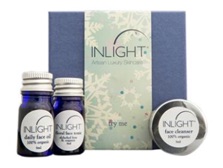
Selected winner receives one of the following Inlight trial kits valued at $29.99, $32.00 and $39.00 FOR FREE!!
What’s new in organic skincare for holiday 2016?
Anyone looking for true 100% organic skincare to address acne, anti aging, wrinkles, cellulite, cracked heels, dark circles, eye area, hands, joint muscles, oily, sensitive, or dry skin, sundamage, rosacea, rashes, eczema, dermatitis, psoriasis, peeling, skin issues during pregnancy, stretch marks, scarring and shaving irritation, Inlight Skincare is the real deal.
The Inlight line of 100% Organic Skincare takes only the finest, ethically-sourced, natural, and organic ingredients and harness them at their most potent to create a gourmet, artisan, sublimely luxurious diet for your skin. Inlight organic skincare contains the finest and most effective organic food-grade and cold-pressed oils, herbs, the purest essential oils and beeswax. That’s it.
Using only certified organic ingredients, with 100% organic accreditation from the Soil Association as a further guarantee of quality and integrity; Inlight trusts their uncompromising standards, and their ethical principles reflect our own. Inlight is also proud to be the very first UK skincare company accredited under the new European-wide standard, Cosmos, streamlining the various national standards under one umbrella.
The Try Me Collection ($29.99):
Our essential trio of products in miniature to cleanse, tone and moisturize for beautiful, radiant skin.
o Face Cleanser 0.17 fl. oz.
o Floral Face Tonic 0.17 fl. oz.
o Daily Face Oil 0.17 fl. oz.
Cleanse, tone and moisturize with this essential Inlight trio, offering your skin just the right nutrients to keep it well nourished and silky soft and smooth. Make Inlight part of your essential daily regime and see the difference for yourself.
100% organic* (100% of the agricultural ingredients in our Floral Face Tonic are organically produced; however water cannot be certified organic)
How to use: Take up a pearl size of cleanser with the spatula and massage gently into the skin for several minutes, allowing the warm fragrances to soothe your senses. Wipe away the balm using a cotton wool pad dampened with a few drops of tonic and feel the silky soft texture of clean skin. Repeat every evening, and morning also if desired. Apply a few drops of Face Oil onto the face every morning, taking care to smooth from the chin upwards, and from the center outwards. Your skin will stay moisturized and fresh all the day
Indulgence Collection ($39.00)
The cleanser and reviving tonic will delicately cleanse away impurities, whilst the Face Oil soothes and moisturizes and the sumptuous Line Softener, combining 20 different bio-actives, works to plump and hydrate with extra concentrated care.
o Face Cleanser 0.17 fl. oz.
o Floral Face Tonic 0.17 fl. oz.
o Daily Face Oil 0.17 fl. oz.
o Line Softener 0.17 fl. oz.
100% organic* (100% of the agricultural ingredients in our Floral Face Tonic are organically produced; however water cannot be certified organic)
Body Beautiful Collection ($32.00)
o Body Oil with Arnica 0.17 fl. oz.
o Body Butter 0.17 fl. oz.
o Foot & Leg Balm 0.17 fl. oz.
o Firm & Tone Oil 0.17 fl. oz.
Dr. Spiezia - Co-founder and Formulator
Medical herbalist and skin expert at The Walsingham Natural Health Center in Turo, Italy, Dr. Mariano Spiezia has been considered the father of the organic beauty movement in Britain and was voted one of the Top 25, “Who’s who in natural beauty” in 2012 and 2013, 2015 and again in 2016. Dr. Spiezia graduated in Medicine and Surgery in Italy in the early 1980s, and has since worked on combining orthodox medicine with the extraordinary power of nature.
The Bio-lipophilic Matrix ®
For years Dr Spiezia has studied these connections with the idea of empowering the ingredients he uses with a higher frequency to gain a positive resonance on people’s skin and overall health. The result of this research is the Bio-lipophilic Matrix®, which is now at the core of each individual Inlight skincare product.
The Bio-lipophilic Matrix® consists of a specific blend of pure organic, cold-pressed oils selected for their high bio-chemical affinity to the lipidic human skin layer. Prior to production, they are energized by Dr. Spiezia’s bespoke techniques, which combine ancient traditions with modern science. These techniques heighten the oils’ vital force and help re-attune the skin to harmony, health and beauty. This enhanced blend of oils forms the heart of every Inlight product.
The core feature of Inlight’s formulations lies most importantly in the synergy between the individual ingredients. Other key factors are Dr. Spiezia’s medical expertise and Inlight’s carefully designed manual production, including its herbal oil, the base of all INLIGHT products, obtained by infusing the selected herbs in oils. The resultant herbal oil is extremely rich in beta-carotene, antioxidants, and pigments such as chlorophyll.
Entirely Plant Based, Inlight Skincare is suitable for vegetarians and Inlight oils are suitable for vegans. In addition, all Inlight products are microbiologically and nickel tested in the high tech labs of the Centre of Homeopathic Medicine in Naples (CeMON).
Inlight proudly displays the BUAV accreditation to demonstrate that none of our products or their ingredients has ever been tested on animals.
Environmentally Mindful Packaging
o Inlight packaging is all recycled (glass jars up to 98% recycled), recyclable or biodegradable, and Inlight only uses vegetable-based inks. Even maize filler is GM free and will biodegrade over time.
o Inlight stunning eco-glam boxes contain no extra insert, everything we want you to read is printed on the beautiful interior. Just open the glue-free box and enjoy reading!
o Every new material is subject to intense scrutiny to ensure we make the best environmental choice.
o The use of plastic is minimal, and strictly where no realistic alternative exists. Where possible a recyclable plastic is selected (eg. our ointment labels).
o Inlight re-uses packaging wherever possible.
o Nothing is wasted, even herb pizza, left at the end of a production cycle, is fed to the cows on Roskilly’s organic dairy farm where Inlight has a workshop.
o Inlight recycles or composts all office waste, including print cartridges and tea bags.
o Inlight turns off electric appliances whenever possible.
o All but one of Inlight's team walks to work.
Embracing the whole body from top to toe, our deeply warming Body Oil will rejuvenate, promoting suppleness and elasticity, whilst its partner the Firm & Tone oil with its high concentrations of active plant oils and astringent plant extracts will leave skin toned and smooth. Restorative Body Butter will pamper, soothe and replenish the skin with its rich formulation and our exquisite Foot & Leg Balm is the perfect answer to revive tired, aching feet and melt away dry, rough skin.
How to use: For the most beneficial effect, apply each of these products after a warm bath or shower when the skin is relaxed, warm and can readily absorb their bio-active nutrients. Massage gently into the appropriate area for long-lasting moisturizing effect.
Canadian Company Announces Virtual Medical Consultations Anytime Anywhere
Sick? Click! (CNW Group/MyCare)
A Canadian telehealth company launches virtual medical consultations for episodic care that can be accessed from the privacy of home, office or hotel room.
MyCare MedTech Medical Clinic is utilizing advanced communication technology to connect a patient to a licensed medical provider through its innovative service, GOeVisit.
GOeVisit can diagnose, treat and prescribe for more than 30 non-emergency conditions, from common illnesses like cough, colds and flu, to general medical concerns, minor injuries and pediatric care. GOeVisit uses the same technology most people are already using daily, turning a computer, smartphone or tablet into a private, face-to-face medical consultation platform.
"GOeVisit is unique as it is the only service of its kind in Canada offering 24/7 and 365 access to medical practitioners from wherever a client lives, works or travels," said Dr. Raj Attariwala, Medical Director of AIM Medical Imaging in Vancouver and Medical Director of GOeVisit. "Virtual care is exploding, and GOeVisit is at the forefront, using proprietary Virtual Practice Guidelines to ensure clients receive an accurate consultation and treatment plan. The Virtual Practice Guidelines are well established and proven by multi-national corporations to help patients and parents quickly make appropriate health related decisions."
GOeVisit can provide prescriptions for non-controlled medications through its national prescription drug service. Using the Virtual Practice Guidelines (VPGs), GOeVisit providers may recommend over the counter medications or home therapies as alternatives to prescriptions. Use of VPGs has proven to reduce prescriptions by as much as 67%, an important alternative to the over prescription of medication, particularly antibiotics.
"Canadians are ready to take control of their healthcare," says Liz Bryant, Chief Operating Officer of MyCare MedTech Inc., "and want alternatives to waiting for non-emergency care. Two thirds of Canadians surveyed want to access care the way they access so many other services: through technology. GOeVisit makes that possible."
About MyCare MedTech Inc. MyCare MedTech Inc. is a Canadian telemedicine company with offices in Calgary, Alberta and Vancouver, BC. For more information, visit www.goevisit.com
National Survey reveals 91 per cent of Canadians believe health is the key to happiness
CHFA presents four simple ways to stay happy and healthy this winter
In response to new national survey results and with cold and flu season fast approaching, the Canadian Health Food Association (CHFA) have put together simple and effective tips to help Canadians stay happy and healthy during the winter months.
The survey of more than 1,500 Canadians conducted by CHFA revealed that the vast majority (91 per cent) of Canadians believe that their overall health impacts their level of happiness. The same survey also shows that more than half of our population (54 per cent) get sick most often in the winter.
When asked what factors are negatively impacting their health, Canadians from coast to coast reported that lack of sleep tops the list at 73 per cent. Sleep was followed closely by stress and lack of mindfulness (57 per cent), lack of exercise (52 per cent) and poor nutrition (46 per cent).
Additional interesting findings from the survey include:
Canadians’ favourite foods to ward off cold and fluand stay happy and healthy include chicken soup/broth (49 per cent), oranges (49 per cent) and tea (48 per cent).
Canadians’ top picks for natural health products to keep them happy and healthy during cold and flu seasoninclude vitamins C (46 per cent) and D (37 per cent).
Things Canadians do to stay happy and healthy:Over three-quarters say they improve their sleep (76 per cent), improve eating habits (43 per cent) and engage in exercise (40 per cent).
As Canadians prepare to celebrate the fifth annual National Health Products (NHP) Week, which runs from November 7 to 13, 2016, the focus is on practical and innovative ways to stay healthy through the holidays and into the New Year.
“Our goal this NHP Week is to arm Canadians with the tools they need to maintain health and happiness during cold and flu season,” said Michelle W. Book, CHFA’s in-house holistic nutritionist. “We identified four pillars of immunity, each including simple steps Canadians can take to help boost their immune system naturally this season and beyond.”
CHFA’s four pillars of immunity include:
Nutrition: Lack of proper nutrition has been linked to decreased immunity and increased risk of illness. Nuts, fermented foods and garlic are all shown to help boost the immune system.
Exercise: Engaging in 30-60 minutes every day can improve your body’s immune response. To improve exercise and immune health consider including krill oil, protein and vitamin D as part of your daily routine.
Sleep: Our bodies respond to lack of sleep in a similar way as it does to acute stress. Try adding magnesium, L-theanine and melatonin for better sleep.
Mindfulness: Mindfulness can reduce markers for inflammation and stress hormones. Probiotics and omega-3s can be beneficial in managing stress.
“While we always encourage Canadians to speak to their health care practitioners when they are under the weather, we also want to encourage everyone to consider adding natural health products to improve overall wellbeing and boost immunity,” says CHFA President Helen Long. “When you visit a local CHFA Member health food store, you can find all kinds of safe, effective and high-quality supplements, vitamins, minerals, herbal products and traditional medicines. Canadians should feel confident that Health Canada-approved natural health products can play an important role in maintaining and optimizing our health and happiness.”
Canadians should also be aware that Health Canada is proposing changes that impact natural health products in two fundamental ways:
Some products will no longer require Health Canada review and will provide less information.
Other products will be required to submit drug-level scientific evidence to support their claims.
About CHFA
The Canadian Health Food Association (CHFA) is Canada's largest national trade association dedicated to the natural health and organic products industry. The association represents manufacturers, retailers, wholesalers, distributors and importers of natural health and organic products. With a membership of more than 1,000 businesses across the country, CHFA represents an industry that contributes more than $6 billion to the Canadian economy. Michelle W. Book is CHFA’s in-house holistic nutritionist, trained in natural and complementary therapies.
About the survey:
A survey of 1591 Canadians was completed online between September 12th to 15th 2016 using Leger’s online panel, LegerWeb. A probability sample of the same size would yield a margin of error of +/-2.5per cent, 19 times out of 20.
VERY, VERY SURPRISING USES FOR BOTOX THAT HAVE NOTHING TO DO WITH FOREHEAD WRINKLES
When most people think of Botox the first thing that usually comes to mind is wrinkle reduction. Indeed, Botox is the world’s most popular treatment for eradicating wrinkles and fine lines. The toxin is specifically FDA approved for treating frown lines between the eyebrows (glabellar lines) and lines around the eyes (crow’s feet). In addition to being the gold standard for wrinkle reduction, Botox can also be used to treat a variety of issues, both cosmetic and non-cosmetic. Dr. John Zannis is a New Bern, North Carolina board certified plastic surgeon. He provides a list of conditions that Botox has been used to treat.
Acne
Botox can curb oil production, reducing breakouts. "To totally treat acne, you'd need to use doses of Botox so large they'd prevent you from constricting your facial muscles," says Dr. Zannis. "But tiny amounts of Botox injected very superficially help reduce oil production, and you can still have facial expressions." Though he'd recommend it for almost any patient struggling with acne, Zannis would likely advise trying another dermatologist-prescribed treatment, like spironolactone or birth control pills, first. And though it can technically be used to quell oil production anywhere on the face, he cautions against using it all over because of potential effects on muscular activity (a.k.a. frozen face). The most effective and common area for using Botox to curb oil production, he says, is the forehead.
Gummy smile (not FDA approved)
A "gummy" smile, one that's characterized by a smile that shows too much of the gums, usually results from "excessive lip elevation" when the upper lip rises too far above the upper teeth when smiling. Injecting Botox into the upper lip weakens the upper lip's retractor muscles so that it won't raise as high and your smile will seem better-balanced. It can be done in about five minutes. Usually lasts for four to six months. Costs range from $200-$300. Dr. Zannis says, "This technique is not for the novice Botox injector. Too much, and your lip won’t raise enough, too little and you will need more, or if injected asymmetrically, you might have a funny asymmetrical smile."
Urinary incontinence.
Overactive bladder problems affect up to 20% of women over 40. For severe cases where medications do not provide complete relief, Botox injections into the bladder wall may provide relief lasting about 6 months.
Psoriasis
Psoriasis is uncomfortable, itchy, and not exactly easy on the eyes. Luckily, this flaky skin condition could be a thing of the past thanks to Botox. Though psoriasis is technically incurable, Botox minimizes the activity of inflammatory cells that bring on outbreaks.
Excessive Sweating
For those who suffer from excessive sweating, however, summer isn’t always the sunniest time of the year. Thankfully, Botox could be a saving grace for those attempting to manage this condition, which is officially known as axillary hyperhidrosis. Studies show that just a handful of injections can reduce underarm sweat for up to TWO years. Um, where do we sign up?
Breast Lift
Are your breasts in need of a pick-me-up? Instead of going under the knife and getting permanent augmentation, some experts have suggested a quick and easy Botox lift. Dr. Zannis says that, “Those looking for a modest improvement are said to be able to temporarily plump their assets thanks to injections into the pectoralis minor chest muscle.”
Depression
The benefits of Botox® may be more than skin deep; two recent studies suggest that it may help alleviate the symptoms of depression. In a study published in the May 2014 issue of the Journal of Psychiatric Research, more than half of participants who had moderate-to-severe depression showed a substantial improvement in depressive symptoms following one injection of Botox® between the brows. This improvement lasts longer than the cosmetic effects, suggesting that the effect may be more than just feeling better about your appearance. Botox® is not approved to treat depression.
Teeth Grinding
Injections of Botox® were used to control involuntary muscle tension and spasms long before it became the go-to wrinkle buster. Dr. Zannis says that, “these neurotoxin injections may weaken the chewing muscles enough to reduce bruxism (teeth grinding) without affecting your ability to chew, talk and smile. Results last about four months. Botox® is not yet approved to treat bruxism.”
Migraine Headache
Botox® is approved by the FDA to treat chronic migraine headaches in adults who have 15 or more headache-days a month, each lasting four hours or more. Studies that led to this indication show that BOTOX®® prevents up to nine headache-days a month (vs seven for dummy injections). Other research hints that the neurotoxin may also help with low cerebrospinal fluid headaches and cluster or "suicide" headaches.
Brow Boost
Much like lines form over time, your brow may also drop or droop. Botox cosmetic treatments can also be used to improve the appearance of the brow. Dr. Zannis explains that, “the treatment essentially freezes the sagging muscles in place and gives the brow more stability. Lifting the brows in this way leaves you with a less tired and younger, fresher appearance.”
Jaw Reduction (off label use)
Botox can be used to perform jaw reduction (commonly called jaw line softening). Injecting Botox into the masseter muscle (the primary muscle used in chewing actions) reduces its overall size; transforming an overly square and masculine appearing jawline into a more feminine oval or heart shape.
Dr. John Zannis is a New Bern, North Carolina board-certified plastic surgeon and best selling author. A graduate of Stanford University and The University of Cincinnati Medical College, he received his formal training in General Surgery and Plastic and Reconstructive Surgery at Wake Forest University in Winston-Salem, North Carolina under the guidance of world-renowned plastic surgeon Dr. Louis Argenta. During this time, he performed over 5,000 surgical procedures and covered all aspects of plastic surgery including cosmetic surgery of the face and body, complex reconstructive procedures of face and body, cleft lip and palate surgery, hand surgery, facial and jaw fracture repair, and reconstruction following massive weight loss. He blends his interests and studies of classical art and symmetry to his surgery practices. Connect with him via twitter@JohnZannisMDor his website www.zannisplasticsurgery.com
There is lots of great content coming! Vlogs, exercises, motivational workouts, Q&A and more! Go subscribe, like and comment. Yes I know I need thumbnails for my videos but I am pressed for time lately. They will be coming soon!
Make sure to comment and let me know what you would like to see or if you have any Q&A's for me!
Road trips, gas stops, no time for lunch; we’ve all found ourselves at the convenience store for a fast bite on the go. While a bag of chips or chocolate bar may be an option we later regret; there are fast bites that can actually offer some health benefits. Dr. Christopher Calapai a board certified expert in osteopathic medicine specializing in longevity offers some junk food options to consider the next time there’s no time for an actual meal.
Blue M&M’s and Blue Gatorade
Don’t get the blues about all food dyes.From candy to sports drinks, the unnatural colors of foods today can make you cringe at the thought of what’s making them colored. But, not all colored dyes are as bad as you may think. Research done by scientists at the University of Rochester found that Brilliant Blue G (BBG), found in blueM & M’s and blue Gatorade, could help reduce damage from spine injuries. When BBG was injected into lab rats with spinal cord injuries, it sped up their recovery time and ability to walk.
Cheeze Whiz?? No way!!
Fat isn’t always a bad word.The FDA has stated that not only are all trans fats not bad, some are actually good for you. Conjugated Linoleic Acids (CLAs), although high in calories can help fight cancer, weight gain, diabetes and arthritis. It’s hard to believe, but CLAs are found in Cheese Whiz.
Pork Rinds
Just the words pork rinds sound like instant heart attack. However did you know they are a fantastic source of protein? A one-ounce serving of this fried snack has seventeen grams of protein, seven times the amount of found in a serving of potato chips. Plus, 43% of the fat found in pork rinds come from oleic acid, the same healthy fat found in olive oil.
Beer
Some studies have found that beer can actually help increase bone mineral density because it contains silicon, making bones stronger and less likely to fracture. A Harvard University study found that beer could prevent blood clots and reduce the risk of stroke. Italian researchers found that beer can raise HDL, the good cholesterol in your body. Opt for a light beer with fewer calories to avoid that full feeling.
Graham Crackers
They are the next best things to cookies if you’re trying to keep your health in mind. Graham crackers contain much less sugar than regular cookies and are still sweet enough to satisfy a craving. Plus, they are made with flour that undergoes a special milling process, preserving more of the whole wheat than in usual milling.
Popcorn
This is a snack that gets two thumbs up. Popcorn is packed with fiber and polyphenols, which are antioxidants that help to protect us from heart disease and certain cancers. Surprisingly, popcorn has more iron than eggs and spinach! It is also gluten-free, which makes it an option for those with Celiac Disease and other gluten allergies. Lastly, popcorn is mostly air. This means it fills you up, helping to stave off hunger cravings.
Beef Jerky
Forget about the leather-tasting jerky of years past, today’s gourmet jerky is delicious and can be healthy. Beef Jerky, just like its non-dried version of meat, is high in protein, iron and zinc. It, also, contains heart-healthy monounsaturated fats. Be sure to look for natural beef jerky as the newer gourmet styles that are packed with flavor and free of nitrates.
About the Doctor:
Dr. Christopher Calapai, D.O. is an Osteopathic Physician board certified in family medicine, and anti-aging medicine. Proclaimed the "The Stem Cell Guru" by the New York Daily News, Dr. Calapai is a leader in the field of stem cell therapy in the U.S. His stem cell treatments have achieved remarkable results in clinical trials on patients with conditions as varied as Alzheimer's, arthritis, erectile dysfunction, frailty syndrome, heart, kidney and liver failure, lupus, MS and Parkinson's. He has worked with Mike Tyson, Mickey Rourke, Steven Seagal, and Gotham's, Donal Logue; and as a medical consultant for the New York Rangers. Connect with him via twitter @drcalapai or at www.drcal.net
Eyesight and Memory Loss are Leading Concerns Around Aging
Internationally, the top five physical conditions that people worry most about having, either now or as they age, are eyesight getting poorer, not being as mentally alert, lacking energy, having trouble taking care of themselves physically, and being unable to walk or drive.
These are the findings from a GfK survey of the online population across 17 countries, which asked people which physical conditions they worry most about having, either now or as they age, from a list of 19 different conditions:
Eyesight getting poorer 38%
Not being as mentally alert / memory
loss 38%
Lack of energy 36%
Having trouble taking care of
yourself physically 34%
Losing mobility / unable to walk or
drive 33%
Experiencing body aches 30%
Gaining weight 27%
Being more at risk for serious
diseases 26%
Losing your hearing 24%
Having digestive problems /
irregularity 21%
Getting wrinkles, sagging / loose
skin 21%
Losing your hair or having your hair
get thin 20%
Incontinence 19%
Losing muscle tone 19%
Losing your sexual drive 17%
Hair turning gray or white 16%
Developing age marks, scars or
noticeable veins 15%
Menopause 10%
None of these 10%
The study reveals how widespread certain concerns are within different countries and between genders - information that manufacturers and retailers can use to better target their product placement and advertising.
For example, 38 percent of the international online population says "eyesight getting poorer" is a worry. But this rises to over half in Spain (53 percent), Mexico and Argentina (both 52 percent). Similarly, "not being as mentally alert" is a concern for 38 percent of people internationally, but is much wider concern in Spain (66 percent), Argentina (58 percent), Germany (52 percent), Mexico (51 percent) and Italy (50 percent).
Some countries also stand out as being more concerned about specific physical conditions compared to others. Russia is the only country surveyed where "losing your teeth" is a top five most popular concern, while in Japan and Korea "getting wrinkles or sagging skin" is in their top five. Japan also has "losing muscle tone" in their top five, which again does not feature in other countries' top five.
Differences between men and women are also seen. Both genders have the same top five physical concerns around aging - although in slightly different order. However, looking further down the list, far more men than women worry about "losing sexual drive" (22 percent men; 11 percent women) - and far more women than men are worried about "getting wrinkles or sagging skin" (32 percent women; 11 percent men).
GfK's online survey interviewed over 22,000 consumers aged 15+ across 17 countries. Fieldwork was completed in summer 2016 with data weighted to reflect the demographic composition of the online population aged 15+ in each market: Argentina, Australia, Belgium, Brazil, Canada, China, France, Germany, Italy, Japan, Mexico, Netherlands, Russia, South Korea, Spain, UK and USA.
TRAIN IT RIGHT NEWSLETTER
Sign Up and get a free 7 day Train it Right HIIT Program!