In the Throes of COVID Burnout, What Can We Learn from Healthcare’s Thrivers?
Some people don’t just survive life’s storms, they come out stronger. Drs. Wayne M. Sotile and Gary R. Simonds have studied what sets them apart from those who can’t cope. Here are a few of their resilience secrets.
Pensacola, FL (August 2021)—The pandemic is taking an unmeasurable toll on healthcare workers. They’re stressed, exhausted, disillusioned, and burned out. Some are crippled by PTSD. Many are contemplating leaving healthcare altogether. If you’re one of the walking wounded—or a leader trying to help a whole team of them stay upright—what’s the solution? Is there one?
“The answer is no, and also yes,” says Gary R. Simonds, MD, MHCDS, coauthor along with Wayne M. Sotile, PhD of Thriving in Healthcare:A Positive Approach to Reclaim Balance and Avoid Burnout in Your Busy Life (Huron|Studer Group Publishing, 2019, ISBN: 978-1-62218-108-7, $32.00). “COVID happened. It’s still happening. When it’s over, there will be other disruptions, other sources of stress and even trauma. That will never change.
“That’s the no part,” he adds. “The yes part is this: while we can’t change the nature of healthcare, we can build ourselves up so we are able to walk out of storms without being destroyed by them.”
Dr. Simonds and Sotile have spent decades pinpointing why some people emerge stronger from conditions that devastate others. Their book shares solutions based on their work developing a ground-breaking resilience program for an ultra-high intensity healthcare team.
“As we grapple with how to move forward in what feels like a war-torn landscape, we need to study healthcare’s thrivers,” says Dr. Sotile. “I know—it feels strange to use the word ‘thrive’ alongside a tragedy like COVID, but I don’t mean to be insensitive. We all deserve to find meaning, wonder, and enjoyment in our daily lives. That includes healthcare workers.”
The authors share a few of the resilience secrets healthcare’s “thrivers” have in common:
Thrivers grant themselves permission for self-compassion and self-care. This is the first of two critical factors in building and sustaining resilience. You will need to normalize the concept of self-compassion and self-care, because many people in healthcare wear their self-neglect as a badge of honor. Notice what makes you feel good or bad; what angers and excites you; and what brings you joy, peace, wonder, or meaning. Make micro- and macro-adjustments as needed.
They nourish and cherish their relationships. This is the second critical factor for healthcare workers. We are social creatures, but the intense work of healthcare can be isolating, and our fatigue after work hours isolates us further. Because we are tired and drained, we may stop going out and developing new friendships. It’s critical to stop this cycle and fully commit to nourishing your relationships—with coworkers as well as loved ones.
They debrief the challenges of the day and celebrate the uplifts. Sharing hurtful experiences from the dark side of your work life—disappointments, embarrassment, confrontations, resilience breakdowns, etc.—can build empathy and lessen the pain. When you share (or listen to colleagues as they share), focus on the effect of the experience(s) rather than the details. How did it feel? What were the lessons learned? How could the storyteller have managed the events or his or her responses to them differently? Likewise, make a habit of seeking, collecting, and reflecting on daily uplifts. This is not just a feel-good ploy. Multiple studies support the concept that “collecting” uplifts can significantly boost well-being and counter psychological distress.
They celebrate being part of the healthcare team. In the midst of your daily work, it is important to keep sight of what you and your colleagues are all trying to do. No matter what part you play in healthcare, your work contributes—it has real meaning, and you should revel in that fact. If you are not directly involved in patient care, your influence may feel more abstract. Try to trace the steps from your particular work to its eventual impact on the care of a single patient who is sick or injured. It’s likely that the degrees of separation are very few, no matter your job.
Thrivers demystify and partner with leadership. Work on breaking the “us versus them” mentality. Don’t just take comfort in the notion that there’s a team dedicated to facilitating your work efforts, but befriend and engage them in your efforts to provide high-quality, high-efficiency work. Seek to understand your leadership’s infrastructure; learn how decisions are made and enacted, and identify the key players in your sphere of function. Take any opportunity to meet and chat with them and educate them on your role, and volunteer for institutional committees. Get involved. Be known; be seen. When there’s a problem, don’t rail at your administrators. Calmly discuss problems with them and bring a selection of possible solutions.
They maintain healthy habits no matter how busy they are. You must find balance between working hard and getting enough rest, exercise, and good nutrition, so you can maintain your physical and mental health. A few tips for building healthy habits:
Commit to getting frequent exercise—even if only in 15-minute bursts during your work break. Schedule movement into your calendar and show up for it no matter what.
Seek balance in your food/drink intake. Discuss your diet with a nutritionist and learn to cook some healthy meals at home (restaurant food is loaded with sugar and fat!).
Bring healthy snacks to work so you won’t be tempted to indulge in junk food. Apples, oranges, celery, and nuts are good options—just watch your portion control.
Save sodas for occasional treats. Drink water or diluted fruit juice instead. Stay hydrated!
Practice good sleep hygiene. Avoid extended naps during the day; limit non-sleep-related activities in your bedroom; keep your bedroom dark, quiet, and cool. Avoid alcohol and screen time just before bed and clear troubling thoughts by focusing on positive events.
They take “humanity breaks,” large and small. If you feel captive to the world of near-constant multi-tasking and endless demands happening under artificial lights and accented by unpleasant sights and smells, take short breaks to focus on positivity, quiet, laughter, fresh air, and humanity. Enjoy a brief break in the morning and another respite in the afternoon for coffee, chatting with colleagues, or meditation. If possible, consider a weekly extended humanity break, where you step away from responsibilities for an hour or two in the middle of the workday. Leave the premises, have lunch, take a walk, soak up some sun, or run a pleasant errand.
They create schedules and stick to them. In the face of utter chaos, creating a schedule gives you a sense of control and can improve your efficiency and efficacy. Buy a nice planner and break the workday into concentrated bundles of related work. In your off-time schedule, include meals, self-care, exercise, reading, studying, play, chores, intimacy, and sleep. Repeat the mantra, “If it is not planned, it will not likely occur.”
They steer clear of perfectionism. If nothing is ever good enough, you may overthink and fret compulsively over every detail of everything you do. Make an effort to eliminate the concept of perfection from your thinking and from your approach to your work. Beware of signs of maladaptive perfectionism, such as chronic procrastination, being overly cautious and thorough in tasks, excessive checking, and avoiding trying new things and risking making mistakes. Develop, instead, a quest for excellence. Remind yourself that excellence always leaves room for improvement. You can strive for success while allowing yourself to be less than perfect.
Finally, those who end up thriving over the long haul aren’t afraid to reach out for help when they need it.
“We all have a breaking point and some reach it sooner than others,” says Dr. Sotile. “There’s nothing shameful in a physician, clinician, or any healthcare worker going to a leader or a mental health professional and saying ‘I’m not okay right now.’”
“COVID has showed us that we desperately need to shift the culture inside healthcare organizations,” adds Dr. Simonds. “We need to break the ‘mental health’ stigma, we need to fix systemic issues that exacerbate these problems, and we need to give people the tools and support they need to build up their resilience. These are huge tasks, but our people are worth it.”
# # #
About the Authors:
Gary R. Simonds, MD, MHCDS, and Wayne M. Sotile, PhD, are coauthors ofThriving in Healthcare:A Positive Approach to Reclaim Balance and Avoid Burnout in Your Busy Life (Huron|Studer Group Publishing, 2019, ISBN: 978-1-62218-108-7, $32.00), The Thriving Physician: How to Avoid Burnout by Choosing Resilience Throughout Your Medical Career (Huron|Studer Group Publishing, 2018, ISBN: 978-1-62218-101-8, $32.00), and Building Resilience in Neurosurgical Residents (B Wright Publishing, 2015, ISBN: 978-0-69244-951-6, $24.95).
Dr. Simonds is a highly experienced clinical and academic neurosurgeon. He trained at Walter Reed National Military Medical Center and completed a medical research fellowship at the Walter Reed Army Institute of Research. He also holds a master’s degree in health care delivery science from Dartmouth College. He is a professor at the Virginia Tech Carilion School of Medicine, the Virginia Tech School of Neuroscience, and the Edward Via College of Osteopathic Medicine.
Known for his compassion and broad neurosurgical expertise, Dr. Simonds has personally performed over 13,500 operations, adult and pediatric. His interests have included socioeconomic issues affecting patient care, medical ethics, education of all levels of learners, and the promotion of wellness in medical practitioners and trainees. He recently retired from his position as chief of neurosurgery and residency program director at Carilion Clinic-Virginia Tech Carilion School of Medicine.
Dr. Sotile is the founder of the Sotile Center for Resilience and the Center for Physician Resilience, in Davidson, North Carolina. Of the 45,000 people they have coached or counseled, more than 70 percent have worked in healthcare, including 12,000 physicians. Dr. Sotile is an international thought leader on resilience and work/life balance for busy professionals. He has published widely in the peer-reviewed medical literature and has authored nine books.His work is featured frequently in the national print and television media, and he has appeared on Good Morning America, CBS This Morning, Dateline NBC, and other broadcast programs.
As one of the most sought-after keynote speakers today, Dr. Sotile has delivered more than 9,000 invited addresses and workshops to audiences of high-performing professionals across disciplines. He consults nationally with organizations interested in deepening workforce resilience and leadership passion and effectiveness.
Dr. Sotile earned a BS degree in psychology from Louisiana State University and a PhD in clinical psychology from the University of South Carolina. He completed his clinical training in medical psychology in the Department of Psychiatry at Duke University Medical Center.
About the Book:
Thriving in Healthcare:A Positive Approach to Reclaim Balance and Avoid Burnout in Your Busy Life (Huron|Studer Group Publishing, 2019, ISBN: 978-1-62218-108-7, $32.00) is available from major online booksellers and the Huron|Studer Group website.
Tips for Strengthening Your Joints as You Age
As you get older, your joints can become stiffer, inflamed, and all-around more painful. While you cannot avoid wear-and-tear, you can take some preventative steps to keep your joints healthy and strong as you age. Here are four tips we have on how to strengthen your joints as you get older.
Get Plenty of Vitamin D
Arthritis can develop as early as your 30's. It is a progressive condition that causes destruction around the joints, leading to stiffness, pain, and inflammation. One of the easiest ways to combat arthritis is by getting enough Vitamin D.
Truth is, you're never too young to start supplementing your Vitamin D intake. Studies indicate that people - predominantly women - are at risk for developing rheumatoid arthritis (RA) due to a D deficiency. A deficiency can also lead to osteoporosis.
Vitamin D can be taken in from the sunshine, from eating D-rich foods, and from taking D3 supplements.
Try CBD Products
CBD oil products have been known to target arthritis symptoms. Using a 2000mg CBD full spectrum pain cream can reduce swelling around the joints and open up more flexibility. Studies show that CBD is a safe treatment option for joint pain and that it is effective. CBD has anti-inflammatory properties that, when introduced to the body's own endocannabinoid system, reduce inflammation.
CBD can take effect in about 15-45 minutes, and you can choose to take it as a topical cream, roll-on, tincture, gummies, or capsule. CBD oil can even be made into food and drinks.
Do Yoga
You might not be able to do much vigorous exercise with painful joints, but one type of exercise that can really help is yoga. Yoga involves grounding yourself, learning to be in tune with your body, and gently working out aches and pains through step-by-step stretches.
Iyengar yoga has been particularly noted for its effects on arthritis. It emphasizes structural alignment of the body through asanas. It involves using props to help you with your stretches and relies heavily on sequential structuring of a pose. That means you can learn beginner poses and work your way into more complex ones. Inyengar is not as upbeat as Vinyasa yoga, but you will still burn calories while gently stretching your muscles and allowing your joints to loosen up.
Manage Your Weight
Obesity and joint pain seem to go hand-in-hand. Obesity contributes to osteoarthritis and soft tissue damage around the joints. The more you weigh, the more weight your joints have to try to carry.
Managing your weight is essential as you get older. Eating less sugar-laden products and opting instead for nutrient-rich fruit and veggies is ideal. What's more, upping your water intake can keep your body hydrated as you digest your food and convert that into energy.
Your joints - and you - will age; that is a given. What you have control over is what you do right now to strengthen those joints. Getting enough Vitamin D, doing gentle exercises like yoga, staying hydrated, and eating appropriately can make a difference. When those aches and pains do come, using a CBD product can add some relief.
Surprising Health Benefits of Hot Tubs
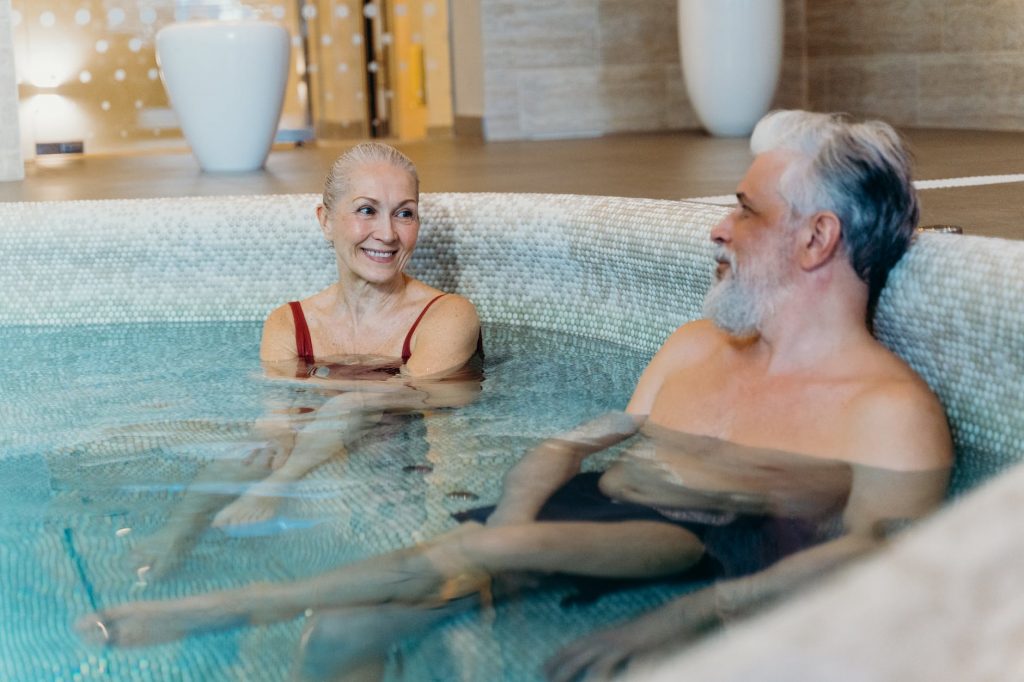
There's nothing quite so relaxing as a dip in the hot tub after a long day: the warm water bubbling around you and the jets pushing streams onto your tight back muscles. Certainly the most obvious benefit is just getting some time to unwind. However, hot tubs have other benefits too. They are actually good for your overall health and well-being. Here are four surprising health benefits that you can reap from sitting in a hot tub.
Better Sleep at Night
Okay, so you're probably well aware that hot tubs release stress. But it doesn't just impact you in the hot tub—there are lasting effects. Getting a better night's rest is one of them.
One study from 2012 found that people with fibromyalgia that caused sleep disturbances benefitted from hydrotherapy. In addition to improving their fibro symptoms, they received better sleep quality. And, even before this study, research into the effects of hot baths and hydrotherapy linked warm water with improved nightly rest.
Improved Cardiovascular Health
Soaking in a hot tub has the dual effect of lowering your blood pressure and raising your heart rate. Vascular functions and blood pressure show signs of improvement, reducing cardiovascular risk and mortality. This is especially true for individuals who have limited mobility that keeps them from regular exercise. Even just ten minutes in a hot tub can show an effect and has been considered a safe treatment option for people with high blood pressure.
Burning Calories
Who doesn't want to burn calories while just relaxing? As it turns out, hot tubs can help you achieve your weight loss goals. One small study from 2016 revealed that soaking in waist-high hot water (like in a hot tub) burns about as many calories as a half-hour walk. While sitting in a hot tub should not take the place of exercise, it can be a great addition to any exercise routine, making for a great way to relax those sore muscles afterward. There are several types of hot tubs offered by brands like Marquis Spas that you can utilize after your land-based workout.
Improving Insulin Sensitivity
Diabetics might benefit from hot tubs too. A few studies have shown that both saunas and hot tubs help improve insulin sensitivity. This could help make managing diabetes easier for people with either Type I or Type II as well as those struggling with obesity. In addition to some diet and lifestyle changes, as well as taking insulin, hot tubs could improve their quality of life.Hot tubs aren't just for relieving stress and relaxing sore muscles. They have a number of health benefits that might surprise you. Even if you are a considerably healthy person, you can still feel better after a delightful dip in the hot
Weak at the Knees: Strengthening Your Knees So You Can Keep Up With Your Workout
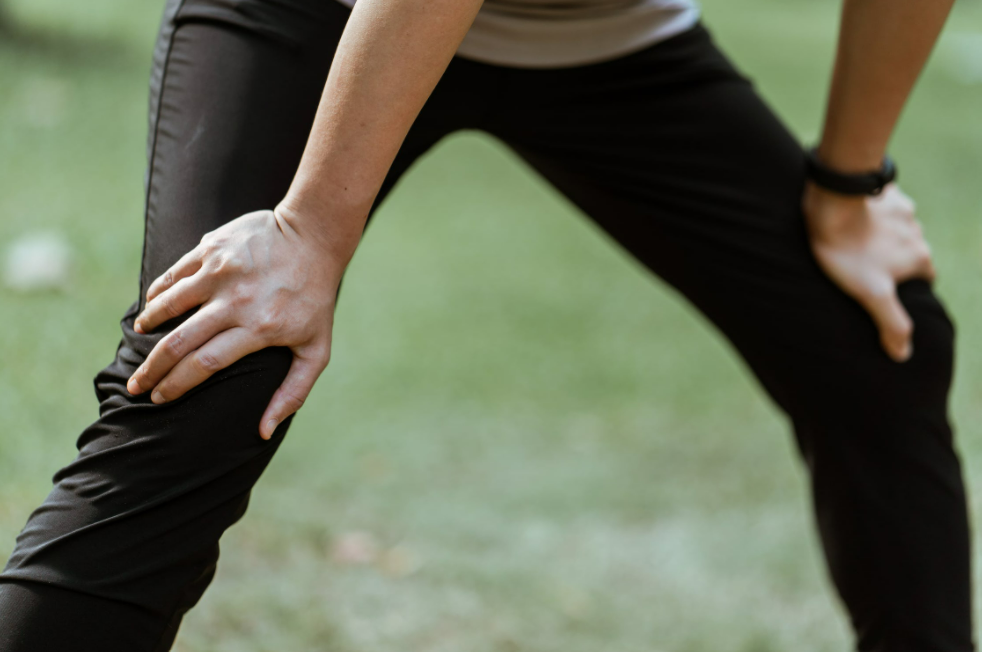
If you're one of the millions of Americans who struggle with chronic knee pain, you're not alone. Among the many difficulties wrought by stiff or painful knees, this specific type of pain can place severe limitations placed on your workouts.
By now, most people are aware of the critical importance of maintaining a regular exercise regime for long-term health. So don't let weak knees stop you from hitting the elliptical machine or attending that yoga session. Here are some of the best ways to strengthen your knees and fend off chronic knee pain.
Massage
Ancient healing practitioners have utilized the power of massage for millennia because it works. Massage can help relieve pain, increase circulation, and improve healing in aching knees so that you can get back to your regular workouts.
Best of all, you can massage your own knees—no need to hire an expensive masseuse. You can find videos that explain the techniques you can use at home to administer a DIY knee massage. In addition to focusing on the knees, massaging the thigh and calf muscles can also help relieve the pain in your knees.
Knee Replacement
In 2017, more than 700,000 people in America received knee replacement surgery. This type of surgery is one of the more common (and safer) invasive procedures. While it is most often performed on patients with chronic arthritis, it is also useful for those who have experienced a traumatic knee injury or a similar problem. The procedure has an enormous success rate and hopeful long-term prognosis in terms of greatly reducing or totally eliminating knee pain.
Talk to your doctor if you are interested in knee replacement, and they can discuss your options with you. After a healing period after the surgery, this procedure could enable you to get back into your regular workouts.
Anti-Inflammatory Diet
Chronic inflammation, in addition to driving the disease process in several conditions, also contributes to chronic knee pain. Accordingly, you should consider adding more powerful anti-inflammatory food choices or supplements into your daily routine. Examples of effective anti-inflammatory foods include garlic, ginger, turmeric, cruciferous vegetables like broccoli or kale, omega-3 oils from fish, and cinnamon.
Medications
In the unfortunate instance that natural interventions fail to eliminate knee pain, there is the option for pharmaceuticals to relieve your chronic pain. Acetaminophen, for example, is one of the more common over-the-counter drugs that can effectively manage pain.
However, you should remember that these pain relievers don’t heal your injured knee. Continuing to do high-impact workouts on a damaged knee could do serious harm to the joint. If there is a deeper problem, you should talk with your physician about treatment options.Try some of these strategies out on your own and see which ones work best for you. Remember: if you experience knee pain, you are not alone. Reach out to family, friends, or even one of the many online supp
Trainerize Makes Personal Training Even More Personal with New Apple Watch App Capabilities
Trainerize bridges the gap between trainers, clubs and members using the power of Apple Watch to define a 360° degrees approach to client coaching.
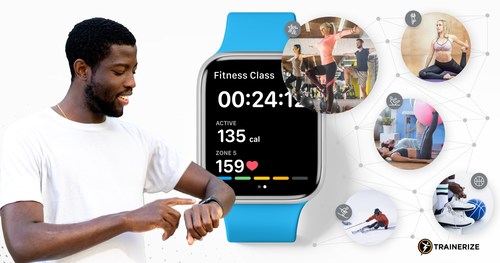
VANCOUVER, BC, July 29, 2021 /PRNewswire/ -- Trainerize, a pioneer of mobile applications that empower engagement between fitness trainers, gym owners, and their clients, announces its most sophisticated Apple Watch solution to date. The Trainerize Apple Watch app allows fitness businesses and individual personal trainers to participate in the digitalization of the health and fitness industry, using multiple Apple Watch capabilities to redefine the trainer/client experience.
Trainerize Makes Personal Training Even More Personal with New Apple Watch App Capabilities
The Trainerize Apple Watch app levels the playing field, allowing fitness brands/clubs of all sizes and independent personal trainers to launch an Apple Watch experience that matches that of any well-known brand, without the expense and expertise required to create their own solutions. It provides a whole new level of connection between personal trainers and their clients.
Trainers can develop tailored coaching programs, workout plans, and fitness classes delivered on their clients' Apple Watch while deepening and extending relationships through the real-time exchange of daily data such as activity, fitness levels and daily lifestyle information such as sleep and nutrition, with the clients' permission.
The Trainerize Apple Watch app is one of the most robust solutions to be developed for personal trainers within the fitness industry to streamline member engagement and activity in and outside the gym. Whether in-person or virtually, it brings a new level of intelligence and personalization to fitness and health coaching that goes way beyond the mere tracking of calories or the progress of activities.
Now phones can stay at home or in the locker since the app provides invaluable insights into clients' workout regimens and general health and fitness directly from Apple Watch. These include duration of workouts, distance, average and resting heart rate, calories burned, steps, sleep, and more.
Facilitating a 3600 approach to coaching, trainers can develop and adapt health and fitness programs based on real-world physiological indicators, activity, and habit data. For example, over time prescribed workouts can be increased in intensity taking into account changes to indicators like the client's predicted vo2 and resting heart rate, or the number of assigned lunges reduced if a client completed a long run the day before or slept poorly the previous evening.
The latest version of the Trainerize Apple Watch app provides even more functionality. It can now track any workout – regular/circuit or interval from the wrist as well as extra cardio activities including Swimming, Dance, and HIIT. It also allows for even more customization for trainers. For example, users can apply varying time sets to tailor training plans or personalize the apps' look and feel via updates to the watch face to highlight their own brand. In addition, the app streamlines the navigation and display of information for both the client and the trainer.
"We are entering an exciting new era where the fusion of technology, the omnipresence of wearables and specific data insights is making personal health and fitness training ever more personal," Trainerize Managing Director and Co-founder, Sharad Mohan. "The Apple Watch app we have created is a massive step into the future of digital fitness where it is no longer about tracking from the wrist but about developing a holistic approach to wellness 24/7. We are making it possible for fitness professionals and businesses to become constant companions in their clients' daily lives and guide and influence their fitness regimens and habits."
About Trainerize
Trainerize is a client engagement mobile app and software that allows fitness businesses and fitness professionals to expand their reach beyond their physical spaces, better connect with clientele, build meaningful relationships, and digitize the training experience. Fitness businesses use Trainerize to boost member engagement through digital services as well as attracting new members by tapping into the market of online training. To learn more, visitTrainerize.com.
National Seating & Mobility Expands Home Accessibility Services into California
NASHVILLE, Tenn., July 28, 2021 (GLOBE NEWSWIRE) -- National Seating & Mobility (NSM), North America’s largest provider of comprehensive mobility solutions has expanded home accessibility services into California with the acquisition of Eagle Accessibility Solutions & Equipment (EASE) in Sacramento and the appointment of home access expert Scott Lanswick, owner and founder of San Diego Age in Place Services. The acquisition and added expertise strengthen NSM’s ability to support home access customers throughout the state.
“Expanding the availability of home accessibility services is a reflection of our commitment to provide the full spectrum of mobility solutions to individuals who rely on them for independence,” said Bill Mixon, NSM CEO. “These investments will better position us to reach more Californians in need of these services.”
Founded in 2003 by Steve Weaver, EASE has built a national award-winning reputation as a home access market leader, specializing in the installation and service of ceiling lifts, ramps and stairlifts. An innovator in bathroom accessibility solutions, EASE has been recognized by the National Association of Remodeling Industry (NARI) and separately by the National Association of Home Builders (NAHB). Weaver, who has more than 20 years of industry experience, will transition to the NSM team with the acquisition alongside EASE employees, including Lisa and Nick Weaver.
Lanswick will join the NSM team to oversee home access services in Southern California. With more than 25 years of mobility and home accessibility experience, he has supported thousands of customers in the San Diego market. His expertise includes the sale, installation and servicing of home accessibility equipment.
“We are proud to welcome these experienced professionals to NSM and look forward to working together to provide comprehensive mobility and accessibility solutions throughout California,” added Mixon.
With the addition of the new location in Sacramento and the expansion in San Diego, NSM can cover the entire spectrum of home accessibility solutions from home modifications to the installation of ramps, stairlifts, vertical platforms lifts and ceiling lifts to better support clients. The NSM team additions bring a combined 40 years of home access experience to NSM in the market.
NSM also continues to expand home accessibility offerings through the company’s exclusive home accessibility partnership with The Home Depot. Announced last fall, The Home Depot Independent Living program offers solutions to customers looking to create safer home environments.
With the Sacramento location, NSM’s growth includes seven acquisitions so far this year.
About National Seating & Mobility For more than 25 years, National Seating & Mobility has been advancing independence and enhancing the quality of life of individuals with mobility challenges. With a network of more than 180 locations, experts and resources across the U.S. and in Canada, National Seating & Mobility is North America’s largest and most trusted provider of comprehensive mobility solutions including complex rehab technology, home and vehicle accessibility, and full-service equipment maintenance and repair. National Seating & Mobility is the only national mobility solutions provider accredited by The Joint Commission for demonstrating quality and safe care. For more information about National Seating & Mobility visit nsm-seating.com.
New App Helps Users Find Fitness Plans Fast
The FitnessPlans app takes the guesswork out of getting fit by providing users with data about other users’ changes in weight, body fat, and lean mass when following a particular program, and offers fitness plans by a variety of fitness professionals.
Consumers want to achieve noticeable results in the most efficient manner possible. An effective plan requires careful engineering.
That service can cost hundreds of dollars and require hours with a fitness professional. And while there's an overabundance of great workout choices today, mainstream consumers lack the time and expertise to engineer an effective plan from these options. Most fitness and nutrition services are unidiscplinary, siloed, and they focus on the means (a great workout), not the end (outcomes). As a result, consumers spend excessive time and money using multiple products, overtraining, and achieve minimal results.
FitnessPlans is a compass, not a coach. The FitnessPlans app takes the guesswork out of getting fit by providing users with data about other users’ changes in weight, body fat, and lean mass when following a particular program. Choose from plans that accommodate any training style, goal, or range of equipment. Each plan day lists out a concise workout and nutrition card and features supplemental behind-the-scenes content from the plan creator that includes daily best practices for achieving optimal results. Users can conduct workouts on their schedule, in the venue of their choice (home, gym, or on the go). No lengthy follow-along workout videos, scrolling, or manual tracking.
FitnessPlans has recently filed for two new patents to help customers invest their time and money wisely.
“We are entering a new era where being your fittest self doesn’t have to be so difficult. When you buy a water bottle on Amazon, there are thousands of ratings on quality, performance, and price. Why then, when it comes to something as meaningful as your personal fitness do consumers have to navigate hundreds of apps, health articles, and the latest social posts to determine the best way to get results,” asked Sarah Ludwig of FitnessPlans. “We’re on a mission to utilize existing technologies to drive outcomes for consumers, professionals, and commercial fitness operators with the highest possible ROI.”
Fitness professionals contribute a great deal of time and workout advice for free, with no easy way to monetize that value. Pros can join the app to create new plans or digitize existing PDFs and hardcopy plans. Once hosted on the app, features like Reel Share® dramatically reduce time required for common tasks like sharing to social, while automatically embedding a purchase link. In addition to automating routine tasks, the platform tracks the likes, clicks, and conversions of such posts to inform the fitness professional of which content will most likely grow their audience and sales.
The FitnessPlans consumer app is now available in the App Store. Fitness professionals interested in joining the platform should visit fitnessplans.io for more information.
About FitnessPlans
FitnessPlans is a company whose success thrives on the simple idea of making fitness results efficient, effective, and accessible to all. FitnessPlans leverages the best technology available to create solutions that are simple, practical, and connect all sides of the fitness ecosystem.
Masking Anxiety: Many U.S. Adults Believe Workers Still Need Masks in the Workplace
Majority Says Employees Are Entitled to Co-Workers’ Vaccination Status
Alexandria, VA, June 24, 2021—Nearly six in 10 U.S. adults (57%) believe employees should be required to wear a mask when working at an on-site work location, even after being vaccinated for Covid-19, according to results from the latest American Staffing Association Workforce Monitor® online survey conducted from June 10–14 by The Harris Poll among 2,066 U.S. adults aged 18 and older.
Notably, 70% of Blacks/African-Americans and 64% of Hispanics/Latinos believe employees should be required to wear a mask when working at an on-site work location, even after being vaccinated for Covid-19, compared with 50% of Whites/Caucasians. Two-thirds of parents with children under 18 (65%) feel this way, compared with 53% of nonparents of minor children.
“While government officials are rolling back Covid-19 requirements throughout the country, many workers aren’t ready to give up their masks just yet,” said Richard Wahlquist, ASA president and chief executive officer. “As brick-and-mortar workplaces reopen, workers are anxious about being around their colleagues once again. Employers must clearly communicate what steps they are taking to make their workplaces safe for their employees as they reopen.”
The Workforce Monitor also uncovered a tension between the right to know about co-workers’ vaccine status and the right to privacy about one’s own status. While two in three U.S. adults (66%) believe employees have a right to know if their co-workers have been vaccinated against Covid-19, a majority (60%) also say their personal vaccine status is no one’s business but their own.
In particular, 70% of Baby Boomers say employees have a right to know co-workers’ Covid-19 vaccine status compared with 66% of Millennials and 60% of their Generation X counterparts. The largest support for privacy regarding their own Covid-19 vaccine status comes from Generation X (68%), closely followed by Millennials (67%), with half of Baby Boomers (52%) sharing this sentiment.
“As work sites reopen across the country, employee concerns about Covid-19 are creating a challenging privacy paradox,” said Wahlquist. “Employees want to know whether their fellow co-workers have been vaccinated but don’t want to make their own status public. In balancing these interests, employers must keep workplace safety considerations top of mind.”
The Harris Poll conducted the survey online within the U.S. on behalf of ASA from June 10–14, 2021, among a total of 2,066 U.S. adults aged 18 and older. Results were weighted on age, gender, education, race/ethnicity, household income, marital status, household size, and geographic region where necessary to bring them into line with their actual proportions in the U.S. population. In addition, the data were adjusted for differences between the online and offline populations.
# # #
About the American Staffing Association
The American Staffing Association is the voice of the U.S. staffing, recruiting, and workforce solutions industry. ASA and its state affiliates advance the interests of the industry across all sectors through advocacy, research, education, and the promotion of high standards of legal, ethical, and professional practices. For more information about ASA, visit americanstaffing.net.
About the ASA Workforce Monitor
The ASA Workforce Monitor is a periodic survey commissioned by ASA and conducted online by The Harris Poll among 2,000 or more U.S. adults aged 18 and older. The survey series focuses on current workforce trends and issues. For more information about the survey series, visit americanstaffing.net/workforcemonitor.
About The Harris Poll
The Harris Poll is one of the longest-running surveys in the U.S.—tracking public opinion, motivations, and social sentiment since 1963—that is now part of Harris Insights & Analytics, a global consulting and market research firm that delivers social intelligence for transformational times. To learn more, visit theharrispoll.com.
Manitoba Harvest Announces New Research Partnership to Drive Innovation in Hemp and Pea Protein
The world's leading brand in hemp foods, Manitoba Harvest will lend its expertise in innovation, product development, and formulation to a consortium of industry leaders through Protein Industries Canada.
WINNIPEG, MB, July 27, 2021 /CNW/ - Manitoba Harvest, the global leader in hemp food, is partnering with a consortium of industry leaders through Protein Industries Canada to develop new hemp and pea varieties with increased protein content, differential starch content, and improved texture. These advancements will dramatically increase the potential for hemp usage in the growing plant-based protein movement.
Manitoba Harvest will lend its expertise in food innovation, product development, and formulation, to improve the potency and functionality of hemp and pea protein. Together with their partners, this work will make hemp proteins suitable for a wider range of food applications.
"Diversity of ingredients within Canada's plant-based foods and ingredients sector is an essential element of helping it grow to become a global leader," Protein Industries Canada CEO Bill Greuel said. "Manitoba Harvest, through their partnership with NRGene, Farmer's Business Network and Pulse Genetics, is displaying great leadership in the area of hemp ingredient development. The hemp-pea flour blend they develop through this project will go a long way in meeting the needs of consumers and food manufacturers alike."
"As the largest and longest standing hemp food brand in North America, we are committed to providing our customers with the best hemp products available," said Jared Simon, President, Manitoba Harvest. "Developing plant-based protein products with superior taste, functionality and nutrition aligns perfectly with our objectives as a brand, and we have a history of leadership at the farm level, working directly with growers to improve quality throughout the hemp supply chain."
The development of these new seed varieties, as well as the hemp-pea flour blend, is expected to create new market opportunities within Canada's plant-based food and ingredients value chain. NRGene, Farmer's Business Network, Pulse Genetics and Manitoba Harvest are together investing $3.3 million into the project, with Protein Industries Canada investing an additional $1.8 million.
About Manitoba Harvest Founded in 1998, Manitoba Harvest (the "Company") is a pioneer and leader in branded, hemp-based foods with the fastest growing products in the global hemp food market. The Company's all-natural product portfolio includes Hemp Hearts (shelled hemp seed), Hemp Protein, Hemp Protein Blends, Wellness Bars, Granola and Hemp Oil. Manitoba Harvest's products are sold globally, including approximately 17,000 retail stores across the United States and Canada.
Manitoba Harvest is a Certified B Corporation and the first Canadian food company to attain a CarbonZero Certification. A wholly owned subsidiary of Tilray, Inc. (NASDAQ: TLRY) (TSX: TLRY), Manitoba Harvest is mission-based company dedicated to inspiring and empowering the worldwide community to live their very best life by providing them with products that meet the needs of their mind, body, and soul and invoke a sense of wellbeing.
About Protein Industries Canada
Protein Industries Canada is an industry-led, not-for-profit organization committed to positioning Canada as a global source of high-quality plant-based food and ingredients. Together with industry, Protein Industries Canada has committed more than $377 million to the Canadian plant-protein sector. For more information, visit proteinindustriescanada.ca.
SOURCE Manitoba Harvest
Plastic Surgery on the Rise as Cities Reopen, Top NYC Surgeon Says Beware
New York, NY, July 22, 2021 — As states begin to reopen, cosmetic surgeries have risen at an astounding rate. Experts say the biggest factor is likely the "Zoom Boom." With the switch to online work and meetings, many people went from only looking at themselves while washing their hands during bathroom breaks to suddenly staring at their image on a screen for hours each day. As a result, they had ample time to analyze their lines, wrinkles, double chins and more.
People quickly turned to seeking out solutions, cosmetic surgeons say, and thousands upon thousands began seeking plastic surgery during the pandemic, and now this surge has only increased as cities have begun to open their doors.
For those who suddenly didn't need to commute, buy lunches out or add to their work wardrobes, the pandemic also meant more money in the bank to spend as they wished.
At the start of the pandemic, things didn't look good for the field of plastic surgery. With lockdown, many hospitals and surgical centers banned all elective procedures, limiting plastic surgeries to those that were reconstructive in nature. In some cities, practices had to close to all but essential patients or quickly pivot their focus to in-office procedures. Patients canceled surgeries, afraid of new risks in the face of COVID-19. Some were no longer able to afford their procedures due to changes in income or were pulling back on spending just in case.
Doctors say breast augmentation and Brazilian Butt Lifts are the top surgeries being performed; however, liposuction, rhinoplasty, eyelid surgery and facelifts are also on the rise. Less invasive procedures like Botox injections also are skyrocketing. Experts say the Botulinum Toxin market jumped from a -8.6 percent slump in 2020 to a 4.7 percent increase this year, and it’s still rising at an even faster pace.
Top New York City plastic surgeon Dr. Richard Westreich offers the following tips for those considering cosmetic procedures:
Tip 1: Make sure any doctor you schedule through a virtual visit allows you to cancel AFTER an in-person meeting for surgery. There is no substitute for face to face.
Tip 2: Results over name recognition. Your outcome will not be better than what they post online. That's considered their best work.
Tip 3: Don't rush. COVID-19 won't last forever, and you will have opportunities in the future that are different but workable. Make sure you're solid before moving on.
Now that mask mandates are ending, lower facial nonsurgical procedures will likely rise. Lips should make a huge comeback, and noses will stay strong. Body procedures will be on the rise now that people need to shed COVID-19 weight and are going out again.
Dr. Westreich says it’s also very important that patients are vaccinated to stay healthy pre- and post-operation.
“Nearly all COVID-19 deaths in the U.S. now are in people who weren’t vaccinated, a staggering demonstration of how effective the shots have been and an indication that deaths per day — now down to under 300 — could be practically zero if everyone eligible got the vaccine. A recent study shows that ‘breakthrough’ infections in fully vaccinated people accounted for fewer than 1,200 of more than 853,000 COVID-19 hospitalizations.”
More on Dr. Richard Westreich
Dr. Richard Westreich graduated Magna Cum Laude with a B.A. in Biological Basis of Behavior, Neuroscience concentration in 1995 from the University of Pennsylvania. He completed his medical school training at the New York University School of Medicine in 1999 with an M.D. and Honors in Cell Biology Research. Dr. Westreich then did his post-graduate training in Facial Plastic Surgery and Otolaryngology at the prestigious Mount Sinai Hospital in New York City.
He has been selected multiple times by Castle Connolly and New York magazine as one of the top doctors in facial plastic surgery. He is an assistant professor at SUNY Downstate Medical Center and is on staff at Lenox Hill and Mount Sinai Hospitals. He is a faculty member and teacher at a fellowship in Facial Plastic Surgery at Mount Sinai. His private practice is located on the Upper East Side of Manhattan, where he specializes in rhinoplasty, septoplasty, secondary and reconstructive rhinoplasty, facelifts, eyelid surgery and nonsurgical procedures.
He can be seen regularly on several national news programs, including ABC, CBS, FOX and Newsmax.
TRAIN IT RIGHT NEWSLETTER
Sign Up and get a free 7 day Train it Right HIIT Program!