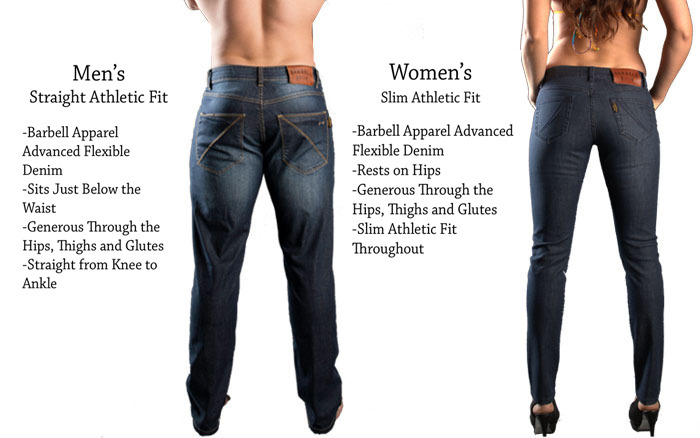
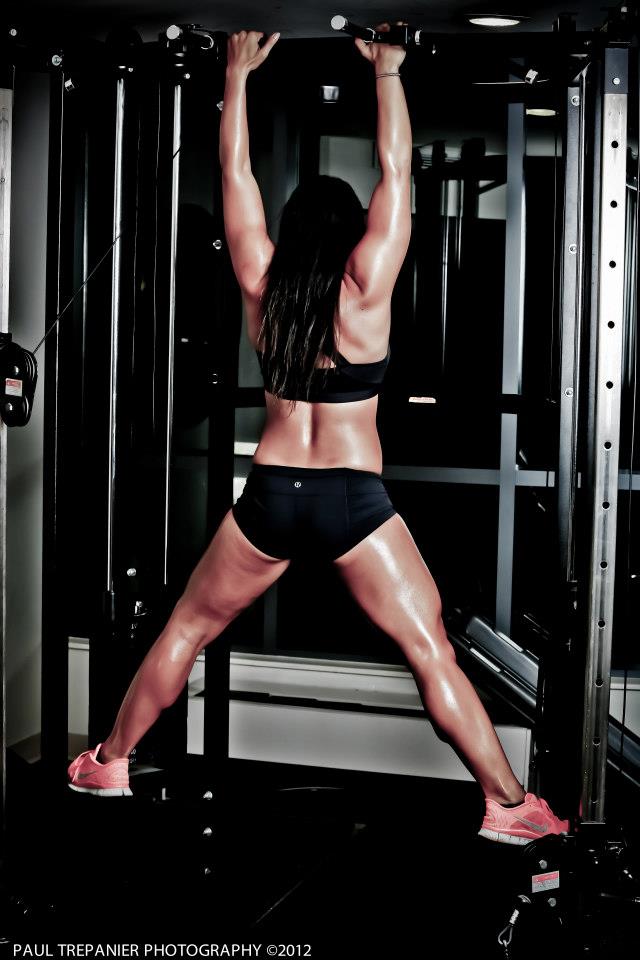
Are you an athlete or fitness enthusiast? Are you having trouble fitting into jeans? The crafty fitness enthusiasts behind Barbell Apparel have designed jeans that fit. YEP I said it. Jeans that fit!!!!!!!!! They recently just launched their venture on Kickstarter.
According to the kickstarter site:
"Barbell Denim uses technologically superior denim designed to move in complete sync with your body. With our jeans it almost feels like you’re wearing nothing.
Designed for athletes, these jeans are made to fit comfortably over muscular legs by accommodating your quads and butt without forcing you to buy larger sizes for the small waist you work so hard for.
However, Barbell Denim will accommodate any body type. Even if your legs aren't particularly muscular, Barbell Denim will still look amazing on you and feel even more amazing as you move in them. Our hybrid denim stretches both ways so that it can compliment smaller legs, while still easily stretching to accommodate larger legs as well. "
I want a pair! I can never find jeans that fit! Who's with me?!
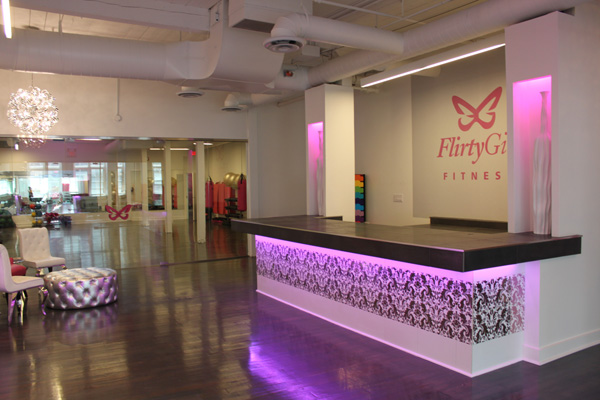
Join us this Thursday for free flowing pink cocktails & munchies. Lots of prize giveaways in every class & of course FREE CLASSES ALL NIGHT!
First Timers Welcome.
Punchcard Holders Don't Need Your Cards.
Members Get a Special Gift Bag
Just a Few of the Prize Giveaways:
Fifth Night Club - Bottle Service for 8 for the Perfect Girl's Night Out Party Hammam Gift Certificate for a Dermalogica Facial, Shellac Manicure & Hammam Steam Kara Scalp Salon - Revolutionary Holistic Approach to Detox Your Hair & Scalp Fresh Gift Certificate - Our Favorite Super Healthy Vegetarian Restaurant Degree Anti-Perspirant for Everyone Lara Bars for Everyone Schwarskopf Gift Basket Full of Amazing Hair Products And so many more....
Check out our schedule below and call 416.920.1400 to register or go online.
Injury prevention: Tennis Elbow
No doubt you have heard of this injury in past while either watching sports or have personally experienced some symptoms of it. Tennis elbow (properly known as Lateral Epicondylitis) is a chronic, nagging pain on the lateral (outer) aspect of the elbow joint often caused by weakness leading to overuse and overexertion of certain movements. Some other signs include pain when gripping an object, pronation and supination while holding an object or by stiffness throughout the forearm and elbow. The reason it was given the common name of tennis elbow was it was a common injury that was popping up in tennis players, with those at higher levels having a greater incidence of the injury. While not a completely debilitating injury, it is commonly a nagging, persistent annoyance for many while it can manifest itself as a very sharp shooting pain very much like other tendonitis type pains.
Rapid extension of the elbow joint coupled with either forceful pronation (turning palm down) or supination (turning palm up) is one of the primary causes of tennis elbow with both direct impacts and overuse also being major contributors to the frequency of the debilitation. Typically there is minimal inflammation from this but is indicated with pain along the radial nerve as micro tears and adhesions in the tendons at the wrist and/or elbow signal pain.
To help prevent the injury from occurring in the first place or to reverse the symptoms of it, one must directly focus on the structures involved. What this requires is properly warming them up to allow greater blood flow and also performing various stretches for the muscles around the elbow and wrist to ensure that there is adequate flexibility in the muscles and tendons and also that the joints themselves are able to move through their full ranges of motion. Some simples ones are wrist circles, wrist extension and stretching out the hand. As well, ensuring that the muscles and joints are “conditioned” enough to handle repetitive use like in tennis/racket sports by gradually increasing their work capacity over time and learning proper mechanics. One population known for this are the older population who take up tennis, doing some general fitness and stretching before and after will help alleviate symptoms.
Also strengthening up specific muscles will immensely cut down the risk for injury. A few of the major points are the supinators and pronators of the arm, excluding the biceps brachii as it is typically already sufficiently strong. I speak of the smaller, supinator muscle, Pronator quadratus and teres. Some simple ways to do this is at a twin pulley station, adjust the pulley height to be at roughly waist height (approximately the same height as the hand when the elbow is bent to 90 deg). From here using either a small straight bar or a rope attachment, perform both pronation and supination of the wrist while keeping the elbow bent to 90 degrees. To do this, stand beside the pulley with it beside your elbow while you are looking sideways to the pulley, grab the attachment with your furthest hand (if right side is beside pulley, grab with left hand) for supination and closest hand for pronation. From here if you are doing supination start with the palm facing the floor and turn your palm up, in the case of pronation, do this in reverse. This will help strengthen the muscles to be able to handle greater external load demands like striking a ball in with a racket. Performing relatively higher reps, 10-15 reps with a slow eccentric and fast concentric is best while holding a pause at the end of each range.
Another common issue is that people are generally far stronger in elbow flexion movements when the hands are supinated (regular bicep curl) while being pronated (reverse curl) they are significantly weaker. This large imbalance on its own over time can manifest it in the form of tendonitis so as opposed to always doing regular curls, for a time being exclude them completely and focus on reverse grip and neutral (hammer) grip curling movements to bring these muscles all up to par.
With the 2014 Sochi Winter Olympics just a couple of weeks away let’s take a look at one aspect of getting to the highest level in a sport, Strength training. While yes a vast majority of sport specific coaches have a decent understanding of strength training the truth is their expertise is the specific skill and tactical development of the sport which is why athletes need an additional component to their support staff, Strength and Conditioning Coaches.
Using track and field as an example, the main staples that 90% of track coaches program for their athletes are:
Power Cleans
Partial Range Back Squats
Barbell Flat Bench Press
[insert random abdominal exercise here]
As a strength coach I have to look not only at what will improve performance by making the athlete faster (stronger to improve stride length) but also what will prevent injury and the biggest injury in the sport is a hamstring injury, but yet not one of the above exercises addresses the issue of ensuring the hamstring is sufficiently strong to prevent being overpowered by the quadriceps and glutes and then leading to a strained/pulled hamstring. This can then be extended to every sport and the specific strength qualities related to them whether its acceleration/power, speed, strength, endurance, strength endurance.
Strength Coaches study and are better equipped than sport specific coaches to find various imbalances and then using the tools in our toolbox, scientifically formulate a program to reduce the discovered imbalance to reduce injury risk and improve athletic performance whether that’s running speed, jump height, racquet speed or punching power. This requires another approach to periodization training and even mini periodization within a specific training cycle/block to maximize the effect of training to translate onto the field of play. Just in a program this includes:
Exercise selection
Variation of exercise selection (Range of motion, implement, grip, angles)
Specificity to sport skills, tasks and movements
Taking into account physical and emotional demands of practice
Taking into account physical (metabolical, hormonal, neurological) and emotional demands of training session (repititions, sets, intensity/load, tempo and speed of movement, rest intervals, range of motion)
Nutritional demands and status of athlete
Elite athletes need to have a strength coach in their support staff to help to ensure they are physically ready to perform at their highest level, to be their strongest/fittest for competition. Take a look at every NCAA collegiate program, they have a department dedicated to strength and conditioning for this very reason.
To perform at the highest levels, elite athletes require their training to be catered and specific towards them. This gives the added NEED to have an additional coach who specializes in strength and conditioning training to ensure the athlete is at their best when in competition and able to handle the rigors and demands of day to day practices and come out of it healthy.
- Tony Risling
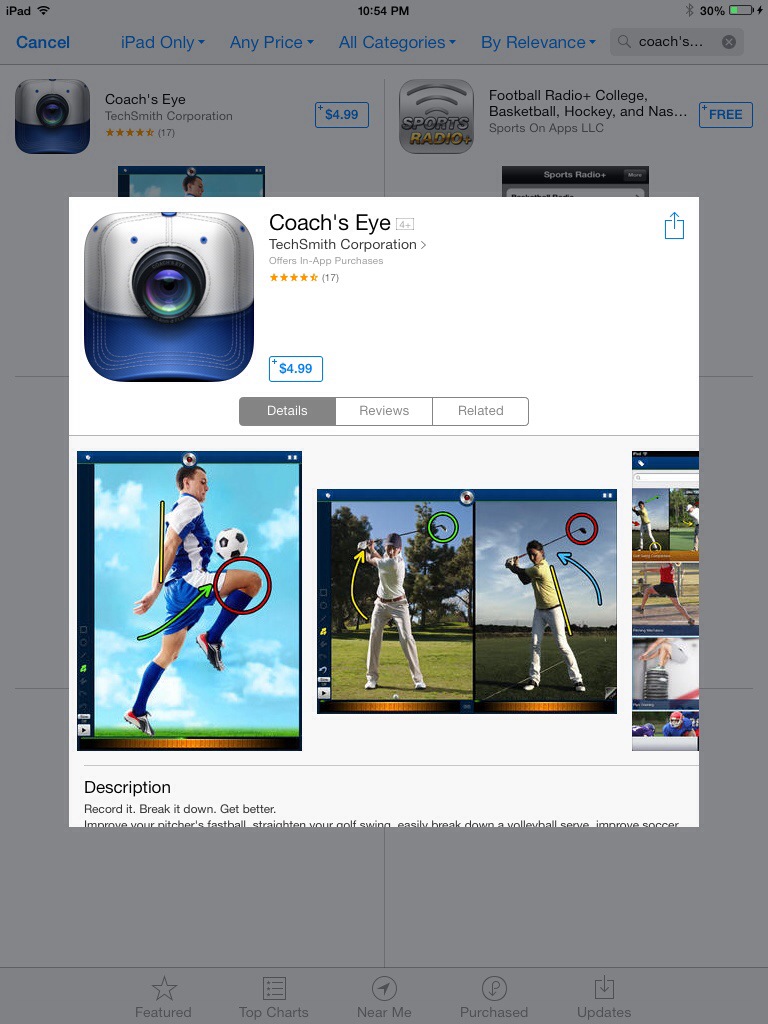
I found out about this app just recently and it's so good to show your athletes and clients what they need to improve on and where things are going wrong. It's called coaches eye. It costs only $4.99 and is totally worth ever cent. Search for it In the App Store.
Do you think bootcamp is tough? Try it in the sand! Starting Saturday December 7th 2013. Join Alicia at Beach Blast for an indoor bootcamp. Choose the morning session or the afternoon session. Bring your own yoga mat and get ready to have some fun!
Location
Beach Blast 15 Leswyn Rd Toronto, ON, Canada, M6A 1K1
TTC Directions
From Yorkdale Subway Station:
Take any Lansdowne 47 (B or C) Bus to Caledonia and Leswyn Rd. Walk to #15 Leswyn
From Lawrence West Subway Station:
Take any Lawrence Ave. W Bus # 52 or 58 to Caledonia. Walk North 1 block to Leswyn Rd. Turn right walk to #15
From Lansdowne Subway Station:
Take any Lansdowne 47 Bus North. Get off at Caledonia and Leswyn. Walk 2 buildings in on Leswyn.
2 Minutes from Yorkdale Mall
Features
7 indoor courts
8 outdoor courts at Caledonia Park (adjacent to Beach Blast parking lot)
Easy access to Caledonia Park
Licensed cafe and snack bar
3 Large Patio Areas on multiple levels
Register on the December 7th in person or email trainitright@gmail.com
Reebok introduces new Sidney Crosby
SC87 Collection
NHL Superstar’s new Reebok apparel and footwear designed
to deliver functional, adaptable performance
Toronto, ON – Today leading fitness brand, Reebok, unveiled its new ReebokSC87training collection of footwear and apparel to the Canadian market. Endorsed by three-time NHL all-star Sidney Crosby, the high-performance assortment is now available at Sport Chek, Sports Experts and Reebok retail locations across the country, as well as at www.reebok.ca.
The Reebok SC87 apparel line, Sidney Crosby’s signature collection of Reebok ONE Series apparel, incorporates Reebok’s latest and most innovative fitness apparel technologies. Reebok PlayDry is a moisture management system designed to wick away moisture from the body, keeping the wearer dry while working out. Flat locked stitching and engineered arm openings also provide ease of movement during any workout.
“At Reebok we believe in making fitness products that live up to the expectations of professionals like Sidney Crosby and everyday athletes alike,” said Michael Rossi, VP Reebok Canada. “Crosby wears his gear everyday as he prepares for his season, which is a testament to its quality. We are very proud to have an outstanding Canadian sports icon as part of the Reebok family, and his signature collection, Reebok SC87, representsour brand so well.”
Key apparel items in the collection include the Reebok SC87 Delta Bonded Fleece FZ Hoody ($79.99), the Reebok SC87 Jacquard Short Sleeve Shirt ($44.99) with engineered armhole construction and Flatlock stitching, as well as the Reebok SC87 10” Knit Short ($39.99) with low pressure waistband with internal drawcord.
Reebok SC87 apparel
The Reebok SC87 line features two new footwear offerings in the Reebok SC87 ONE Trainer 1.0 ($109.99) and the Reebok SC87 ZigTech 3.0 ($119.99).
A lightweight trainer that delivers the essentials, Reebok SC87 ONE Trainer 1.0footwear comes equipped with a breathable upper, durable heel strike and a soft, cushioning sockliner that can accommodate orthotics. Its low-cut design means added mobility needed for the exercises Crosby performs in the gym to get stronger on the ice.
Reebok SC87 ONE Trainer 1.0
At 9.4 oz. (270 gr) Reebok SC87 ZigTech 3.0 footwear is the lightest, most responsive ZigTech shoe to date. It features a de-coupled heel for an impact-reducing natural shearing during heel strike and its Infinity Impact System midsole keeps Zig units located only where your foot strikes the ground. A strong and lightweight spring plate supports the foot from impact thru the gait cycle and an Active Lacing FitSleeve secures the foot directly over the midsole.
Reebok SC87 ZigTech 3.0
Revealed during this past weekend’s Road Hockey To Conquer Cancer tournamentbenefiting The Princess Margaret Cancer Foundation, the Reebok SC87 collection was launched alongside Sidney Crosby’s new Reebok TV commercial, which will air this fall. As part of the fundraising event, Reebok donated $35,000 to Road Hockey To Conquer Cancer tournamentto help fund research for a cause close to so many Canadians.
Reebok's new commercial featuring Sidney Crosby for the SC87 Collection is available to watch at http://youtu.be/k6qYBkRL_Z8.
The Reebok SC87 Collection is available at Sport Chek, Sports Experts and Reebok retail locations across the country, as well as at www.reebok.ca.
Reebok is dedicated to empowering people to be fit for life. Reebok wants to inspire people to get moving and is passionate about helping people lead a healthy and active lifestyle.
Check out the youtube video that the Toronto Police posted. It shows you what they have to go through to become an officer. Do you think this is enough? Is there re-testing every year? I think that there should be so that they are forced to keep their fitness levels in check. This would be a good idea since their job is physically demanded.
Questions? Comments? Concerns?
Fitness model Jamie Eason is ready to train again and posted this on her facebook.
"Just had my final post-partum check up and I got the green light to work out. I've gained quite a few curves. My hips are 3 inches wider and I'm not sure how much more they will shrink? I'm about 8 lbs from my pre-baby weight, which isn't bad but my body composition is considerably different. I've got free weights at home, so it's time to start building up some endurance again. Please wish me luck! "
She looks great for just giving birth! We wish you all the best girl!
TRAIN IT RIGHT NEWSLETTER
Sign Up and get a free 7 day Train it Right HIIT Program!