Research shows hydroxychloroquine has substantial survival benefit among patients with systemic lupus erythematosus in the general population
VANCOUVER, May 20, 2020 /CNW/ - An Arthritis Research Canada study has revealed substantial survival benefit associated with the current use of hydroxychloroquine (HCQ), and increased mortality with recent discontinuation among individuals with systemic lupus erythematosus (SLE) in the general population.
Hydroxychloroquine is an often prescribed medication for lupus patients given the number of benefits it offers, including a reduction in disease severity and its ability to lower the risk of lupus nephritis and several other comorbidities such as hyperglycemia, hyperlipidemia, venous thromboembolism, and pregnancy complications. While it has shown significant survival benefit among patients who receive specialized care, this benefit has not been previously demonstrated with the general population until now.
"The study supports the additional benefit of hydroxychloroquine in preventing premature death in patients with lupus, regardless of what type of lupus patients may have. Staying on hydroxychloroquine, will save your life," said Dr. J. Antonio Avina-Zubieta, senior research scientist at Arthritis Research Canada who conducted the study.
The research team used anonymous administrative health data which includes information on demographics, vital statistics, healthcare visits, and prescription history to study all patients. Users of hydroxychloroquine were designated into four categories based on the timeframe between their last prescription date (i.e. end of medication supply) and index rate (i.e. death rate). These categories include current users (<30 days), recent users (30-365 days), remote users (>365 days), or never used.
"Hydroxychloroquine is a life-saving medication for lupus patients that should never be stopped if tolerated. Taking hydroxychloroquine as prescribed by a physician can help avoid premature death for lupus patients. One of the highlights of our study, is the findings apply to the average patient with lupus. We know that often patients believe when it comes to medications, less is better – this study showed that this is not the case for hydroxychloroquine. In the current COVID-19 pandemic, this medication was suggested as a potential therapy for COVID-19 patients which resulted in a potential shortage. Lupus patients need to make sure they have their supply secured by their pharmacy," Dr. Avina-Zubieta continued.
In the long term, researchers hope future studies can further explore the potential link between hydroxychloroquine discontinuation and increased mortality as well as its impact on other systemic lupus erythematosus related outcomes.
About ARTHRITIS RESEARCH CANADA: Arthritis Research Canada is the largest clinical arthritis research institution in North America. Our mission is to transform the lives of people living with arthritis through research and engagement. Led by world-renowned rheumatologist, Dr. John Esdaile, Arthritis Research Canada's scientific team of over 100 are creating a future where people living with arthritis are empowered to triumph over pain and disability. With four centres across Canada in British Columbia, Alberta and Quebec (Laval and McGill Universities), Arthritis Research Canada is leading research aimed at arthritis prevention, early diagnosis, new and better treatment, and improved quality of life.
SOURCE Arthritis Research Canada
Canadian Hospice Palliative Care Association calls for more compassionate visitation protocols during COVID-19 pandemic
OTTAWA, May 21, 2020 /CNW/ - In response to inconsistent and in some cases extreme restrictions on end-of-life visitations across Canada during the COVID-19 pandemic, the Canadian Hospice Palliative Care Association (CHPCA) and the CHPCA Champion's Council are calling on health authorities to implement a more compassionate approach.
While certain provinces have taken steps to relax visitation protocols for end-of-life situations, many hospitals and long-term care homes still do not allow family access, even with personal protective equipment (PPE).
"Every Canadian deserves the chance to say goodbye to their loved ones, even in an unprecedented crisis such as COVID-19. There have been too many heartbreaking stories of families who were unable to say goodbye due to extreme restrictions on end-of-life visitations." said Sharon Baxter, Executive Director at the CHPCA. "While health and safety must continue to be paramount as we fight COVID-19, we can do better as a society by promoting a more compassionate, inclusive visitation protocol that embraces hospice palliative care principles and dying with dignity.
"The CHPCA, which serves as the Secretariat for the Quality End of Life Care Coalition of Canada (QELCCC), is urging health authorities and providers to deliver on three key asks:
Adopt a compassionate protocol that allows those nearing death to say goodbye to their families and loved ones, and follows safety measures including PPE requirements as indicated by the Public Health Agency of Canada. This can be achieved by reviewing current public health protocols to include a compassionate approach around end-of-life visitations.
Liaise with the hospice palliative care (HPC) community to exchange expertise in caring for the dying and the bereaved. Many of the approximately 265,000 Canadians who die each year are supported by HPC, so the CHPCA and its partners have extensive experience in this area and valuable learnings to share.
Offer grief and bereavement support services for those who lose a family member or loved one. Existing grief and bereavement services are extremely limited and not necessarily funded by the health care system. There are significant long-term implications Canada could face if growing demand is not addressed.
"Together, these recommendations will help Canadians say goodbye and deal with their loss in a way that protects the safety of frontline health care workers and prevents transmission of COVID-19," added Russell Williams, chair of the CHPCA's Champion's Council. "We look forward to collaborating with health care providers on this important issue."
About The Canadian Hospice Palliative Care Association The CHPCA is the national voice for Hospice Palliative Care in Canada. Advancing and advocating for quality end-of-life/hospice palliative care in Canada, its work includes public policy, public education and awareness. Established in 1991, its volunteer Board of Directors is composed of hospice palliative care workers and volunteers from Canadian provinces and territories as well as members-at-large.
SOURCE Canadian Hospice Palliative Care Association
Switch Health Launches First Mobile Rapid Testing Unit (MRTU) to Fight COVID-19 in Canada
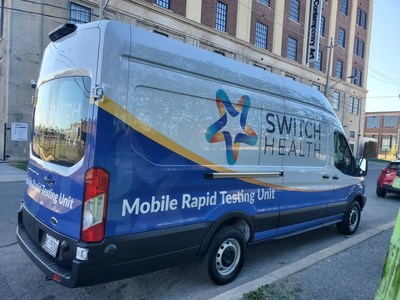
TORONTO, May 21, 2020 /CNW/ - Today, May 21, 2020, Switch Health Holdings Inc. (Switch Health) is pleased to announce the launch of its first Mobile Rapid Testing Unit (MRTU), designed to assist in the fight against COVID-19. Switch Health, a Canadian health solutions provider focused on patient-centered point-of-care, has partnered with leading Canadian laboratories to expand COVID-19 testing across the country.
Switch Health has an initial fleet of 30 rapid testing vehicles, staffed with registered healthcare professionals, support staff, and personal protection equipment, with ability to rapidly deploy 250 MRTUs. Switch Health staff are trained in nasopharyngeal swabbing specimen collection, which will then be delivered to lab partners to run testing diagnostics. As well, Switch Health has entered into a strategic partnership with a leading onsite DNA detection platform to offer point-of-care testing.
Switch Health MRTUs have the capacity to test entire enterprises and communities efficiently, including elder care facilities, remote communities, and essential businesses and organizations. Such widespread and targeted testing will assist in providing the confidence necessary for individuals, employees and businesses to safely open the economy.
Switch Health is able to rapidly respond to COVID-19 flare-ups and presents an enduring solution to assist preventing further economic and societal shutdown. Specific to business, the Switch Health solution comprises initial and ongoing testing combined with regulated facilities entry surveillance monitoring by proven and tested hardware and workplace sanitization.
"COVID-19 is an all-hands-on-deck situation which is why we've crafted our public health and business to business solutions to help Canada get back on track," says Marc Thomson, Chief Operating Officer at Switch Health.
"Testing is the key to opening society, restarting the economy, and most importantly, saving lives. By being able to rapidly identify, test, trace, and isolate COVID-19 cases, Switch Health will be a long-term partner to keep Canadians safe and healthy, and our economy strong," Mr. Thomson added.
About Switch Health:
Switch Health is a leader in connected disease management, having worked with pharmaceutical companies to assist in developing modern connected diabetes diagnostic devices, and more recently in the arena of technology transfer, licensing, distribution, and deployment of broader diagnostic devices, services, and their required secure digital platforms.
Switch Health currently services clients across Canada, USA, Switzerland, Germany, UK, Australia, South Africa, Spain and Singapore. The Switch Health team prides itself with world-class advisors and medical researchers, and has long standing relationships with clients such as McKesson, Ascensia, Bayer, Takeda, Roche, and AstraZeneca.
SOURCE Switch Health Inc.
The Warrior’s Meditation Shares Best-Kept Secret In Stress Relief And Self-Improvement
Portland, OR, May 21, 2020 — The Warrior's Meditation by Richard L. Haight, the award-winning author of The Unbound Soul, makes transformative meditation accessible to the masses, with short, daily sessions that don’t require periods of isolation.
“The Warrior's Meditation is unlike any other meditation. This method is flexible in application, which allows it to blend with whatever your day has in store,” Haight says.
Perfect for people of all backgrounds and skill levels, The Warrior’s Meditationteaches an instinctive, non-religious form of Samurai meditation that is both practical and extremely effective.
Through daily meditation, practitioners can experience the following cognitive and physical benefits, among many others:
1. Improved immune function; decreased cellular inflammation and pain.
2. Increased positive emotions; less anxiety, depression and stress.
3. Increased emotional intelligence and compassion; reduced feelings of insecurity.
4. Increased gray matter in areas related to paying attention, positive emotions, emotional regulation and self-control.
5. Improved memory, creativity and abstract thinking.
Life is busy, and few people have time to spend hours a day in meditation. With The Warrior's Meditation, readers can experience profound clarity and awareness wherever they are and eventually embody meditation as a way of being.
Author Richard L. Haight is a master-level instructor of martial, meditation and healing arts. He began formal martial arts training at age 12 and moved to Japan at the age of 24 to advance his training with masters of the sword, staff and aiki-jujutsu.
During his 15 years in Japan, Haight was awarded masters licenses in four samurai arts as well as a traditional healing art called sotai-ho. He is one of the world's foremost experts in the traditional Japanese martial arts.
Through his books, his meditation and martial arts seminars, Haight is helping to ignite a worldwide movement for personal transformation that is free of all constraints and open to anyone of any level. He now lives and teaches in southern Oregon.
The Warrior's Meditation: The Best-Kept Secret in Self-Improvement, Cognitive Enhancement, and Stress Relief, Taught by a Master of Four Samurai Arts
Publisher: Shinkaikan Body, Mind, Spirit LLC
ISBN-10: 0999210092
ISBN-13: 978-0999210093
Paperback available at all online bookstores.
APA STRESS IN AMERICA REPORT: HIGH STRESS RELATED TO CORONAVIRUS IS THE NEW NORMAL FOR MANY PARENTS
Online learning, basic needs, missing milestones contribute to parental stress
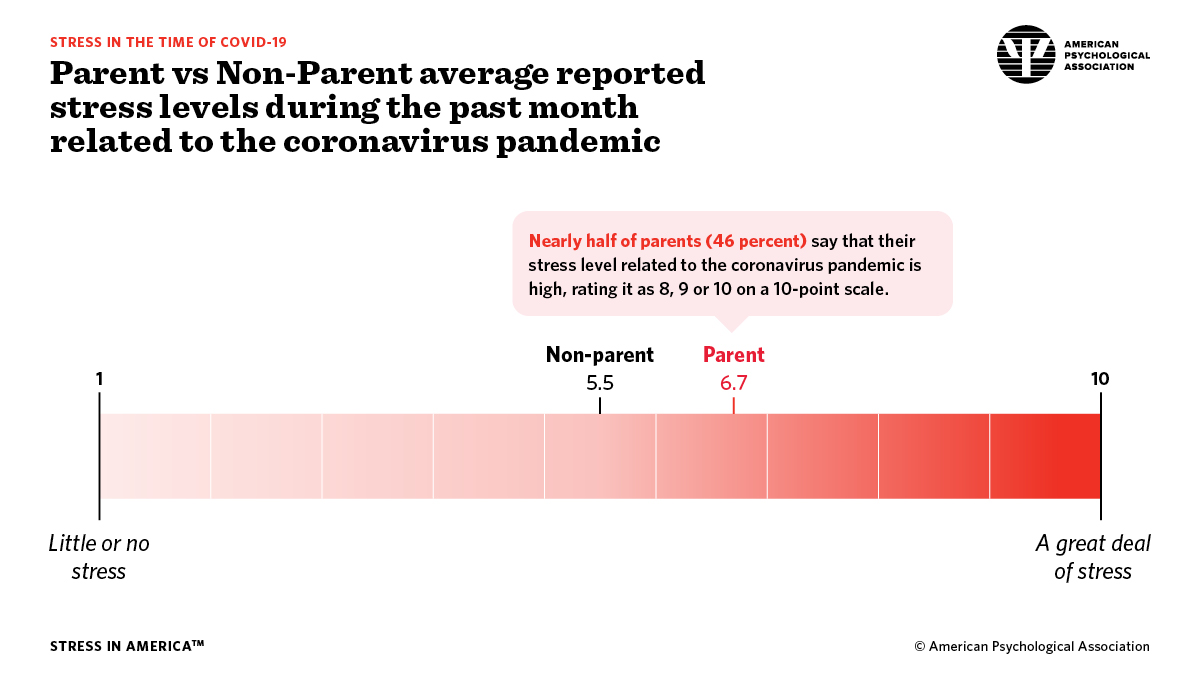
WASHINGTON — Nearly half of parents of children under age 18 say their stress levels related to the coronavirus pandemic are high, with managing their kids’ online learning a significant source of stress for many, according to a new survey by the American Psychological Association.
As the global pandemic continues and parents juggle child care, work and schooling demands, the mental health toll on parents is growing, warns APA. At the same time, the proportion of Americans saying that the economy or work is a significant source of stress in their life has risen significantly.
“For many parents, it can feel overwhelming to face competing demands at home and work along with possible financial challenges during this unprecedented crisis,” said Arthur C. Evans Jr., PhD, APA’s chief executive officer. “Children are keen observers and often notice and react to stress or anxiety in their parents, caregivers, peers and community. Parents should prioritize their self-care and try their best to model healthy ways of coping with stress and anxiety.”
Stress in America 2020 Stress in the Time of Coronavirus, Volume 1, was conducted by The Harris Poll from April 24 to May 4, 2020, and surveyed online 3,013 adults age 18+ who reside in the United States. This is the first of at least three monthly surveys APA and The Harris Poll plan to gauge the impact of the pandemic on stress.
The survey found that 46% of parents say their average stress level related to the coronavirus pandemic is high (between 8 and 10 on a 10-point scale where 1 means “little or no stress” and 10 means “a great deal of stress”). Only 28% of adults who don’t have children under the age of 18 report similar levels of stress.
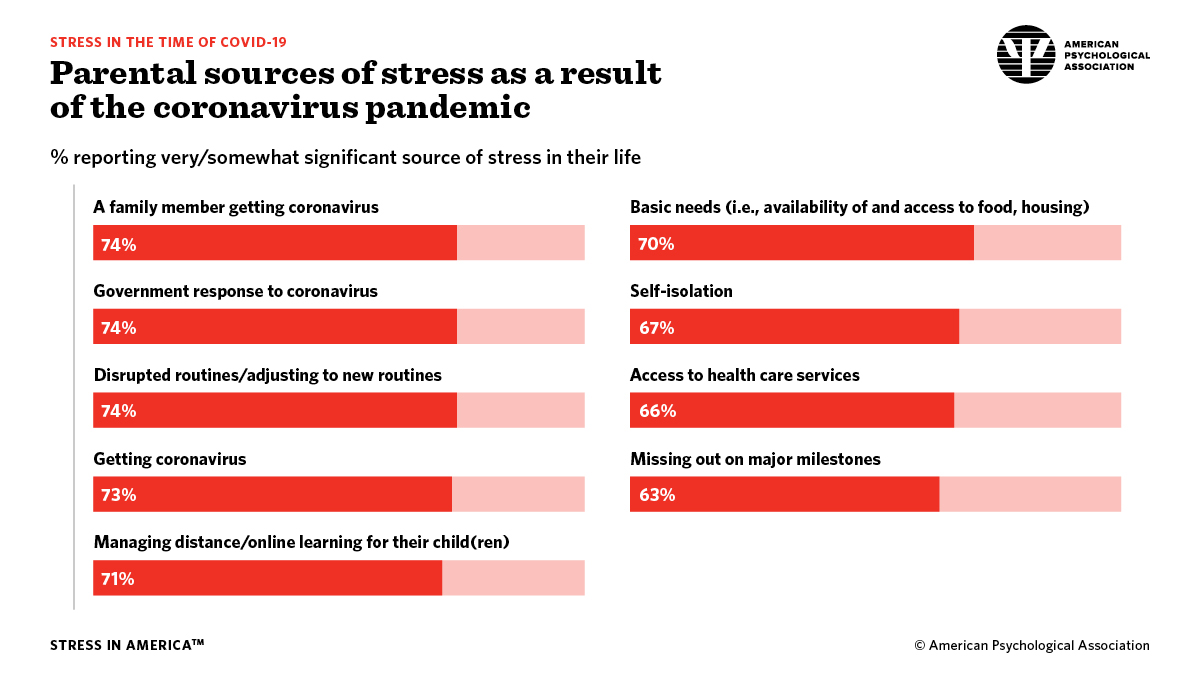
With schools closed and many parents working from home while coordinating their children’s schedules, 71% of parents say managing distance/online learning for their children is a significant source of stress.
Parents are more likely than those without children to say basic needs—such as access to food and housing—are a significant source of stress (70% compared with 44%). Other significant stressors for parents include access to health care services (66% vs. 44%) and missing major milestones, such as weddings and graduation ceremonies (63% vs. 43%).
As unemployment numbers have reached record highs, the economy and work have increased as stressors for Americans. The current survey found that the economy is a significant source of stress for 70% of adults, compared with 46% in APA’s 2019 Stress in America poll. Current stress levels are similar to the levels seen in the 2008 Stress in America poll during the Great Recession. Similarly, 7 in 10 employed adults say work is a significant source of stress in their lives, compared with 64% in the 2019 survey.
Pandemic-related stress is having a disproportionate impact on communities of color. People of color are more likely than white adults to report significant stressors in their life as a result of the coronavirus pandemic, namely getting coronavirus (71% vs. 59%, respectively), basic needs (61% vs. 47%), and access to health care services (59% vs. 46%). Slightly more than 2 in 5 Hispanic adults (41%) say their average level of stress related to the coronavirus pandemic during the past month was between 8 and 10. Hispanic adults are also most likely to say they constantly or often feel stress as a result of the pandemic (37%), as compared with white (32%), black (32%), Native American (31%), and Asian (28%) adults.
“The mental health ramifications of the coronavirus pandemic are immense and growing,” Evans warned. “We need to prepare for the long-term implications of the collective trauma facing the population. On an individual level, this means looking out for one another, staying connected, keeping active and seeking help when necessary.”
Methodology Wave 1 of the COVID Tracker was conducted online within the United States by The Harris Poll on behalf of the American Psychological Association between April 24 and May 4, 2020, among 3,013 adults age 18+ who reside in the U.S. Interviews were conducted in English and Spanish. Data were weighted to reflect their proportions in the population based on the 2019 Current Population Survey by the U.S. Census Bureau. Weighting variables included age by gender, race/ethnicity, education, region, household income and time spent online. Hispanic adults also were weighted for acculturation, taking into account respondents’ household language as well as their ability to read and speak in English and Spanish. Country of origin (U.S./non-U.S.) also was included for Hispanic and Asian subgroups. Weighting variables for Gen Z adults (ages 18 to 23) included education, age by gender, race/ethnicity, region, household income and size of household. Propensity score weighting was used to adjust for respondents’ propensity to be online. Because the sample is based on those who were invited and agreed to participate in research panels, no estimates of theoretical sampling error can be calculated.
Drake’s Organic Spirits Spiked Iceä Hits Shelves
at all California Save Mart Locations
Leading distiller of organic spirits offers freeze-and-eat adult treats free from chemicals and artificial colors
Minneapolis, MN ( May 21,2020 ) – Drake’s Organic Spirits announced today that its popular Spiked Iceä freeze-and-eat adult pops are now available at all 205 Save Mart Companies locations throughout Northern/Central California.
“We’re beyond thrilled to offer Drake’s Organic Spiked Iceä to Save Mart customers,” said Drake’s Founder and CEO Mark Anderson. “Our products are a perfect fit for The Save Mart Companies ‘fresh comes first’ philosophy. Consumers want cleaner options for their bodies and they want products that are friendlier to the planet. Drake’s accomplishes both.”
Based in the heart of the Central Valley, The Save Mart Companies operates 205 traditional and price impact stores under the banners of Save Mart, Lucky, Lucky California, FoodMaxx, S-Mart Foods, and Maxx Value Foods.
Drake’s Organic Spiked Iceä are handheld ice pops that feature 15% ABV and only 80 calories each. Spiked Iceä comes in four flavors - Mango Rum Punch, Vodka Lemonade, Watermelon Martini and Classic Mojito - and are made with Drake’s award-winning all-organic ultra-premium vodka and white rum. They contain no artificial colors or flavors and freeze with twice the ABV as other brands.
Drake’s Organic Spirits is the first and only spirit line in the world to be certified USDA organic, non-GMO Project Verified, gluten-free, vegan and kosher. The five certifications ensure a cleaner drinking option that comes only from the highest quality organic ingredients. Drake’s continues to be among the most environmentally conscious brands in the spirits industry and deeply committed to using ingredients and processes that lead to a more sustainable planet.
In 2019, Drake’s Organic Premium Vodka was awarded Double Gold and Drake’s Organic White Rum received Gold at the Wine & Spirits Wholesalers of America (WSWA) Convention & Exposition in Orlando, FL. The highly-respected awards are widely considered among the most prestigious in the industry because judges are industry experts who blind taste-test each spirit.
Proceeds from the sale of all Drake’s Organic Spirits products help fund Long Lake Animal Rescue, an animal rescue foundation that takes in animals in urgent need of a second chance at life.
About Drake’s Organic Spirits Minneapolis-based Drake’s Organic Spirits was launched in 2017. Drake’s uses the highest quality USDA organic and non-GMO Project Verified ingredients to create a line of ultra- premium spirits and mixes. Drake’s Organic Vodka, Drake’s Organic White Rum and Drakes Organic Spiced Rum offer a no-grain, no-gluten, no-gmo, ultra-premium and 12-times distilled handcrafted spirits at a better price than the leading premium brands. The company recently began producing bulk sanitizer to meet the need for cleaner, safer environments.
About The Save Mart Companies The Save Mart Companies operates 205 stores throughout California and Northern Nevada under the banners of FoodMaxx, Lucky and Save Mart. The Save Mart Companies is committed to sourcing a wide variety of local products to communities throughout California and Northern Nevada. In addition to its retail operation, the company also operates Smart Refrigerated Transport and is a partner in Super Store Industries (SSI), which owns and operates a distribution center in Lathrop and the Sunnyside Farms dairy processing plant in Turlock. For more information on the company, please visit: www.TheSaveMartCompanies.com.
Beli Announces New Product Line to Fill A Major Void In The $23B Fertility Market
Beli’s proprietary, science-backed Vitality blend is the first of its kind focused on men and includes all-natural Shilajit as a key ingredient; draws seed round investors and early customer traction
Seattle, WA – May 19, 2020 -- Beli, Inc., science-backed prenatal products helping couples conceive healthy pregnancies, today announced the launch of its first line of clean, science-backed modern prenatal vitamins for men that fills a huge void in the $23 billion fertility market. The company announced a campaign called #spermcounts bringing awareness to the importance of optimizing sperm health to increase a couple’s chances for a healthy pregnancy.
Beli VitalitySM, a male prenatal, was specially formulated to help the 100+ million people trying to get pregnant each year increase their chances of conceiving and sustaining a healthy pregnancy. Research and market data trends from the National Institute for Health and others prove that fertility issues are on the rise. 1 in 5 couples will seek fertility care over their lifetime. More than 40% of couples who have fertility issues are due to poor sperm quality and quantity on the male side of the equation. According to the Eunice Kennedy Shriver National Institute of Health and Human Development reports that overall, one-third of infertility cases are caused by male reproductive issues, one-third by female reproductive issues, and one-third by both male and female reproductive issues or by unknown factors. In fact, only 1 in 4 men have optimal semen quality. It’s been well established that nutritional deficiencies in the man contribute to risk factors around sperm health, fertility, conception, miscarriage, birth defects, overall health, and the future health of the baby, so the emphasis on nutritional optimization for the male is critical.
“Some factors related to fertility are beyond your control. But you would be surprised how much power you have over the health and vitality of your sperm,” says Edmund Sabanegh, MD, Department Chair of Urology at Cleveland Clinic.
“Fertility and reproductive health is a $23 billion dollar industry and growing at warp speeds but men are often overlooked in the pregnancy equation, despite the fact sperm health is 50% of the equation and plays a dramatic role in not only creating, but also sustaining a successful pregnancy,” said Joni Hanson Davis, CEO and Founder of Beli. “Despite the importance of the male side of the equation, the vast majority of products in the market have been focused on women. It is surprising that in 2020, women still bear the physical and psychological burden of getting and staying pregnant when science is telling us men’s sperm health is just as important as her egg health. One of the easiest ways to increase sperm health is to take a male prenatal that is optimized for his reproductive health. If you are in your reproductive years, we believe men should be taking Beli over a general multi-vitamin.”
Davis continued, “With stories hitting daily about the massive decline in sperm counts, couples having children later in life, pressure to freeze eggs, rise in infertility treatments, and the growth of fertility centers and sperm banks, one of the easiest things we can do and what we must do is get healthy during our reproductive years – and that goes for both him and her. We need to elevate that message because science tells us this is a big part of the equation that is not being addressed.”
That message is resonating with customers who are seeking out Beli to help increase their chances for a successful conception and pregnancy. "Beli was referred to us by my husband’s sister. She had heard from a friend of a friend who had used Beli to get pregnant. She recommended it to us because my husband had some personal concerns about his fertility. We ordered a bottle to see how it would go. He took the pills diligently and within the first month off birth control, we were pregnant.” – Beli customer Hailee. You can read more in her path to pregnancy story.
Beli Vitality for Men
Most men produce millions of new sperm every day and it takes around three months to fully mature. A lot can happen in those three months that can affect the overall health and capabilities of that sperm. The sperm provides 50% of the genetic material for the baby, and if the sperm is not healthy enough to preserve that material or penetrate the egg, that fetus will never occur or probably develop.
Evidence shows that the most common cause of sperm deficiencies are nutrient shortages. Just like women, men’s bodies need different vitamins and minerals to produce healthy sperm. Taking steps to maintain sperm health, even if no fertility issues are present, can dramatically improve how quickly the woman conceives and the viability of that conception.
Beli’s Vitality provides men with the right nutrients optimized for reproductive and sperm health, with some amazing bonus benefits of energy, balance, and overall wellness. Beli’s proprietary Vitality blend is the first to include the all-natural Shilajit as a key ingredient to improve sperm quality and overall fertility potential of men. Clinical investigations have confirmed Shilajit’s effectiveness in improving sperm count and overall sperm quality.
Beli includes high-quality ingredients that have been clinically proven to help:
Improve sperm health
Increase sperm count
Protect sperm while they grow
Improve sperm quality
Increase egg penetration
Balance acid-alkaline balance so sperm survive and work properly
Naturally boost energy
Improve cellular health
“In our opinion, Beli is one of the best male fertility supplements out there. Beli’s supplement contains a proprietary ingredient blend specifically designated to improve sperm count, sperm growth, sperm quality, and sperm motility. Every single ingredient in Beli is thoughtfully included due to research indicating how that particular ingredient will improve a man’s sperm,” said of Arielle Spiegel, CEO and founder, CoFertility. “Beli is basically the gold standard of male fertility supplements, and they’ve really done their diligence to make sure they’ve included everything you need and none of the junk that you don’t.”
Numerous scientific studies published on the National Institute for Health have proven that nutrients like L-carnitine, Vitamins C and E, N-acetylcysteine, Zinc, and Coenzyme Q10 could increase male fertility four-fold. One study from the International Journal of Reproductive BioMedicine found that a combined supplementation of folate and zinc for a period of 26 weeks increased total sperm count in men with optimal and sub optimal sperm counts. In fact, it increased normal total sperm count by 74 percent. Also interesting in this study, before supplementation was started, seminal folate and zinc levels were not significantly different in the fertile and sub-fertile men. This may indicate that even though low folate was not the cause for lower sperm counts, supplementation still helped.
"Trying to conceive is hard enough for a couple. It is even harder when the man does not know how to support his partner. Beli is a solution that allows the man to actively involve himself in the health and vitality of a pregnancy and share the responsibility of reproductive health. I am so excited to see a product that empowers men to help make the trying to conceive journey as successful as possible," said Jess Milanes, Host of Real Talk: Women’s Health and Fertility.
“Your fertility can be an incredibly empowering aspect of your health; the more work you do to nourish it today, the better off you’ll be down the road,” said Davis. “So, think of Beli as your secret weapon in the pregnancy equation. This one habit of taking a daily vitamin will help you get the critical nutrients needed and improve your odds of successfully making your mini me.”
About Beli
Beli is designed to create a positive foundation of health through one small, yet significant act of a daily vitamin. Beli is modernizing the nutritional science market bringing the latest research, science, data, and innovation to consumers to solve some of the most pressing health needs facing us today, including reproductive, prenatal, and fertility, among others to come. Our bodies are constantly changing and rejuvenating, which is amazing, but what those cells are being created from is what we consume. What we put in our mouths is one of the biggest factors how our bodies work and feel, and perhaps the only thing we can control. Our formulas contain high quality, highly activated, bio-available ingredients at optimized levels to ensure nutrients are readily absorbed by the body and can do their job in the way they are intended. Beli takes pride in researching and producing each product with great care and integrity. All products are vegan friendly, gluten free, GMO free, made in an FDA registered facility in the United States, and follow the Good Manufacturing Process Guidelines (CGMP).
Visit us at www.belibaby.com to learn more about the science behind Beli and follow us on Instagram, Facebook, and Medium.
Sheridan Athletics aims to boost student wellness during the pandemic
For immediate release: May 19, 2020
Social distancing. Learning and working remotely. Limiting trips to the grocery store by ordering in. Whatever you’re doing to flatten the curve of COVID-19, you don’t have to do it all sitting down.
That’s the message that Sheridan’s Athletics and Recreation department is sharing with students, through a new initiative - 20-4-20 - that promotes fitness, healthy eating, and general wellness during the pandemic. The 10-week program includes 20 acts of outreach and supports both Sheridan’s student body and the greater community, including five area food banks.
“There’s a million studies on how being active promotes well-being and positivity in general, and it’s obviously much more challenging to stay active during these times,” says Scott Van Hende, Athletics Facility Coordinator at the Davis Campus. “We believe this campaign can help students, who tend to be very social beings and may be finding this pandemic more challenging than others.”
The program launched at the end of April with a donation drive to support five food banks in Halton and Peel. Over the 10-week campaign period, Sheridan’s Athletics department is streaming live or recorded exercise sessions on Tuesdays, and hosting informative or social events on Thursdays. Activities include boot camps, yoga classes, and stretching/mobility classes (via Facebook and Instagram), ESport tournaments, the launch of a Sheridan Run Club with an eight-week challenge, and information sessions about the Ontario College Athletics Association, which oversees college varsity sports in the province.
“It’s a full team effort,” says Van Hende. “Our department was already doing some of these things, and we just switched to a different delivery method – but we’ve also added some new initiatives to promote healthy living during the pandemic.”
As Sheridan campuses remain closed for the foreseeable future, Athletics and Recreation hopes to build on this 10-week initiative to continue outreach and support for students over the summer term.
Lumen Releases First Of-Its-Kind at Home Metabolism Tracking Device, Available Globally Today
Unprecedented Insight into How Efficiently Their Bodies Burn Calories Allows Users to Take Greater Control Over Their Health and Wellness, in the Comfort of Their Home
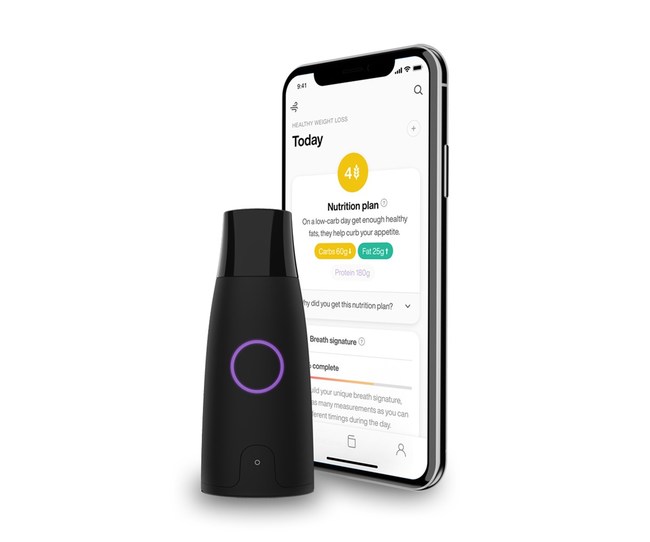
NEW YORK, May 19, 2020 /PRNewswire/ -- Lumen, a health technology company at the forefront of personal health, today announced the global launch of its ground-breaking wellness device: Lumen. Developed through years of scientific testing and validation, Lumen is the first handheld, portable device and app that measures your metabolism in real-time with just your breath. Lumen is making personal, at home metabolic tracking available outside of research labs for the first time - revolutionizing the way we approach weight loss, fitness and healthy nutrition decision making.
LumenLumen
Lumen works by measuring your body's carbon dioxide concentration by breathing into a handheld Lumen device. These levels, calculated through Lumen's vast scientific research and development, indicate the type of fuel your body is using to produce energy - a mix of fat or carbs. Like having a nutritionist in your pocket, Lumen provides you with personalized suggestions on when and what to eat to fuel your workout, based on your metabolism. Lumen supports fat burn and improves your metabolic flexibility, which is your body's ability to efficiently switch between using carbs and fats as a fuel source.
Research (Calcada et al, Gormsen et al) finds that metabolic flexibility has a profound role in assessing a person's health. People with good metabolic flexibility:
Are in a better position to gain muscle and perform better during workouts;
Find it easier to lose weight and maintain it; and
Are at lower risk of developing obesity, diabetes and metabolic disorders.
Michal and Merav Mor, twin sisters with PhDs in Physiology, co-founded Lumen and act as Head of Science for Product and Head of Research and Science respectively. The sisters conceived of the idea for a personal metabolic tracker as they trained for an Ironman race. Determined to improve their fitness and race times, the scientists sought out a way to track and test their metabolism to achieve peak fitness. Eight years in the making, and on the heels of a successful Indiegogo campaign, they are releasing their groundbreaking device, Lumen, around the world today.
"While metabolism is key to weight loss, the only way to test metabolism was through a restrictive, hours-long laboratory process, leaving regular people with zero visibility into their metabolic rate and only haphazard ways of improving it," said Michal Mor, co-founder and Head of Science for Product, Lumen. "With Lumen, we are bringing scientifically rigorous insight into personal metabolism for the very first time, allowing anyone at home to measure how efficient their body is at burning calories, but also sharing research-driven recommendations on how they can reach their health and fitness goals faster."
The Lumen device and app enable users to maximize their wellness:
Like having a nutritionist in your pocket - Know what and when to eat to fuel your workout, improve your metabolic flexibility and support fat burn.
Track your metabolism daily - See how your metabolism is affected by your sleep, physical activity, and nutrition.
Customize your nutrition - Get daily personalized meal plans. Know exactly what to eat and when.
Workout optimization - See if you have enough energy before a workout or if you need to fuel up. Breathe afterwards to see the impact on your body.
Monitor and improve your metabolic health - Over time, Lumen tracks your metabolism, sleep, nutrition, and fitness data to provide a Lumen Flex Score, which reflects your success and helps sustain results.
At home not a lab - What takes nearly an hour in a lab using expensive and heavy machinery can now be done at home or on the go
Scientific Validation Lumen can provide numerous insights about the metabolism of an individual, as well as valuable scientific data to increase knowledge of metabolic flexibility and nutrition. In a study conducted by San Francisco State University, Lumen has been validated to meet the gold standard for metabolic measurement.
Availability The Lumen device is available at Lumen.me, currently priced at $299 with an MSRP of $349. The device comes equipped with a travel case, charging dock, USB-C Cable, and Premium Customer Support. Users can download the app for free on the Apple App Store and on Google Play.
About Lumen Lumen helps people improve their health and fitness through technology on the forefront of personalized nutrition and metabolism. Conceived and designed by twin sisters, physiology PhDs and Ironman winners, Lumen harnesses the power of our breath to measure metabolism, which is closely linked to weight, fitness and personal health. The Lumen device measures metabolism in a single breath, in less than a minute, which previously was only possible through an hour-long lab test. Available at Lumen.me, Lumen devices ship globally, with the app available on the Apple App Store and Google Play. Lumen is headquartered in Israel, with offices in the United States.
[2] Source: Estradiol acutely inhibits whole body lipid oxidation and attenuates lipolysis in subcutaneous adipose tissue: a randomized, placebo-controlled study in postmenopausal women. Available via:https://eje.bioscientifica.com/view/journals/eje/167/4/543.xml. Last accessed 5 May 2020.
Poor People’s Campaign, National Pan-Hellenic Council hold town hall on COVID-19 impact on African American & poor, low-income communities
The Council of Presidents of the National Pan-Hellenic Council is announcing its full endorsement and support of the Poor People’s Campaign: A National Call for Moral Revival and the call for a digital Mass Poor People’s Assembly and Moral March on Washington on June 20, 2020.
The groups will join forces at 7 p.m. Eastern on Tuesday, May 26, for a town hall titled “Call to Action and Conscience: Racism, Poverty and the Pandemic” to build momentum for the digital assembly and march and to highlight the disproportionate impact of COVID-19 on African Americans and poor and low-income communities.
"The Council of Presidents of the National Pan Hellenic Council recognizes the importance of collectively addressing poverty in America,” Dr. Everett Ward, chair of the NPHC Council of Presidents and president of Alpha Phi Alpha Fraternity Inc., said Tuesday. “As supporters of the Poor People's Campaign, the Council of Presidents will utilize its united voices during the webinar and the June 20th campaign to fight against poverty."
The NPHC, representing nine African American Greek-letter fraternities and sororities and sometimes collectively referred to as the "Divine Nine," is joining forces with the Poor People’s Campaign to build a movement to force the nation to address the interlocking crises of systemic racism, poverty, ecological devastation, the war economy and the distorted moral narrative of religious nationalism.
The partnership was formed after a meeting earlier this month with Bishop William J. Barber II, DMin, co-chair of the campaign, along with Ward, the nine council presidents and their staff. At that meeting, the NPHC agreed to challenge its organizations to sign up at least 20% of their memberships for the digital assembly and march.
“The time is now! NPHC will use their collective power to ensure that underserved and underrepresented communities have a voice that will not be ignored,” said Vanetta Cheeks Reeder, National Pan-Hellenic Council president. “We all joined our various organizations understanding that we are ‘our brother and our sister's keeper.”
The U.S. Census Bureau reports that African Americans make up 13.4% of this country’s population. But a recent study released by Amfar shows that counties with higher black populations account for more than half of all COVID-19 cases and almost 60% of deaths.
And even before the crisis of the pandemic, this nation suffered from the crisis of poverty -- 140 million Americans, or 43%, were poor or low-income. That included 60.4% of black people (26 million),; 64.1% of Latinx people (38 million), 40.8% of Asian people (8 million), 58.9% of Native and indigenous people (2.14 million), and 33.5% of white people (66 million).
“It is crucial that our collegiate body support the efforts of movements such as the Poor People’s Campaign,” said Kasey A. Coleman, chairman of the NPHC National Undergraduate Leadership Council and international second vice president of Alpha Kappa Alpha Sorority Inc. “As a younger generation today, we must leave our world in a better state than we found it, whether that be socially, culturally, economically and more. This begins with uplifting the voices of poverty to encourage moral change in America.”
The council joins over 100 national partners in the Poor People’s Campaign that are building toward the digital assembly and march.
The Poor People’s Campaign “is bringing together a mighty fusion movement to end poverty, end racism and save the planet from climate change and war,” Rev. Dr. Alvin Jackson, national executive director of the assembly march, and Rev. Erica Williams, co-lead and director of student organizing, said in a statement. “We are so proud to stand with our brothers and sisters from the NPHC to uphold its long tradition of social activism and justice work. Now more than ever we need the NPHC to join hands with faith, labor and civil and human rights organizations to stand up to the forces that threaten our democracy and the soul of our nation.”
The presidents and public health professionals will discuss the dire risk that COVID-19 poses to the African American community and demand a more coordinated federal response.
Other speakers will include Nakiya Wakes of Flint, Michigan, who twice miscarried twins because of the poisoned water in Flint, and Rev. Carolyn Foster, a tri-chair of the Alabama state chapter of the Poor People’s Campaign.
On June 20, the Poor People’s Campaign will hold the largest digital and social media gathering of poor and low-income people, moral and religious leaders, advocates, and people of conscience in this nation’s history.
The National Pan-Hellenic Council, Inc. is composed of nine international Greek-letter sororities and fraternities: Alpha Kappa Alpha Sorority Inc., Alpha Phi Alpha Fraternity Inc., Delta Sigma Theta Sorority Inc., Zeta Phi Beta Sorority Inc., Iota Phi Theta Fraternity Inc., Kappa Alpha Psi Fraternity Inc., Sigma Gamma Rho Sorority Inc., Phi Beta Sigma Fraternity Inc. and Omega Psi Phi Fraternity Inc.
The Poor People’s Campaign: A National Call for Moral Revival, is building a generationally transformative digital gathering called the Mass Poor People’s Assembly and Moral March on Washington, on June 20, 2020. At that assembly, we will demand that both major political parties address the interlocking injustices of systemic racism, poverty, ecological devastation, militarism and the distorted moral narrative of religious nationalism by implementing our Moral Agenda
___
The National Pan-Hellenic Council was founded on May 10, 1930, at Howard University in Washington, D.C., with five chartering organizations and now has nine organizations. Its purpose is to foster cooperative actions of its members in dealing with matters of mutual concern. The NPHC promotes the well-being of its affiliate fraternities and sororities, facilitates the establishment and development of local councils, and provides leadership training for its constituents.
TRAIN IT RIGHT NEWSLETTER
Sign Up and get a free 7 day Train it Right HIIT Program!