Thelander is available to speak to PAACS’ 23-year history of training male and female African physicians to become surgeons in their home countries, as well as the success PAACS has had with its female surgeon graduates.
Keir Thelander, Chief Medical Officer of the PAACS, a non-denominational, multinational service organization that trains African physicians to become surgeons, said:
“The emphasis on bringing more women into the fold of surgical training is one component of a larger and more comprehensive approach to improving the perception of a woman’s value within a culture. We must be very careful that we do not oversimplify the causes that have impacted the gender disparity in the medical field without addressing the larger discussion of cultural norms that contribute to the result.”
“PAACS’ will continue its 23-year history has been driven by the belief that education and engagement within the training of physicians in their home countries is the best way to serve a nation’s long term needs. To date, PAACS has issued 88 graduate certificates to African surgeons who have gone on to serve across twenty countries on the African continent. A little over 10% of our trainees are women — we would like to see that number increase. The balance of that is a greater impact of PAACS for the world.”
Keir Thelander, Chief Medical Officer of the PAACS, a non-denominational, multinational service organization that trains African physicians to become surgeons, said:
“The emphasis on bringing more women into the fold of surgical training is one component of a larger and more comprehensive approach to improving the perception of a woman’s value within a culture. We must be very careful that we do not oversimplify the causes that have impacted the gender disparity in the medical field without addressing the larger discussion of cultural norms that contribute to the result.”
“PAACS’ will continue its 23-year history that has been driven by the belief that education and engagement within the training of physicians in their home countries is the best way to serve a nation’s long term needs. To date, PAACS has issued 88 graduate certificates to African surgeons who have gone on to serve across twenty-one countries on the African continent. A little over 10% of our trainees are women — we would like to see that number increase and continue to implement strategies to achieve that goal. The balance of that is a greater impact of PAACS for the world.”
ThePan-African Academy of Christian Surgeons (PAACS) is a strategic response to the need for surgeons in Africa. We are a non-denominational, multinational service organization training African physicians to become surgeons who are willing to remain in Africa to meet this need. PAACS also disciples these residents to share the love and gospel of Jesus Christ with their patients. The surgical and spiritual training of these residents is offered at several well-established mission hospitals in Africa, under the direction of experienced, board-certified missionary surgeons.
Avicanna Commences Trading on the TSX Under the Symbol "AVCN"
/NOT FOR DISTRIBUTION TO UNITED STATES NEWSWIRE SERVICES OR FOR DISSEMINATION IN THE UNITED STATES. ANY FAILURE TO COMPLY WITH THIS RESTRICTION MAY CONSTITUTE A VIOLATION OF UNITED STATES SECURITIES LAWS/
TORONTO, July 18, 2019 /CNW/ - Avicanna Inc. ("Avicanna") a company focused on the development, manufacturing and commercialization of plant-derived cannabinoid-based products, is pleased to announce that its common shares commenced trading on the Toronto Stock Exchange (the "TSX") under the symbol "AVCN" at market open today, July 18, 2019.
In connection with its first day of trading, Avicanna participated in market open ceremonies at the TSX. An archive of the ceremony will be made available at http://www.tsx.com/news/market-opens.
About Avicanna
Avicanna is an Ontario corporation focused on the development, manufacturing and commercialization of plant-derived cannabinoid-based products through its two main business segments, cultivation and research and development.
Avicanna's two majority-owned subsidiaries, Sativa Nativa S.A.S. and Santa Marta Golden Hemp S.A.S., both located in Santa Marta, Colombia are the base for Avicanna's cultivation activities. These two companies are licensed to cultivate and process cannabis for the production of cannabis extracts and purified cannabinoids including cannabidiol (CBD) and tetrahydrocannabinol (THC).
Avicanna's research and development business is primarily conducted out of Canada at its headquarters in the Johnson & Johnson Innovation Centre, JLABS @ Toronto. Avicanna's scientific team develops products, and Avicanna has also engaged the services of researchers at the Leslie Dan Faculty of Pharmacy at the University of Toronto for the purpose of optimizing and improving upon its products.
Avicanna's research and development and cultivation activities are focused on the development of its key products, including plant-derived cannabinoid pharmaceuticals, phyto-therapeutics, derma-cosmetics and Extracts (defined as plant-derived cannabinoid extracts and purified cannabinoids, including distillates and isolates), with a goal of eventually having these products manufactured and distributed through various markets.
Stay Connected
SOURCE Avicanna Inc.
Anova Fertility & Reproductive Health adds Experienced Fertility Executive to the Board of Directors
TORONTO, July 16, 2019 /CNW Telbec/ - Anova Fertility & Reproductive Health Inc. ("Anova") is pleased to welcome William ("Bill") Hughson as Chair of the Anova Board of Directors.
Following Anova's recent partnership with Persistence Capital Partners ("PCP"), a private equity fund focused exclusively on investing in high-growth opportunities in Canadian healthcare, Anova is poised to execute on a number of strategic initiatives focused on increasing access for its clients through expansion and growth. These initiatives include opening new clinics, pursuing investment and partnership opportunities, creating a collaborative and 'cutting edge' environment for physicians and other healthcare practitioners, and investing in the best global technologies and techniques to help Canadians grow their families.
Founded by Dr. Marjorie Dixon, Chief Executive Officer, Anova boasts a state-of-the-art embryology laboratory and a clinic inspired by Dr. Dixon's desire to combine the best global technologies and techniques to elevate the patient experience, improve patient outcomes and humanize treatment in fertility care.
"At Anova we strive to elevate the patient experience by creating a supportive and caring environment," added Dr. Dixon. "As Anova expands operations we will benefit from Bill's deep experience supporting our science, patient care, and business strategy as we scale our organization, and I look forward to working closely with Bill as we implement the shared vison."
Adrianna Czornyj, Partner at PCP, said, "Bill has extensive experience leading growth strategies in the healthcare industry and has extensive knowledge and expertise in both the Canadian and US fertility space. Adding Bill to the Board as an independent director is part of accelerating Anova's strategic growth plans."
"Anova is a leading provider of reproductive health services in Canada and abroad, using best-in-class techniques from around the world. Today, I am proud to join the Board of Directors and look forward to being a part of this amazing organization; helping Anova to achieve its objectives, but more importantly contributing to the growth of families with Anova's patient-centric fertility care," said Bill.
Mr. Hughson has extensive executive and healthcare experience, having most recently served as Chief Executive Officer of Blue Sky Vision ("BSV"). BSV is dedicated to providing world-class support to leading providers of eye care services. Prior to BSV, Bill served as President, Chief Executive Officer and Vice Chairman of IntegraMed Fertility, the largest network of fertility practices in North America.
About Anova Fertility & Reproductive Health Inc.
Anova Fertility & Reproductive Health Inc. opened in 2016 as a full-service fertility and IVF clinic. Anova is Canada's first next-generation embryology laboratory, and is the leader in innovation, education, and communication for high quality patient centric fertility and reproductive care. The team at Anova strives to set the international standard for successful reproductive health and fertility centres, committed to making the right to family accessible to everyone. Anova is known for their culture of support, effective processes and their holistic approach to patient care. For more information about Anova, please visit www.anovafertility.com.
About Persistence Capital Partners
Persistence Capital Partners is Canada's leading private equity fund exclusively focused on high-growth opportunities in the healthcare field. With deep healthcare industry expertise, PCP aims to create significant long-term capital appreciation for its investors by identifying and developing attractive investment opportunities in the Canadian healthcare market. PCP has offices in Montreal, Quebec, and Toronto, Ontario. For more information about Persistence Capital Partners, please visit www.persistencecapital.com.
SOURCE Persistence Capital Partners
Avicanna Announces TSX Listing Date
/NOT FOR DISTRIBUTION TO UNITED STATES NEWSWIRE SERVICES OR FOR DISSEMINATION IN THE UNITED STATES. ANY FAILURE TO COMPLY WITH THIS RESTRICTION MAY CONSTITUTE A VIOLATION OF UNITED STATES SECURITIES LAWS/
TORONTO, July 16, 2019 /CNW/ - Avicanna Inc. ("Avicanna" or the "Company") a company focused on the development, manufacturing, and commercialization of plant-derived cannabinoid-based products, is pleased to announce that its common shares ("Common Shares") are expected to commence trading on the Toronto Stock Exchange (the "TSX") on Thursday, July 18, 2019 under the symbol "AVCN". The listing represents the first direct listing on the TSX by a company with Colombian-based cannabis cultivation assets. In connection with its first day of trading, Avicanna will be participating in market open ceremonies at the TSX, which will be broadcast live on the Business News Network morning show and live streamed on YouTube.
In connection with listing on the TSX, shareholders holding an aggregate of 10,523,077 Common Shares have entered into lock-up agreements pursuant to which they have agreed not to sell, transfer or pledge any securities of the Company for a period of 39 months following the listing date where 10% of such securities will be released on the date that is three months following the listing date with the remaining securities released in six equal tranches of 15% every six months following the first release. In addition, shareholders holding an aggregate of 1,495,022 Common Shares have entered into lock-up agreements pursuant to which each such shareholder has agreed not to sell, transfer or pledge any securities of the Company held by such shareholder, for a period of 4 months following the listing date where 20% of such securities will be released immediately prior to the listing date with the remaining securities released in four equal tranches of 20% every month thereafter.
A copy of the Company's final long-form prospectus is available on SEDAR at www.sedar.com.
About Avicanna
Avicanna is an Ontario corporation focused on the development, manufacturing, and commercialization of plant-derived cannabinoid-based products through its two main business segments: (i) cultivation and (ii) research and development. The Company's business is focused on the development, manufacturing, and commercialization of key products, including plant-derived cannabinoid pharmaceuticals, phyto-therapeutics, derma-cosmetics and extracts (defined as plant-derived cannabinoid extracts and purified cannabinoids, including distillates and isolates).
Research and Development Activities
Avicanna's research and development is headquartered in the Johnson & Johnson Innovation Centre, JLABS @ Toronto. The Company is focused on commencing and completing clinical trials for its pharmaceutical products, completing testing to support its phyto-therapeutic products under the Pura Elements™ brand, commencing the manufacture and distribution of its derma-cosmetic products under the Pura Earth™ brand, and commencing clinical trials on three of its derma-cosmetic products to demonstrate their effectiveness with specific cosmetic endpoints, such as reduction of fine lines or increased skin moisture levels.
In connection with its research and development activities, Avicanna has a team of more than 20 scientists and clinicians working out of four laboratories including: (i) the University of Toronto Faculty of Pharmacy; (ii) JLABS @ Toronto which is located in the MaRS Discovery District; (iii) the facilities of the Company's subsidiaries in Santa Marta, Colombia; and (iv) the facilities of Avicanna's manufacturing partner, Altea Farmaceutica S.A. ("Altea"). Through its various operations, Avicanna's team of scientists and clinicians are enhancing product optimization through the completion of animal pharmacokinetics and toxicology studies and pre-clinical studies, including both in vitro and in vivo studies to demonstrate the safety and efficacy of Avicanna's product offering.
Avicanna currently has the following clinical trials in progress or planned for the near future:
CAIMED (Centro de Atencion e Investigacion Medica CAIMED S.A.S.). Phase I studies are expected to commence in the second half of 2019 with CAIMED for certain cosmetic trials.
University of West Indies. Avicanna is currently conducting a prevalence study through UWI to determine the prevalence of neuropathic pain in a random sample of 500 to 600 patients suffering from Sickle Cell disease.
SickKids. Avicanna has received ethics approval to conduct a clinical study with the Hospital for Sick Children to explore safety, tolerability and efficacy of CBD on patients with dermatological indication. Avicanna has completed animal pharmacokinetics and toxicology studies and a clinical trial application is in progress and expected to be submitted before the end of July 2019.
Pending Approval. Avicanna also has pending pharmaceutical and phyto-therapeutic trials that are currently in protocol development and are being submitted for ethics approval. Such products are aimed at addressing neuropathic pain, chronic pain, and Eczema.
Cultivation and Supply Chain
Avicanna's cultivation activities are conducted by its two majority-owned subsidiaries, Sativa Nativa S.A.S. ("Sativa Nativa") and Santa Marta Golden Hemp S.A.S. ("SMGH"), both located in Santa Marta, Colombia in the foothills of the Sierra Nevada Mountains. The location offers 12 hours of daily sunlight year-round, while the tropical weather of Santa Marta and microclimate of the Sierra Nevada Mountains provide optimal conditions to maximize the number and amount of harvests. Access to cost efficient energy sources and construction labour allow for affordable expansion and production. Both companies also have easy access to the local Santa Marta shipping port that is expected to provide low cost shipping for export.
Sativa Nativa and SMGH are focused on commercial cannabis and are licensed to cultivate and process cannabis for the production of cannabis extracts and purified cannabinoids including cannabidiol (CBD) and tetrahydrocannabinol (THC). SMGH has 200,000 square feet of shadehouse plus 20,000 square feet of customized greenhouse space and construction is currently underway for an additional 70,000 square feet of shadehouse and the related infrastructure. Thus far, SMGH has achieved genetic registration of one non-psychoactive strain (CBD) and three psychoactive strains (THC) and is currently cultivating its registered non-psychoactive genetics while it seeks to obtain quotas for its psychoactive genetics. SMGH currently has an inventory of approximately 1.3 tonnes of flower of its registered non-psychoactive genetic. SMGH has applied for good agricultural practices ("GACP") and organic certifications and the preliminary site visits for them have been completed. SMGH expects to receive the certifications before the end of 2019. Sativa Nativa currently has 50,000 square feet of shadehouse plus 20,000 square feet of customized greenhouse space and construction is currently underway for an additional 50,000 square feet of shadehouse. Sativa Nativa does not currently have any registered genetics under cultivation, however, it is currently cultivating for the purposes of genetic registration.
Extraction and Manufacturing
In October, Avicanna completed the technical transfer of its extraction and isolation techniques to SMGH. SMGH intends to utilize Avicanna's techniques in its extraction lab, which is currently capable of processing 300 kg of bio-mass per day, resulting in production capacity of 45kg of resin per day. The SMGH laboratory is capable of extraction, distillation, and isolation of cannabinoids in addition to analytical testing and quality control. Avicanna intends to utilize the isolates produced at the SMGH facility from SMGH's registered non-psychoactive cannabis genetic in its derma-cosmetic products marketed under the Pura Earth™ brand.
Avicanna has entered into a manufacturing agreement with Altea, pursuant to which Altea will be the exclusive manufacturer of Avicanna products in Colombia. Under the agreement, Altea has committed to manufacture products containing cannabinoids exclusively for Avicanna, subject to certain minimum order quantities purchased from Altea on an annual basis. Altea's facility maintains a number of requisite approvals that will allow Avicanna to ensure its pharmaceutical, phyto-therapeutic and derma-cosmetic products comply with a high standard of quality, including INVIMA for Good Laboratory Practices (Colombia), Bureau Veritas for ISO 14001 environmental management system for Good Manufacturing Practices (Australia), ANVISA for Good Manufacturing Practices (Brazil), and Health Canada for Good Manufacturing Practices (Canada).
Avicanna's Products
Derma-Cosmetics
Avicanna intends to distribute its line of derma-cosmetic products under the Pura Earth™ brand. Avicanna's CBD based derma-cosmetic products are formulated to maintain and improve the health and beauty of the skin through high-end cosmetic formulations supported by research data. Avicanna has completed the technical transfer of all derma-cosmetic products to be manufactured by Altea both for testing and commercial scale production purposes. Avicanna has entered into an agreement with Percos S.A. ("Percos") pursuant to which it has appointed Percos as the exclusive distributor of Pura Earth™ derma-cosmetics products in Colombia, subject to certain minimum sales volumes and the Company anticipates that its Pura Earth™ derma-cosmetics products will be on the market before the end of 2019. In addition, Avicanna has contracted CAIMED to conduct clinical studies on three of its derma-cosmetics products to demonstrate their effectiveness with specific cosmetic endpoints, such as reduction of fine lines or efficacy as moisturizer for acne and eczema prone skin.
Phyto-Therapeutics
Avicanna intends to distribute its line of phyto-therapeutic products under the Pura Elements™ brand. Avicanna's phyto-therapeutic products consist of cannabis plant extracts designed for medical or homeopathic use, but are not pharmaceuticals or drugs. These phyto-therapeutic products will be manufactured by Altea under Avicanna's current agreement with Altea. Avicanna has completed the technical transfer of its phyto-therapeutic products to Altea both for testing and commercial scale production purposes. There are a wide range of targeted delivery mechanisms for these products including tablets, sublingual sprays, oil drops, capsules, patches, creams and gels, which will be supported by bioavailability and pharmacokinetic data. It is expected that Altea will manufacture Avicanna's phyto-therapeutic products, ranging from isolated CBD formulations to CBD-THC whole plant extracts, using cannabis sourced from SMGH and Sativa Nativa. These products will be manufactured under the various approvals and certifications maintained by Altea and will use USP-NF (pharmaceutical-grade) ingredients. Avicanna is currently preparing for commercial launch of its phyto-therapeutic products, initially expected to occur through pharmacies in Colombia, and expects to begin bringing these products to market in 2020.
Pharmaceuticals
Avicanna's initial pipeline of pharmaceutical products will address neurology, dermatology, and pain. Avicanna's pharmaceutical products will be manufactured, first, in test batches for use in its clinical trials, and then, provided the products successfully complete the process, for distribution to end users by Altea. Avicanna is currently conducting product optimization for dosage and form of delivery through its research and development department and in collaboration with the University of Toronto. These products are expected to eventually be commercialized as over-the-counter medicines and prescription drugs.
Cautionary Note Regarding Forward-Looking Information and Statements
This press release contains certain "forward-looking information" within the meaning of applicable Canadian securities legislation and may also contain statements that may constitute "forward-looking statements" within the meaning of the safe harbor provisions of the United States Private Securities Litigation Reform Act of 1995. Such forward-looking information and forward-looking statements are not representative of historical facts or information or current condition, but instead represent only Avicanna's beliefs regarding future events, plans or objectives, many of which, by their nature, are inherently uncertain and outside of Avicanna's control. Generally, such forward-looking information or forward-looking statements can be identified by the use of forward-looking terminology such as "plans", "expects" or "does not expect", "is expected", "budget", "scheduled", "estimates", "forecasts", "intends", "anticipates" or "does not anticipate", or "believes", or variations of such words and phrases or may contain statements that certain actions, events or results "may", "could", "would", "might" or "will be taken", "will continue", "will occur" or "will be achieved". The forward-looking information and forward-looking statements contained herein may include, but is not limited to, the expected initial listing date, information concerning the planned capacities of the SMGH and Sativa Nativa facilities, the expected timing of GACP and organic certifications, the use of the Company's extraction techniques and cannabis genetics by SMGH and Sativa Nativa, the brands under which the Company's derma-cosmetic and phyto-therapeutic products will be marketed and distributed, the timing of the distribution of the Company's derma-cosmetic and phyto-therapeutic products, the goal of the Company's initial clinical studies, the expected timing of the Company's initial clinical studies, the manufacturer of the Company's products, the ingredients to be used in the Company's final products, the approvals to be maintained by Altea and the expected designations of the Company's pharmaceutical products.
By identifying such information and statements in this manner, Avicanna is alerting the reader that such information and statements are subject to known and unknown risks, uncertainties and other factors that may cause the actual results, level of activity, performance or achievements of Avicanna to be materially different from those expressed or implied by such information and statements. In addition, in connection with the forward-looking information and forward-looking statements contained in this press release, Avicanna has made certain assumptions.
Among others, the key factors that could cause actual results to differ materially from those projected in the forward-looking information and statements are the following: delays in obtaining the necessary approvals from the TSX; delays in opening new cultivation and manufacturing facilities; higher than expected costs to construct and operate cultivation and manufacturing facilities; adverse changes in the public perception of cannabis; changes in consumer demand for cannabis; decreases in the prevailing prices for cannabis and cannabis products in the markets in which the Company operates; adverse changes in applicable laws; adverse changes in the application or enforcement of current laws, including those related to taxation; increasing costs of compliance with extensive government regulation; changes in general economic, business and political conditions, including changes in the financial markets and in particular in the ability of the Company to raise debt and equity capital in the amounts and at the costs that it expects; risks related to licensing, including the ability to obtain the requisite licenses or renew existing licenses for the Company's proposed operations; dependence upon third party service providers, skilled labor and other key inputs; risks inherent in the agricultural and retail business; intellectual property risks; risks related to litigation; dependence upon senior management; and the other risks disclosed in the Company's long form final prospectus dated July 8, 2019. Should one or more of these risks, uncertainties or other factors materialize, or should assumptions underlying the forward-looking information or statements prove incorrect, actual results may vary materially from those described herein as intended, planned, anticipated, believed, estimated or expected.
Although Avicanna believes that the assumptions and factors used in preparing, and the expectations contained in, the forward-looking information and statements are reasonable, undue reliance should not be placed on such information and statements, and no assurance or guarantee can be given that such forward-looking information and statements will prove to be accurate, as actual results and future events could differ materially from those anticipated in such information and statements. Key assumptions used herein are that there will not be any unexpected costs or delays in the completion of the facilities at Sativa Nativa and SMGH, SMGH will be able to harvest sufficient product to meet the needs of the Company, SMGH will be able to maintain high quality extracts, there will not be any delay in obtaining GACP or organic certifications, the Company will be able to market its phyto-therapeutics and derma-cosmetics under the Pura Elements™ and Pura Earth™ brands, there will be no unexpected delays or costs in obtaining the necessary ethics or trial approvals for the commencement of clinical trials, Altea will use agreed upon ingredients in the manufacture of the Company's products and will maintain the necessary approvals and standards to meet the Company's quality objectives, initial clinical studies will provide results in line with management's current expectations and there will not be significant changes to the regulatory landscape that would prevent the Company from manufacturing and distributing its products pursuant to management's current plan. The forward-looking information and forward-looking statements contained in this press release are made as of the date of this press release, and Avicanna does not undertake to update any forward-looking information and/or forward-looking statements that are contained or referenced herein, except in accordance with applicable securities laws. All subsequent written and oral forward-looking information and statements attributable to Avicanna or persons acting on its behalf is expressly qualified in its entirety by this notice.
SOURCE Avicanna Inc.
Diabetic SPIbelt $21.99: The Diabetic SPIbelt® is the perfect product for individuals with medical needs because it is comfortable enough for daily wear and was designed to carry an insulin pump. Every Diabetic SPIbelt can securely and comfortably accommodate cords and infusion tubing through a reinforced pass-through hole. The pass-through hole is placed behind the pocket to allow tubing to feed through the patented pouch design. The Buckle is now by the pocket instead on in the back!
Kids’ Double-Pocket SPIbelt $26.99: The Kids’ Double Pocket SPIbelt® is perfect for active children who need to carry medical supplies such as insulin pumps, inhalers, EpiPen®, or CGMs (continuous glucose monitoring systems). The Kids’ Double Pocket SPIbelt holds insulin pumps close to the body without tangling or bouncing and has an extra pocket for essentials such as a cell phone or medical ID. Every Kids’ SPIbelt can securely and comfortably accommodate cords and infusion tubing through a reinforced pass-through hole. The pass-through hole is discretely placed behind the pocket to allow infusion tubing to feed through the patented pouch design. SPIbelt won’t ride or shift while participating in vigorous activities.
Kids SPIbelt $18.99: Does your child wear an insulin pump? As a parent, we want you to feel confident that your child has a dependable and discreet way to get physically active while wearing an insulin pump or other similar sized medical devices. We at SPIbelt have heard your feedback, and now, every Kids’ SPIbelt® can accommodate cords and infusion tubing securely and comfortably. The reinforced opening is discretely placed behind the pocket to allow infusion tubing and headphone cords to pass through the patented designed pouch.
The Kids’ SPIbelt® is perfect for active children who need to carry medical supplies such as insulin pumps, inhalers, EpiPen®, or CGMs (continuous glucose monitoring systems). The Kids’ SPIbelt holds insulin pumps close to the body without tangling or bouncing. Every Kids’ SPIbelt can securely and comfortably accommodate cords and infusion tubing through a reinforced pass-through hole. The pass-through hole is discretely placed behind the pocket to allow infusion tubing to feed through the patented pouch design. SPIbelt won’t ride or shift while participating in vigorous activities.
Bounce-free
Expandable, secure, low-profile pocket
Pass-through hole for insulin pump tubing
Comfortable, soft elastic prevents chafing
No Logo on the elastic of the belt
Sturdy buckle and glides for even the most active users
Pocket expands to 6.5″ x 3″ x 2″
Fits waist size 18″ through 24″ – Our product averagely fits 2 years old to 10 years old.
Arthritis Research Canada opens fourth centre
VANCOUVER, July 17, 2019 /CNW/ - Arthritis Research Canada, the largest clinical arthritis research institution in North America, continues to grow with its newest centre located at McGill University.
Drs. Deborah Da Costa, Michal Abrahamowicz, Susan Bartlett and Marie Hudson will join the new location and bring with them a collective and extensive knowledge of arthritis research.
Dr. Da Costa's area of study focuses on the connection between mental health and chronic illness. Dr. Abrahamowicz' research involves the development of new, flexible statistical methods for survival analyses. Dr. Bartlett has done extensive research on behavioural factors (like exercise, diet and medication adherence) and their impact on health outcomes in patients with inflammatory arthritis. And Dr. Hudson's expertise is systemic autoimmune rheumatic diseases.
"As Arthritis Research Canada celebrates its 20th anniversary, we are excited to open a new centre and welcome scientists with a wide range of research areas to the team," said Scientific Director Dr. John Esdaile. "This expansion strengthens our ability to improve the lives of Canadians with arthritis."
The announcement of the new location comes as three new scientists also join the British Columbia, Alberta and Quebec centres.
Dr. Jackie Whittaker is an expert on sports injury and osteoarthritis prevention and will be based in BC. Dr. Laëtitia Michou will work from the centre in Quebec, focusing on the human genetics of bone and joint diseases. And Dr. Susanne Benseler, a leading paediatric rheumatologist and Arthritis Research Canada's first scientist with a focus on childhood arthritis, will join the Alberta centre.
"Our scientific team is currently engaged in over 75 studies covering the breadth of arthritis," said Dr. Esdaile. "We are proud to further expand our research in the areas of mental health, paediatrics, arthritis prevention and more."
ABOUT ARTHRITIS RESEARCH CANADA:
Arthritis Research Canada is the largest clinical arthritis research institution in North America. Our mission is to transform the lives of people living with arthritis through research and engagement. Led by world-renowned rheumatologist, Dr. John Esdaile, Arthritis Research Canada's scientific team of over 100 are creating a future where people living with arthritis are empowered to triumph over pain and disability. Within British Columbia, Alberta and Quebec, Arthritis Research Canada is leading research aimed at arthritis prevention, early diagnosis and treatment, and quality of life issues.
SOURCE Arthritis Research Canada
Tried. True. Totally Improved.
Meet the New BlenderBottle® Classic™ Shaker
Lehi, Utah (July 17, 2019) – Innovation never ceases at BlenderBottle®, the brand that revolutionized the portable mixer market. The latest product to join the BlenderBottle shaker lineup is an impressive overhaul to the original BlenderBottle® Classic™ shaker, with features engineered for weekend warriors and elite athletes alike.
BlenderBottle® transformed the health and fitness industry in 2000 with the introduction of the BlenderBall® wire whisk. The original BlenderBottle® Classic™ shaker followed in 2004, quickly becoming a global icon of health and fitness—a status it enjoys to this day. The improvements to the tried and true Classic™ shaker include performance-focused innovation and also modern style.
“The Classic is our cornerstone shaker bottle,” says Michael Sorensen, Vice President of Marketing at BlenderBottle®. “But we have a hard time just resting on our laurels. We’re always looking for new ways to improve performance—even at our introductory price point.”
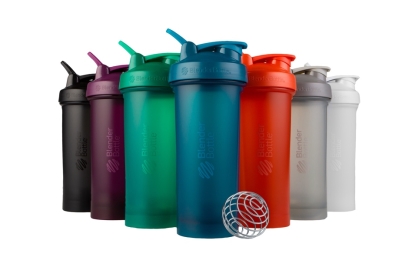
The new and improved BlenderBottle® Classic™ shaker sports an updated lid featuring a more ergonomic carry loop and customer-favorite SpoutGuard™ to keep dirty gym fingers off the drinking surface. A rounded base enhances mixing performance and conveniently fits in most cup holders. Modern design elements enhance the bottle’s sleek aesthetic appeal.
In addition to these upgrades, the new Classic™ shaker offers familiar features that loyal BlenderBottle customers have come to know and trust. The patented mixing system uses the BlenderBall wire whisk—found only in BlenderBottle® brand shakers—to deliver smooth protein and nutrition shakes with ease. Integrated with the ergonomic, StayOpen™ flip cap, the bottle’s adjustable carry loop offers portable convenience and a place to attach keys while at the gym. The new Classic shaker is covered by a leak proof guarantee—which backs every BlenderBottle® shaker. Measurement markings are clearly embossed on the bottle’s side, and the durable plastic material is top-rack dishwasher safe and BPA and phthalate free.
The new BlenderBottle® Classic™ shaker joins the ever-expanding BlenderBottle shaker line, which includes the high-performance BlenderBottle® ProSeries™shakers, the sleek glass BlenderBottle® Mantra™ shaker, and the modern BlenderBottle® Radian™ shaker. Offered in an array of vibrant colors, the new BlenderBottle Classic shaker is available in 20-ounce and 28-ounce capacities and retails for $8.99 and $9.99 respectively.
Founded in 2000, BlenderBottle Company is a privately held manufacturer of premium and innovative products that help simplify everyday life. The company’s patented, revolutionary products were hailed by Good Morning America, Reader’s Digest, Self, the Today Show, Men’s Fitness, and others as some of the “hottest new products” on the market.
Today BlenderBottle® brand products are available in over 90,000 retail locations worldwide, and in over 70,000 retail locations in the U.S. alone, including GNC, Vitamin Shoppe, Vitamin World, Bed Bath & Beyond, Walmart, Target, Rite Aid, Whole Foods, Amazon.com, and online at blenderbottle.com. BlenderBottle Company is located in Lehi, Utah and markets and sells its products to retailers and resellers worldwide. All BlenderBottle brand products are backed by a Customer Satisfaction Guarantee. For additional information, visit blenderbottle.com.
A brighter future is possible with the launch of The Baker Centre for Pancreatic Cancer
LONDON, ON, July 17, 2019 /CNW/ - On Wednesday, July 17, 2019, London Health Sciences Foundation (LHSF) is launching The Baker Centre for Pancreatic Cancer at London Health Sciences Centre (LHSC) following a donation of $1.5M from Rick and Shelley Baker. The newly created Baker Centre will result in improved access to care, more targeted personalized treatment and new treatment options for pancreatic cancer patients.
"It is with the help of inspirational donors like Rick and Shelley Baker that a change in medical care for pancreatic cancer patients is possible now and into the future," said John MacFarlane, President and CEO at LHSF. This gift will not only impact the lives of pancreatic cancer patients in our community, but in communities around the world."
Pancreatic cancer is a fast growing cancer with one of the lowest survival rates. Diagnosis and treatment is complex with frequent delays and often not detected until at an advanced stage, making treatment more difficult. The Baker Centre for Pancreatic Cancer will be a centre of excellence in pancreatic care and research. The centre will offer a multidisciplinary clinic, new diagnostic technology, streamlined process for patients and the development of a new Translational Pancreatic Research Program. In addition to the clinical and research areas of The Baker Centre for Pancreatic Cancer, a focus will be placed on enhancing the utilization of Patient Assistance Funds to support out-of-pocket costs associated with care.
"We need to do better for pancreatic cancer patients in our community. Dr. Stephen Welch and his team were excellent, but the access to cutting edge technology and experimental treatment options was just not there," said Rick Baker, grateful patient and donor. "I had to travel the world to find alternative treatments and trials to help me fight this disease. I want to help others, here in London, to have access to better treatment options and technology. With Dr. Welch and the medical experts at London Health Sciences Centre and the philanthropic support of London Health Sciences Foundation we can create possibilities for patients that didn't exist before."
The Baker Centre for Pancreatic Cancer will service patients from London and communities across Southwestern Ontario. It will provide quicker and more coordinated access to care as well as enhanced diagnosis and treatment through new technology. It will also focus on developing new treatment options for the future through an intensive research program.
The Baker Centre for Pancreatic Cancer will develop a database to track and measure patient outcomes, purchase an Endoscopic Ultrasound machine, begin genomic sequencing for all newly diagnosed patients, raise awareness for the Patient Assistance Funds, officially launch the Translational Pancreatic Research Program and establish a dedicated fund for pancreatic cancer research within the existing Catalyst Grant Program.
About London Health Sciences Foundation (LHSF) is a Canada Revenue Agency registered charity accredited by both Imagine Canada and the Better Business Bureau, linking our community and health care experts - including physicians, allied professionals, researchers, staff and educators - together in pursuit of medical excellence at London Health Sciences Centre (LHSC) and Lawson Health Research Institute (Lawson). Established to strengthen LHSC's ability to provide the highest quality health care for patients in Southwestern Ontario and beyond, LHSF offers opportunities to support discovery and innovation in research, education and patient care at our hospital. To see how donations enable extraordinary care, visit www.lhsf.ca.
SOURCE London Health Sciences Foundation
CBD ESSENTIALS SUPPORTS CHRISTINE CLINTON CANCER CARE DURING BREAST CANCER AWARENESS MONTH
“Therapy Designed by Nature”
Topically Applied Farm-to-Skin CBD Featuring the Brand’s Award-Winning ProductsLOS ANGELES, CALIF. (October 2019)—During Breast Cancer Awareness Month, Cannaisseur Brands will donate one 1 oz bottle of oncology massage oil ($29 value) for every Deluxe CBD Essentials First Aid Kit (MSRP $125) sold during the month of October to Christine Clinton Cancer Care to be used for treating clients living with cancer and spa professionals in training. A graduate of Harvard’s “Mind Body Medicine” program, Clinton was trained in medical massage for cancer patients at Memorial Sloan Kettering 17 years ago. Today, Christine’s organization continues to train therapists in the art and science of massage and skincare for clients with compromised health. CBD Essentials was founded by industry expert and advocate Aryn Sieber, who consults with physicians and patients nationwide on the responsible use and medicinal benefits of cannabis. Sieber became a sought-after professional leader in the industry after using cannabis during his own battle with Stage IV cancer.
“It has been a challenge to build awareness of the need for evidence-based, quality education in the field of medical massage,” said Christine Clinton, Founder of Christine Clinton Cancer Care. “There was a time when massage for cancer patients wasn’t encouraged. But we now understand the importance of touch in the healing journey of cancer patients. It has been an honor to be a part of that process, as we continue to train spa professionals globally in this modality.”
CBD Essentials topically applied products are lab-formulated, third-party tested, and batch numbered to ensure quality and consistency. All CBD Essentials products feature Sieber’s award-winning flower and meet the federal requirements of the 2018 Farm Bill, which mandates that all CBD-infused products are derived from dried Cannabis Sativa L. plant material that contains less than 0.3 percent THC to be legal in the United States. (It is important to note that therapeutic statements for CBD products are not yet evaluated by the Food and Drug Administration and are not intended to diagnose, treat, cure, or prevent any disease.)
“The benefits of touch cannot be understated in supporting the specific needs of cancer patients during their journey through treatment,” said Ayrn Sieber, Founder of Cannaisseur Brands. “I received CBD massages during my battle with Stage IV cancer. And it was one of the most beneficial aspects of my own healing process. Now that I am cancer-free, it’s a blessing for me to have the opportunity to share my journey and some of these benefits with others going through their own battles with this disease.”
The Cannaisseur Brands CBD Essentials Deluxe First Aid Kit that offers 1 oz bottle of oncology massage oil to Christine Clinton Cancer Care during the month October includes: 1.5 oz. Pain Relief Cream (available in Green Tea Cucumber and Natural); 1 oz. CBD Essentials Salt Soak (available in Green Tea Cucumber, Eucalyptus, Lavender and Natural); 1 oz. CBD Essentials Body + Massage Oil (available in Green Tea Cucumber, Peppermint, Eucalyptus, Lavender and Natural); 0.15 oz. CBD Essentials Lip Balm (available in Tropical Punch, Grape, Coconut, Vanilla and Peppermint); and CBD Essentials Transdermal Patch (unscented). The CBD Essentials Deluxe First Aid Kit is offered at a retail price of $125.
About the products featured in the CBD Essentials First Aid Kits:
CBD Essentials Pain Cream — This body cream, formulated to offer pain relief for sore muscles, aching joints, and chronic skin conditions, won the Les Nouvelles Esthétiques & Spa “Best New Product” award in 2018. A therapeutic blend of premium CBD, select terpenes, and organic hydrators such as coconut oil and shea butter facilitate muscle rejuvenation and replenish moisture for dry skin conditions. The product uses 50 mg. per oz. of premium CBD.
CBD Essentials Salt Soak Concentrate —This therapeutic blend of immune-boosting, mineral-rich sea salts, combined with premium CBD and select terpenes was formulated to soothe sore muscles, reduce stress, and induce relaxation. This product won the Les Nouvelles Esthétiques & Spa “Best New Product” award in 2019.
CBD Essentials Body + Massage Oil —This product features organic coconut oil infused with premium CBD to reduce discomfort associated with muscle and joint inflammation. This non-greasy topically applied product helps to rejuvenate tired muscles and aching joints, enhancing recovery and relieving pain. It was formulated to be used for therapeutic and oncology massages, and has been shown help reduce inflammation associated with arthritis, fibromyalgia, tendonitis and psoriasis in hundreds of real-world test cases. Designed for all skin types, the CBD Essentials Body + Massage Oil also can improve dry skin, deeply hydrating for maximum benefit and long-lasting protection.
CBD Essentials Massage Roll-On —This product features the same formulation of CBD Essentials Body + Massage Oil, in the convenience of a roll-on applicator. CBD Essentials Massage Roll-On is available in Green Tea Cucumber, Peppermint, Eucalyptus, Lavender and Natural in sizes 0.3 oz. at a retail price of $12 ; and 3 oz. at a retail price of $70.
CBD Essentials Transdermal Patch —This THC-free time-released product delivers 70 mg. of premium CBD via a 2.5 in. by 3.5 in. waterproof adhesive patch (so it can be worn in the shower and during a workout) and is effective for up to 36 hours.
CBD Essentials Lip Balm —The first lip balm launched by the brand, CBD Essentials Lip Balm is formulated to moisturize the lips from discomfort associated with dryness and deeply hydrate dry skin for maximum benefit and long-lasting protection.
CBD Essentials products are available at CannasseurBrands.com and select spas, wellness centers and specialty retail outlets nationwide.###About Cannaisseur Brands Cannaisseur Brands was launched by cannabis industry advocate Aryn Sieber, who consults with physicians nation-wide on the legal use of medical cannabis and CBD for their patients. Sieber became a sought-after professional leader in the CBD and medical cannabis industry after using medical cannabis and CBD during his own battle with Stage IV cancer. The topically applied products in the Cannaisseur Brand line are lab-formulated, third-party tested, and batch numbered to ensure quality and consistency. All products in the line feature the brand’s award-winning flower.
About Christine Clinton Cancer Care Founder Christine Clinton holds a certification from Harvard in “Mind Body Medicine” and was trained in medical massage at Memorial Sloan Kettering. She has been working with guests living with cancer in a spa setting for 17 years. Her classes are accredited by NCBTMB in the US, By Think Tree in the UK and partially funded by the Irish Government in Ireland. She works with pain management specialists, holistic chiropractors and functional medicine doctors in her private practice of 28 years.
Atlantic WeedBoard.com Presents “Cannabis Diaries” -- Personal Stories Illustrating the Wellness Benefits of CBD --
There has been a lot of celebration lately about the wellness benefits of CBD, but with so much information out there, it’s hard for the average person to sort out what this can actually mean to them and their loved ones. To illustrate some specific ways CBD can heal the body,Atlantic WeedBoard has created a series of original “Cannabis Diaries” videos featuring real people with real health issues sharing their experience of finding relief with CBD.
An exclusive interview posted this week on Atlantic WeedBoard.com gives the first- hand account of Becky, who suffered for years with severe, chronic hives as well as joint pain, anxiety and insomnia. Her health issues were originally jump-started by a bad reaction to antibiotics, and later diagnosed as an autoimmune disorder. After going from doctor to doctor, exploring a variety of treatments and not finding any relief from traditional medicine, she finally found a solution in the anti-inflammatory properties of CBD oil. Within a month, Becky saw a reduction in her symptoms.
“I was surprised to find that CBD had no psychoactive tendencies,” explains Becky. “I knew I didn’t like that feeling and I wasn’t looking for that. CBD has made a huge difference in my life.”
Another “Cannabis Diaries” video on Atlantic WeedBoard.com tells the story of Kathy. After a burst appendix she was seriously ill with sepsis. Following her stay in the hospital she was sent home with opioids but still not getting relief from the pain. She tried cannabis tincture, which not only helped ease her pain and transition her off the pain medication, but also worked to reduce the stress she was experiencing over the frustration of waiting for body to get better.
“Healing is really hard work and it’s hard to be patient with the process,” says Kathy. “Cannabis gave me a lot more patience to contend with how long things were going to take.”
“We want Atlantic WeedBoard to be a place where people turn to for guidance and clarification about CBD,” says Atlantic WeedBoard co-founder Richard Carey. “These shared stories help people understand how CBD may translate into their own lives.”
AtlanticWeedboard.com is a new website that serves as a resource and community for all things cannabis. Atlantic WeedBoard helps guide consumers through the wellness benefits and choices of CBD products, with a focus on organically grown products where the source and quality are clearly defined. One of the unique features of Atlantic WeedBoard is originally produced video interviews that provide detailed insight into the latest developments and benefits of CBD. In addition to “Cannabis Diaries,” other video themes on the site include the “Five Minutes With…” series of interviews with those who are at the forefront of the CBD revolution, and “High Profile” videos on the cannabis industry, dispensaries and farmers.
Atlantic WeedBoard is a newly-formed informational center specifically developed for the emerging cannabis industry. The site is presented in artistic graphics with a fun side to it featuring a boardwalk and Ferris wheel as its signature logo. On a more serious note, Atlantic WeedBoard is a type of “Consumer Reports” of cannabis as it presents products for people and their pets, interviews with the top growers, curates independently tested legal products and offers anecdotal beauty, health and wellness advice for consumers. For more information, visit www.atlanticweedboard.com
TRAIN IT RIGHT NEWSLETTER
Sign Up and get a free 7 day Train it Right HIIT Program!