/NOT FOR DISTRIBUTION TO US NEWSWIRE SERVICES OR FOR DISSEMINATION IN THE UNITED STATES/
TORONTO, June 26, 2019 /CNW/ - ProMIS Neurosciences, Inc. (TSX: PMN) (OTCQB: ARFXF), a biotechnology company focused on the discovery and development of antibody therapeutics targeting toxic oligomers implicated in the development of neurodegenerative diseases, is pleased to announce that it is closing today a private placement of 4,680,000 units (the "Units") at a price of CDN$0.25 (or US$0.1875) per Unit (the "Offering Price") for gross proceeds of approximately CDN$1,170,000 (the "Offering").
"We are pleased with the completion of this private placement", stated Dr. Elliot Goldstein, ProMIS President and CEO. "The additional funds coupled with our conservative expenditure management support a cash runway into late 2019."
Each Unit consists of one common share of the Company (each a "Share") and one share purchase warrant of the Company (each a "Warrant"). Each Warrant entitles the holder thereof to purchase one Share ("a "Warrant Share") at an exercise price of $0.35 per Warrant Share at any time for five years.
All securities issued in connection with the Offering will be subject to a four-month statutory hold period in accordance with applicable securities laws. Net proceeds from the Offering are intended to be used for working capital and general corporate purposes. Closing of the Offering is subject to TSX approval.
This press release shall not constitute an offer to sell or the solicitation of an offer to buy nor shall there be any sale of the securities in any state in which such offer, solicitation or sale would be unlawful. The securities issued, or to be issued, under the Offering have not been, and will not be, registered under the United States Securities Act of 1933, as amended, and may not be offered or sold in the United States absent registration or an applicable exemption from registration requirements.
About ProMIS Neurosciences Inc.
ProMIS Neurosciences, Inc. is a development stage biotechnology company focused on discovering and developing antibody therapeutics selectively targeting toxic oligomers implicated in the development and progression of neurodegenerative diseases, in particular Alzheimer's disease (AD), amyotrophic lateral sclerosis (ALS) and Parkinson's disease (PD). The Company's proprietary target discovery platform is based on the use of two complementary thermodynamic, computational discovery engines -ProMIS and Collective Coordinates – to predict novel targets known as Disease Specific Epitopes on the molecular surface of misfolded proteins. Using this unique precision approach, the Company is developing novel antibody therapeutics for AD, ALS and PD. ProMIS is headquartered in Toronto, Ontario, with offices in Cambridge, Massachusetts. ProMIS is listed on the Toronto Stock Exchange under the symbol PMN, and on the OTCQB Venture Market under the symbol ARFXF.
The TSX has not reviewed and does not accept responsibility for the adequacy or accuracy of this release. This information release contains certain forward-looking information, including about the timing and completion of the Offering, the receipt of TSX approval and the expected use of proceeds from the Offering. Such information involves known and unknown risks, uncertainties and other factors that may cause actual results, performance or achievements to be materially different from those implied by statements herein, and therefore these statements should not be read as guarantees of future performance or results. All forward-looking statements are based on the Company's current beliefs as well as assumptions made by and information currently available to it as well as other factors. Readers are cautioned not to place undue reliance on these forward-looking statements, which speak only as of the date of this press release. Due to risks and uncertainties, including the risks and uncertainties identified by the Company in its public securities filings, actual events may differ materially from current expectations. The Company disclaims any intention or obligation to update or revise any forward-looking statements, whether as a result of new information, future events or otherwise.
SOURCE ProMIS Neurosciences Inc.
For further information:
For media inquiries, please contact: Shanti Skiffington, shanti.skiffington@gmail.com, Tel. 617 921-0808; For Investor Relations, please contact: Alpine Equity Advisors, Nicholas Rigopulos, President, nick@alpineequityadv.com, Tel. 617 901-0785
ImmunoPrecise Guarantees Success for Customers of Their Well-Established B cell Select™ Antibody Discovery Platform
VICTORIA, June 26, 2019 /CNW/ - IMMUNOPRECISE ANTIBODIES LTD. (the "Company" or "IPA") (TSX VENTURE: IPA) (OTC PINK: IPATF), the industry leader in the discovery of novel, therapeutic monoclonal antibodies, announces that from this point forward it will guarantee the success of campaigns powered by its proprietary B cell Select™ Antibody Discovery platform.
Pioneering innovative antibody discovery, ImmunoPrecise harnesses its species agnostic platform, driven by scientific experts with over a decade of experience in single B cell services, to leverage its already industry-wide, unprecedented success rates.
B cell technologies is a space where IPA has spent years differentiating itself from competitors. The Company understands the importance to ensure clients can readily ascertain who has the depth of experience and proven success to partner with pharma, without jeopardizing outcomes.
It can be to the detriment of pharmaceutical partners and patients when therapeutic programs are continually repeated due to low success rates, oftentimes a result of contract organizations' lack of experience in modern technologies, which can take years to master, or their use of outdated platforms.
"We believe that backing our expertise with a success guarantee, in a royalty-free service offering, aligns our B Cell Select™ platform with the goals of our clients worldwide", stated IPA President and CEO, Dr. Jennifer Bath. "Ultimately, our optimized platform, exhibiting a minimum 94% success rate, along with our success guarantee, decreases turnaround time, attenuates risk, and reduces the overall cost for our clients in getting antibody therapeutics to the clinic. We are both humbled and honored to be servicing this niche."
ImmunoPrecise is a full-service, therapeutic antibody discovery company focused on the next generation of antibody discovery, to deliver the most therapeutically-relevant antibodies, in a shorter period of time, with the highest probability of succeeding to clinical trials.
ImmunoPrecise operates from state-of-the-art laboratory facilities located in Victoria, British Columbia, in collaboration with its wholly-owned subsidiary operations at ImmunoPrecise Antibodies Europe (formerly ModiQuest Research), in Oss, and U-Protein Express, in Utrecht, both in the Netherlands. The Company operates globally to offer a continuum of superior antibody services, from target analysis to pre-clinical studies.
Forward Looking Information
This news release contains statements that, to the extent they are not recitations of historical fact, may constitute "forward-looking statements" within the meaning of applicable Canadian securities laws. The Company uses words such as "may", "would", "could", "will", "likely", "expect", "believe", "intend" and similar expressions to identify forward-looking statements. Any such forward-looking statements are based on assumptions and analyses made by ImmunoPrecise in light of its experience and its perception of historical trends, current conditions and expected future developments. However, whether actual results and developments will conform to ImmunoPrecise's expectations and predictions is subject to any number of risks, assumptions and uncertainties. Many factors could cause ImmunoPrecise's actual results to differ materially from those expressed or implied by the forward-looking statements contained in this news release. Such factors include, among other things, actual revenues and earnings for IPA being lower than anticipated, and those risks and uncertainties described in ImmunoPrecise's annual management discussion and analysis for the fiscal year ended April 30, 2018 which can be accessed at www.sedar.com. The "forward-looking statements" contained herein speak only as of the date of this press release and, unless required by applicable law, ImmunoPrecise undertakes no obligation to publicly update or revise such information, whether as a result of new information, future events or otherwise.
Neither the TSX Venture Exchange nor its Regulation Services Provider (as that term is defined in the policies of the TSX Venture Exchange) accepts responsibility for the adequacy or accuracy of this release.
SOURCE ImmunoPrecise Antibodies Ltd.
For further information:
For investor relations please contact: Frederick Chabot, Phone: 1-438-863-7071, Email: frederick@contactfinancial.com, Contact Financial Corp., 1450 – 701 West Georgia St., Vancouver, BC V7Y 1G5
For Chiropractors, Naturopaths, Acupuncturists and Medical Doctors, Functional Medicine Offers a Short Path to a “Go-to” Reputation
Greer, SC, June 25th,2019 – For health care practitioners hoping to carve out a local reputation for achieving remarkable results with patients, a relatively new diagnostic paradigm called Functional Medicine provides a promising route. At Functional Medicine University (www.functionalmedicineuniversity.com), where training in Functional Medicine builds on practitioners’ previous medical education, after just six to eight months graduates are often able to begin building a reputation for helping patients who had nearly given up hope. “By looking at the whole patient and at data from advanced laboratory tests, Functional Medicine practitioners can frequently diagnose and treat difficult cases that have stumped other health care professionals,” says Dr. Ron Grisanti, D.C., a leading advocate of Functional Medicine and director of the Functional Medicine University program. “Their success rate with hard cases in turn leads to strong patient loyalty and increased referrals from patients and other practitioners. It’s also relatively easy for our graduates to receive local media coverage because Functional Medicine is still new to the general public.” Functional Medicine University’s holistic training involves rigorous modules on the GI system, the effects of stress, the immune system, the endocrine system, inflammation, detoxification, nutrition and more. Continuing education credits are available for physicians, chiropractors, naturopaths, acupuncturists, osteopaths, nurses, nurse practitioners, dieticians, pharmacists and dentists. Training occurs through teleseminars, webinars, online videos, textual material, clinical case conference calls, one-on-one coaching and an interactive private forum for those in the program. The next training session, which costs $2,495, begins in July 2019. For more information or to be added to the notification list for potential enrollees in the program, health care professionals should visit www.functionalmedicineuniversity.com. About Functional Medicine UniversityFounded in 2006 by Dr. Ron Grisanti, D.C., Functional Medicine University is the oldest online Functional Medicine certification training school, serving healthcare professionals from 81 countries and all 50 US states. Functional Medicine emphasizes scientific diagnosis of an individual’s unique biochemical relationships, then encouraging the body to rebalance itself naturally instead of through surgery or drugs. Founder/director Dr. Grisanti is a board certified chiropractic orthopedist with a master's degree in nutritional science from the University of Bridgeport. He also holds a diplomate degree with the American Clinical Board of Nutrition.
New Technology Platforms Dramatically Increase Cannabinoid Yields
LOS ALAMOS, NM, June 25, 2019 — Trait Biosciences Inc. ("Trait" or the "Company"), the largest integrated bio-technology innovator in the cannabis industry, today announced the US Patent and Trademarks Office (“USPTO”) has allowed it patent protection for breakthrough technology platforms that produce truly water-soluble cannabinoids and dramatically increase cannabinoid yields in hemp and cannabis.
The USPTO granted allowance for the Company’s Patent Application 16/110,728 entitled “High Level In Vivo Biosynthesis and Isolation of Water-Soluble Cannabinoids in Plant Systems” (the “Patent”). The Patent, which was applied for in August 2018 and allowed in just under one year, gives Trait robust protection over all key technological components for its Distilled™ and Amplified™ technologies.
“This is another pivotal day for us,” said Dr. Richard Sayre, Chief Science Officer of Trait. “The allowance of this Patent gives us robust protection over two of our platform technologies — TraitDistilled™ and Trait Amplified™ — which, we are confident, will change the future of the cannabis and hemp industries.”
Sayre added: “What makes the allowance of this Patent more gratifying is the scope of protection that the USPTO has given us — the Patent covers every gene/enzyme from allorganisms claimed in the Patent. It is uncommon for the USPTO to grant such broad protection over classes of genes and enzymes in this manner. It is a testament to the hard work, innovation and experience of our science team, and the excellent IP strategy that has been developed by our IP counsel.”
TraitDistilled™ is the Company’s proprietary technology that uses a natural process to convert fat-soluble cannabinoids into cannabinoids that are tasteless, odorless, fully soluble in water and have higher bioavailability than fat-soluble cannabinoids. These characteristics make Trait Distilled™ cannabinoids ideal for use in cannabis and hemp beverages and other products because they are an alternative to the current industry reliance on nano- and micro-emulsion particle technologies. Regulators such as Health Canada, the European Union and the OECD are expressing concern about the use of nanotechnologies, and potentially harmful impacts to human health.
“These patented platforms reinforce Trait's leadership in providing the Hemp and Cannabis Industry the innovative technology needed to develop high-quality products that consumers can trust," added Trait Chief Executive Officer Peter McDonough. "We're excited to provide our partners the breakthrough solutions associated with this science, which offers a powerful competitive advantage in product development."
Trait Amplified™increases plant trichome production, and offers greater photosynthetic efficiency, resulting in cannabinoid yield increases of 2x to 5x higher than conventional plants. Amplified™ also allows plants to produce water-soluble cannabinoids within the plant itself, enabling the extraction of cannabinoids through simple, water-based extraction techniques. This can replace high-intensity, solvent-based extraction techniques that use toxic chemicals, which can leave unwanted residues.
“The breadth of protection granted to us in this Patent will preclude competitors from attempting to mimic our technologies by using alternative genes to achieve the same outcomes,” added Ronan Levy, Chief Strategy Officer at Trait. “It also confirms what we have long expected — that the technologies we are developing at Trait are extremely novel and light years ahead of what the rest of the industry is doing, and offer a dramatic competitive advantage.”
The Company is currently in discussions with potential partners to scale up production of its Trait Distilled™ cannabinoids.
About Trait Biosciences
With a team of internationally recognized scientists who are applying best-in-class technology and agricultural science, Trait Biosciences is a global biotechnology leader in the hemp and cannabis industries. Its consumer technology platforms provide breakthrough IP and science which produce enhanced cannabinoids featuring predictable onset timing, superior bioavailability, extended stability and improved taste. Trait's technologies include a process for generating water-soluble cannabinoids that eliminates the need for emulsion or nanotechnology. The company is providing advanced agricultural technologies to increase crop yields and plant safety, including ultrahigh yield Amplified™ plants which dramatically increase a plant's natural cannabinoid productivity, and its Defence™ RNAi crop protection technology, which eliminates the need for pesticides or fungicides, providing higher quality safer CBD infused nutraceutical and pharmaceutical products.
Cautionary Statement on Forward-Looking Information
Certain information contained in this press release, including any information as to Trait Bioscience Inc.'s (the "Corporation") strategy, projects, plans or future financial or operating performance, constitutes "forward-looking statements". All statements, other than statements of historical fact, are forward-looking statements. The words "will", "expect", "continue", "assess", "anticipate" and similar expressions identify forward-looking statements. Forward-looking statements are necessarily based upon a number of estimates and assumptions; including material estimates and assumptions that, while considered reasonable by the Corporation as at the date of this press release in light of each of management's experience and perception of current conditions and expected developments, are inherently subject to significant business, economic and competitive uncertainties and contingencies. Known and unknown factors could cause actual results to differ materially from those projected in the forward-looking statements and undue reliance should not be placed on such statements and information.
Any forward-looking statements included in this document are made as of the date of this document and the Corporation disclaims any intention or obligation to update or revise any forward-looking statements, whether as a result of new information, future events or otherwise. Although management of the Corporation believes that the expectations represented in such forward-looking statements are reasonable, there can be no assurance that such expectations will prove to be correct.
STATEMENT - OMA Welcomes Premier's Council Recommendations to Improve Health Care and End Hallway Medicine
TORONTO, June 25, 2019 /CNW/ - The Ontario Medical Association (OMA) is committed to addressing hallway medicine and is encouraged by the recommendations in today's report from the Premier's Council on Improving Healthcare and Ending Hallway Medicine.
Ontario's doctors fundamentally believe that patients should be at the centre of the health care system in Ontario. This report supports that view.
"We are pleased with the Council's recommendations to offer more virtual care, incorporate digital solutions and ensure clinicians help lead the new Ontario Health Teams (OHTs)," said OMA President, Dr. Sohail Gandhi. "Physicians are critical to the successful integration of health care services and are best positioned to take on a leadership role in the process of establishing OHTs. Experience around the world proves that physicians are crucial in health care transformation and that physician-led systems that focus on integrated care deliver better quality at lower cost."
Equally important is the focus on the Quadruple Aim which is an internationally-recognized framework that designs and delivers an effective health care system. An effective health care system is one that balances three components (improved patient experience, better health outcomes and lowered costs) with a fourth pillar of improving the experience of physicians and other health care providers. This aligns with work the OMA has been doing on physician burnout and could significantly improve both our health care system and the health of doctors.
The OMA continues to be a partner with the government on the following:
Ensuring physician leadership in new Ontario Health Teams and support of strong, meaningful partnerships with the primary care sector.
Caring for our health care system and providers by implementing the Quadruple Aim.
The importance of emerging technology in medicine including improved patient record keeping and sharing of data.
Investments to community-based mental health.
Commitments to revise the Personal Health Information Protection Act (PHIPA).
The priority of Ontario's doctors is the health and well-being of every resident in the province. The OMA welcomes the opportunity to work with the government of Ontario to effectively deliver the health care services Ontarians need. Additional background on the OMA's priorities and positions can be found here: Ontario's Doctors Welcome Premier's Council Report on Ending Hallway Health Care
About the OMA The Ontario Medical Association is a membership organization that represents the political, clinical and economic interests of doctors in Ontario. Our 41,000 members are practicing and retired doctors, residents and medical students.
SOURCE Ontario Medical Association
For further information:
L’ORÉAL PARIS AND THE HOUSE OF KARL LAGERFELD ANNOUNCE AN EXCLUSIVE COLLABORATION
The two iconic Parisian brands will launch a makeup collection on September 27, 2019, on the eve of Paris Fashion Week Spring/Summer 2020.
#KARLXLOREALPARIS
PARIS, FRANCE – L’Oréal Paris and KARL LAGERFELD are pleased to announce their exclusive collaboration to introduce a makeup collection.
Initiated by the late designer, the collection will channel KARL LAGERFELD’s iconic rock-chic style, fused with a sense of Parisian elegance that is both classic and effortless. To celebrate both his vision of beauty and his creative legacy, the KARL LAGERFELD X L’Oréal Paris collection will be revealed worldwide on September 20, 2019. The global release will take place a week later during Paris Fashion Week on September 27. Product will be available to the Canadian market February 2020. “This line of makeup truly reflects the KARL LAGERFELD brand universe and what Karl loved in makeup — he often used eyeshadows as colours in his sketches,” said Caroline Lebar, Head of Image and Communication at Maison KARL LAGERFELD. “L’Oréal Paris has an inclusive message of beauty for all. Karl liked it when a collaboration resonated with his brand and would make a real impact to many people.”
Connected by their Parisian heritage, both KARL LAGERFELD and L’Oréal Paris share a pioneering spirit and commitment to celebrating feminine power, with a relentless quest to create the unexpected. TheKARL LAGERFELD X L’Oréal Paris products have been created with L’Oréal’s scientific dedication and colour expertise. The collection will be complemented by a striking campaign inspired by Karl Lagerfeld’s most iconic quotes and instantly recognizable codes.
“For L’Oréal Paris, all of our fashion designer collaborations are an honour, but this one is particularly meaningful,” said Delphine Viguier, L’Oréal Paris Global Brand President. “While Karl upturned the hierarchy of the landscape to democratize fashion, L’Oréal Paris is committed to making beauty according to women’s own rules and desires. We look forward to sharing with the world the makeup born from this creative connection: KARL LAGERFELD’s rock chic and L’Oréal Paris’ empowered vision of beauty.”
“For the House of KARL LAGERFELD, it is an exciting moment to bring these two Parisian fashion icons together in one compelling collaboration, and bring it to life in such a cool way — and Karl’s way,” said Pier Paolo Righi, CEO of KARL LAGERFELD.
Karl Lagerfeld, who passed away in February, was one of fashion’s most influential and prolific creators for more than half a century. Following nobody’s rules, he boldly stepped where no designers had before, turning his own image into a style itself.
“Embrace the present and invent the future.” - Karl Lagerfeld
For more information about L’Oréal Paris Canada makeup launches and products, please contact: Alexandra Scarlato, rock-it promotions, inc. at alexandra@rockitpromo.com or 416.656.0707 ext. 123
About L’Oréal Paris L’Oréal Paris, the world’s no.1 beauty brand, is dedicated to empowering women and men by offering the most luxurious and innovative products and services available in the mass market. For most, the name “L’Oréal” is immediately evocative of the brand’s signature phrase, “Because I’m Worth It.”— the tagline behind the legendary advertising campaign for the Superior Preference® hair colour launch in 1973. Today, it represents the essence of the L’Oréal Paris brand as a whole, a spirit which is about helping every woman – and man - embrace their unique beauty while reinforcing their inner sense of self-worth. For more than 100 years, L’Oréal Paris has held an unparalleled commitment to advancement in technology, innovation and research, providing ground-breaking, high-quality products for women, men, and children of all ages and ethnicities in five major beauty categories: cosmetics, skincare, hair colour, haircare, and men’s grooming.
Summer is finally here. From State Fairs to Labor Day, Americans are spending more time in the sun at cookouts and trips to the beach. Hours spent outside under the sun sounds great; but too much exposure to the sun can lead to painful sunburn and worst yet could lead to skin cancer.
Skin cancer is the most commonly diagnosed cancer in the United States and men are impacted the most. Basal cell carcinoma, the most common form of skin cancer, disproportionately affects men,[1] and this year an estimated 60,000 American men will be diagnosed with melanoma, the deadliest form of skin cancer.[2] That said, men are still less likely than women to apply sunscreen regularly[3] and more than one-third of men are hesitant to share health concerns with their family.[4] As the days get warmer and families are spending more time outdoors during the summer, it's important that conversations with men and their families include sharing “sun sense” about the dangers of the sun, healthy skin habits and tips for prevention to future generations.
[1] The Skin Cancer Foundation Journal. Men on the Hook. 2018.
[2] American Cancer Society. Cancer Facts & Figures 2019.
[3] JAMA Dermatology. Gender Differences In Melanoma Awareness And Detection Practices Between Middle-Aged And Older Men With Melanoma And Their Female Spouses. 2009.
AbbVie Receives Positive Recommendation from the Institut national d'excellence en santé et en services sociaux (INESSS) for the Combination VENCLEXTA® With Rituximab as a Treatment for Patients With Chronic Lymphocytic Leukemia
INESSS recommends the reimbursement of VENCLEXTA® (venetoclax) in combination with rituximab for the treatment of adult patients with chronic lymphocytic leukemia (CLL).i
Adult patients with CLL taking VENCLEXTA in combination with rituximab can stop their therapy after a defined treatment period of 24 months on treatment.
MONTREAL, June 25, 2019 /CNW/ - AbbVie (NYSE: ABBV), a global research and development-based biopharmaceutical company, today announced that the Institut national d'excellence en santé et en services sociaux (INESSS) recommends that the Minister include Venclexta, in combination with rituximab, on the Lists of Medications for the treatment of chronic lymphocytic leukemia (CLL), if the following conditions are met: exceptional medication and lessening of the economic burden.i VENCLEXTA in combination with rituximab is an effective treatment option that has the benefit of a finite treatment approach, meaning patients are able to stop their therapy after two years of treatment.
"Being able to prescribe a therapy, such as venetoclax in combination with rituximab, that has a finite treatment duration and manageable side effects is a welcomed option for my patients. After two years, I can tell them that they can stop their medication because this effective combination helps to delay disease progression. So far, my clinical experience with venetoclax plus rituximab has been remarkable," explains Dr. Sarit Assouline, Physician, Division of Hematology, Sir Mortimer B. Davis-Jewish General Hospital, Senior Investigator, Lady Davis Institute for Medical Research, Associate Professor, Department of Oncology, McGill University.
INESSS concludes that the evaluation of venetoclax's efficacy and safety in combination with rituximab is based on a good-quality study. The outcomes of that study demonstrated that venetoclax delays disease progression compared to intravenous chemotherapy. Although intravenous chemotherapy is not included on the Lists of Medications, INESSS has recognized its efficacy.i The most common adverse reactions with venetoclax in combination with rituximab were related to white blood cells. Furthermore, there is an unmet clinical need in CLL. The reimbursement of venetoclax in combination with rituximab would be beneficial in the care pathway of CLL patients.i
"The INESSS recommendation for VENCLEXTA plus rituximab is positive news for people living with CLL in Quebec," says Elizabeth Lye, Director of Research & Programs, Lymphoma Canada. "Receiving a diagnosis of CLL or any cancer is always shocking and overwhelming, therefore knowing that there are highly effective treatments available provides reassurance to people facing this uncertain journey."
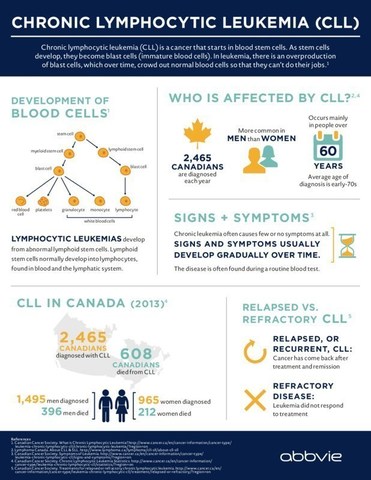
CLL, which is typically a slow-progressing cancer of the bone marrow and bloodii, is one of the most common types of leukemia in adults. In Canada, CLL accounts for approximately 2,465 newly diagnosed cases of leukemia each year and is responsible for more than 600 deaths a year.iii The goal of treatment is to delay progression of the disease and improve quality of life.
"This is another tremendous milestone in our efforts to bring VENCLEXTA plus rituximab to people living with CLL in Quebec. This is a much needed treatment option as it is the first chemotherapy-free combination in CLL that allows patients a 24-month treatment duration," says Stéphane Lassignardie, General Manager of Abbvie Canada.
VENCLEXTA continues to be investigated in CLL and other hematological diseases.
VENCLEXTA is being developed by AbbVie and Roche. It is jointly commercialized by AbbVie and Genentech, a member of the Roche Group, in the U.S. and by AbbVie outside of the U.S.
About the MURANO Study A total of 389 patients with R/R CLL who had received at least one prior therapy were enrolled in the international, multicenter, open-label, randomized (1:1) MURANO study (NCT02005471). The study was designed to evaluate the efficacy and safety of VENCLEXTA in combination with rituximab (194 patients) compared with bendamustine in combination with rituximab (195 patients). The median age of patients in the trial was 65 years (range 22-85).iv
About AbbVie Care Canadians prescribed VENCLEXTA will have the opportunity to be enrolled in AbbVie Care, AbbVie's signature care program. The program is designed to provide a wide range of customized services including reimbursement and financial support, pharmacy services, lab work reminders and coordination, personalized education and ongoing disease management support throughout the treatment. For more information, please visit www.abbviecare.ca.
About AbbVie AbbVie is a global, research and development-driven biopharmaceutical company committed to developing innovative advanced therapies for some of the world's most complex and critical conditions. The company's mission is to use its expertise, dedicated people and unique approach to innovation to markedly improve treatments across four primary therapeutic areas: immunology, oncology, virology and neuroscience. In more than 75 countries, AbbVie employees are working every day to advance health solutions for people around the world. For more information about AbbVie, please visit us at www.abbvie.ca and www.abbvie.com. Follow @abbvieCanada and @abbvie on Twitter or view careers on our Facebook or LinkedIn page.
Natural Relief: Why CBD is Effective for Pain and Inflammation
CBD is an abbreviation for “Cannabidiol.” It is an element of the resin found in hemp plants. Cannabidiol is not to be confused with Delta-9 Tetrahydrocannabinol (THC). THC is the ingredient partially responsible for the “high” that some users experience when they smoke marijuana. CBD, by contrast, does not have addictive properties. It is for this reason that CBD is sometimes prescribed as a natural medicine.
Forms Available
Vaporizer e-cigarettes (or “vape”) pens are an increasingly common method of consuming CBD. The smoke comes from boiling CBD oil. The effects can be felt in as little as 30 seconds. Straight CBD oil can also be consumed through a dropper or spray. Topical applications of CBD are mixed into carrier materials like beeswax or coconut oil. If you put CBD into a pill or mix it into an edible it may take up to 30 minutes or more for you to feel the high.
Use in Treatment
Use of cannabis for medical purposes is now legal in many states. In some cases marijuana itself is still illegal but there are permissions for CBD oil in treating severe forms of epilepsy. Most states still require a prescription to use it. Your healthcare provider is the first place to start if you are thinking about incorporating CBD oilinto your treatment plan. Your doctor will have the most up-to-date information about legality and side effects.
Effectiveness against Pain
Marijuana has a long and storied history of pain treatment. The first reports of this medical usage date from at least 2900 B.C. It is effective because of the body’s own endocannabinoid system, or ECS. These endocannabinoids bind to the cannabinoid receptors found in your nervous system. CBD affects endocannabinoid receptors which could then treat chronic pain.
Effectiveness against Inflammation
The aforementioned receptors also contribute to inflammation. The specific culprits involved here are the CB1 and CB2 receptors. The CB2 receptors are particularly tied to the immune system and therefore the body’s response to inflammation. CBD targets the CB2 receptors to calm inflammation. Patients with arthritis and other similar disorders can apply CBD balms to the affected joints or muscles for relief.
Don’t be surprised or discouraged if you don’t feel that CBD is an effective form of treatment. Continue to work with your healthcare provider to find the dosage or form that works for you.
DON’T SET FOOT AT THE BEACH OR POOL THIS SUMMER IF YOU’RE USING THESE SKINCARE PRODUCTS
You’re all set for a fun day in the sun with your wide-brimmed hat to shield you from the UV rays, and you have given your waterproof SPF 30 or higher plenty of time to absorb into your skin. To play it safe, you have brought more suntan lotion to reapply after swimming or sweating. You are a dermatologist’s dream- or so you think! Have you given any thought to what you applied to your skin the night before or that morning before your set out for your day? The answer is you probably have not if you have concocted a skincare regimen that works for your skin type. The problem: What is effective for Winter, Spring and Fall, can cause significant photo-sensitivity (read burning) and other skin complications come Summer. We turned to Dr. Manish Shah, a Board- Certified Denver, Colorado plastic surgeon to reveal what types of products/ingredients sun worshippers should avoid and what can serve as safe substitutes.
Dr. Shah explains that “Certain ingredients in products make people photosensitive. Photosensitivity (or sun sensitivity) is inflammation of the skin induced by the combination of sunlight and certain medications or substances. This causes skin redness and may look similar to a sunburn. Both the photosensitizing medication or chemical and light source have to be present in order for a photosensitive reaction to occur. Consumers should understand that it is not brands of skincare that can make one photosensitive but rather the ingredients in those brands.”
According to Dr. Manish Shah
If you are planning to be in the sun, do not use the following types of products
Topical Acids Alpha and beta hydroxy acids such as glycolic, lactic, and salicylic acids can cause the skin to be more susceptible to sun damage from being regularly exfoliated. These ingredients are commonly used in anti-aging, skin-brightening, and acne-fighting products.
Alternative: While AHAs and BHAs only cause minimal photosensitivity, you wouldn’t want to risk feeling that stinging sensation on your face. There are alternatives. Azelaic acid, found in wheat, rye and barley—comes in handy during the day as it is useful in the treatment of acne, rosacea, melasma and post-inflammatory hyperpigmentation and is not associated with the sun-induced reaction.
Benzoyl peroxide – This is most typically found in acne products and can cause the skin to be very sensitive.
Alternative: Zinc. Zinc enhances the immune system and has anti-inflammatory properties. Another major role of zinc is to regulate cell production and turnover and reduce the amount of natural oil that your skin produces. It prevents pores from clogging and subsequent acne formation. Zinc oxide is present in many physical sunscreens and is less likely to cause sun-sensitivity. “So, wear a good sunscreen with zinc oxide,” says Dr. Shah.
Hydroquinone- Typically used in skin-lightening products. Although hydroquinone is stable in sunlight, it’s not advisable to use it during the day as the sun’s skin-darkening effects are stronger than hydroquinone’s bleaching effect. Additionally, hydroquinone actually reduces your body's ability to create enough pigment to protect your from UV rays.
Alternative: Vitamin C is an excellent alternative to hydroquinone, as it is an antioxidant and combats dark spots while also having anti-inflammatory and anti-aging properties.
Retinol and retinol derivativesencourage cell turnover, which exposes delicate, new skin. These newer layers of skin can be more sensitive to the sun. With enough sunscreen protection, newer formulations of retinol can be safely used during the day, but experts still advise limiting its use to nighttime especially for those who have sensitive skin.
Alternative: Bakuchiol is the new, clinically proven “natural retinol,” a powerful plant-based retinol alternative that decreases skin sensitivity to the sun. It is derived from the leaves and seeds of the babchi plant and helps to heal, calm and soothe the skin, via its anti-inflammatory and antibacterial properties.
Essential oils including bergamot, bitter orange, grapefruit, lemon, lime, and mandarin leaf can also cause sun sensitivity.
Alternative: It is best to choose FCF or “furocoumarin free” essential oils when in the sun, as these are not known to be “photosensitive” or cause reactions to sunlight. Furocoumarins are phototoxins which are produced by plants as a mechanism to ward off small animals or bugs. Common ones include Oxypeucedanin and Bergapten. Examples of FCF essential oils are Bergamot FCF (Citrus bergamia), Blood Orange, Tangerine, and Red Mandarin.
Topical and oral prescriptions including antibiotics, antifungals, antihistamines, and anti-inflammatories can also cause sensitivity, so it's vital to thoroughly read labels, instructions, and warnings as well.
Manish Shah, M.D., F.A.C.S. was born in Canada and raised in the Washington, D.C. area. He graduated with honors from the University of Pennsylvania, receiving a degree in biomedical engineering. He then completed his medical training at the University of Virginia, earning his Medical Doctorate. During this time, he also completed a one-year fellowship in microsurgery research at the New York University School of Medicine / Institute of Reconstructive Plastic Surgery. As a prelude to his plastic surgery training, Dr. Shah completed a rigorous five-year training program in General and Trauma Surgery at Emory University and the Medical College of Georgia. His formal training in Plastic and Reconstructive Surgery was completed at the Univ. of Tennessee College of Medicine – Chattanooga Unit. After completing his plastic surgery training, he moved to New York City when he was selected for the prestigious Aesthetic Surgery Fellowship at Manhattan Eye, Ear, and Throat Hospital. He underwent extensive, advanced training in aesthetic surgery of the face, breasts, and body at the hands of some of the most renowned cosmetic surgeons in the world. This fellowship is widely considered to be the best of its kind in the world. Dr. Shah is one of only a select few plastic surgeons in the country who have undergone formal post-graduate training in aesthetic surgery.
Dr. Shah’s specialties include revision facial aesthetic surgery, rhinoplasty (“nose reshaping”), and aesthetic surgery of the breast (breast augmentation, breast lift, breast reduction). He is, however, well-trained in all areas of aesthetic surgery.
Dr. Shah’s aim is to obtain a natural appearing transformation that complements the real you!
Dr. Shah is a Clinical Assistant Professor of Surgery at the University of Colorado Health Sciences Center. He maintains a private practice in Aesthetic Plastic Surgery in the Cherry Creek neighborhood of Denver.
Dr. Shah is a member of the American Society of Plastic Surgeons, the American Society of Aesthetic Plastic Surgery, the International Society of Aesthetic Plastic Surgery, the Rhinoplasty Society, and the European Academy of Facial Plastic Surgery.
Dr. Shah is board-certified by the American Board of Plastic Surgery.
TRAIN IT RIGHT NEWSLETTER
Sign Up and get a free 7 day Train it Right HIIT Program!