Scientists Say Specific Fat Cell Protein may be Key to a New Treatment for Diabetes
By Eddie Fatakhov M.D. (a.k.a. Dr. Fat-Off)
A study released this week out of a British Columbia research lab in Canada provided a new possible treatment for one of the most rampant diseases in the world. The study found that manipulation of a specific protein within fat cells may not only prevent the development of, but also reverse type 2 diabetes.
Type 2 diabetes now affects over 30 million Americans, according to the Centers for Disease Control and Prevention (CDC). The CDC estimates 84 million Americans are prediabetic (majority of them being unaware). Long-term complications of unmanaged type 2 diabetes can lead to heart disease, uncontrolled blood pressure, nerve damage leading to limb amputation, kidney disease and blindness. Obesity is a primary risk factor of type 2 diabetes. The steady incline of obesity rates is directly correlating with the number of people being diagnosed with type 2 diabetes.
Our bodies are designed to eat in order to produce the energy we need to survive. Glucose (or blood sugar) is the body’s main source of fuel. We produce insulin in response to sugar consumption. Insulin is essentially the key that opens the doors for glucose to enter our body’s cells and fuel our body. When we regularly consume more glucose than required for the energy we expend, our body cannot keep up with the insulin demand and we can become insulin resistant. This results in an inability to use glucose for fuel. In turn, the glucose remains in the bloodstream, resulting in high blood sugar levels over long periods of time, eventually turning into, you got it… type 2 diabetes.
Along with potential insulin resistance, eating more than our body needs results in expansion of white adipose tissue, where excess energy is stored as fat. This study conducted by a group of researchers out of Canada and Sweden examined a specific protein and its role in fat cells. This protein is a glycoprotein known as CD248, a protein that has a known association with the growth of tumors and inflammation. CD248 had never been studied in direct relation with obesity or insulin resistance. Researchers found that CD248 was found in greater amounts within the white adipose tissue in people that were obese or insulin resistant.
In a laboratory setting, researchers then artificially reduced the activity of CD248 in the white adipose tissue cells. From experimentation with the activity of CD248 in the white adipose tissue, researchers were able to conclude that the protein plays a role in the process that leads to insulin resistance and a cellular hallmark of obesity, hypoxia. Researchers next moved from the artificial reduction of activity to looking at the gene that codes for CD248 in mice. They used genetically-altered mice that lacked the gene that codes CD248 in white adipose tissue. These mice were fed high-fat diets and became obese, but did not develop insulin resistance and type 2 diabetes.
Potentially the most beneficial find is that the mice that already had diabetes and had the CD248 levels within their fat reduced, showed improvement in their insulin sensitivity. This discovery suggests the possibility of a future target therapy for type 2 diabetes, especially considering the reduction of CD248 did not result in any adverse events. Researchers are careful to point out that this is a very early stage of discovery, but the results give them a new pathway to head down in the treatment and/or prevention of type 2 diabetes. The more the prevalence of type 2 diabetes increases, the more urgent new treatment options become.
Eddie Fatakhov, M.D., a.k.a. Dr. Fat-off, is a Board-Certified Physician, Nutritionist, and Best-Selling Author. His latest book is “Dr. Fat-Off: Simple Life-Long Weight-Loss Solutions.”
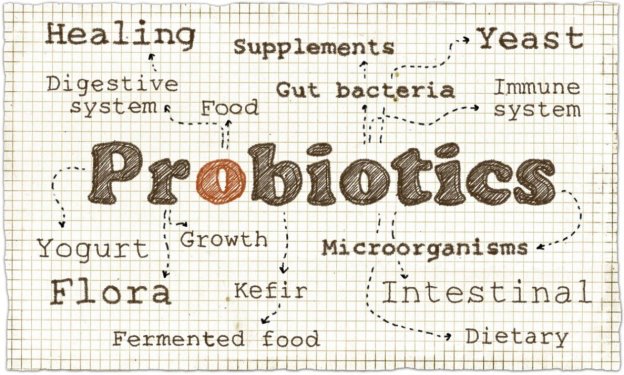
Probiotics are not only live microorganisms found in supplements and some fermented foods such as yogurt and pickles, but they have also been found to have a variety of health benefits. These benefits include vitamin K and B production, the breakdown of insoluble (indigestible) fiber, immune system support, the improvement of mental health, improvement of heart health, reduction of certain allergies and skin conditions, and (possibly one of the most sought after effects) the reduction of belly fat.
What is the link between probiotics and body fat?
There are large populated families of primarily friendly microorganisms (bacteria) living in your digestive system, two of which are families tied to the management of body fat – bacteroidetes and firmicutes. According to a wide variety of studies, body weight is related to the balance of these two families of bacteria.
These studies look at the difference between the gut bacteria in normal-weight people versus overweight or obese people. The major difference found was that obese subjects had an imbalance in their firmicute levels versus their bacteroidetes.
Which probiotics help you lose weight?
Not all probiotics are created equal. While there are many strains available, only a few have been proven to have positive effects on weight. One strain that studies have found to assist in weight loss is the Lactobacillus family. Studies have found the following to be true:
When paired with diet and exercise eating yogurt with Lactobacillus fermentum or Lactobacillus amylovorus helped to reduce body fat by 3–4% over a 6-week period.
The effect of Lactobacillus rhamnosus supplements was measured on 125 subjects for weight loss and weight maintenance. The study found women taking the probiotics over a three month period lost 50% more weight than the placebo group.
Lactobacillus gasseri is one of the most productive probiotic when it comes to weight loss. This specific probiotic inhibits dietary fat absorption. This means the calories your body would otherwise “harvest” are excreted instead.
How can probiotics help you lose weight?
While research is still ongoing, here are some of the ways probiotics are thought to assist in weight loss:
They release GLP-1. Probiotics may play a part in the release of GLP-1 (appetite-reducing hormone). Studies have shown increased levels of GLP-1 may actually help you burn calories and fat.
They increase production of ANGPTL4. Levels of the protein ANGPTL4 may rise from probiotic use. This production might actually lead to decreased fat storage.
Are probiotics safe?
There are many types of probiotics available today. Because of this, it’s good to remember that some have a lot of research behind them and some do not. Here are some things to know before you buy a probiotic:
Mild side effects are possible such as gas or bloating within the first few days of use.
All foods with probiotics are not created equal. While these foods usually have good levels of live bacteria – “live and active cultures” yogurt, kefir, aged cheeses, brined pickles, sauerkraut, tempeh, and miso – products that claim to have probiotic benefits might not. Enriched juices, cereals, and snack bars may have less than promised levels or weakened forms of the organisms.
Probiotics might not be safe for everyone. People with weakened immune systems, such as cancer patients in treatment, should avoid probiotics.
Expiration dates and storage are very important. Because probiotics are living organisms they have a limited shelf life. Using probiotics before their expiration dates and following the suggested storing advised on the product label maximizes their potency.
Before taking any supplements we recommend talking to your doctor to ensure you are taking one that is right for you.
Eddie Fatakhov, M.D., a.k.a. Dr. Fat-off, is a Board-Certified Physician, Nutritionist, and author of the new book, "Dr. Fat-Off: Simple Life-Long Weight-Loss Solutions.”
CONTACT: Jerry McGlothlin 919-437-0001
Rights 4 Vapers Reaction to Study Showing Increase in Vaping Among Youth in Canada
TORONTO, June 21, 2019 /CNW/ - Across Canada underage youth are legally restricted from purchasing alcohol, marijuana, cigarettes and vaping products. But according to recently released data in a study published yesterday in the British Medical Journal (BMJ), they are using them anyway.
Provincial tobacco control coalitions and physicians' groups immediately reacted to the results of the study and the media headlines say it all: a recent report in the British Medical Journal, shows that Canada has experienced a "massive", "staggering", "whopping" increase in teen vaping.
The provincial government of British Columbia and the Canadian Cancer Society used the data from the BMJ Report to publicly demand that the Federal Government immediately introduce vaping regulations that would restrict nicotine content, device design and flavours. Their failure to do so, the BC government implied, would result in BC introducing more restrictive provincial regulation.
"What's not mentioned is that both federal and provincial vaping legislation already exists which restricts sales to anyone under the age of 18, promotion, display advertising and communication and limits features like certain flavours and designs thought to be appealing to youth," said Dr. Chris Lalonde, Academic Research Advisor for Rights 4 Vapers. "Is this single set of data enough to justify the hasty introduction of more draconian regulatory measures that could simultaneously reduce the appeal of these products to adult smokers that rely on vaping to reduce or quit smoking?"
What's more concerning is that the same report shows that teen cigarette smoking in the past 30 days increased 45%. The use of alcohol in the past 12 months by teens actually decreased by 3%, but cannabis use went up by 19%.
The important question then is which of these numbers should we be worried about? According to the study, 60% of youth used alcohol and 27% used cannabis in the past 12 months, 16% smoked cigarettes in the past 30 days, and 15% vaped.
If what we hope is that teens who already smoke might be tempted to switch to vaping, then the report contains some good news. Among current teen smokers, 44% are also vaping. Even "experimental smokers" are also vaping (29%). Are they on their way to fully switching from cigarettes to vaping (likely, and a good thing), or from dual-use to just smoking (unlikely, and a bad thing)?
And what about teens who have never smoked? Are they being lured into a lifetime of addiction by vaping? Here the news is good from a public health perspective.
It turns out teens are not being lured into a lifetime of addiction by vaping – they are not very keen on vaping or smoking, according to the data in the study published in the BMJ. Most of the teens surveyed have never vaped, and among those who have tried it (20%), just 3% have vaped in the past week, and only 0.6% vaped on more than 15 of the last 30 days. That's just 14 teens out of the 2,441 surveyed.
Cigarette smoking and drinking carry far higher health risks than vaping or cannabis. If, as health authorities all agree, vaping is safer—not 'safe' but safer—than smoking cigarettes, then, perhaps, we should think clearly about what we hope to accomplish by battling teen vaping through introducing provincial regulations that go even further than regulations for smoking or drinking.
Rights 4 Vapers is an organization of vaping advocates dedicated to the advancement of Canadian-based research on vaping. Dr.Chris Lalonde is an academic advisor.
SOURCE Rights 4 Vapers
Rethinking The American Dream: 5 Tips To Live A Simpler Life Millennials have been coined “the burnout generation.”
Culture observers attribute the burnout to work, social, financial, and technological pressures that can leave a young adult overwhelmed and their coping mechanisms frazzled. With so much life yet to live, what can millennials do to reverse or avoid burnout? Further, how can subsequent generations handle the pressures that consume millennials? Simple life and self-help guru Gary Collins says it comes down to simplifying their lives. “Burnout is an undeniable fact among many millennials,” says Collins, author of The Simple Life Guide To Decluttering Your Life (www.thesimplelifenow.com). “They’re feeling the effects of complicated living. It’s no secret today that we’re bombarded by outside stressors that are unfamiliar to earlier generations of humans, and we’re struggling to deal with them. “Decluttering is a popular concept today in terms of organizing your closet, garage, etc., but it’s also an effective mindset for simplifying your life. It’s about removing the unnecessary internal and external stressors in order to live the life you want.” Collins offers five principles for decluttering your life – or living a simple life from the outset of adulthood:
Knowledge is power. People tend toward the quick fix in today’s fast-moving world, but Collins says it takes time to acquire the correct, in-depth information that helps someone make lasting, positive changes. “New habits are most effective when you know why you’re doing them,” Collins says. “Otherwise, you’re likely to be swayed by the next fad product that promotes the easy life but does not work long-term.”
Avoid extremes. People can be drawn to selling pitches such as, “Make millions in just a few hours per week,” but extreme claims rarely pan out. “A slow-and-steady approach with a well-thought-out plan that’s followed day-after-day delivers true change for the positive,” Collins says.
Keep it simple. “As a culture,” Collins says, “we’ve turned the concept of living a healthy, happy life into a confusing and overwhelming selection of products and gimmicks. But less is more. We love to overthink everything and make living the life we want far more complicated than it needs to be. Once you cut out the noise and clutter, everything comes into focus.”
Something is better than nothing. While overhauling an entire lifestyle can seem daunting, little changes and choices can add up. Examples are analyzing spending habits when short on money each month, or developing skills to find a job you enjoy rather than staying in a job you don’t like. “When it comes to doing nothing versus doing at least something, something is always the right choice,” Collins says. “Think of it like dropping a dollar into a piggy bank every hour of the day for years and years. Eventually, you’ll have a nice nest egg.”
Take action every day. “America is full of people who want to live a better and more fulfilling life,” Collins says, “but in reality very few ever take action to accomplish this. Happy, successful people take action — today and every day. Maybe that means getting up earlier to get to the gym, writing that novel you’ve talked about for the last 10 years, or selling that sports car you can’t afford and getting something more practical.”
“You must ingrain and practice positive habits to achieve positive outcomes,” Collins says. “Life gets hard, and making better choices is sometimes inconvenient, but today’s choices are under your control. Once it’s a habit, it gets easier.” About Gary CollinsGary Collins is the author of The Simple Life Guide To Decluttering Your Life(www.thesimplelifenow.com). He has a varied background, having worked in military intelligence, served as a Special Agent for the U.S. State Department Diplomatic Security Service, worked for the U.S. Department of Health and Human Services, and also worked for the U.S. Food and Drug Administration. In addition to being a best-selling author, Collins has taught at the college level, consulted and trained college-level athletes, and been interviewed for his expertise on various subjects by CBS Sports, Coast to Coast AM, The RT Network, and FOX News, among others.
The ABCDs of CBD for Women
With CBD showing up in just about every consumer product these days – from cosmetics to bath balms to fizzy drinks – how can women know what works, what is good for them or where to find it?
“As with any decision about your health, it’s important to forget the hype and start with number one – yourself,” advises Richard Carey, co-founder of Atlantic WeedBoard a new website that serves as a resource and community for all things cannabis and helps guide consumers through the wellness benefits and choices of CBD products, with engaging videos and interviews with experts.
Here are some tips from Atlantic WeedBoard on the ABCDs of CBD for women:
A stands for ALL ABOUT YOU. Whether you want to treat pain or stress, internal or external discomfort, choosing the best product depends on identifying the condition you want to treat and the kinds of medicine you are comfortable taking.
B means you need to LISTEN TO YOUR BODY. How do you feel? Where does it hurt? What are you doing now to alleviate that discomfort? And after switching to a CBD regimen it’s important to listen to how your body responds, because there are variations in each person’s endocannibinoid system – a group of cannabis-related chemicals produced throughout the body to help maintain health – and how CBD interacts with this important system to improve wellness.
C is to MAKE A COMMITMENT. The effects of CBD can be profound, but they are subtle. If you want to try CBD for any reason you need to commit to using it for at least a month. At the end of that period stop, look, listen, and see how you feel.
D is for DOSAGE. Since everyone’s system is unique, the best advice is to start low and go slow. Begin with a lower dosage and slowly increase the amount of CBD you’re consuming untilyou achieve the desired effect.
“Women lead busy, active lives, juggling work and home, family and fitness. All that multitasking can lead to pain and stress,” adds Carey. “Whether she needs to calm anxiety, soothe sore muscles after a session of yoga or a day on her feet, ease the symptoms of menstrual cramps or menopause, or drift off to sleep more easily, CBD’s phytocannabinoids can help to reduce inflammation, pain, stress and anxiety.”
Atlantic WeedBoard recommends products from Sagely Naturals a women-owned CBD company founded in 2015. The Sagely Relief and Recovery Cream is packed with CBD, essential oils, and cooling menthol to help revive the body and combat discomfort; Sagely’s Tranquility capsules help promote a balanced mood and manage occasional stress with CBD, ashwagandha, magnolia bark, and lavender; and the Dreamwell Roll-on with CBD, lavender and geranium soothes the temples, and quiets the mind for sleep.
“The cannabis products from Sagely Naturals have been shown to alleviate pain and stress in a natural and non-toxic way,” says Carey. “They fit right in with the carefully curated items we sell on Atlantic WeedBoard, focusing on organically grown products where the source and quality are clearly defined.”
Atlantic WeedBoard (www.atlanticWeedBoard.com), is a newly-formed informational center specifically developed for the emerging cannabis industry. The site is presented in artistic graphics with a fun side to it featuring a boardwalk and Ferris wheel as its signature logo. On a more serious note, Atlantic WeedBoard is a type of “Consumer Reports” of cannabis as it presents products for people and their pets, interviews with the top growers, curates independently tested legal products and offers anecdotal beauty, health and wellness advice for its users. For more information, visit www.atlanticweedboard.com
#
Why a Reliable Exercise Regimen Helps with Dependency and Addiction
Addiction and dependency can be horrible. It doesn’t matter if you’re addicted to heroin, to alcohol, to gambling or to anything else on the planet. It can ruin your existence. It can even impact the people who are around you. If you want to do away with addiction and dependency nightmares, it may be helpful to establish a dependable exercise routine.
A Tougher Body
Working out with regularity can make you a lot more physically fit. That’s how it can make your body markedly tougher. A tough body can do a lot for people who are trying to banish addictive and dependent behaviors. If you want to be able to hold your own against withdrawal symptoms and beyond, then you need your body to be as powerful as possible. Fortunately, routine exercise can help you out there.
Mental Resilience
A workout routine that’s dependable can toughen up your physique. It can also toughen up your mind. If you want to have the resilience that’s necessary to get through the recovery process, then you need to do whatever you can to gain mental fortitude. Exercise teaches people about self-discipline. It teaches people about the relationships between their minds and their bodies as well. These lessons can be useful to people who want to eliminate addictive and dependent behaviors forever.
Better Stability
People who are suffering from addiction and dependency often lack structure in their lives. If you establish a dependable workout routine, then you can learn all about the beauty of unwavering structure in your normal existence. This can help you immensely as you manage detox heroin treatment services. A sense of structure can help you understand things better. It can help you keep your head on straight as well.
An Outlet for Stress and Tension
Exercise can be a fantastic outlet for people who are trying to handle pressure. Recovering from drug addiction can make people feel pressured and overwhelmed. If you want to be able to channel your anxious feelings in a positive manner, it can be terrific to get your adrenaline flowing. Workout sessions can help you release your energy. They can help you handle emotions that are bottled up inside of you as well.
Exercise can help you look and feel better than ever. It can also make getting through addiction and dependency a lot more realistic. If you want to boost your odds of recovery success, you need to get to the gym, stat.
How to Strengthen Your Bones with Exercise When Going Through Menopause
Bone issues aren’t at all unusual. They’re actually pretty commonplace in women who are dealing with the ins and outs of menopause as well. As women get older, their estrogen amounts diminish considerably. This can lead to significantly decreased bone density. If you’re a menopausal woman who wants to maintain optimal bone strength and health, these options can do you a lot of good.
Get Frequent Exercise
Frequent exercise sessions can be beneficial for women who want to maintain powerful bones. Sedentary lifestyles make people a lot more susceptible to a condition that’s called osteoporosis. Speed walking outside can be terrific. The same thing goes for biking. If you want to keep the weakening of your bones at bay, then you need to do a lot moving.
Consume Nutritious Foods
Proper nutrition can also do a lot for menopausal women who want sturdy bones. It’s critical to consume foods that contain all sorts of vitamins and minerals. It’s particularly crucial to zero in on nutrients that can contribute to the power of your bones. Examples of these nutrients are vitamin D and calcium. Ask your doctor for suggestions for foods that are chock-full of both.
Go See a Bone Specialist
Routine medical care can do a lot for women who are in the middle of menopause and all of its effects. If you want your bones to be the definition of powerful, you should make an appointment with an orthopedic surgeon. He or she can talk to you about all of your choices in osteoporosis treatmentsand medications. Therapies that revolve around hormones can often be suitable for individuals who have osteoporosis and who want to take control of it.
Refrain from Smoking
Poor lifestyle habits can often be detrimental for bone health. If you’re a menopausal woman who is enthusiastic about bone wellness, then you should refrain from smoking no matter what. Smoking is capable of making the loss of bone occur in a speedy fashion. It can make people a lot more vulnerable to bone fractures as well. It can also be wise to steer clear of immoderate alcohol consumption. Immoderate alcohol intake can negatively impact bone development.
It’s vital to do anything you can to maintain powerful bones for life. It’s particularly vital for women who are currently trying to manage the sometimes tough world of menopause. If you want to feel energetic, then you need to prioritize bone wellness.
HEART TUGGING VIDEO FOR “LOVE IS STRONGER” BY COUNTRY MUSIC ARTIST AND SONGWRITER MATT KENNON ANNOUNCED
Single Ranked In Top 20 Most Downloaded and Streamed Tracks on Play MPE
NASHVILLE, TN. - (June 20, 2019) – “Love Is Stronger” by Matt Kennon hit the radio airwaves this month and was ranked in The Top 20 Most Downloaded and Streamed on Play MPE. Best known for his emotional, heart wrenching and true to life songs that tug at listeners heart strings, and the fact he is not afraid to bring attention to subjects that are uncomfortable. The accompanying official video was exclusively premiered on Center Stage Magazine and My Jam Music yesterday and available today on YouTube and Facebook, as well as online video platforms worldwide.
"Love Is Stronger" is a whirlwind of emotions that will leave you crying like a baby as the story unfolds,” states Center Stage Magazine Editor, Missy Wolf. “Kennon's ability to capture the harsh realities of life is encapsulated brilliantly in this video.”
“A thread that runs through the new music is definitely love, and its awe-inducing power to lift us up, stir our souls, or crush us in its wake when it goes,” said GrassRoots Managing Partner, Nancy Tunick. “It’s a subject Kennon is intimately familiar with, and the material is well-suited for the hard-working artist who is finally coming into his own creatively and hitting his stride.”
“Love Is Stronger” is special to me because I know there have been times to me when I have seen love overcome a lot of things with a lot of people, not only in my own life but also to people who were close to me. I think the world could use a little more love right now,” stated Matt Kennon. “Love is stronger than anything you are going through and it makes me feel really good to be able to share this message with everyone who needs to hear it.”
“A listener can choose to take or leave hope, the lyrics to this song reinforce that you can take hope with you,” said Casting Life Films, Darren Williams. “The truth is...what we fight for....what we believe in...and lives are still taken from loved ones, how do we deal with that? This song gives listeners hope.”
About Matt Kennon: Matt Kennon knows the power of a great song. It can stir your emotions, move you to tears, motivate you to action, and in some cases even save your life, as Matt has seen firsthand in his career with songs like “The Call,” “You Had To Pick On Me,” and even his latest song, “Wasn’t It Enough.” For him, music is about the message, and time and again he’s written thought-provoking and heart-tugging songs that have racked up impressive chart numbers and even more impressive sales: throughout the course of his career he’s already sold 300,000 singles and 30,000 albums. The Atlanta native is inspired by and writes about things close to his heart, and often finds himself writing songs with emotional messages. His songs have definitely hit home with many struggling with issues like suicide, post-traumatic stress, and bullying. The Atlanta native devoted the last two-plus years to a special anti-bullying campaign he developed and took to 83 schools in seven states. Through partnering with several sports foundations around the country, including Alabama coach Nick Saban’s charity, Nick’s Kids, Matt was able to reach 150,000 students with a powerful anti-bullying message. The campaign was just one example of how apt Kennon is at dialing in to the emotions fans are experiencing, and for proof of that connection, one need not look any further than the iTunes chart, where Matt has been a Featured Artist for the last five years with each of his independent releases. His explosive live shows no doubt fuel those sales as well, as Kennon is a powerful live performer with thousands of shows under his belt on stages across the country. Throughout the course of his career he’s shared the stage with high profile artists including, Kenny Chesney, Blake Shelton, and Train, Darius Rucker, Uncle Kracker, Lee Brice, and The Band Perry, among others.Powerful social media interaction has moved the needle for Kennon. The video for “The Call” recently reached an amazing seventeen million accumulated views. A successful songwriter in his own right, with outside cuts by artists such as Randy Travis, (who recorded his song “Turn It Around,”) and many others. The soulful singer also writes with many of Nashville’s top writers regularly.
Torn Tendon? 4 Ways to Fix it and Get Back to Your Routine
Even though healthy tendons are very strong, a rupture or tear can occur in the blink of an eye. If you have recently torn a tendon, then you must immediately come up with a comprehensive treatment plan that gets you back on your feet as quickly as possible.
Rest the Extremity
The first thing that you must do after a tendon injury is immobilize the affected extremity. Trying to push yourself through the pain could make the recovery period much longer, and will probably end up doing more damage to the tendon. For a severe tear, you will need to keep the extremity completely immobilized for at least four weeks. Minor tears usually heal within a week or two, but you must consult with your doctor before you resume any strenuous activities.
Ice the Area
There are a few different reasons why many doctors suggest icing tendon injuries. In addition to minimizing the swelling, icing is also going to dull the pain. When you are icing, you should never put the ice bag or cold pack directly on your skin. Prolonged exposure to ice could result in frostbite or permanent nerve damage. You also need to remove the ice pack every 15 or 20 minutes so that the soft tissue can warm back up.
Compression
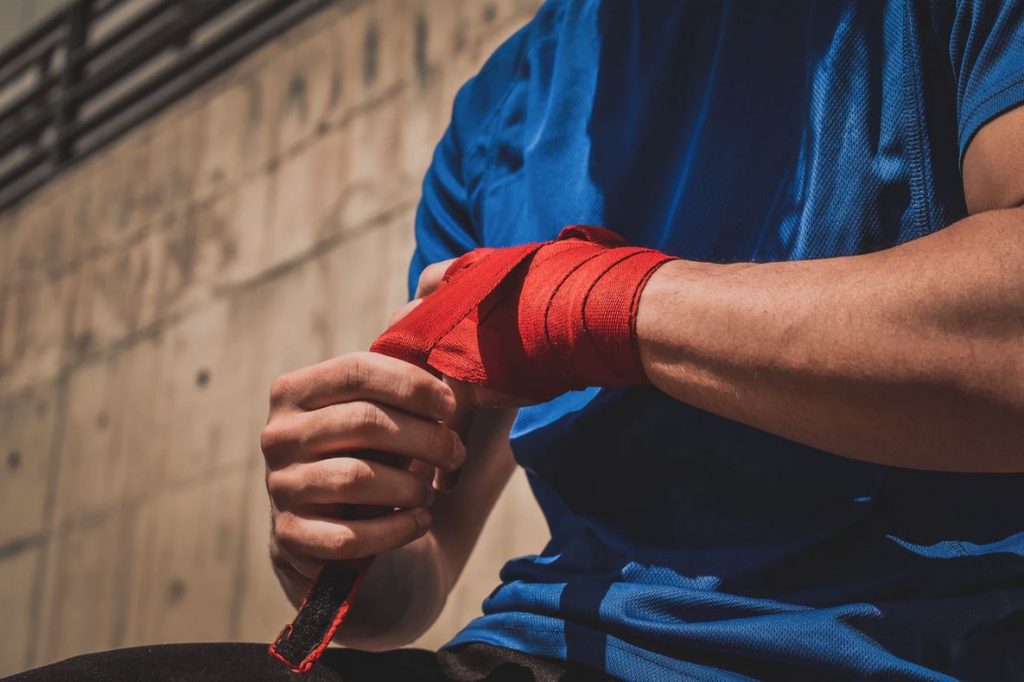
Compression therapy is a very popular treatment option for injuries in the arms and legs. As soon as you are done icing the injury, you might want to put on a compression sleeve or bandage for 20 or 30 minutes. By compressing the area, you can reduce the inflammation and improve blood flow. While compression bandages can be very effective, you should only use them for a day or two. Wrapping the extremity for more than a few days will actually slow your recovery.
Visit a Medical Specialist
Most minor sprains will heal on their own, but you need to visit an orthopedic surgeonif the tendon is ruptured. Those types of injuries often require special procedures, and your tendon might not heal properly if you don’t have an operation carried out. An experienced medical team can also help you come up with a long-term therapy plan that strengthens all of the muscles that surround and support the tendon.
As a general rule, you should seek out medical attention if a tendon injury doesn’t heal after a day or two. You must also head to the hospital if your injury is accompanied by secondary side effects such as severe discoloration, a fever, or unbearable pain.
What is ART International?
Background on Nonprofit
Restauranteur and entrepreneur Chris T. Sullivan formed and is funding ART International Training and Research, Inc., an organization dedicated to making Accelerated Resolution Therapy, or ART,more widely available to individuals in need of professional help to ameliorate the devastating effects of post-traumatic stress (PTSD) and other psychological traumas.
To expand the reach of ART, the foundation is specifically looking to increase the number of clinicians certified in this treatment. To accomplish this, the nonprofit is hosting more than 100 training sessions in different cities throughout the country in 2018 for community therapists who are interested in being trained in ART and becoming certified to use ART in their practice.
Licensed clinicians including psychologists, psychiatrists, social workers, marriage and family therapists and mental health counselors are eligible to participate in the training. Therapists who complete the session will earn 21.5 CEUs and are immediately certified to use ART in their practice.
For more information on ART International’s upcoming training sessions, or to sign up for a session, individuals can visit https://artherapyinternational.org/.
What is Accelerated Resolution Therapy?
Process of Therapy
ART is an evidenced-based psychotherapy that has demonstrated proven results in treating individuals with PTSD. The therapy, which continues to gain popularity nationwide, aims to resolve a traumatic memory through a combination of relaxation and memory visualization. This treatment provides effective relief from strong physical and emotional reactions associated with PTSD in as few as one to five sessions, with the average being four sessions.
The therapy resolves how distressing memories and images are stored in the brain so that they no longer trigger strong physical and emotional reactions. The therapy’s distinct features include use of horizontal eye movements and memory reconsolidation, which is a way in which new information is incorporated into existing memories. The technique is used to reprogram traumatic memories and images that are currently triggering strong physical reactions like depression, isolation, crying, insomnia, fear, anger and troubling memories.
Due to the physical desensitization and memory reconsolidation that occurs within a treatment session, the patient typically does not experience troubling memories and symptoms of the trauma thereafter. Verbally recalling or writing details of the traumatic experience is not required which may offer patients a greater sense of safety and control than in other trauma-focused therapies.
This approach is delivered in a standardized way to be easier on both the client and the clinician as it quickly and quietly moves through recall of negative imaging to reprocess the memory with positive material, including new imagery.
In an ART session, patients can expect to be seated across from the therapist and will be guided through a thought process involving a previous experience. The pace of the session is directed by the patient as they move through imagining the original experience and then adding positive material and imagery to the original memory. The therapist will often suggest metaphors to the patient to help create new images to be woven into and take precedence over the original memory and to guide the process to completion.
History of Therapy
ART was developed by Laney Rosenzweig, MS LMFT, in 2008. Since then, there have been five research studies completed and several more are in progress. These studies have produced more than 10 published papers in scientific peer-reviewed journals on the therapy including by researchers at the University of South Florida and with federal funding from the Department of Defense and currently the National Institutes of Health. Since 2015, ART has been recognized as an evidence-based therapy by the SAMHSA National Registry of Evidenced-Based Programs and Practices.
The ART studies that have been published represent treatment of hundreds of U.S. civilians and military personnel, as summarized in the journals Military Medicine, Frontiers in Psychiatry, and Nursing Outlook. A randomized controlled trial of ART showed that approximately 70 percent of service members and veterans who completed treatment with ART substantially reduced their symptoms of PTSD in an average of four treatment sessions, and with consistent evidence of safety. Results have been similar in civilians treated with ART. A large randomized controlled trial is underway at the University of Cincinnati to compare ART’s effectiveness with Cognitive Processing Therapy which is considered standard-of-care and is widely used in Veterans Administration facilities.
Over the past five years, the Department of Defense has shown considerable interest in ART by contracting for the training of 80 mental health clinicians at Ft. Hood, Ft. Stewart, and Ft. Drum, as well as more than 100 clinical providers at Ft. Belvoir Community Hospital, the sister military hospital to Walter Reed Hospital in Bethesda, MD. Other clinician trainings have been conducted at the Betty Ford Clinic and with the Idaho National Guard.
TRAIN IT RIGHT NEWSLETTER
Sign Up and get a free 7 day Train it Right HIIT Program!