
 I'm opening spots for 1 new client! ▪Coaching helps you change in the way you wish and helps you go in the direction you want to go. ▪Coaching supports you at every level in becoming who you want to be. ▪Coaching builds awareness, empowers choice and leads to change. Pay It ForwardIf you feel someone in your life would benefit from having a coach in their corner, please share this post with them. Contact me NOW or Sign Up HERE Not interested in coaching but still want to support me and my sport....click HERE!  |
Author: trainitright
How Rehab Can Change Someone's Life
When a substance or alcohol abuse reaches the point of seeking help at a rehab, it shows that you or your loved one is unable to disengage without professional assistance. Going to rehab changes your life for the better in the following ways.
Creates the Right Environment to Fight Addiction
Disengaging from substance or alcohol is not simple when you are at the same places where supply and peer pressure is rife. A drug rehab, mainly in-house, helps to escape from the trigger factors until you overcome the habit. A rehab turns to overcome addiction to the main activity. The longer time you spend interacting with people focused on treatment helps to break the addictive cycle. Research shows that the most addicted need at least 3 months in three treatments to stop or significantly reduce drug use. The recovery addiction process is a long-term thing that frequently requires multiple treatment episodes.

Helps to Explore Underlying Issues
Addiction builds up due to many reasons. You only break it up by gaining an insight into the triggers that draw you towards a substance. Some of the things that can submerge you into addiction are an attempt to:
• Cope with stress
• Numb emotions to escape physical or emotional pain
• Avoid responsibility
• Fit into a group
• Gain approval from others
Rehab motivates you to peel the layers of your behavior until you understand the cause of your habits. Counselors at rehab are trained to dig into underlying causes of addiction, make sense of them, and build new coping skills that will not rely on substance use. A rehab facility can be in or outpatient. However, a good one does more than initiate withdrawal. It uses medications and applications that help the brain in adapting to the absence of drugs or substances. Rehab also works on binding stress cues to prevent relapse.
Inspires New Habits and Practices
A critical part of self-care in recovery is to set and accomplish goals. Many substance users do not know how to self-care, maintain discipline and set achievable goals. The rehab team helps you set recovery goals with a proper mindset to prevent choices that compel abandonment mid-way. It is simpler to overcome addiction when you first conquer a repetitive cycle of failing to change habits as planned because it weakens resolve to the point of giving up.
Establishes Healthy Relationship Boundaries
Family members usually assume the role of helping addicts to cope. The roles can lessen the stress of addiction, but it is temporary since it often does not directly deal with the underlying issue that causes the habit. Rehab helps create balanced family boundaries so that you and your family develop defined roles in fighting substance abuse. Rehab trains you to take more responsibility for your life and behavior while the family supports you, and not the other way round.
In conclusion, rehab will change your life because it does not just focus on stopping substance abuse or alcohol. It also addresses the negative thoughts and feelings that fuel dependence to make you act positively in supporting sobriety while resisting triggers.
How Kegel Exercises Can Improve Your Health and Well-Being
Generally, exercise helps people to build strength as well as lose fat and body weight. Also, it helps improve body immunity, thus helping the body fight off diseases and infections. While there are many forms of exercise, each of them target specific areas of the body and different muscles. One form of exercise that’s not often talked about is Kegel exercises. Kegel exercises help strengthen the muscles around the pelvic region. When pelvic muscles are strengthened, you gain the ability to prevent urine leakage, among other pelvic-related problems. Apart from that, Kegel exercises are also known to contribute to your health and well-being in the following ways.
Improves Recovery After Childbirth
If you are pregnant and are about to give birth, your body will release hormones that will loosen pelvic ligaments and muscles to facilitate safe child delivery. Once the baby is born, these ligaments constrict again to regain their normal position. Unfortunately, some women do experience organ prolapses in the process. By conducting Kegel exercises, you can recover from these problems. At the same time, your body can return to pre-baby shape and fitness, which is a dream for many moms.
Improves Your Sexual Health
Sexual dysfunctions are becoming more common in the present generation. It could be because of modern lifestyles, the food we eat, diseases, medications, or lack of exercise. If you are suffering from sexual dysfunction and other related problems such as short erections or premature ejaculation, Kegel exercises will definitely change your life forever. According to research, these exercises help strengthen bulbocavernosus muscles in men. When strengthened, these muscles make blood flow more efficiently, leading to stronger and longer-lasting arousal.
Helps Recover From Prostate Problems

Prostate diseases can be caused by a number of factors, including aging, family history, or lifestyle. When prostate diseases are present, they can weaken the prostate muscles and tissues. Some of the tissues that are weakened by prostate diseases include the gland, urethra, and bladder. Therefore, if you have prostate cancer, prostatitis, enlarged prostate, or urinary incontinence, then presuming Kegel exercises will strengthen these tissues, enabling you to gain better control of your bladder and urine flow.
Final Thoughts
Kegel exercises are great for those willing to address pelvic issues. Apart from the strength it brings to the pelvic area, this form of exercise also contributes to overall health, fitness, and wellness.
Merck Canada and Guy Lafleur Team Up Against Lung Cancer
Campaign for Lung Cancer Awareness Month aims to empower Canadians to be the MVP in the fight against lung cancer
KIRKLAND, QC, Nov. 8, 2021 /CNW/ - In the face-off against lung cancer, early detection is key. That's why Merck Canada and former hockey player Guy Lafleur are teaming up to launch Be the MVP, a new public awareness campaign marking Lung Cancer Awareness Month in November, with support from a network of Canadian lung health advocacy organizations including: Lung Cancer Canada, the Lung Health Foundation, L'Association pulmonaire du Québec, Coalition Priorité Cancer au Québec and the Canadian Lung Association. The campaign aims to empower Canadians to take charge of their health by learning the symptoms and risk factors of lung cancer, which can help to gain an advantage on the disease through earlier diagnosis.
Late-stage diagnosis a challenge for Canadians facing lung cancer
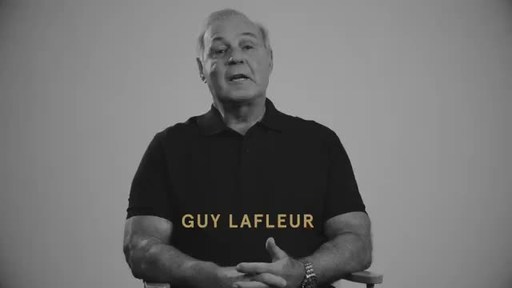
When former NHL player and hockey legend, Guy Lafleur, was diagnosed with lung cancer in 2019, fans and former teammates rallied in support, giving him strength in the fight against the disease. By lending his voice to the Be the MVPcampaign, Guy intends to extend the same support to those who may be at risk for lung cancer.
"As they say, the best defence is a good offence, and it's the same with your health. When I was diagnosed, it was completely unexpected. I didn't think I was at risk, but now, I am incredibly grateful to my team of healthcare professionals and loved ones who have supported me through every step of this journey," said Guy Lafleur. "I wanted to be a part of this campaign because I hope Canadians will hear my story and find the strength and courage to talk to their doctor if they're at risk. That's what I'm passionate about – getting more people aware of the symptoms and risk factors so they can talk to their doctor as soon as possible. This way they can get right to the game plan of their disease."
More Canadians are diagnosed with lung cancer than any other type of cancer,1 with over 20,000 estimated deaths in 20201 – more than the deaths caused by colorectal, pancreatic and breast cancer combined.2 In fact, half of lung cancer cases in Canada are diagnosed in stage 4.2 This can make lung cancer more difficult to treat, resulting in poor prognosis and one of the lowest survival rates of all types of cancer. 2
Early detection a possibility through patient empowerment
From smoking habits, to personal and family medical history, to exposure to chemicals, there are a number of contributing factors that may increase one's risk of lung cancer.3 Early on, people with lung cancer may not have any symptoms, or they may not realize that their symptoms are caused by lung cancer. Knowing the symptoms, and when to speak up, could make the difference for Canadians and their loved ones. Some common symptoms4 associated with lung cancer include a cough that doesn't go away, shortness of breath and constant chest pains that get worse when you breathe deeply.
"The unfortunate reality for too many Canadians and their loved ones, is that lung cancer isn't getting diagnosed early enough. We take our mission to save and improve lives very seriously, so we're thrilled to partner with Mr. Lafleur, whose story resonates with so many, to help raise awareness," said Marwan Akar, President and Managing Director, Merck Canada.
Visit BETHEMVP.ca to learn more about the symptoms and risk factors of lung cancer and to download a guide for speaking with your doctor. For more resources and information, visit: Lung Cancer Canada, The Lung Health Foundation, l'Association pulmonaire du Québec, Coalition Priorité Cancer au Québec and The Canadian Lung Association.
About Merck
For more than 130 years, Merck, known as MSD outside of the United States and Canada, has been inventing for life, bringing forward medicines and vaccines for many of the world's most challenging diseases in pursuit of our mission to save and improve lives. We demonstrate our commitment to patients and population health by increasing access to health care through far-reaching policies, programs and partnerships. Today, Merck continues to be at the forefront of research to prevent and treat diseases that threaten people and animals – including cancer, infectious diseases such as HIV and Ebola, and emerging animal diseases – as we aspire to be the premier research-intensive biopharmaceutical company in the world.
In Canada, Merck markets a broad range of vaccines, pharmaceutical and animal health products and is one of the top R&D investors in Canada, with investments totaling $93.58 million in 2020 and more than $1.3 billion since 2000. Based in Kirkland, Québec, Merck employs approximately 592 people across the country. For more information about our operations in Canada, visit www.merck.ca and connect with us on YouTube and Twitter @MerckCanada.
References
____________________________________
| 1 | Canadian Cancer Society, Lung Cancer Statistics: Available at: https://cancer.ca/en/cancer-information/cancer-types/lung/statistics. Accessed on September 29, 2021. |
| 2 | Canadian Cancer Society, Canadian Cancer Statistics: A 2020 special report on lung cancer. Available at: https://cc-arcc.ca/canadian-cancer-statistics-a-2020-special-report-on-lung-cancer/.. Accessed on September 29, 2021. |
| 3 | Canadian Cancer Society. Risk factors for lung cancer. Available at: https://cancer.ca/en/cancer-information/cancer-types/lung/risks. Accessed September 29, 2021. |
| 4 | Canadian Cancer Society. Symptoms of lung cancer. Available at: http://cancer.ca/en/cancer-information/cancer-type/lung/signs-and-symptoms. September 29, 2021. |

SOURCE Merck Canada
Recognizing and Celebrating Outstanding Contributions to the Canadian Cancer Research Community
The CCRA recognizes five outstanding leaders in the Canadian cancer research community
at their 2021 Canadian Cancer Research Conference
TORONTO, Nov. 8, 2021 /CNW/ - Today, on the opening day of the sixth Canadian Cancer Research Conference (CCRC), the Canadian Cancer Research Alliance (CCRA) will announce the recipients of its biennial awards, recognizing significant contributions to cancer research in Canada.
Initiated in 2011, the CCRA Awards acknowledge and celebrate the contributions of individuals who have had a remarkable impact on cancer research and the cancer research community as well as those who have shown exceptional leadership in patient involvement in cancer research.
"These awards are an opportunity to recognize those key individuals within the Canadian cancer research community who are furthering the research agenda and forging the path for others," says Dr. Sara Urowitz, Executive Director of CCRA. "Each of our recipients have been nominated by their peers, recognizing their overall leadership and commitment to excellence in cancer research and patient engagement."
The 2021 Award Recipients are:
- Barry Stein, President & CEO Colorectal Cancer Canada is the recipient of the Exceptional Leadership in Patient Involvement in Cancer Research award for his tireless advocacy to improve treatment access for cancer patients by facilitating the engagement of patients in clinical trials and for his commitment to promoting primary prevention and ensuring population-based colorectal cancer screening for all people in Canada.
- Dr. Linda Watson, Scientific Director of Applied Research and Patient Experience, Cancer Care Alberta is the recipient of the Exceptional Leadership in Patient Involvement in Cancer Research award for her dedication to person-centred care and commitment to improving the patient experience for cancer patients in Alberta and across Canada and for her leadership in promoting oncology nursing and improving patient outcomes through implementation science.
- Dr. Bradley Wouters, Senior Scientist, Princess Margaret Cancer Centre; Executive VP Science and Research, University Health Network is the recipient of the Exceptional Leadership in Patient Involvement in Cancer Research for his commitment to facilitating research excellence across the cancer research spectrum in his leadership role at the University Health Network, for promoting multi-centred research collaborations to accelerate translational research, and for his responsiveness to the national and global needs created by the pandemic.
- Dr. Connie Eaves, PhD, FRSC, FRSE, FRSL, Terry Fox Laboratory, BC Cancer and Department of Medical Genetics and School of Biomedical Engineering, University of British Columbia is the recipient of the Outstanding Achievements in Cancer Research award for her pioneering, cutting-edge, and paradigm-shifting scientific contributions to the study of hematopoietic, mammary and cancer stem cells and for her dedication to outstanding mentorship of trainees, early-career investigators, and promotion of women in science.
- Elisabeth Baugh, Chair of World Ovarian Cancer Coalition and past CEO of Ovarian Cancer Canada is the recipient of Distinguished Service to Cancer Research award for her leadership as CEO of Ovarian Cancer Canada. She created a unified national organization to support women in Canada who are living with ovarian cancer, generated a strategic vision of research priorities, and mobilized women with ovarian cancer to successfully advocate for a first-ever targeted federal investment in ovarian cancer research. Elisabeth also championed ovarian cancer on the world state, founding World Ovarian Cancer Day in 2013, and leading a global coalition calling for the urgent prioritization of this disease because all women deserve the best care.
The Canadian Cancer Research Alliance (CCRA) is an alliance of organizations that collectively fund most of the cancer research conducted in Canada – research that will lead to better ways to prevent, diagnose and treat cancer, and improve patient and survivor outcomes. Over 30 members, including federal research funding programs/agencies, provincial research agencies, provincial cancer care agencies, cancer charities, and other voluntary associations, are part of the Alliance. Members are motivated by the belief that, through effective collaboration, Canadian cancer research funding organizations can maximize their collective impact on cancer control and accelerate discovery for the ultimate benefit of Canadians affected by cancer. The CCRA Executive Office is supported by the Canadian Partnership Against Cancer, an independent, not-for-profit organization funded by the federal government to accelerate action on cancer control for all Canadians. For more information, please visit: http://www.ccra-acrc.ca.
About the Canadian Partnership Against Cancer
As the steward of the Canadian Strategy for Cancer Control, the Partnership works with partners to reduce the burden of cancer on Canadians. After 10 years of collaboration, the Partnership is accelerating work that improves the effectiveness and efficiency of the cancer control system, aligning shared priorities and mobilizing positive change across the cancer continuum. The Partnership continues to support the work of the collective cancer community in achieving the shared 30-year goals: a future in which people in Canada have equitable access to quality cancer care, fewer people get cancer, more people survive cancer and those living with the disease have a better quality of life. The Partnership was created by the federal government in 2006 to move the Strategy into action and receives ongoing funding from Health Canada to continue leading the Strategy with partners from across Canada. Visit www.partnershipagainstcancer.ca.
SOURCE Canadian Cancer Research Alliance
The Alzheimer Society Is Lighting Up Ontario With Kindness In New Fundraising Event: Quest For Kindness
January Fundraiser Supports Vital Programs & Services for 250,000 People Living with Dementia in Ontario
TORONTO, Nov. 8, 2021 /CNW/ - In celebration of World Kindness Day on November 13, the Alzheimer Society is excited to announce their kindest event yet—the Quest for Kindness (www.jointhequest.ca). Starting January 1st, get ready to fundraise and fight the stigma surrounding Alzheimer's disease and other dementias by lighting up Ontario with kindness and making our communities a kinder place to live.

The Quest for Kindness is a month-long event (January 1 to 29) that challenges participants to make at least 30 kind-nections by completing a series of acts of kindness like baking cookies for someone, shovelling a neighbour's driveway, or even something as simple as paying someone a compliment. Designed for family, friends, and colleagues to spread kindness, create awareness, and raise $1 million for crucial Alzheimer Society education, counselling, and social recreation programs, the Quest for Kindness highlights the importance of being kind to the community, to people living with dementia, and even to yourself. Throughout the event, participants can watch their community light up with kindness using the online Kind-nections Map—a map of Ontario that will display all the acts of kindness that are being completed and the kind-nections that are being made in real time.
"When someone is living with dementia, they can feel disconnected from their community because of the stigma attached to the disease. We've seen these feelings heightened during the pandemic," says Cathy Barrick, CEO, Alzheimer Society of Ontario. "By making kind-nections and lighting up Ontario, we strive to reconnect those living with dementia to their community and create an environment that is more accepting and welcoming to all!"
Participants can look forward to using the interactive website where they can check off all the kind-nections they make, as well as using #QuestForKindness to share their fundraising progress and promote the campaign.
Registration for the event opens on November 13th. Every dollar raised from the Quest for Kindness will help ensure essential Alzheimer Society programs and services are available in every community across Ontario to everyone who needs assistance.
Alzheimer's Disease in Canada by the Numbers
- Over 250,000 Ontarians are living with dementia. The number is expected to double in the next 20 years.
- Over 500,000 Canadians are currently living with dementia.
- 912,000 Canadians will be living with dementia in 2030.
- Dementia or Alzheimer's disease were listed on the death certificate of 42% of the women and 33% of men in COVID-involved deaths in Canada.
- Dementia or Alzheimer's disease were the most often cited medical conditions among COVID-involved deaths in Ontario (36%)
- 65% of those diagnosed with dementia over the age of 65 are women.
- 1 in 5 Canadians have experienced caring for someone living with dementia.
Stay tuned to Alzheimer Society social media pages and website for the #CountdownToKindness to see the latest contests, ways you can be kind leading up to the event, and so much more!
For more information on the Quest for Kindness and to register, visit www.jointhequest.ca.
For more information on Alzheimer's disease and other dementias, visit www.alzheimer.ca/on.
For interviews, contact: Beth Merrick, beth@zazoupr.com.
Follow on social media:
Facebook: @AlzheimerSocietyofOntario
Twitter: @AlzheimerOnt #QuestForKindness
Instagram: @AlzheimerOnt
ABOUT ALZHEIMER SOCIETY OF ONTARIO
The Alzheimer Society is a Federation of 29 community support providers, operating in every corner of Ontario. We support tens of thousands of clients each year, including both caregivers and people living with dementia. For more information, visit www.alzheimer.ca/en/on.
SOURCE Alzheimer Society of Ontario
NYC Top Doc Inspires Vaccine Confidence in People of Color to Prevent Deaths
New York, NY, November 8, 2021 — “It’s too new”, “it will change my DNA” and “it might impact my fertility” are common reasons cited for COVID-19 vaccine hesitancy.
Even though COVID-19 seems to be in retreat, “Getting the vaccine is the most important thing you can do,” Dr. Daniel Laroche said in a recent interview.
As the Director of Glaucoma Services and President of Advanced Eyecare of New York, Dr. LaRoche has joined the battle against vaccine hesitancy by educating his patients and others about vaccine misconceptions and emphasizing the importance of getting a COVID-19 vaccine.
Studies show that Black, Hispanic and Native American people are about four times more likely to be hospitalized and nearly three times more likely to die of COVID-19 than white people. African Americans have nearly the lowest rates of vaccination among any ethnic group. In fact, white Americans are being vaccinated at a rate three times higher than Black Americans. New Centers for Disease Control figures show that of those who have received at least the first dose of a vaccine, 5.4 percent are Black people, compared to 60 percent who are white. According to recent studies, about 35 percent of Black Americans said they don’t plan to get the vaccine, citing fears about safety and concerns that the vaccinations are ineffective.
By September, 75 percent of the adult population in the United States had received at least one dose of a COVID-19 vaccine. While this progress represents a marked achievement in vaccinations, coverage remains uneven across the country. Black and Hispanic people remain less likely than their white counterparts to have received a vaccine, leaving them at increased risk, particularly as variants arise.
“There is an urgency to spread the message that COVID vaccines are saving lives. It is critical that people of color get the correct information that these vaccines are making the difference between life and death. Many are getting misinformation and have based their decisions on not getting the vaccinations on untruths or unfounded fears. However, in the medical community we are seeing the heartbreaking results of those decisions,” said Dr. Laroche.
In addition to getting vaccinated, Dr. LaRoche stresses the importance of keeping up with regular health care visits, including vision checks, to prevent blindness caused by glaucoma. In most cases of glaucoma, there is no pain, and the loss of vision occurs slowly from peripheral to central. Many people do not even realize it’s happening until they have lost a substantial amount of peripheral vision. But he wants you to know there is a way to prevent the devastating effects of glaucoma: Don’t skip your eyecare visits.
People at risk for glaucoma include the elderly, Black people, people with elevated eye pressure, primary relatives with glaucoma, persons with high myopia, high hyperopia, history of eye trauma and diabetes.
The elevated intraocular pressure from glaucoma damages the optic nerve mechanically and creates decreased blood flow to the eye. The most identifiable cause of glaucoma is the enlarged lens or cataract in the eye. Early cataract surgery and trabecular bypass has become the best option to stop vision loss in patients with glaucoma. The current use of eyedrops and laser help to lower intraocular pressure but do not address the causative mechanism of the glaucoma being the enlarged lens. Incisional cataract surgery and glaucoma surgery is often needed to truly stabilize glaucoma.
All people should be screened regularly for glaucoma as part of a medical eye exam. Screening should consist of an eye examination consisting of gonioscopy (examination of the drainage angle), intraocular pressure measurement with Goldmann applanation tonometry and a dilated optic nerve examination. If there appears to be any damage to the optic nerve or abnormal pressure, then a visual field test should be performed, and optic nerve photos taken. Persons with thin corneas should be more aggressively monitored and treated for glaucoma as the disease tends to be worse in these patients.
If you have eye pressure or glaucoma and feel that you may be losing vision, Dr. Laroche recommends that you seek the care of a glaucoma specialist for a second opinion. DON’T GO BLIND FROM GLAUCOMA! People with conditions such as glaucoma and diabetic retinopathy that could lead to blindness if left unchecked need to stay particularly vigilant with their checkups. The pandemic shouldn’t keep you from visiting your doctor, and everyone should get vaccinated for the Covid 19 virus. He also encourages people to wear face masks on visits and maintain social distancing, even if they are in a health clinic, and if you’re high-risk, consider adding eye protection when in public spaces.
“Eyesight or human vision is one of the most important senses. As much as 80 percent of what we feel comes through our sense of sight. By protecting the eyes, people will reduce the chance of blindness and vision loss while also staying on top of any developing eye diseases, such as glaucoma and cataracts.
About Dr. Daniel Laroche
Dr. Laroche is an exceptional glaucoma specialist in New York. He studied and received his bachelor's degree from New York University and a medical doctorate with honors in research from Weil Cornell University Medical College. He underwent a medical internship at Montefiore Hospital and finished his ophthalmology residency at Howard University Hospital in Washington D.C., where he was the chief resident in his third year. He later completed his glaucoma fellowship at New York Eye and Ear.
For more information about Dr. Laroche, please call (212) 663-0473 or visit: www.advancedeyecareny.com. To learn what causes glaucoma, please watch https://www.youtube.com/watch?v=iEKOj-KJ0oo. To watch a glaucoma procedure, please visit https://www.youtube.com/watch?v=u7gS-7fGXGE&list=UUXVc2YbXJZGBSgtoknvid8w&index=4&t=2s.
Dr. Laroche is also the author of the new young adult book, How to Become a Successful Black Man, which educates and empowers young boys and men of African descent about their history, heritage and legacy. Dr. Laroche connects history to the present-day life experiences and challenges of the Black Man to instill self-confidence and personal growth to succeed. The book helps to address health and wealth disparities and can be ordered here: https://www.amazon.com/How-Be-Successful-BlackMan/dp/0578841770/ref=sr_1_2?dchild=1&keywords=daniel+laroche&qid=1623702468&sr=8-2.
###
Experts Look for Solutions as Fentanyl Overdose Deaths Surge
Baltimore, MD, November 8, 2021 — There’s no question that the pandemic caused a troubling upward trend in addiction disorders, with many people turning to substances like opioids to help them cope with the loss of a loved one, feelings of isolation or job stress. But amid the darkness came a sliver of light: the dawn of telehealth and tele-mental health services, which provide convenient ways for folks to seek help.
“We’ve also seen the rollout of naloxone … the opioid reversal agent that can save lives,” said Dr. Paul Christo in a recent interview. “It doesn’t have to be prescribed by a physician. It can be, but in certain states, pharmacists can dispense it without a prescription. … And … drugs like methadone, buprenorphine and suboxone … these drugs help prevent relapse, reduce craving and are really important.”
Dr. Christo, Associate Professor in the Division of Pain Medicine at the Johns Hopkins University School of Medicine, wants to remind those battling addiction to make use of these valuable telemedicine and tele-mental health services, and adds that it’s important for clinicians to advocate to their patients that online treatment options — including telehealth prescriptions for critical medications — are available.
The opioid epidemic today progressed in three phases, according to the Centers for Disease Control and Prevention. The first involves deaths caused by prescription opioids, the second, an increase in heroin use, and the third, a surge in the use of synthetic opioids or fentanyl. Experts say the U.S. is right in the middle of the third phase of the epidemic, due to the increasing availability of fentanyl and increasing rates of overdose deaths involving synthetic opioids.
According to a recent study there were 632,331 drug overdoses between 1999 and 2016. Most of these deaths (78.2 percent) were drug overdoses with known drug classification. Moreover, 21.8 percent were unclassified drug overdoses. A further investigation revealed that for unclassified drug overdoses, 71.8 percent involved opioids, translating to 99,160 additional opioid-related deaths.
There were over 70,000 drug overdose deaths in 2017, according to an estimate from the CDC. Based on findings from the new study, over half of those deaths — about 47,000 — are suspected of having involved opioids.
Another study on opioid overdoses found that the number of drug overdose deaths decreased by 4 percent from 2017 to 2018. In 2018, more than 67,000 people died from drug overdoses, making it a leading cause of injury-related death in the United States. Almost 70 percent involved a prescription or illicit opioid of those deaths.
“COVID-19 impacted the drug supply chain by closing borders on some regions, and it led to the higher death rate,” Dr. Christo explained. He added that drugs become more challenging to get, and the potency of overdose goes up. It also impacts the price, everything goes up, and in that sense, it becomes more deadly each day, according to Dr. Christo.
About Dr. Paul Christo
Dr. Paul Christo serves as Director of the Multidisciplinary Pain Fellowship Program at Johns Hopkins Hospital. He is the author of Aches and Gains, A Comprehensive Guide to Overcoming Your Pain. Dr. Paul Christo also hosts an award-winning, nationally syndicated SIRIUS XM radio talk show on overcoming pain called, Aches and Gains®. For more information about Dr. Paul Christo. Please visit www.paulchristomd.com.
###
Knee Replacements vs ACL Reconstruction Recovery
Joint pain and dysfunction are common problems that affect many adults. Damage may be due to accidents, sports injuries, or natural aging processes. The patient may experience joint pain, stiffness, swelling, and instability. Procedures such as total knee replacement and ACL reconstruction are available to restore normal weight-bearing and movement to the knee. There are significant differences between these two surgical procedures and why they are performed.
When Is An ACL Reconstruction Procedure Needed?
An ACL reconstruction is normally done when the anterior cruciate ligament is so torn or damaged and can’t be successfully repaired. The reconstruction procedure removes the ligament and replaces it with tissue from another part of the body or from donor tissue that is reserved for grafting purposes. ACL injuries most commonly occur when a person stops or changes direction abruptly, which is a common occurrence in soccer, basketball, and even downhill skiing. Typically, athletes report that they recognized as soon as it happened that something was wrong with their ACL and they anticipated reconstruction would be needed.
When Is A Total Knee Replacement Needed?
While ACL reconstruction involves damage to ligaments in the knee, total knee replacement involves damage to the bones that make up the joint. This problem usually occurs from arthritis, in which cartilage that cushions the bones of the knee during movement becomes worn away. The most common arthritis for this procedure is osteoarthritis and other knee diseases such as rheumatoid arthritis and psoriatic arthritis. Typically, patients with severe pain or severely limited range of motion are considered for this procedure. Knee replacement replaces the damaged joint with a new one made of artificial materials. Typically, due to the invasive nature of a total knee replacement, it is typically recommended that patients use physiotherapy and steroid injections first before considering surgery.
Differences in Surgical Technique
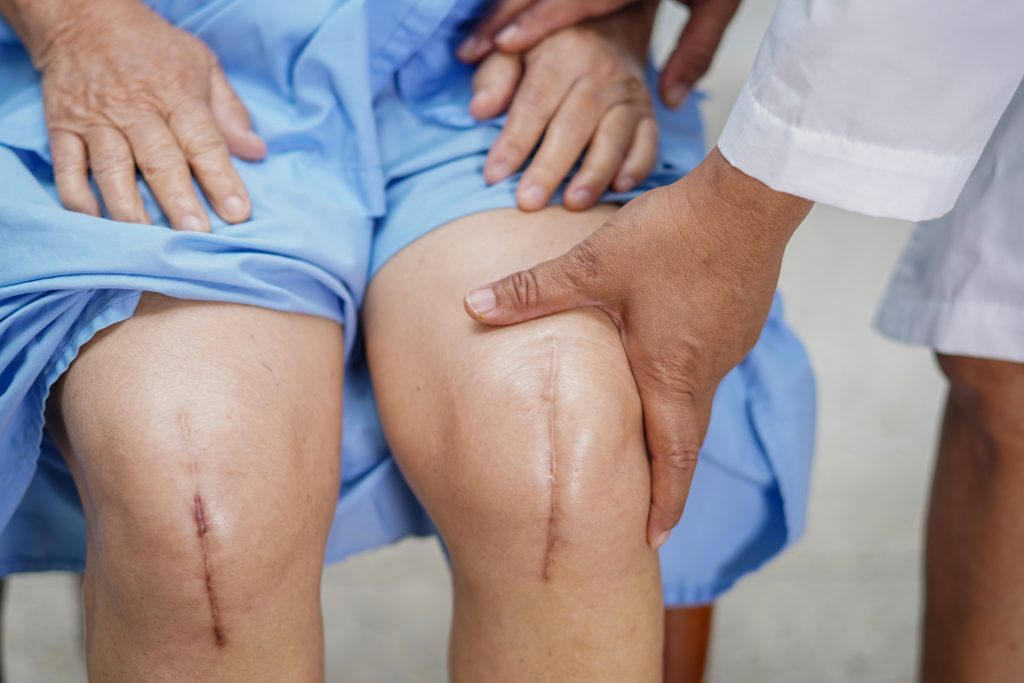
An ACL reconstruction is performed as a minimally-invasion procedure. This means that only small incisions are made in the knee. Instruments are inserted into the incision to remove the damaged ligament and replace it with tissue from the patient’s body or donor tissue. With ACL tears, simply sewing up the ligament doesn’t usually lend to a full recovery or use of the ligament, which means that grafting is required. Grafting enables your body to recover with full motion instead of stinted growth when sewing the tendon. The procedure typically takes between two and three hours long. Once the procedure is complete, patients tend to go home on the same day. In most cases, there is between an 80-90% success rate for ACL surgeries.
In a total knee replacement, a large incision must be made in the knee joint. Damaged areas of bone are removed and replaced with durable materials that create an artificial knee joint. Implants are typically made of metal alloys, ceramic material, or strong plastic parts. This is typically addressed prior to the surgery and each type of material has pros and cons. However, patients typically don’t have much say in this option as it is usually based on the surgeon’s preferred material and training. The entire procedure typically takes between one to three hours. Once the procedure is complete, patients tend to stay in the hospital for two to three days. During this time, you’ll recover from the anesthesia and surgery. In most cases, there is around an 82% success rate for knee replacement surgeries.
Differences in Recovery Time
Generally, an ACL reconstruction procedure requires an extended period of six months of rehabilitation. A patient who has had ACL reconstruction may not return to normal, rigorous activity for up to a year and it typically takes 12 weeks before being able to be weight bearing on the knee. Additionally, the physical therapy that follows after an ACL reconstruction is typically very strict to ensure that you get as much use out of your knew tendon as possible. Not to mention the nutrition needed to help your body recover.
A knee replacement requires physical therapy for 4 to 8 weeks. A patient who has had a knee replacement can return to normal activities after 12 weeks. However, some strenuous activities that put too much stress on the replaced joint should be avoided. Additionally, it typically takes 6-8 months before patients reach full recovery maximal strength and endurance.
Your orthopedic physician will determine the right surgical procedure for your individual case. Both surgeries have been performed millions of times, with good rates of success for the patient. The most critical point is to follow your doctor’s instructions and your physical therapist’s workout plan precisely to enjoy the best outcomes for your surgery.
Feeling Healthy? What to Talk to Your Doctor About During Your Annual Check-Up
An annual physical is an important measure for staying healthy. It allows your physician to get to know you and your current condition, anticipate potential problem areas and develop a rapport in talking about health matters. Healthy individuals often wonder what they should talk about during these visits when they don’t have any medical problems to report. Here are a few topics to talk about to make the most of your annual physical.
Discuss Your Weight Goals
Obesity is a known factor for a number of health problems, such as high blood pressure, diabetes, heart disease, and even some types of cancer. If you are carrying a few extra pounds, you can discuss ways to lose weight with your doctor. If you are underweight, your physician can offer ways to help you add a few pounds for optimum health.
Ask About Exercise Options
Regular exercise is a critical part of your health maintenance strategy and can help you avoid many illnesses. Various types of exercise are available. These programs often recommend individuals to “check with their doctors" to prevent any injury from the exercise. Your doctor can advise on whether you are able to participate in an exercise program and will allow the physician to note for the records that exercise is part of your lifestyle.
Mention the Supplements You Take

If you are healthy enough, you will want to continue to do all you can to stay healthy and avoid serious illness. You may take supplements on a regular basis to strengthen your immune system, support joint health or increase your energy. It’s important to discuss these supplements with your doctor to ensure they don’t interfere with other medications you may be taking or pose a danger of overuse.
Discuss Current Medications
If you are taking medication, you may wish to discuss whether you should keep taking it or whether you continue to need it. You can also discuss the need for vaccinations, such as a flu shot, to prevent serious complications from contagious illnesses. If you’re worried about the cost of these medications, most insurance policies, even non-Obamacare health insurance policies have coverage for certain medications, supplements, and vaccines.
Ask About Test Results
You may have done a number of medical tests in advance of your appointment for the annual physical. Your doctor can provide information about the results of the tests and if there are any concerns. Understanding what these tests reveal can help you to adjust your diet, exercise levels, or other health measures to ensure that you maintain good health in the future.
Even when you are completely healthy, an annual physical is an opportunity to check in with your doctor and learn the best ways to protect your health going forward. Take this opportunity to ask questions, so you can participate fully in maintaining your health.
