
I'm thrilled to announce the official opening of elxr Juice Lab's newest location in Yorkville (55 Avenue Road), as well as their newly-developed menu created by in-house certified nutritionist, Katie Rosenberg.
Elxr now serves of a variety of vegan, organic, gluten-free items including sprouted granola, parfaits, smoothies, hot drinks and a variety of add-ons, plus their coveted line of cold-pressed juices. Menu highlights below!
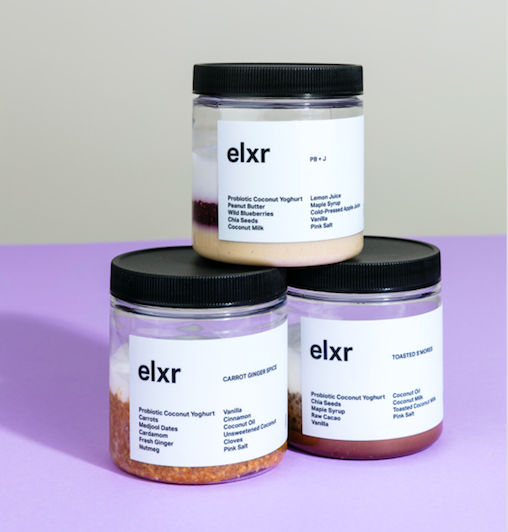
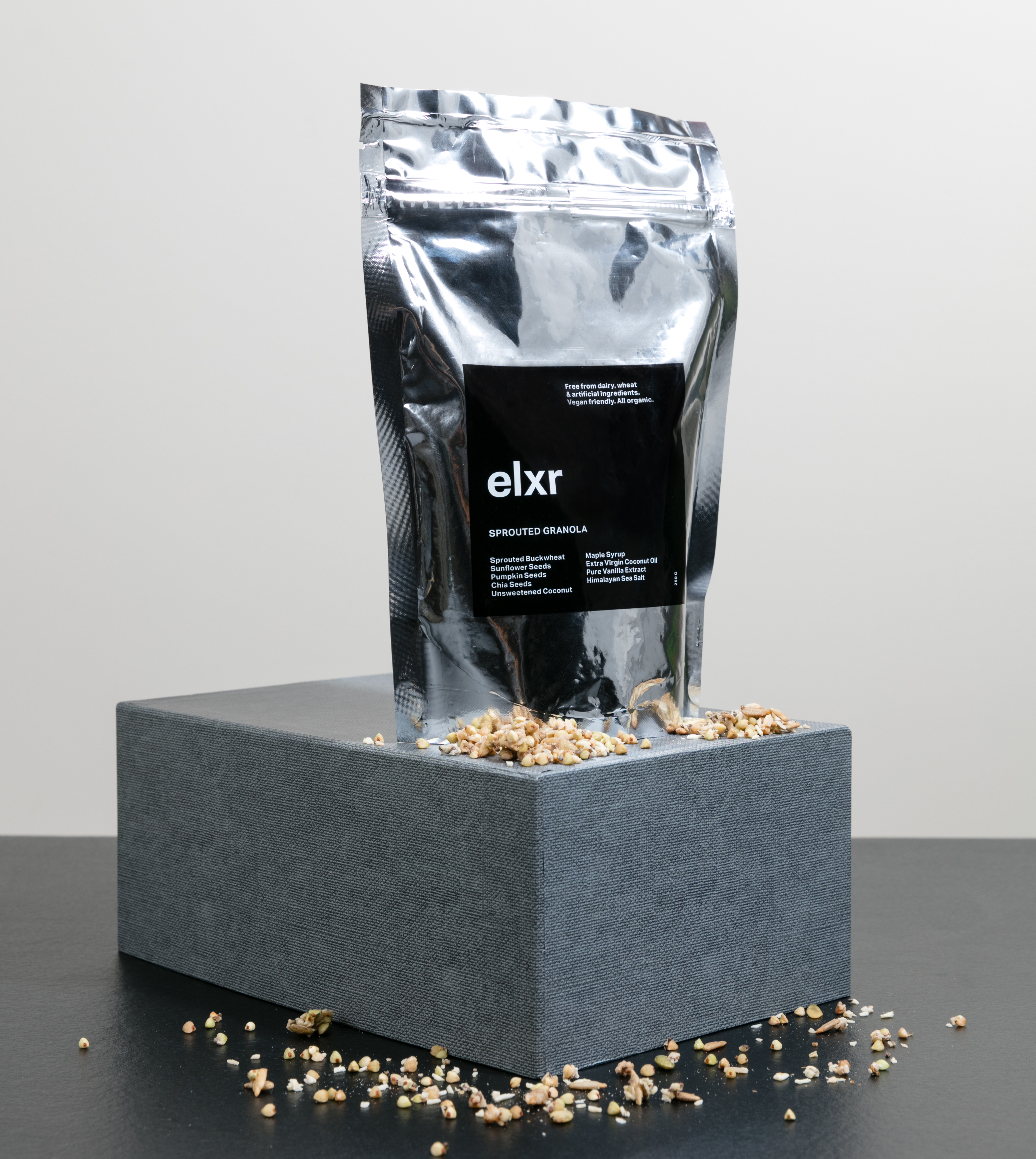
Sprouted Granola: Super crunchy, sprouted, house-made granola with great maple flavour, but not too sweetIngredients: sprouted buckwheat, sprouted tri-seed blend (sunflower, pumpkin, chia), unsweetened coconut, maple syrup, extra virgin coconut oil, pure vanilla extract, Himalayan sea salt.Dehydrated at a low temperature to maintain the nutritional integrity of the fats in the nuts and seeds.
Collagen Beet Latte: Warm, balanced sweetness with hints of berries and chocolate.Ingredients: house cashew milk, cold-pressed beet, maple syrup, goji, raw cacao, schisandra, vanilla, Himalayan sea salt, TruMarine collagen.TruMarine Collagen: clinically show to aid in fine line and deep wrinkle reduction while maintaining skin elasticity, reduces joint pain and helps t strengthen hair and nails.Add to any smoothie or latte for an extra nutritional kick.
A daily serving of 5 prunes helps slow bone loss and lowers the risk of osteoporosis
TORONTO, Oct. 18, 2017 /CNW/ - Approximately 1.4 million Canadians are living with osteoporosis1, a condition characterized by low bone mass and deterioration of bone tissue. Now, scientific research has found that simply eating a serving of five prunes a day may help slow and prevent bone loss.
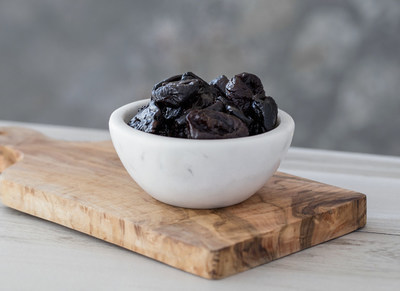
Research published in the journal Osteoporosis International,2 studied postmenopausal women with low bone density, who ate 5 to 6 prunes (50g) per day, for a six-month period. The research suggests that this level of consumption was as effective in preventing bone loss as a previous study3 where postmenopausal women consumed 10 to 12 prunes (100g) per day for one year.
"This research is extremely compelling, since women can lose 1 to 1.5 per cent of their bone density annually following menopause," says Dr. Shirin Hooshmand, PhD and lead researcher, of the study, at the School of Exercise and Nutritional Sciences at San Diego State University.
In April 2017, a comprehensive review of 24 studies on prunes and bone health was published in Nutrients.4 The author found that prunes enhance bone formation and exert beneficial effects on bone mineral density.
California prunes are rich in nutrients that are vital for bone health including vitamin K and potassium. Naturally sweet and delicious, a serving of about five prunes is only 100 calories and is a source of dietary fibre.
"Healthy bones are vital to overall wellbeing," says Cara Rosenbloom, RD. "It's excellent news that prunes, a flavourful dried fruit and convenient snack may be helpful for bone health."
The evidence continues to grow and support the fact that incorporating prunes as a regular part of a nutritious diet seems to offer long-term bone health benefits, particularly in postmenopausal women. A larger clinical trial is currently underway, to further explore prunes' effect on bone density and estimated bone strength in postmenopausal women. Research continues to discover the potential mechanism and compounds in prunes that support healthy bones.
In addition to supporting healthy bones, prunes also help support heart and digestive health. Prunes have a low glycemic index, which along with fibre, helps manage blood sugar levels.
For more information on the health benefits of California prunes or for delicious prune recipes and tips, visit: www.californiadriedplums.org or follow on Instagram @CADriedPlumBoard and Twitter @CADriedPlums.
- Canadians putting themselves at risk for osteoporosis. Osteoporosis Canada. http://www.osteoporosis.ca/news/press-releases/canadians-putting-themselves-at-risk-for-osteoporosis-survey/
- Hooshmand S, et al. The effect of two doses of dried plum on bone density and bone biomarkers in osteopenic postmenopausal women: a randomized, controlled trial. Osteoporosis Int. 2016 Jul;27(7):2271-2279. https://www.ncbi.nlm.nih.gov/pubmed/26902092
- Hooshmand S, et al. Comparative Effects of Dried Plum and Dried Apple on Bone in Postmenopausal Women. British Journal of Nutrition 2011;106:923:-930
- Wallace TC. Dried Plums, Prunes and Bone Health: A Comprehensive Review. Nutrients. 2017 Apr 19;9(4). https://www.ncbi.nlm.nih.gov/pmc/articles/PMC5409740/
About The California Dried Plum Board (CDPB): The CDPB represents about 800 growers and 29 prune packers, under the authority of the California Secretary of Food and Agriculture. California produces approximately 90 percent of the United States and 40 percent of the world's supply of prunes, a convenient, healthy snack for today's busy lifestyle. CDPB provided partial funding and dried plum products for the various studies.
SOURCE California Dried Plum Board
Local Canadian Success Story Introducing
Better-For-You SPOKES Air-Puffed Potato Snacks
Calgary, AB October 18, 2017 Left Field Foods launches naturally simple and delicious SPOKES air-puffed potato snacks. A unique entry into the North American Better-For-You (BFY) snack category which is growing rapidly due to consumer preference for simple ingredients with no preservatives.
A light and crunchy potato snack that is air-puffed {never oil fried}, SPOKES are lightly oil-misted and seasoned for a naturally delicious clean and crisp taste experience. Made with good-for-you simple ingredients, SPOKES are gluten-free, Non GMO Project Verified and have only 40 calories per cup. Free of the 11 major allergens including dairy, gluten, wheat, soy and egg, no artificial preservatives or colours, and no trans fat or cholesterol, SPOKES are a potato snack everyone can love. Plus, theyre made locally in a peanut free facility in Calgary, AB, Canada. Available in nine (9) mouth-watering flavours, there is something for everyone: Sea Salt, Mango Habanero, Sea Salt & Vinegar, Barbecue, Dill Pickle, Salt & Pepper, Fiesta Salsa, Sea Salted Caramel and Simply Bare.
Created by a Canadian Mom who wanted a Better-For-You (BFY) snack for her family, SPOKES was born as a result of many years work refining product development and consumer research. Were naturally curious, and are always experimenting with new things. With an emphasis on wholesome, naturally simple ingredients and great taste, we set out to create a delicious snack the whole family can love. The new brand is quickly gaining traction with extremely positive consumer response so far, and for good reason, says Dave Pullar, CEO of Left Field Foods. Selective about everything we do, we listened carefully to our customer. This is at the heart of our commitment to excellence and the driving force behind what we do every day from sourcing simple, quality ingredients, to our product innovation and production processes, to ensuring consumer satisfaction and above all, creating a naturally delicious taste experience for families to enjoy, without all the bad stuff, says Pullar.
SPOKES air-puffed potato snacks typically retail $3.99 for a regular size bag, and are already available across Canada in most natural, conventional and independent grocery and drugstore retailers including: Whole Foods, Kardish, Goodness Me!, Planet Organic, Blush Lane, Safeway, Sobeys (Western Canada), Thrifty Foods, Metro (Quebec), London Drugs and Bed Bath & Beyond. For more information on where to find SPOKES, please visit spokes.ca
About Left Field Foods
Headquartered in Calgary, Alberta, Canada, Left Field Foods is a high-growth snack food company focused on helping savvy snackers eat and feel better, today and tomorrow. The company develops innovative, naturally delicious products with Great Taste from the Ground UpÔ that appeal to consumers growing preference for great tasting, Better-For-You (BFY) products made with naturally simple ingredients. For additional information, please visit: leftfieldfoods.ca
Insulin in People Living with Type 2 Diabetes: Initiation and Dosage
Favourable results from a scientific study conducted by Canadian investigators on the dosage adjustment of Toujeo®
LAVAL, QC, Oct. 17, 2017 /CNW Telbec/ - Individuals with type 2 diabetes may need insulin to achieve target blood glucose levels. As such, healthcare professionals and individuals living with diabetes may have questions about insulin initiation and reaching the right dosage.
A possible reluctance to delay starting someone on insulin or increasing their insulin dose, a phenomenon called clinical inertia, may negatively affect optimal diabetes treatment. Dr. Stewart Harris, Professor in the Department of Family Medicine of the Schulich School of Medicine & Dentistry at Western University and a medical expert who took part in the study entitled TITRATION: A Randomized Study to Assess 2 Treatment Algorithms with New Insulin Glargine 300 units/mL, states that "patients with type 2 diabetes start insulin approximately 9 years after the diagnosis is made, when glycated hemoglobin is above 8.5% and complications of the disease have already begun to appear1. The results of the study that we have just performed support a simple and effective method to initiate and increase doses of insulin glargine 300 units/mL."
Published in the Canadian Journal of Diabetes2 and undertaken in collaboration with Sanofi Canada, this new Canadian study aimed to measure the efficacy and safety of adjusting once daily doses of insulin glargine 300 units/mL, marketed under the name Toujeo®. The study was conducted over a period of 12 weeks in 212 randomly selected participants with uncontrolled type 2 diabetes.
Toujeo® is a basal insulin that was approved by Health Canada in 2015, and which has been studied in a large clinical program3. Toujeo® provides a constant glucose lowering effect over 24 hours with a once daily administration. Toujeo® has a low within and between day variability.4
"Insulin makes it possible to lower the amount of glucose in the blood. Unfortunately, it is often initiated too late in the process, exposing the patient to the risk of complications associated with high blood glucose. It is thus important to have access to a simple and effective method to initiate and increase insulin doses. As part of our study, we compared the efficacy and safety of adjusting doses of Toujeo® according to Diabetes Canada's clinical practice guidelines," explains Dr. Jean-François Yale, Endocrinologist, Professor in the Department of Medicine of McGill University and member of the team of investigators who carried out the study. "Since Toujeo® is a longer-acting insulin than Lantus®, it was important to assess whether the recommendation for patients to adjust their doses at a rate of one unit per day until target blood glucose levels are achieved also applied to Toujeo®; this study's conclusions proved favourable and show that it is possible."
"We are proud that Toujeo® was instrumental to this important study for people living with diabetes," claims Niven Al-Khoury, President at Sanofi Canada. "With over 100 years of experience of working to understand and support the healthcare needs of Canadians, being able to bring valuable solutions is core to our purpose."
Diabetes in Canada
Diabetes affects approximately 3.4 million Canadians, of which type 2 diabetes accounts for 90% of cases 5,6. It is estimated that 5.7 million Canadians have prediabetes; this condition is characterized by blood glucose levels above normal, but not high enough to be diagnosed as diabetes. Fifty percent of individuals with prediabetes will develop type 2 diabetes7. Left untreated, diabetes can lead to many serious complications, such as heart disease, kidney disease, loss of vision and amputation of the lower limbs.
"This study demonstrates Sanofi Canada's commitment with regard to the effort and energy invested by healthcare professionals to help patients receive the best possible care they need in terms of available treatments stemming from the most recent developments in research on diabetes management," concluded Dr. Hisham A.S. Mahmoud, Medical Director at Sanofi Canada.
About Sanofi Diabetes and Cardiovascular
Diabetes and cardiovascular disease affect millions of people worldwide, with many managing the complex challenges of both. Building on its portfolio evolution, heritage and expertise, Sanofi has implemented a focused business unit dedicated to delivering innovative, value-based medicines and integrated solutions in these therapeutic areas. It is committed to a collaborative approach that involves strategic alliances with professional and patient associations, research institutions and leaders in healthcare and other industries, with the goal of advancing scientific knowledge, driving the convergence of science and technology, helping to improve outcomes and inspiring an evolution in care.
About Sanofi www.sanofi.ca
Sanofi, a global healthcare leader, discovers, develops and distributes therapeutic solutions focused on patients' needs. Sanofi is organized into five global business units: Diabetes and Cardiovascular, General Medicines and Emerging Markets, Sanofi Genzyme, Sanofi Pasteur and Consumer Healthcare. Sanofi is listed in Paris (EURONEXT: SAN) and in New York (NYSE: SNY).
Together, Sanofi entities in Canada employ close to 1,900 people. In 2016, Sanofi companies invested $130 million in research and development in Canada, creating jobs, economic activity and opportunity throughout the country.
Follow us on Twitter @SanofiCanada and on YouTube.
__________________________
1 Harris SB, Stewart M, Brown JB, Wetmore S, Faulds C, Webster-Bogaert S, Porter S. Type 2 diabetes in family practice. Room for improvement. Canadian Family Physician - [bilingual text]. VOL 49: JUNE [bilingual text] 2003; 778-85.
2 http://www.canadianjournalofdiabetes.com/article/S1499-2671(17)30014-X/abstract
3 Patient‐level meta‐analysis of EDITION 1, 2 and 3: glycaemic control and hypoglycaemia with new insulin glargine 300 U/mL versus glargine 100 U/mL in people with T2DM - Robert Ritzel, Ronan Roussel, Geremia B. Bolli, Laetitia Vinet, Claire Brulle-Wohlhueter, Stanislav Glezer, and Hannele Yki‐Järvinen.
4 Becker RH, Nowotny I, Teichert L, et al. Low within- and between-day variability in expo-sure to new insulin glargine 300 U/ml. Diabetes Obes Metab. 2015;17(3):261-7.
5 Diabetes Canada, diabetes statistics in Canada: http://www.diabetes.ca/how-you-can-help/advocate/why-federal-leadership-is-essential/diabetes-statistics-in-canada
6 Diabetes Québec, type 2 diabetes: http://www.diabete.qc.ca/en/understand-diabetes/all-about-diabetes/types-of-diabetes/type-2-diabetes
7 Diabetes Canada, prediabetes: https://www.diabetes.ca/about-diabetes/prediabetes
SOURCE Sanofi Canada

I was recently asked if I wanted to review the Floating Comfort Pillow by Mediflow. The product is also Canadian! And you guys know how much I love supporting Canadian products!
Being an athlete and coach I know the importance of sleep. It helps me with my recovery from my hard workouts so my rest is of high importance to me. Obviously I had to say yes! They quickly shipped me over one and I have been using it for about two weeks straight.
What is it and how does it work?
The secret is in the Mediflow pillow’s supportive waterbase. Not only is it fully adjustable to any desired level of comfort but it also provides responsive support as you sleep. No more waking to fill and stuff when you change sleeping positions. The waterbase adjusts as you move to maintain proper alignment of the head and neck.
More about the pillow?

The Floating Comfort Pillow by Mediflow, the only pillow clinically proven to improve the quality of sleep.
The Floating Comfort Pillow features an exclusive waterbase technology that provides responsive support by adapting to the shape of your head and neck as you move during sleep. No matter which way you lay, your head and neck remain in proper alignment, creating a totally different kind of sleeping experience.
Here’s more:
> It’s the only pillow clinically proven to improve the quality of sleep, as noted by a peer-reviewed study conducted at Johns Hopkins University School of Medicine
> Benefits include deeper sleep (no more waking up to fluff your pillow!) and a reduction in neck pain
> It’s customizable. Choose your preferred filling (fiber, foam and feather) and level of comfort – just fill the pillow with tap water until you reach your desired amount of firmness
> Invented in Canada and ranked #1 selling pillow in six countries (USA, Canada, UK, Germany, France and China)
> Over 5 million sold – reaching #1 on global e-commerce platforms including Amazon, Shopify, Bed Bath & Beyond, and Alibaba with consistent 4+ Star reviews
> Reached #1 Bestseller in Amazon Home & Kitchen during July 2017 among 24,163,959 items
We are supposed to spend about 1/3 of our lives sleeping, so help your loved ones disconnect with cutting edge technology. The Floating Comfort Pillow by Mediflow MSRP is only $49.99, but the benefits are priceless. For more information, visit www.mediflow.com.
I absolutely love my new pillow and I would recommend it to anyone who needs support for their head and neck at night! The best part is that you can customize and adjust it to the support you need! Thanks Mediflow for allowing me to test and review your product!
LOVE YOU BOOK INTERVIEW – PINK PEARL PR

Why I Wrote ‘Love You’ – Lorna Jane Clarkson
Australia's iconic award-winning technical fashion brand designer, Lorna Jane Clarkson, releases her fifth book, Love You.
Fresh from the first leg of her book tour, we sat down with our one and only leading lady and wellness pioneer, Lorna Jane Clarkson, to gain a personal insight into her latest book, ‘Love You’.
Interview Questions:
What is Love You about?
Essentially ‘Love You” is about the incredible power and positivity you can bring in to your life when you decide to love and believe in yourself.
Why did you write Love You?
LOVE YOU is my 5th book and surprisingly not one that I set out to intentionally write.
For the past 18 months I’ve been running an Active Schools program for young girls where we teach the importance of loving and believing in yourself and the more I spoke about this message and saw how much it resonated not only with the students but with their teachers and their parents – I just knew that it was something that ALL women would benefit from.
I wanted to write about self-love because I wanted to inspire women to stop and think about where they are going with their lives, to instil in them the importance of taking care of themselves and to show them that they CAN bring about positive change in their lives.
I believe that self-love is important because everything good in your life starts with how YOU think and feel about yourself and I want to encourage ALL women to invest in themselves, back themselves, challenge themselves and ultimately love and believe in themselves enough to create a life that they love.
In this book, I talk about self-love and self-belief, the importance of authenticity and that making mistakes is inevitable and ultimately how we learn and move forward in life. I share the real stories of my personal journey (warts and all!), the daily rituals that keep me on track despite my busy schedule and what I do to take care of myself both physically and mentally so that I can live my life at 100%.
How did you come up with the title?
Honestly, I’m usually at least half way through a book before the title starts to emerge and it’s not until I begin writing the introduction (which is usually after I have decided on all of the content) that I start to seriously think about what the title should be.
I decided on LOVE YOU because I wanted the message to be crystal clear to the reader as soon as she saw the book. I also wanted her to feel loved when she received the book – so the title also serves as an “I love you” message from me and the Lorna Jane team.
Why do you think self-love is so important?
I know from my own personal experience just how important self-love is, because how you think and feel about yourself has a direct impact on your life. Without self-love, you can’t have self-belief and without self-belief and self-confidence it’s almost impossible to reach your full potential in anything that you do.
I think right now is the perfect time to focus on YOU and what you are doing with your life instead of getting caught up in what everyone else is doing and comparing their seemingly perfect lives with yours. Social media and our obsession with celebrity is taking our focus away from being WHO we are and taking our attention away from what we want to do with our lives. I think we need to stop seeking likes on social media and start to like ourselves. Spend less time looking at other people’s lives and start working on where we want to go with our own lives instead!
When you decide to love and believe in yourself, your whole world changes for the better and I want every woman to know this and understand how she can take back her power.
Why was this book difficult to write?
Honestly, it was tough to write because it was so personal. It’s a well-known fact that the media can be tough on people in the spotlight and I have certainly felt that over the last few years. There are more and more ‘click-bait’ headlines and they often lead to or report on unfounded and misleading facts. I haven’t spoken about it publicly before, but these were difficult times for me that played havoc with my self-confidence. I felt too scared to do or say anything, especially when I learnt that ‘no comment’ wasn’t really an option either.
I started to doubt myself and what I was doing with my life and had to find a way to re-gain my own self love and self-confidence as well as the fearlessness and ability to be open and honest that I had lost. When I was writing this book I started thinking about all the other women out there that may have gone through something similar in their lives causing them to lose their confidence, and wouldn’t it be great if I could somehow use the stories of my journey to help them overcome their fears, find self-love and get back on track to creating an amazing life for themselves.
Why did you feel the need to share so many personal stories in this book?
I think that it’s important for people to know what it really takes to live with passion and purpose – of course I want to inspire women to follow their dreams like I did, but I also want them to know that it can (and will) be hard sometimes.
I think by telling my ‘own’ personal stories it allows me to share with the reader what I believe are the key ingredients to move forward towards success in their lives. What it actually takes to step out of your comfort zone and make change. And that it’s perfectly okay for people to think that you are crazy!
In this book I also talk about the daily rituals that I know have carried me through the most difficult times. That taking care of your health both physically and mentally is always important, and that anything truly is possible when you make the commitment to LOVE and believe in yourself every day.
My stories teach you that nothing worthwhile is easy. Building something important takes time. That without passion you will never begin, without courage, you will falter and without drive and determination you will never finish.
What is it really like to work with your husband Bill?
Everyone is saying ‘surround yourself with good people’ so it confuses me when they’re surprised that so many of my friends and family work with me at Lorna Jane! I mean why wouldn’t you want to chase your dreams and build something with the people that you love?
Right now, the official count is – one best friend, one brother-in-law, a school friend of Bill’s, two sister-in-law’s, one brother, one husband and one dog … and quite honestly, I wouldn’t want it any other way. I love working with my husband and YES we do argue (a lot!) but it just never seems to affect our personal life or how we feel about each other.
I think that the people you spend time with is important – and It’s nice to know that you can trust each other, that there is a genuine human connection and that we have each other’s best interests at heart. Working with family certainly works for me, but I’m not going to say it will work for everyone!
What is your ultimate dream for females around the world?
I think that right now is an amazing time in history for women, and I want every one of them to know that they have the power to bring positive change into their lives, to reach their full potential, to be fearless and make a difference big or small in the world.
To pre-order your signed copy, visit Lorna Jane.
Lorna Jane is available to buy in stores in Vancouver, Calgary and Toronto, in 45 Sport Chek retail locations across Canada, online at sportchek.ca and online at lornajane.com
Join the conversation!
#movenourishbelieve
#lornajane
Facebook: @lornajaneactivecanada
Twitter: @LornaJaneActive
Instagram: @lornajaneactive
About Lorna Jane
Lorna Jane began in 1989 when Lorna Jane Clarkson sewed her first one-off design
at her home in Brisbane, Australia. Since then, Lorna Jane has transformed her fashion vision into a world-leading activewear brand with over 250 stores worldwide and a connected community of over 3 million women embracing Lorna’s personal philosophy of Active Living.
The technical fashion label designed for women by women provides the perfect mix of fashion and function. Lorna Jane delivers active, innovative and inspirational activewear that aims to inspire all women to lead an active and fulfilling life.
Australian Technical Fashion Brand Lorna Jane Now Available at Sport Chek Stores Across Canada
Lorna Jane Expands Across Canadian Market with New Partnership at Sport Chek, Canada’s Largest Sporting Goods Retailer
October 2, 2017 (Vancouver, BC) – Australia's iconic award-winning technical fashion brand, Lorna Jane, has recently launched in Canada and is available for purchase in Sport Chek stores across Canada and online at sportchek.ca
Since opening their first Canadian Lorna Jane store in Calgary in November 2016, the proven demand for fashionable and functional activewear saw the opening of a showroom in Vancouver last December and a second store recently in Toronto.
Less than a year after their Canadian launch, Australian active lifestyle trailblazer, Lorna Jane, has expanded with products now available to purchase at Sport Chek, Canada’s largest retailer of sports clothing and sports equipment. The full range of products including sports bras, leggings, and tanks is now available at 45 Sport Chek stores across Canada.
Founder of Lorna Jane, Lorna Jane Clarkson said, “It’s exciting! We aren’t just onboarding another stockist, we are making the brand accessible to so many more women worldwide and in turn introducing them to our renowned Active Living Philosophy, that continues to inspire women across the globe to constantly strive for more and live at 100%”.
The Lorna Jane brand is widely recognized as an extension of Clarkson’s personal philosophy of active living, achieved through the daily practice of ‘Move, Nourish, Believe’. This philosophy allows Lorna Jane to uphold its brand promise to motivate and inspire women to live their best life.
“It’s humbling and a credit to everyone involved in the brand that we are making such great inroads in challenging times. In tough times, great brands can flourish and that is just what we will continue to do by keeping the customer at the heart of our business,” stated Clarkson.
Lorna Jane is available to buy in stores in Vancouver, Calgary and Toronto, in 45 Sport Chek retail locations across Canada, online at sportchek.ca and online at lornajane.com
Join the conversation!
#movenourishbelieve
#lornajane
Facebook: @lornajaneactivecanada
Twitter: @LornaJaneActive
Instagram: @lornajaneactive
About Lorna Jane
Lorna Jane began in 1989 when Lorna Jane Clarkson sewed her first one-off design
at her home in Brisbane, Australia. Since then, Lorna Jane has transformed her fashion vision into a world-leading activewear brand with over 250 stores worldwide and a connected community of over 3 million women embracing Lorna’s personal philosophy of Active Living.
The technical fashion label designed for women by women provides the perfect mix of fashion and function. Lorna Jane delivers active, innovative and inspirational activewear that aims to inspire all women to lead an active and fulfilling life.
Technical Fashion Brand Designer Lorna Jane Clarkson Releases Fifth Book, Love You
October 2, 2017 (Vancouver, BC) - Australia's iconic award-winning technical fashion brand designer, Lorna Jane Clarkson, is set to release her fifth book, Love You.
The inspiring 22-page handbook will be available through Lorna Jane stores nationwide as well as an exclusive signed edition online. In this heartfelt book, Clarkson opens up about what it takes to run a successful business, how you can master your own potential and how to stay healthy no matter how busy life gets.
Love You is without a doubt Clarkson’s most intimate and compelling work yet. Readers will have the opportunity to delve into the ‘real life’ of the woman behind the brand, Lorna Jane, and experience their very own journey of self-love, self-discovery and self-belief.
“As women, we can be our own worst enemies. We get so caught up in the things we don’t like about ourselves that we forget how amazing we actually are. You can’t have a great relationship with anyone whether it’s a partner, a work colleague or even a family member, if you don’t first and foremost have a good relationship with yourself and that’s exactly what Love You is all about,” said Clarkson.
Learn Clarkson’s secrets to Active Living in a whole new way and uncover some of her most personal untold stories, never before heard.
To pre-order your signed copy, visit Lorna Jane.
Lorna Jane is available to buy in stores in Vancouver, Calgary and Toronto, in 45 Sport Chek retail locations across Canada, online at sportchek.ca and online at lornajane.com
Join the conversation!
#movenourishbelieve
#lornajane
Facebook: @lornajaneactivecanada
Twitter: @LornaJaneActive
Instagram: @lornajaneactive
About Lorna Jane
Lorna Jane began in 1989 when Lorna Jane Clarkson sewed her first one-off design
at her home in Brisbane, Australia. Since then, Lorna Jane has transformed her fashion vision into a world-leading activewear brand with over 250 stores worldwide and a connected community of over 3 million women embracing Lorna’s personal philosophy of Active Living.
The technical fashion label designed for women by women provides the perfect mix of fashion and function. Lorna Jane delivers active, innovative and inspirational activewear that aims to inspire all women to lead an active and fulfilling life.
VAPING – E-CIGS HAVE RISKS OF THEIR OWN, SAYS VASCULAR SURGEON
Vascular patients should not use electronic cigarettes

CHICAGO, Illinois, Oct. 17, 2017 – Are electronic cigarettes, which have been booming in popularity over the past 10 years, safer than regular cigarettes?
Like so many things, it’s complicated. Most research looks at whether vaping helps people quit smoking better than nicotine patches (inconclusive) and at the effect of vapor on the lungs (no tar is delivered by e-cigarettes, but plenty of chemicals are).
Vascular surgeons see vaping from a different angle; they are concerned about its effect on the body’s veins and arteries. With e-cigarettes, it’s easy for vapers to inhale an unhealthy amount of nicotine, or even accidentally give themselves a sky-high dose. Several recent studies have found that nicotine contributes to hardening of the arteries. It also constricts the blood vessels, which causes the heart rate to go up and blood pressure to rise. Together it’s possible that those symptoms could cause a dangerous heart arrhythmia.
People who have any kind of vascular disease should avoid tobacco and e-cigarettes with nicotine, said Dr. Jeb Hallett, a vascular surgeon at the Medical University of South Carolina and a board member of the Society for Vascular Surgery. Because vascular surgeons treat diseases of the circulatory system, it is common to see patients whose arteries are severely compromised, due in large part to a lifetime of smoking.
“Not only can vaping nicotine fluids be toxic,” Hallett noted, “just getting the liquid on your skin is also dangerous, because nicotine can be absorbed through the skin and cause abnormal rapid heartbeat, which can sometimes lead to heart failure.”
The liquid is especially dangerous for children. The liquids are sometimes manufactured to smell like candy or food, and just skin contact with the liquid can cause children to overdose on nicotine. According to an article in the journal Pediatrics, roughly seven children a day are poisoned by vaping fluid.
Nicotine is not usually a problem at low doses, but causes trouble at high doses, particularly for women. Women have more nicotine receptors in the brain than men, Hallett said. “They are more susceptible to the effects of nicotine, and if they are vaping continually over a long evening, for example, it could mean they are taking in a very high dose of nicotine.”
Electronic devices are filled with a flavored vaping fluid that is sold in different concentrations of nicotine. This ranges from zero to 36 milligrams per milliliter, and sometimes higher. (Traditional cigarettes also vary in nicotine content, from 6 to 16 mg per cigarette, according to the National Institutes of Health.)
While vaping is most popular with smokers who are hoping to break their addiction to cigarettes, a recent study reported in the Journal of Vascular Surgery found “a very modest effect on abstinence rates through the use of electronic cigarettes.”
If someone is committed to trying vaping to get off cigarettes, Hallett might agree that for some people, it’s the lesser of two evils.
“If you are determined to quit smoking and vaping eventually, vaping can be a temporary solution,” he thinks. “But you should have a plan for reducing your nicotine over time – and be very skilled at filling and not spilling the device.”
For smokers who are serious about quitting, he said, more reliable options would be to ask their physician for a prescription such as Chantix SP or to call the 800-QUITNOW hotline for assistance.
##
The Society for Vascular Surgery® (SVS) is a 5,800-plus member, not-for-profit professional medical society, composed primarily of specialty-trained vascular surgeons, which seeks to advance excellence and innovation in vascular health through education, advocacy, research and public awareness.
Resources:
http://onlinelibrary.wiley.com/doi/10.1002/14651858.CD010216.pub3/full "Electronic cigarettes for smoking cessation"
http://www.jvascsurg.org/article/S0741-5214(96)70038-1/fulltext "Nicotine... smooth muscle cell"
http://www.jvascsurg.org/article/0741-5214(87)90132-7/fulltext “Prostacyclin… Effect of nicotine…”
Canadian journalism award puts spotlight on workplace mental health
LONDON, ON, Oct. 17, 2017 /CNW/ - Journalists will compete for an award recognizing outstanding reporting this year on mental health issues in the workplace. The $1,000 prize is being offered by the Canadian Journalism Forum on Violence and Trauma, in connection with its widely-used journalist-to-journalist guide, Mindset: Reporting on Mental Health.

The Mindset Award for Workplace Mental Health Reporting will be open to Canadian journalists or media organizations working in any medium, in English or French, the Forum announced today. Submissions must have been published in Canada in the calendar year 2017. Self-published work is not eligible.
In French, the award is styled le prix En Tête pour le reportage sur la santé mentale en milieu de travail.
The award, inaugurated last year, is sponsored by the Great-West Life Centre for Mental Health in the Workplace. The Centre is a leading source of free, practical tools and resources designed to help all Canadian employers with the prevention, intervention and management of workplace mental health issues.
"This award is intended to encourage bold acts of journalism in the public interest - stories that are incisive or investigative," said Forum president Cliff Lonsdale.
The award's rules define "work" and "workplace" broadly, to capture volunteer as well as paid work and include the wide variety of places in which work is carried. Last year the main prize was awarded to the team that wrote The Globe & Mail's Unremembered series exposing the extent of suicide among Afghanistan war veterans. Subsidiary prizes were awarded to work published in The Ottawa Citizen and The Tyee.
Applications will open on January 22 and close on March 2, 2018. Details of the free application process will be posted on the Mindset and En-Tête websites. The award or awards will be presented in May, 2018, at the national conference of the Canadian Association of Journalists in Toronto.
"There's growing awareness that mental illness affects about 20% of Canadians at any given time," Lonsdale said, "so it's clearly an important issue for everyone – paid workers and volunteers, management and unions – in all kinds of work settings. There are lots of important stories for journalists to bring out of the shadows, breaking down stigma."
Mindset, and its French counterpart En-Tête : reportage et santé mentale, were published in 2014 to help general assignment reporters deal with breaking stories that involve mental illness. About 7,000 copies are in use in newsrooms and journalism schools across the country. The guides are supported by the Mental Health Commission of Canada, using a grant from Health Canada, and by CBC News. The Forum is solely responsible for their content.
The Forum is an educational charity concerned with the physical and emotional wellbeing of journalists, their audiences and those they report about.
Our thanks to CNW Group for supporting this announcement.
SOURCE Canadian Journalism Forum on Violence and Trauma

TRAIN IT RIGHT NEWSLETTER
Sign Up and get a free 7 day Train it Right HIIT Program!